Sacred Datura

Native sacred datura is extremely toxic.

Georgia O’Keeffe made jimson weed flowers famous. Within the context of her paintings, they seem to be angel’s trumpet flowers. Californians know its species as sacred datura, Datura wrightii. It is as native here as where Georgia O’Keeffe observed and painted it in New Mexico. For refined gardens, though, it is rare. It lives almost exclusively in the wild.

There are a few reasons for this. Sacred datura is a sloppily sprawling perennial that can quickly grow eight feet wide. It is not reliably perennial though. It might perform for only a single season, and then suddenly die. The spectacular flowers close through the middle of the day. Seed capsules are annoyingly bristly. Worst of all, sacred datura is very toxic.

Otherwise, sacred datura is as appealing as Georgia O’Keeffe depicted it to be. Its grand flowers resemble those of angel’s trumpet. They stay open longer during cool and damp weather. Foliar color is creamy white, perhaps with a slight lavender blush. Fragrance is mild only because bloom is so close to the ground. Big specimens can get three feet tall. The foliage has a velvety texture.

From the Muddy Banks of the Wishkah

Well, . . . it is not exactly on the muddy banks.

Kurt Cobain was here. So was I. That is how I got this picture of this English holly in this awkward situation within Kurt Cobain Memorial Park, on the muddy banks of the Wishkah River. I wrote about other pictures from there at my other presently discontinued blog, ‘Felton League’, a bit more than a year and a half ago. This particular picture was omitted because it was irrelevant to that particular post. It is more relevant to this horticultural blog.

‘From the Muddy Banks of the Wishkah’ is, incidentally, the second album that the band Nirvana recorded without Kurt Cobain.

English holly is more naturalized on the muddy banks of the Wishkah River and throughout coastal regions of the Pacific Northwest than it is here. There are not many ecosystems that it can not migrate into there. Here, it can infest only ecosystems that retain sufficient moisture through summer to sustain it, such as riparian or coastal ecosystems. Even within such ecosystems, it would not likely survive on top of a piling such as this specimen.

Some of the most prominent vegetation of the coastal ecosystems of the Pacific Northwest is surprisingly similar to vegetation here. Douglas fir, which is sporadically native here, is the most prominent species within the forests there. Bigleaf maple is likewise more common there than here. Naturalized Himalayan blackberry is even more common and more wicked there!

However, to me, the entire region seemed to be riparian. Nothing was far from some sort of waterway. I encountered nothing that resembled a familiar chaparral ecosystem. Someone who is more familiar with the region could distinguish between the various local ecosystems. I should be more observant about the diversity of the ecosystems and their associated vegetation, both native and exotic, when I return late next winter.

Irrigation Technology Can Get Complicated

Modern irrigation does not age well.

Old fashioned irrigation systems were quite thorough, and technically sustainable. They broadcast generous volumes of water over any vegetation that required it. Their systems were too simple to need much adjustment. Their metallic composition was very resilient. That is why so many old systems were in service for so long. Some continue to function.

However, such old fashioned irrigation systems were not perfect. Their consumption was not as sustainable as their plumbing. They wasted water on vegetation that needed less, and pavement. Some of the broadcast water evaporated before reaching any vegetation. Without automation, old irrigation systems operated when convenient for their operators.

Modern irrigation systems are typically more efficient. Automation allows them to operate prior to sunrise to limit evaporation. Most modern systems apply water directly to the soil. This leaves no irrigation water to evaporate from foliar or other surfaces. Also, it prevents evaporation from airborne broadcast irrigation water. Evaporation innately wastes water.

Of course, modern irrigation systems are no more perfect than old systems. Groundcover and lawns still rely on broadcast irrigation. Such systems still waste water on pavement. Automation can actually waste water if not adjusted manually for rain and other weather. Only the most modern automation adapts to weather. No system responds to vegetation.

Consequently, irrigation can become either deficient or excessive as vegetation matures. Many native species need regular irrigation only as they disperse roots after installation. They are likely to rot with the same irrigation as they mature. Many tropical species need more water as they grow. Some vegetation, as it grows, can obstruct broadcast irrigation.

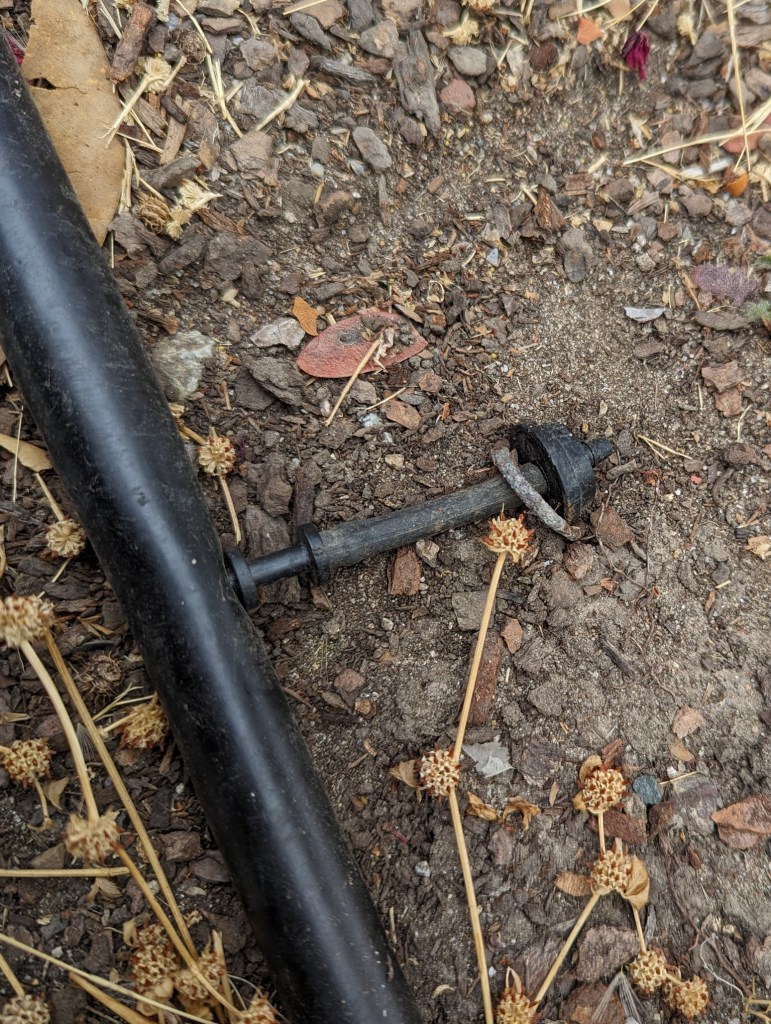
The complexity of modern irrigation systems complicates their maintenance. Automation is merely one component of the infrastructure. Emitters of drip irrigation sometimes need relocation or replacement. They are sometimes difficult to find below healthy vegetation. Because components are plastic, they are not as durable as old fashioned components.

Punchbowl Godetia

Bloom is brief for wild godetia.

All forty-one species of Clarkia that are native to North America are native to California. Punchbowl godetia, Clarkia bottae, inhabits almost all counties of Southern California. It is absent only from Imperial County. It also inhabits Monterey and San Benito Counties. Its name may allude to its floral shape, or its bloom in Devil’s Punchbowl near Valyermo.

Punchbowl godetia is an ephemeral annual that blooms briefly for spring. Bloom is early in some regions but late in other regions. Also, its schedule is variably from year to year. Because it does not transplant easily, it is rarely available from nurseries. It grows better from seed, which is available online. Within favorable situations, it self sows after bloom.

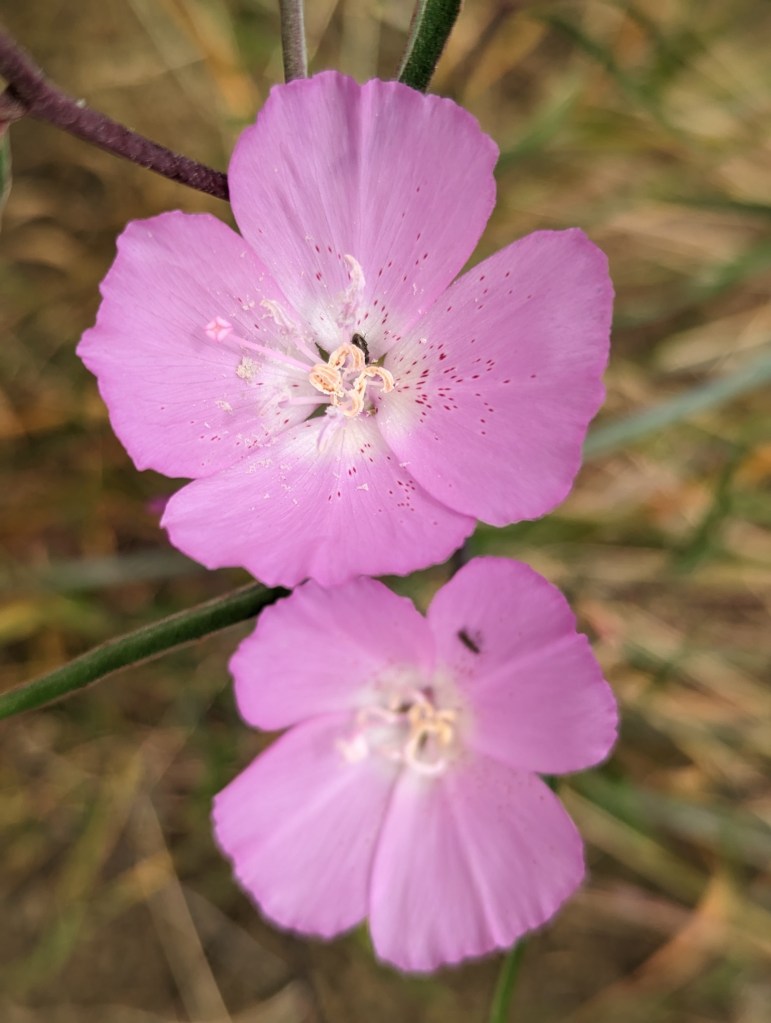
Bloom is delicate and airy, on limber and lightly foliated stems less than three feet high. Individual flowers are barely an inch wide. Floral color is slightly purplish pink with white centers and tiny red spots. It is variable though, so might be a bit more purplish or lighter pink. Leaves are very narrow. New seedlings do not compete well with other vegetation.

California Lilac

Native California lilac lacks lilac fragrance.

Almost all California lilac that inhabit refined landscapes are cultivars of native species. Ceanothus thyrsiflorus is one of such native species that grows wild near here. It is a bit less adaptable to home gardens than cultivars are. However, it can be splendid within unrefined and wildland landscapes. New plants need irrigation only until they establish their root systems. Wild plants need none.

Wild California lilac can get taller and wider than fifteen feet. That is larger than cultivars, but with more open branch structure. Their evergreen foliage is somewhat glossy. Individual leaves are only about an inch and a half long, with prominent veins. Fluffy floral trusses that bloom in spring are about two or three inches long. Tiny individual flowers are sky blue or pale blue.

Like many chaparral species, California lilac does not respond favorably to pruning. It performs best where it can grow without disruption. Wild specimens perform well for only about ten years. They might then die suddenly. Some may survive for nearly fifteen years. They grow faster with occasional irrigation, but do not survive as long.

Douglas Iris

Douglas iris can interfere with grazing.

California poppy, sky lupine and many favorite coastal wildflowers are annuals. Douglas iris, Iris douglasiana, blooms with the best of them as a perennial. It is persistent enough to be a noxious weed within rangelands. Of course, that is only because it competes with forageable vegetation. Douglas iris is actually tame enough for cultivated home gardens.

Douglas iris bloom is mostly the color of faded blue denim. It can alternatively be slightly richer lavender blue or very pale bluish white. Purple with yellow centers is rare. Flowers stand only about a foot to a foot and a half tall. Their deep green foliage is about as high. Individual leaves are narrow and arching. New leaves displace deteriorating old leaves.

Wild Douglas iris colonies can be impressively expansive. They generally mingle nicely with other low vegetation and wildflowers. With occasional irrigation, they can get dense enough to exclude most other vegetation. However, such colonies are not evenly dense, so develop bare zones. They crave good sun exposure, but tolerate a slight bit of shade. Excessive fertilizer might inhibit bloom. Excessively frequent or generous irrigation might cause rot.

Weeding Before Weeds Start Seeding

Some cultivated species can become weeds.

Weeds are weeds simply because they grow so aggressively where they do not belong. They begin before the weather gets warm enough for desirable plants to grow. Some are already blooming and dispersing seed. This is why weeding is presently very important. Weeds innately compete with desirable vegetation for space, water and other resources.

Weeding should ideally eliminate target weeds before they disperse seed. Some weeds are sneaky. They bloom and disperse seed while young and seemingly innocent. Some conceal their bloom and seed with their lush foliage. They seem to know to do so during rainy weather that discourages weeding. They effectively provide their own replacement.

Some weeds regenerate vegetatively. They grow from stolons, rhizomes, bulbs, corms or other dromant storage structures. Many of these structures were dormant through winter. Some were dormant even longer. They are aware that winter is becoming spring, so now begin to grow. As they do, they generate more of the same structures, perhaps with seed.

Weeding is easiest as soon as weeds are big enough to grip. Their young roots separate easily from their soil before more thorough dispersion. Also, their soil remains thoroughly damp and soft from winter rain. However, it may be easier to eliminate a profusion of tiny seedlings by tilling. Weeding bulkier weeds, such as pampas grass, can involve digging.

Only a few weeds are woody vines, shrubs or trees. More weeds are perennial. The vast majority of weeds are annual. Regardless, the most substantial weeds are woody. Some can regenerate persistently from their stumps. Therefore, weeding of such weeds should involve removal of their entire stumps. It is important to dig rather than cut oak seedlings.

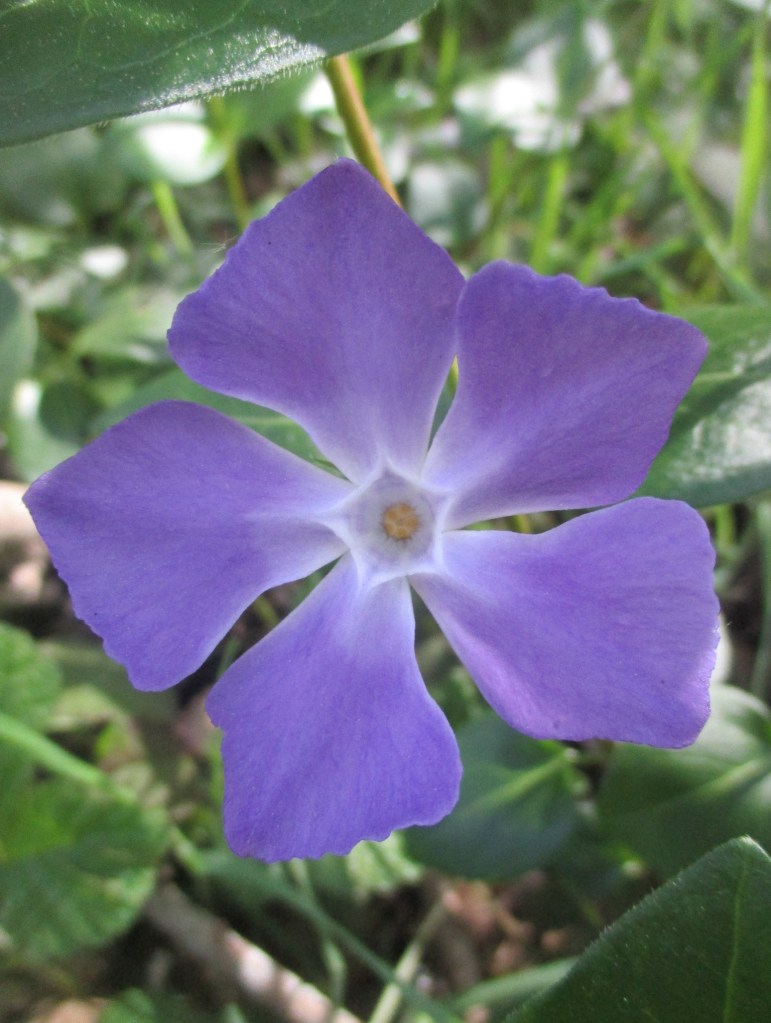
Few native species proliferate undesirably. Therefore, most weeds are exotic. Most were originally desirable, but naturalized. English daisy, periwinkle, pampas grass and broom were formerly popular flowers. Blue gum eucalyptus formerly provided wood pulp. Other weeds formerly grew as vegetables, fruits or grain. Many weeds were once forage crops.

Six on Saturday: Aspen

Aspen are not native here like they are around Aspen in Colorado. Common cottonwood is. While bare, it almost resembles aspen, and really seems to be a species from a climate with colder winters. Actually, all of my Six this week seem to be from colder climates. All but #1 and #2 are native however.

1. Forsythia X intermedia, forsythia looks like it belongs in a colder climate where it can bloom as the snow melts. Only a few inhabit our landscapes, and they are blooming late.

2. Leucojum aestivum, summer snowflake blooms whenever it wants to here. I had been wanting some for here when a few mysteriously appeared near a ditch of the main road.

3. Corylus californica, beaked hazelnut is native, but also looks like it should bloom like this as the snow melts in a colder climate. The nuts are rare and tiny, but richly flavored.

4. Populus deltoides, cottonwood grew as a small colony from roots of a tree that got cut down. This colony got thinned. This stump is under water that reflects a remaining tree.

5. This is that reflected tree, which is the only one of seven remaining trees that is out in the water. Its colony grew before the formerly drained pond filled more than a year ago. Platanus racemosa, California sycamore is reflected to the lower left and the upper right and, I believe, Salix lasiandra, red willow or shining willow is reflected to the upper left.

6. These are the other six cottonwood trees. The seventh is beyond the right edge of this picture, where more twigs of California sycamore are visible. Myrica californica, Pacific wax myrtle is in most of the background to the left, with a lodge building farther behind. Such elegantly straight trunks of common cottonwood seem to resemble those of aspen.

This is the link for Six on Saturday, for anyone else who would like to participate: https://thepropagatorblog.wordpress.com/2017/09/18/six-on-saturday-a-participant-guide/

Box Elder

Box elder is the ‘other’ maple.

No other maple is native to so much of North America as the common box elder, Acer negundo. Yet, because of innate structural deficiency and a general lack of pizazz, it is also one of the least popular. The smaller and more adaptable garden varieties are more often grown for their interestingly colorful foliage. ‘Flamingo’ starts out with pink, white and pale green foliage that turns richer green and white by summer. ‘Violaceum’ has smokey purplish new foliage that fades to rich green. ‘Auratum’ has yellowish foliage that fades to chartreuse green. Any stems that try to revert to a more natural shade of green should be removed before they dominate. Unlike other maples that have distinctively palmate leaves, box elder has compound leaves with three or more leaflets each.

Coffeeberry

50826
Coffeeberry must be and ‘acquired’ taste. (Ick!)

Before the 49ers of the Gold Rush discovered that the seeds of the native coffeeberry, Rhamnus californica (or Frangula californica), make a nice uncaffeinated coffee substitute, the native American Indians were eating the fruit and using the leaves and bark herbally. The black berries supposedly make good jelly, but do not last long, and are too bitter while still red or greenish.

Before the birds get them, the quarter inch wide berries are somewhat colorful, but are not very abundant. The small clusters of tiny greenish yellow flower that bloom in spring are not much to look at either. The army green evergreen foliage is the main appeal. New stems are somewhat ruddy. Old stems and main trunks have smooth gray bark.

Large coffeeberry plants in the wild can get more than ten feet tall, with relatively open branch structure. Garden varieties stay smaller, with compact branch structure. ‘Eve Case’, which is probably the most popular variety, stays less than six feet tall, and is densely foliated. ‘Mound San Bruno’ is even more compact, with smaller leaves. ‘Seaview’ is a groundcover.