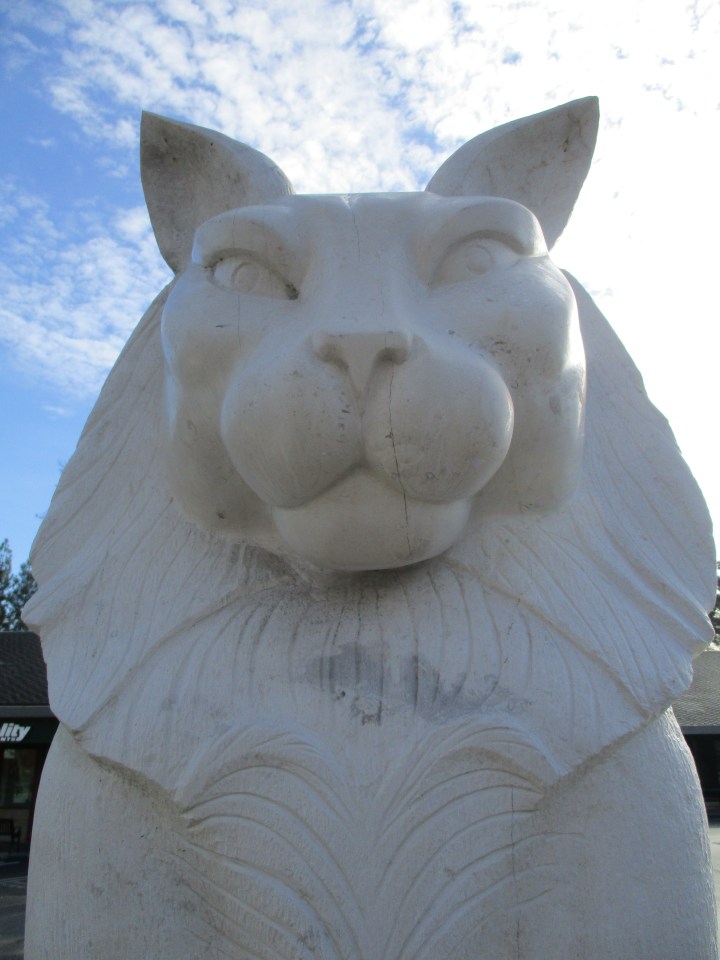
 Los Gatos is named after bobcats. More specifically, it is named after an interchange that was named after bobcats; La Rinconada De Los Gatos. There are a few theories about how and why it was named after bobcats. The most popularly accepted theory involved the remarkably violent demise of everyone involved, leaving no one to document it as accurately is it has been repeated for generations. Don’t question it if you ever hear it. It is quite entertaining. I prefer to think that we do not need an elaborate excuse for naming our town after native wildlife. The bobcats were here. People noticed them. BINGO – La Rinconada De Los Gatos.
Regardless and contrary to what my colleague Brent would tell you, ‘Los Gatos’ does not mean ‘The Ghettos’ in Spanish.
Other towns in California have horticultural names. Some are named for horticultural commodities that were grown there. Others are named for native flora. Some are named after native flora that was harvested as a horticultural commodity!
Apple Valley, Citrus Heights, Greenfield, Lemon Grove, Orange, Orange Cove, Prunedale, Rosemead, Roseville and Wheatland might have been named after what was grown there commercially, although Orange was probably a recycled name from somewhere else. Calabasas is a Spanish name for pumpkins that were grown there. Hesperia is derived from citrus.
Del Rey Oaks, Live Oak, Oakdale, Oakland, Oakley and Thousand Oaks were probably named for the native oaks that grew there naturally. Paso Robles was named El Paso De Los Robles, and Roble is the Spanish name for the valley oak. Encino is the Spanish name for coast live oak, and a few small ones are Encinitas.
La Palma, Palm Desert, Palm Springs, Palmdale and Twenty Nine Palms are obviously named for palms, both the native desert palm and exotic palms. Yucca Valley is of course named for the native specie of yucca. Cypress, Hawthorne, Palos Verdes Estates, Rancho Palos Verdes, Walnut, Walnut Creek, Willow Glen and Willows should be easy to figure out, although some are not as obvious as they would seem to be.
Redwood City was probably named for the mills that processed redwood lumber there, rather than the trees.; just like Mill Valley. Madera translates into wood; and Corte Madera is a place to cut wood. Palo Alto translates to something like ‘high stick’, but was really derived from a tired old redwood tree with a dead top. Fresno translates into ash tree.
Bell Gardens, Bellflowers, Cloverdale, Elk Grove, Ferndale, Garden Grove, Gardena, Grass Valley, Hawaiian Gardens, Laguna Woods, Lake Forest, Larkspur, Lawndale, Pacific Grove, Tulelake, Woodland, Woodlake and Woodside are open to interpretation. Then there is Weed. After all, this is California.
 Now that I have been watching a few other blogs for three months, I notice that some people write some very interesting or at least entertaining articles about topic that are not directly related to the main topic of their respective blogs. Most are just like old fashioned slide shows (remember those?) with cool pictures from around the neighborhood, travels, home projects, or whatever might be interesting. I have not done this yet; but I happen to have a bit of free time at the moment, so thought that I would post these three pictures of the historic Felton Covered Bridge. Although I am technically from Los Gatos, my home is in the Santa Cruz Mountains between Los Gatos and Felton. I also have history in Felton, since my grandparents and my Pa used to live here.
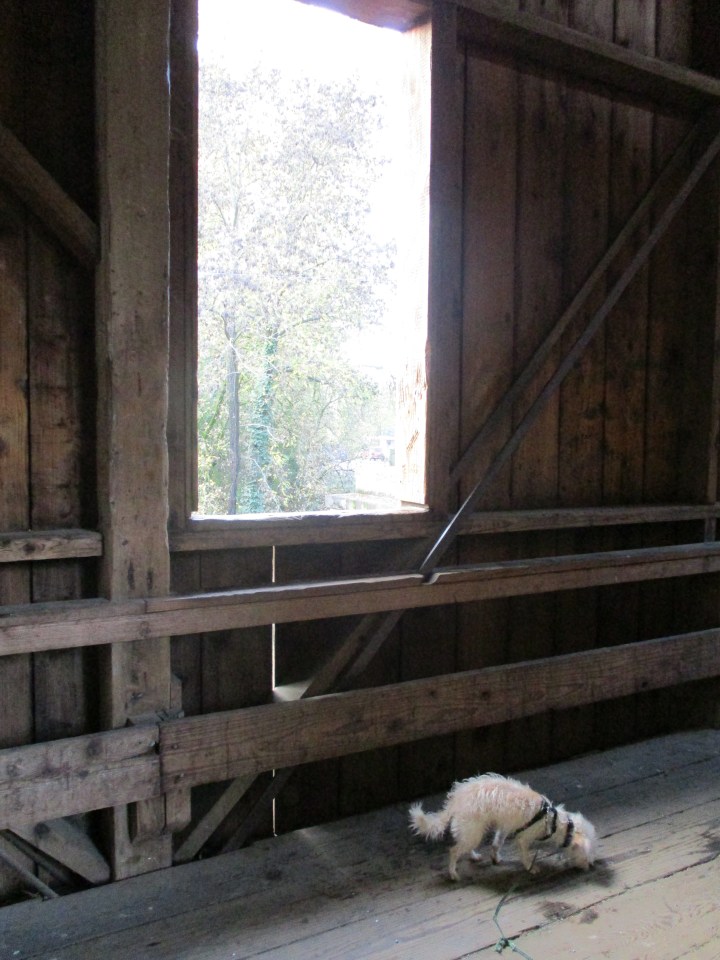 This is the southwestern of the four sidelight windows on the Felton Covered Bridge. If crossing from the end in the upper picture, it would be on the left side toward the far end. It is the best window in the house. Rhody to the lower right might be mistaken for a rodent (
  This is the view from that same window. That wet thing below is the San Lorenzo River. The black spots in that wet thing below are ducks. Once the rain starts, the San Lorenzo River really looks more like river than a creek. This last spring, in the San Lorenzo River right below the Bridge, we scattered the ashes of a good friend, Steven Ralls, with whom I went to Oklahoma (to the right in the illustration –
  Because I sometimes go to Brent’s jobs sites while in the Los Angeles area, people sometimes ask me if I see many famous actors. Well, I try to stay out of everyone’s way, so rarely see anyone at the sites. If I see anyone famous about town, I would not know it. I do not watch enough television or movies to recognize many of them.
 Tony Tomeo