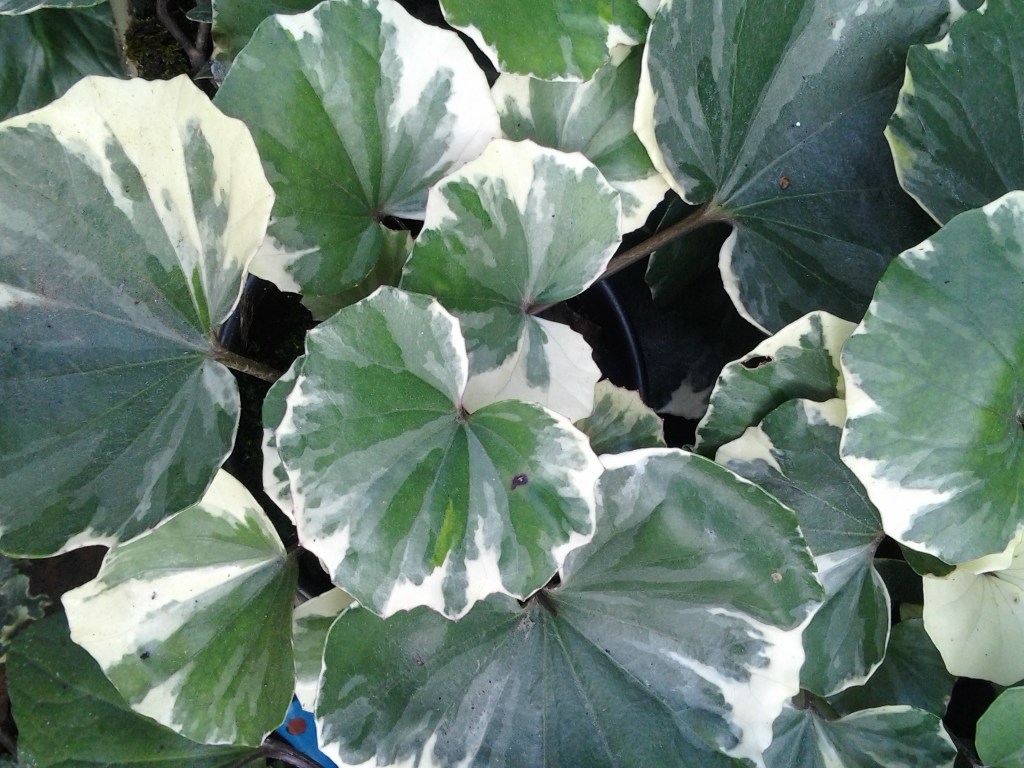
‘Purple Ribbon’ sugarcane has been growing like a weed, but should go into the garden.
Autumn is the time for planting. So is winter. It is difficult to resist new acquisitions for the garden. However, there is already so much in the nursery that needs to be planted into the garden that I should not consider acquiring more.
I like to think that I purchase almost nothing for the garden. I grow just about everything that I want to grow from bits and pieces from other gardens. I purchased sugarcane, though, because I could not find any of a cultivar that I wanted in another garden. Now that it has been growing like a weed here, I returned to the online catalogue of one of the nurseries that sells sugarcane to see what else I want.
Planting Justice grows and sells many fruit and vegetable plants that I want to purchase. Because the primary nursery is in Oakland, only about an hour and a half away, I could purchase directly, rather than by delivery. My wish list from them includes medlar, yacon, currant, sunchoke, lingonberry, moringa, kangaroo apple, raisin tree, earth chestnut, chestnut, cinnamon vine, tree collard, sea berry, aronia and highbush cranberry. The twenty items that I want cost only $316, but are contrary to my tradition of purchasing almost nothing for the garden. Fortunately and unfortunately, I will most likely refrain for another year, when I expect the garden to be refined enough to accommodate them.
Heliotrope is available from nurseries in climates that get too frosty for it.
Limiting selection of plants to those that are appropriate to the local climate is not as easy as it seems. Even in mild climates, plants that should be grown in even milder climates are just too tempting, and have sneaky ways of getting from nurseries into the garden. Consequently, when the weather gets cold, at least a few plants get damaged by frost.
Geraniums, angel’s trumpet, daisies and many other perennials that are so reliable throughout the rest of the year were likely damaged when the weather recently got harshly cold so suddenly after being so mild. Sensitive plants that got some protection prior to the frost may have avoided damage this time, but will likely need protection again before the end of winter. The only sensitive plants that are reasonably safe are those that are located in sheltered spots or in pots that got moved to shelter.
Now that the damage has been done, it is important to not rush corrective procedures. Even though frost damaged foliage is unsightly as it deteriorates, it insulates undamaged tissue below. Early removal of the damaged foliage exposes interior stems to frost later in the season. On rare occasion, exposed stems of some plants can be damaged by desiccating cold wind or sun scald. (Sun scald typically happens during summer, while sunlight is most intense.)
Early pruning of frost damage can also stimulate premature development of new growth, which is much more sensitive to later frost. Most moderately sensitive plants have no problem recovering from minor frost damage once annually. However, recovery is so stressful and takes so much effort that secondary frost damage to new growth can be much more damaging and even fatal to some plants.
It is best to delay removal of frost damage until late winter when subsequent frost is unlikely. Large plants that are too unsightly to wait that long should be pruned as minimally as possible, and then pruned as necessary later. Minor distal damage known as ‘tip burn’ of avocado and lemon trees may not need to be pruned out at all if it first gets obscured by new growth that develops after winter.
This may seem contrary to the importance of pruning most other plants while they are dormant during winter. The difference is that, unlike most plants that stay dormant while the weather is cold, plants that get damaged by frost are not so well adapted to cold winter weather, so do not know that they need to stay dormant until the weather is safe for new growth.
Burlap, plastic sheeting or any other coverings used to protect sensitive plants from frost should be removed when it is not needed. These protective coverings hold warmth within, which can stimulate premature development of sensitive new growth. Opaque materials shade the plants below and can eventually cause etiolation (stretching of the stems), which likewise makes plants even more susceptible to frost damage.
Flowering crabapples are generally reliable for profuse bloom, but some varieties might perform and grow better where winters are cooler.
Dogwoods are certainly pretty as they bloom this time of year. They are rare, but seen often enough in nurseries to make one wonder why they are even more scarce in local gardens. Those that got sold in previous years should now be prominent features around town. The problem is that because they are not happy in local climates, dogwoods become dogwon’ts. They won’t bloom. They won’t provide good fall color. Many won’t even grow. Dogwoods prefer more humidity, so in local gardens, want to be sheltered from full sun exposure and drying wind by larger trees or buildings.
Nurseries generally stock plants that are appropriate for local climates. A few nurseries also have a few plants that would rather be somewhere else, but can be grown with certain accommodations. Reputable retail nurseries are generally careful to divulge which plants need more attention, and what their requirements are. However, many of the big garden centers in home improvement stores are more interested in selling what they can rather than selling what is actually appropriate, particularly since they thrive on turnover and replacing plants that do not survive.
Not all plants are as easy to grow as junipers and oleanders are. Japanese maples and rhododendrons like at least some degree of shelter from direct sun exposure and dry heat; but the California fan palm thrives in wicked heat. Plumerias and coleus can be damaged by even slight frost; but many apples and pears want more frost. Spruces like even moisture; but many yuccas rot without enough dry time.
This is why it is important to know how to accommodate plants that may be less than ideal for local climates. Those of us who choose to grow plants that have special needs should at least give them what they want if we expect them to perform as we want them to.
The differences between nurseries and garden centers within big box type home improvement centers should be more obvious. Contrary to all the fancy marketing, a big box garden center really is just another of many departments within a larger home improvement center. A good nursery specializes in plants, and only plants. A sales representative in a big box store might have been selling paint or refrigerators last week. A nurseryman in a real nursery works regularly and more exclusively with horticulture.
It is probably safe and most likely significantly less expensive to obtain common and resilient plants from big box garden centers. Crape myrtles (ick!), oleanders, pittosporums, junipers and photinias seem to be healthy regardless of their respective origins. However, more unusual varieties of more unusual plants, or plants that are likely to be damaged by a bit of neglect, are either unavailable or likely to be of inferior quality in big box garden centers. Only the most common and resilient cultivars (varieties) of rhododendrons, flowering cherries, flowering dogwoods and fuchsias are marketed. If they get damaged, the damage may not be noticed by the possibly undiscriminating staff.
Nurseries are not only able to maintain their stock better, but can maintain a much more extensive selection of different types of plants. The more finicky types of ferns, columbines, azaleas and Japanese maples are no problem. Experienced horticulturists are familiar with the plants that they work with, and can make recommendations for those who might need help with selection. The prices are often more expensive, but are justifiable to those wanting specific plants that can not be found elsewhere.
A few wholesale nurseries that procure nursery stock for the landscape industry are open to the public for retail. Their retail (not wholesale) prices can be comparable to those of big box garden centers. The selection is different, which means that they lack many plants, but have a few others that the big box garden centers lack. They have plenty of horticultural expertise, but not much sales staff.


 Tony Tomeo