Six on Saturday: Zoning Out


Zonal geraniums, Pelargonium hortorum, can bloom anytime it wants to here, but really does tend to slow down somewhat through autumn and winter. As growth slows, older foliage will deteriorate and become more susceptible to rust and decay. Where exposed, older grown might succumb to frost over winter. Zonal geraniums will soon be zoning out.

Such deterioration and winter frost damage is not as bad as it looks, unless of course, frost is severe enough to kill the entire affected plants. By the time old growth looks shabby enough to be removed, new growth is probably already starting to develop down near the roots. After the last frost date (when no more frost is likely), old growth can be cut back to expose new growth that will soon replace it. Even if new growth is very minimal, growth will accelerate once exposed by the removal of old foliage, and as weather warms into spring.

That is still a few months away. For now, zonal geraniums are just beginning the process of zoning out, which is why their floral trusses are neither as big nor as abundant as they had been through summer. While they are busy with that, autumn flowers are beginning to bloom, and some of the winter flowers are getting ready for their season. Winter flowers get started in autumn because growth is slower in cooler weather, even for plants that prefer cool weather.

1. Chrysanthemum is ‘the’ classic autumn flower. These are blooming well enough in the infirmary that they will soon be relocated out into prominent spots or pots out in landscaped areas.P81006

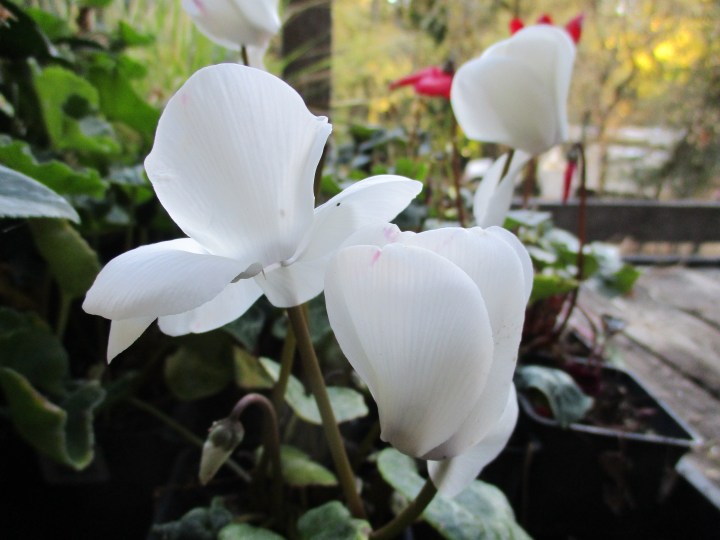
2. Cyclamen is a winter flower that is just now starting to grow after its long summer dormancy. These rudimentary first blooms are not much to brag about, but will likely be followed by enough for these plants to also be recycled back into the landscape from which they came last spring. These white flowers really are the best of the cyclamen for now. (I did not take this picture just because white is my favorite color.)P81006+
3. Reddish orange zonal geranium, and the magenta zonal geranium below, exhibit two more of those colors that I can not identify. I will just say that it is reddish orange. I happen to like it because the color resembles that of one of my two first zonal geraniums. Mine is not so well bred, so exhibits weedier growth and less prominent bloom. Nonetheless, I like mine because it is so resilient and predictable. I cut it to the ground at the end of winter, before new growth develops, and it grows right back. This prettier garden variety would probably prefer a gentler process.P81006++

4. Red zonal geranium seems to me to be the most elegant of those blooming here presently. Of course, I do not know for certain if it is. I do not know much about color. It just seems to me that this color is not as garish as the magenta sort of color below, or as unrefined as the common reddish orange above.P81006+++

5. Magenta zonal geranium, like the reddish orange zonal geranium above, is another color that I can not identify. It is a bit too flashy for my taste. However, the other one of my two first zonal geraniums blooms with a softer hue of a similar color. As much as I prefer to not admit it, my two first zonal geraniums are still my favorites, even though they bloom in colors that I am none too keen on.P81006++++

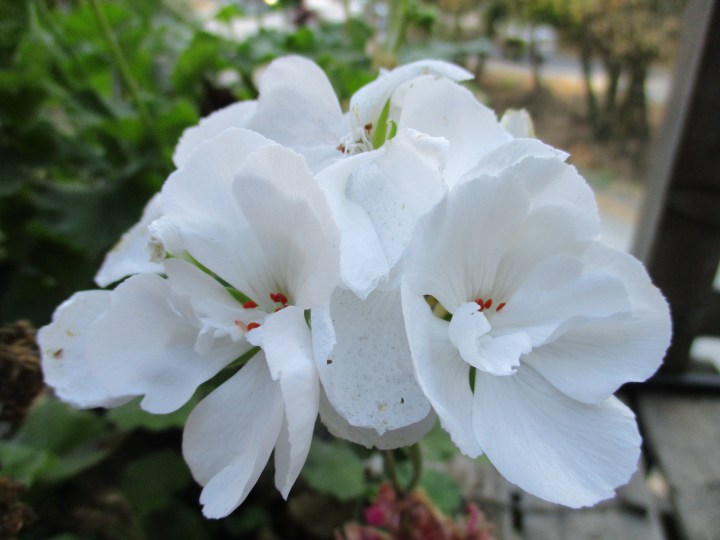
6. White zonal geranium happens to contrast well with the dark greens of landscapes in the redwood forests. Although it is my favorite of the four zonal geraniums that are blooming here now, my first two weedy zonal geraniums that bloom with unrefined reddish orange and garish magenta are still my two favorites.P81006+++++
This is the link for Six on Saturday, for anyone else who would like to participate:

https://thepropagatorblog.wordpress.com/2017/09/18/six-on-saturday-a-participant-guide/

Six on Saturday: Nursery Rhyme


I wish we had one. There is no rhyme and only a few disjointed reasons for what happens at the small storage nursery at the maintenance shops. This is nothing like acres of production nursery full of rhododendrons, azaleas, camellias and such. Nor is it like the retain nurseries that sell the rhododendrons, azaleas, camellias and such. This is merely a small yard where we store a few plants that get removed from landscapes, and plants that were recently procured from a nursery but have not yet been planted.

It is like the nursery version of the wood shop, with its collection of new lumber and old recycled lumber that gets used on the historic buildings. The plumbing shop contains all sorts of new plumbing and fixtures, as well as many old fixtures that might someday be useful. The landscape shop, which is separate from the nursery, is #7 of about twelve specialized shops used by the maintenance staff. The nursery might seem to be the most dysfunctional of the several shops, but only because plants are dynamic and need maintenance . . . and because, without necessary maintenance, a few have deteriorated, died or conversely thrived and made themselves at home.

Newly procured plants like #5 and #6 are easy to work with. They come in with a plan, and generally leave within a week or two as they get installed out somewhere in the various landscapes. Recycled plants like #1 and #2 were removed from the landscapes either because they were in the way of something, or because they proliferated too much, but could someday go back into other landscaped areas. Then there are a few plants like #3 and #4 that stay long enough to disperse roots through the bottoms of their cans and into the ground, essentially planting themselves on the spot because they got tired of waiting for a new home.

1. Peruvian lily was so prolific at the Post Office that many needed to be pulled. They were canned to be installed elsewhere, but no one wants to put them into a situation where they might proliferate like they did at the Post Office. Besides this pink, there is also peachy pink and yellow. All are the tall types that were originally grown fro cut flowers, rather than the lower mounding home garden varieties. Consequently, they need to be staked or caged like tomatoes so that they do not lay on the ground.P80623
2. Chrysanthemum was grown as annuals in a few various locations, but when they were removed to relinquish their space for more seasonable annuals, a few were canned. It is not always easy to discard certain perennials just because their time is up. The problem is that, although they look so good in the nursery, and bloom in spring instead of autumn, they do not get cycled back into the landscape. When new color is needed, it is often purchased and planted before the old stock is considered.P80623+
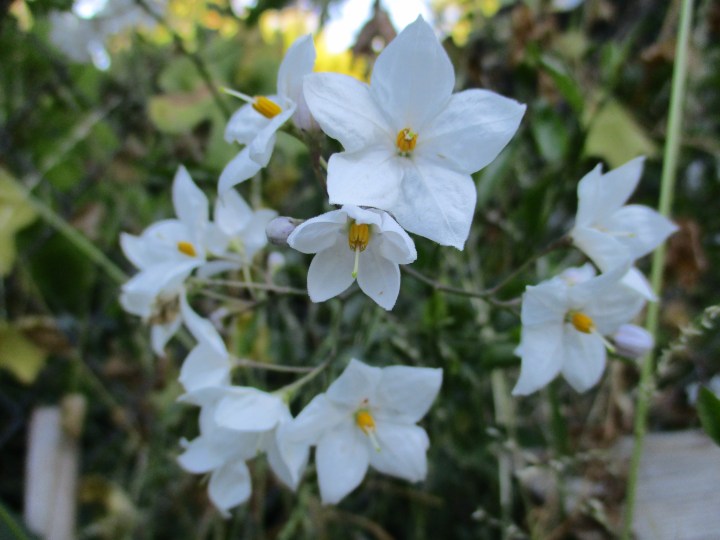
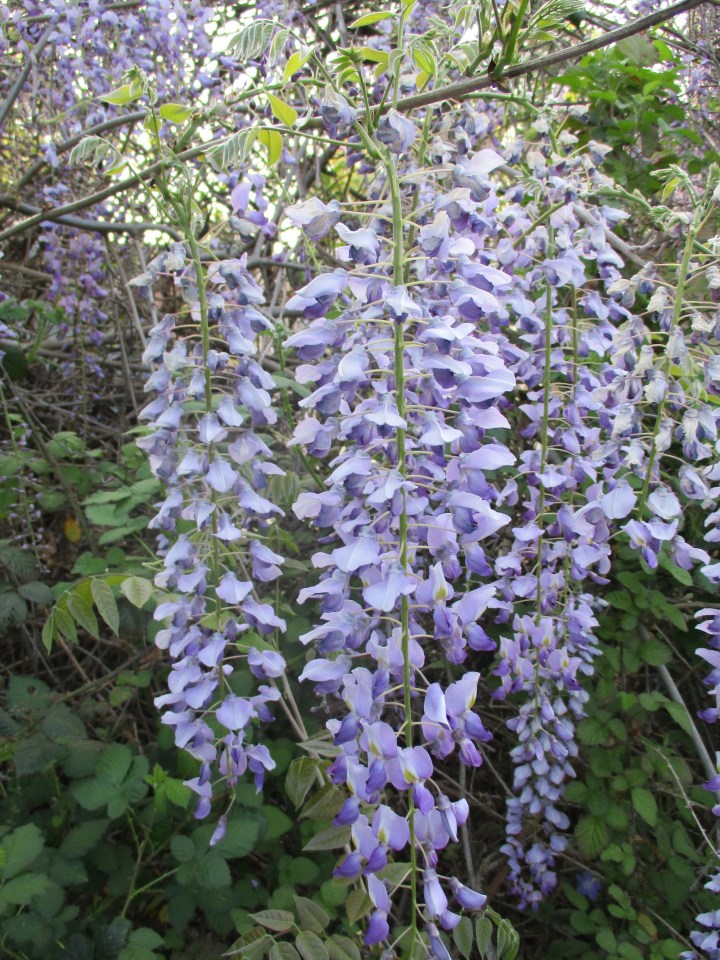
3. Potato vine has been growing like a weed on the cyclone fence and shade structure for so long that no one knows where it came from. I do not even know where the vines originate from. I would guess that somewhere under the overgrowth, the main canes emerge from the remains of a #1 can that the roots split apart years ago. This vine lives here now. Even if we had a spot for it, relocation is not practical. If it gets too overgrown, it might get cut back.P80623++
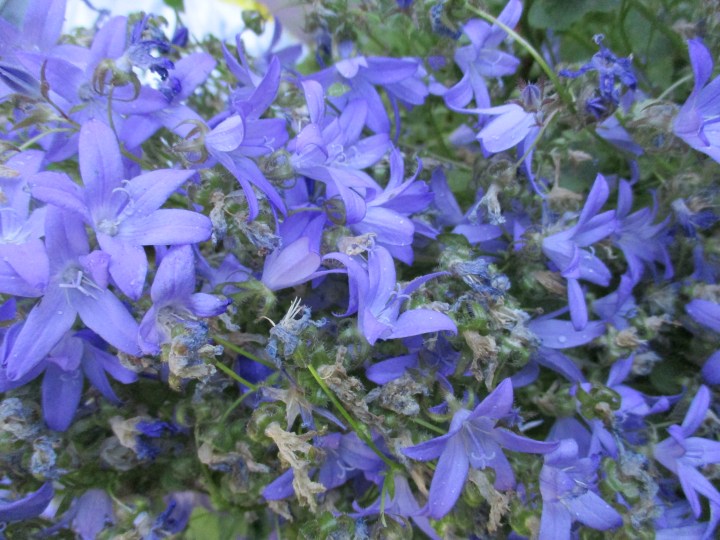
4. Campanula was probably in a 4” pot that got set into the #15 can of a ‘Black Lace’ elderberry and forgotten about. It might have been recycled, or it might have been something new that never got installed. Before the elderberry was relocated, the campanula had spread into the cans of other trees, so like the potato vine, it lives here now.P80623+++
5. Cone flower is easy. I just arrived from a nursery, and will be installed into a landscape in just a few days.P80623++++
6. Yarrow came with the cone flower, and will be planted nearby in the same landscape at about the same time.P80623+++++

This is the link for Six on Saturday, for anyone else who would like to participate:

https://thepropagatorblog.wordpress.com/2017/09/18/six-on-saturday-a-participant-guide/

High Fashion

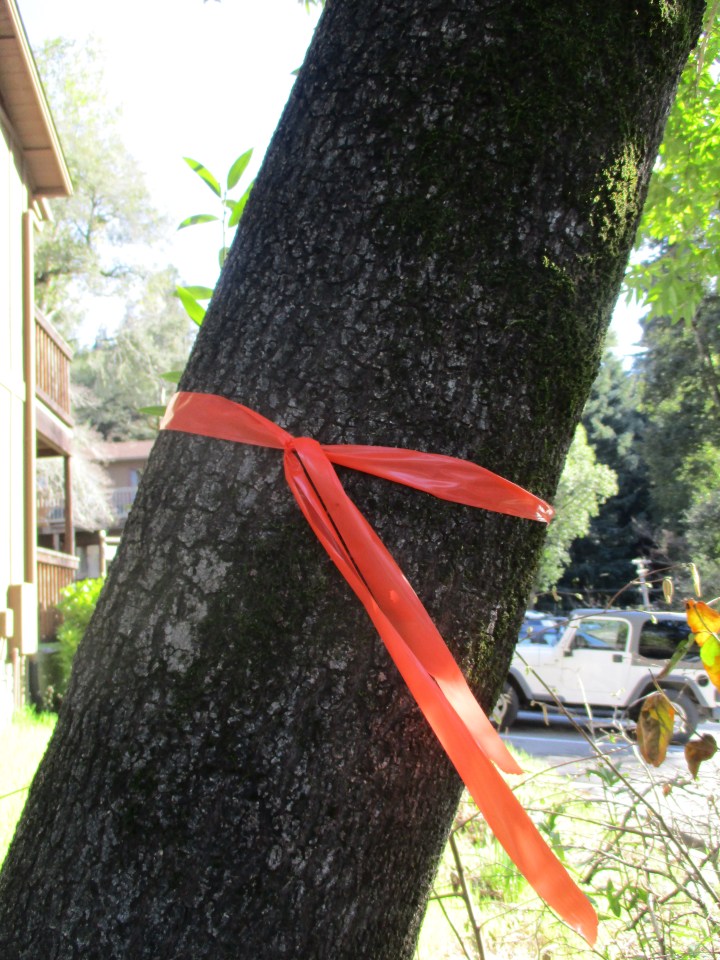
P80404This exquisite yet elegantly simple persimmon orange cravat is to die for! See how distinguishing it is for the Umbellularia californica sporting it! The brilliant color is so appropriate for a tree that needs to stand out in a crowd! How else would the arborists coming to cut it down find it? Yes, it is to die for!
This sort of high fashion is not normally so high. Trees that are tagged by surveyors are typically more discretely tagged with spray paint down near the ground. We just used this orange tape because we were only hastily marking a few or our own trees for removal, and nothing else.

The problem with tape in other situations is that it can be removed and applied to another tree. One of my colleagues sent his crew to cut down a street tree downtown that had been marked with orange tape, only to find later that the wrong tree had been cut down. The client had procured a permit for the tree that the arborist had tied the tape onto, but not another tree next to it that he wanted removed also. After the arborist marked the tree to be removed with tape and left, the client removed the tape, and tied it onto the tree that was to be preserved. Of course, the crew cut down the tree with the orange tape. The sleazy client did not want to pay for the removal because the wrong tree had been cut down, and then hired another tree service to legally remove the tree for which the removal permit had been issued, while leaving the first arborist liable for cutting down a protected tree without a permit. Fortunately, a neighboring merchant knew what the client was up to, saw him move the tape, and reported the incident to the responding code enforcement agents. The arborist got paid. The client got two huge fines; one for removing the tree without a permit, and one for the value of the rather valuable tree.

Tape works fine in the nursery because there is no one there to do anything sleazy. Besides, paint would be messy. Many years ago, we used red tape for stock that needed to be disposed of, orange tape for stock that needed to be shifted into the next larger size, and blue tape for stock that was sold and needed to be moved to a holding corral or loaded onto a delivery truck. Of course, different nurseries might use different colors and a different code.

For the sort of tree work that I was involved with, orange or red paint was used only on trees that were to be removed. It would not have been appropriate to tag good trees with paint! We usually marked trees for removal with a circled ‘X’ or just an ‘X’, in a very visible manner.

Surveyors use paint in a more discrete fashion, with single dots or other small markings of paint down near the ground. They use a variety of colors and a standardized code system. The paint is not permanent, and weathers away after a year or so. Some trees get tagged for pruning for clearance from utility cables. Some get tagged for clearance above roadways and sidewalks. A few that are hazardous or in need of such severe pruning that they will be ruined in the process get tagged for removal. Each color of paint means something different. Each specific tag is a message to whomever is responsible for the prescribed procedure. Some who are responsive to the coded messages work for the respective municipality. Others work for a utility company of some sort. They may not know what all the tagging means, but they recognize the meaning of the tags that are addressed to them.

That is why, when a client asks me what a particular tag on a tree means, I can only say that I do not know. I know what tags my associates use, and I can guess what a prominent circled ‘X’ or an ‘X’ means because I know of so many arborists who use that tag. I do happen to know what the bright orange tape around the bay tree above means because my associate put it there. However, I do not know what a blue dot, green dot, yellow dot, orange vertical line or red horizontal line mean.

Autumn Really Was For Planting

70531thumbIt is easy to see why there are optimum times to prune, and just as easy to see when pruning should not be done. Generally, deciduous plants prefer to get pruned while dormant and bare. They should not be pruned when actively blooming or making new foliage. Roots are of course not so easy to see. Do we really know what they are doing, or what sort of mischief they are getting into?
Autumn is the best time for planting most plants. They are less active than they had been earlier in the year, and many are going dormant. Either way, they do not need much. Once in the ground, their roots are kept cool and moist by the weather. They get to sit there all winter, as they slowly begin to disperse their roots to get ready for the following spring. It all fits into their natural life cycle.

Shopping habits, however, do not. By autumn, many plants are neither as pretty nor as tempting as they were earlier in the year. By winter, the weather keeps many of us inside, and out of nurseries. Now that it is spring, it is difficult to resist all the pretty plants that are blooming so delightfully. We are tempted to buy them compulsively, even if we have no immediate plans for them.

That is okay. We can make this work. Buying certain plants in bloom actually has certain advantages. It shows how and when particular plants bloom. This might be helpful when trying to decide between different cultivars of deciduous magnolias, flowering cherries, flowering crabapples or wisterias, for example. Besides, they will finish blooming quickly, and start to produce new foliage.

If planted before new foliage matures, new plants should be planted in cool weather, and maybe sprayed lightly with water after the roots get soaked in. This is best for drought tolerant plants like ceanothus, that want out of their cans (nursery pots) as soon as possible. If new plants stay in their cans long enough for foliage to mature, they must be watered carefully, but not kept saturated. The black vinyl cans should be shaded, since they get warm in sunlight.

Six on Saturday: Infirmary


Some of the plants that get recycled at work go to a small nursery next door to the shop until they find a new home. Many are out of season annuals that are really perennials. Some were not performing adequately, so got replaced. Some just needed to get out of the way for something else. Because most plants must recover from transplant, or whatever happened to them out in the landscape, the nursery is more of an infirmary. Only a few plants were recently purchased at a nursery for installation into a new project.

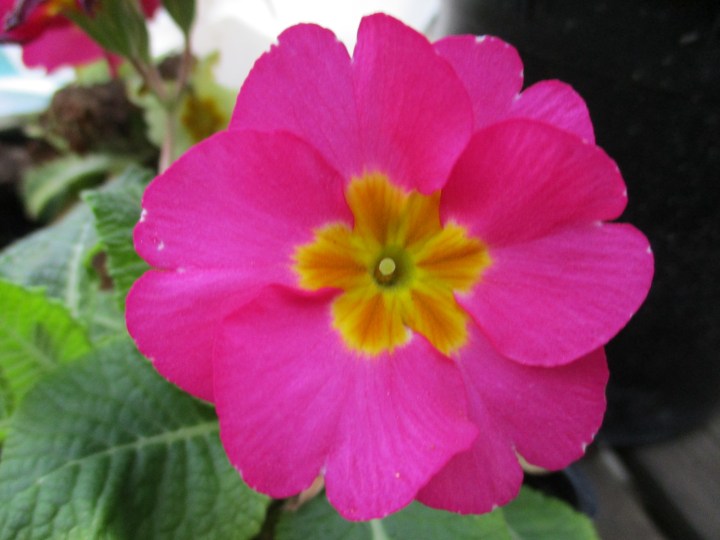
1. Primrose blooms in many colors besides white – the sequel to the sequel – https://tonytomeo.wordpress.com/2018/03/03/six-on-saturday-my-favorite-color-ii-the-sequel/P80317
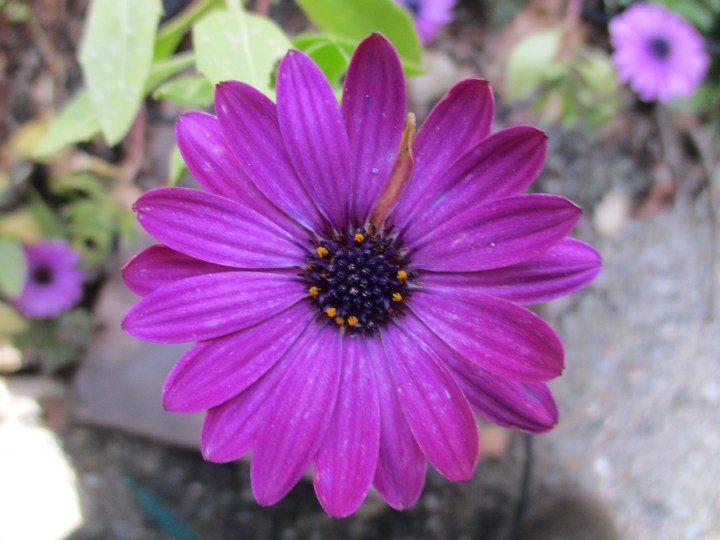
2. African daisy works well in the sunnier parts of our unrefined landscapes.P80317+
3. ‘Sunset Gold’ breath of Heaven is a new acquisition for a newly landscaped area; but was not my choice. This picture makes it look even worse than it really is.P80317++
4. Wallflower will go with the ‘Sunset Gold’ breath of Heaven.P80317+++
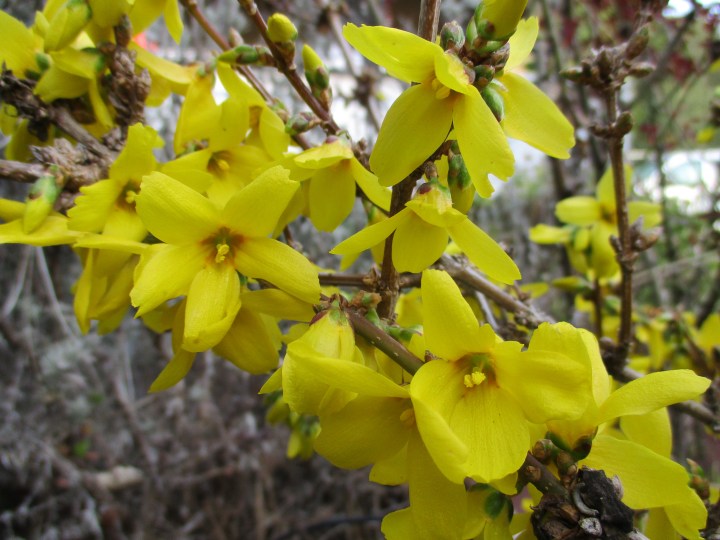
5. Forsythia is rare here. Besides this one, there is only one other in the landscape. This picture was taken earlier, while the forsythia were still blooming.P80317++++
6. ‘Black Lace’ elderberry is starting to foliate. I really want to try the berries from this ornamental cultivar, if it fruits, to see how they compare to the native blue elderberry.P80317+++++
This is the link for Six on Saturday, for anyone else who would like to participate:

https://thepropagatorblog.wordpress.com/2017/09/18/six-on-saturday-a-participant-guide/