Village Harvest

The Santa Clara Valley was formerly famous for fruit and nut production.

(This article is recycled from several years ago, so contains outdated information.)

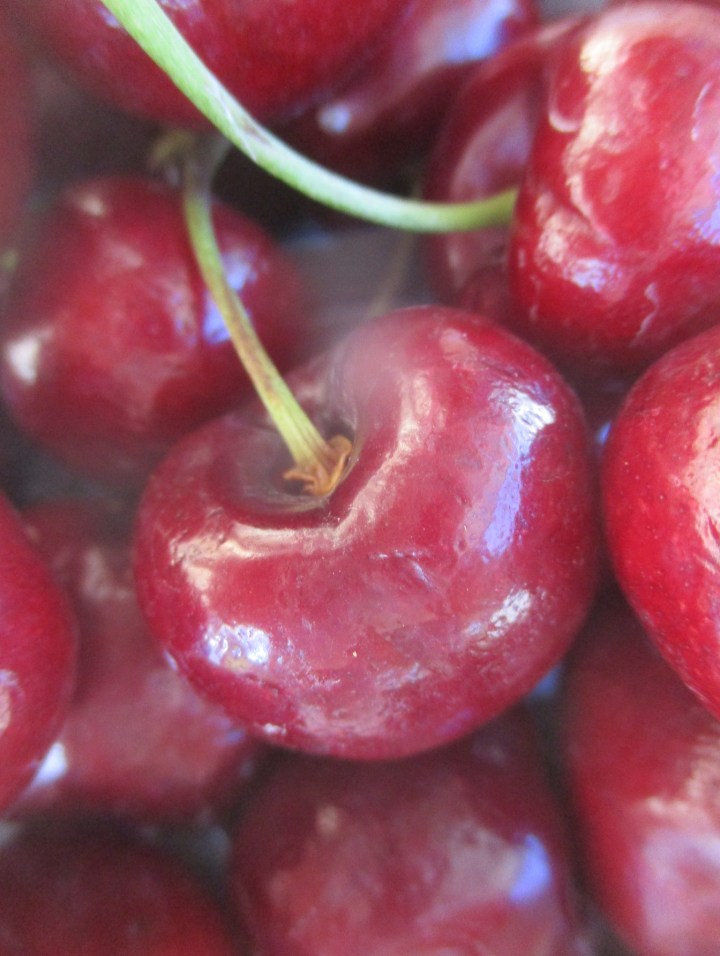
The vast orchards that formerly inhabited the Santa Clara Valley were here because this is among the best places on Earth to grow apricots, cherries, prunes, almonds and walnuts. Actually, there are not many fruit trees that would prefer to be somewhere else. Home gardens continue to produce the many traditional fruits, as well as many other types of fruit that were not so common in the orchards; such as citrus, figs, apples, pears, persimmons, avocados, peaches, nectarines and too many more to fit into a brief list.

Those of us who enjoy growing fruit trees do not need to be reminded of how well they do here. Some trees produce too much and  can become overwhelming. It is not always possible to can, dry, freeze or share with friends and neighbors all the fruit from the more productive trees. Leaving the fruit out in the garden is not only wasteful, but also bad for the garden, attractive to vermin, very messy and smelly.

Besides, there are other people in the community who could use it. During this past year, Village Harvest has harvested from local gardens, and distributed to those who can use the produce, approximately 156,000 pounds of fruit. The record for distribution of produce may be exceeded this year after apples, persimmons and citrus are harvested.

Volunteers make Village Harvest possible, by collecting excessive fruit from home gardens. Some of the people with productive trees like to retain some of the fruit. Volunteers are also welcome to take some of the fruit. The vast majority of fruit gets dispersed to others in the community who can use it.

(Most of the following information is outdated.)

The next apple harvest event in the Cupertino orchard on October 22 may no longer be able to accommodate additional volunteers; but the next major apple harvest in the Woodside Orchard on October 29 may still be in need of volunteers. Harvests take about three and a half to four hours, between 9:00 a.m. and 12:30 p.m.. Volunteers must be at least sixteen years old.

Volunteers can register for harvest events, or get more information at villageharvest.org. Early registration is recommended since space is limited. Volunteer instructions, including meeting location addresses will be e-mailed to volunteers a few days prior to each event. Those of us with excessively productive fruit trees who happen to be within range of harvest events can possibly make arrangements to get fruit harvested.

The next few neighborhood harvests will be on October 25 in Central San Jose, October 31 in Sunnyvale, November 1 in Central San Jose, November 6 in Mountain View, November 8 in Central San Jose, and November 14 in Sunnyvale. Sunnyvale harvests begin at 8:00 a.m.. Some harvests are repeated. For example, the Central San Jose harvests are weekly on Tuesday.
Pecan

Pecan is the Official State Tree of Texas.

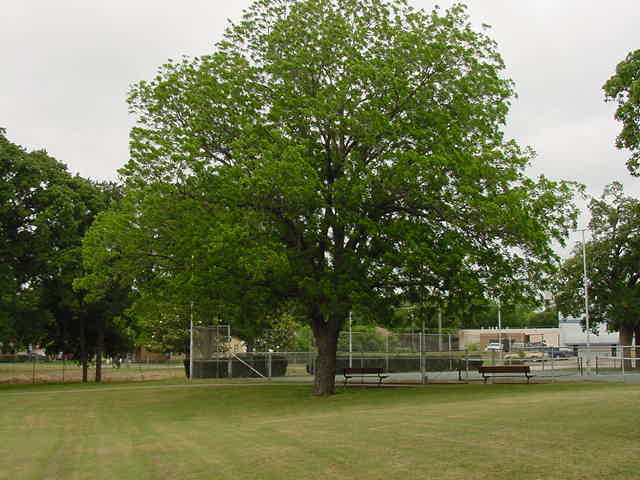
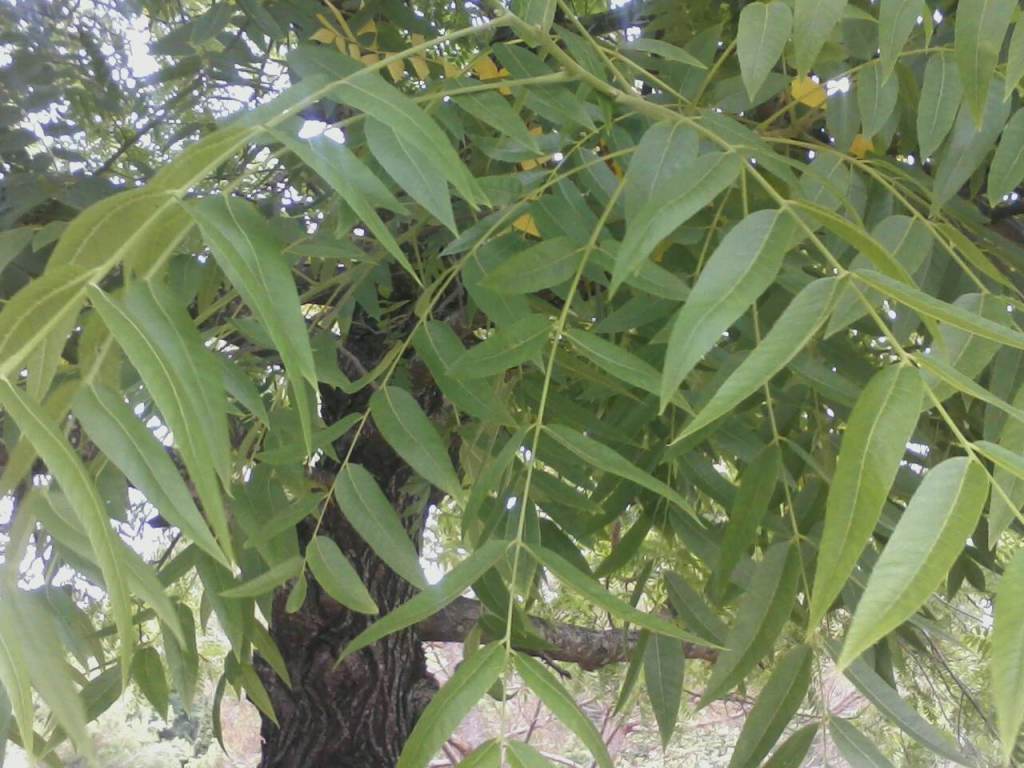
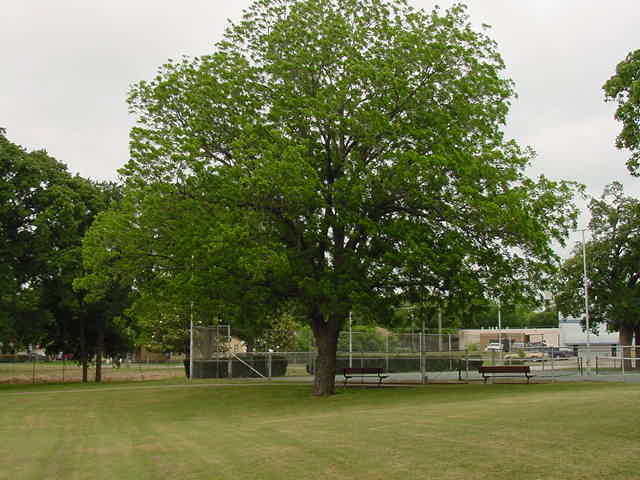
Texas selected a distinctive state tree; the pecan, Carya illinoensis. It is happy in the south and middle mid-west, where naturally grows about seventy feet tall. It can get almost as large here, so is best in big spaces. Summers are a bit too mild for reliable nut production in autumn, but single trees can sometimes make plenty. Two different trees (to pollinate each other) can actually be quite productive, although not quite as well flavored as in warmer climates. The pinnately compound leaves have about eleven individual leaflets that are about five or six inches long. Shade is not too dark.

Almond / Almond

Pote-8-o or pote-aht-o? Tome-8-o or tome-aht-o? Ape-ricot or app-ricot? Pee-can or pi-kahn? What about “almond”? This is different from the distinction of plums and prunes. It is a matter of pronunciation. Is “almond” pronounced like “salmon” or “common”? Those who grow them, and likely know better than the rest of us, commonly pronounce it like “salmon”. Most of the rest of us pronounce it like “common”. The nuts are harvested by machines that shake them from their trees, which supposedly shakes the ‘ell out of them, which sort of makes sense. Although the “l” is silent within both pronunciations, it might be slightly more so within the “common” pronunciation. Everything associated with almonds prior to harvest, such as their orchards, trees, bloom, unharvested nuts and their collective industry, commonly employs the “salmon” pronunciation, in which the “l” may be slightly less silent. Everything associated with harvested and processed nuts and their products, which are what most of us are familiar with, more commonly employs the “common” pronunciation. For the pair of trees in my garden, I use the “salmon” pronunciation. For their nuts, I use the “common” pronunciation.

Almond

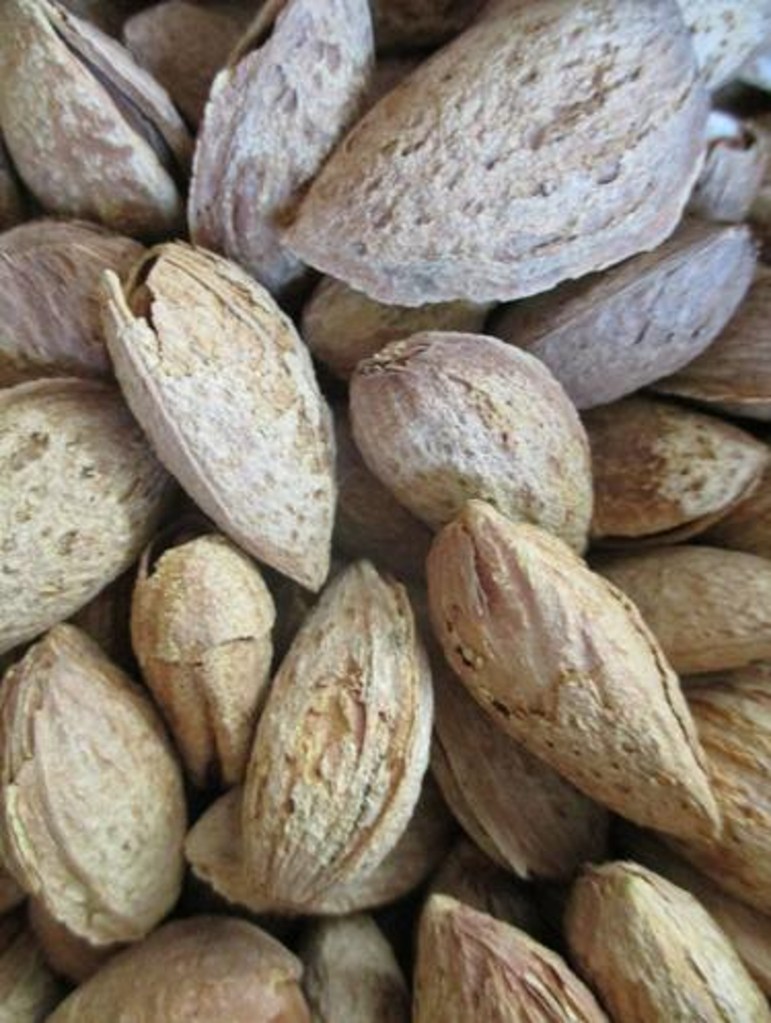
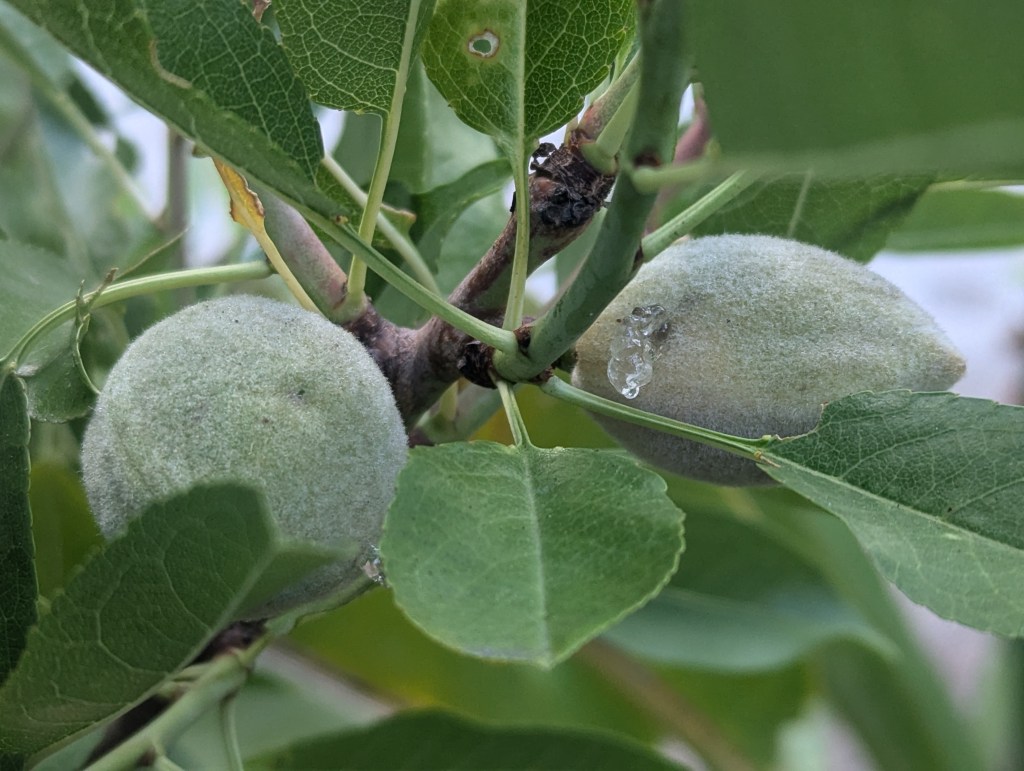
Almonds are stone fruit without fruit.

Is the pronunciation of the “al” of almond comparable to that of “salmon” or “palm”? That is about as controversial as the pronunciation of pecan. While pecan is related to walnut, almond, Prunus dulcis, is a stone fruit. That can be controversial also. Unlike other stone fruit, its mesocarp develops as leathery hulls instead of edible flesh. It is fruitless stones.

Like other stone fruit trees, almond trees need maintenance while dormant during winter. Bare root trees that are now available should be in the ground before their spring growth. Established trees need winter pruning before warming spring weather stimulates bloom. Almonds ripen for late summer though, after plums, apricots, peaches or other stone fruit.

Almonds are not as heavy as other stone fruits, and need no gentle handling. Therefore, winter pruning of almond trees may not need to be very aggressive. Such trees can grow as small shade trees with splendid white spring bloom. It is easier to shake unreachable nuts from tall trees than to pick them anyway. A few old fashioned cultivars need compatible pollinator cultivars.

Pecan

It is ‘PEEkan, not ‘piKAHN’!

Texas selected a distinctive state tree; the pecan, Carya illinoensis. It is happy in the south and middle mid-west, where naturally grows about seventy feet tall. It can get almost as large here, so is best in big spaces. Summers are a bit too mild for reliable nut production in autumn, but single trees can sometimes make plenty. Two different trees (to pollinate each other) can actually be quite productive, although not quite as well flavored as in warmer climates. The pinnately compound leaves have about eleven individual leaflets that are about five or six inches long. Shade is not too dark.

Black Walnut

Most black walnuts were not planted intentionally, but grew from the roots of old English walnut trees.

Although native, most local black walnut trees, Juglans hinsdii, are secondary growth from the rootstock of what were once grafted English walnuts, or descendents of such trees. (English walnut trees are grafted onto black walnut understock.) However, the massive old trees that flank the old Monterey Highway south of San Jose were planted as large shade trees nearly a century ago. They are now about sixty feet tall, with lofty broad canopies. Their foot long leaves are pinnately compound, with about eleven to nineteen slightly dentate leaflets that are about three or four inches long. The hard nuts and thick husks are far too messy for refined gardens.

English Walnut

English walnuts are popular among squirrels.

It has been in cultivation for several thousands of years. Throughout that time, it escaped cultivation to naturalize in many regions between the Balkans and the Himalayas. It most likely originated from a much smaller natural range within Persia. An interesting certainty of its dubious original range is that English walnut, Juglans regia, is not actually English.

English walnut likely arrived at Spanish Missions of California prior to 1800. It became a major agricultural commodity of both the Sacramento Valley and the San Joaquin Valley. A few old trees survive within urban areas that were formerly orchards of the Santa Clara Valley. Newer trees are unfortunately rare within home gardens because they get messy.

English walnut trees rarely grow more than forty feet high and wide here. Their abundant foliar, floral and fruit debris is toxic to young plants though, and stains hardscapes. Each type of debris sheds during a different season. Squirrels might claim most or all nuts, but drop shredded hulls. The deciduous and pinnately compound leaves can be a foot long.

Chestnut

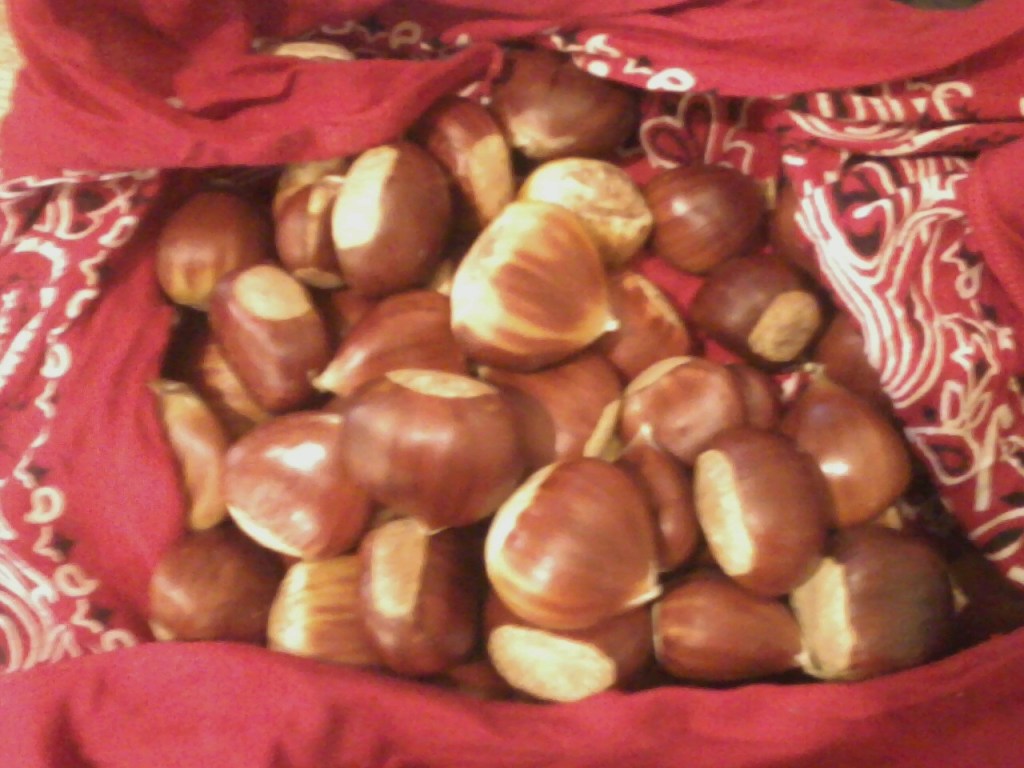
These chestnuts that may later be ‘roasting on an open fire’ are now falling from the trees that produced them over summer.

Of all the nut trees that are actually quite easy to grow, the chestnut, Castanea (various specie and hybrids), has somehow become the most obscure. It probably lost popularity while native forests in eastern North America were being annihilated by rampant disease (which never became such a threat in the west), but may be unpopular simply because it can get so big. Mature trees are regularly more than seventy feet tall and nearly as broad.

Chestnut trees are productive for those who like the nuts, but simply very messy for those who do not. The smooth meaty nuts are contained within offensively spiny husks known as ‘burrs’. A few varieties of chestnuts fall freely from the burrs. Most need to be separated from their burrs even after they fall to the ground. The evenly serrate leaves will soon be turning amber gold or brown for autumn.

English Walnut

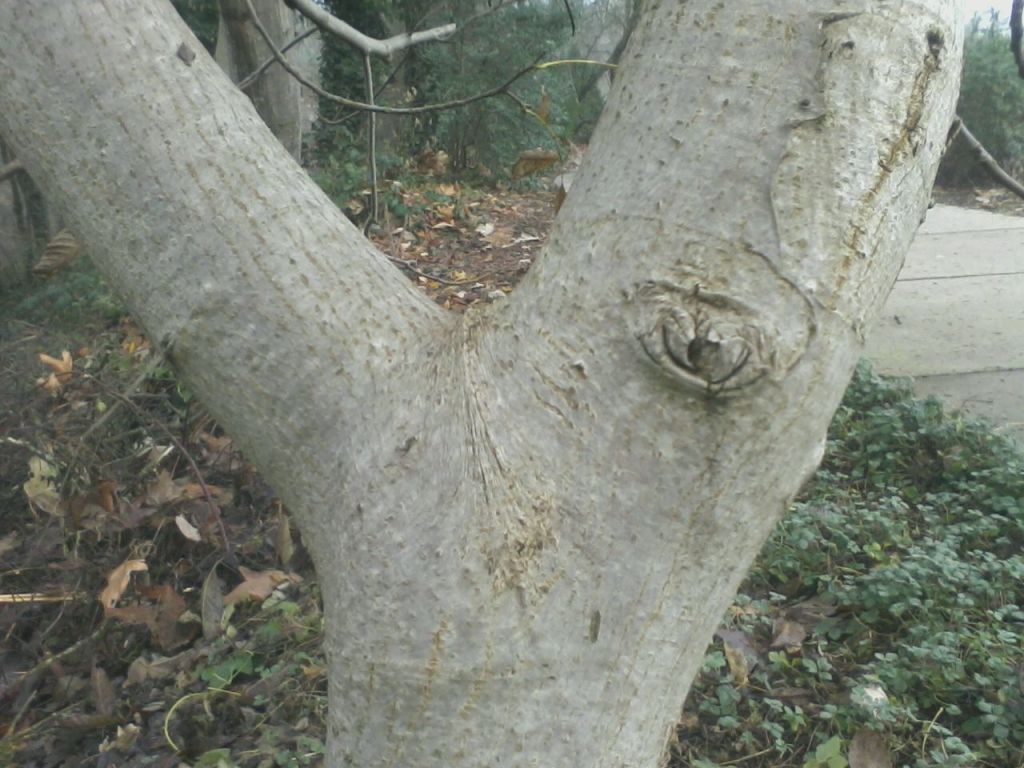
It may take a few years for a walnut tree to grow into a sculptural specimen with striking white limbs.

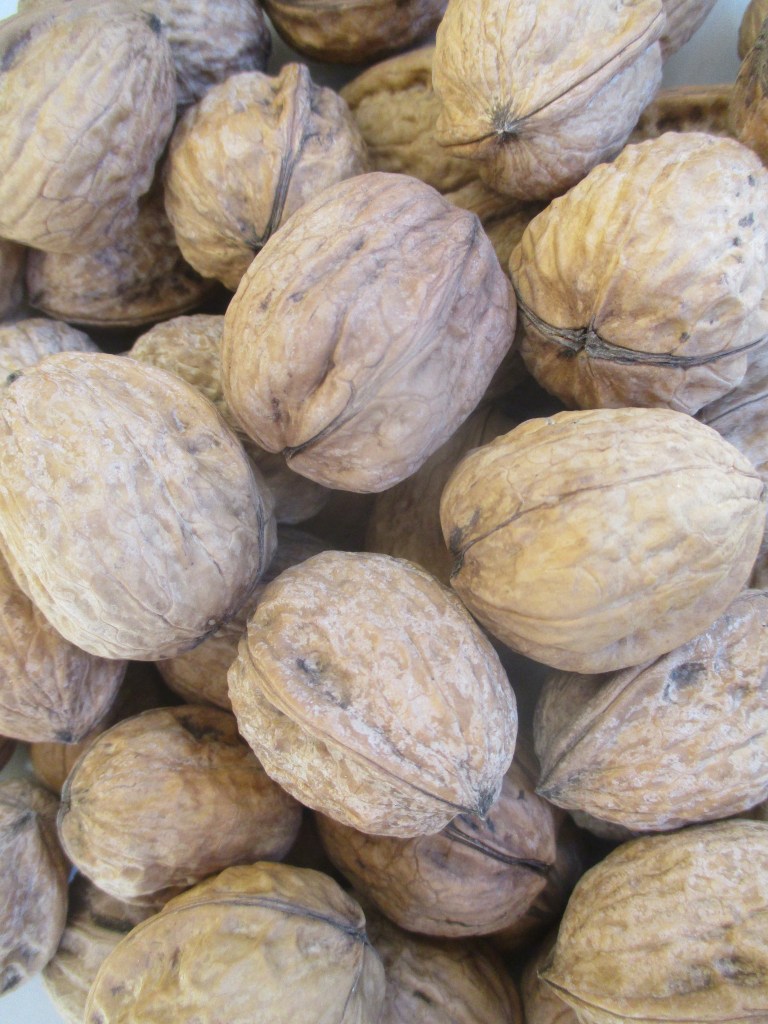
Like many ‘English’ plants, the English walnut, Juglans regia, is not actually from England. It is Persian, so is quite comfortable here in California. However, the foliar litter and husks contain a natural herbicide that can make nearby seed grown plants and annuals uncomfortable. Planted trees are typically grafted onto native California black walnut understock (roots) that is more resistant to disease, and improves stability.

Mature trees can be as tall as seventy five feet with trunks as wide as five feet, but are almost always significantly smaller, and even proportionate to urban gardens, although notoriously messy with bloom, leaves and nuts. The pinnately compound leaves are generally less than a foot long, with five to nine leaflets that can be between two to six inches long, and about two inches wide. The bark is notably smooth and gray until trees get quite old and furrowed.

Pecan

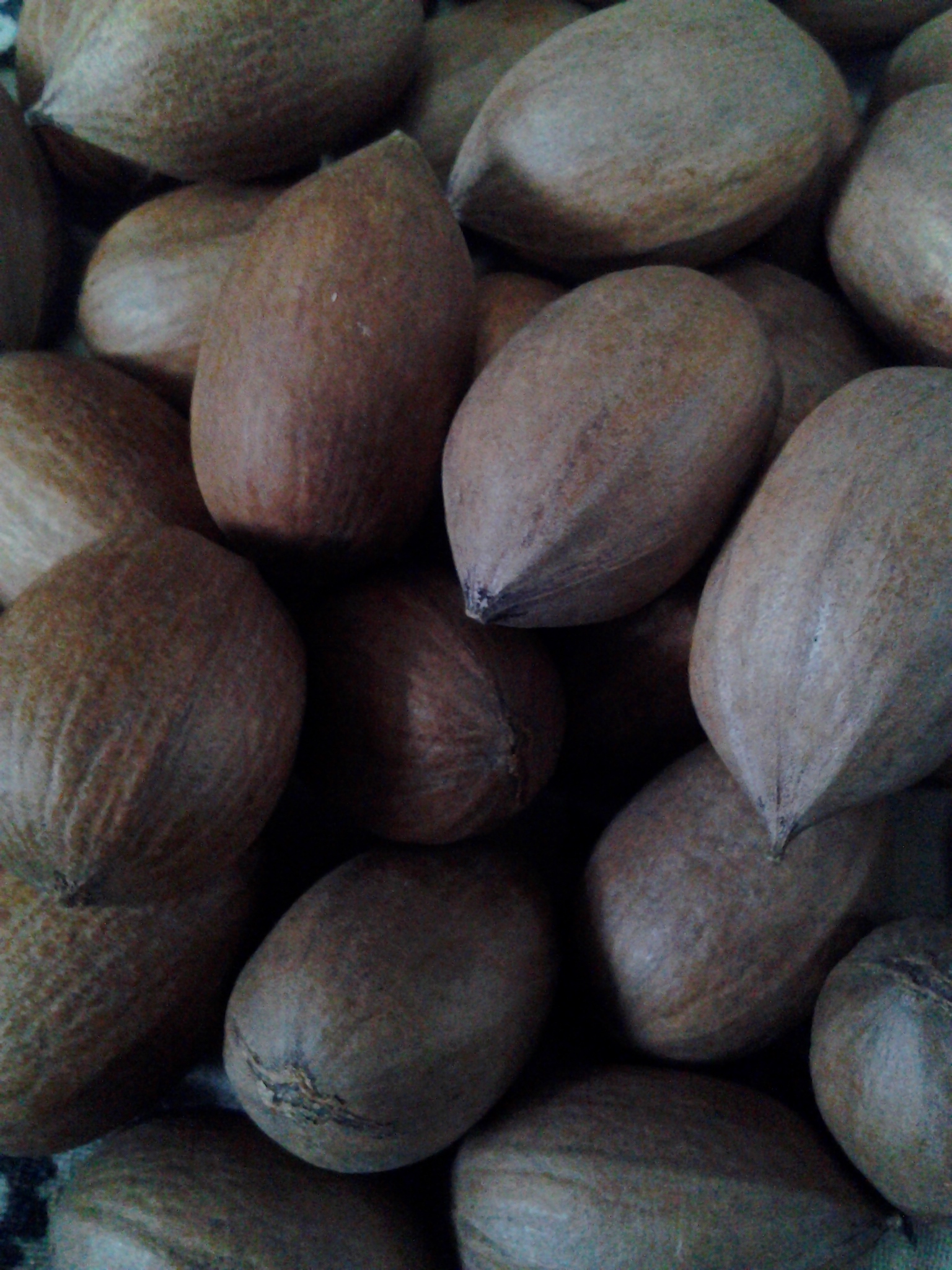
41210One might surmise that a tree that is resilient enough to be the state tree of Texas is not too discriminating. If it can take the heat and humidity of the Lone Star State, it can make it anywhere! However, pecan, Carya illinoinensis, actually prefers heat and humidity, and is bored with the mild local climate. The nuts and the mess that comes with them are actually less abundant than they would be in the Gulf Coast States. The deciduous foliage is not quite so colorful in autumn.

A mature pecan tree may stay a low as fifty feet, or get twice as tall. The height is usually nearly double the width. Generous watering can cause roots to buttress and displace nearby pavement. Most local pecan trees that are intentionally planted are garden varieties that were bred for bigger pecan nuts. Seed grown trees tend to produce nuts that are nearly comparable to the nuts they were grown from. The pinnately compound leaves have nine or more leaflets that are about two or three inches long.