Autumn Fever

‘Purple Ribbon’ sugarcane has been growing like a weed, but should go into the garden.

Autumn is the time for planting. So is winter. It is difficult to resist new acquisitions for the garden. However, there is already so much in the nursery that needs to be planted into the garden that I should not consider acquiring more.

I like to think that I purchase almost nothing for the garden. I grow just about everything that I want to grow from bits and pieces from other gardens. I purchased sugarcane, though, because I could not find any of a cultivar that I wanted in another garden. Now that it has been growing like a weed here, I returned to the online catalogue of one of the nurseries that sells sugarcane to see what else I want.

Planting Justice grows and sells many fruit and vegetable plants that I want to purchase. Because the primary nursery is in Oakland, only about an hour and a half away, I could purchase directly, rather than by delivery. My wish list from them includes medlar, yacon, currant, sunchoke, lingonberry, moringa, kangaroo apple, raisin tree, earth chestnut, chestnut, cinnamon vine, tree collard, sea berry, aronia and highbush cranberry. The twenty items that I want cost only $316, but are contrary to my tradition of purchasing almost nothing for the garden. Fortunately and unfortunately, I will most likely refrain for another year, when I expect the garden to be refined enough to accommodate them.
Sugarless

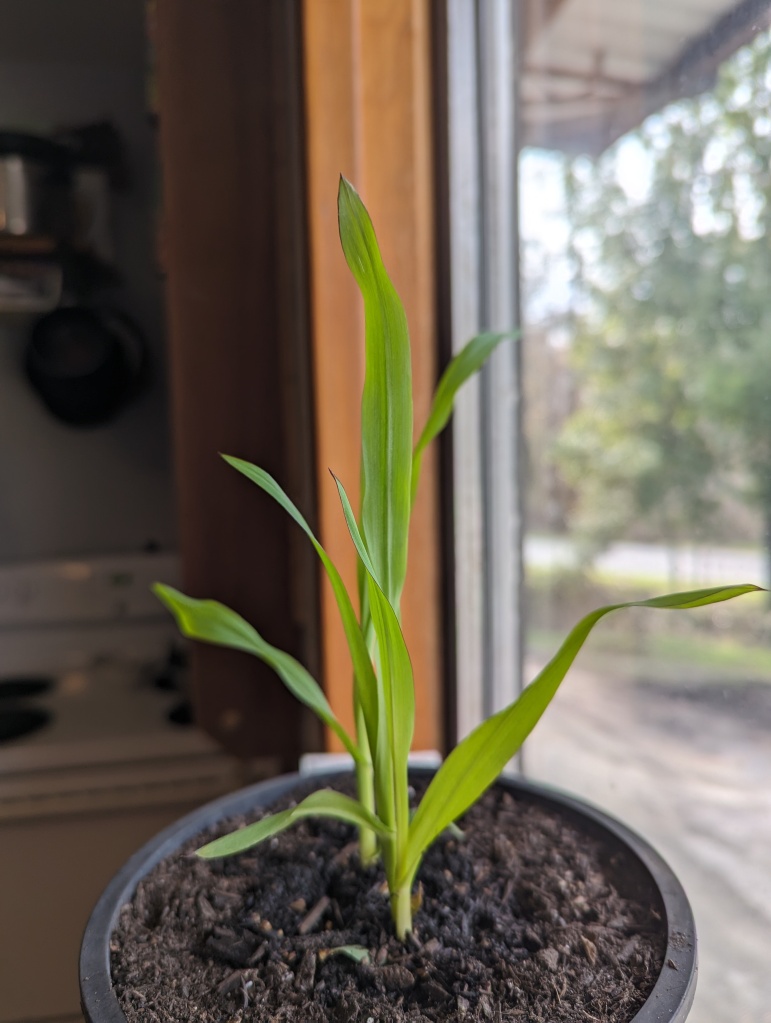
‘Pele’s Smoke’ is an ornamental sugarcane that should bronze with better exposure.

The internet is surprisingly deficient. It contains an amazing abundance of information, including a majority of information that most of us should not want. No one can filter out all the previews to disturbingly violent cinema, disturbingly idiotic political scandal, disturbingly aberrative sexual content, and so on. Yet, some of the simplest information remains mysteriously elusive.

I grow ‘Pele’s Smoke’ sugarcane only because it is what I obtained first. I grew it from scraps that I pruned from a specimen in the garden of a colleague in the Los Angeles region. It grows like a weed. I happen to enjoy growing it. It is primarily an ornamental cultivar though. With its bronze foliage, it is intended to be prettier than it is functional. Although it is considered to be productive, the canes are small and relatively tough.

I would like to grow a variety of sugarcane that is more utilitarian than ornamental. There are many varieties within three types of sugarcane that I should be able to choose from. Chewing cane is the sort that develops a soft and chewable pulp within its canes that can be chewed like a confection, leaving less inedible fibrous pith than other varieties. I do not want to bother growing chewing cane. Syrup cane may produce a bit more fibrous pith, but generates an abundance of sugar syrup, which unfortunately does not crystalize as readily as that of other varieties. I do not want to bother growing syrup cane. Crystal cane is the sort that produces the most sucrose, which should crystalize more readily than the combinations of sugars that other varieties produce. That is what I am still trying to find! Several varieties of sugarcane are available online, but very few are classified as chewing, syrup or crystal canes! I am still searching!

Alocasia or Colocasia? II

Alocasia or Colocasia or both?

While it seems that anything can be found online, it is baffling to see what can not be found online. Horticultural concerns seem to be particularly lacking. Perhaps those who enjoy horticulture innately dislike the internet. Perhaps they are merely too busy in their gardens to bother getting online too much.

‘Pele’s Smoke’ has been one of the more popular cultivars of sugarcane for home gardens for quite a while, but I can not determine how wide its canes are. Eucalyptus pulverulenta and Eucalyptus cinerea seem to have traded their names since the 1980s, but now, no one seems to know which is which, or if either ever was the other. No one can explain how seed from sterile banana cultivars are available online. Anyone can say anything. There is no accountability.

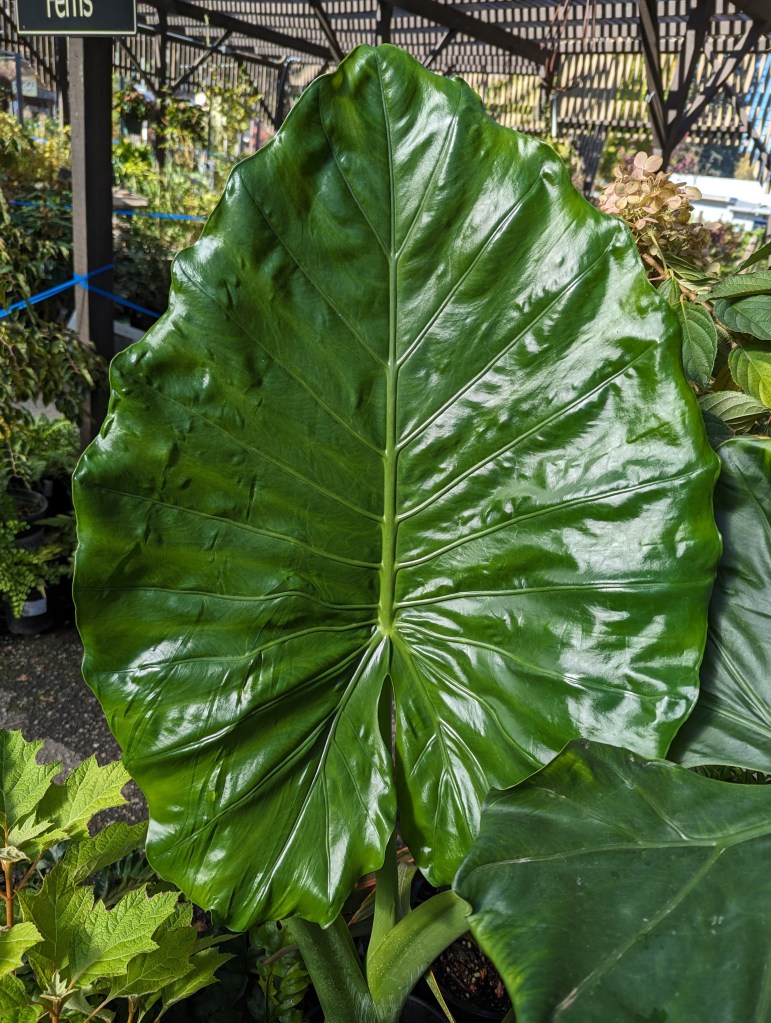
Alocasia and Colocasia are as baffling now as they were when I mentioned the difficulty with choosing between the two about a month ago. I am still inclined to procure Colocasia gigantea for a riparian landscape at work. However, I am now inclined to also procure Alocasia macrorrhiza. Both are quite appealing. I think that I would like to grow both within the same landscape so that I can compare them later. It would be easier than trying to compare vague information about them that I can find online. Realistically, since I would grow them from corms, both are quite inexpensive. If necessary, I can later relocate whichever is less appealing than the other.

This would not be my first occasion of not relying on the internet. I am working with ‘Pele’s Smoke’ sugarcane presently, and will be pleased with it regardless of how it behaves. I grow both Eucalyptus pulverulenta and Eucalyptus cinerea; although by mistake, since I procured one because I thought it was the same as the other. All of the cultivars of banana that I grow were procured as pups or plugs, since I do not trust seed. Ultimately, I will be pleased with both Alocasia and Colocasia.

Catalog Shopping Has Certain Limits

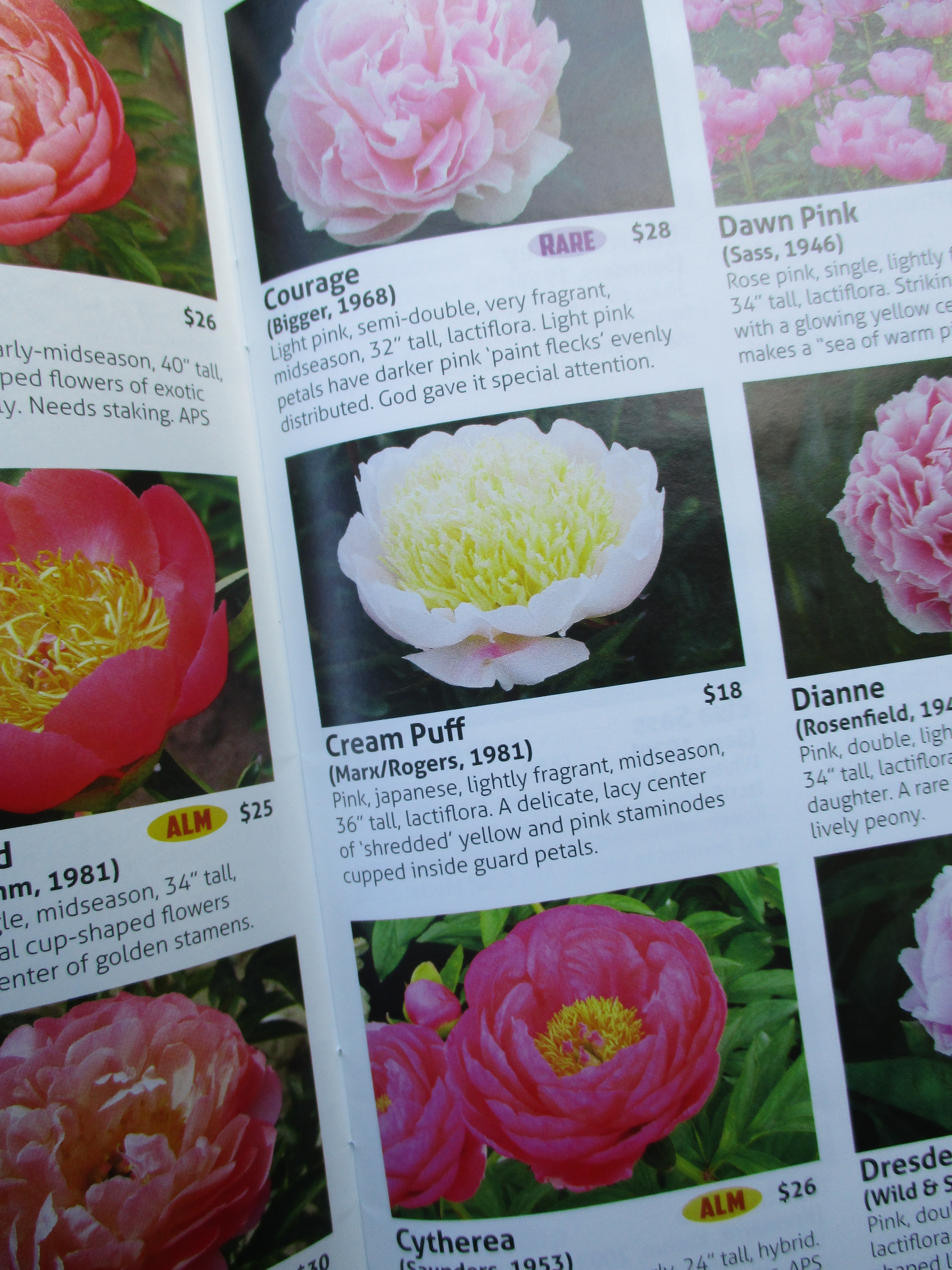
70621thumbThe temptation is unbearable. The catalog of Adelman Peony Gardens, either in print or at www.peonyparadise.com, shows how spectacular peony blossoms can be. There are one hundred and seventy-eight exquisite pictures of the cultivars available for mail order on online purchase. The only problem, and it is a big one, is that peonies are recommended for USDA Zones 2 through 8.

So maybe some of us in Zone 9 might conveniently neglect to read that part of the catalog. Maybe some of us believe that since peonies can not read that part of the catalog, they might not mind getting cheated out of the winter chill they need for good dormancy. Somehow, many of us are able to grow peonies where they have no business growing. Perhaps we should keep that a secret.

So many more plants are available online and by mail order than can be found in nurseries. Most of them are appropriate to local climates. Some are not. Catalogs from the best nurseries are careful to make that distinction obvious by describing what zones their plants are recommended for. That can be a lot of information for nurseries that have many different types of plants available.

Plants that have potential to transmit disease or become invasive might be banned from certain states. Nurseries can send plants to inappropriate climate zones for clients who really want them, but can not send plants to states where they are banned. Black elderberry plants can not be imported into California. Only black elderberry plants that were grown in California can be sold here.

Unfortunately, many plants are sold online without any regulation whatsoever. Anyone can sell any extra seeds, seedlings or cuttings online, whether or not they actually know what the seeds or plants are. Some plants are not really what they were described as when sold. Many others get sent to climates where they will not be happy, and might not even survive. Worst of all, there is serious potential for plants to be vectors of disease and insect pathogens, or to become invasive in formerly uninfested regions.