
Sunday Best – Tulip (March 22)

California poppy is the Official State Flower of California. It is native to all but Yuba, Sierra and Imperial Counties within California. It is also native to portions of Oregon, Washington, Nevada, Utah, Arizona, New Mexico, Alaska, Sonora and Baja California.
Although rare elsewhere, a few isolated colonies inhabit several other states and Canada. It naturalizes efficiently in many other regions of other continents.
California poppy naturally blooms almost exclusively orange. Modern varieties that bloom yellow, red, lavender and creamy white were developed relatively recently. Naturally white and lavender California poppies are extremely rare in the wild. To Californian children, they are supposedly good luck, like-four leaf clovers are to Irish children. I remember finding a few of each at the Portola Monument in Montara when I was a kid. I did not see either again until I found a white California poppy at work a few years ago. Of course, modern varieties take the fun out of that tradition.
California poppies are now blooming splendidly. Unfortunately, they are neither as common nor as profuse as they were only a few decades ago. They are displaced by naturalized exotic vegetation, including naturalized forage crops and cover crops. Also, exotic vegetation, including flowers within home gardens and orchard trees, distracts the pollinators that they rely on for pollination. We dispersed California poppy seed at work while the weather was still a bit rainy, so should get more blooming later in spring. Hopefully, they will disperse a bit more seed for the following spring, although I suspect that they would already be naturally established there if it were a good situation for them.
California poppies can get somewhat unkempt within refined landscapes, particularly if they stay long enough to disperse their seed. That is why we want more within unrefined areas.
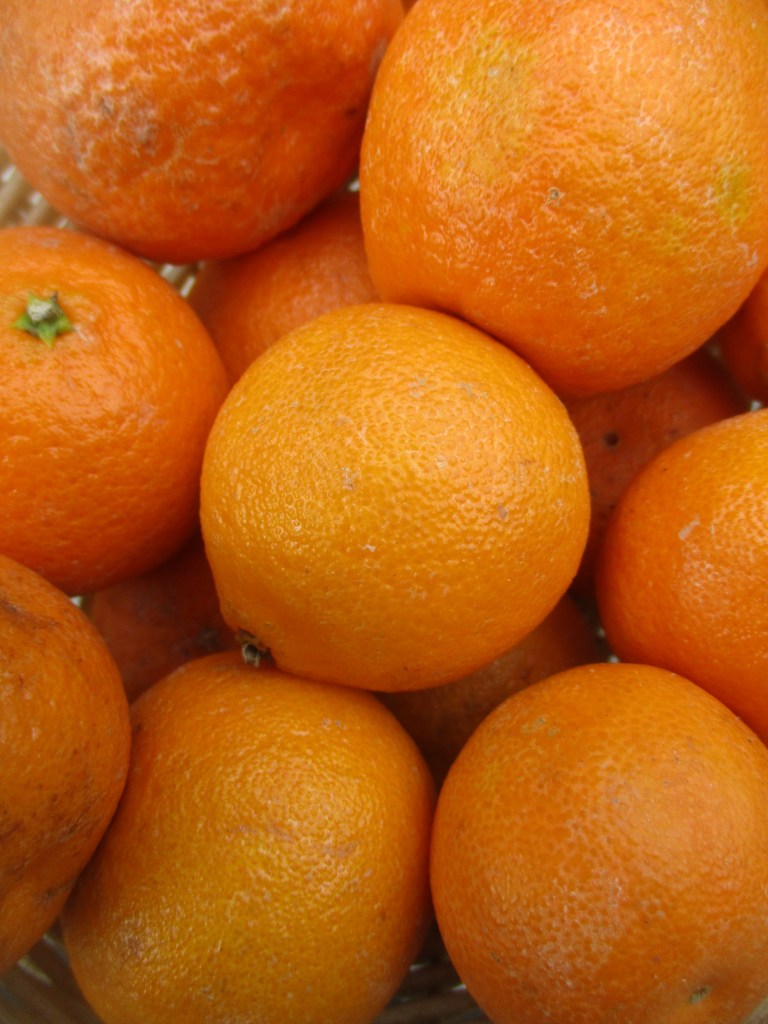
Winter seems like an odd time for fruit to ripen. Winter weather is cool enough to inhibit vascular activity in plants. That is why most plants are dormant to some extent through winter. Most familiar fruit trees are deciduous, so defoliate in winter chill. Stone fruits ripened through early summer. Pome fruits ripened through late summer and autumn. Nonetheless, citrus fruits are now in season.
The various citrus fruits and their cultivars ripen at various times through their season. Like stone fruits and pome fruits, they are on distinct schedules. Furthermore, climate affects ripening. Citrus fruits that ripen earlier than other cultivars in a particular climate may ripen after the same other cultivars in another climate. A few cultivars produce sporadically, or notably later than citrus season.
Such cultivars are justifiably popular. For example, ‘Eureka’ lemon is a mutant of ‘Lisbon’ lemon. ‘Lisbon’ lemon works well for orchards because all the fruit ripens within a limited season. ‘Eureka’ is more practical for home gardens because it instead produces sporadically throughout the year. A few fresh lemons are always available. The winter crop is abundant, but not too overwhelming.
Mandarin oranges are the first citrus fruits to harvest, even if they are not the first to completely ripen. Because their rinds fit so loosely, they are the most perishable of citrus fruits. They will oxidize and dehydrate before they rot. Tangerines are the same, since they are merely American descendants of Mandarin oranges. ‘Rangpur’ lime is not a lime at all, but a sour Mandarin orange hybrid.
Oranges, lemons and grapefruits, although ripening now, can remain on their trees for quite a while. The tartness of grapefruits mellows with age, and might be preferable after a few months. The same applies to the acidity of lemons. However, too many lingering citrus fruits can inhibit bloom. Some limes are supposedly best before totally ripe. All citrus fruits stop ripening when harvested. Juice of the various citrus fruits can be frozen for storage if necessary.
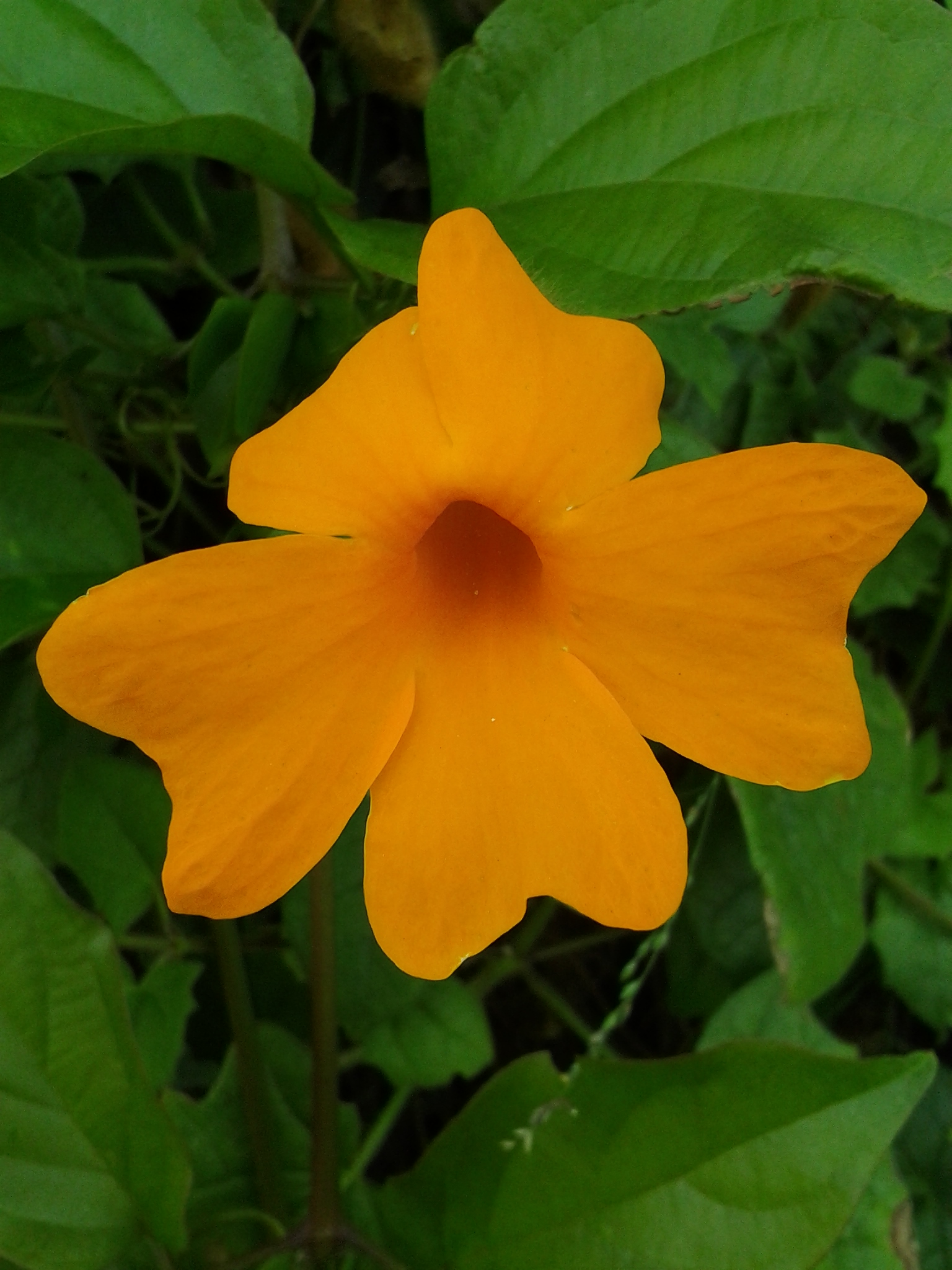
Since it rarely gets cold enough here to freeze the foliage and stems, clock vine, Thunbergia gregorii, provides very orange flowers throughout the year, and will bloom more profusely in summer. It is very similar to the more traditional black-eyed Susan vine, but the flowers lack the prominent black throats. Relative to most vines, orange clock vines is rather docile. The wiry vines are happy to climb to the height of first floor eaves, but do not go much farther. Without support, the vines grow as small scale ground cover.
New plants prefer full sun exposure, even if they later choose to spread into partial shade as they grow. Shade inhibits bloom. Once established, orange clock vine does not need much water, and can actually survive in abandoned landscapes. Overgrown or neglected vines can get weedy in spots, especially if not regularly watered. Fortunately, they are easily renovated by severe pruning at the end of winter. Even if pruned almost to the ground, vigorous vines regenerate very efficiently.
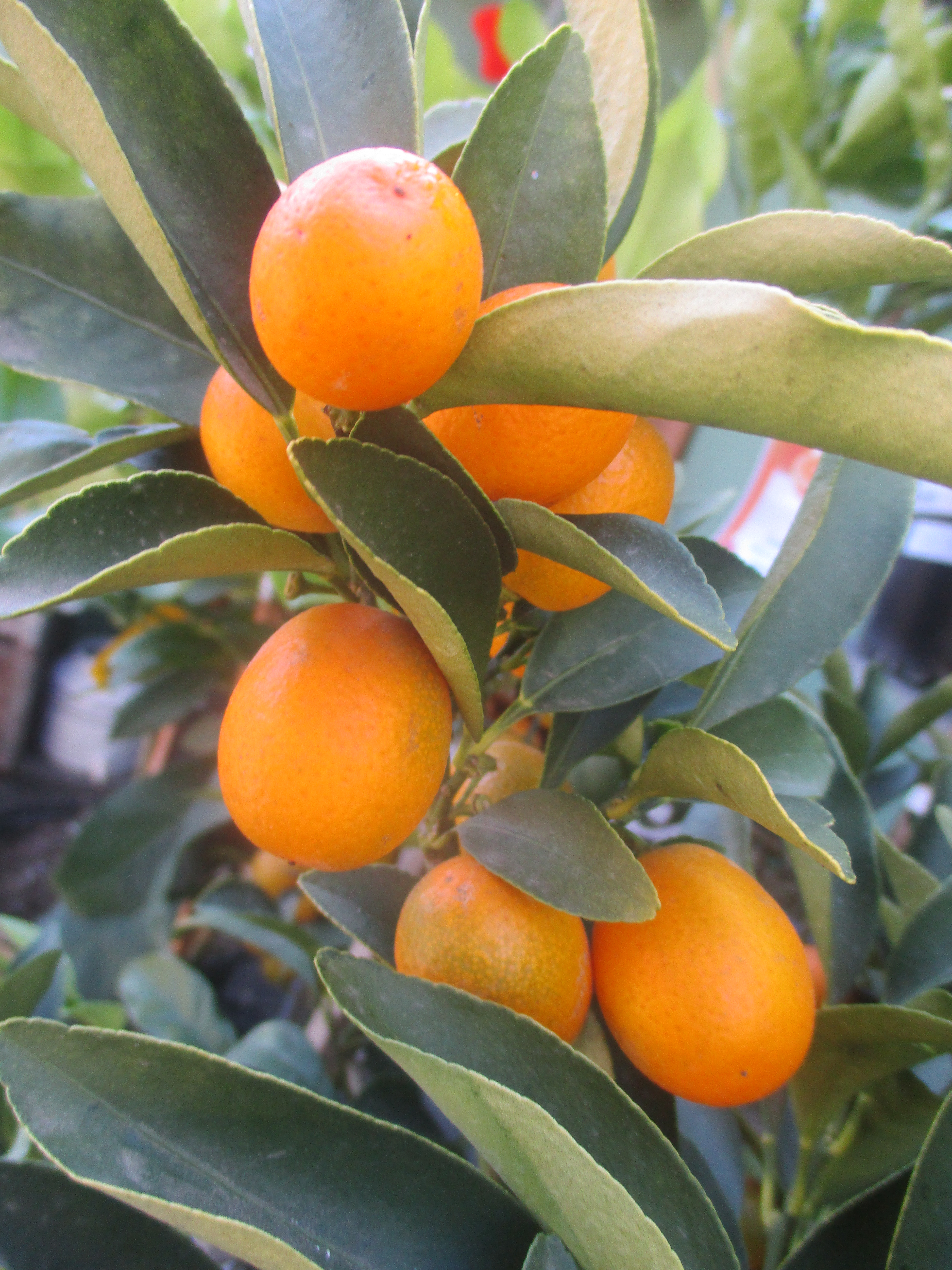
Citrus seem like such summery fruits. Chilled lemonade and lemon meringue pie are best during warm weather. There are certainly plenty of lemons that ripen randomly throughout the year, and plenty that last for months on their trees. Most limes, some grapefruits and ‘Valencia’ oranges will be around in summer too. Otherwise, most citrus are at their best right about now, through winter.
Mandarin oranges are traditional ingredients of well stuffed Christmas stockings. Where winters are cold and snowy, far from where they grow, they seem contrary to their natural ripening season.
Of all the citrus, they are the most perishable, so are best as they ripen. Their loosely fitting skins, that are so easy to peel, allow them to oxidize and dehydrate more readily than other citrus fruits.
Tangerines are just Mandarin oranges that were developed in North or South America. ‘Rangpur’ limes are actually sour Mandarin oranges that are somewhat less perishable because their skins happen to fit more firmly. Calamondins, which are odd but likely natural hybrids of Mandarin oranges and kumquats, are diminutive tangy fruits that do not last much longer than Mandarin oranges.
‘Bearss’ limes are preferably harvested right as they grow to mature size, but just before they ripen completely. Their flavor mellows as they ripen and yellow. Fortunately, they develop sporadically through an extensive season, so can be available any time fresh limes are desired. Grapefruits can be left intentionally to mellow on their trees after ripening, although this tactic can inhibit bloom.
Otherwise, many citrus fruits can last for more than three months on their trees without consequence. Some improve with mellowing. ‘Meyer’ lemons, which are a hybrid of an orange and a lemon, ripen like richly flavored lemons, and then mellow like very tart oranges. Since citrus fruits stop ripening when harvested, it is advisable to taste one before harvesting too many that are not ready.
Some ripened Mandarin oranges may have slight green blotches. ‘Valencia’ oranges may be slightly yellowish.
 Tony Tomeo