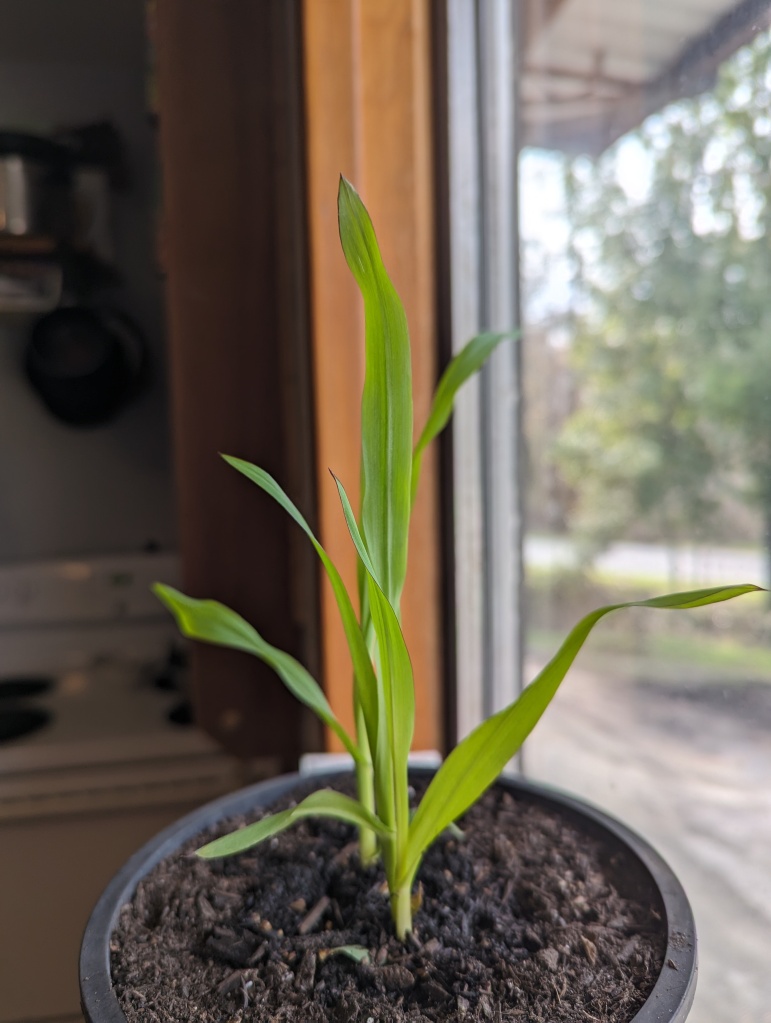
Sugarless

‘Pele’s Smoke’ is an ornamental sugarcane that should bronze with better exposure.

The internet is surprisingly deficient. It contains an amazing abundance of information, including a majority of information that most of us should not want. No one can filter out all the previews to disturbingly violent cinema, disturbingly idiotic political scandal, disturbingly aberrative sexual content, and so on. Yet, some of the simplest information remains mysteriously elusive.

I grow ‘Pele’s Smoke’ sugarcane only because it is what I obtained first. I grew it from scraps that I pruned from a specimen in the garden of a colleague in the Los Angeles region. It grows like a weed. I happen to enjoy growing it. It is primarily an ornamental cultivar though. With its bronze foliage, it is intended to be prettier than it is functional. Although it is considered to be productive, the canes are small and relatively tough.

I would like to grow a variety of sugarcane that is more utilitarian than ornamental. There are many varieties within three types of sugarcane that I should be able to choose from. Chewing cane is the sort that develops a soft and chewable pulp within its canes that can be chewed like a confection, leaving less inedible fibrous pith than other varieties. I do not want to bother growing chewing cane. Syrup cane may produce a bit more fibrous pith, but generates an abundance of sugar syrup, which unfortunately does not crystalize as readily as that of other varieties. I do not want to bother growing syrup cane. Crystal cane is the sort that produces the most sucrose, which should crystalize more readily than the combinations of sugars that other varieties produce. That is what I am still trying to find! Several varieties of sugarcane are available online, but very few are classified as chewing, syrup or crystal canes! I am still searching!
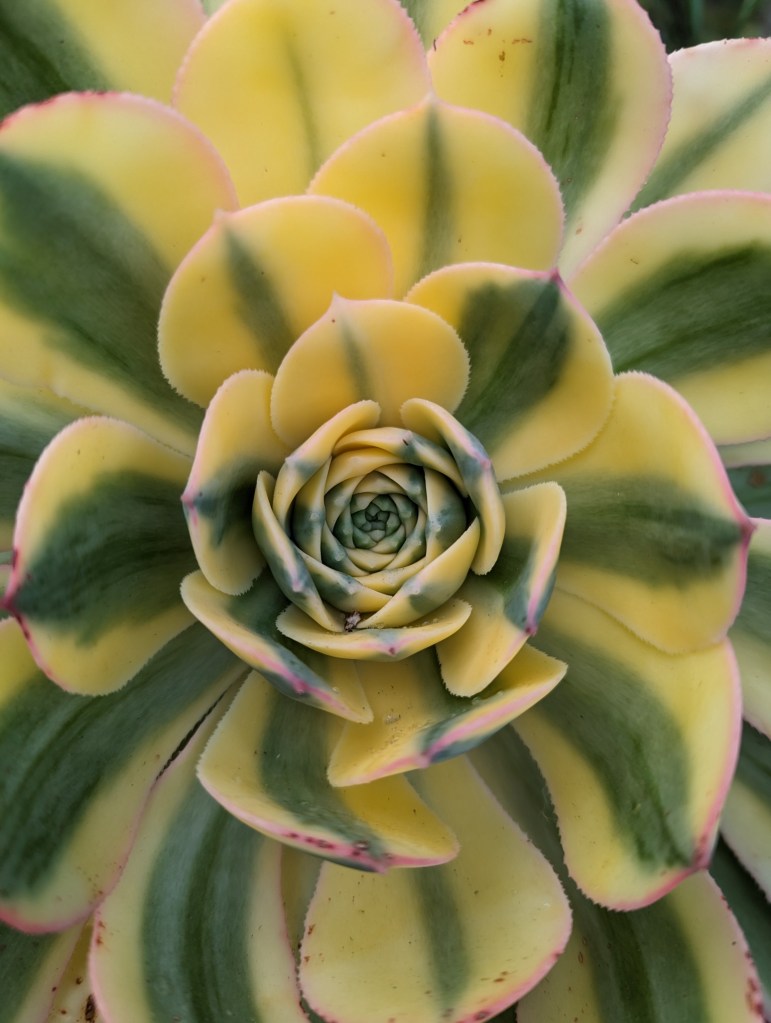
Ornamental Foliage Augments Spring Color

Variegation contrasts nicely with darker foliage.

Spring bloom is the most colorful color in the garden here. It is not the only color though. Some deciduous foliage will provide color at the opposite end of the year. Bark can add a bit of color, particularly while deciduous trees defoliate for winter. So can colorful fruit. Furthermore, ornamental foliage, both deciduous and evergreen, can contribute color.

Ornamental foliage is not the same as deciduous foliage that is colorful only for autumn. The distinction is that it is colorful from the beginning. Generally, it is most colorful while fresh during spring. If both deciduous and colorful for autumn, it changes from one color scheme to another. If evergreen, it may remain more or less colorful throughout the year.

Ornamental foliage of this sort displays various colors and patterns. Variant colors might be yellow, orange, red, purple, blue, pink, bronze, white or gray. They can be variegation such as stripes, margins, blotches, spots, patterns or blushes. Alternatively, they can be monochromatic. Most fade to some degree during the warm and dry weather of summer.

The colors of ornamental foliage are not as vibrant as floral color. They are not intended to attract pollinators. In fact, most of such color serves no practical purpose. Blue, gray or white foliage mostly originates from high altitudes or harsh desert climates. It reflects a bit of excessive sunlight to avert scorch. Most other ornamental foliage is mere mutation.

In the wild, such mutant foliage is generally a disadvantage. White portions of variegated leaves contain less chlorophyll. Consequently, they can not photosynthesize as much as green portions. Such foliage only perpetuates unnaturally within cultivation because it is appealing. Some mutant ornamental foliage can revert to more vigorous greener growth.

Ornamental foliage can be annual, perennial or woody. New Zealand flax, canna, coleus and caladium are the most variably colorful. Coprosma and various pittosporum are a bit more limited. Euonymus, hosta and ivy display white or yellow variegation. Smoke tree, redbud and some maples are surprisingly diverse. Agave blue spruce and some junipers can contribute gray and blue. There are too many options to mention.