Palm Trees Are Specialized Trees

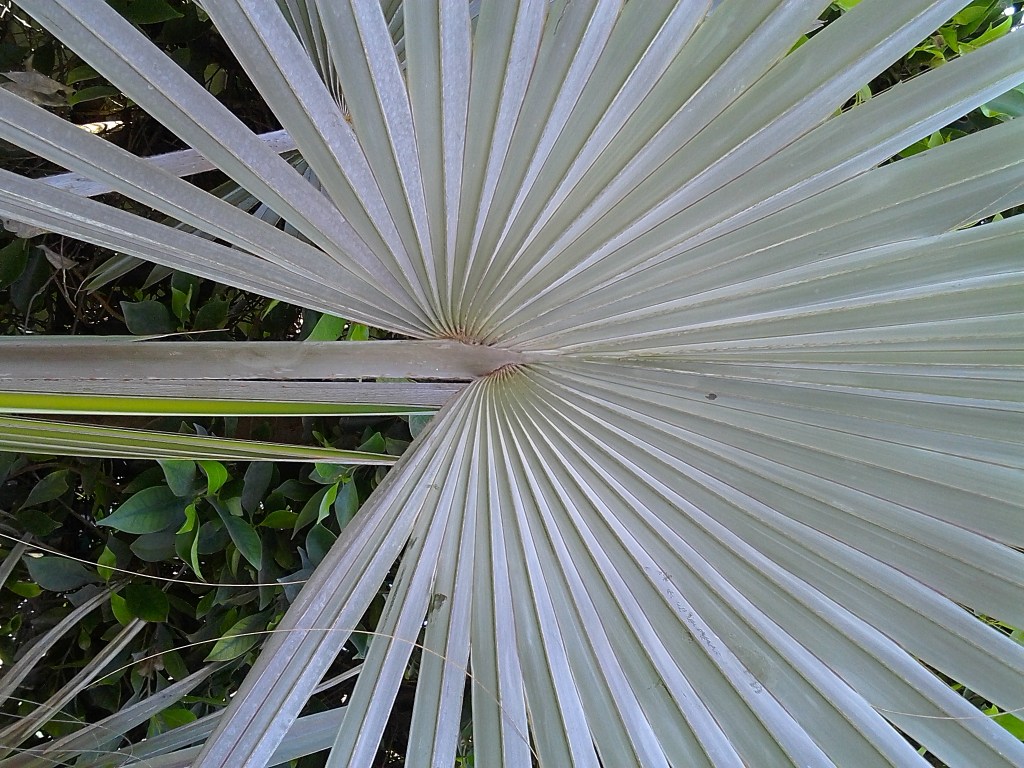
Many palms have palmate leaf form.

A tree is a woody perennial plant with a single tall trunk and branches. Banana trees and tree ferns lack both branches and wood. Arboriform yuccas develop branches but are not woody. Palm trees are no better. Some develop a few trunks but without branches. Doum palms that develop branches are extremely rare in California. No palm is actually woody.

Palms are trees only because of their size and form. In other words, most are big and tall. The most compact of palms are no smaller than Japanese maples, which are also trees. Realistically though, palms are merely large to very large perennials. They are monocots like grass, bamboo or cordyline. Some horticulturists classify them as herbaceous trees.

Only California fan palm is native to California, and only to remote desert oases. All other palms are exotic. Spanish Missionaries imported date palms to produce dates within arid regions. Only a few other palms were similarly utilitarian. The majority are desirable only for their distinctive form, texture and evergreen foliage. They are genuinely ornamentals.

All palms are evergreen. Fan palms produce rounded palmate leaves on sturdy petioles. Feather palms produce elongated pinnately compound leaves on sturdy rachises. Many fan palms also produce wicked teeth on their petioles. Many feather palms also produce dangerously sharp spines on the bases of their rachises. Even lush palms can be mean.

Not many palms get big enough to provide much shade. Many types are shady in groups though. Without branches, palms are not conducive to containment or redirection. Some eventually grow tall enough to shade neighboring gardens instead. Unfortunately, palms that encroach too closely to high voltage cables require removal. They do not go around.

Palm trunks do not widen as their canopies grow higher above. Palms with plump trunks grow at ground level for several years before they can launch. Their single terminal buds must first grow as wide as their mature trunks will ever get. Their foliar canopies likewise grow no broader than they were when they launched. They only grow higher. Most large palms develop distended basal adventitious roots that can get quite wide, though.
Date Palm

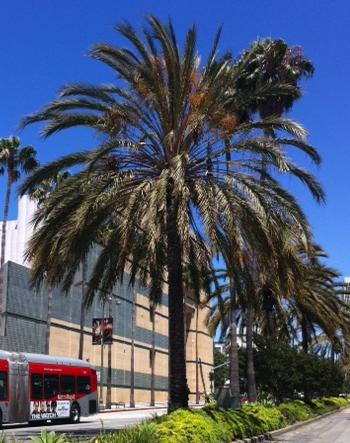
Many relocated mature date palms were recycled from date orchards.

It seems that recycled large date palms, Phoenix dactylifera, became trendy in the past few decades while vast date orchards around Las Vegas were displaced by urban sprawl. They are stately trees with airy but bold rounded canopies between twenty and thirty feet wide. Mature trees are more than fifty feet tall on single trunks. Varieties with multiple trunks are shorter and rare. The ten to twenty foot long leaves are pinnately compound with folded foot long leaflets, and nasty basal spines.

Each date palm tree is either male or female (dioecious). Orchards are almost exclusive to fruiting female trees with only a few male trees grown separately for their pollen, which gets applied manually. Without male pollinators, recycled formerly productive female trees are fruitless, and therefore not messy.

Date palms may have been in cultivation for nine thousand years! The Judean date palm was grown from seed that was lost in storage for two thousand years, which (until recently) was the oldest known viable seed!

Trees Naturally Dominate Their Gardens

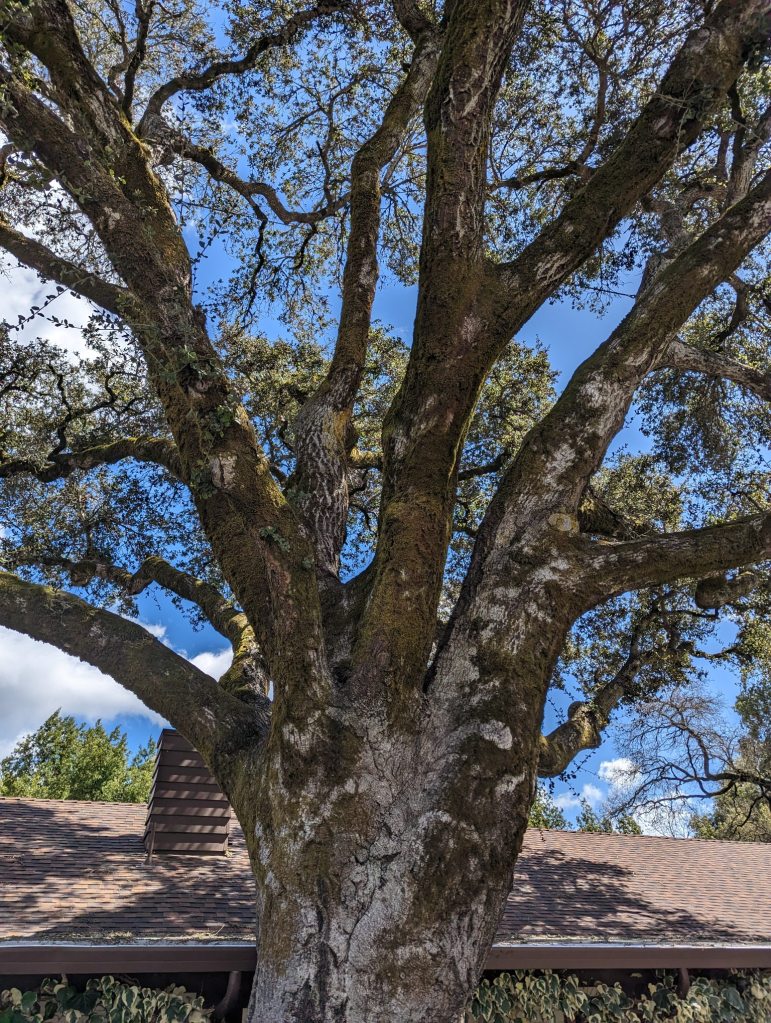
Oaks slowly become grand and sculptural.

Trees are generally the most significant living components within a home garden. Even treeless gardens benefit from nearby trees. Some old redwoods contain more wood than the homes that they shade. Some old oaks inhabited their gardens centuries before their gardens did. With few exceptions, nothing in a garden is as big or permanent as a tree.

Japanese maples, citrus trees and other small trees can be among the exceptions. They might be smaller than some of the shrubbery they share their gardens with. Papayas and other herbaceous trees can also be exceptions. Some live for only a few brief years. The definition of what a tree is can be vague. Variable interpretations complicate this matter.

A tree is a woody perennial plant with a single tall trunk and branches. However, banana trees develop several unbranched herbaceous trunks. Palms and tree ferns are neither woody nor branched. Arboriform yuccas are no woodier than palms. Many trees develop many trunks. Banyans use roots as trunks. This definition does not even describe ‘tall’.

Ultimately, the characteristics of a tree are more important than its definition. Shade trees near homes should be deciduous to let warm sunshine through in winter. Evergreens are better for obscuring unwanted scenery throughout the year. Evergreens are messier than most deciduous vegetation though. Their shedding is not so limited to distinct seasons.

Fruit trees are some of the most misunderstood inhabitants of home gardens. Not many grow big enough to function as shade trees. Fruit is difficult to harvest from those that do. Almost all require intensive and specialized pruning and maintenance. Few get it. Most eventually succumb to neglect. Citrus and avocados are some of the least demanding.

Palms, whether or not they qualify as a type of tree, are also misunderstood. They lack branches, so are not conducive to pruning away from utility cables. Their single terminal buds grow only upward. Removal is the only option for palms that encroach too closely to high voltage cables. Even the best palms need grooming from professional arborists. Most quickly grow beyond reach from the ground or even a ladder, and are dangerous to climb.

Horridculture – Reading Palms

Few arborists read palms like they should. Most simply do not care like those I worked for so many years ago. Some of their butchery is deplorable, and some even kill the palms that they are paid to maintain.

Fortunately, the first example here might be explainable.

It is not uncommon for palms to wear beards of old fronds. Some beards extend all the way to the ground from the viable tops of the associated canopies.

This beard is very different. The canopy is neatly trimmed, without a bead directly below. However, a portion of beard remains on the middle of the trunk. Why would an arborist leave such an impassable obstacle between the ground and the canopy that will likely need grooming again?

I suspect that the tree had been neatly groomed until it got dangerously close to the high voltage cables. Arborists who are not certified for ‘line clearance’ are not allowed to work so close to cables, so were unable to groom the trunk any higher.

However, with boom lifts to avoid climbing, arborists who are certified for such clearance pruning removed the portion of the beard above so that dead fronds do not fall onto the high voltage cables. Such arborists who perform minimal utility clearance pruning are not allowed to do any more than necessary, so can not remove the portion of the beard that is not a threat to the cables, although it is out of reach for other arborists. Therefore, as silly as this looks, this may not be as egregious as it seems to be.

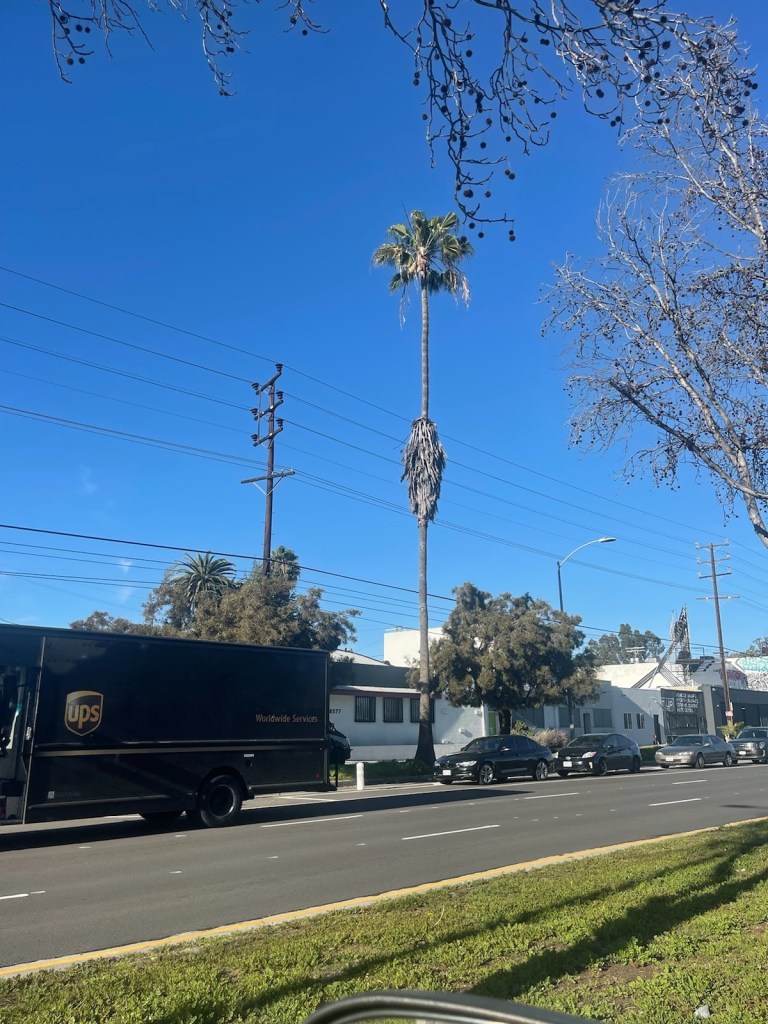
The second example can not be explained so easily. These three Mexican fan palms are very dead. They have been dead for so long that they are now decaying too severely for arborists to climb them safely for removal. Their death was certainly not natural. They were decapitated. Someone climbed to the tops of each of these three palms and cut their single terminal buds off, but left the trunks to die.

Did someone think that they would regenerate new terminal buds or branches like yuccas? If so, why were the trunks left so high? This really defies explanation.

These dead trunks can not be left here. They are so tall that if one falls, it could damage the apartment building across the street, and anything else that happens to be in between. They could kill someone! There are three of them! They are unsafe to climb, so must be removed by crane, which is very expensive.

Six on Saturday: Brent’s Pointless Pictures V – Hawaii

Brent left for vacation in Hawaii at about the same time that I returned from vacation in Oregon and Washington. Since I told him to stop sending me so many pointless pictures prior to my vacation, he is now sending even more. I might have gotten more pictures of his vacation than I got of mine. Although I would like to see Hawaii for the horticultural aspects, I am not otherwise impressed by what little I know about it. Perhaps I would get a better impression of it without so many of Brent’s pointless pictures. These are a few of the lesser pointless pictures, without the selfies.

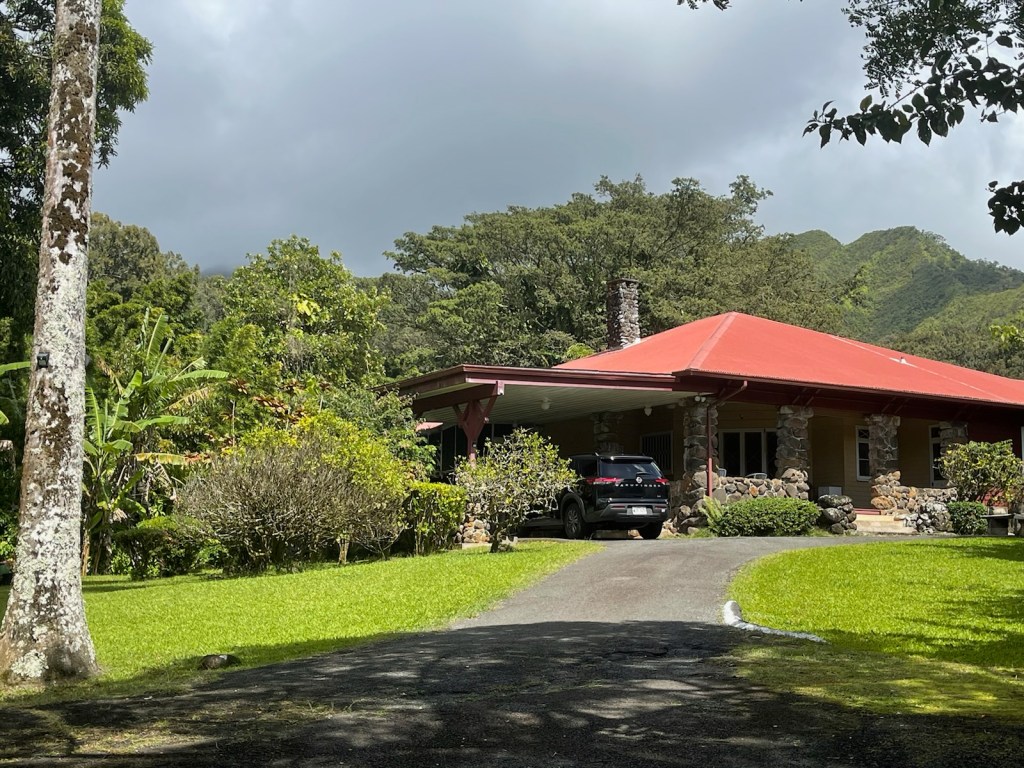
1. Accommodations were quite comfortable. Brent enjoyed the forests around this guest house, which was only a few miles from the Penthouse in Waikiki that he also stayed at.
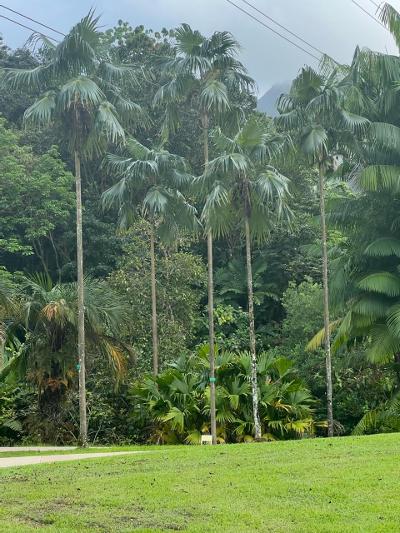
2. Palms of all sort are common in Hawaii. I have no idea what the palms to the left are. Nor can I know if this is a picture of those palms, a rainbow, or a utility pole with cables.
3. What is this? It must be in the Araceae Family. It looks like some sort of Philodendron that does not develop a vining stem. Some familiar species are not so familiar in Hawaii.
4. Doum palm is a weird palm that branches. There are actually a few species within the same genus. No one seems to know why it was never popularized in Southern California.
5. Is this Kentia palm? There are so many unfamiliar palms in Hawaii that identification is baffling. This group certainly is pretty. The palms to the left looks a bit more familiar.
6. Brent labeled these as windmill palms. If they are, why are their trunks bald? Perhaps they are one of those few shedding species of Trachycarpus that is not yet available here.

This is the link for Six on Saturday, for anyone else who would like to participate: https://thepropagatorblog.wordpress.com/2017/09/18/six-on-saturday-a-participant-guide/

Pygmy Date Palm

Other date palms are significantly larger.

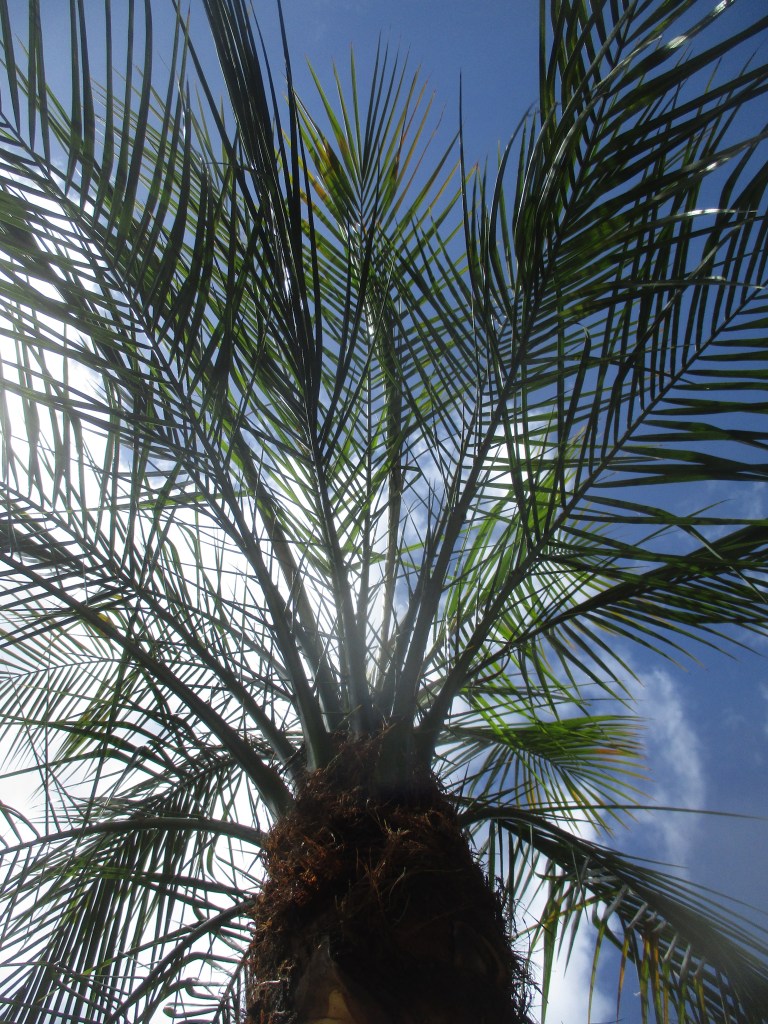
Canary Island date palm is the largest local palm. Pygmy date palm, Phoenix roebelenii, although a species of the same genus, is one of the more diminutive palms. It might take many years to grow ten feet tall, and may never get twice as tall. Its pinnately compound leaves are only about two to four feet long. Thin leaflets are about five to ten inches long. 

Such compact stature is a distinct advantage for some situations. With sufficient sunlight, pygmy date palm is a delightful houseplant. It is also appealing within atriums and cozily compact gardens. For those who appreciate the aesthetics but not the large size of most palms, pygmy date palm is a practical option. It actually resembles a common date palm. 

Like all date palms, a pygmy date palm surrounds its single terminal bud with nasty long spines, which are specialized proximal leaflets. These spines are painful to interact with while grooming and pruning deteriorated old leaves and floral trusses back to their trunk. Unlike most other palms, mature pygmy date palms are not very conducive to relocation.

Palms Are Very Distinctive Among Trees

Palms provide distinctively lush foliar texture.

Palms seem to exemplify the culture of California. However, only the California fan palm, which is also the desert fan palm, is native. All others are exotic. With its dwarf palmetto, Oklahoma has as many native palms as California. Furthermore, the California fan palm is only endemic within remote riparian ecosystems of the Colorado and Mojave Deserts.

Common date palms were likely the first of the many exotic palms in California. Spanish Missionaries imported them for date production during the Eighteenth Century. Although initially utilitarian rather than decorative, recycled trees from displaced orchards became popular for larger landscapes. Potentially messy fruit is minimal without male pollinators. 

Long before urbanization displaced date orchards, many other palms came to California merely because of their visual appeal. Some are large enough to be shade trees. Others can provide shade in groups. Many develop elegant trunks or sculptural form. Some stay relatively low or shrubby. All innately provide famously and luxuriantly evergreen foliage.  

Palms are most certainly appealing within appropriate situations. They are very different from other trees though. Like arborescent yuccas and cordylines, palms are ‘herbaceous trees’. Unlike yuccas and cordylines, and with very few exceptions, palms do not branch. Nor do their trunks continue to expand in width as they continue to grow in height above.  

Palms consequently spend their first few years widening their bases at ground level. Big palms, such as Canary Island date palm, likely require many years. Once their bases are adequate, developing palms ‘launch’ into vertical growth. Although palms do not branch, a few, such as Mediterranean fan palm, develop multiple trunks from their primary bases. 

Once palms launch, they grow only upward. They lean only to avoid shade, or if pushed by wind. It is impossible to direct their bulky but singular terminal buds around obstacles, such as utility cables. It is also impossible to contain their shade as they get high enough to shade adjacent areas instead. Many palms are spiny, so are difficult to prune properly, even while young and within reach.

Queen Palm

The elegant queen palm has a slender trunk and a billowy canopy. Grouped trees lean gracefully away from each other.

While Mexican fan palms and Canary Island date palms dominated the palm fad in California during the Victorian period, the queen palm, Syagrus romanzoffiana, was still relatively uncommon. Since then, selective breeding has improved their foliar color and density. They are now the most popular of palms.

Modern queen palms grow a bit faster than their Victorian ancestors to about thirty feet tall, and then grow somewhat slower for another ten to even twenty feet. Their long and arching feather (pinnately compound) leaves are quite billowy. The elegant trunks are generally slender, but often develop constrictions or bulges from fluctuations of irrigation or nutrient availability. The abundant fruit can be messy.

Palms Need Proper Planning Too

Every species of palm has a distinct personality. All have attributes; but many also have the potential for considerable problems.

California has no more native palms than Oklahoma has with the diminutive dwarf palmetto. The stately California fan palm, which is also known as the desert fan palm, inhabits warm desert regions in southern California. It is what put the ‘Palm’ in ‘Palm Springs’. However, because it likes heat and minimal humidity, it is not so happy away from deserts. The very tall and lean Mexican fan palm is closely related to the comparably stout California fan palm, but is so happy in local climates that it naturalizes and can be invasive.

The queen palm has a leaner trunk, and a broader and more billowy canopy. It rarely self sows, but is so overly popular that it very often gets planted in bad situation where it does not have room to grow. Unlike fan palms that have rounded palmate leaves that radiate outward from the ends of bare petioles (leaf stalks), the queen palm is a ‘feather’ palm, with pinnately compound leaves comprised of narrow leaflets arranged along stiff midribs.

The massive Canary Island date palm is another feather palm, with a broad canopy and bulky trunk. Like Mexican fan palm, it often self sows, so gets into some weird situations. The foliage is so thick that is commonly becomes infested with rats and pigeons. Female trees produce messy fruit that keeps rats and pigeons well fed.

Whether they get planted intentionally or simply appear in the landscape, the main problem with all these and other large palms, is the expense of maintenance, since they can only be maintained by professional arborists who know how to climb such large branchless trees. Without regular grooming, fan palms that are so often allowed to retain long beards of old leaves become fire hazards, and have the potential to drop dangerously heavy sections of their beards without warning. Removal of old deteriorating leaves from the huge canopies of Canary Island date palms is quite an chore!

There are few small palms, like windmill palm and Mediterranean fan palm, that are more proportionate to compact gardens. Windmill palm has a strikingly shaggy trunk and a compact canopy that is easy to groom before it grows beyond reach. Mediterranean fan palm has multiple trunks that grow so slowly that it takes many decades for them to grow beyond reach. Nasty sharp thorns on their petioles make pruning difficult but not impossible.

Selection of a palm that is appropriate to a particular situation is just as important to limiting serious long term problems as the selection of any other tree is.

Bismarck Palm

Silvery gray that is almost comparable to blue spruce is even more striking from a palm, like the Bismarck palm.

Most palm enthusiasts believe that the distinguished Bismarck palm, Bismarckia nobilis, is rare because it does not like local climates. It can be damaged by frost in winter, and prefers warmer weather in summer. Another concern is that they get too broad for compact urban gardens, since their shady foliar canopies can get more than twenty feet wide. However, a few seemingly happy specimens are sometimes seen about town.

Foliage of this rare palm is strikingly silvery gray. Green Bismarck palms are even more scarce, both because they are less tolerant to frost, and because they are not so striking. The big and rather rounded leaves are more than six feet wide, and maybe up to eight feet wide, on petioles (stalks) about six to eight feet long!