Parasite

Cuscuta spp., dodder

Dodder is likely the second most common parasitic vegetation here. Only mistletoe is more common. Yet, it is very rarely encountered within home gardens. When it does appear, it seems to do so spontaneously, with its source difficult or impossible to identify. Its many species can also be difficult to identify, since most are so visually similar. This species seems to be a bit greener than most, which are typically somewhat yellowish or even orangish. Only its genus of Cuscuta is known. If its wiry twining stems resemble those of bindweed, it is because the two are related. Unlike bindweed, dodder lacks, leaves, roots and perhaps a few other otherwise important parts that it does not need because it draws resources from its hosts, which, for this example, is red yucca. Most are yellowish or orangish because they do not need chlorophyll to photosynthesise for themselves while they rely on their hosts to do so for them. Dodder looks like something from science fiction. Not only does it parasitize its hosts, and exploit them for their resources, but it is also very invasive and persistent. Like mistletoe, it is difficult to remove completely from its hosts, and any small bits that remain regenerate efficiently. Its seed remain viable for many years. Even if visible dodder growth is completely eradicated, it may have tossed seed that can grow two decades later! Because dodder is parasitic and mingles so thoroughly with its hosts, herbicides are impractical for its eradication. Sometimes, infested host vegetation is too thoroughly infested to be salvaged. Dodder has an extensive host range, so can infest other species in the landscape even after original hosts are removed. Dodder may look interesting, but should not be allowed to grow wild. When removed, it should be disposed of rather than composted.

Parasite

Mistletoe, Phoradendron leucarpum

Mistletoe, Phoradendron leucarpum, suddenly and inexplicably disappeared from local ecosystems several years ago. Although it was unlikely completely gone, no one could find any. Carcasas of deceased specimens deteriorated and fell slowly in pieces from their host trees. Regeneration has been a very slow process, and in some local ecosystems, does not seem to be happening at all.

If botanists are aware of what happened to the mistletoe, they are not sharing what they know. Arborists are amazed by such sudden death of mistletoe that they had been unable to eliminate from infested trees. Some believe that it was the result of distress of host trees. However, it is unlikely that all host trees, including many within cultivated and irrigated landscapes, could have been so similarly distressed at the same time. Disease could be the primary culprit. There is even a possibility that mistletoe, the most familiar plant parasite, succumbed to another parasite.

Similar die off of various species of mistletoe has been observed within various other ecosystems, at various times, and with various rates of recovery. Perhaps several factors are involved, either individually or in any variety of combination. Because mistletoe is generally considered to be undesirable, investigation of such die off is minimal.

I noticed this particular mistletoe within the same Oregon white oaks in Oregon that I wrote about yesterday. It seems to be adequately healthy and unaffected by whatever killed mistletoe here. I do not remember if it had died off previously, and is now recovering. For all I know, it could be in the process of dying off right now. Mistletoe might be more efficiently controlled or even eliminated from infested trees within cultivated landscapes if someone could identify what kills it naturally. After all, it is a famously persistent and potentially very distressing parasite.

Mistletoe Un-Update

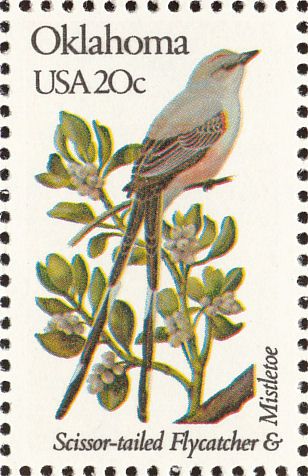
oklahomaThere is still no news about why mistletoe disappeared this last year in our area. No one really noticed it missing until late in summer. The absence of mistletoe became more apparent as deciduous trees that had been infested with it last year defoliated in autumn. What is even more strange is that the dead mistletoe plants deteriorated so quickly and efficiently that they are completely absent, as if something ate all the mistletoe, or took it away. The only evidence of former infestation in some trees are the swollen portions of stems where mistletoe had been attached. An article about this mysterious absence of mistletoe can be found here; https://tonytomeo.wordpress.com/2017/09/24/where-has-all-the-mistletoe-gone/ .

Someone who harvests mistletoe from local trees, both to eradicate it from a few trees, and also to sell it in local markets, made an interesting observation about the absence of mistletoe just within the past few day. He found that some mistletoe survives, but only in the upper extremities of tall trees. Most of the trees are locust trees, perhaps because they happen to be taller than most of the other trees that had been infested. One infested tree is a black walnut. The viable mistletoe plants are somewhat young and small. Larger plants or colonies that were as high as the smaller surviving plants are gone. Specie of mistletoe that infest coast live oak and some conifers have not been observed.

There are several variables that could account for the survival of relatively small mistletoe plants high in the canopies of host trees. Some pathogens that could affect mistletoe might proliferate in congested growth that limits air circulation, but not where air circulates efficiently through sparse and exposed growth higher up. Some pathogens that proliferate in cool and damp situations are inhibited by drier and sunnier situations. Some pathogens are more likely to infect hosts that are closer to the ground. If rodents are taking mistletoe vegetation, they prefer the shelter of more congested lower growth, and avoid the vulnerability of more exposed higher growth.

Where Has All the Mistletoe Gone?

oklahoma

Locust and alder trees in my region are commonly infested with mistletoe. Some were severely infested. A few of the locust trees downtown were actually unsightly because they are so stressed and sparse from mistletoe infestation, and also because they were so full of big shaggy mistletoe bushes that obviously do not belong there. Now, viable mistletoe can not be found. Even the carcases of the big dead mistletoe bushes are hard to find. They seem to have died and deteriorated before anyone noticed. The formerly infested trees are noticeably healthier, and producing more healthy foliage than they normally do, partly hiding any remnants of dead mistletoe.

No one here seems to know what happened. Is this part of their natural life cycle? Is there something that sets them off to die all in the same season like some specie of bamboo do? Is there a disease or insect that we should know about? Is this isolated to our region, or is it happening elsewhere as well?

I know I should be pleased that the mistletoe is gone, even if it is only temporary. It is such a destructive parasitic weed! The concern is that we just do not know what happened.

Years ago, Phytophthora ramorum started killing tan oaks. At first, not many of us minded. After all, tan oaks are considered to be trashy trees that clutter otherwise pure redwood stands, or compete with more desirable oaks. Dead tan oaks were better than live ones, and only needed to be cut and split to be sold as seasoned firewood.

The following year, the same disease started to kill coast live oaks. Then we had a problem. Coast live oak is one of the two most majestic oaks in our region (and the most majestic in the Santa Cruz Mountains where the valley oak is uncommon). It took a long time to identify the disease because the ambrosia beetle, which is a secondary pathogen, was initially blamed for the widespread death, which became known as Sudden Oak Death Syndrome, or SODS. It took a few years for the worst of the SODS epidemic to subside, and it continues to kill oaks sporadically.

That is why it is hard to ignore what is happening with the mistletoe, even though we really should be pleased to see it go.