Shade Tolerant Species

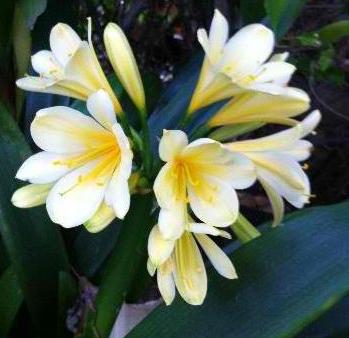
Kaffir lily is famously resilient to shade.

Most gardens have some sort of shade. Those that are not shaded by substantial trees likely have shadows from houses or fences. Big eaves of ranch architecture make big shadows. So do tall Victorian houses. Yet, the disproportionately small gardens of bulky modern homes with high fences are shadiest.

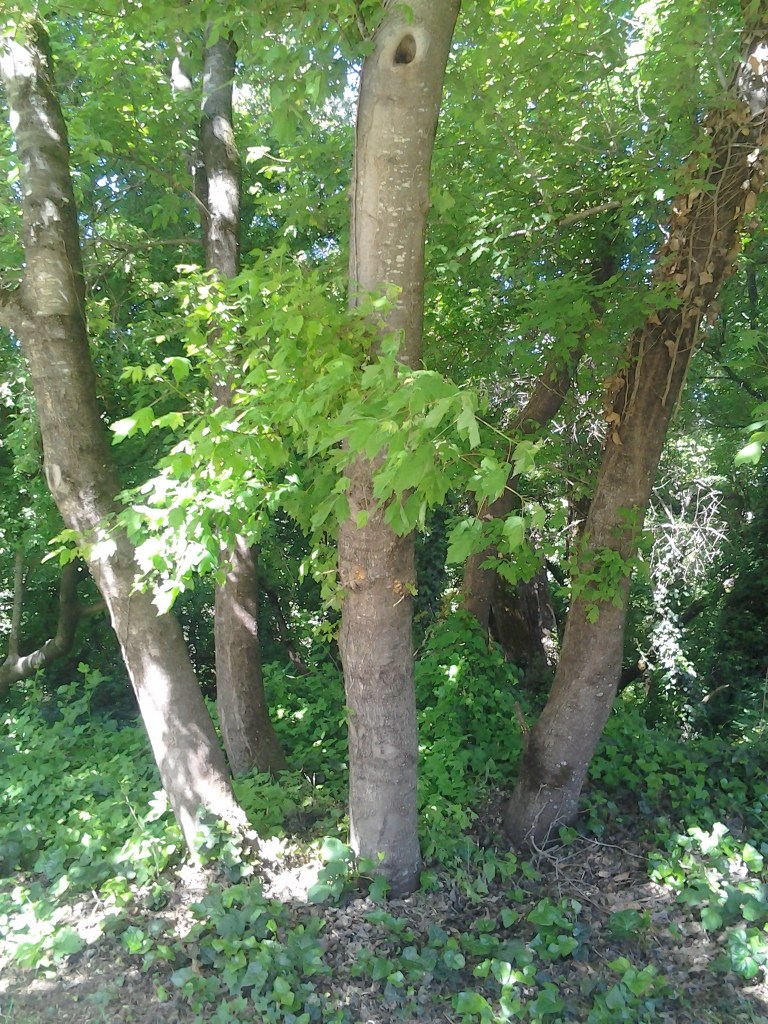
There are not many trees that do well in shade. Most of those that do are rather small ‘understory’ trees that naturally prefer to be in the partial shade of taller trees. The many different Japanese maples are perhaps the most familiar. Vine maple is a similar maple from North America. Many dogwoods are likewise understory trees.

Eastern redbud, parrotia, strawberry tree, sweet bay and various podocarpus are not necessarily understory trees, but are quite tolerant of partial shade. However, stems that reach beyond the shade are likely to thrive at the expense of shaded parts if not pruned for confinement. For example, a fern pine (podocarpus) can be happy on the north side of a house, but can develop such a thick canopy where it gets good sun exposure on top, that lower growth gets shaded out. All palms tolerate significant shade while young, but most eventually grow beyond it.

There is more shade tolerant shrubbery to choose from, since shrubbery is naturally lower and more likely to be shaded by trees. Rhododendron, azalea, camellia, hydrangea, pieris, fuchsia, aucuba and Japanese aralia are about as familiar as Japanese maple is. Heavenly bamboo (Nandina spp.), Oregon grape, mountain laurel, flowering maple and various hollies are also worth investigating. 

Because low growing perennials are naturally lower than both trees and shrubbery, many are naturally more tolerant to shade. Bear’s breech, cast iron plant, perwinkle, tradescantia, arum and forget-me-not can be so happy in shade that they can actually be invasive. Kaffir lily, bergenia, hosta, lily turf, ginger lily, coral bells and various ferns are much better behaved.

Foxglove, cyclamen and balsam (Impatiens spp.) are good annuals for shady spots. Cyclamen is actually a perennial that deteriorates during warm summer weather, but can regenerate as weather gets cool in autumn, to bloom through winter and early spring. Balsam does just the opposite, thriving through warm weather, but deteriorating with frost. Caladium and coleus can provide remarkably colorful foliage until frost. (Foxglove is actually biennial. Caladium grows from bulbs, but is rarely perennial.)

Despite their reputation as being aggressively invasive, both Algerian and English ivies can be resilient ground covers in significant shade. Baby’s tears likewise spreads as far as it gets water. Star jasmine is more complaisant, but only tolerant of moderate shade, and will not bloom as well as it does with better exposure.
Gold Dust Plant

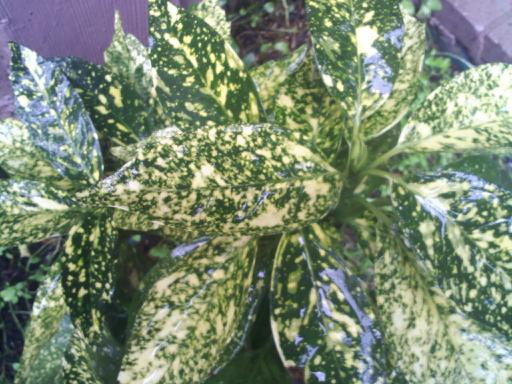
Gold dust plants actually prefers partial shade to full sun exposure.

Like so many hollies, the gold dust plant, Aucuba japonica ‘Variegata’, is grown more for its glossy foliage than for flowers or berries. The tiny dark red flowers that bloom in the beginning of spring are barely visible. Clusters of bright red half inch wide berries that ripen in autumn and winter are almost never seen without a male pollinator. Yet, the three inch wide and three to five inch long leaves are colorful enough with their splattering of light yellow spots. Gold dust plant grows rather slowly to about six to eight feet tall and wide, and does better in partial shade. Foliage can get roasted if too exposed to sunlight.

Shady Characters

Hellebore may not tolerate much arid warmth, but is impressively tolerant of partial shade.

Suburban gardens are becoming shadier. More modern homes are taller than a single story, so make larger shadows. Taller and more fortified fences likewise create more shade. Smaller garden spaces of modern homes, or of older homes that have been added onto, have less sunny area away from the shadows of the associated homes and fences. Even large gardens of low profile homes lose sunlight as shade trees grow.

Most plants that prefer or at least tolerate shade are ‘understory’ plants; which means that they naturally live in the shade of larger plants. Consequently, most of the few trees that tolerate shade do not get very tall. Vine maple, dogwood, Japanese maple, Eastern redbud and many podocarpus are small to medium sized trees. All palms tolerate some shade, although most grow tall enough to eventually get above it.  

Aucuba, boxwood, euonymus, Japanese aralia, holly, Heavenly bamboo and some pittosporums are among the evergreen shrubs that provide foliage in partial shade. Andromeda and Oregon grape have both appealing foliage and flowers. Sarcococca, daphne and gardenia flowers are not quite as showy, but are remarkably fragrant.

Rhododendron, camellia and mountain laurel provide some of the most colorful flowers in partial shade, and have good evergreen foliage while not blooming. Fuchsia and abutilon are rather lanky shrubs, but do have interesting flowers. Hydrangeas are deciduous, so can have good fall color after providing nice foliage and big billowy blooms through summer.

Both Algerian and English ivies, as well as star jasmine, are climbing vines that enjoy partial shade. (Although the ivies cling to whatever they climb, so should be confined to where they will not ruin paint or siding). Star jasmine does not bloom as well or nearly as fragrantly in shade as it does in sunny areas, but has good foliage nonetheless. Any of these vines, as well as periwinkle, is good ground cover for shady spots.

Cast iron plant and arum are not only tough perennials that produce rich deep green foliage in the shade, but can actually become invasive and are difficult to eradicate once established. Bear’s breech is comparable, with the advantage of striking flowers, but the disadvantage that it defoliates through warm summer weather. Various ferns are perhaps the most familiar and complaisant foliar perennials for shade. Lily turf is an evergreen flowering perennial, but realistically, has better foliage than flowers.

Clivia miniata, bergenia and hardier begonias are grown for their colorful flowers as much as for their rich foliage. Clivia miniata is like lily-of-the-Nile for the shade, but blooms with shorter bright reddish orange, red or yellow flowers instead of soft blue and white on tall stems. Some of the various campanulas are delicate shade tolerant perennials with pale blue or white flowers.

Cyclamen, primrose, viola, pansy, forget-me-not, foxglove and impatiens are seasonal annuals that do not mind partial shade. Cyclamen and primrose are actually perennials that can survive through summer to resume bloom the following autumn. Impatiens is actually a warm season annual for summertime that can survive as a perennial through winter.  

Shade Tolerant Species Genuinely Shine

Some species actually prefer partial shade.

Home gardens are getting shadier as bigger modern homes occupy smaller modern lots. Bigger homes make bigger shadows. So do their bigger fences that compensate for their minimal proximity to each other. Less space within their smaller gardens extends beyond their shade. Consequently, shade tolerant species have become more popular than ever.

Also, small trees have become more popular than large trees for small modern gardens. However, more of them are evergreen to partially obscure obtrusively close homes. Their shade lasts throughout the year, and is likely darker than that of deciduous trees. It could be too dark in some situations even for shade tolerant species. Even they need sunlight.

Realistically, shade tolerant species merely require a bit less sunlight than most species. No real vegetation can survive without any sunlight. Like it or not, artificial turf can be the most practical option for the shadiest of lawns. Some potted plants can cycle around the garden, to take turns in shade and sunlight. If so, they may not need to be shade tolerant.

Most shade tolerant species perform differently with shade than with better exposure. For example, some rhododendrons that tolerate shade bloom better with more sunlight. Most species with colorful or variegated foliage are more colorful with more sunlight. Likewise, sunlight enhances autumn color for some deciduous species. Shade is merely tolerable.

Also, some shade may be dynamic. Garden space below deciduous trees can be shady for summer, but sunny for winter. Below high evergreen trees, sunlight might get through at a lower angle through winter. Major pruning or removal of vegetation can improve sun exposure if necessary. Many shade tolerant species are adaptable to such modifications.

Most shade tolerant species are understory species. They naturally live below canopies of higher vegetation. Some have big leaves and dark foliar color to maximize absorption of sunlight. Ferns are famously tolerant of shade, although tree ferns can reach above it. Kaffir lily, cast iron plant and hosta tolerate shade also. Rhododendron, azalea, camellia, andromeda and hydrangea tolerate shade as well, but need a bit of sunlight to bloom.

Made In The Shade

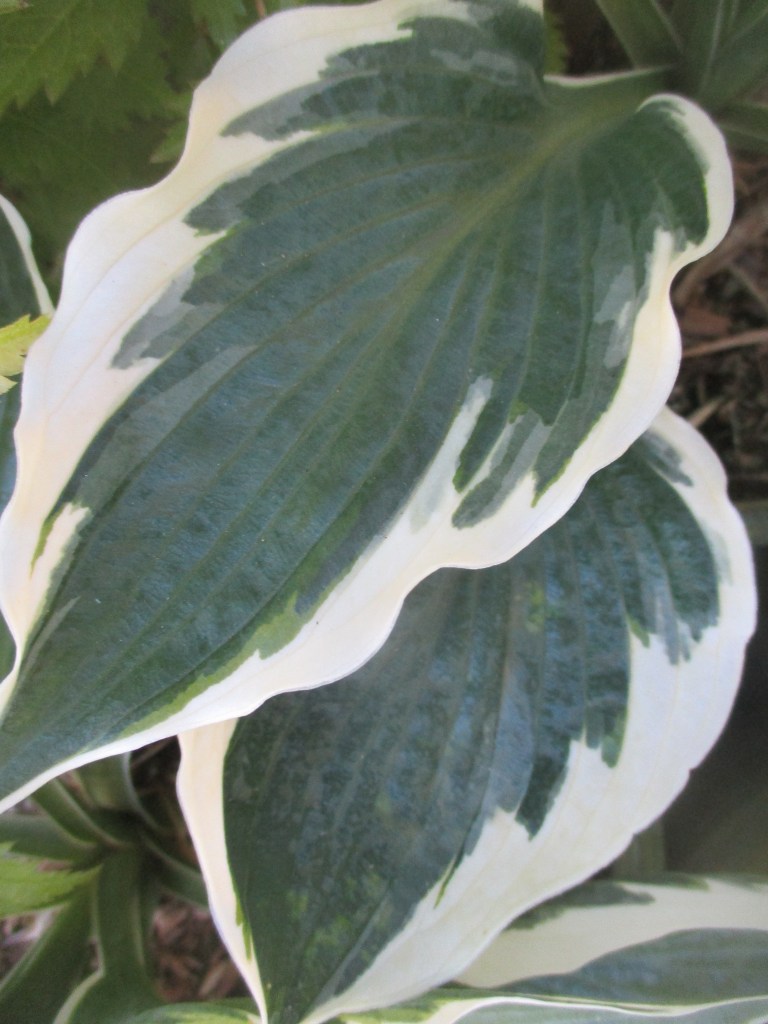
Hosta happen to tolerate a bit of partial shade.

Modern gardens are shadier now than they ever have been. Ranch houses that were popular through the middle of the last century had those classic big eaves that shaded wide margins close to the homes. Prior to that, tall Victorian houses made big shadows. Modern houses though are even bigger. To make matters worse, lots and garden spaces are smaller and surrounded by ominously tall fences; so there is less space that is not shaded by something sometime during the day.

This is why small trees, sometimes known as ‘micro-trees’, are so popular. They are all that fit into some small gardens without creating too much shade for other plants. Large shrubbery, like some of the larger types of pittosporum, and some of the smaller types of podocarpus, often function quite nicely as small scale trees. Where not too shaded, pineapple guava and New Zealand tea tree are just as effective. They only need to be allowed to develop upper canopies with adequate clearance, while their lower limbs get pruned away, instead of getting pruned to stay down low as shrubbery typically does.

Camellia, hydrangea, aucuba, Japanese aralia, Oregon grape and Heavenly bamboo (Nandina spp.) are appealing shrubby plants for shady locations. Camellias and hydrangeas of course provide impressive blooms during their respective bloom seasons. Camellias also have the advantage of excellently glossy dark green foliage all year;  but hydrangeas are bare and need pruning in winter. Oregon grape and Heavenly bamboo, which are actually related, are more subdued but look more woodsy in bloom, and sometimes provide interesting berries afterward. Aucuba and Japanese aralia do not need showy flowers because their foliage is so bold. Japanese aralia has bigger and bolder leaves, but common types of aucuba are spotted with gold.

Balsam (Impatiens spp.), which is already one of the most popular warm season annuals that is beginning to get phased in as the weather gets warmer, is not quite as colorful in the shade as it is with better exposure, but can be impressive nonetheless. Cyclamen takes shade as well, but will actually be getting phased out through late spring and summer. Cyclamen is actually a perennial that can stay in the garden (if it is not in the way of anything else) to regenerate next autumn. As weather gets warmer in spring, caladiums and coleus can provide remarkably colorful foliage for shady spots through summer and early autumn.

Various types of ferns, although devoid of flower color, provide distinctive and often bold form and foliar texture. Australian tree ferns can actually get quite large and eventually function as small trees. Baby tears is a finely textured perennial ground cover that spreads as far as it has moisture. It can actually get to be invasive.

Heath

Heath prefers rich and acidic soils.

For Scotland, various species and cultivars of heath, Erica, may be as common as lily of the Nile is here. It has become somewhat popular in the Pacific Northwest and the North Coast of California also. It is likely less popular locally because it prefers acidic soil, and cooler and moister climates. Here, it appreciates regular watering and shelter from wind.

Mature heath is generally less than five feet tall, with densely mounding form. Only a few rare species get significantly taller. Most popular cultivars stay lower. Some creep slowly over their ground without getting more than half a foot deep. Their small and very narrow leaves are no more than half of an inch long, and almost resemble small spruce needles. 

Even with such a fine texture, this evergreen foliage is delightfully woodsy. It is generally dark forest green. Some cultivars produce ruddy, yellow or gray new foliage in spring. Of these, some retain their rich foliar color through much of the year. Tiny heath flowers that bloom most abundantly through winter or spring are white, pink, red, or purplish.

Shade Is Not Always Cool

Deep shade can be a problem.

Tall Victorian houses make long shadows. Lower ranch houses make shade with broad eaves. Awkwardly big modern homes shade more of their disproportionately small gardens than the others, especially since they have such tall fences to compensate for their minimal proximity to other homes. Even the sunniest of home gardens have some sort of shade.

Like various architecture, various shade trees make different flavors of shade. Silk tree, honeylocust and silver maple make broad shadows of relatively light shade. Because they are deciduous, they allow most sunlight through while bare in winter. Southern magnolia, Canary Island pine and Canary Island date palm make darker shade throughout the year.

Spots that are shaded only by the west side of a fence get warmer afternoon sun exposure than spots that get eastern exposure in the morning. Plants that are only shaded in the morning therefore need to tolerate both warm afternoon exposure and partial shade. Eastern exposures are easier to work with, since most plants that tolerate a bit of shade also like to be sheltered from harsh afternoon exposure.

Because fences lack eaves, southern exposures lack shade, and may enhance exposure by reflecting glare and heat. Southern exposure against houses and garages is determined by the height and width of the eaves. Light colors reflect more than darker colors. Northern exposures are of course the shadiest.

Whether for shade of sunny exposure, plants need to be selected accordingly. Bougainvillea, ceanothus and other plants that like good warm exposure with plenty of sunlight will not do much if shaded. Kaffir lily, hosta, rhododendron and various ferns that prefer partial shade can get roasted if too exposed when the weather gets warm and dry (with minimal humidity).

Eastern redbud, sweet bay, Oregon grape, Heavenly bamboo (nandina), various hollies, various podocarpus and both English and Algerian ivies are some of the few plants that are not too discriminating about their exposure, and will be just as happy with partial shade as with full exposure. Hydrangea, camellia, fuchsia and aucuba are nearly as agreeable, but will get roasted by harsh exposure enhanced by reflected glare from walls or pavement. All palms tolerate shade while young, but adapt to full exposure as they grow above what shades them.

Shade can change as the environment changes. Sun exposure increases if a tree or building gets removed. Remodels or newer and higher fences can increase shade. Even without such obvious modifications, large shrubbery and trees make more shade as they grow.