Six on Saturday: Pestilence

Molluscs, rodents, insects, virus, fungal pathogens and an identified disease that causes gummosis; we have it all. I know that it is nothing to brag about, but it makes a good six.

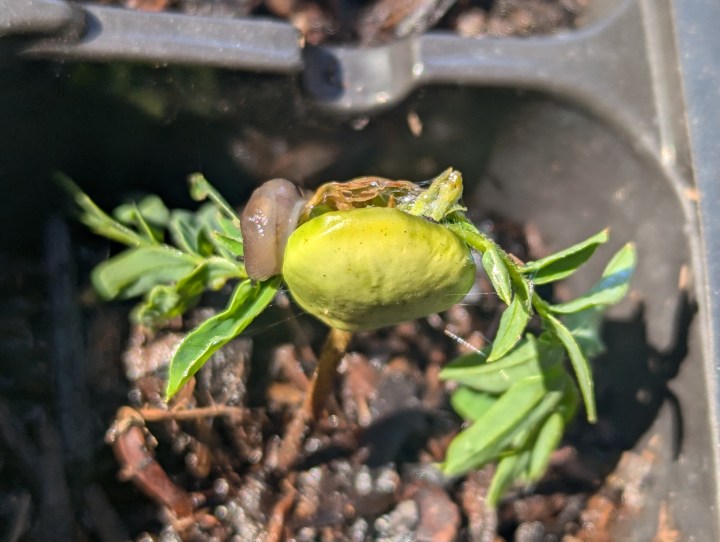
1. Tamarindus indica, tamarind seedlings are popular with slugs. Not much else here is. Weirdly, slugs do not seem to consume the foliage. They only coat it with slime that does not rinse off. The foliage eventually deteriorates. What is the point of this odd behavior?
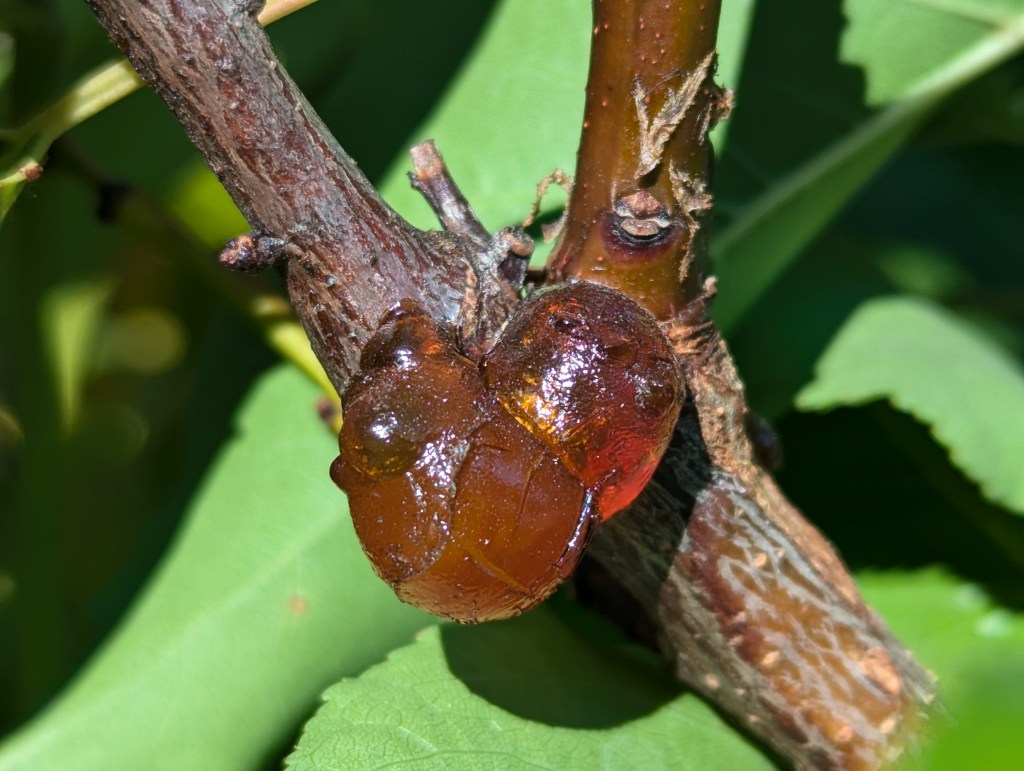
2. Prunus armeniaca, apricot trees sometimes exude gummosis as a symptom of disease or boring insect infestation. I can not see what caused this, and do not care to. I will just prune it out. I know that it will not be the last time. Gummosis is common with apricots.
3. Chamaedorea plumosa, baby queen palm was chewed so badly by some sort of rodent that it will not likely survive. I suspect that a squirrel did this. I have not seen any rats or their damage since Heather arrived. This is one of only two rare baby queen palms here.
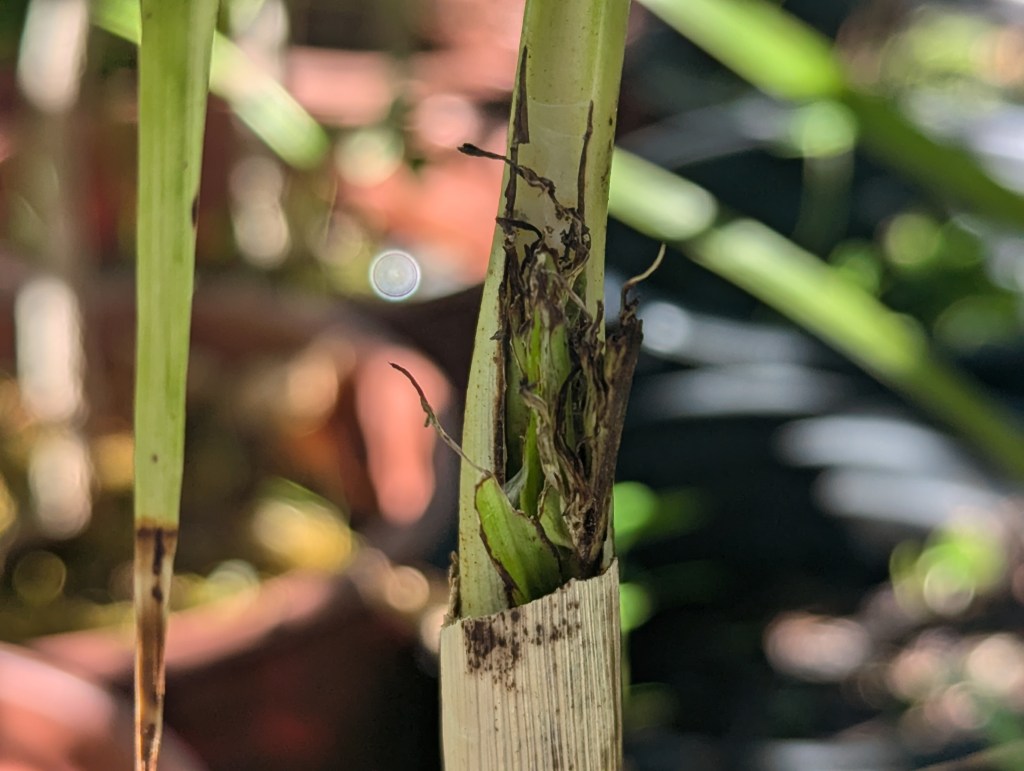
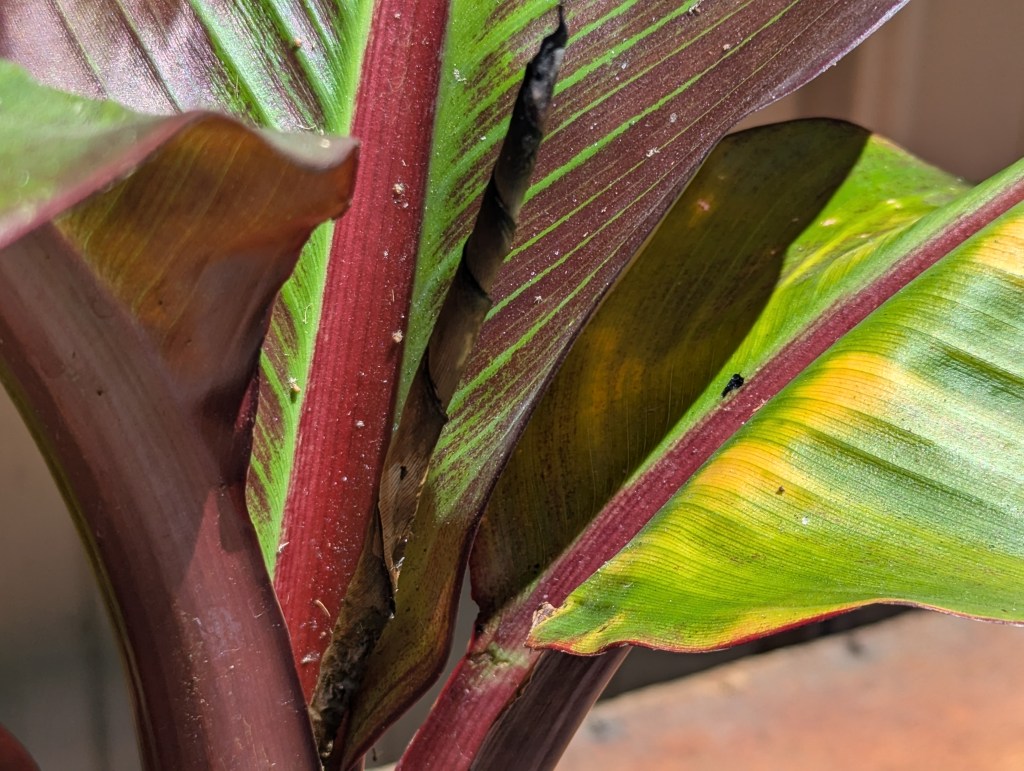
4. Ensete ventricosum ‘Maurelii’ red Abyssinian banana was initially infested with aphid and associated mold. The aphid disappeared, as it typically does, but the mold remained and ruined the currently emerging leaf. I hope that the primary bud within does not rot.
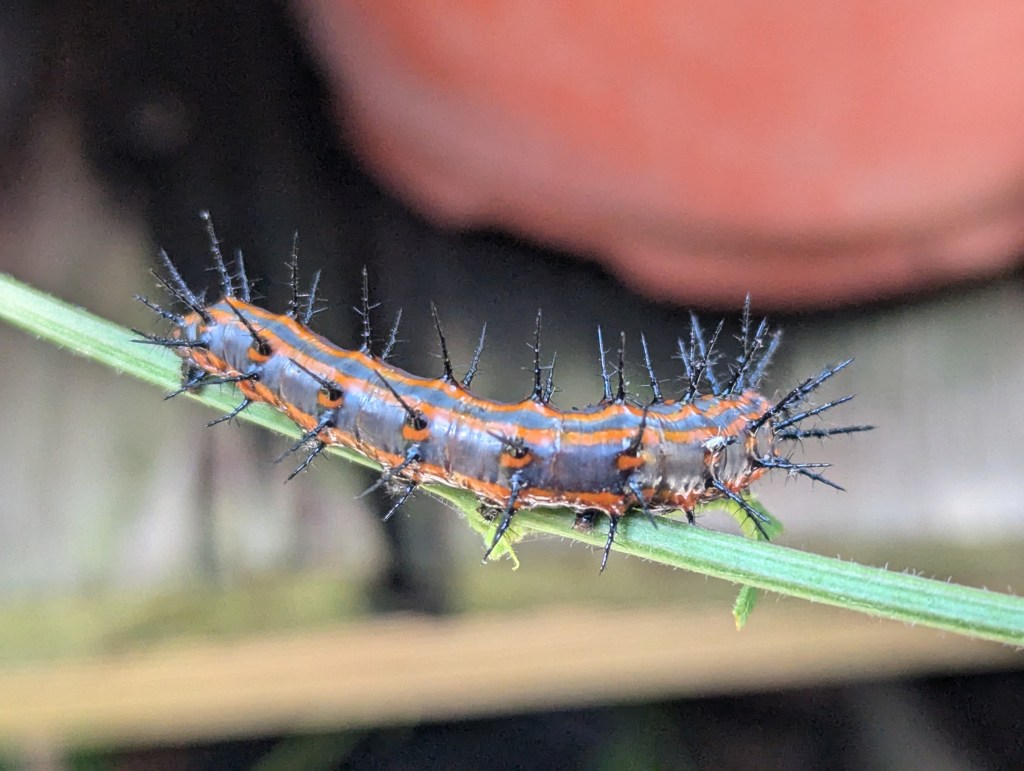
5. Passiflora racemosa, red passion flower vine has been defoliated a few times just this year by a few of these unidentified caterpillars. The caterpillars leave after they consume all foliage, but then return shortly after the foliage regenerates, while I am not watching.
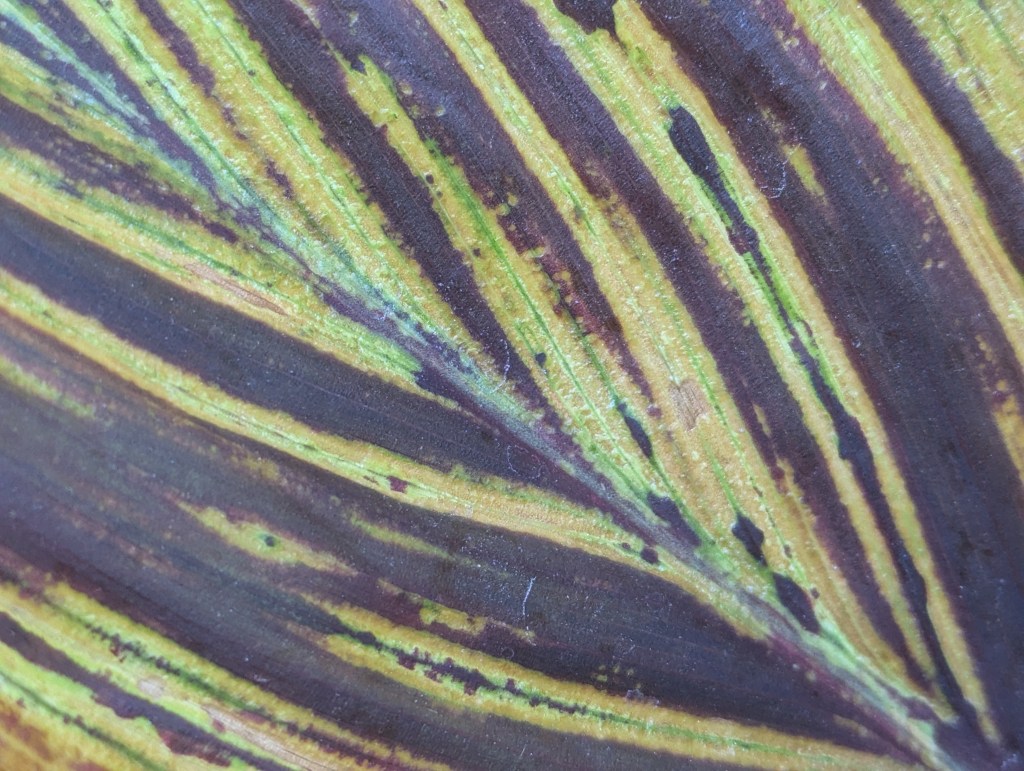
6. Canna indica ‘Australia’ canna is infected with canna mosaic virus. Several others are also, although they do not express symptoms as colorfully as ‘Australia’ does. Most other cannas are isolated from this virus within their landscapes. I am infuriated nonetheless.
This is the link for Six on Saturday, for anyone else who would like to participate: https://thepropagatorblog.wordpress.com/2017/09/18/six-on-saturday-a-participant-guide/

Integrated Pest Management Really Works

Pesticides are effective but innately toxic.

Wildlife is not the only menace to home garden fruits, nuts and flowers. All sorts of insect pathogens want their share also. Old fashioned nonselective insecticides can be helpful, but can leave toxic residue. They also eliminate beneficial insects that might help control pathogens. Integrated pest management, or simply IPM, is likely a more practical option.

Integrated pest management involves biological, cultural and physical pathogen control. Biological control can involve introduction of beneficial insects that consume pathogens. Ladybugs or lacewings are available from certain nurseries, for control of certain insects. However, doing nothing but allowing beneficial insects to proliferate naturally may work.

Some types of integrated pest management are standard procedure for home gardening. Cultural control may be as simple as growing varieties that are resistant to certain pests. This also involves not growing varieties that are susceptible to locally problematic pests. Sanitation is merely removal of detritus that some pathogens proliferate or overwinter in.

Physical or mechanical integrated pest management can be as simple as picking snails. Copper tape as a barrier to exclude snails and slugs is more involved but more effective. Sticky barriers, like ‘Tanglefoot’, prevent ants from cultivating aphid. (Ants cultivate aphid for sustenance.) Then, wasps, which are a biological control, control the aphid naturally.

Integrated pest management also includes various insect traps. Wasp traps use bait, like pheromones or sweet aroma, to attract stinging insects. Although they are not a problem for vegetation, stinging insects complicate gardening. Thrip traps attract thrip with yellow color, and trap them in glue. Apple maggot traps resemble developing apples, with glue.

Chemical pesticides are not beyond the realm of integrated pest management. However, such pesticides should be as nontoxic as possible. Furthermore, they should target only very specific pathogens. Although modern pesticides are safer than old fashioned types, they are still poison. They have significant potential to interfere with natural ecosystems.

Aphid Savor Fresh Spring Growth

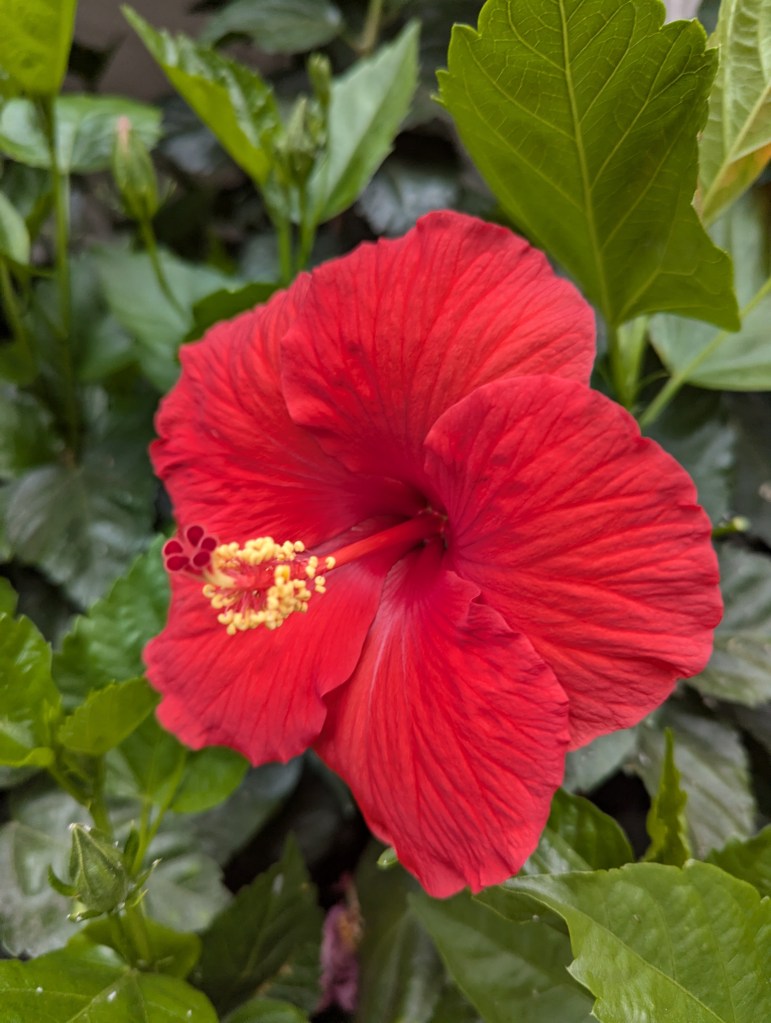
Not many hibiscus escape aphid completely.

Dormant pruning last winter did more than concentrate resources for flowers and fruits. It did more than eliminate superfluous growth, which many pathogens overwinter in. It also directed or concentrated resources for stems and foliage. Such growth now grows faster than some types of insect infestation. Aphid, though, are famously prolific and tenacious.

Hybrid tea roses very effectively demonstrate the advantages of dormant pruning. Those that lacked such pruning are more vulnerable to major aphid infestation now. Those that benefit from such pruning are significantly less vulnerable. Even with minor infestations, they may bloom well. Their vigorous stems grow at least as fast as aphid can proliferate.

It is too late for dormant pruning now. Furthermore, this is the beginning of aphid season. It continues until early autumn. Fortunately, aphid are usually not problematic for too long on the same hosts. Their natural predators often find and control them as their infestation culminates. They might continue to be present, but at a tolerable or unnoticeable degree.

Insecticides can be useful for severe infestation, but can interfere with natural processes. Some eliminate predatory insects that can naturally control aphid. If possible, it might be more practical to literally allow nature to take its course. Aphid are prolific, but essentially weak. Mildly soapy water kills them fast without killing many beneficial predatory insects.

Ants symbiotically cultivate aphid in exchange for their honeydew, (which is excrement). They protect their benefactors, and move them to ideal host material. Pruning citrus trees so that they touch nothing else can nearly block access to ants. Application of a barrier to their trunks, such as grease, blocks access more completely. Predatory insects still fly in.

This technique is practical for many small trees, but not low shrubby roses and hibiscus. For them, aphid might be easy to blast off with a spray nozzle on a hose. This procedure neither removes nor kills all aphid, but it can limit their damage. Repetition of the process will likely be needed a few days later, and maybe a few times. Aphid might be persistent, though.

Aphids

Aphid enjoy fresh new growth of roses.

Since the seeds arrived in the mail from Renee’s Garden, I have been waiting for the pale yellowish white ‘Buttercream’ nasturtiums to bloom. The appearance of their first few leaves was quite an event. They then started to grow a bit faster like annuals do this time of year. Then, suddenly and without warning, they where overtaken by a herd of hungry aphids!

These small but prolific insects congregate at the tips of new foliage and flower buds. They pierce fresh tissue and suck out the juices within. They are more often yellowish green, but can be grayish black, pale white or sickly pink. Although minute, the fattest aphids can be as plump as caviar.

Fortunately, aphid are typically not problematic for very long, and are easier to control than other insect pests. Even without insecticides, their festivities will be brief before their natural predators move in and break up the party. Pesticides can actually be detrimental by also killing some of the natural predators, and delaying their conquest of the aphids.

Right now though, I do not care! The aphids are hurting the nasturtiums. They must die!

On tougher plants like roses, aphids can be blasted off with water from a hose. Because roses can get mildew if their foliage stays wet too long, they should get blasted early in the day, so that they can dry in the sun. This procedure does not kill all the aphids, and may not even dislodge all of them, but it slows their proliferation so that the natural predators have the advantage.

Nasturtiums and other annuals that are too soft to get blasted with water can instead be sprayed gently with very slightly soapy water, which efficiently kills aphids. Water with a bit of vinegar, or a ‘tea’ made from cigarette butts, also work. Foliage is less likely to be damaged if rinsed afterward. This likewise does not kill all aphids, but controls them long enough for the predators to take over.

Parasitic wasps, syrphid flies, lacewings, lady beetles and predatory midges all eat aphids. They only need some time to do so because they rely on the primary proliferation of aphids to feed their own proliferation. In other words, there must be enough aphids to feed the predators before there can be enough predators to feed on the aphids.

However, aphids have an ally. Ants dutifully protect aphids from their predators, and actually cultivate aphids on choice plants because they like to eat the ‘honeydew’ excreted by the aphids. (ICK!) That is why lemon trees that are infested with aphids also have an abundance of busy ants commuting up and down the trunks.

Trimming an aphid infested lemon tree so that it does not touch anything else, and circling the base of the trunk with axle grease, will keep the ants out without preventing predatory wasps from flying in. Just like with roses, blasting with water dislodges many of the aphids and  stranded ants; but the wasps simply get out of the way and return when it is safe. It may all seem unfair to the aphids and the ants, but is gratifying for the predatory wasps, the lemon tree and whoever cares for the lemon tree.

Messy Mast

This is the mess that remains after acorns get raked or blown off pavement.

Masting is a technique that oaks and many other genera use to both outsmart and exploit squirrels and other wildlife that both consumes and disperses their seed. For several years, oaks here produce enough acorns to sustain a population of squirrels that is limited by their production of acorns. It may not seem to be very effective, since the squirrels consume almost all of the acorns, leaving very few or none to grow into new trees. Then, every several years, the same oaks collectively produce a ‘mast’, which is a crop of acorns that is too excessive for the limited population of squirrels to consume as thoroughly as they typically do. Squirrels instinctually bury many of the surplus acorns anyway. Because they do not return to dig and eat all of their buried acorns, some acorns grow as new trees. This is how the oaks sustain those who disperse their seed, but also get them to disperse their seed without eating all of it. Mast crops of acorns supposedly typically precede exceptionally rainy winters. So far, the mast this year is only coinciding with a messy situation with drippy nut disease. It is caused by bacterial infection of wounds that are caused by filbert weevils, filbert worms or other insects that damage developing acorns. Consequently, squirrels are ignoring many of the unusually abundant but damaged acorns, leaving icky messes of infected acorns and the goo that they exude. When it eventually arrives, the first rain will make this mess even messier. Later rain should rinse some of it away. It is impossible to know how successful this mast will be, since it is impossible to know how many viable acorns will actually contribute to the abundance and grow later, and how many will merely contribute to this unusually messy mast.

Insect Pathogens Prefer Less Biodiversity

Wildflowers and even weeds promote biodiversity.

Weeds grow, bloom, disperse seed and die a natural death without much trouble. This is especially frustrating while insect pathogens destroy desirable vegetation. Weeds seem to be more resilient to insect infestation and damage. Many actually are. They use nature to their advantage. Cultivation of desirable vegetation interferes with natural biodiversity.

Those who enjoy gardening do not want to consider it to be unnatural. Nonetheless, it is. It involves many exotic species that are not natural components of regional ecosystems. Breeding to improve their performance unnaturally compromises their vigor. They rely on unnatural irrigation and perhaps fertilization. They sustain many exotic insect pathogens.

Most species within home gardens could not survive for long without cultivation. Several that can unfortunately become invasively naturalized. In the process, most that benefited from breeding revert to a feral status. Some eventually enjoy more biodiversity in the wild than in cultivation. They rely on naturally beneficial insects to mitigate insect pathogens.

Insect pathogens are quite often more problematic than weeds. However, generally, they are less problematic than they were years ago. This is partly a result of improvements of modern horticulture. Strangely though, it is also partly a result of sloppier gardening. Old fashioned monoculture for big areas is passe. Biodiversity became an incidental benefit.

More species of vegetation sustain more insect species. This might not have qualified as an advantage years ago. Now, garden enthusiasts are more aware that some insects are predatory of others. Predators may not eliminate all insect pathogens, but they often limit infestations. With adequate limitation, damage is likely to be tolerable or inconspicuous.

This is one of two primary reasons that insecticides are less common now. Besides their potentially hazardous toxicity, they are simply less necessary. When they are necessary, modern insecticides target more specific insects. They can kill pathogens without hurting beneficial insects. Vegetation that too frequently needs insecticides becomes unpopular.

Locusts!

the SWARM!

Well, not exactly locusts; although, until they were reclassified within the Order Mantodea, they were of the same Order Orthoptera as locusts. Nor are they affiliated with either honey locust, Gleditsia triacanthos that I wrote about for last Tuesday, or carob, Ceratonia siliqua that I wrote about for the previous Tuesday, and which is the sort of locust that sustained John the Baptist in the desert. These abundant critters are young mantises, which likely hatched shortly before posing for this picture that my niece took on her front porch. My niece had seen a slow moving adult mantis there last autumn, and guessed that it might have deposited eggs, and then later died in privacy. Fortunately, she enjoys all sorts of flora and fauna, and was not too disturbed by this scene, or by the mother last autumn, as even some who work outside might have been. In fact, to the contrary, she was pleased that their mother felt that her porch was safe enough for them to start their lives on. She knows that there are plenty of insects for them to eat within the vegetation that inhabits the landscape there, as well as in nearby landscapes. This many mantises will eventually disperse into the neighborhood to satisfy their voracious appetites as they grow. That is why mantis eggs are available for sale from some nurseries. They are beneficially predatory insects because they consume detrimental insects. Since their arrival, my niece did a bit of research on their sort, and found that some people actually raise certain rare varieties of mantises as pets. As weird as it seems, it is no weirder than pet tarantulas. Anyway, this picture was taken more than a week ago. These baby mantises are likely already growing fast and dispersing elsewhere into Los Angeles.

Snail Season

Very fresh escargot

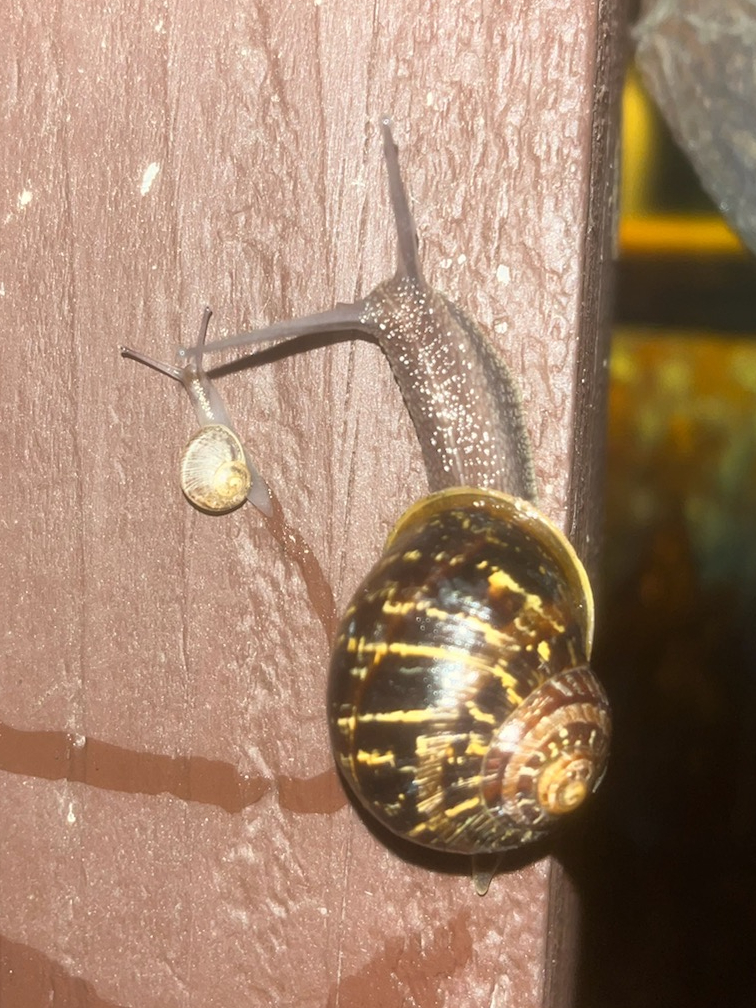
The problem with escargot that is too fresh is that it grazes – a lot! Snails, as well as slugs, lurk in our own gardens, waiting for nightfall, or sometimes not, to emerge and devour any tender plant parts that appeal to them. They tear apart large leaves and fresh flowers, and eat seedlings completely. They are particularly problematic this time of year, while the garden is still damp, but the weather is getting warmer, and especially since there is so much fresh new vegetation for them to eat.

The most effective means of controlling these troublesome mollusks is to eliminate their hiding places where they camp out during the day. This involves pulling large weeds and removing any debris that may be laying about the garden. Leave no stone unturned. Of course, this is not so easy in lush gardens with abundant or overgrown foliage, and features like large pots and statuary. In such situations, cunning and diligence are in order.

I have found bare copper wire wrapped around pots, planters and tree trunks to be an effective deterrent. Copper tape sold in nurseries and garden centers is probably better since it is wider. It can be self adhesive, or stapled to wooden containers or shelves. Snails can get past the copper though, on any plant parts than hang over where the snails can reach. Wire should be removed from tree trunks after ‘snail season’, or wrapped in a manner that accommodates for trunk expansion. For example, an ‘S’ shaped curve in the circling wire set flatly against a tree trunk provides enough slack for a bit of expansion.

It is also good to hunt snails as they come out after dark or before they go in for the morning. They are neither elusive nor fast. They are merely objectionable to handle. Laying a piece of cardboard or similar material out for them to hide under, and then surprising them during the day is a sneaky trick, but effective. Putting small puddles of beer out in shallow containers, such as saucers for potted plants, is more work, but not often as effective. It is sneakier though, since it entices the snails to stay out drinking until they die in the sunlight.   

Mycology

I have no idea what fungi this is.

Mycology was a topic that we horticulture students did not study much in school. We learned about some of the more important fungal diseases of vegetation, but that was about all. We could not take the time to study it any more extensively than mycologists could take the time to study horticulture or even botany.

Yet, horticulturists are often expected to know more about mycology than we should be expected to know. Perhaps it is because fungal organisms seem to grow sort of like botanical organisms grow. In ancient history, mycology actually was more closely related to botany, but needed to become a separate discipline as more was learned about each of the two. Perhaps that was at a time when entomology still included arachnids, myriapods and crustaceans. Heck, there was a time when earth, air, water and fire were considered to be the only four primary elements.

I have no idea what this mushroom is. It got my attention because it is so weird. It is such a weird mix of pastel purple, gray and white, with such a distinctly flat top. It was solitary. Not only did I see no others like it, but I noticed no other terrestrial mushrooms of any sort nearby. It appeared amongst blackberry bramble and naturalized English ivy, on the bank of a creek, under bay trees, with bigleaf maples, white alders, red alders and a deceased Douglas fir nearby. The area was quite damp from all the rainy weather this winter. Large and likely old rusty ruddy brown basidiocarps extend from the rotting bases of some of the bay trees. Smaller and likely younger brown and white basidiocarps extend from the rotting trunk of the deceased Douglas fir. All of this is irrelevant, since I still have no idea what this is.