
Phytophthora ramorum is the pathogen that initiates Sudden Oak Death Syndrome, which is known simply as SODS. Monarthrum scutellare, which are known as ambrosia beetles, and are the secondary pathogen associated with the syndrome, infest and kill tanoak and coast live oak that are infested with Phytophthora ramorum, about as quickly as symptoms are observable.
Hypoxylon thouarsianum is a tertiary but merely opportunistic pathogen associated with the syndrome. By the time it gets established within galleries excavated by the ambrosia beetles, the affected trees are almost completely necrotic. That first ‘S’ in SODS is there for a reason. It is an efficient process. Death occurs too suddenly for affected trees to drop any of their leaves!
Each of these three pathogens causes distinct symptoms. Phytophthora ramorum causes trees to bleed black tar-like fluid, and causes tanoak to exhibit foliar flagging as seen in the picture above. Monarthrum scutellare expels finely textured frass from the galleries it excavates into infected trees. Hypoxylon thouarsianum produces distinct small and black fruiting structures.
In the past several years though, Sudden Oak Death Syndrome has often been a bit less than sudden. There are a few tanoaks here that have exhibited foliar flagging for a few consecutive years, without any bleeding from the trunk or infestation by ambrosia beetle. Some coast live oaks have exhibited minor bleeding, but likewise have not become infested by ambrosia beetle.
It is as if the ambrosia beetle is no longer proliferating as it had been. It actually seems to be rather scarce. Trees that were expected to succumb suddenly to ambrosia beetle infestation are succumbing slower to infestation of only Phytophthora ramorum. The process is variable, so might have potential to kill some trees rather suddenly, but may take a few years to kill others.
Could some possibly survive?
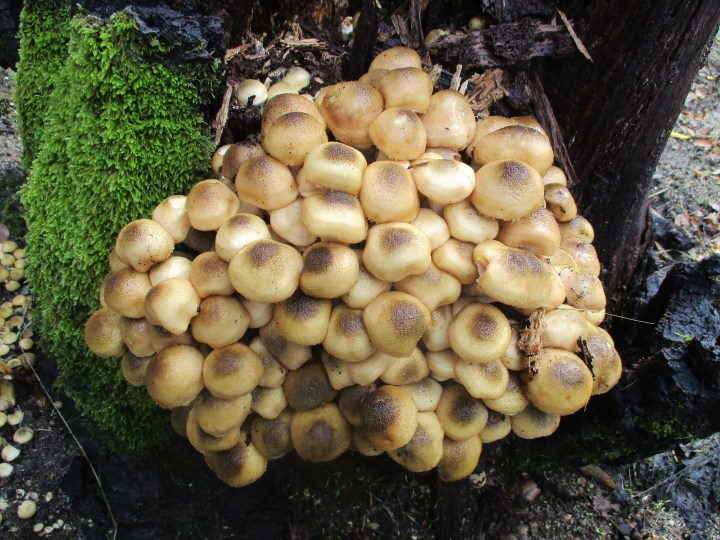 Is this Armillaria mellea, the dreaded oak root rot fungus? I really do not know. All the elements are here. The stump is that of a coast live oak. Bellow the stump there are the remains of roots. Those necrotic roots are undoubtedly decomposing as a result of rot. That rot is undoubtedly associated with this fungus. Furthermore, it fits the description of oak root rot fungus. The toasted spots were probably caused by weathering as the mushrooms started to develop while the weather was still warm and dry.
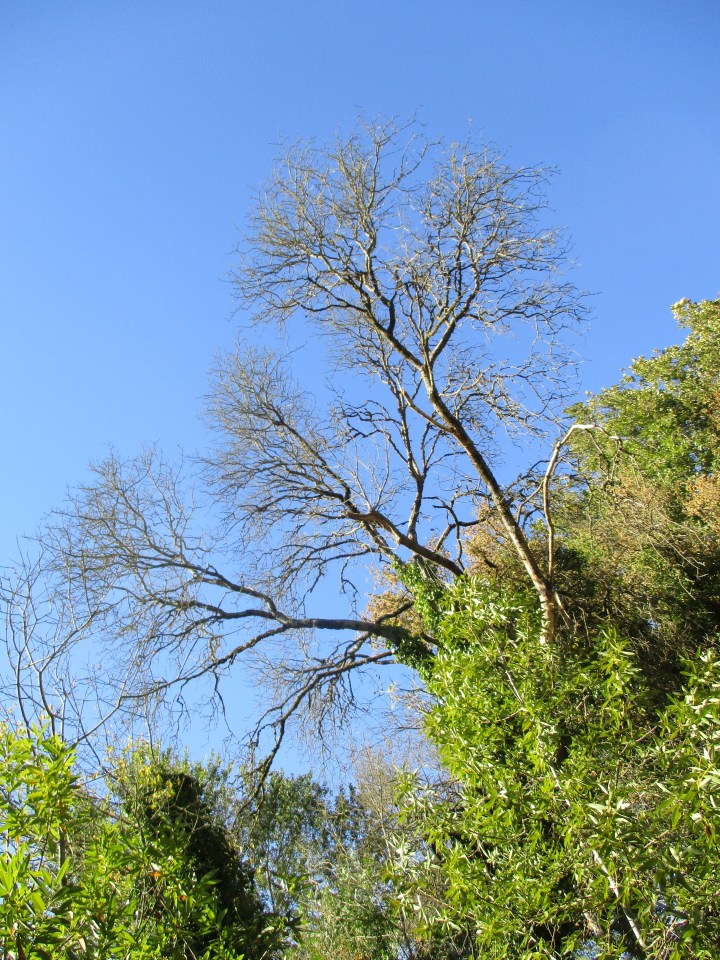 Remember our concern about the mistletoe? (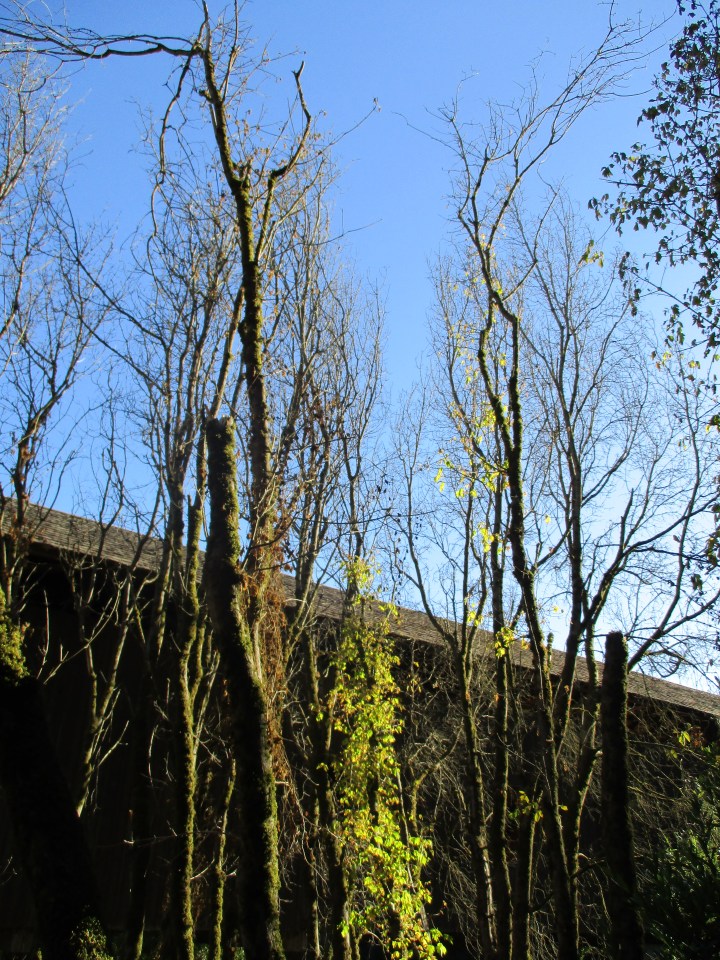
 Tony Tomeo