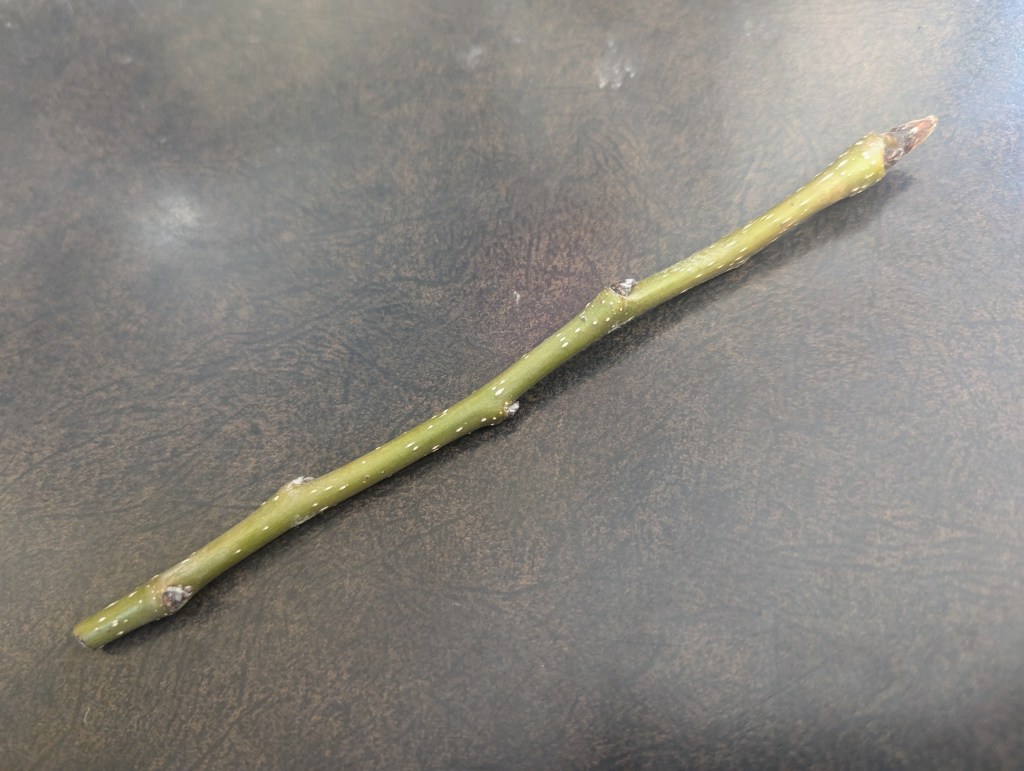
Stick

‘Beurre d’Anjou’

Here it is. The stick! I paid $7.79 for it with delivery from San Leandro, and waited a few days for its arrival last Wednesday. Since then, it was processed into two scions and a cutting, each with two buds. The terminal bud of one of the scions is actually accompanied by a few smaller buds. The scions were grafted, and the cutting was plugged, last Thursday, less than a day after the Stick arrived. I am very pleased with the results, and hope to be even more pleased with their favorable performance in the future. Ultimately, the finished product will be at least one pear tree. More specifically, it will be a ‘Beurre d’Anjou’ pear tree, which is more often known as ‘d’Anjou’ or ‘Anjou’. It and ‘Seckel’ were the only two cultivars of pear that I wanted to acquire this winter. After obtaining scions for ‘Seckel’ pear from the Scion Exchange of the Monterey Bay Chapter of the California Rare Fruit Growers on the first of February, ‘Beurre d’Anjou’ remained elusive. Every pear tree that I could get scions from was either another cultivar, or not identifiable by cultivar. I really thought that the process would be simpler. I could have purchased a tree from bare root stock at a nursery, but that would have been comparable to cheating, and would have cost about $40. The well rooted quince understock for grafting was already here and waiting. I grew a few specimens of it from suckers of an established pear tree, and already used one for the previously acquired ‘Seckel’ scions. Because I was so confident that I would eventually acquire the only pear cultivar that I craved more than ‘Seckel’, I retained the biggest and best of this understock for these recently acquired scions of ‘Beurre d’Anjou’.
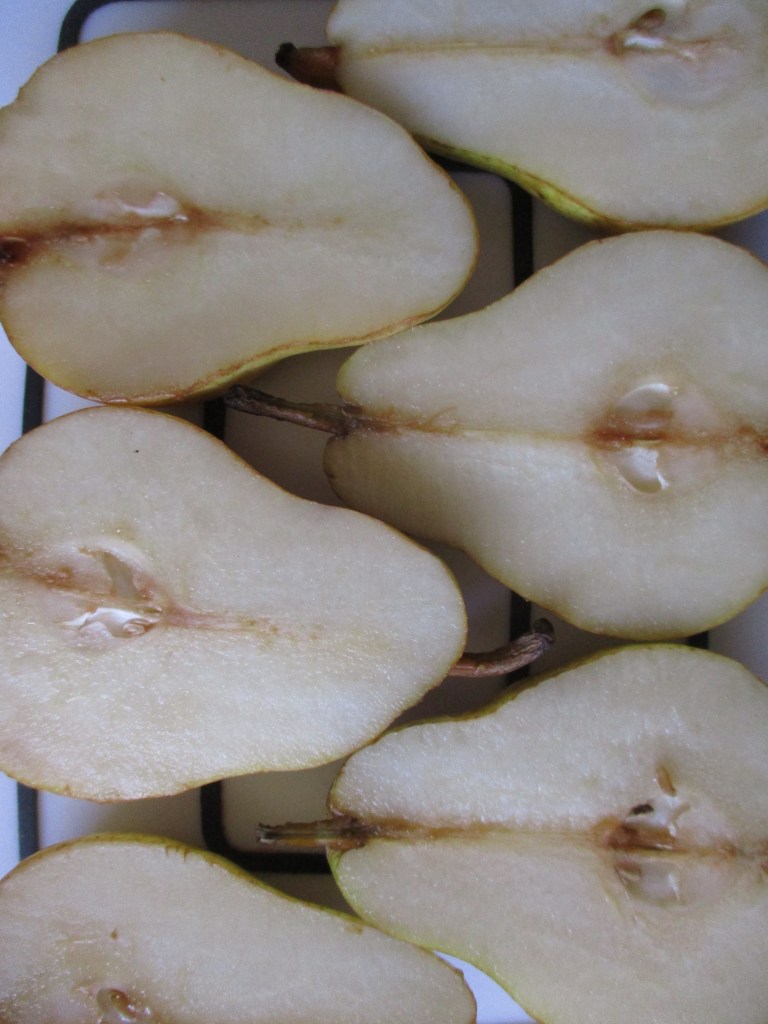
Pomes Produce Better Than Palms

Pear season continues late into October.

Dates, coconuts, acai berries and palm oil grow on palm trees. All are rare in local home gardens. The palms that are popular in much of California are almost exclusively ornamental. Very few of them produce useful fruits. Despite the similar pronunciation, such palms are not at all related to pomes. Some of the more familiar fruits happen to be pomes, which are also known as pommes.

Apples and pears are the most popular examples of pomes. Quinces, which were very popular decades ago, are now rare. Quinces are so closely related to pears that they work well as dwarfing understock for home garden pear trees. (Orchard pear trees use other understocks that are not dwarfing.) Actually, most quince trees grew secondarily from roots of dead or removed pear trees.

Saskatoons (serviceberries), chokeberries (aronias) and medlars are locally rare pome fruits that are slowly gaining popularity. Productively fruiting cultivars of loquat are now more available than those that were primarily ornamental. Some flowering quinces may produce a few small fruits. Mayhaws and mountain ashes (rowans) are berry-like pomes that are more familiar in other regions.

The earliest cultivars of apple might be in season by late July, before stone fruit season finishes. (Some peaches, the largest of the stone fruits, ripen in September!) The latest will be ready in late November, at least a month into citrus season. Pear season extends from August into October. So, this is the middle of apple and pear season. Most but not all other pomes are already finished.

Like stone fruit trees, the trees and shrubs that produce pomes need very specialized pruning while dormant through winter. Without annual pruning to enhance structural integrity and concentrate resources, apple and pear trees are unable to support all of their fruit. Shrubby quince trees become thickets without pruning for grooming and confinement, although they may not need it annually.