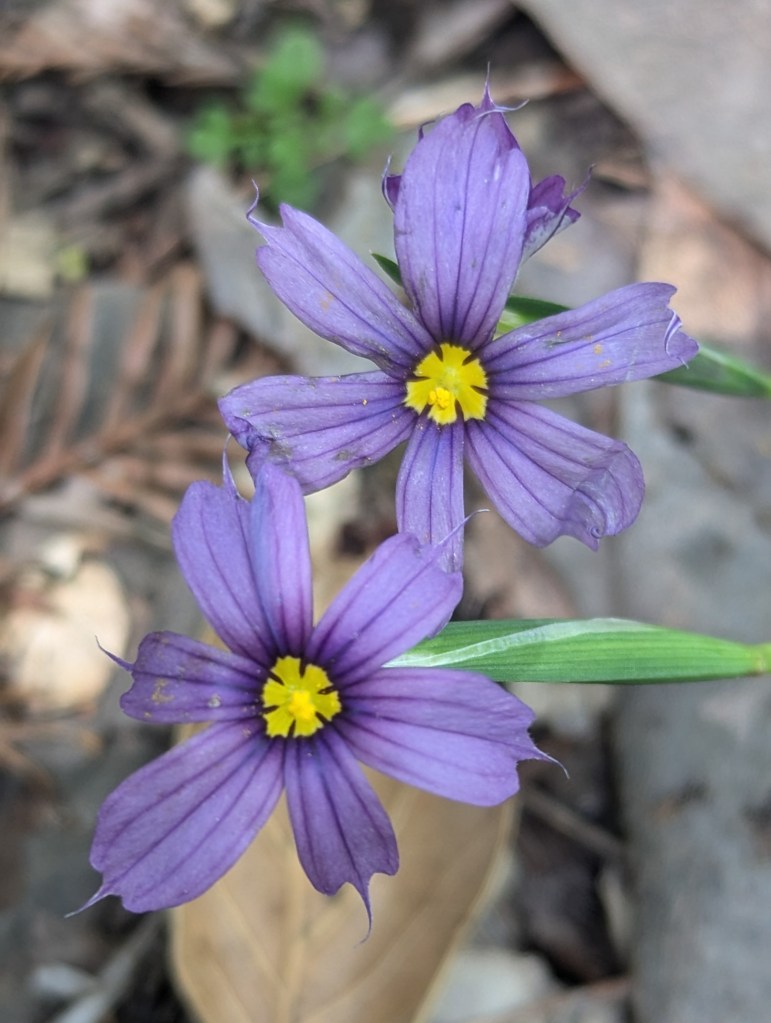
It is not a grass, and lacks eyes, but it is native to most of California and western Oregon. Blue-eyed grass, Sisyrinchium bellum, is related to iris, which actually sounds ocular. Its tiny flowers are typically rather purplish, but can be clear sky blue, or rarely white. Bloom continues through spring until summer dormancy. All foliage then dies back until autumn.
Blue-eyed grass develops small foliar tufts that expand quite slowly. It propagates easily from division of its thin rhizomes as it resumes growth in autumn. Plugging newly divided rhizomes adjacent to original foliar tufts accelerates expansion. Blue-eyed grass can self sow, but typically does so only sparsely. Its grassy foliage is typically less than a foot tall.
Although native and impressively resilient, blue-eyed grass appreciates a bit of moisture. However, it may never require irrigation, since it is dormant through the summer season. Irrigation might maintain foliage through much of summer, but if excessive, can cause rot. Blue-eyed grass prefers sunny and warm exposure, without contention from other plants.


 Tony Tomeo