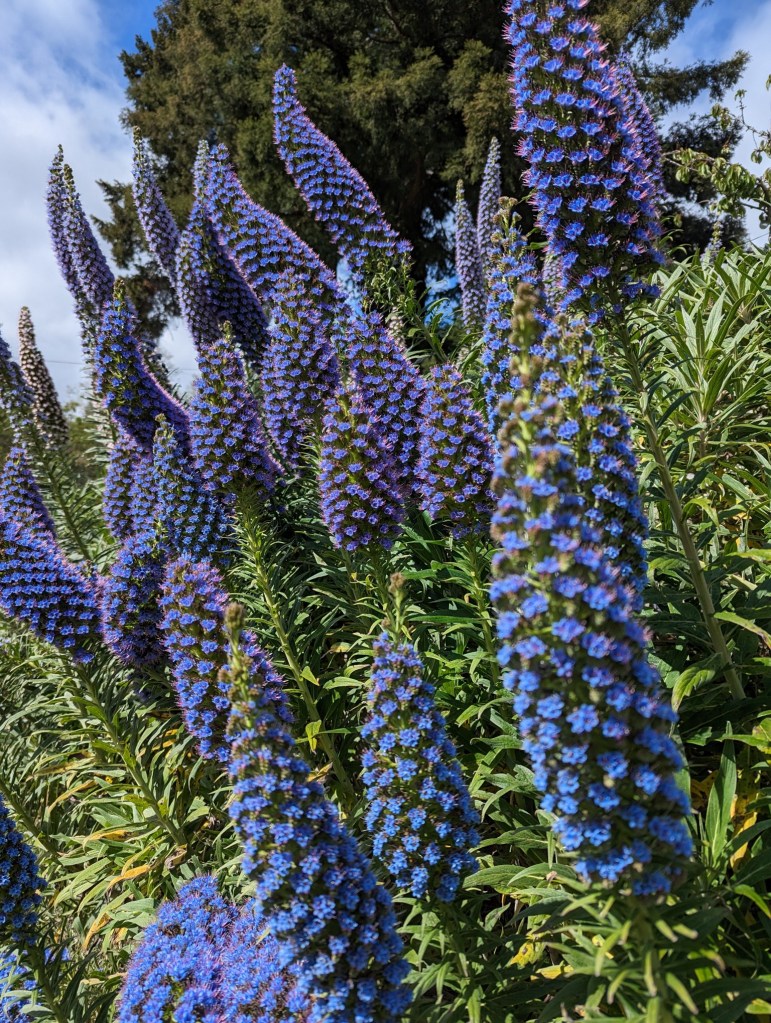
This is most certainly something to be proud of. Pride of Madeira, Echium candicans (or fastuosum), can bloom perfectly blue. Varieties that bloom white or lighter lavender blue are rare locally. Feral specimens might exhibit such floral color variation though. Bloom occurs only annually, but can last through spring. Butterflies and bees are very fond of it.
Pride of Madeira occasionally self sows, but is not too aggressively invasive. It performs exceptionally well within coastal climates. Feral specimens on inaccessible coastal cliffs are only briefly scruffy after bloom. Deadheading within home gardens is tidier and limits seed dispersion. Moderate watering enhances foliar color. Excessive watering rots roots.
Small new specimens of pride of Madeira grow fast, but perform for only about five years. They generally get about six feet tall and eight feet wide. Cool or foggy coastal weather promotes taller and more vigorous growth. Warm exposure might promote more compact growth. The narrow and grayish leaves are rather raspy. ‘Star of Madeira’ is a variegated and compact cultivar.
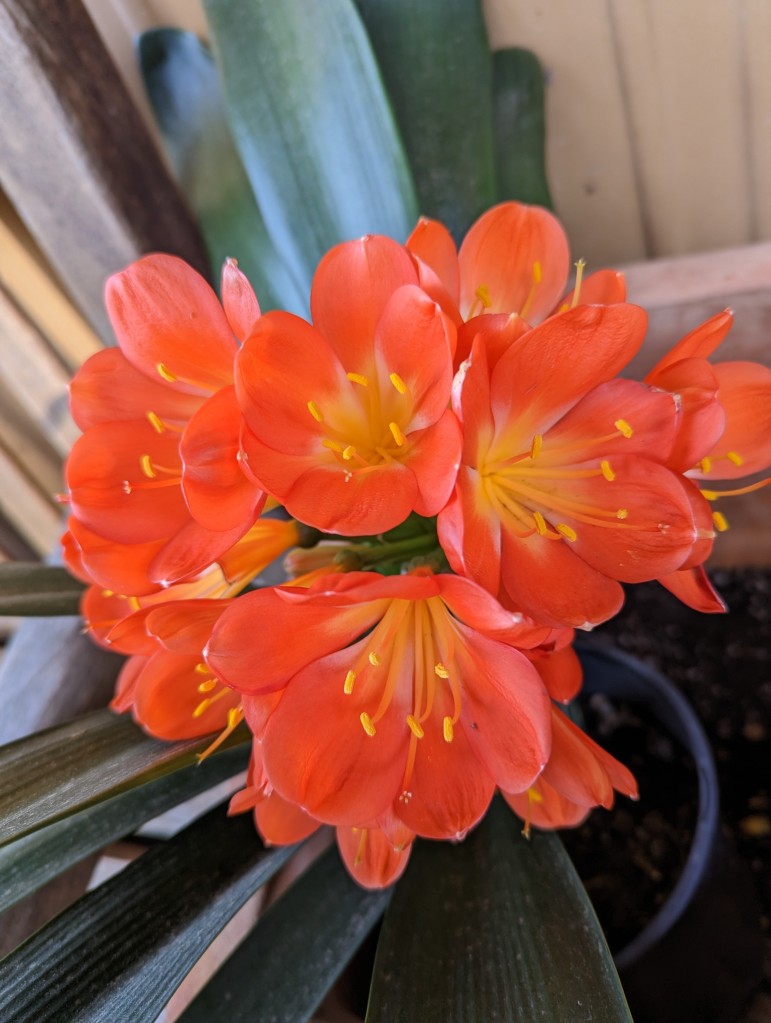
Kaffir lily, Clivia miniata, and lily of the Nile seem to be similar but are very different. Both develop densely evergreen mounds of arched strap shaped leaves. Both bloom with many funnel shaped flowers in spherical umbels on upright stems. Even their thick and rubbery rhizomes and roots are similar. However, they are related neither to each other nor to lilies.
Kaffir lily bloom is rich orange, fiery orangish red or yellow. This is opposite of the pastel blue or white floral color range of lily of the Nile. While lily of the Nile requires abundant sunlight, Kaffir lily tolerates significant shade. Kaffir lily leaves and bloom are more stout and less pliable than those of lily of the Nile. Kaffir lily foliage is generally darker green.
Individual leaves of Kaffir lily can be three inches wide and about a foot and a half long. Mounding growth of old colonies can get more than two feet high. Bloom hovers barely above the foliage. A few round and bright red berries can develop after bloom. Individual seeds within each berry may be genetically variable. All parts of Kaffir lily, particularly the rhizomes, are toxic.
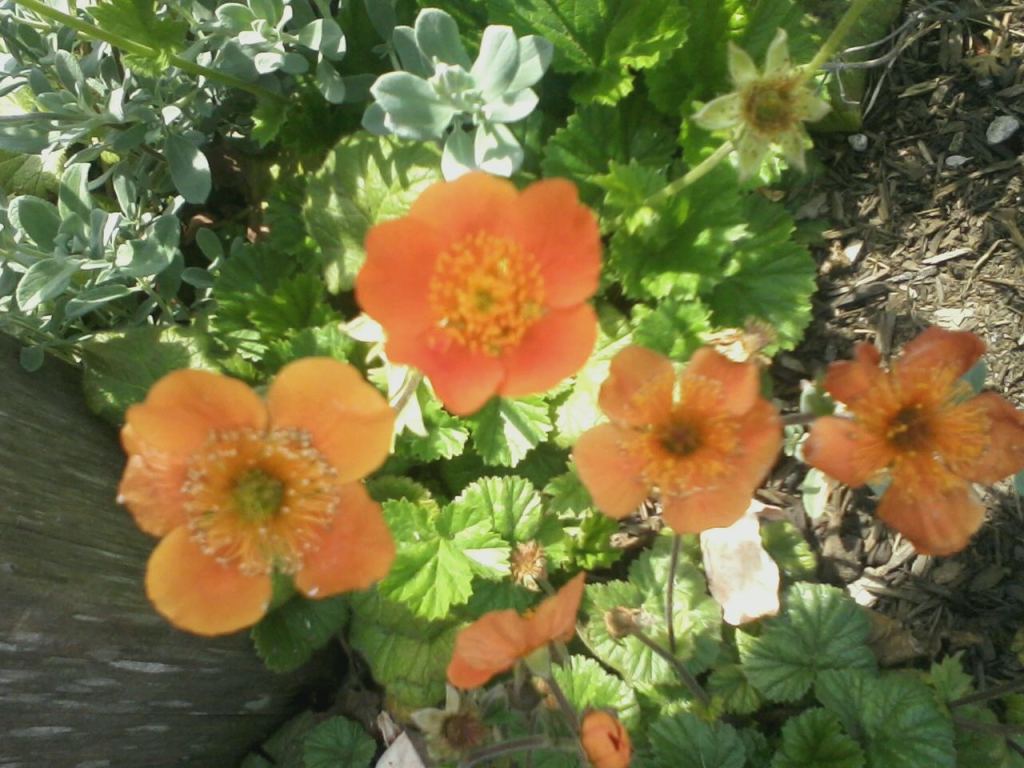
Old fashioned geum (or ‘avens’), Geum coccineum, was popular in rock gardens of the 1970’s because it clings to stone, and cascades somewhat. In modern gardens, it works just as well in large pots or planters, mixed with other perennials. The fuzzy foliage forms compact mounds about half a foot high and wide. The bright orange flowers with fuzzy yellow centers stand about twice as high, and bloom from spring through summer. Removal of fading flowers promotes continued bloom.
Rhody, Carson and I finally left on vacation. Although this trip was planned a year ago, it was delayed weekly since February. I had intended to leave prior to March. I finally realized that the timing would never be convenient, so left anyway, after midnight on Wednesday morning. We arrived in Ilwaco on Wednesday night, and went to Skooter’s Garden at Tangly Cottage Gardening in the morning. Of course, we stayed later than intended, ate cookies with coffee, and arrived in Silverdale later than we should have on Thursday night. The first four of my Six here are gifts from Tangly Cottage Gardening, so are approved by Skooter. The last two were at the Port of Ilwaco.
1. Canna ‘Stuttgart’ is tall and elegant, with small peachy orange flowers and irregularly white variegated foliage. I requested a copy of it shortly after leaving without it last year.
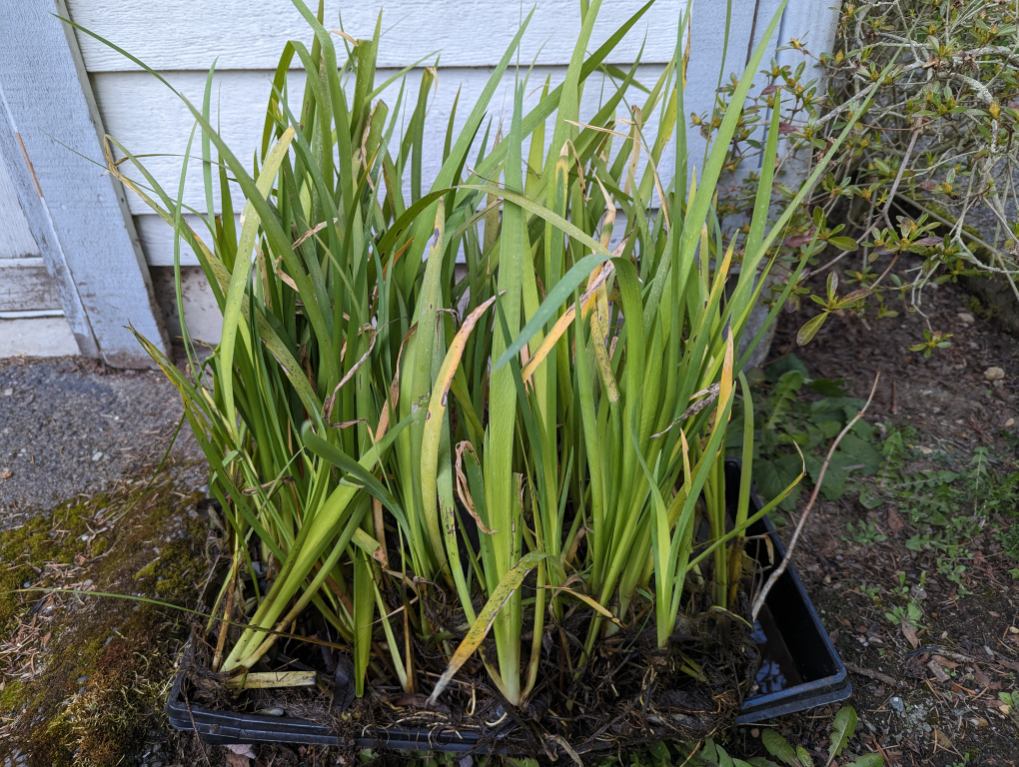
2. Iris X Louisiana ‘Black Gamecock’ is the most popular Louisiana iris, with dark purplish blue bloom. I requested some of it when it was removed from Skooter’s Gaden. This colony will divide into many individual rhizomes. I expect to get significant mileage from them, and I know they will multiply efficiently.
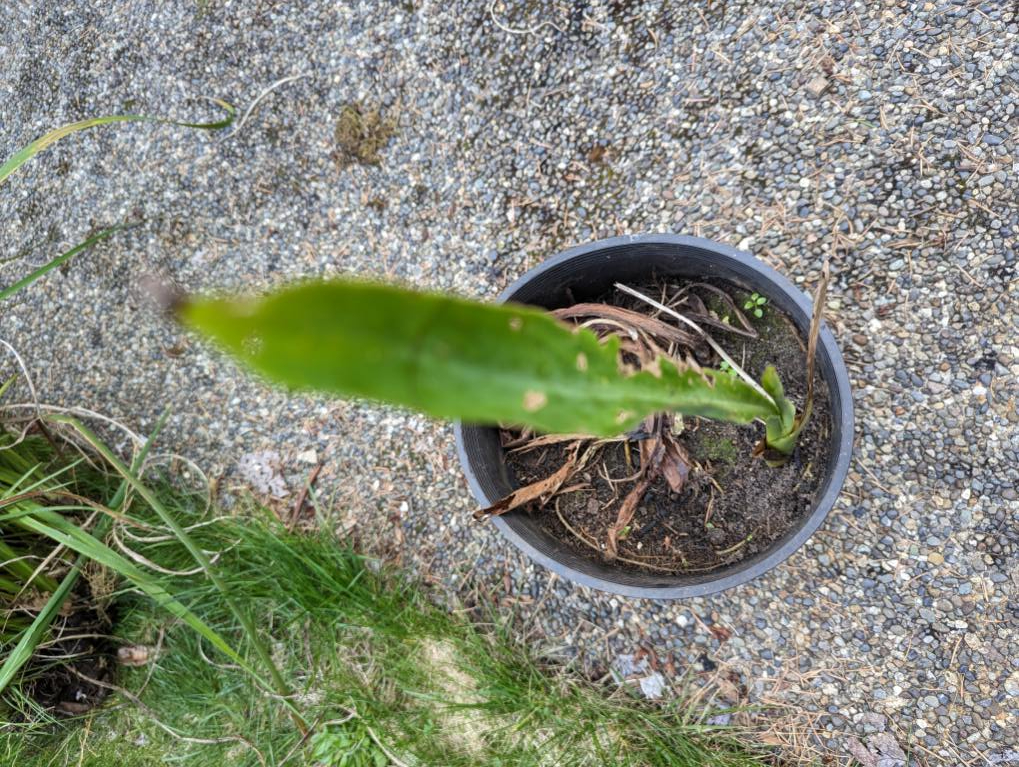
3. Iris unguicularis, Algerian iris was s surprise. It was split after my arrival, directly from a healthy colony within Skooter’s Garden. I had been impressed with the sky blue bloom, but could not justify trying it. Now, no justification is necessary. We will likely put much of it within the Blue Garden. I know that this colony is not very impressive in this picture, but the rhizomes are the important parts.
4. Sambucus racemosa, red elderberry grows wild in Skooter’s Garden. I had been wanting this for a while, but did not think to request it last year. I requested it this year, so got four good wild seedlings.
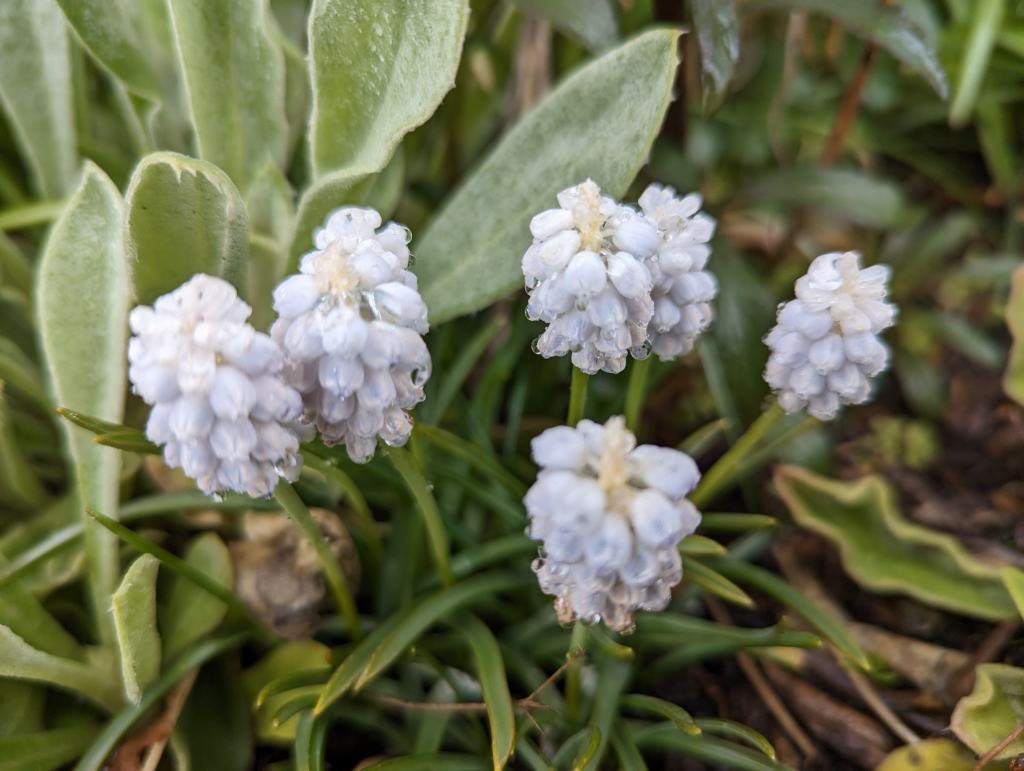
5. Muscari armeniacum ‘Album’, white grape hyacinth inhabits the landscapes at the Port of Ilwaco. I got copies of this last year because I had been wanting it for a while. I know that blue is the most traditional color for grape hyacinth, but white is my favorit color. It may go into the White Garden at work.
6. Muscari armeniacum, grape hyacinth is quite abundant at the Port of Ilwaco. I did not request any of it because I already have a small colony of it for my own garden, and I do not want any others to mingle with them, regardless of how similar they seem to be.
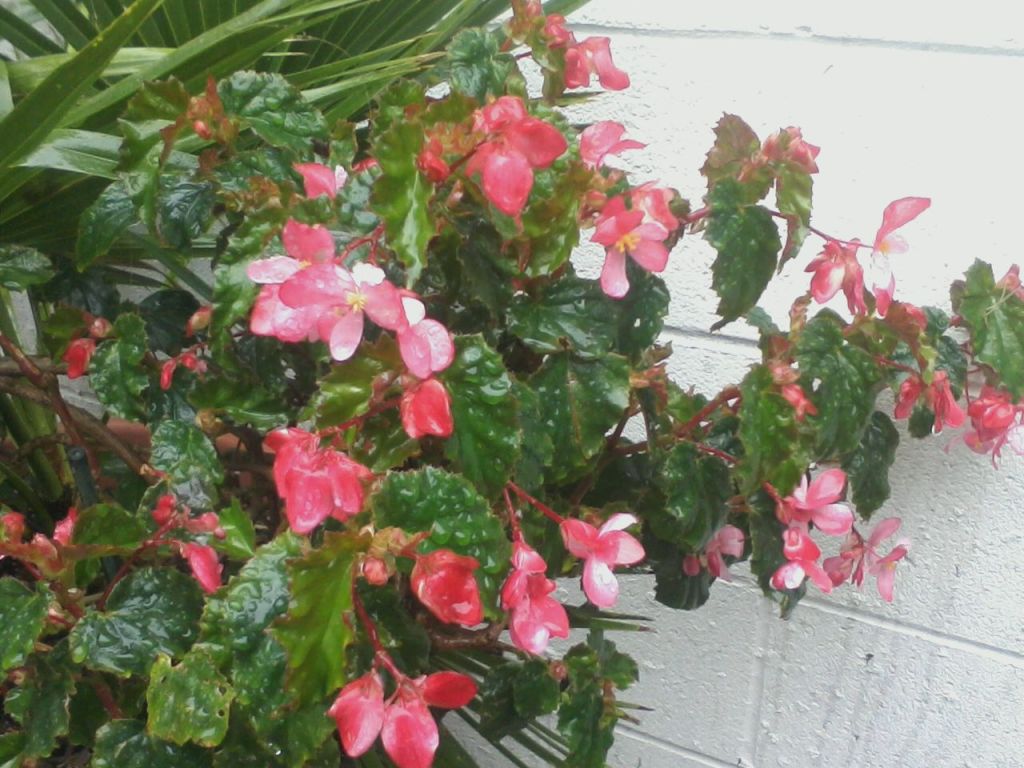
Richmond begonia is very easy to propagate by cuttings.
It is difficult to say whether Richmond begonia, Begonia ‘Richmondensis’, is grown more for unusual waxy pink flowers that bloom throughout the year, or rich glossy green leaves with bronzy red undersides. Perhaps it is the distinctive combination of both characteristics. Perhaps it is because Richmond begonia is so easy to grow in partial shade near porches or atriums where other flowering plants would want more sunlight. It only wants relatively rich soil and regular watering, and is quite happy in pots. Mature plants eventually grow to two feet tall and broad. Lanky branches that get cut back to promote dense growth can be rooted elsewhere in the garden.
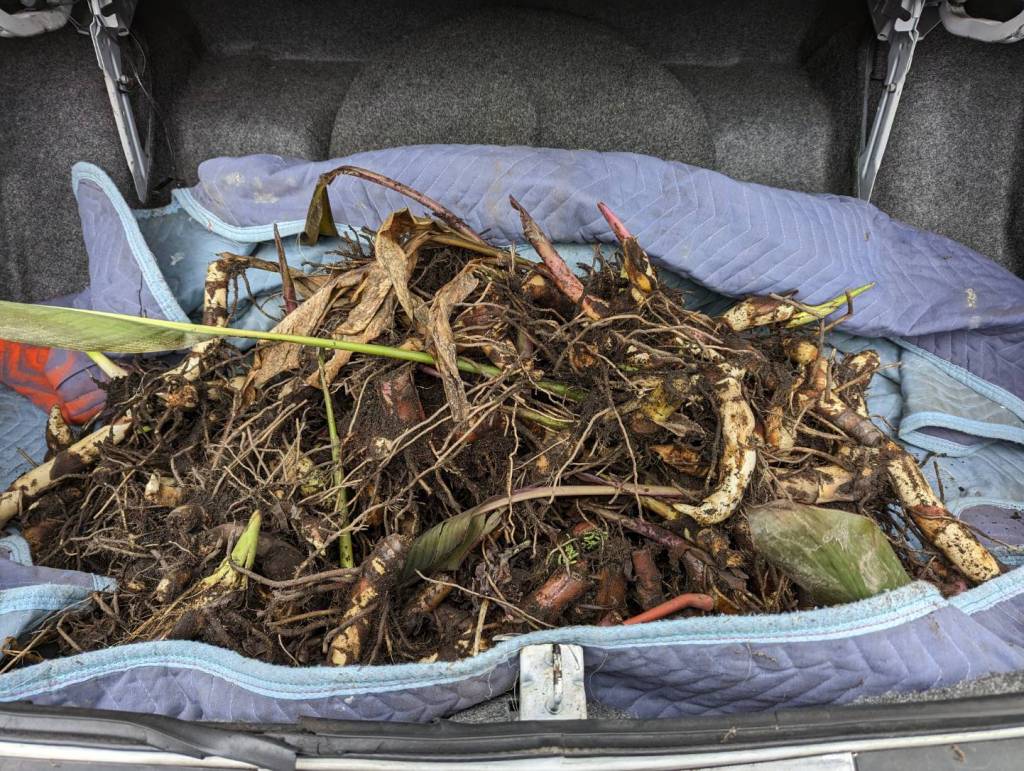
It is exactly what it looks like; more Canna rhizomes. I am very aware that there are already too many Canna here. I grew them. I do not care. I saw these in a neighbor’s garden, and asked for a few copies. She told me that I only needed to dig them myself, as if that might be a problem. As she pointed out those that were migrating a bit too close to her home, I dug many more than I should have. Since she was so generous to share so many, I felt obligated to remove all that were superfluous. Besides, to me, they are not junk. I am very pleased with them, even if they are a bit excessive.
There are two cultivars, and perhaps seed grown rhizomes of one of the two cultivars. The shorter sort are ‘Inferno’, which is the same as ‘Tropicanna’ and ‘Durban’. Some Canna cultivars seem to develop several synonyms. Its bright orange bloom stands tall above distinctively striped and bronzed foliage. It gets about six feet tall, so is only the shorter of the two cultivars because the other is so much taller. Although it is one of the more popular cultivars, I only recently acquired a single can of it from Brent last year. I am pleased to grow much more.
The other cultivar seems to be comparable to the unidentified cultivar at work that resembles and might actually be Canna musifolia. It has similar scrawny orange bloom on top of very tall canes that I must bend over for deadheading. Because I did not notice them until after frost, I do not know how bronzed the foliage is, or if it is bronzed at all. The neighbor who gave them to me says that they are ‘lightly’ bronzed. The newly emerging buds seem to be green without any bronze. I will be pleased with any color, but simple green would be awesome! Some of these may have grown from seed, so may be slightly different from the original.
There were enough rhizomes of ‘Inferno’ for a dozen #5 cans with about four rhizomes each. There were enough rhizomes of the taller sort that might be Canna musifolia for sixteen #5 cans with about three very plump rhizomes each. That was after sharing some with others at work, and leaving some for a neighbor of the neighbor who shared them with me. I intend to take some to the Pacific Northwest before the end of winter, but canned them all because I do not yet know when I will leave. I can always remove some from their cans, or just take them in their cans.
Since they fit into the trunk more easily than a previous batch of ‘Wyoming’ and a cultivar that resembles Canna flaccida that I obtained from another neighbor, they seemed to be less numerous. However, the previous batch included foliage. These rhizomes lacked foliage, and were actually a bit more numerous. Regardless, I am very pleased with them, and intend to enjoy growing them. As I closed the tailgate after unloading them, I could see that Rhody did not share my enthusiasm.
Even if never as overly indulgent in bloom as when new, Kalanchoe blossfeldiana is one of the more sustainable of popular blooming florist plants. Forced bloom remains colorful for quite a while. By the time it deteriorates enough to necessitate grooming, new foliage may already be developing. Sporadic subsequent bloom is more natural in appearance.
Ultimately, Kalanchoe blossfeldiana becomes more of a succulent foliar houseplant that occasionally blooms, rather than a spectacular floral plant. Individual plants may survive for only a few years, but are likely to generate basal pups that grow as new plants during that time. Also, they are very easy to propagate by succulent stem and even leaf cuttings.
Mature Kalanchoe blossfeldiana do not get much more than a foot high and wide. Some may stay half as tall. Their lower leaves can get three inches long, with crenate margins. Minute yellow, orange, red, pink or creamy white flowers bloom for late autumn or winter. Garden plants require shelter from chill through winter and hot sunlight through summer. Most are houseplants that appreciate copious sunlight.
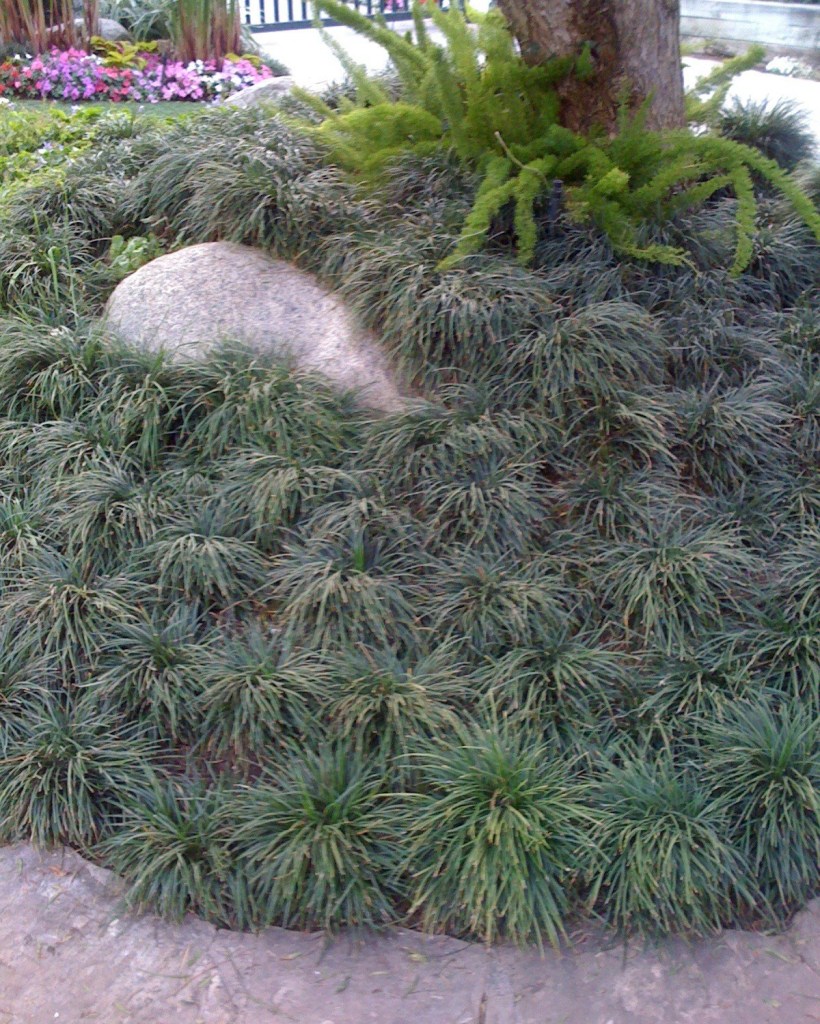
This simple green (unvariegated) mondo grass has been doing well.
The thick clumps of evergreen grass-like foliage of mondo grass, Ophiopogon japonicas, make a nice lumpy ground cover for small spaces. Because it is rather tolerant of shade, and actually prefers partial shade to full sun, it works nicely under Japanese maples or highly branched overgrown rhododendrons. It gets only about half a foot deep. Narrow stems with small pale purplish blue flowers that bloom in summer are not too abundant, and are generally obscured below the foliage, but can actually get taller. ‘Silver Mist’ is variegated with white.
New plants are easily produced by division of large clumps. Overgrown or tired looking clumps can be shorn down at the end of winter, before new growth begins. Slugs and snails can be problematic.
Where winter weather is cooler, honeybush, Melianthus major, is likely to be deciduous. If so, it annually sheds all growth that is above ground. It can not bloom where deciduous because only growth of a previous season can bloom. That is no problem here. Dark red floral spikes bloom boldly about two feet above jungly evergreen foliage for early spring.
This silvery gray foliage can grow taller and wider than six feet, even if deciduous during winter. Foliar texture is both luxuriant and elegant. Pinnately compound leaves are more than a foot long with serrate leaflets. Evergreen plants are tidier with grooming to remove deteriorating older foliage as new foliage replaces it. Deciduous plants are always fresh.
‘Antonow’s Blue’ is a bit bluer than the straight species. ‘Purple Haze’ is slightly purplish, with a slightly finer foliar texture. Some notice that the rich fragrance of honeybush bloom resembles that of honey. Also, some notice that the foliar aroma can be rather grungy. All parts of honeybush are toxic. Honeybush wants regular watering and abundant sunlight.
All but very few plants in my garden have history. Some have very extensive history, and a few have been with me for most of my life. Most were gifts. Some grew from pups, seed or cuttings that I collected from work, other gardens, or places that I travelled to. Almost nothing was purchased, although #1 of these six was a significant purchase for me while I was in high school. These Six are described in reverse chronology of their approximate acquisition. None are blooming now, but some get divided and planted now or a bit later through autumn. The roses will get pruned after defoliation. Only naked lady should not be disturbed until later.
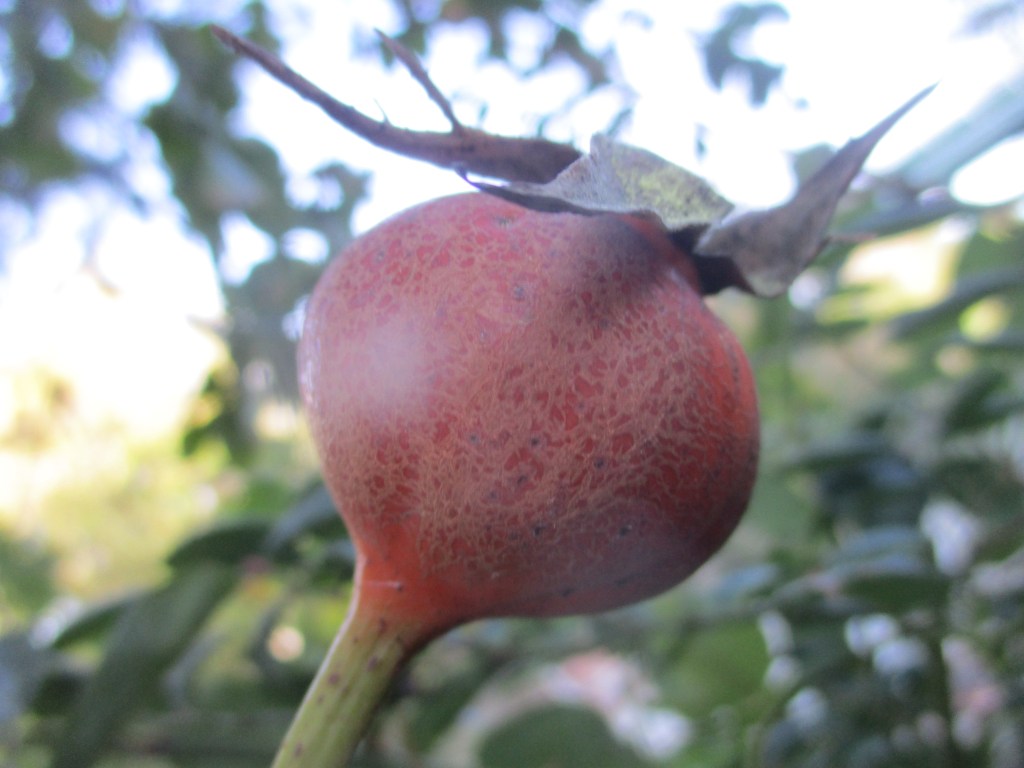
1. 1983 Rosa hybrid, ‘Proud Land’ rose is the only one of these Six that I purchased, and also the only one that has not proliferated abundantly since acquisition. I got only three.
2. 1982 Montbretia masoniorum, crocosmia grew wild on a parcel in Montara where my Pa built his home. I do not know what variety it is. It is not as aggressive as most others.
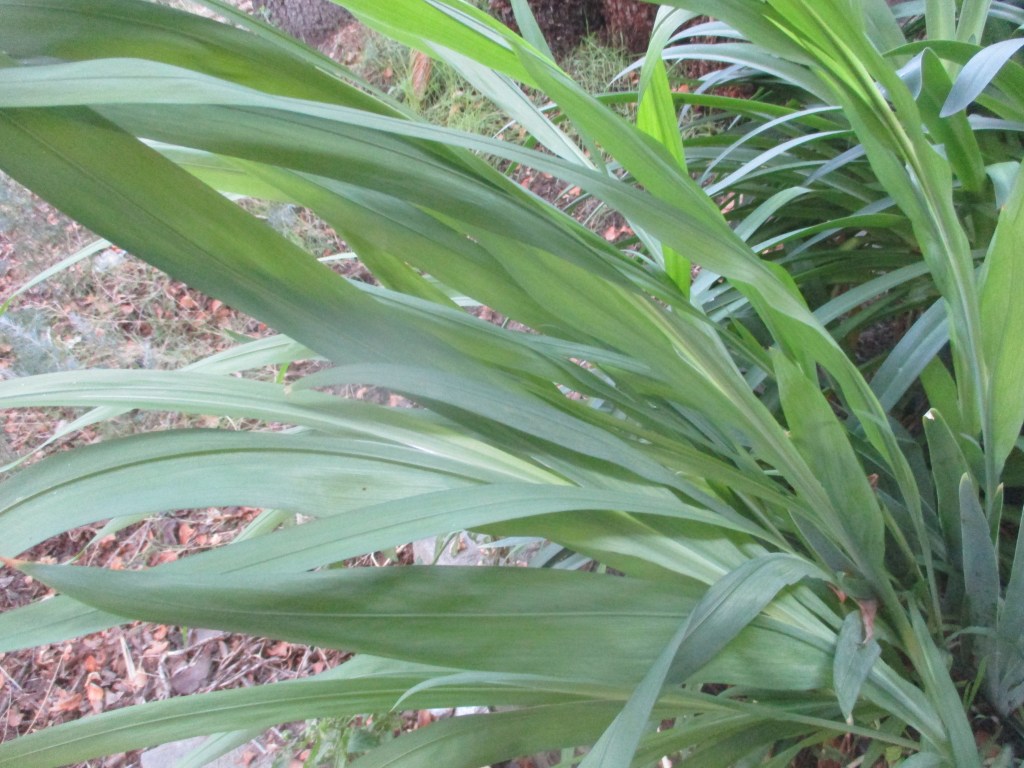
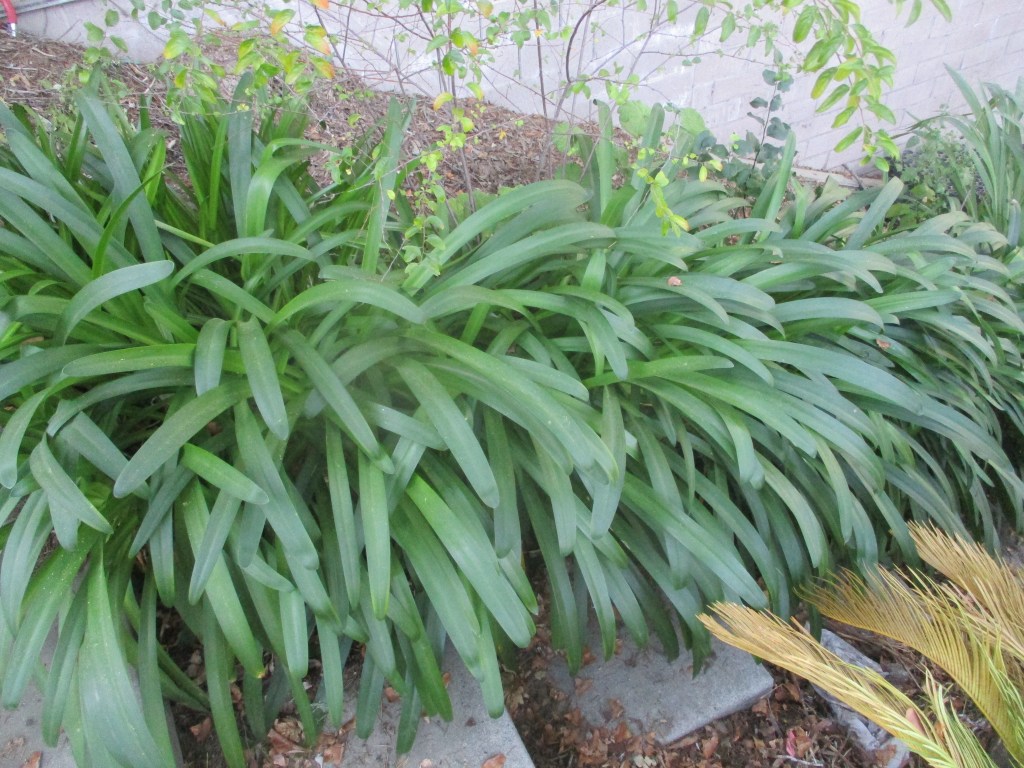
3. 1980 Agapanthus orientalis, lily of the Nile has been with me since I removed it for a beloved neighbor who had brought it from a garden in Oakland about two decades prior.
4. 1979 Amaryllis belladonna, naked lady is from the homestead garden of my maternal maternal great grandparents in Hoot Owl Creek in Oklahoma, like my grape pop iris (5).
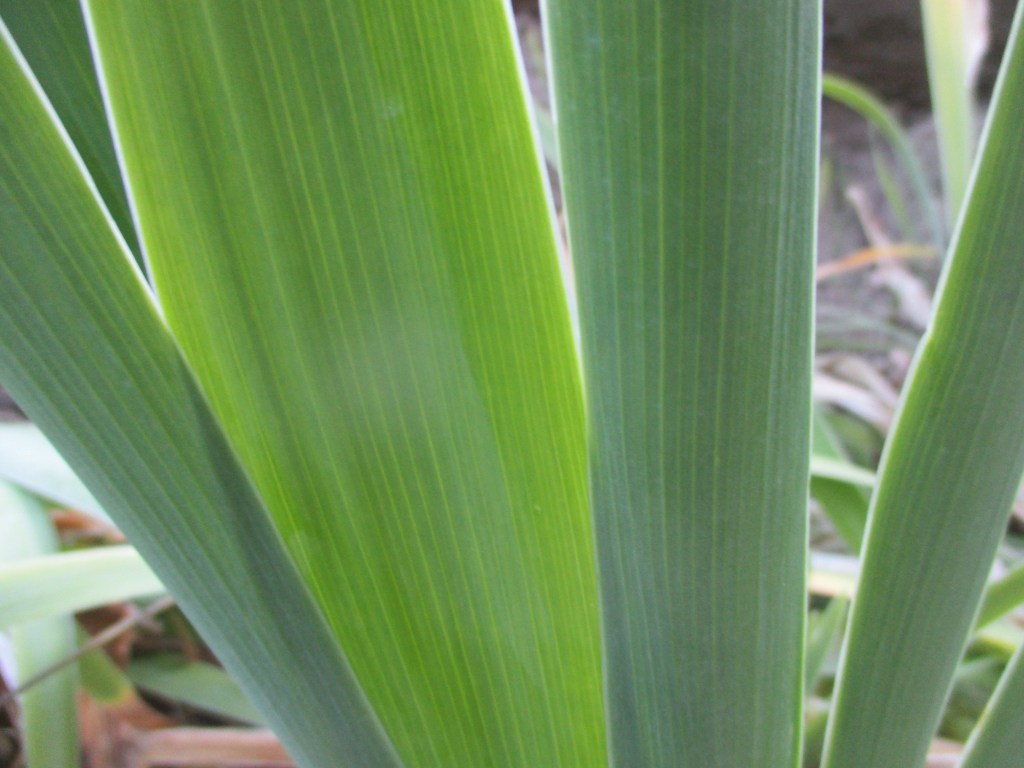
5. 1972 Iris pallida, Dalmatian iris, sweet iris or grape pop iris, came to my garden from the garden of my maternal maternal great grandparents, where it likely grew as an orris.
6. 1971 Rheum rhabarbarum, rhubarb likely grew in the garden of my paternal paternal great grandparents shortly after 1941. I got my copies of it before I got into kindergarten.








 Tony Tomeo