Spuria Iris

Spuria iris should be less rare.

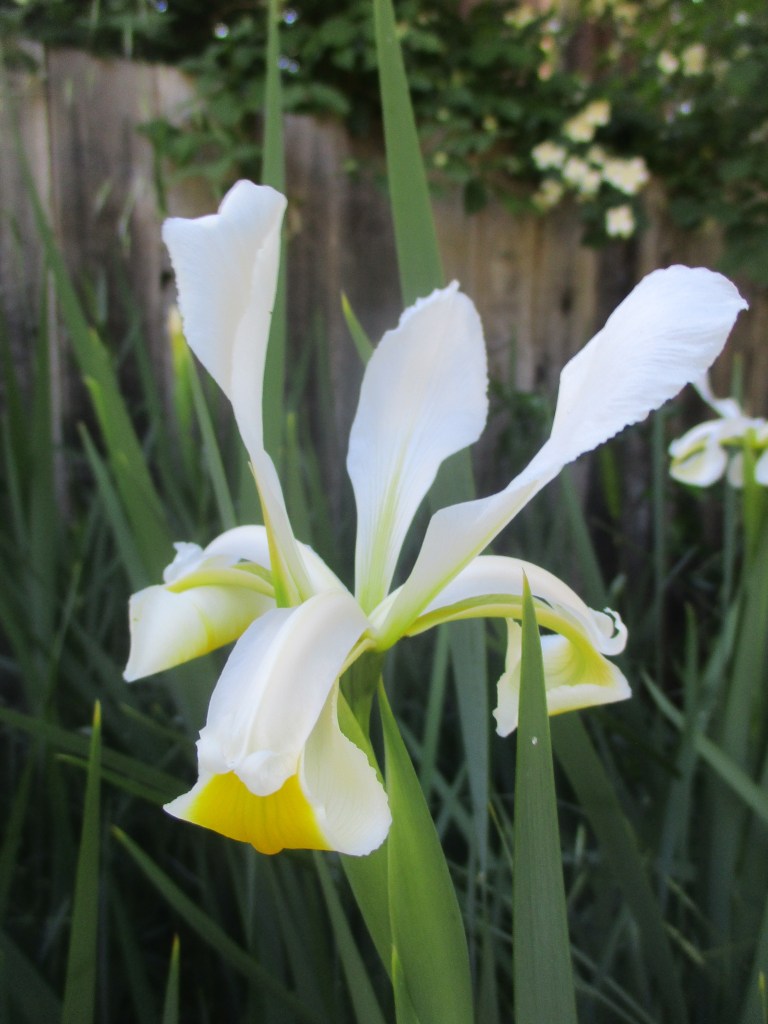
Bearded iris are famously diversely colorful. Not much lacks from their floral color range. Spuria iris, Iris spuria, are quite different. Their floral color ranges only from purplish blue to bright white, all with prominent yellow throats. The least rare of this rare species is the subspecies carthaliniae, almost all of which blooms white. Seed is generally true to type.

Seed might be abundant without timely deadheading. However, propagation is easier by division of the copiously branching rhizomes. Such rhizomes are fibrous and tough, with comparably tough and wiry roots. They migrate to develop broad colonies, which should appreciate thinning every few years. They rarely get too crowded to bloom nicely though.

Spuria iris blooms for almost two weeks during late spring or early summer. Two or three flowers bloom in succession on stems that are nearly as high as their deciduous foliage. Leaves are elegantly narrow and upright like those of cattail, but get only about three feet tall. Carthaliniae subspecies defoliate later than others, which defoliate through summer, then foliate for autumn.

Spring Bulbs Begin In Autumn

Daffodil bloom is not in season, but their dormant bulbs will be soon.

Even before winter begins, it is time to plan for it to end. Bulbs (including corms, tubers, rhizomes and tuberous roots) of many of the earliest spring flowers that bloom while the weather is still cool late in winter should begin to get planted about now. They are still dormant and not all that impressive yet, but have already stored everything they need to be ready to bloom as soon as they think it is time. Since the weather will be getting cooler through autumn before it gets warmer at the end of winter, even the earliest blooming of spring bulbs will stay dormant for a while, and have quite a bit of time to slowly disperse roots before their foliage eventually peeks through the soil.

Bulbs planted later will likely bloom later, which is actually an advantage for ‘phasing’ bulbs. Like vegetables, bulbs can be planted in phases every two or three weeks, depending on the duration of the bloom cycle of the particular bulbs involved. As one group finishes blooming, the next group starts blooming. Bulbs become available when it is time for them to be planted, and generally remain available long enough for a few phases to get added later when convenient, although there is always the threat of particular varieties getting sold out later in the season.

Phasing is only effective in the first season, since bulbs get established after their first bloom cycle, and will subsequently be on the same schedule as all their friends of the same variety. Bearded iris, calla, anemone and rananculus are not conducive to phasing, but instead bloom at a particular time, regardless of when they were planted.

Narcissus, daffodil, grape hyacinth, bearded iris and classic white callas are the most reliable of spring bulbs, and the most likely to naturalize, although bearded iris and callas will probably bloom quite late in their first year. Crocus, freesia and harlequin flower are almost as easy to grow. Anemone, rananculus, hyacinth, lily, tulip and the small colorful callas are tempting, but are not as reliable after their first year because the seasons are so mild here.

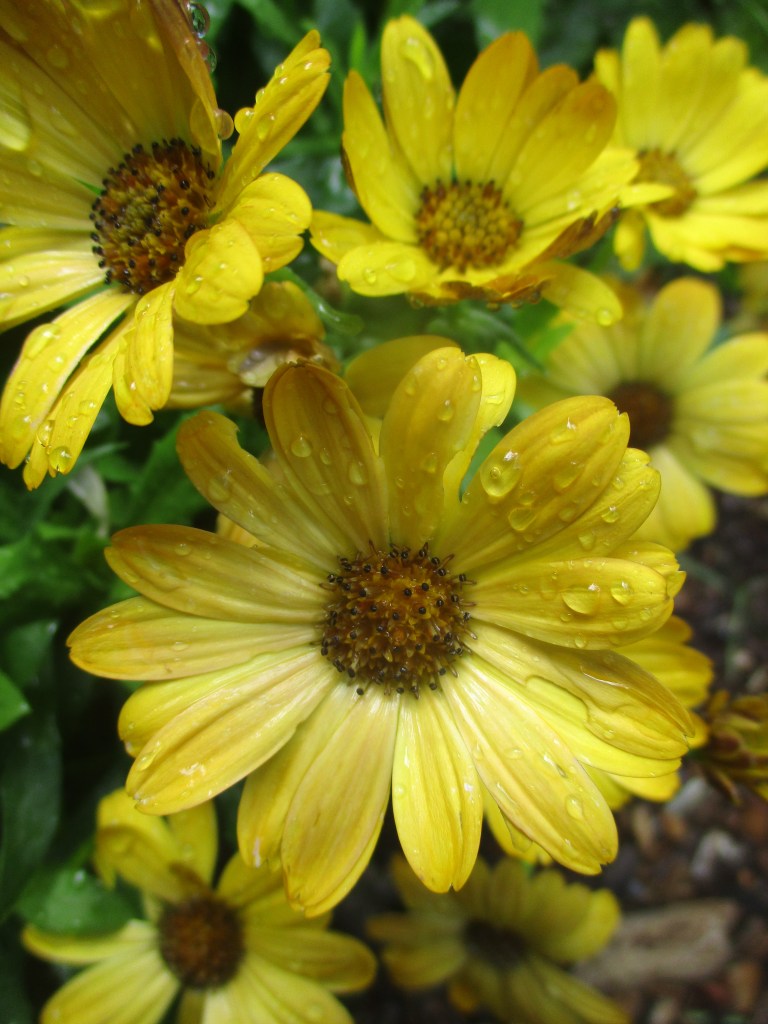
African Daisy

African daisy hybrids are generally sterile.

Old fashioned trailing African daisy was becoming too common by the time it succumbed to the Big Freeze just prior to Christmas of 1990. Shrubbier and more colorful cultivars of hybrids with similar species, particularly Osteospermum ecklonis, are now more popular. Such hybrids mostly lack species designation because their lineage is very complicated.

Mature specimens do not grow much wider than two feet, so do not migrate as efficiently as old fashioned trailing African daisy. Since they are hybrids, they do not produce viable seed either. However, if pressed into damp soil, peripheral stems generate roots to grow as new plants that extend the collective width. They also replace deteriorating old plants.

Sporadic bloom may be almost continuous between a few profuse phases, with the most profuse phase between winter and spring. Only the coolest and warmest weather inhibit bloom. It can be difficult to shear overgrown plants between phases without ruining a few flowers. Floral color is pastel hues of purple, lavender, red, pink, orange, yellow or white.

Garden Phlox

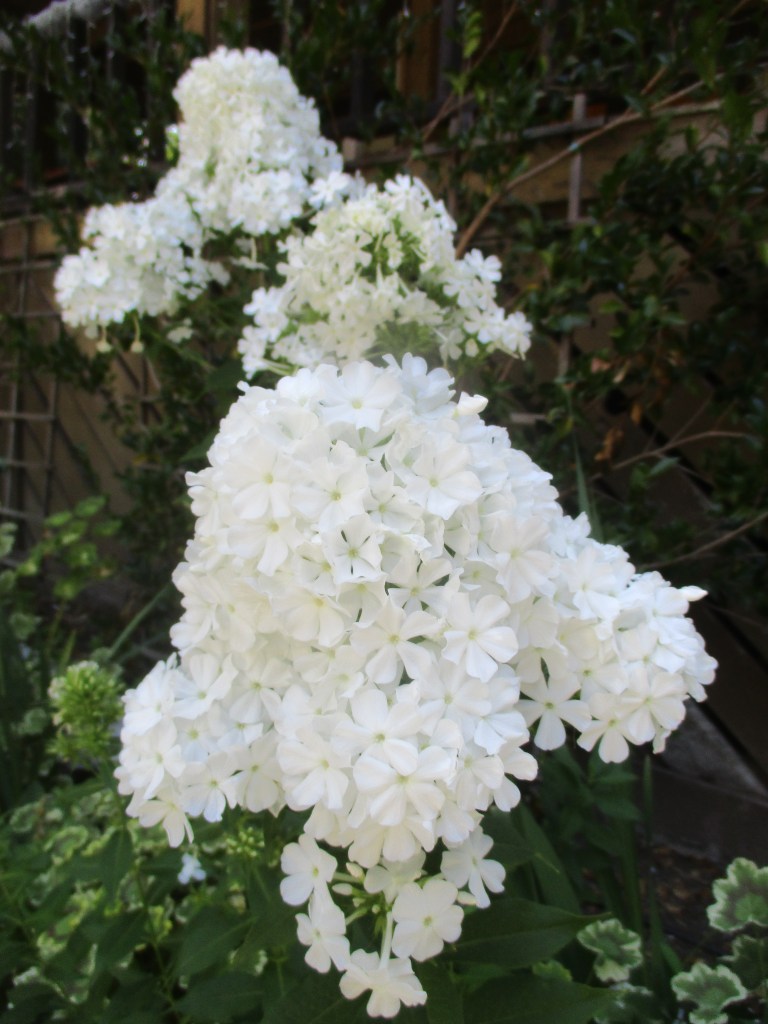
Pictures can not share the fragrance.

More than a dozen species of Phlox are native to various ecosystems of California. They are generally uncommon within refined home gardens though. The more popular garden phlox, Phlox paniculata, is native east of Kansas. It naturalizes in some regions, such as the Pacific Northwest. Locally, it might self-sow only where it gets water through summer.

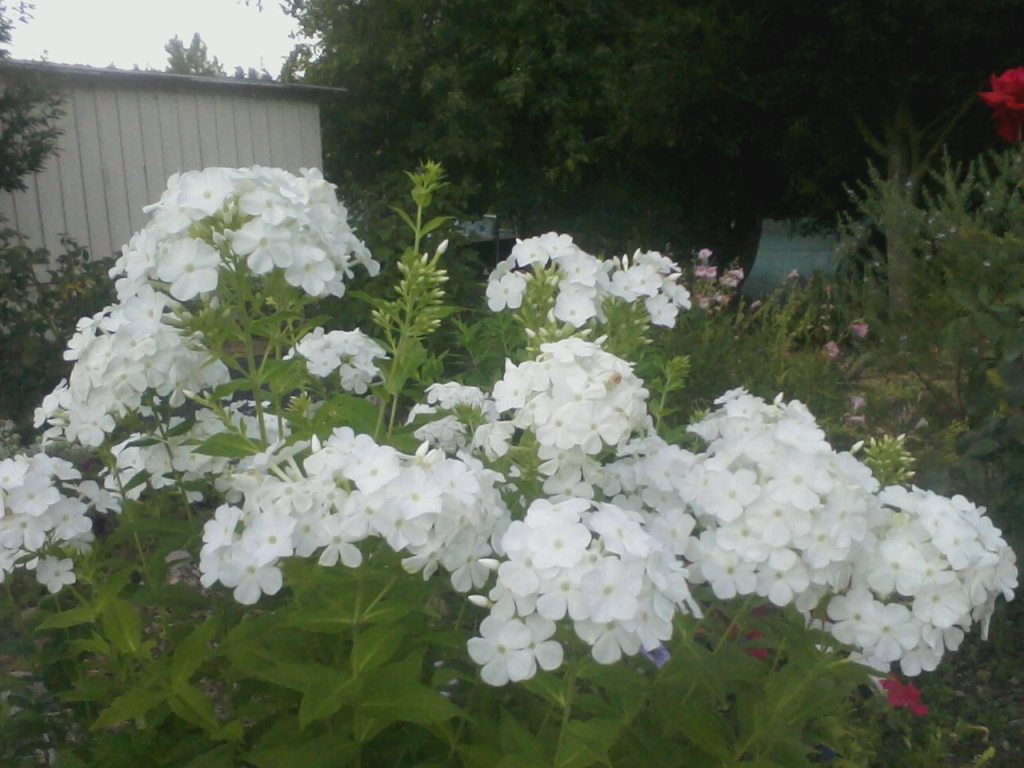
Garden phlox can get as high and wide as three feet. Some modern cultivars should stay a bit more compact. Individual flowers are only about an inch wide, but bloom with many others on dense panicles that are as wide as six inches. This richly fragrant bloom is red, pink, white, pastel orange or pastel purple, and continues for almost a month of summer.

As its potential for naturalization suggests, garden phlox is not particularly demanding. It appreciates good exposure, but can tolerate a bit of partial shade. It enjoys richly organic soil but can survive within soil of mediocre quality if it is not too dense. Regular watering sustains bloom, but established plants can survive with minimal watering after blooming. Propagation by division of large or overgrown plants while dormant through late winter is very easy.

Garden Phlox

Garden phlox is more popular in other regions than it is here.

In eastern North America where it grows wild as a native, garden phlox, Phlox paniculata, is modest but classic perennial that gets more than four feet tall with pinkish lavender flowers from late summer through early autumn. Modern garden varieties are mostly somewhat more compact with pink, red, light purple or white flowers. Many have fragrant flowers; and some have flowers with lighter or darker centers. Butterflies and hummingbirds dig them all.

Locally, garden phlox probably looks best with slight shade or among other lush plants, only because humidity is so minimal. Otherwise, it would be just as happy out in the open. In well watered gardens with rich soil, it sometimes self sows a bit, but rarely naturalizes continually enough to revert to a more natural (wild) state like it can in gardens on the west coast of Oregon and Washington. Garden phlox can be propagated by division of mature plants either after bloom in autumn or in spring.

Thread Agave

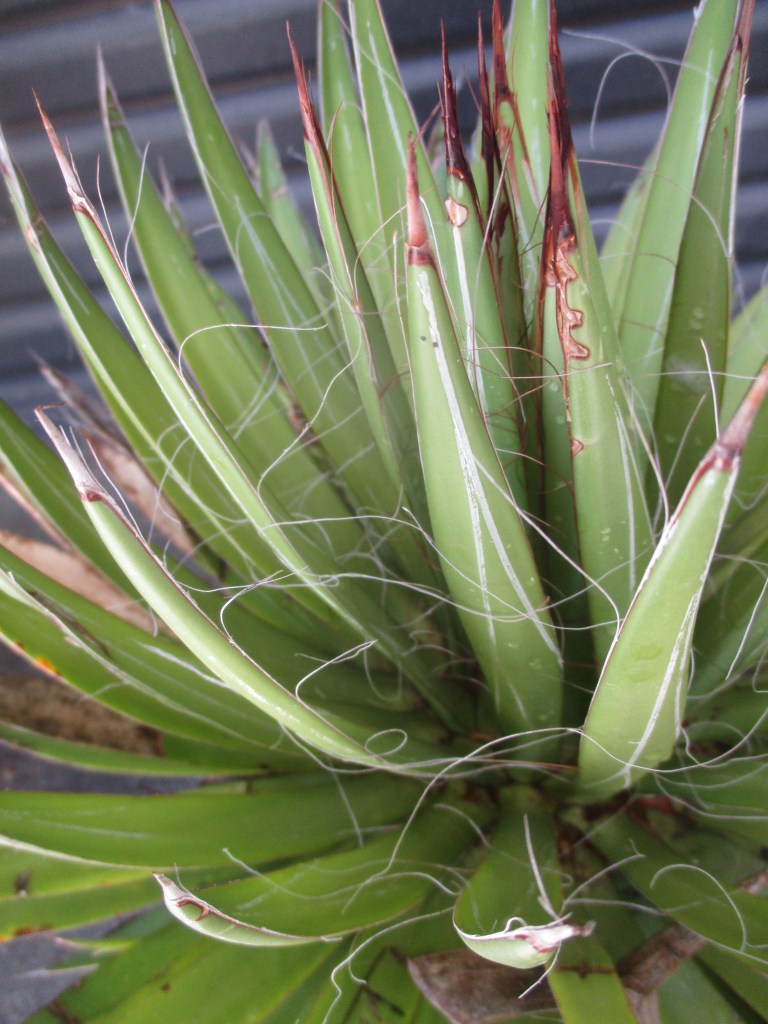
Agave generally excel in chaparral climates.

Many species of Agave and Yucca should probably be more popular here than they are. Several are endemic to desert or chaparral climates. Once established locally, they may survive without irrigation. Occasional watering through summer only improves their foliar color and vigor. Except for gophers that might attack from below, not much offends them.

The primary deterrent to their popularity is their dangerous foliar spines. Many species of Agave and Yucca grow too large to not become obtrusive within compact home gardens. Consequently, their striking but hazardous foliage can be difficult to avoid. Fortunately, a few species such as thread agave, Agave filifera, remain proportionate to home gardens.

Thread agave develops rounded foliar rosettes that are less than three feet wide and two feet tall. Evergreen leaves retain silvery impressions of adjacent leaves. Although growth is generally slow, vigorous floral stalks may grow rapidly to ten feet tall during summer, to bloom during autumn. Pups begin to replace original rosettes prior to monocarpic bloom.

Pups Of A Horticultural Nature

Pups are copies of their parents.

Pups of the most familiar type are canine. Most are puppies of domestic dogs. Some are foxes or wolves. A few are seals, otters or various other animals. Garden variety pups do not get much consideration though. They develop into new progeny of plants rather than animals. Unlike animal pups, they are genetically identical clones of their single parents.

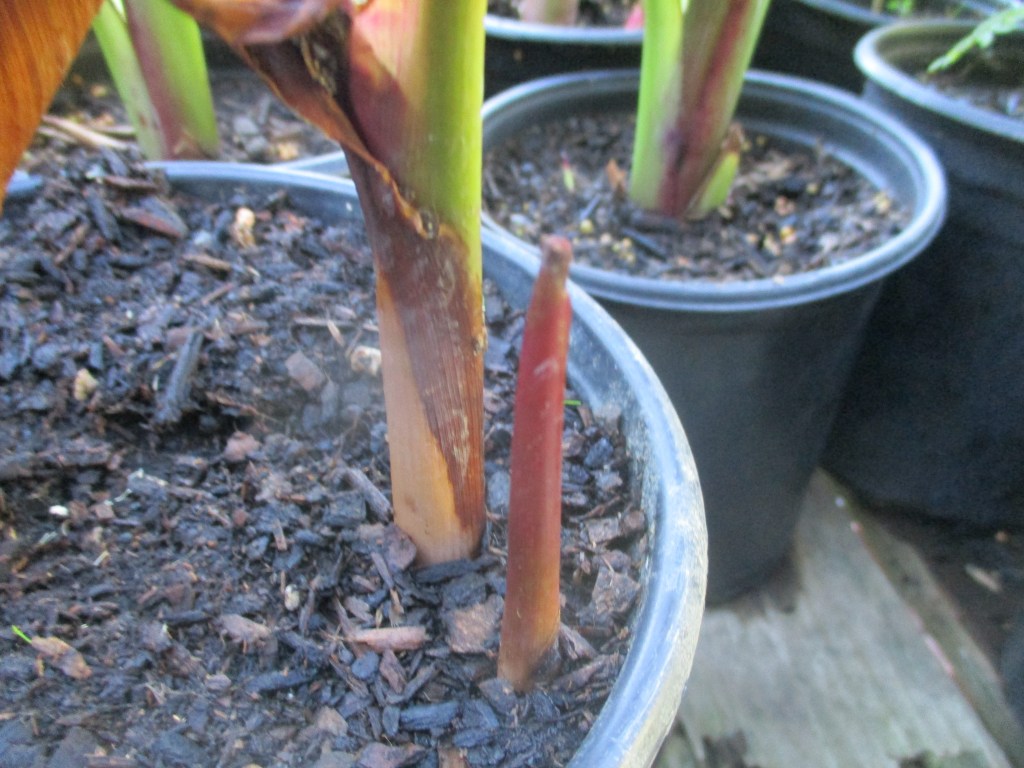
Pups of the horticultural sort generally develop from subterranean stems, such as corms, tubers or rhizomes. Most emerge from formerly dormant buds. Some grow adventitiously from roots. Pups appear as basal sideshoots against or close to their parent plants. They efficiently disperse their own roots to eventually survive as new and independent plants.

Most plants that produce pups are perennials. Some are so proficient with the technique that they grow into substantial colonies of genetically identical clones. For some, it is the primary method of replication. They actually prefer to replicate vegetatively than by seed. Some trees and woody plants do the same, but their clones lack the same classification.

For many perennials, propagation by division is merely the separation of pups from their parent plants. Most types of banana trees eventually generate a few surplus pups. Some types generate an abundance of pups to share with anyone who wants them. Separation of their pups is very similar to division of the smaller rhizomes of canna or lily of the Nile.

Individual rosettes of various species of Agave and a few terrestrial species of Yucca are monocarpic. In other words, they die after blooming only once. However, instead of dying completely, most generate several pups prior to bloom. Some produce pups excessively! Such pups can be difficult and hazardous to separate, but can replace their own parents.

Mediterranean fan palm is one of only a few palms here that generates pups. That is why it develops multiple trunks. Surplus pups can survive separation to grow as distinct trees. However, because of their densely fibrous roots, separation of intact pups can be difficult or impossible. Sago palms, which are not actually palms, are more compliant to division, even for rootless pups that develop on their stout trunks.

Six on Saturday: Canna Diss

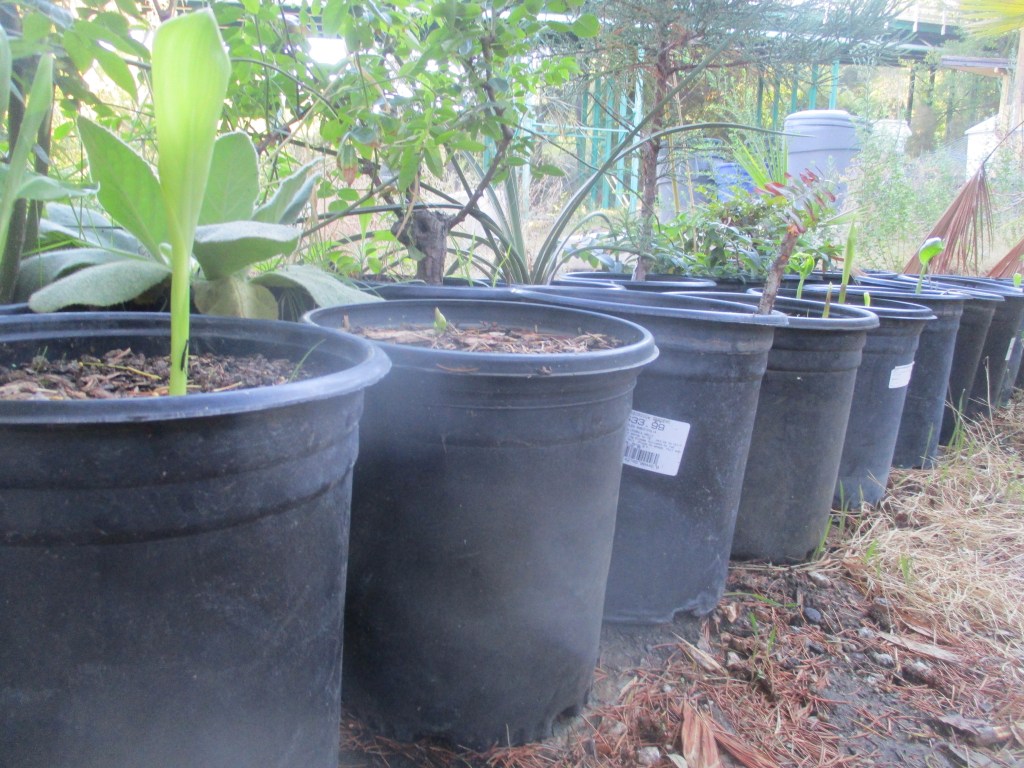
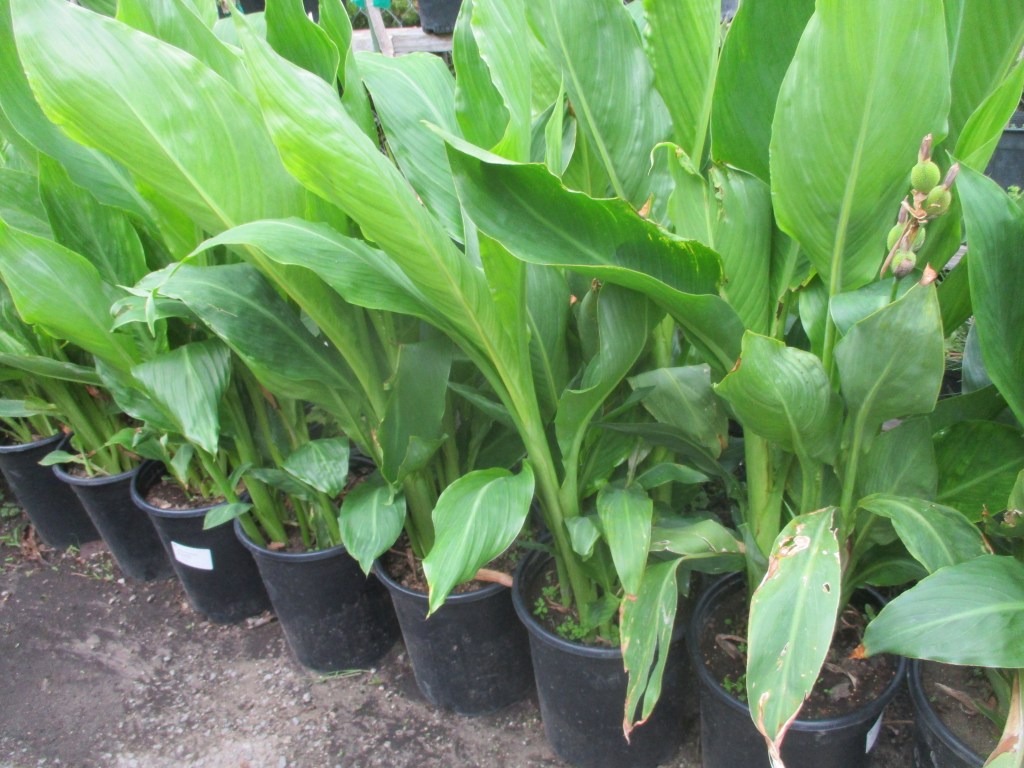
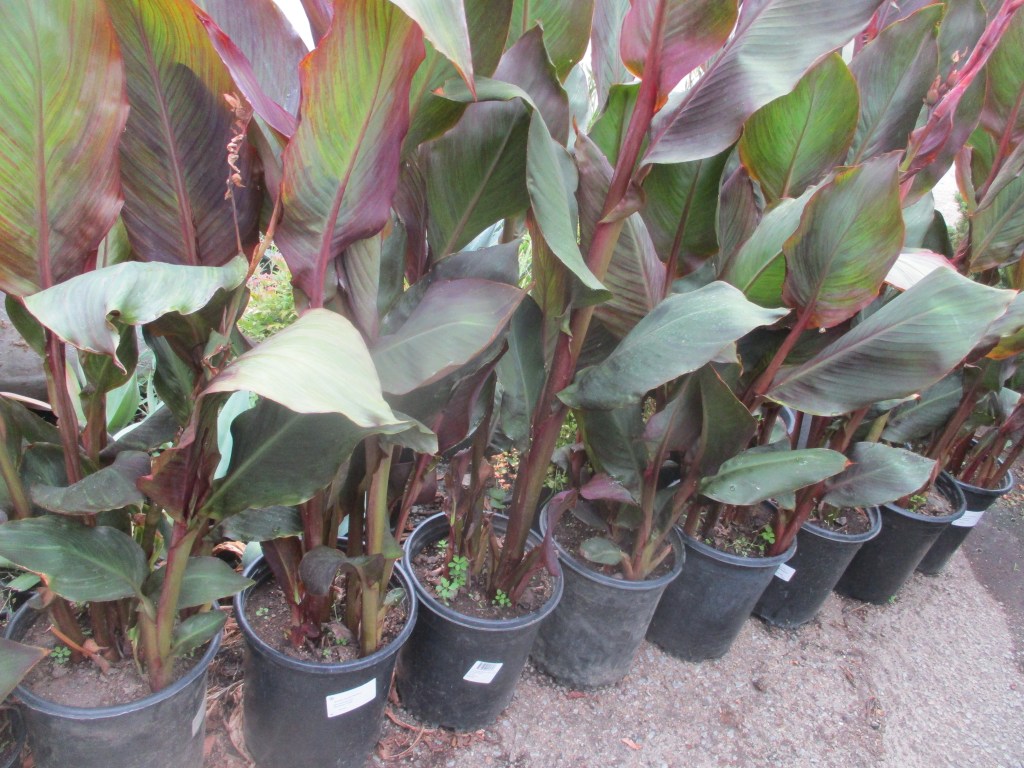
Searching online for information regarding Canna can get discouraging for anyone who objects to the idolatry of Cannabis. It does not help that Canna indica is one of the more common species of Canna. Search engines seem to believe that they know more of what I want information about than I do. Well, I happen to enjoy my ten or so Canna. In fact, I grow way too many of them.  Three cultivars are particularly numerous here, even after giving most of them away to friends and neighbors. If installed directly into a landscape, rather than canned, there would be enough for a row almost exactly a hundred feet long! That would be with one foot spacing!

1. Gophers ate almost all of three of the four original Canna here. I canned the surviving rhizomes within only ten #1 cans. All three cultivars are now generating vigorous shoots.

2. Canna rhizomes are so extremely discounted at the end of their season that I violated my rule that forbids the purchase of new plants. It is very late, but they are growing well.

3. ‘Red King Humbert’ rhizomes cost less than a dollar each. Three got canned into each of ten #5 cans. They only need to grow enough before autumn to survive through winter.

4. Canna flaccida, or what I hope might be Canna flaccida, was dug and recycled after it had started growing last spring. New foliage emerged through its damaged older foliage.

5. ‘Wyoming’ was recycled from the same landscape, and at the same inconvenient time. Like the others, it will recover prior to winter dormancy, and then be ready for next year.

6. Canna bloom is about as appealing as the foliage is. Ours bloom bright yellow, orange or red. Others bloom with pastel yellow, pastel orange, pink or very pale yellowish white.

This is the link for Six on Saturday, for anyone else who would like to participate: https://thepropagatorblog.wordpress.com/2017/09/18/six-on-saturday-a-participant-guide/

Naked Lady

These naked ladies are not shy.

While so many flowers are finishing their bloom and leaving their drying foliage behind, naked lady, Amaryllis belladonna, is just beginning to bloom, naked of any foliage. Clusters of a few to several bright pink flowers stand on bare stems about two feet tall. Individual flowers are about two and a half to three and a half inches long, and resemble lily flowers. Foliage only appears after flowers deteriorate, and lasts only until weather gets warm late in spring. The strap shaped leaves are about a foot to a foot and a half long. Through summer, the two or three inch wide bulbs are dormant and bare, and seem to be dead with their tops visible at the soil surface, but retain fleshy roots below. They should therefore only be dug and divided if they get too crowded or need to be moved.

Irish Moss

Irish moss is darker than Scottish.

It is not actually moss. It is of the same family as carnation. Of course, any distinguishing characteristics of its family are difficult to recognize. Iris moss, Sagina subulata, has such exceptionally fine foliar texture and diminutive bloom. Its slim leaves are not much longer than a quarter of an inch. its tiny white flowers are barely wider than an eighth of an inch.

Irish moss is a luxuriantly dense and richly evergreen ground cover for confined spaces. It works well within small atriums and big pots that contain sculptural plants that lack low foliage. It is a popular accessory for Japanese maple and citrus within tubs. Since it gets no more than two inches deep, Irish moss can fill in between pavers and under benches.

However, Irish moss dislikes how pavement enhances harsh exposure. Although it does not require shade, it appreciates a bit of partial shade while the weather is warmest after noon. Also, it craves somewhat frequent watering to compensate for locally arid warmth. Scottish moss is the cultivar ‘Aurea’. It is lighter chartreuse green, but otherwise identical.