It is now September 2, the day after both the feastday of Saint Fiacre, patron saint of gardeners, and the first anniversary of this blog. It is also the anniversary of the only day in the last year that I did not post anything. Yes, the second day of the blog was the only day without a post. Early in those first few days, I posted the only article that was irrelevant to horticulture, and an explanation that I would not make a habit of doing so. I wanted to try it just once to see if I could do it like so many others do. It was overrated. Nonetheless, after almost a year since that naughty diversion from my self imposed discriminating standards, I want to try it again. After all, I have not yet posted a horticulturally oriented article on September 2 within the context of this blog, so why start now.

This is Privet. He passed away on December 1, 2004, after about eleven years of devout service since about 1993 or so.
Privet was a feral dog who lived in Thomspson Creek behind a retail nursery in the Evergreen District of San Jose where I worked temporarily in the early 1990s. Late every afternoon, he commuted down Thompson Creek to a neighborhood pet store where food was left out for him. Aster and Yarrow, two angry guard dogs who lived in the nursery, would thrash about on the inside of the enclosing cyclone fence as they tried to get to him, but only damaged the merchandise inside the fence. I would cuss at him and threaten him through the fence. He would just stare at me blankly, and keep a safe distance.
One day, Privet was noticeably absent. He was likewise absent the following day. In fact, I did not see him again until several weeks later when we went to the Humane Society of Santa Clara County to adopt a cat to help with the mice in the office. We happened to go through the wrong door to where the adoptable dogs were. There he was! As usual, I cussed at him and said all sorts of mean things to him . . . .until I noticed that his time was up. I asked someone who worked there what that ominous date on his placard meant, only to be told something too unpleasant to repeat here. They were understaffed, so had not gotten around to it yet. Well, the next thing I knew I had payed the adoption fees, and Privet was sitting defiantly next to me in the Buick as we drove away real fast. We never spoke of it again.
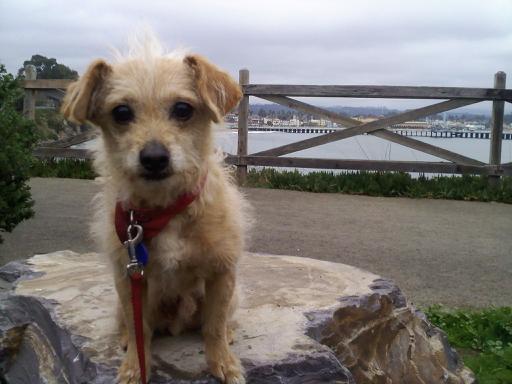
My niece named this cool dude Willow, but we just called him Bill because I was told that Willow is a girly name. He was not planned either. In about 2008, I saw his picture on the website of the Peninsula Humane Society in Burlingame. Without thinking, I drove up and adopted him on the spot. On the way, I telephone a friend who I though would try to talk me out of it. He did not. Those working at the Humane Society asked if I would like to interview other dogs. I told them who I was there for. Bill was a several years old when we met. He became blind and deaf in old age, but was still happy until he passed away on December 4, 2016.

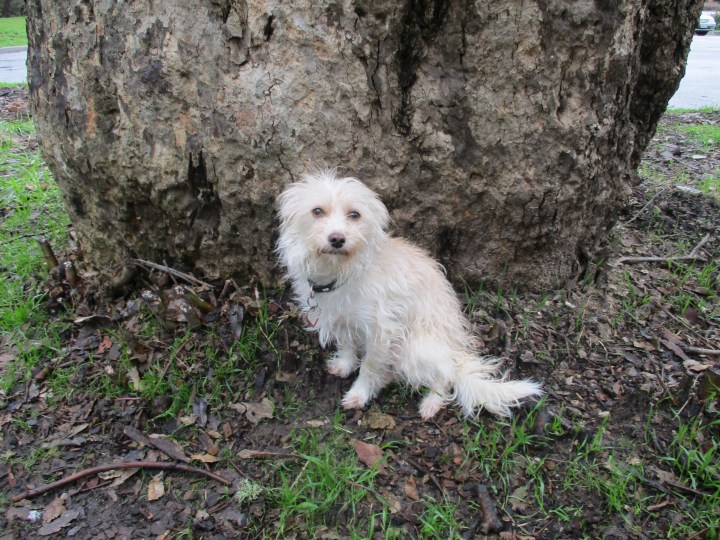
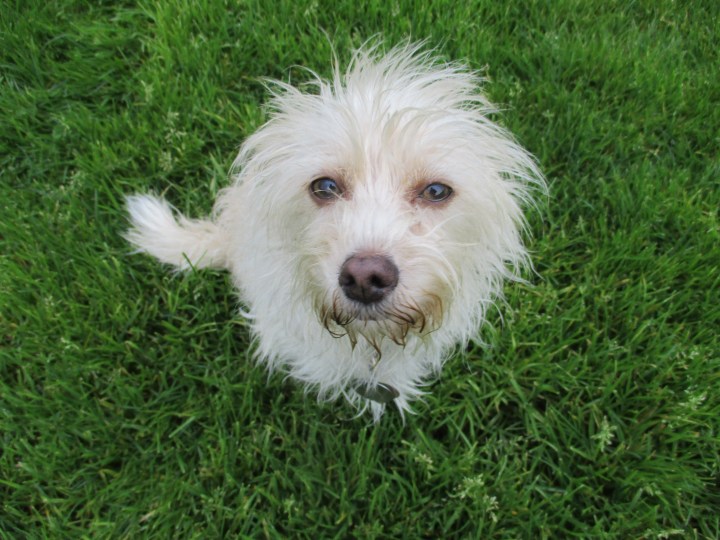
Rhody arrived only a few months later, early in 2017 and in the traditional unplanned manner. I can not imagine why he was available for adoption for several months in Santa Cruz. It was not my idea for him to come live with me. It was his. I could not talk him out of it. He seems to be remarkably happy with his simple lifestyle, although I can not imagine why. I wish I could provide better for him. Like Privet and Bill, he has more friends than he can keep up with. Privet was a Pontiac man. Bill was an Oldsmobile man. So far, Rhody seems to be a simple Chevrolet man.
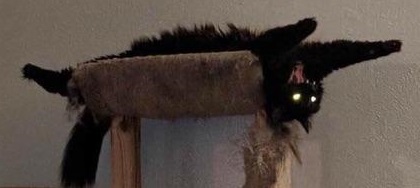
Blackjack does not live with me. He is not a dog either. He is a big kitty who has enslaved one of my colleagues, although my colleague does not seem to be aware of it. Cats are of course masters of mind control techniques. Blackjack did not get his name from the blackjack oak. It is just a cool name that suits him well. He is not really as demonic as he seems to be in this picture. Nor is he trying to fly upside down. He just happened to yawn while laying on his back and stretching.
Of course, only the names are horticultural. None of these guys cares about gardening. I sort of feel guilty about not writing about a horticultural topic today, but perhaps I will get over it.




 Plants are quite ingenious with their technology of exploitation of animals and people. Many get insects, birds, bats, spiders and anyone who is animated within their environment to disperse the plants’ pollen for them. Plants who prefer to not rely on wind, water or gravity to disperse their seed exploit a different range of animals to do so. They know how to compensate for their immobility.
 Tony Tomeo