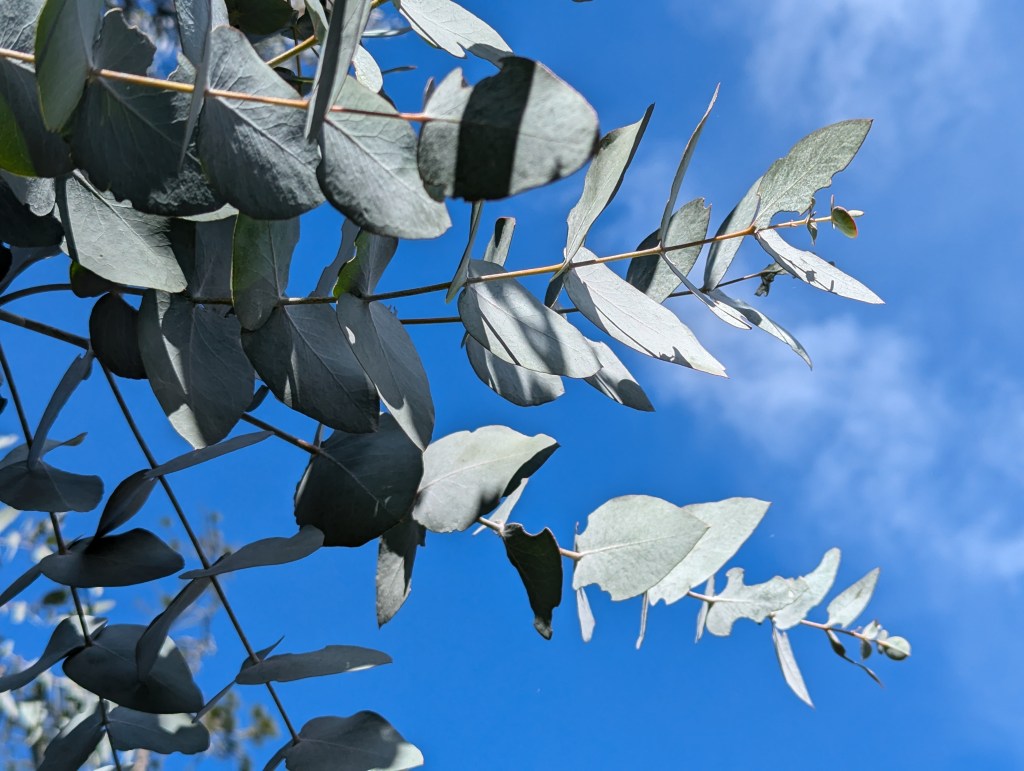
Six on Saturday: More Gifts from Tangly Cottage Gardening

Tangly Cottage Gardening was a primary destination of my vacation. I posted pictures of it last week. These are six more species that I received as gifts.

1. Acanthus spinosus, armed bear’s breech has the strangest common name of these six. Is the bear armed or just its butt? Regardless, I happen to like common Acanthus mollis, and had coincidentally been wanting to try this less common species as well. Now, I will.
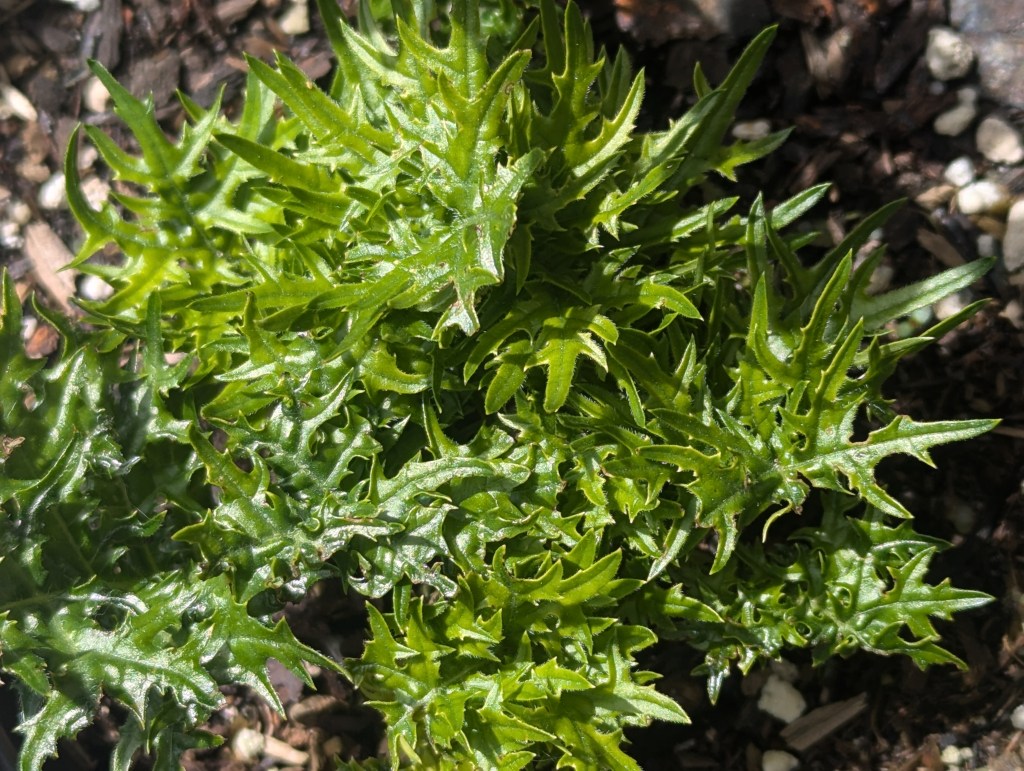
2. Echinops ritro, globe thistle was a minor crop where I worked with cut flowers during the summer of 1986. I did not enjoy harvesting it then, but recently, I had coincidentally been wanting to add a single specimen to my garden. I just could not think of an excuse.
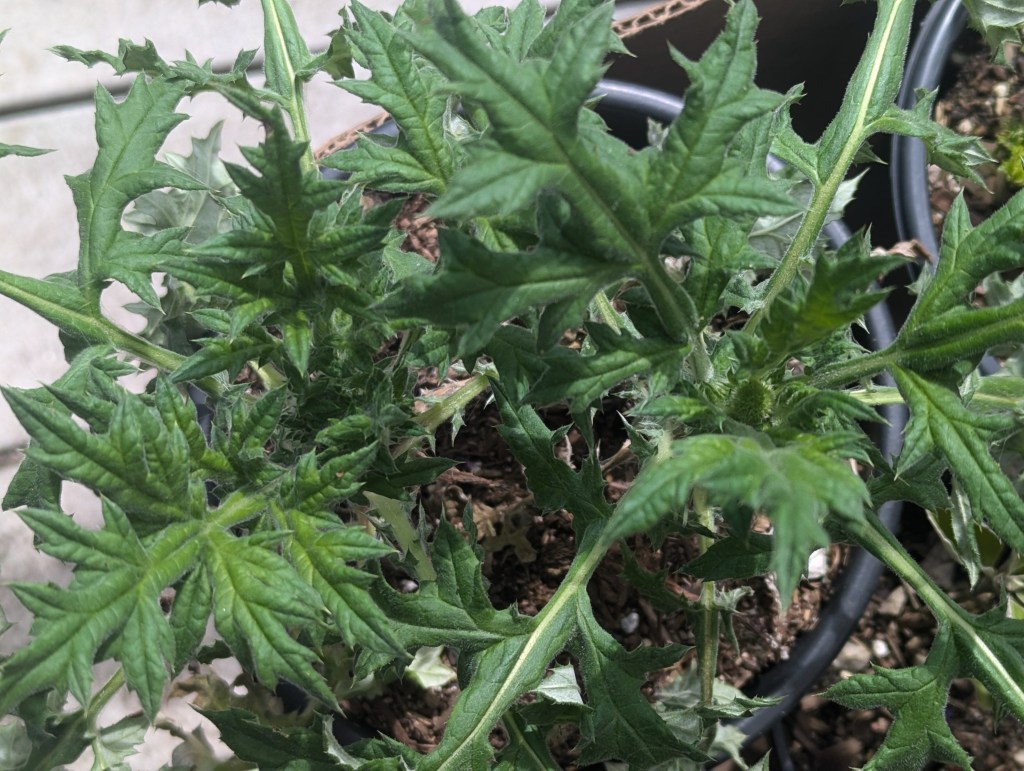
3. Helenium autumnale, common sneezeweed also has an amusing common name. I am unfamiliar with this species, although its botanical name somehow seems to be familiar. I got three distinct cultivars of it now! If we were not already acquainted, we will be now.

4. Brachyglottis greyi, daisy bush has a contrarily mundane common name. Many other species could easily qualify for its name. Somehow though, it makes it more compelling. Now, I want to see what makes it distinct from all other daisies, bushes or daisy bushes.
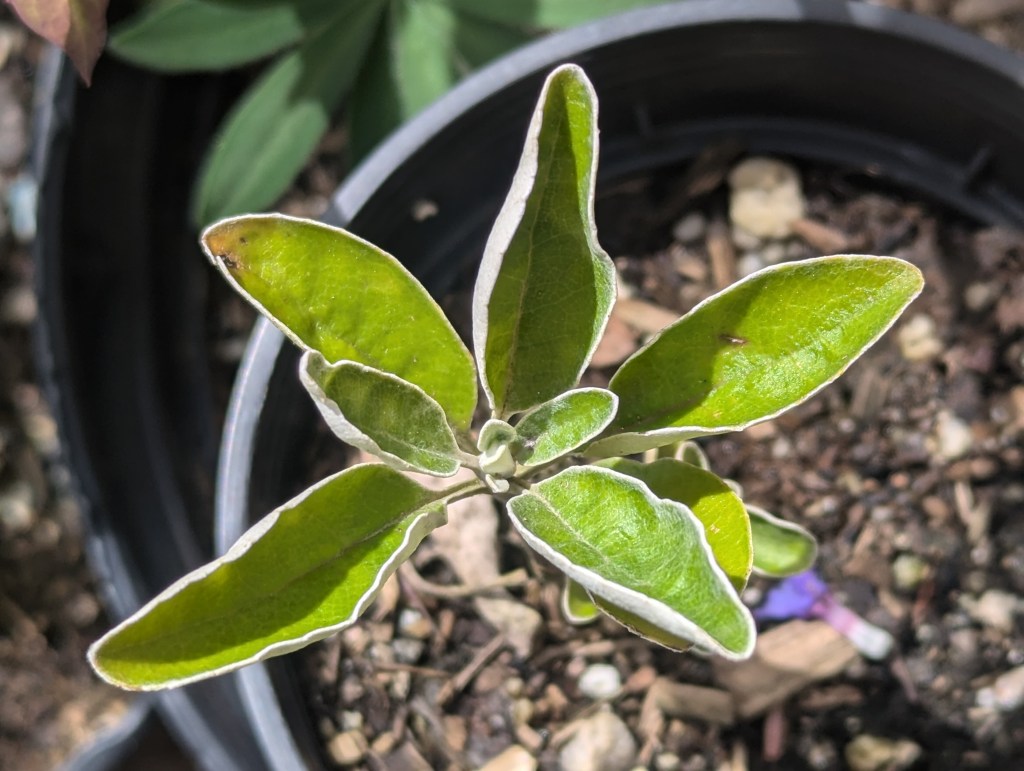
5. Leycesteria formosa, Himalayan honeysuckle or pheasant berry is yet another species that I had coincidentally been wanting to acquire. I embarrassingly did not recognize its name initially. I was told that I would find its flowers to be more appealing than its fruit.
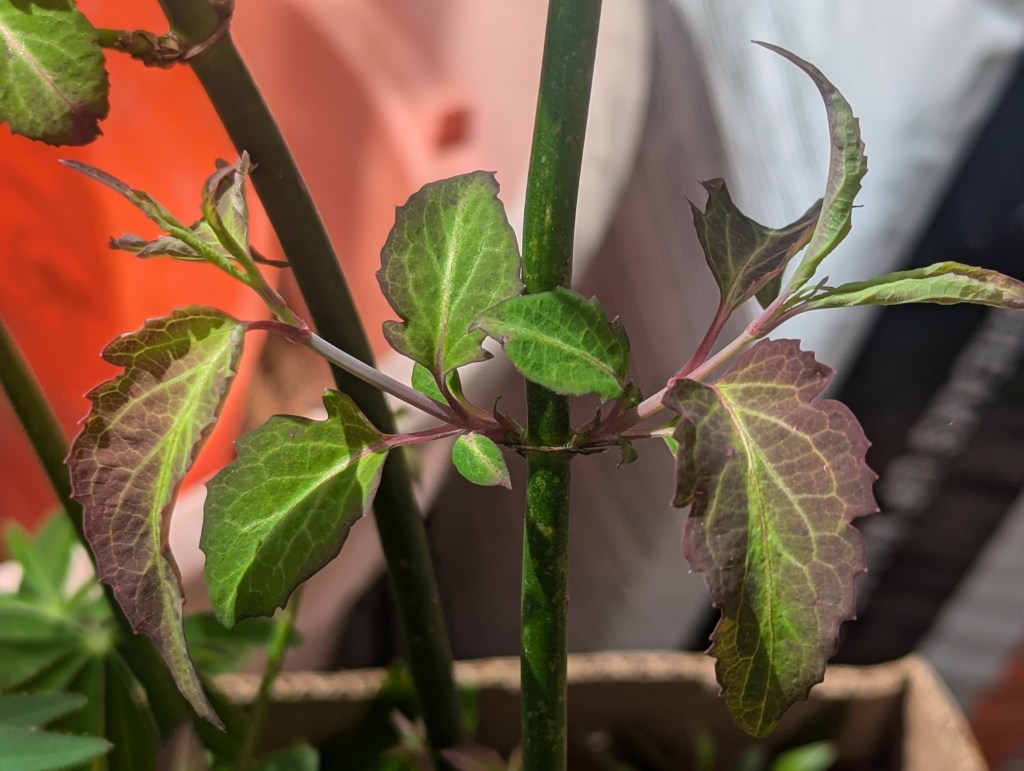
6. Lupinus, lupine is regifted and unidentified. I do not know if it is annual or perennial. Because it was grown in a can rather than merely shared as seed as annuals should be, I suspect that it is perennial. I will find out. This one can contains several swell seedlings.

This is the link for Six on Saturday, for anyone else who would like to participate: https://thepropagatorblog.wordpress.com/2017/09/18/six-on-saturday-a-participant-guide/

Six on Saturday: Tangly Cottage Garden

Skyler and Allan, the people who live with Skooter of Tangly Cottage Gardening, invited Rhody and me to tour their home gardens while vacationing in the Pacific Northwest. It has become an annual event. I always leave with a trunk load of interesting and unusual species. I will post pictures of some of such acquisitions from this tour next week. These six pictures are from the home gardens of Tangly Cottage Gardening, although I did take rooted bits and a potted specimen of two of them. After taking these pictures, Rhody and I stayed for lunch and a visit, but did not leave too late to avoid driving in the dark. More pictures of our tour can be seen at Tangly Cottage Gardening.

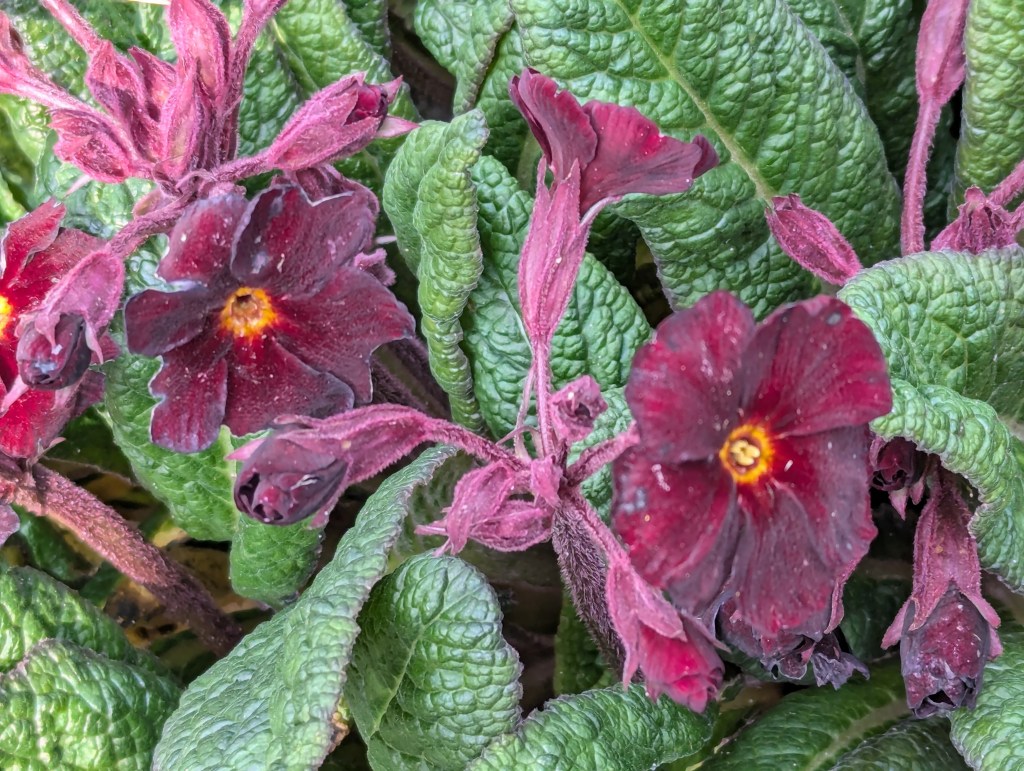
1. Primula X pruhonicensis ‘Old Port’ primrose exhibits luxuriantly rich burgundy floral color. This name is merely a guess, since I actually have no idea what cultivar this one is.

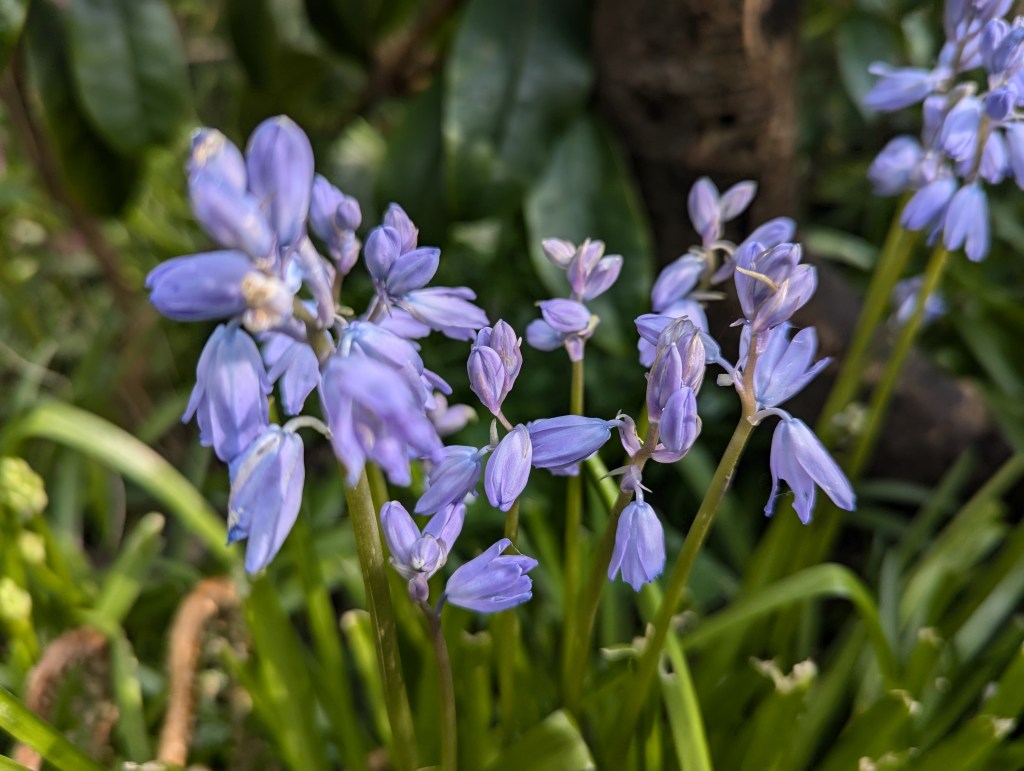
2. Hyacinthoides hispanica, Spanish bluebells is unfortunately a bit too aggressive here, which is why I have not tried it at home. It could be docile in a chaparral climate though.

3. Rubus spectabilis, salmonberry is native and grows wild in Ilwaco. I would have asked for cuttings if I had not already acquired it. I will compare its fruit to other cane berries.

4. Vinca minor ‘Alba Variegata’ periwinkle is not as invasive at home as it is elsewhere. I procured a few bits because I like its white flowers, and may learn to like its variegation.

5. Pulmonaria officinalis ‘Bowles’ Blue’ lungwort, along with cultivars that bloom white, pink and purple, were excellent acquisitions also! Its cultivar name is merely conjecture.

6. Skooter approved of my acquisitions from his Tangly Cottage Garden, which includes quite a bit more than periwinkle and lungwort. I will get pictures of them for next week.

This is the link for Six on Saturday, for anyone else who would like to participate: https://thepropagatorblog.wordpress.com/2017/09/18/six-on-saturday-a-participant-guide/
Six on Saturday: Pruning Apple Trees

This is a rather cursory Six for this Saturday, since Rhody and I are on vacation, pruning apple trees in Washington. I should do better next Saturday.

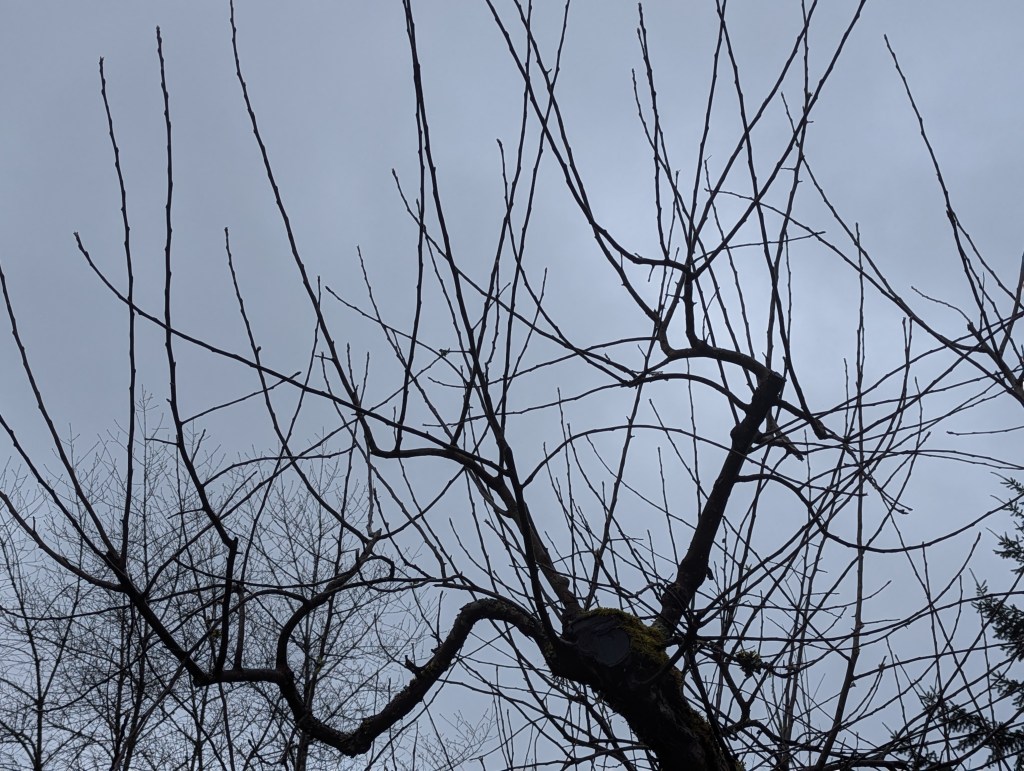
1. Malus domestica, apple trees, even after thorough pruning last winter, are a hot mess now. I prune a small herd of only eleven, but some of them are quite large. Several other assorted fruit trees remain in need of renovation nearby. A tenant maintains a few more.

2. Dormant pruning maintains and contains the otherwise rampant growth of the apple trees, and limits their otherwise messily excessive fruit production, but does not actually improve their visual appeal much. The most meticulously pruned trees will look twiggy.

3. Malus sylvestris, crabapple demonstrates why I am in a rush to prune the apple trees before their bloom and foliation. They are about to bloom, and apple trees bloom shortly afterward. I try to get here earlier each year, but always get here at about this same time.

4. Pyrus communis, pear is already beginning to bloom a slight bit more than crabapple. Fortunately, the pear trees are still somewhat small, and do not yet need major dormant pruning or renovation. I might prune back a few minor spires from one of the pear trees.

5. Prunus cerasifera, Myrobalan plum is in full bloom, but needs no pruning anyway. It is merely the understock of an unidentified stone fruit tree that was cut down years ago. It serves no purpose, but is too pretty in bloom to merely cut down without justification.

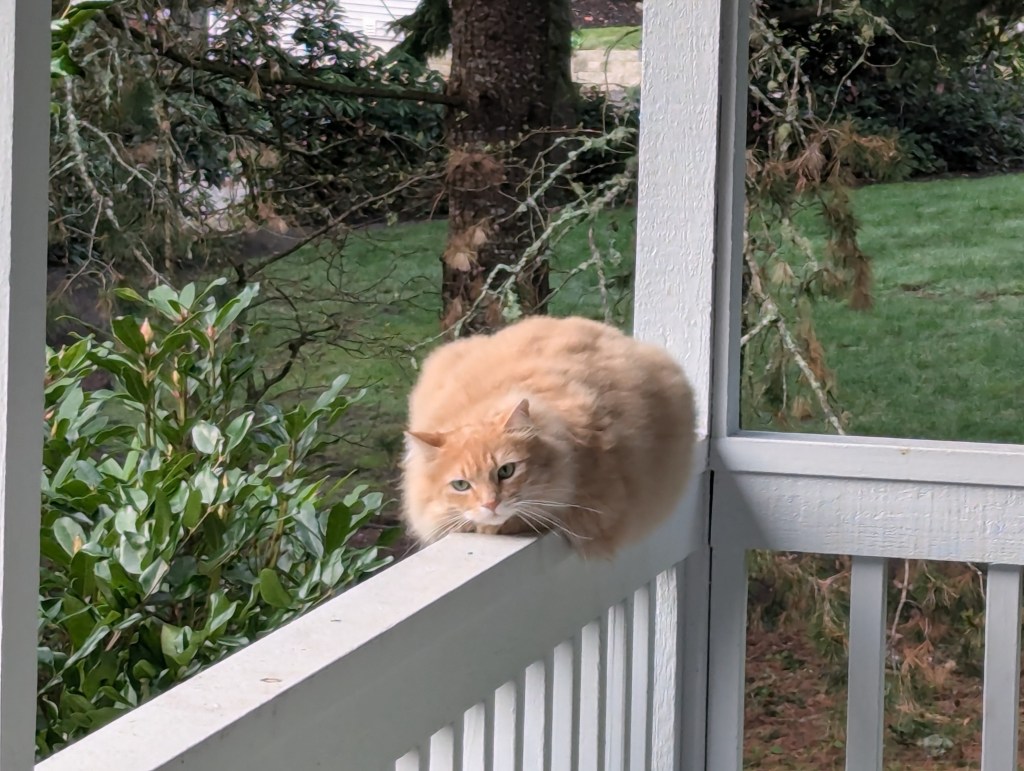
6. Arlo was waiting for us on the porch when we arrived. He lives at another house in the neighborhood, but visits neighbors for food and treats. He was not pleased when Rhody noticed that he was watching us. He did not exactly put much effort into hiding, though.

This is the link for Six on Saturday, for anyone else who would like to participate: https://thepropagatorblog.wordpress.com/2017/09/18/six-on-saturday-a-participant-guide/

Six on Saturday: NIMBY

Flowers in the gardens of others remind me that I should be more adventurous in regard to trying new things. These six are not completely unfamiliar, but happen to be different from the cultivars that inhabit our landscapes. All are Not In My Back Yard.

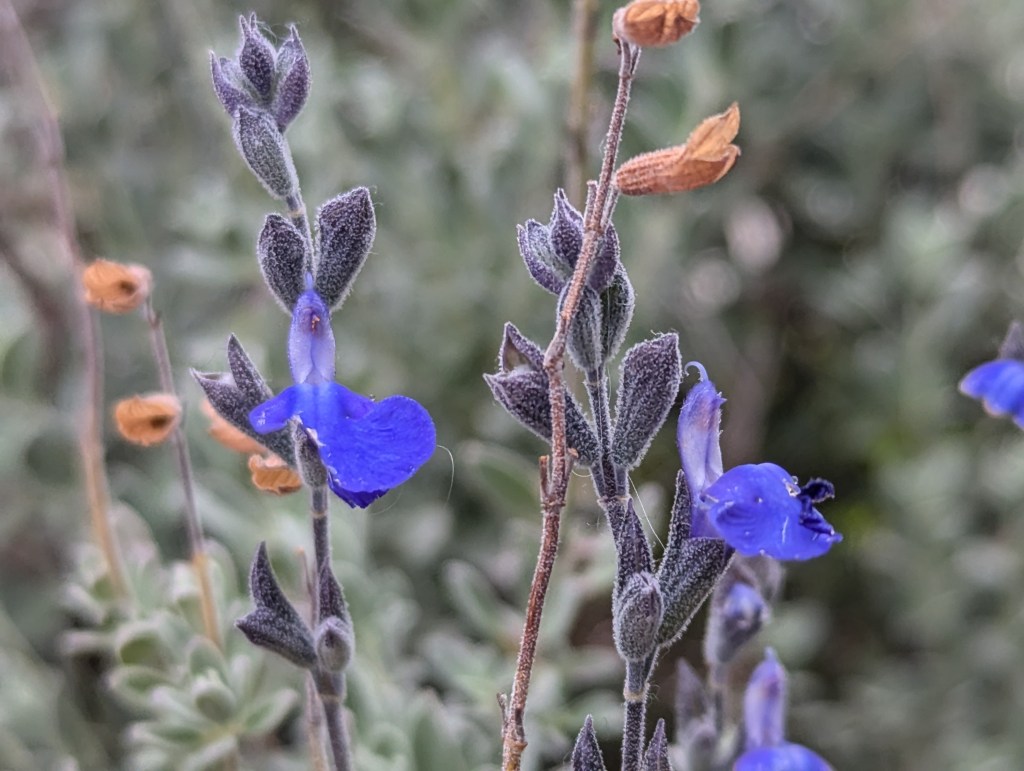
1. Salvia chamaedryoides ‘Marine Blue’ sage, like other species here that are more often grown as common annuals, has performed reliably as a perennial for at least a few years. Like other sages, it is very popular with hummingbirds. It stays small, but gets attention.

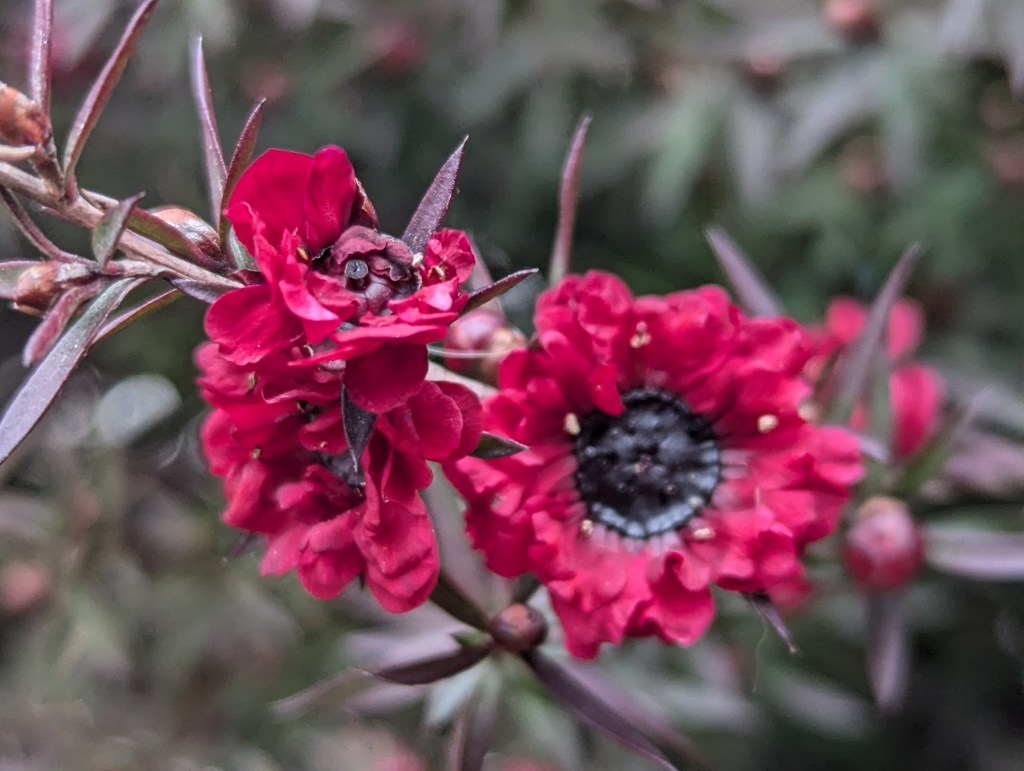
2. Leptospermum scoparium ‘Ruby Glow’ New Zealand tea tree is deprived of its natural form by frequent shearing, but somehow manages to bloom with a few sporadic flowers. Bees are grateful. Its tiny leaves are very dark green, but perhaps technically not bronze.

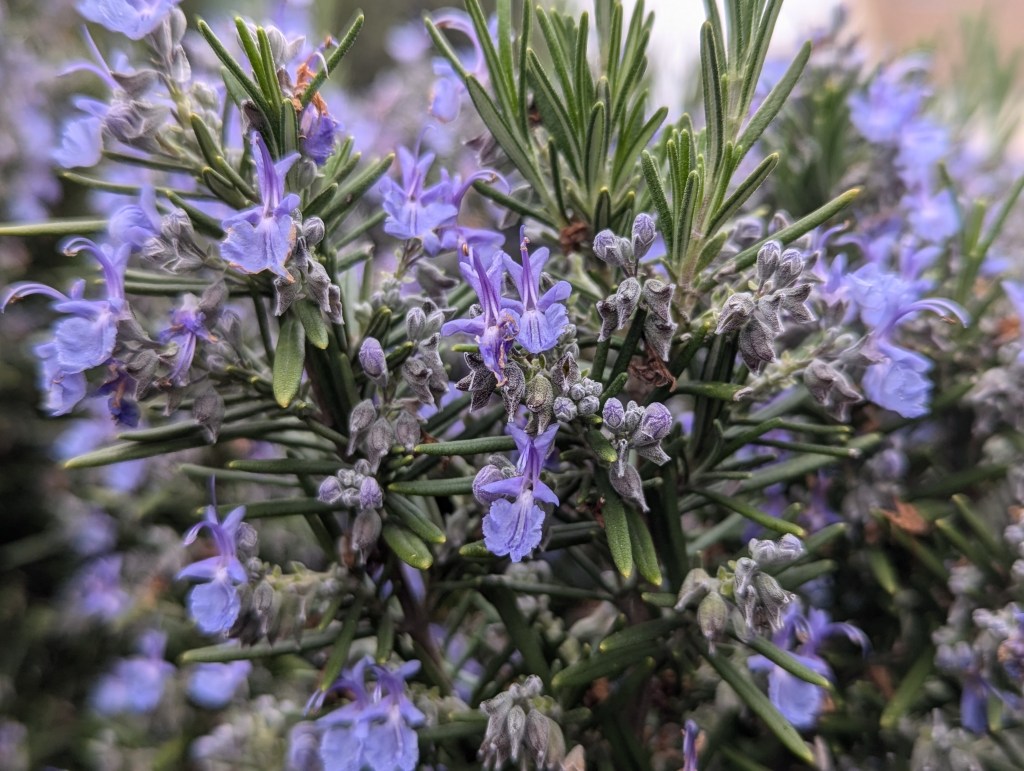
3. Rosmarinus officinalis ‘Tuscan Blue’ rosemary is shrubbier with more upright growth than the sprawling ground cover cultivars that I am more familiar with. I still remember this cultivar as ‘Tucson Blue’ because that is how we said it in school prior to about 1990.

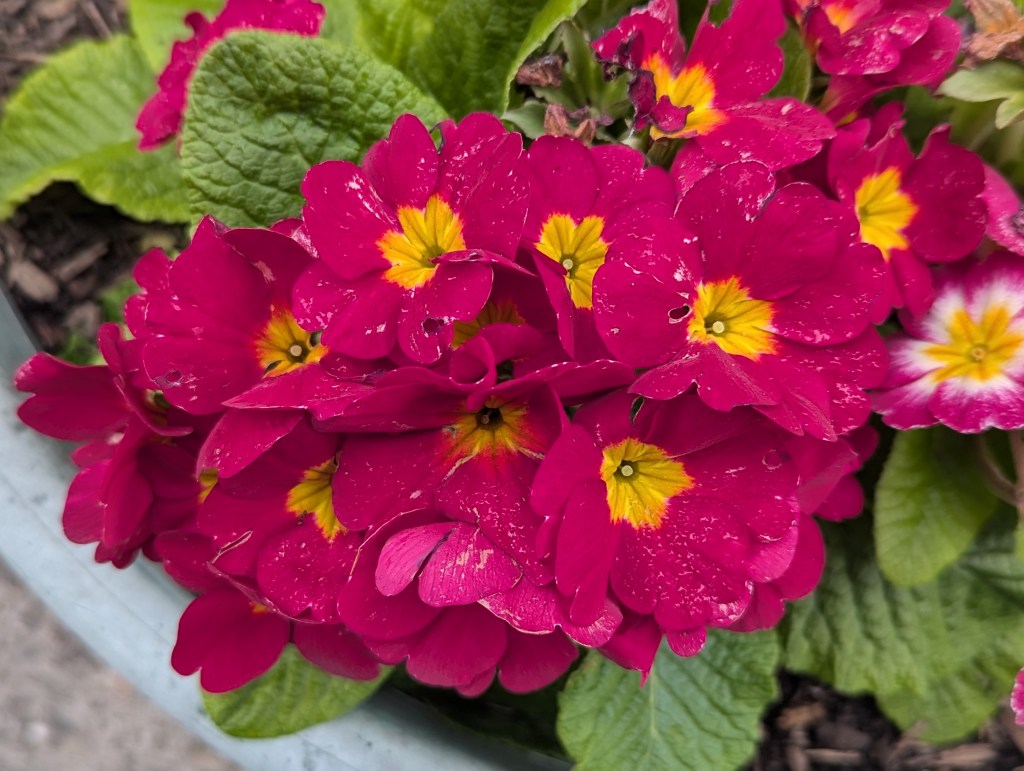
4. Primula X elatior ‘Pacific Hybrids’ English primrose can bloom yellow, white, purple, lavender, blue, maroon, red, orange, or, like this specimen, pink; all with yellow centers. They look like the flowers that Mickey Mouse picked for Minnie Mouse, from her porch.

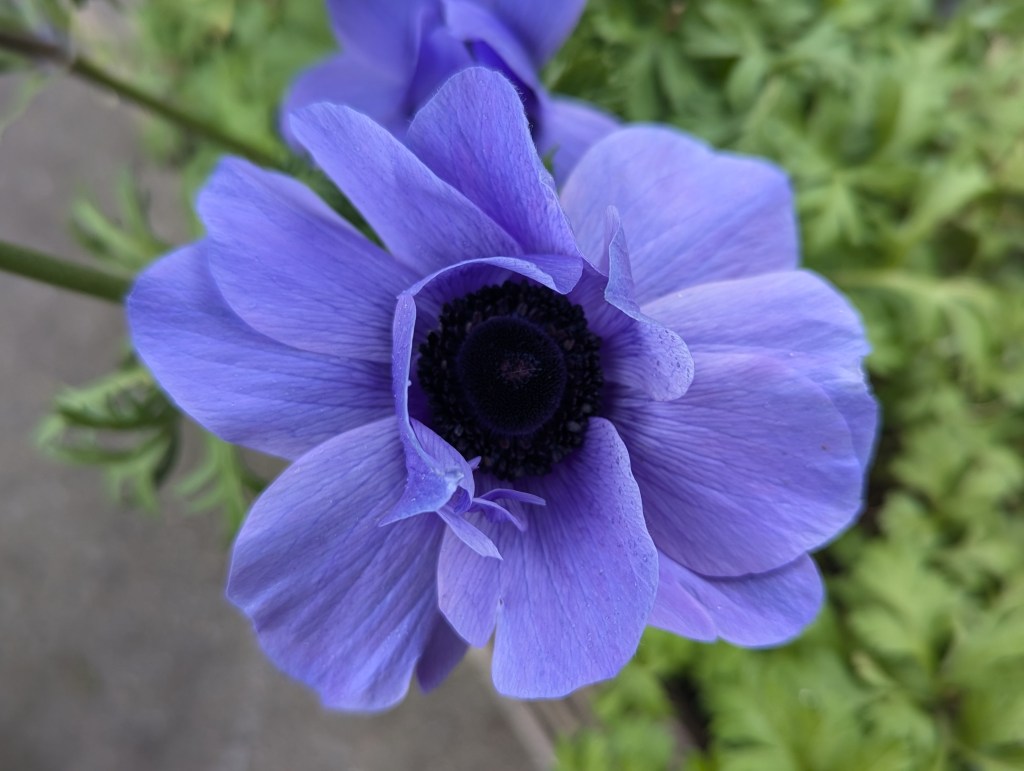
5. Anemone coronaria ‘Mr. Fokker’ windflower has been impressively perennial here for a few years, like the ‘Marine Blue’ sage. Although it technically should be this perennial, it rarely is here. It might prefer cooler winter weather than it typically experiences here.

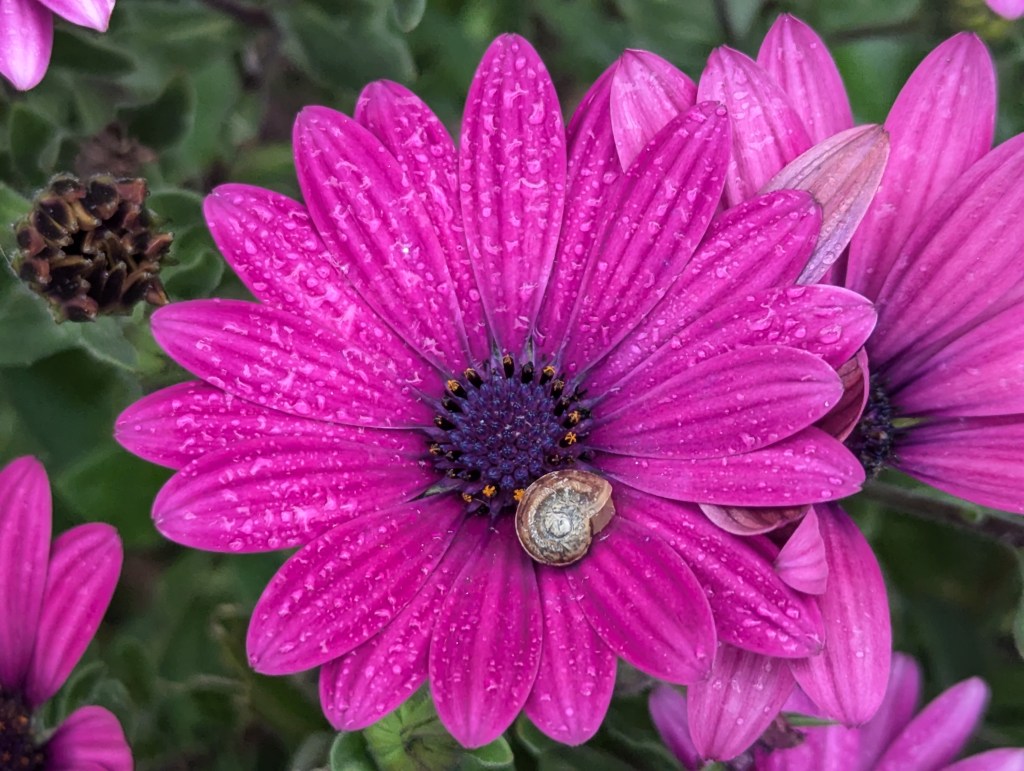
6. Osteospermum ecklonis ‘Flower Power Compact Purple’ African daisy is notably more compact than its extensive name is. Its purple floral color seems to be more purple than any within the landscapes at work. Perhaps I should grow a copy, but without that snail.

This is the link for Six on Saturday, for anyone else who would like to participate: https://thepropagatorblog.wordpress.com/2017/09/18/six-on-saturday-a-participant-guide/

Six on Saturday: Color of Profusion

Tulip is the only single flower of these Six this Saturday. The other five are dinky flowers that are colorful in their natural profusion. Even tulip is more colorful with at least a few friends, as it bloomed in its landscape. Flowering quince shows only three flowers in this closeup picture, but it actually blooms more comparably to forsythia or spirea.

1. Tulipa X hybrida, tulip is of an assorted batch, but seems to be the same color as all of the others. Such batches typically contain a preponderance of varieties that happen to be overly abundant when they are mixed, but are not likely to be completely homogeneous.

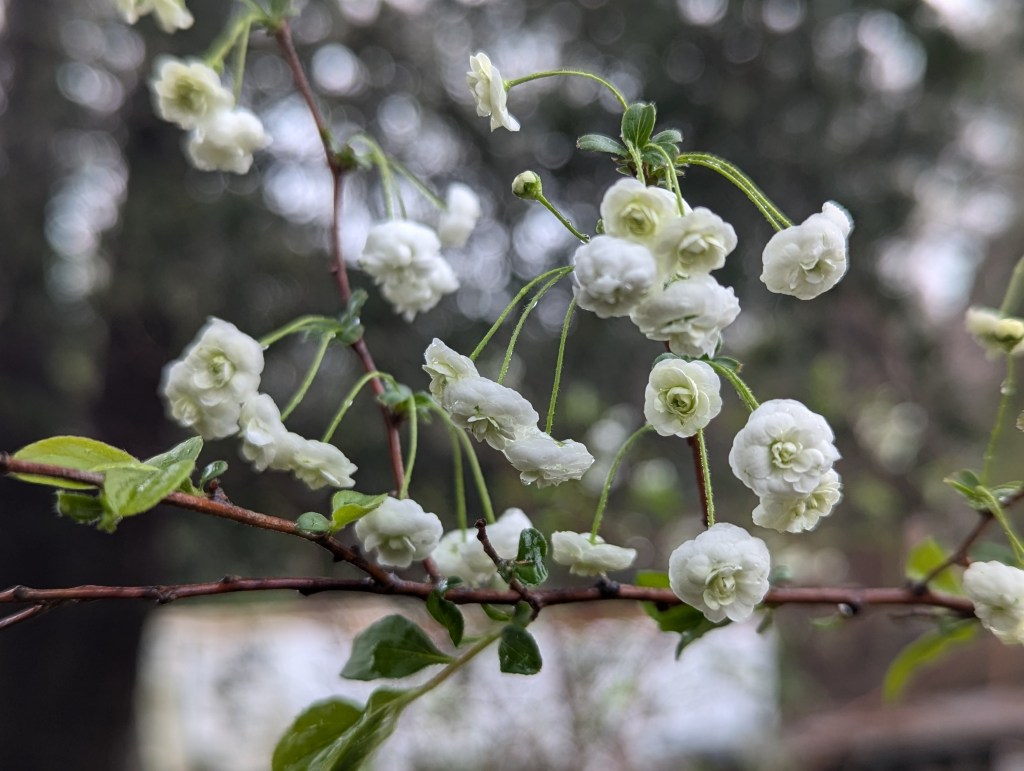
2. Spirea prunifolia, bridal wreath spirea could have bloomed more fluffily if it had been in a sunnier situation. This specimen has been in partial shade in the storage nursery for too long as it waits for reassignment to a real landscape. I remember it only as it blooms.

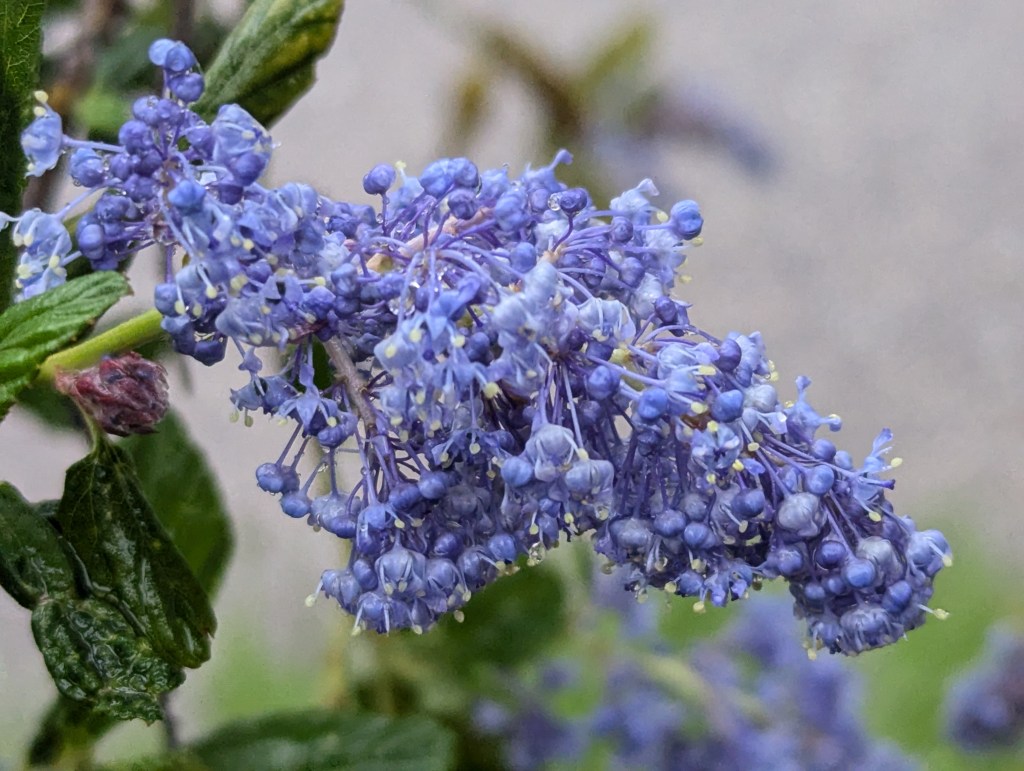
3. Ceanothus thyrsiflorus, California lilac is the same that I posted a picture of here two weeks ago, but neglected to remember until now. It is the only of these six that is native. It could have been installed intentionally into its landscape, but it more likely grew wild.

4. Chaenomeles speciosa ‘Orange Storm’ or ‘Double Take Orange’ flowering quince has a pair of cultivar names, which is two more than I can identify for the other five of my six. I can not determine if one is more correct than the other. It is pretty, but a bit overrated.

5. Forsythia X intermedia, forsythia was with the bridal wreath spirea and ‘Double Take Orange’ flowering quince in the storage nursery for a long time before assignment to the landscape that it now inhabits only last winter. It has not grown much, but blooms well.

6. Loropetalum chinense, Chinese fringe flower is pretty enough to be an illustration for the gardening column. I may feature it next week or the week after. If I do so, it must be within its bloom season. When it became a fad several years ago, I was not so keen on it.

This is the link for Six on Saturday, for anyone else who would like to participate: https://thepropagatorblog.wordpress.com/2017/09/18/six-on-saturday-a-participant-guide/

Six on Saturday: Eucalyptus

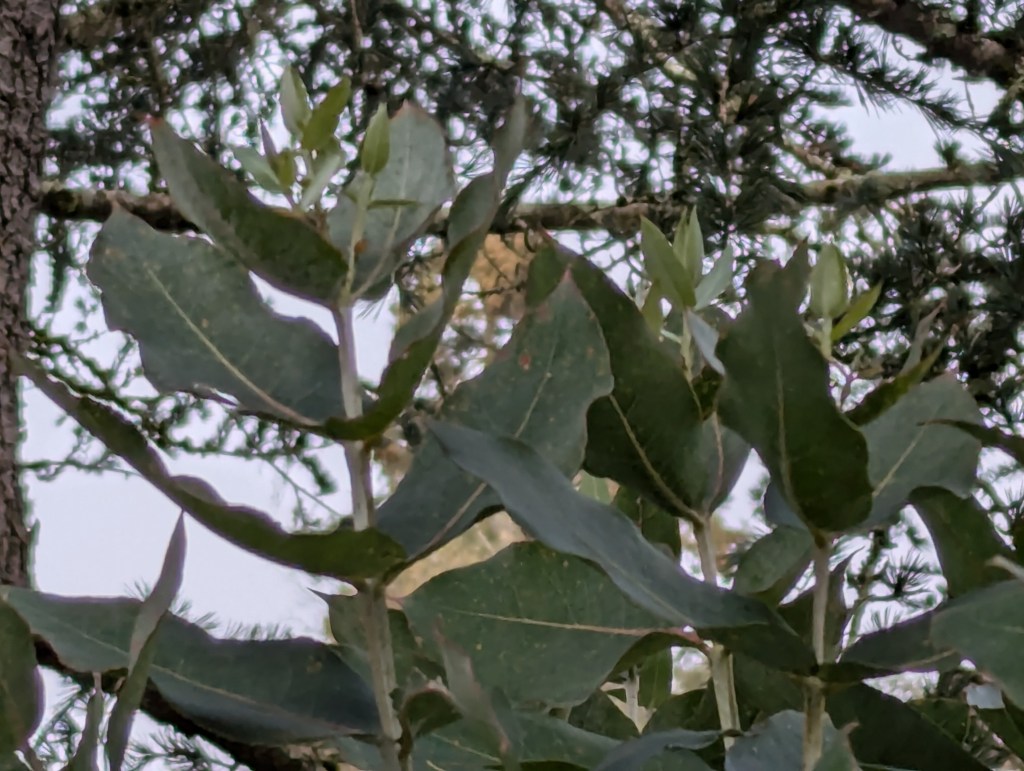
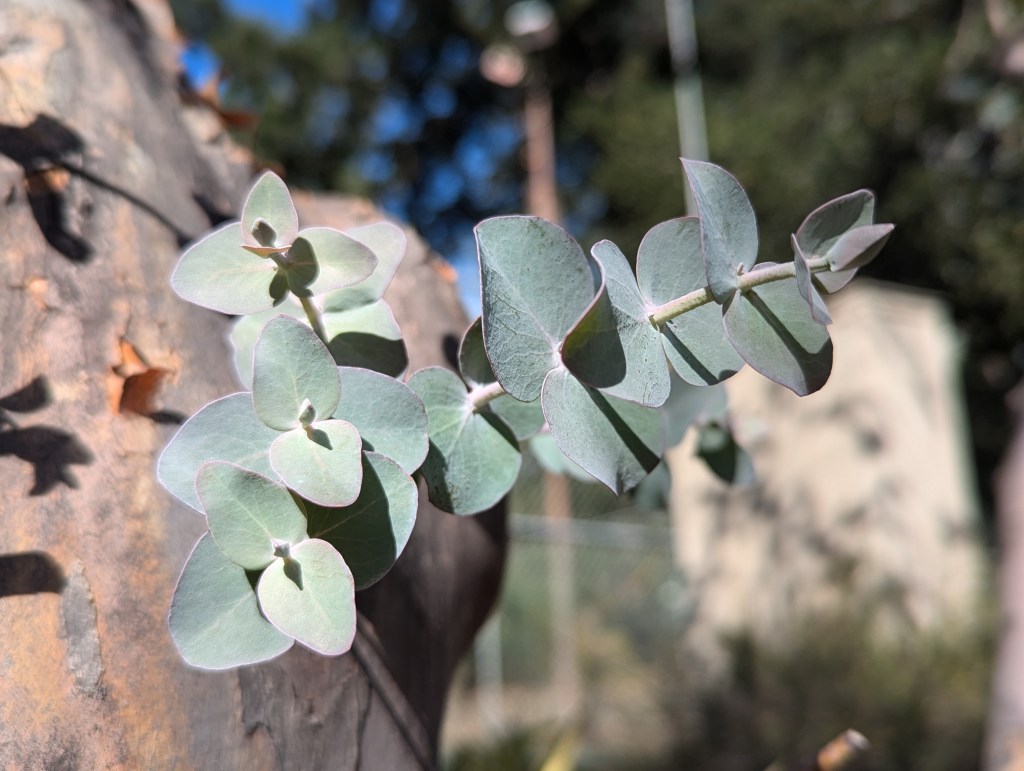
Eucalyptus has a bad reputation. Regardless, the worst of the genus and its only cultivar that I am aware of inhabit my gardens. Four less offensive species inhabit a landscape at work. Actually, several species of Eucalyptus are not only appropriate for home gardens, but are also naturally very well adapted to local chaparral climates. Their bad reputation is an unfortunate result of the bad behavior of merely one of hundreds of species, which happens to be the second of these Six. Eucalyptus camaldulensis, red gum allegedly also contributed to that reputation, but more so in Southern California than here, as it is rare locally. Half of these six show sessile juvenile foliage, rather than petiolate adult foliage. Pictures of high foliage were taken from significant distances.

1. Eucalyptus globulus ‘Compacta’, bushy blue gum is my least favorite eucalyptus, since it is a contrarily runty cultivar of an otherwise grand species, but here it is in my garden.

2. Eucalyptus globulus, blue gum is too grand for my garden, though, so can not develop a natural form. It is pollarded for its aromatic juvenile foliage, but has a few adult leaves.

3. Eucalyptus cinerea, silver dollar tree, which is not the same as silver dollar gum, may be confused with silver mountain gum, since their botanical names are interchangeable.

4. Eucalyptus pulverulenta, silver mountain gum is very distinct from silver dollar tree. I find their confusion to be annoying. Botanical nomenclature is designed for simplicity.

5. Eucalyptus sideroxylon, red ironbark grew from a small root sucker with merely a few roots. I got it from a stump in another landscape, and am impressed by its performance.

6. Eucalyptus citriodora, lemon gum is delightfully aromatic, and, as its name suggests, is rather lemony. Its foliage will soon be too high on lanky bare trunks to reach, though.

This is the link for Six on Saturday, for anyone else who would like to participate: https://thepropagatorblog.wordpress.com/2017/09/18/six-on-saturday-a-participant-guide/