Sunday Best – Seventh For Saturday (Yesterday)
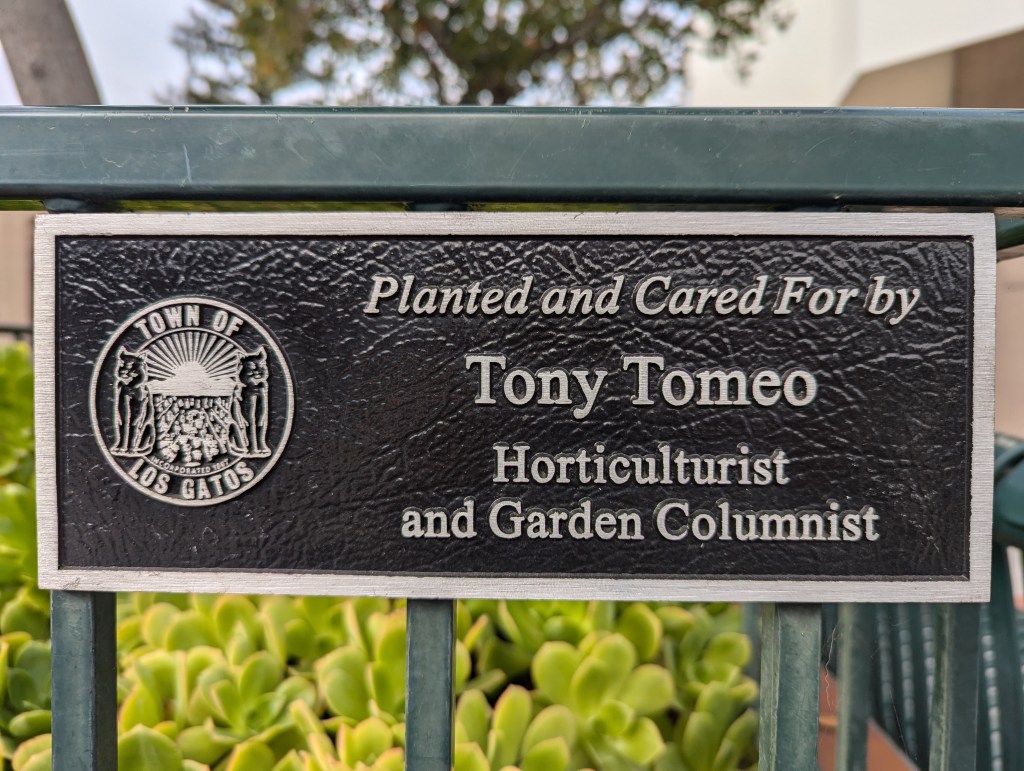
While away from work and home, and tending to errands downtown, I got these pictures from my downtown planter, which inadvertently became something of a Memorial.
1. Cuphea hyssopifolia, Mexican heather is not my favorite component of the downtown planter, but remains because it was installed by someone who was here prior to my time. A uniquely confined colony of montrebia that I will discuss on Wednesday also remains.

2. Senecio cineraria, dusty miller and the stonecrop below are from the garden of a now deceased client so can only be removed if a bit of it gets established in my home garden. It and the Mexican heather above are the only two of these six which are not succulents.

3. Sedum reflexum ‘Blue Spruce’ stonecrop is being displaced by the unidentified species of Aeonium below, but is also already established in my home garden. I expected it to be displaced eventually when I put it here several years ago. It is gratifying to see remnants.

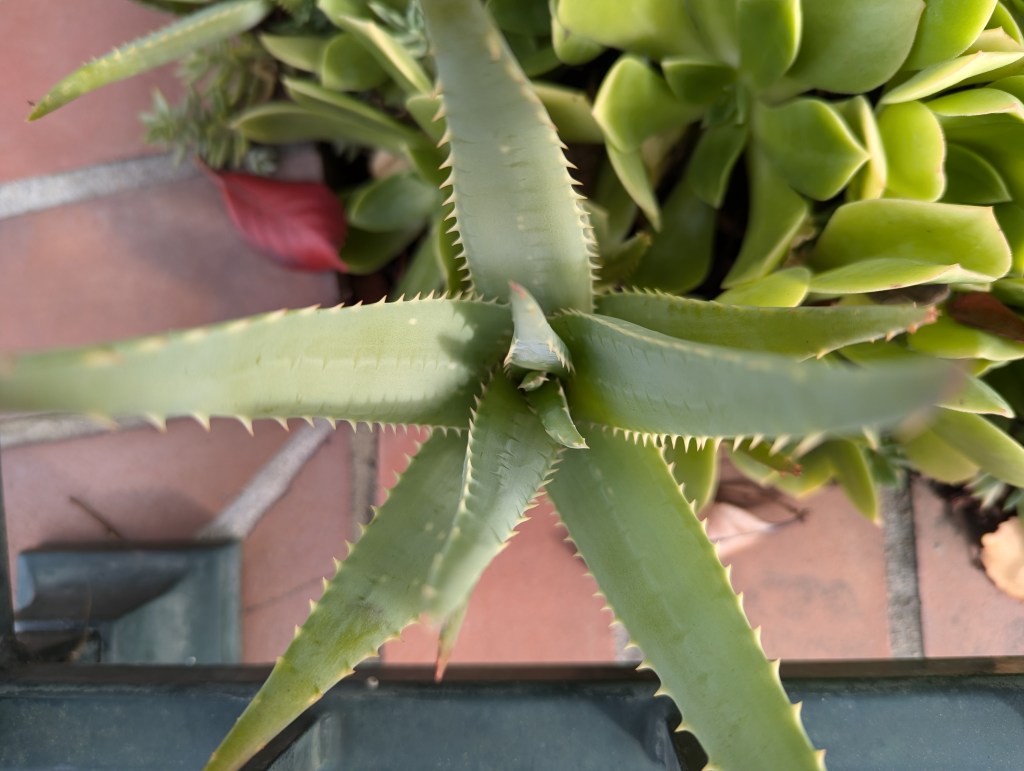
4. Aloe, as the Aeonium at the bottom of this list, is unidentified. It and both of the last six are from the garden of the deceased mother of a deceased friend who happened to be a direct descendant of Spanish explorers who were the first to arrive where Monterey is.
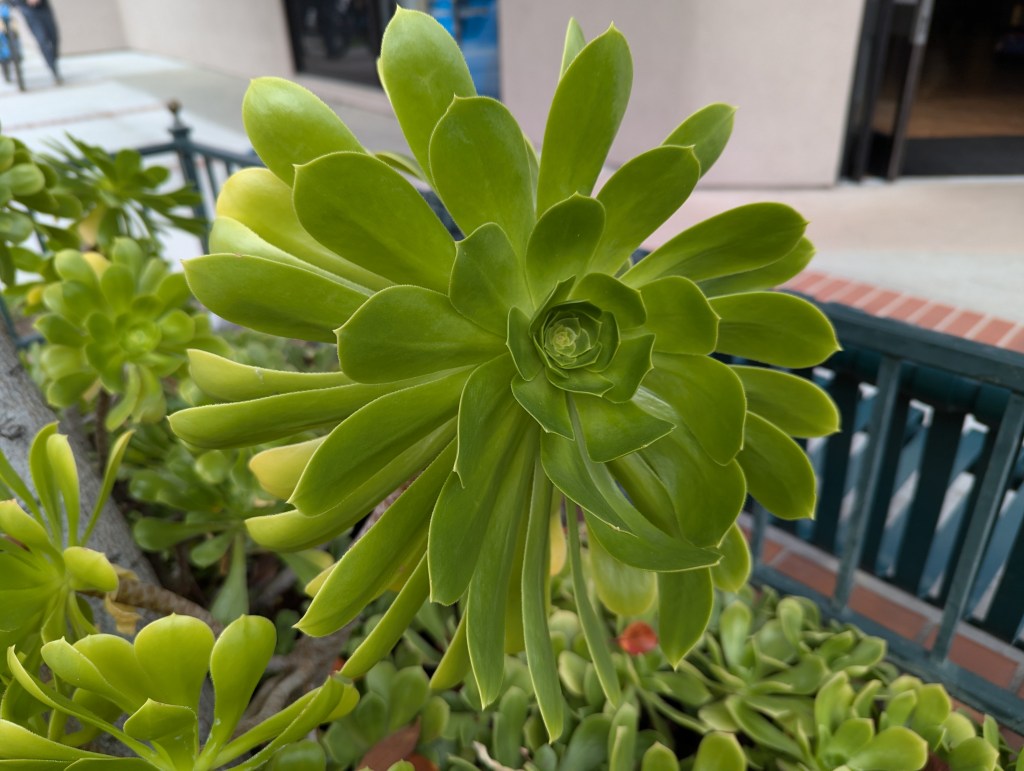
5. Aeonium arboreum, tree houseleek is the most striking vegetation within the planter, but is also occasionally disfigured by theft of its most sculptural stems. A darkly bronzed cultivar from the same special origin was taken piece by piece until none of it remained.
6. Aeonium is as unidentified as the Aloe above. It initially resembles the tree houseleek, also above, but remains low, dense and mounding. It is the most abundant vegetation of the planter, so was the primary culprit of the displacement of the stonecrop, also above.

This is the link for Six on Saturday, for anyone else who would like to participate: https://thepropagatorblog.wordpress.com/2017/09/18/six-on-saturday-a-participant-guide/
The ‘Week of Flowers’ theme was fun for the past several weeks, but the beginning of the rainy season is rather important locally. I suppose I should have gotten more interesting pictures instead of rotting stumps, a leaky gutter and a bare cottonwood tree. Hopefully, they are not as bad as this sounds. If the first five are, the sixth might compensate. There really are no flowers, though.
1. Winter is the rainy season here. It is probably appreciated more than in other climates because it is the only time that significant rain falls. If a thunderstorm passes through in summer, it might start a fire without enough rain to put it out. Anyway, gutters still leak.

2. Rain was sufficient to finish defoliation of this grand cottonwood out back. The foliage had been bright yellow for quite a while. It does not need much chill to develop splendid color. Windy weather typically dislodges the last of it. This year, rain finished it off first.

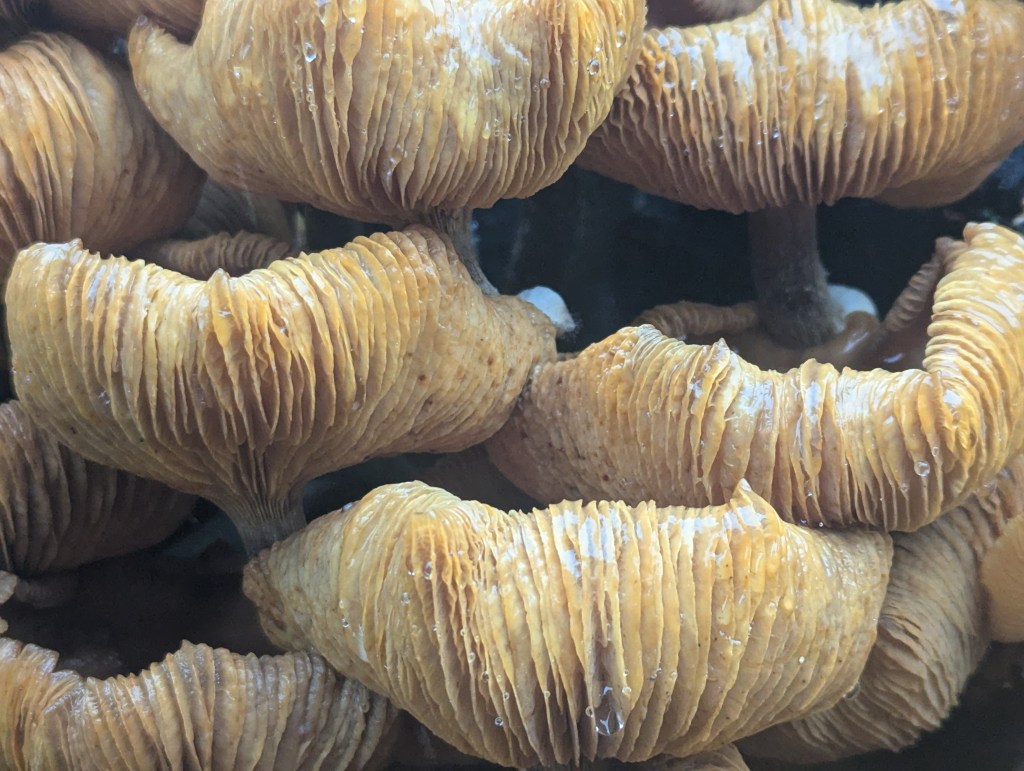
3. Mushrooms grow as the forest dampens through the rainy season. These are growing from a coast live oak stump that has been rotting for several years, but is somehow quite sound. I have been unable to dislodge it, even as the roots rot enough for the soil to sink.

4. Mushrooms that are growing from a rotten toyon stump are weirder, but could be the same sort at a more advanced state. I should recognize them since they do this annually. Some hideously big mushrooms grew elsewhere, but are already melting into black goo.
5. The madrone stump that was maintaining the integrity of the top of this embankment has been rotting for many years. Actually, I am impressed that it remained intact as long as it has. It looks worse from the other side. I could post a picture of that on Wednesday.

6. Heather would not cooperate for a picture against the clear sky between rainy weather a few days ago. She really just wanted to roll around on the sunny pavement, which was still damp and probably cold. She is impressively tolerant of this sort of embarrassment.

This is the link for Six on Saturday, for anyone else who would like to participate: https://thepropagatorblog.wordpress.com/2017/09/18/six-on-saturday-a-participant-guide/
Is exclusive bloom becoming redundant? Well, one of these is actually foliar rather than floral, although it resembles real floral bloom enough to qualify for the title above. Most of these six are annuals.
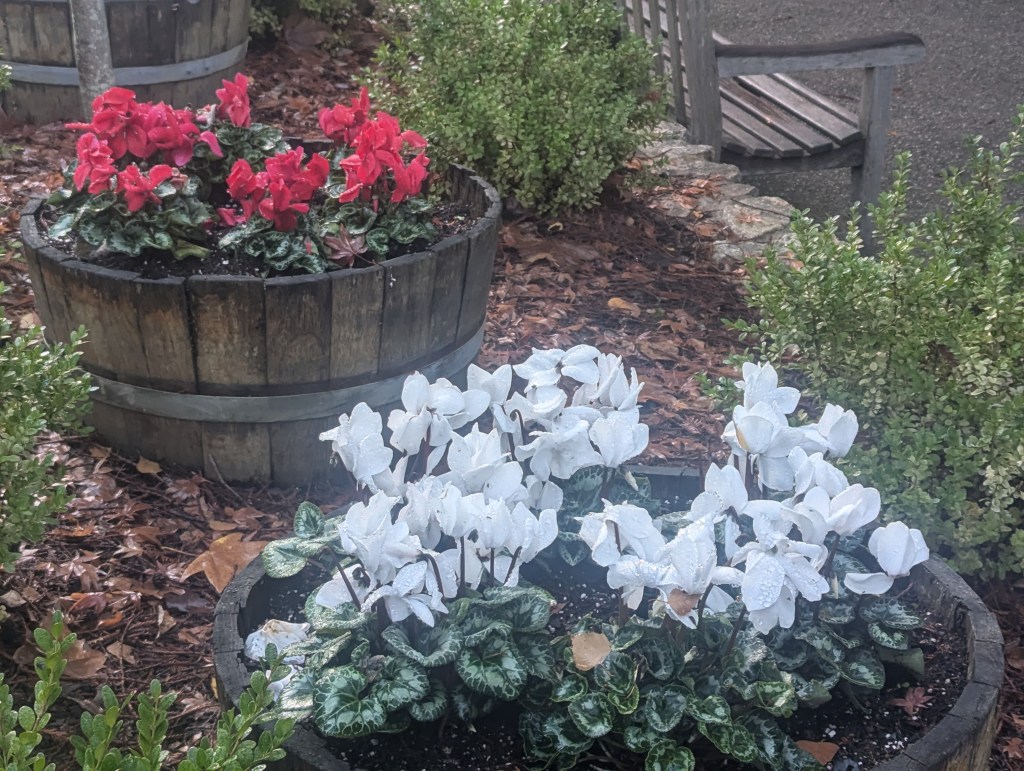
1. Cyclamen persicum, Persian cyclamen is now a Ghost of Christmas Past that will stay as long as it performs. If it does not mold by the end of the rainy season, it will hibernate by the warmly dry season. It is sadly exploited as an expensively cheap annual perennial.
2. Lobularia maritima, alyssum remains from last summer as a genuinely cheap annual that wants to be a perennial. Although it has potential to perform as a perennial, salvage after winter is less practical than replacement, especially since alyssum is not expensive.

3. Rosmarinus officinalis ‘Prostratus’ creeping rosemary is neither annual nor perennial like the others. It is instead a very prostrate shrub that sprawls as a ground cover. Bloom seems to be continuous, although not as impressive as bloom of annuals and perennials.

4. Viola X wittrockiana, pansy is probably the most popular cool season annual here. It has potential to be perennial, but like alyssum, it is easier to replace when it is in season than salvage after it was not in season. It gets thrashed through the warmth of summer.

5. Osteospermum ecklonis, African daisy tries to bloom as continuously as rosemary. Its flowers do not last for long while the weather is cool and damp, though, and might mold before they unfurl. Several cultivars with distinct floral colors bloom in the same garden.

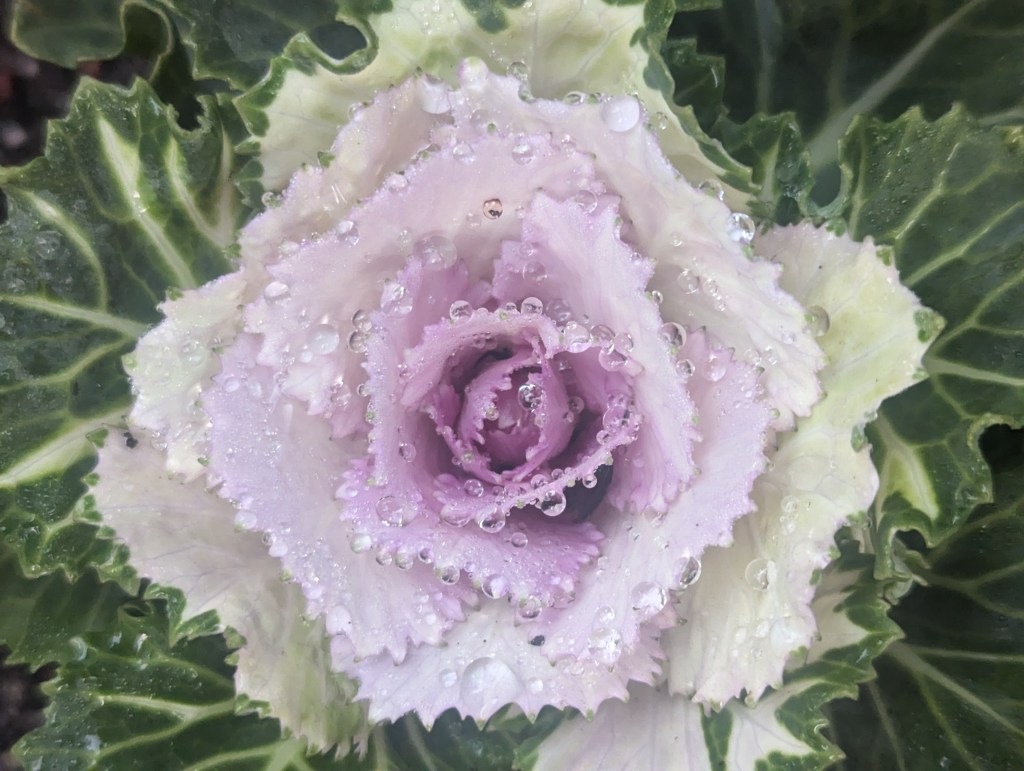
6. Brassica oleracea var. acephala, ornamental cabbage is the only one of these six that is foliar rather than floral. Actually, it deteriorates as it eventually blooms with warming summer weather. Yet, it is the biggest and boldest of these six even without floral bloom.
This is the link for Six on Saturday, for anyone else who would like to participate: https://thepropagatorblog.wordpress.com/2017/09/18/six-on-saturday-a-participant-guide/
A Week Of Flowers’ at ‘Words And Herbs’ got me started. It finished two weeks ago, and I did not even participate, but it reminded me that I should exhibit more floral pictures. Although the original project featured any floral pictures from any time of year, these six are all from yesterday, and actually, all are from the same relatively confined landscape. Minor frost that damages some vulnerable species within nearby landscapes is somehow less bothersome within this particular landscape. Elsewhere, some flowers are not quite as fresh. The only other common lantana within another landscape here was already cut back to the ground because its foliage succumbed to frost. It seems to know to postpone regeneration until after frost, but will likely succumb to frost next winter also. Although frost is mild here, it does happen.
1. Lantana camara, lantana was already damaged by mild frost at a lower elevation and less than a mile away. Even while damaged, though, it was still trying to bloom like this.
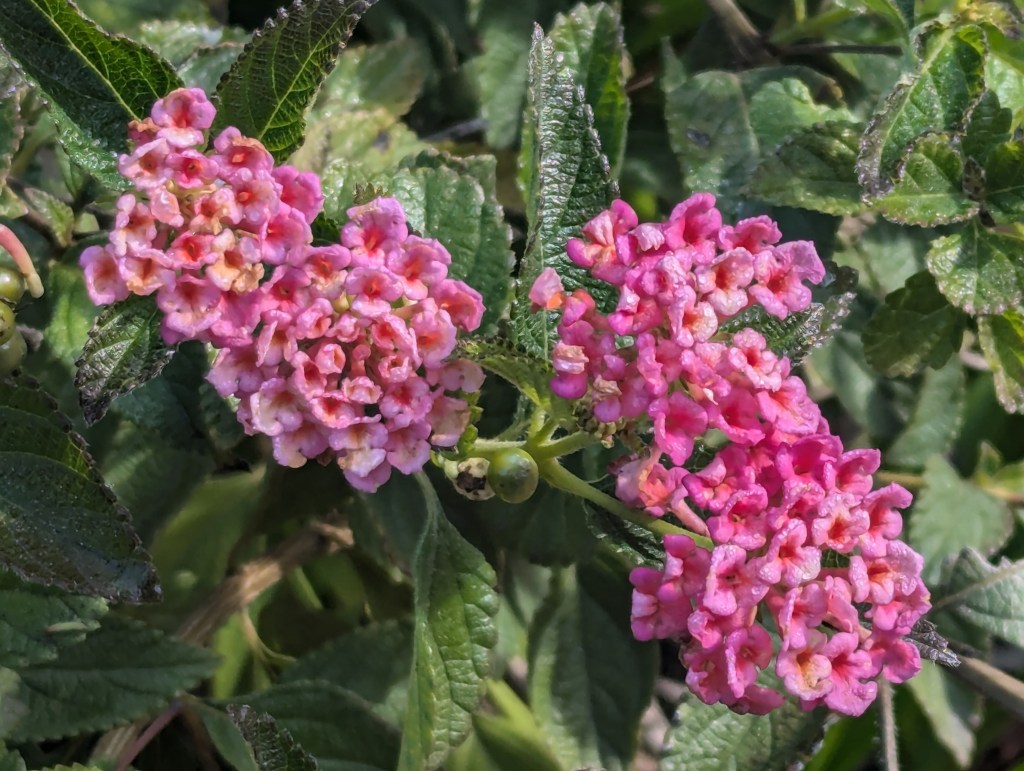
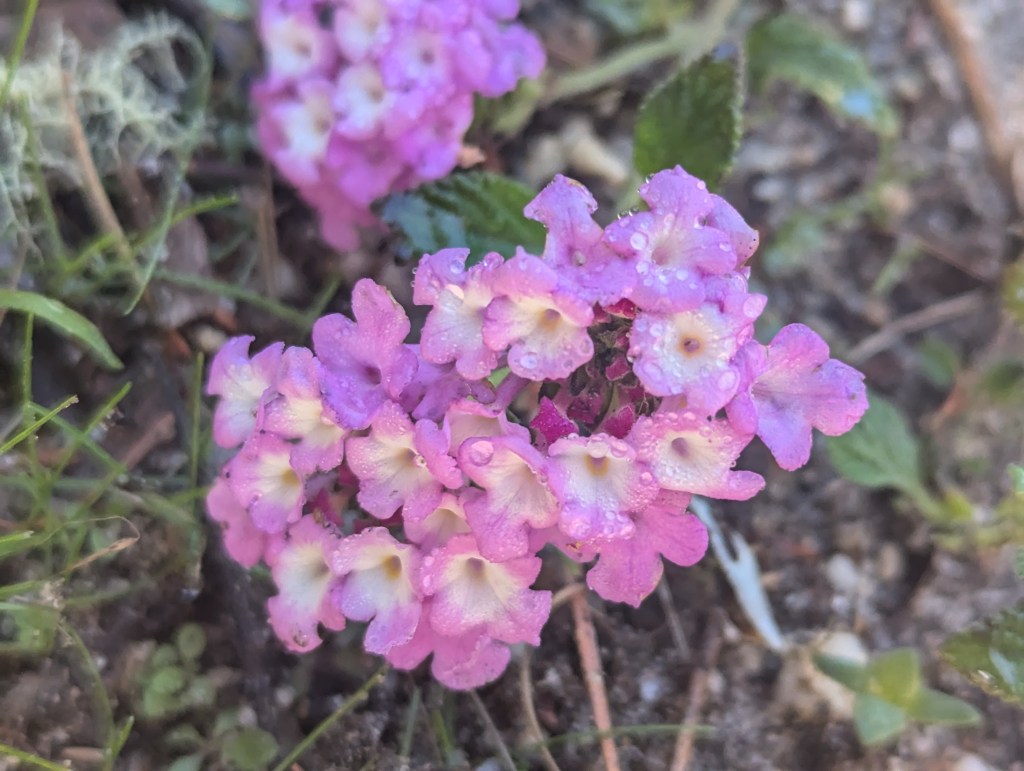
2. Lantana montevidensis, trailing lantana is purportedly slightly more resilient to frost than common lantana. However, its foliage can become very dark, as if it were damaged.
3. Tecomaria capensis, Cape honeysuckle is overrated. Its orange floral color is nice, but its flowers and floral trusses are too small and too scarce to display the color adequately.

4. Leonotis leonurus, lion’s tail bloom seems to resemble that of Cape honeysuckle, most likely because both attract sunbirds as pollinators where they are native in South Africa.

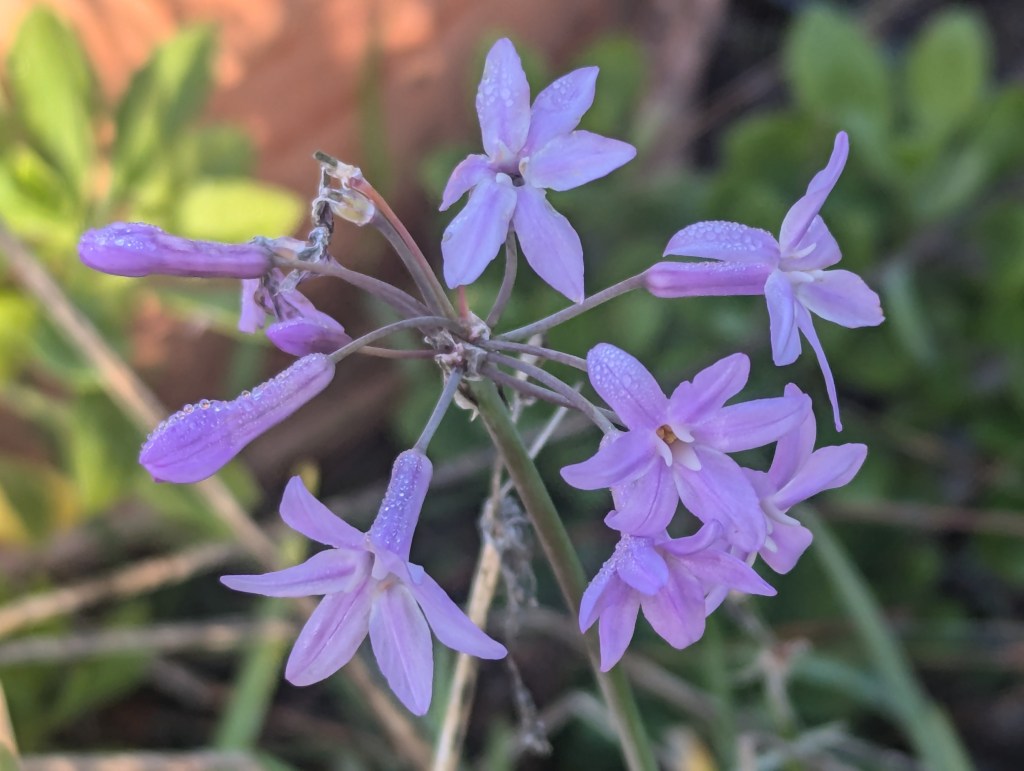
5. Tulbaghia violacea, society garlic is not among my favorite perennials, but is resilient and undemanding. This specimen has been abandoned for years, but constantly blooms.
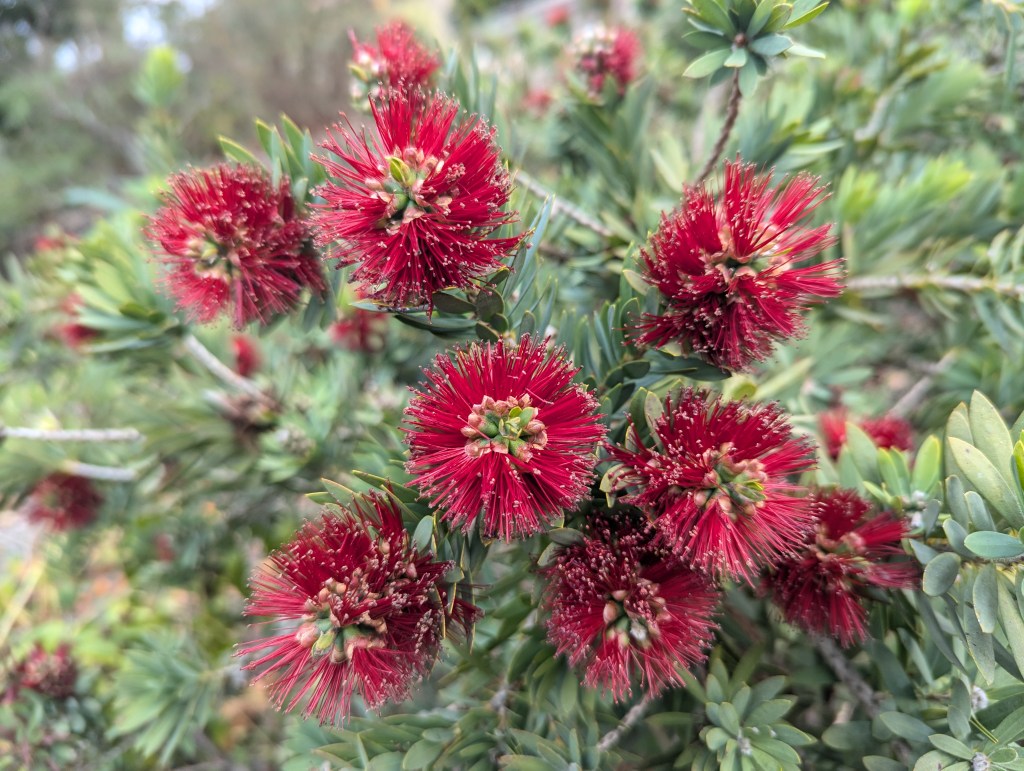
6. Callistemon viminalis ‘Little John’ bottlebrush is now Melaleuca viminalis. I learned it as a cultivar of Callistemon citriodora that is more proportionate to compact gardens.
This is the link for Six on Saturday, for anyone else who would like to participate: https://thepropagatorblog.wordpress.com/2017/09/18/six-on-saturday-a-participant-guide/

This is my first Sunday without writing anything more than this brief explanation about why I wrote nothing more than this brief explanation, . . . and why Rhody looks rather damp and concerned. A tornado landed less than two miles away, in Scotts Valley, just a moment before I got this picture. He knows about Toto of Kansas.

No, not this sort of cutting back. I will be cutting back on posting to this blog. I realize that I have expressed my intent to do so on several occasions in the past, only to resume my habit of posting daily, but now I am a bit more compelled to comply with these intentions. Although I can technically continue to post daily, some of the writing, which is really what occupies the vast majority of time that is devoted to blogging, will be omitted. My garden column will continue to post in two parts on Mondays and Tuesdays. Old articles from my garden column will likewise continue to post in two parts on Thursdays and Fridays. The garden column articles get written regardless, so may as well appear here like they do in their newspapers. Old articles were already written, so do not necessitate too much effort to recycle them here. Therefore, Wednesdays, Saturdays and Sundays are the only days that I actually write for. I can continue to write for the Horridculture theme, or actually, any random topic for Wednesdays. I can also continue to participate with the Six on Saturday meme for Saturdays, since it involves more illustration than writing, which, as previously mentioned, is what occupies too much time. However, I will discontinue my second posts for Saturdays at noon, which were not very interesting anyway. This should be the last of them. Also, instead of writing posts for Sunday, I should merely post illustrations, without much text, if any, perhaps similar to the Silent Sunday and Wordless Wednesday themes at the blog of Eliza Waters.
‘A Week Of Flowers’ at ‘Words And Herbs’ finished a week ago, but as I said last week, it reminded me that I should share more floral pictures.
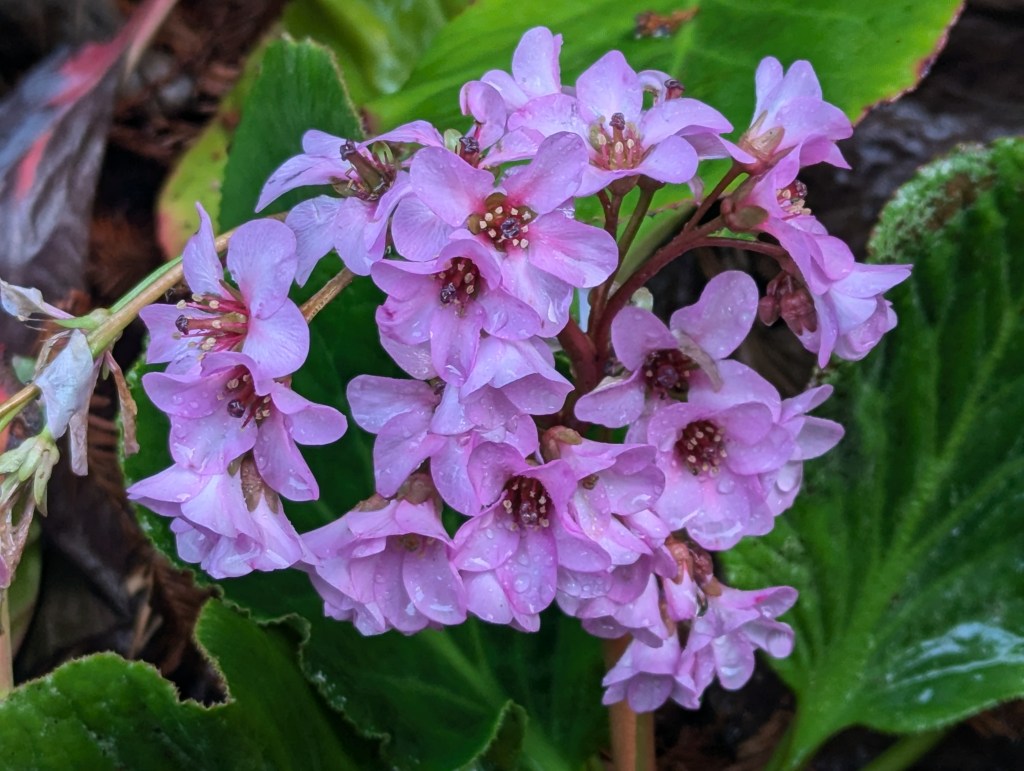
1. Bergenia crassifolia, pigsqueak is as popular as it is because it is so easy to propagate merely by relocating rhizomes that migrate where they are not wanted. These eventually creep onto a low retaining wall around their area, providing more to relocate elsewhere.
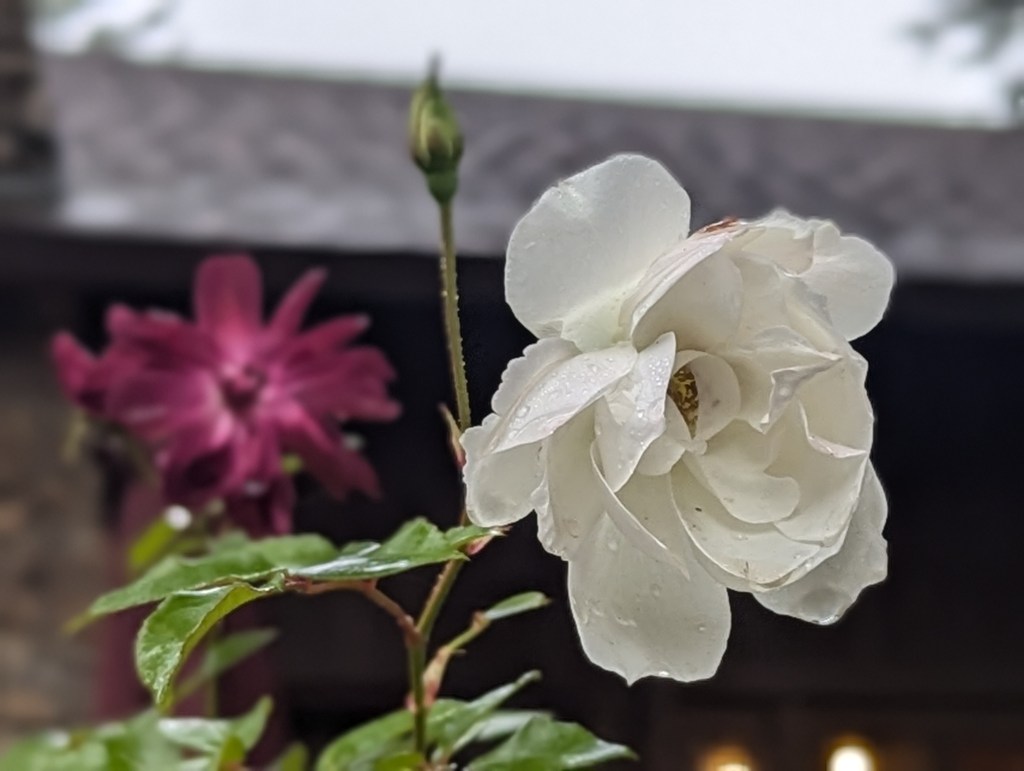
2. Rosa spp. ‘Iceberg’ rose should finish bloom anytime. That bud to its upper left is not likely to open now that the weather is cool for winter. ‘Burgundy Ice’, in the background, is grafted onto the same rose tree with this ‘Iceberg’. I think that they look odd together.
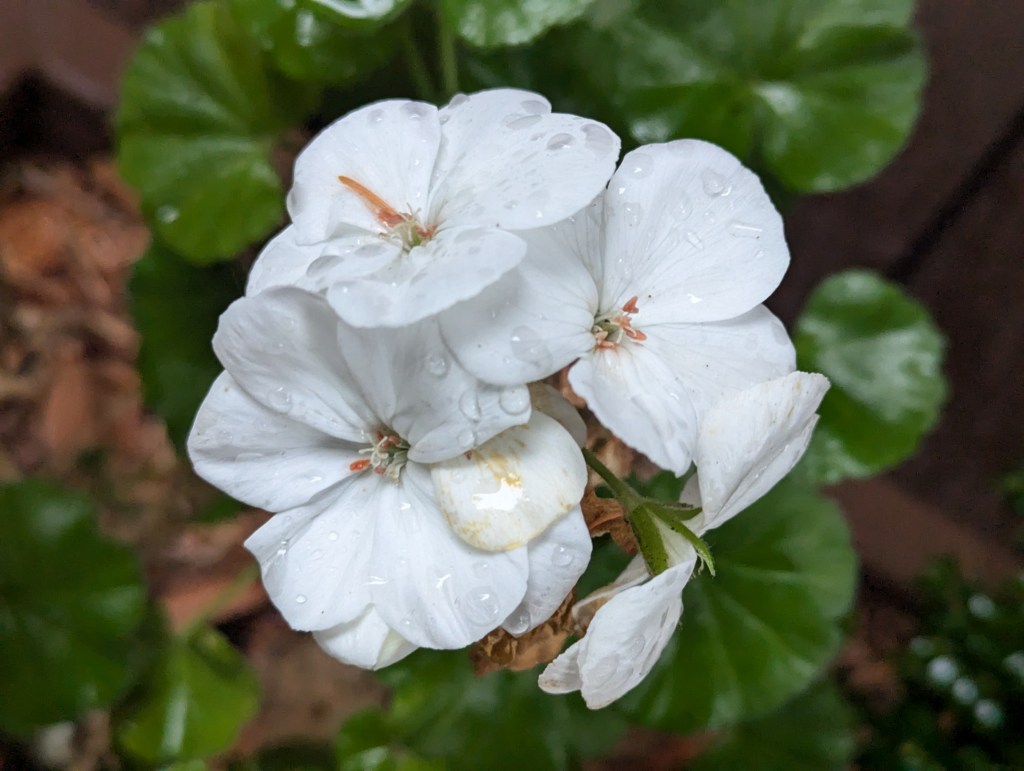
3. Pelargonium hortorum, zonal geranium is getting overgrown enough to look shabby, but should not be pruned back until the end of winter. If it gets pruned back now, it will look even shabbier until it resumes growth as weather gets warmer at the end of winter.
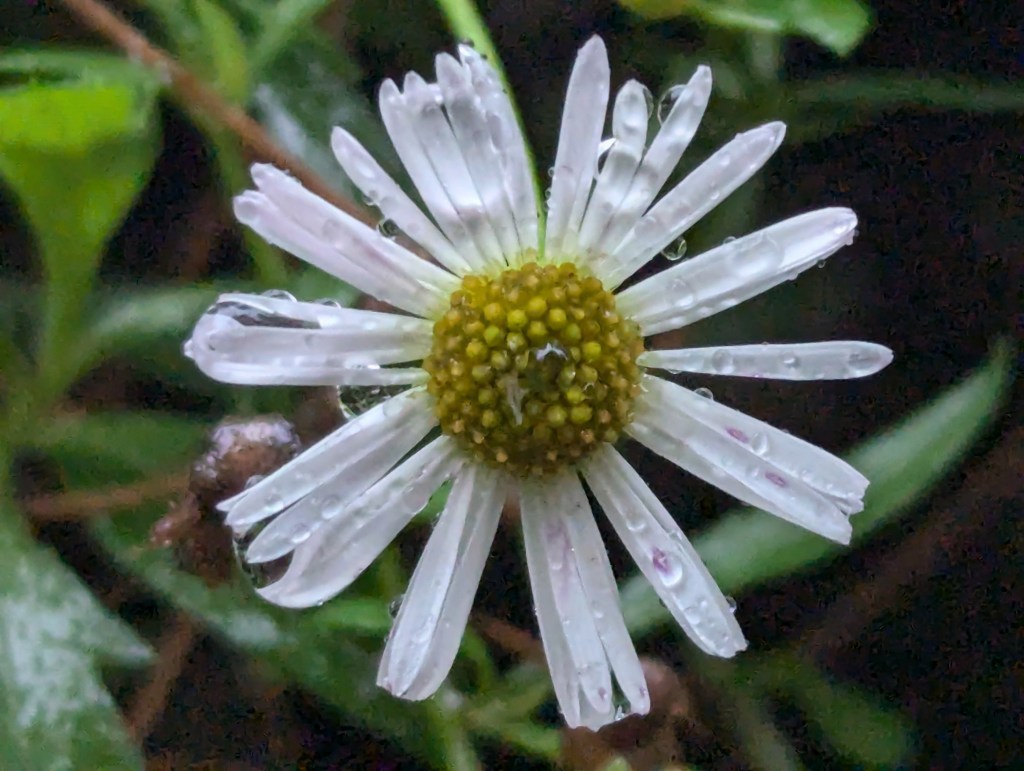
4. Erigeron karvinskianus, Santa Barbara daisy flowers seems to be a bit lean in partial shade. Santa Barbara daisy can be an annoying weed, but within our landscapes, is more often an asset, adorning otherwise bare stone walls. I pull it out to refresh it after winter.
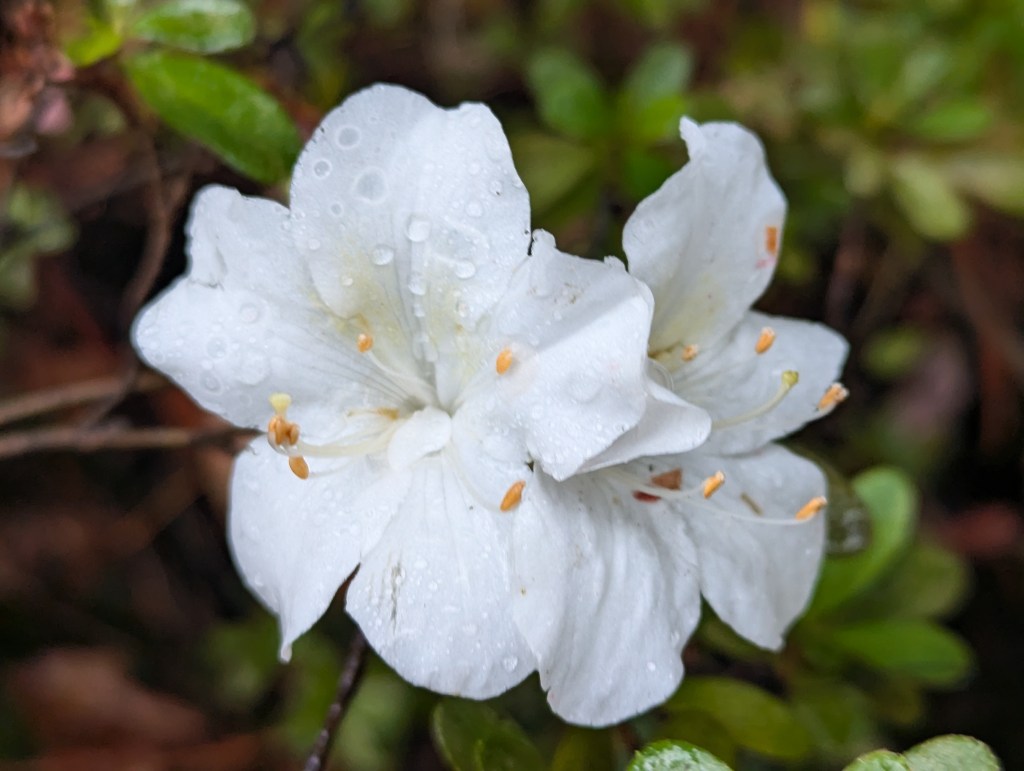
5. Rhododendron spp., azalea blooms lavishly for spring, but this particular unidentified cultivar also tosses out these few premature flowers for winter. Incidentally, it is merely coincidental that most of these Six bloom white. I just got pictures of what is prominent.
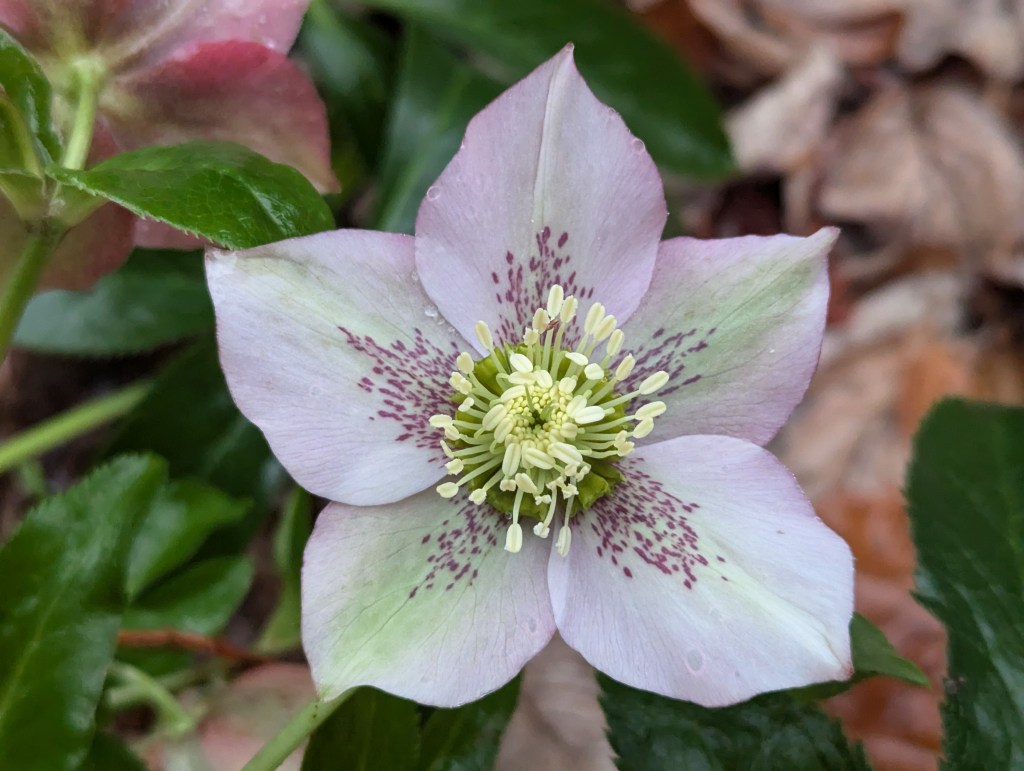
6. Helleborus X hybridus, hellebore is happy to self sow, but not as happy to perform. It does not bloom much. When it does, most of its flowers are spotty and grungy. Even the foliage is shabby. This flower, although pallid and weirdly blushed, is a delightful rarity.
This is the link for Six on Saturday, for anyone else who would like to participate: https://thepropagatorblog.wordpress.com/2017/09/18/six-on-saturday-a-participant-guide/
Black Friday was yesterday. White Saturday seems appropriate today. Actually though, I lacked six pictures after a two week commitment from which I returned less than a week ago. These six were cut flowers where I was at. It is a long story. Apologies for this lapse of any personally relevant horticultural topics.
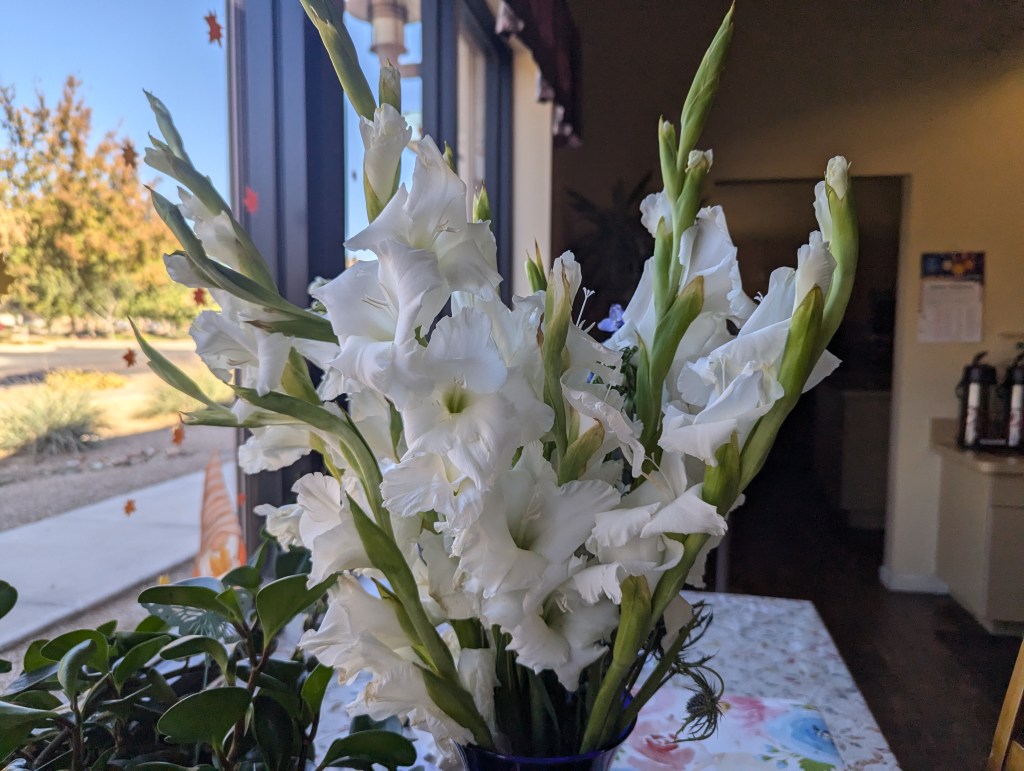
1. Gladiola is one flower that really excels at white! Except for the few at work, I have not grown them in many years. I grew some in yellow and orange in the old neighborhood in 2000 or so. They were fancy hybrids like this, so were not reliably perennial for too long.
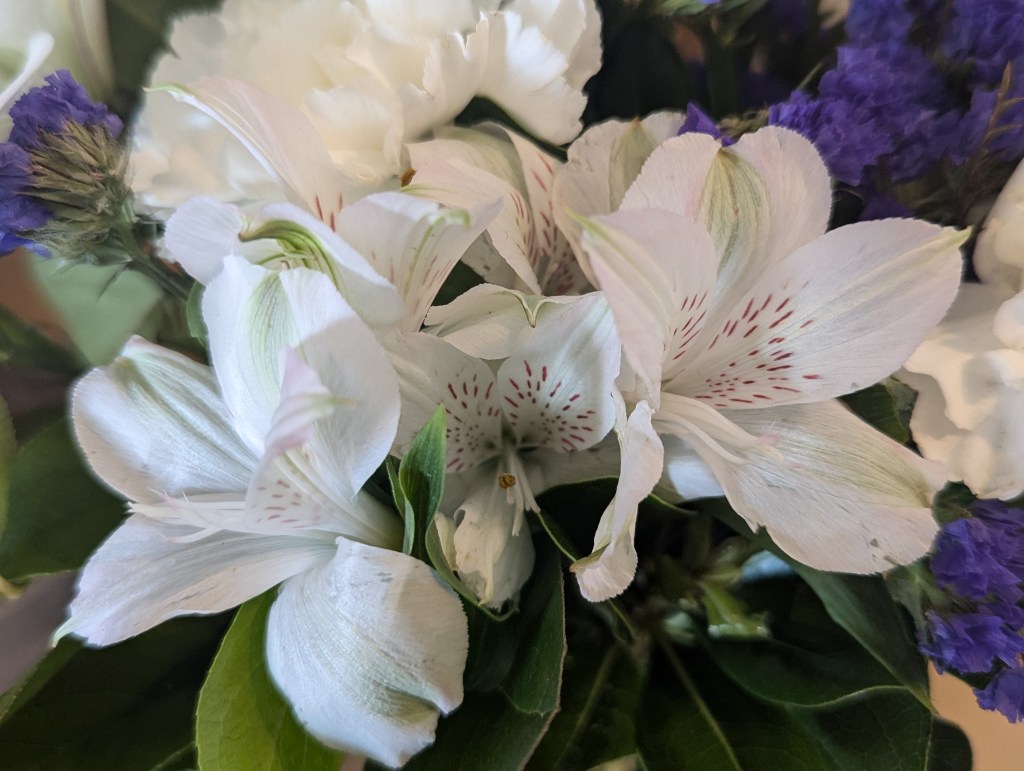
2. Peruvian lily was one of the first cut flower crops that I worked with after my first year of college, for the summer of 1986, when they were new and trendy. White had not been developed back then. I am impressed by how white this variety is, with only minor spots.
3. Carnation is one of the most ubiquitous of cut flowers, but is also the only one of these six that I have never grown. I have worked with only bedding types and sweet William in landscapes at work. I did not get close enough to notice how fragrant this carnation was.

4. Rose is the most popular of cut flowers, although it does not seem to be as ubiquitous as carnations do. I can not remember ever not growing them. I acquired some that are in my garden now while I was in high school in about 1984 or 1985 and brought them here.

5. Chrysanthemum that grow in the landscapes at work were formerly potted plants that were left with us to be recycled. We selected none intentionally. They might be more fun like that. Anyway, this particular cut white chrysanthemum is impressively humongous!

6. Lily was a secondary cut flower crop that I worked with for the summer of 1986, along with the primary crop of Peruvian lily, which is not actually a lily. We grew Asiatic lilies, and we grew white lilies, but not white Asiatic lilies such as this. I am happily impressed.

This is the link for Six on Saturday, for anyone else who would like to participate: https://thepropagatorblog.wordpress.com/2017/09/18/six-on-saturday-a-participant-guide/
Pilferage annoys me. I certainly do not want to annoy anyone else with it. Fortunately, I only want to pilfer weeds that should be removed from their landscapes anyway. Several of these six were unwanted feral seedlings, which technically qualify as weeds. Seed that was not removed could have grown into more feral seedlings if I had left it. Although the red yucca pup was not a weed, it was crowded. Ocotillo was a gift, so was neither a weed, nor pilfered. Now, I have even more to grow.
1. Hesperaloe parviflora, red yucca produces quite a bit of seed. I found some which the gardeners neglected to deadhead. I wrapped it too neatly to unwrap to get a picture of it.

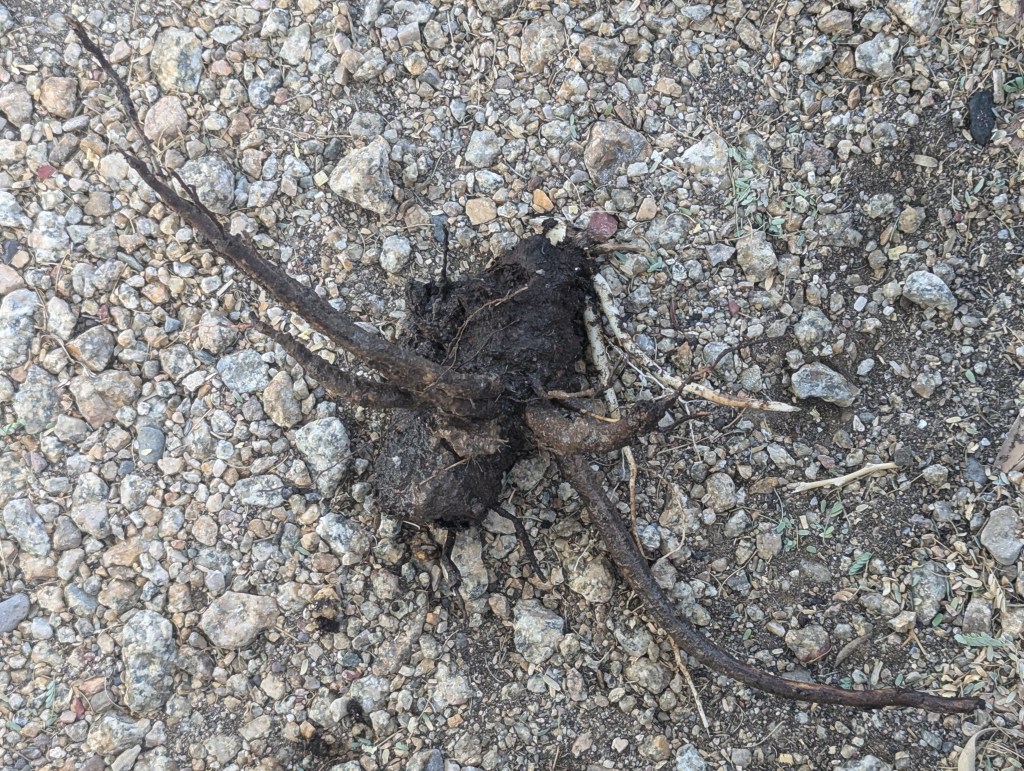
2. Hesperaloe parviflora, red yucca should be easier to grow by division. Unfortunately, this one shoot that I managed to divide is almost totally rotten from excessive irrigation.
3. Calliandra californica, Baja fairy duster is the only species in this bundle of seedlings that I can identify. It is the biggest one which extends to the upper right. The bundle also includes seedlings of both or either Parkinsonia florida, blue Palo verde and or Prosopis velutina, velvet mesquite, as well as a single seedling of an unidentified species of palm.
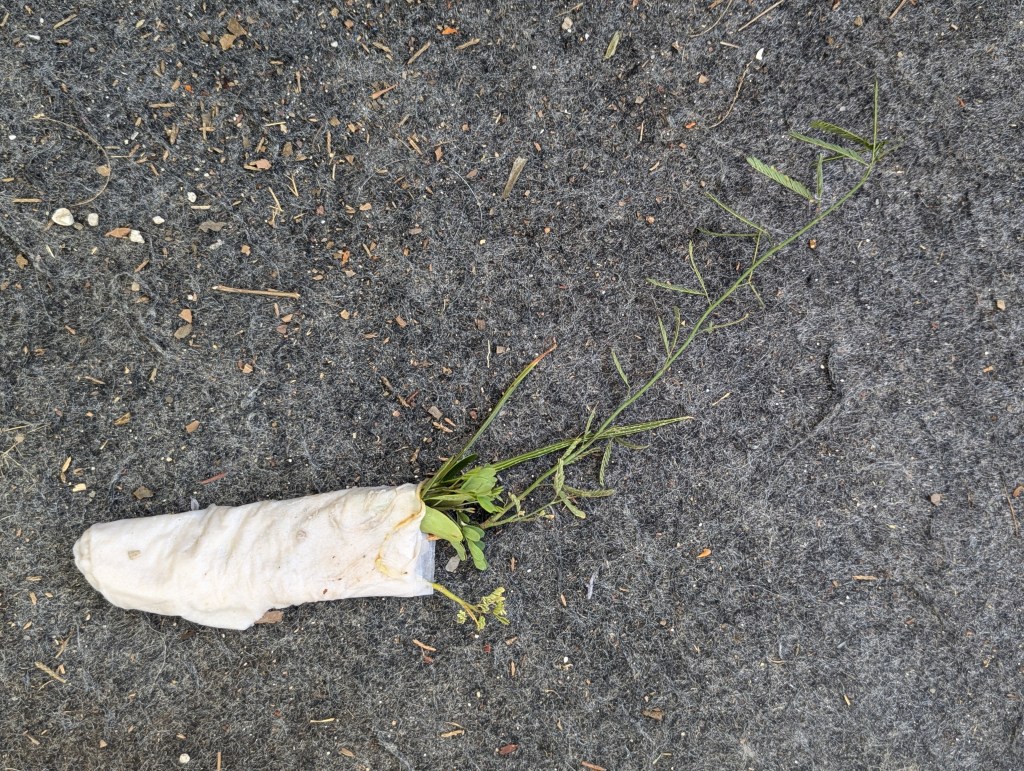
4. Parkinsonia florida, blue palo verde is easier to identify when it larger than seedlings. However, because I am unfamiliar with it, I am still uncertain if these are actually them.

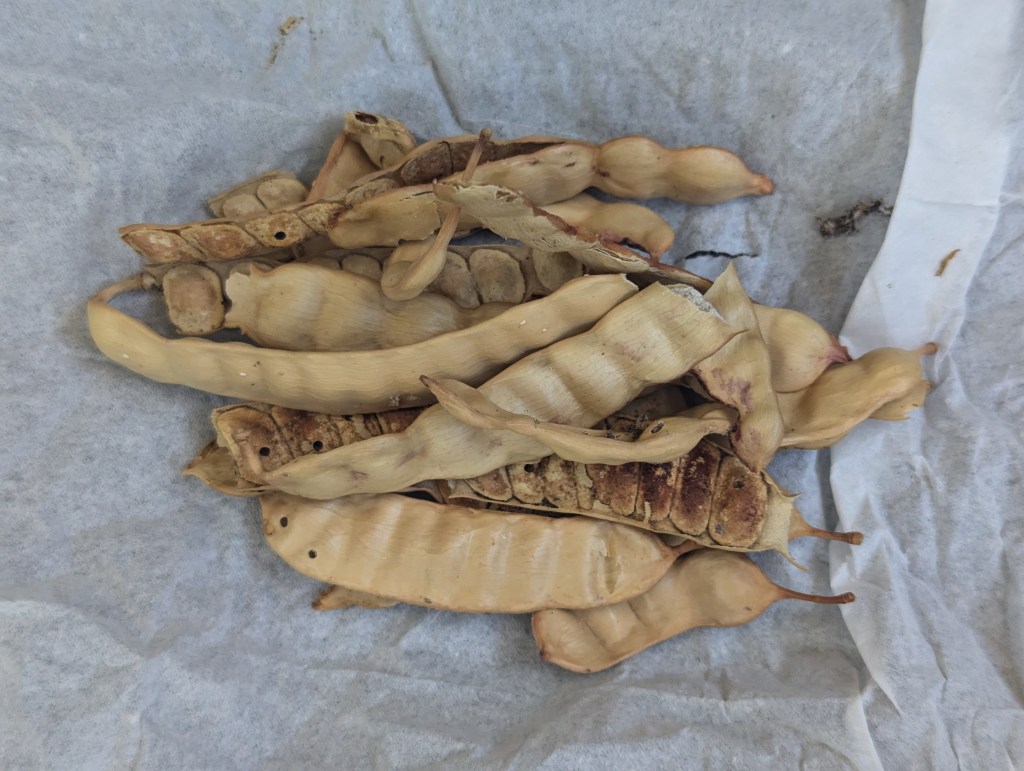
5. Prosopis velutina, velvet mesquite left these seed pods on the ground. Small holes are from insect larvae that ate some of the seed within. A few viable seed would be adequate.
6. Fouquieria splendens, ocotillo was a gift, so was not pilfered. This cane is about three feet long, so can become several cuttings when I determine how long cuttings should be.

This is the link for Six on Saturday, for anyone else who would like to participate: https://thepropagatorblog.wordpress.com/2017/09/18/six-on-saturday-a-participant-guide/
 Tony Tomeo