Six on Saturday: Away Again

It is a long story. To be brief, Rhody and I are again far away from work and home, near Phoenix in Arizona, without time to write.

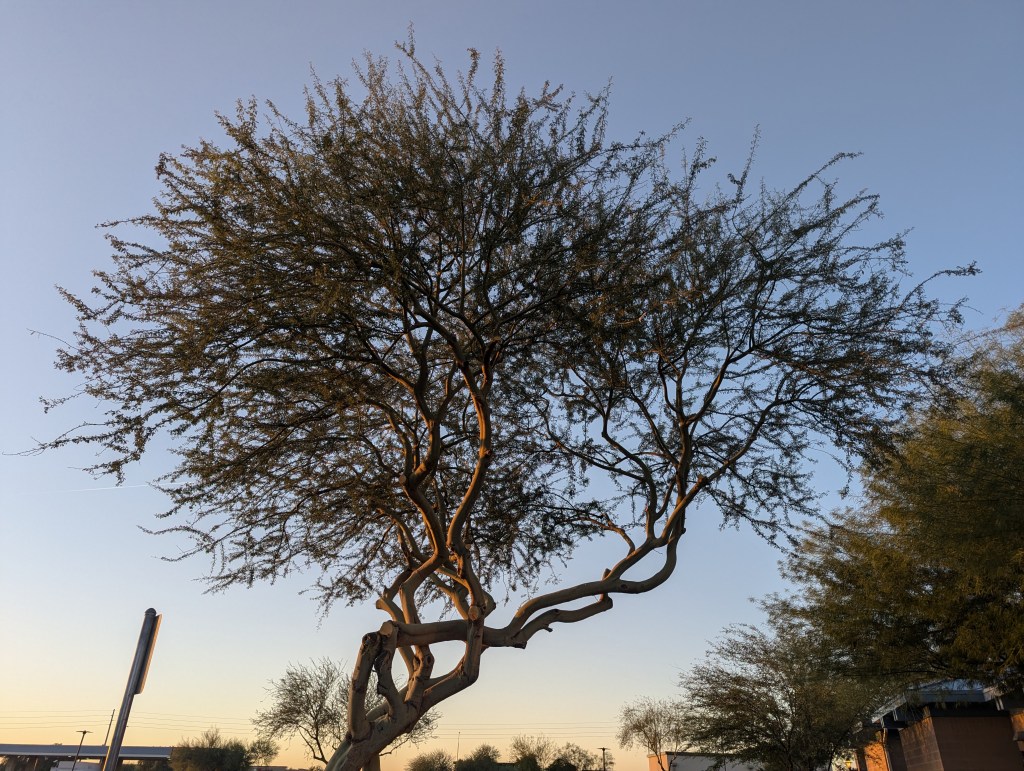
1. Prosopis velutina, velvet mesquite is supposedly the most common mesquite here and is also native. It develops sculptural form, but only light shade, which seems to me to be substandard for such a warm climate. Perhaps it is common because it is undemanding.
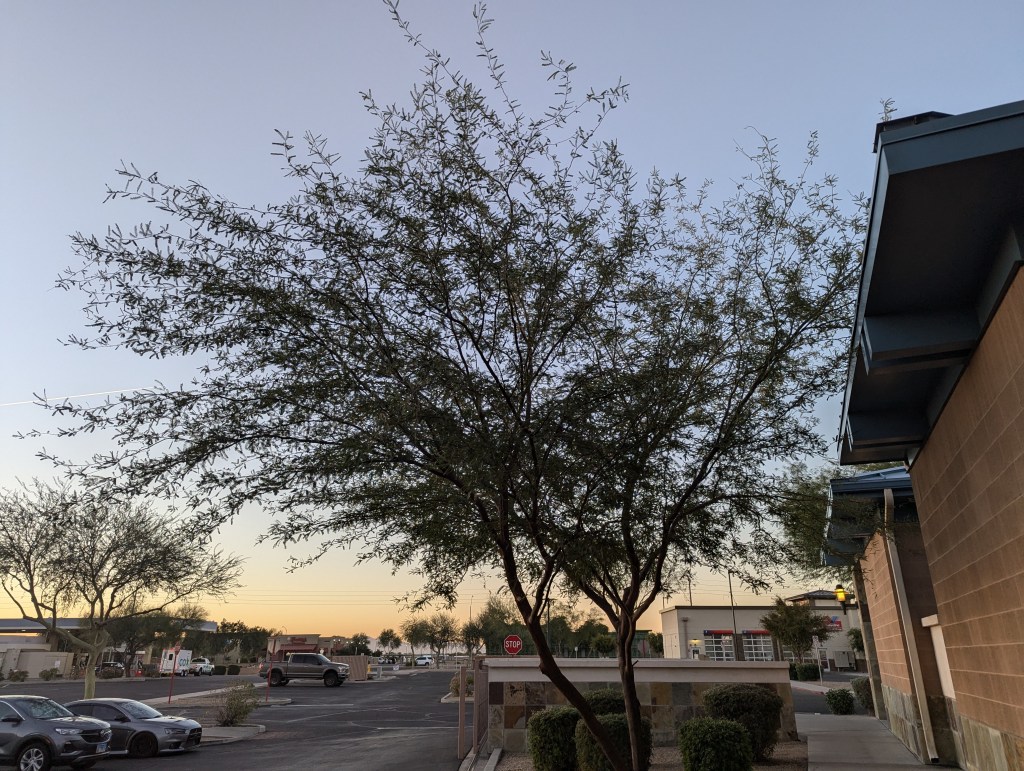
2. Parkinsonia florida, blue palo verde is also native like velvet mesquite, but is only one of the two most common palo verdes here. Foothill palo verde is the other. Both develop sculptural form and light shade, also like velvet mesquite, and are a bit more sculptural.
3. Lantana montevidensis, trailing lantana is the same common type that I occasionally work with at home, but seems to be happier and more colorful here, even while shorn as these weirdly compact globs, and humiliatingly deprived of its naturally sprawling form.

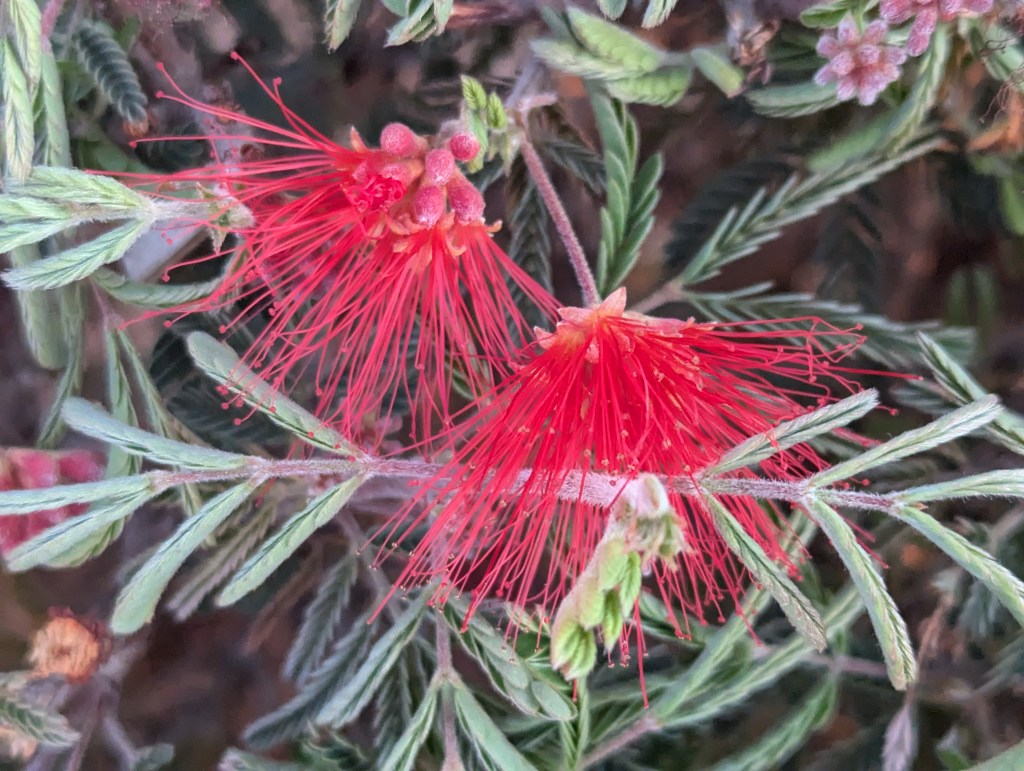
4. Calliandra californica, Baja fairy duster seems to be more prevalent here than it is in California. Of course, Baja California is a very big and very diverse region to the south of the State of California that I am familiar with. I suspect that this is a hybrid or a cultivar.
5. Leucophyllum frutescens, Texas sage, like so much of the flowering shrubbery here, is shorn too abusively to bloom as well as it likely should. Its silvery gray foliar color is also compromised. I can not even guess what its natural form or branch structure should be.

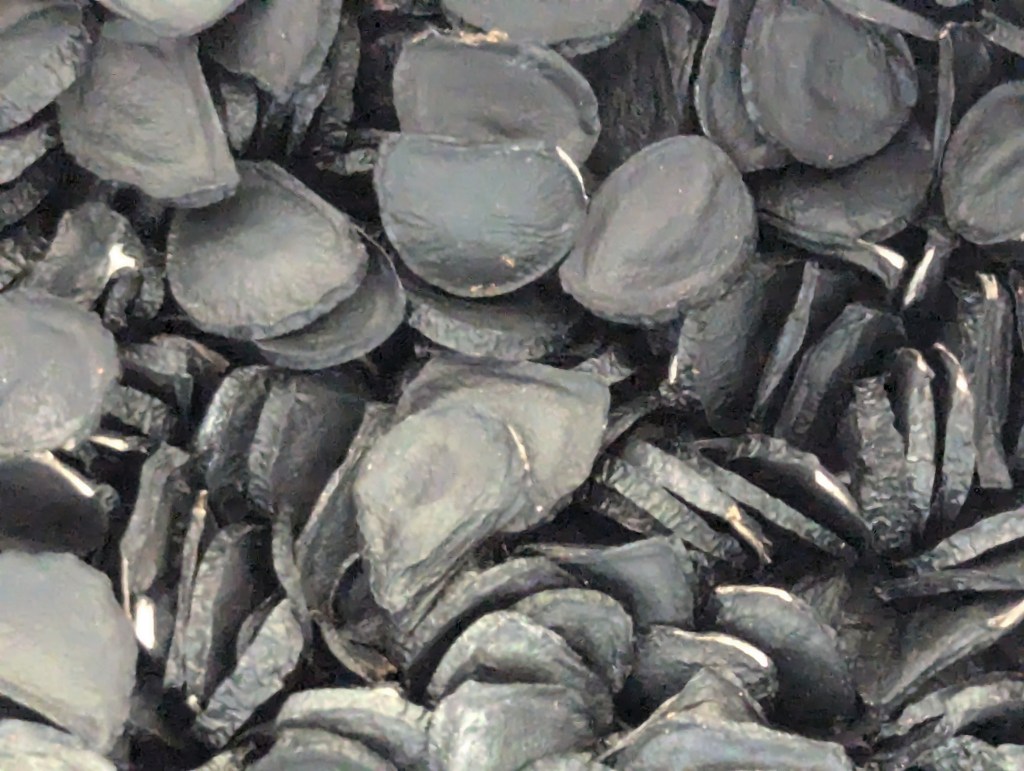
6. Rhody is so tolerant of my interest in unfamiliar vegetation. His only interaction with it involves just ‘claiming’ it. I absconded with a handful of seed pods and three seedlings of velvet mesquite, and a seedlings of Baja fairy duster (which will get a different name).

This is the link for Six on Saturday, for anyone else who would like to participate: https://thepropagatorblog.wordpress.com/2017/09/18/six-on-saturday-a-participant-guide/
Six on Saturday: Day Out

Rhody and I were in Capitola to attend to a few important tasks. Consequently, I did not take any pictures from home or work. My ‘Six’ for this week are therefore totally random without a theme.

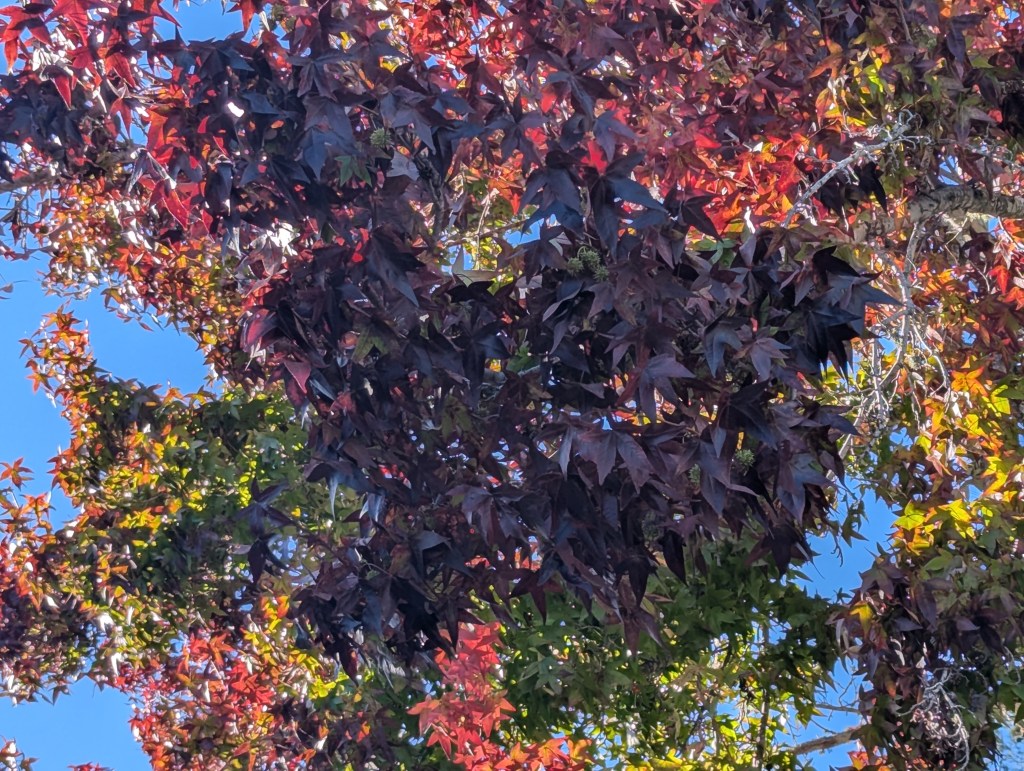
1. Liquidambar styraciflua, sweetgum does not require much chill to exhibit exemplary foliar color for autumn. This deep garnet red is almost too dark to be visually appealing. It looks like it should be in Vermont rather than here on the Central Coast of California.

2. Archontophoenix cunninghamiana, king palm is more common closer to Los Angeles than here. I know of only a few here, and almost all are somewhat shabby like these are. King palm is less tolerant of slightly excessive chill than sweetgum is of inadequate chill.

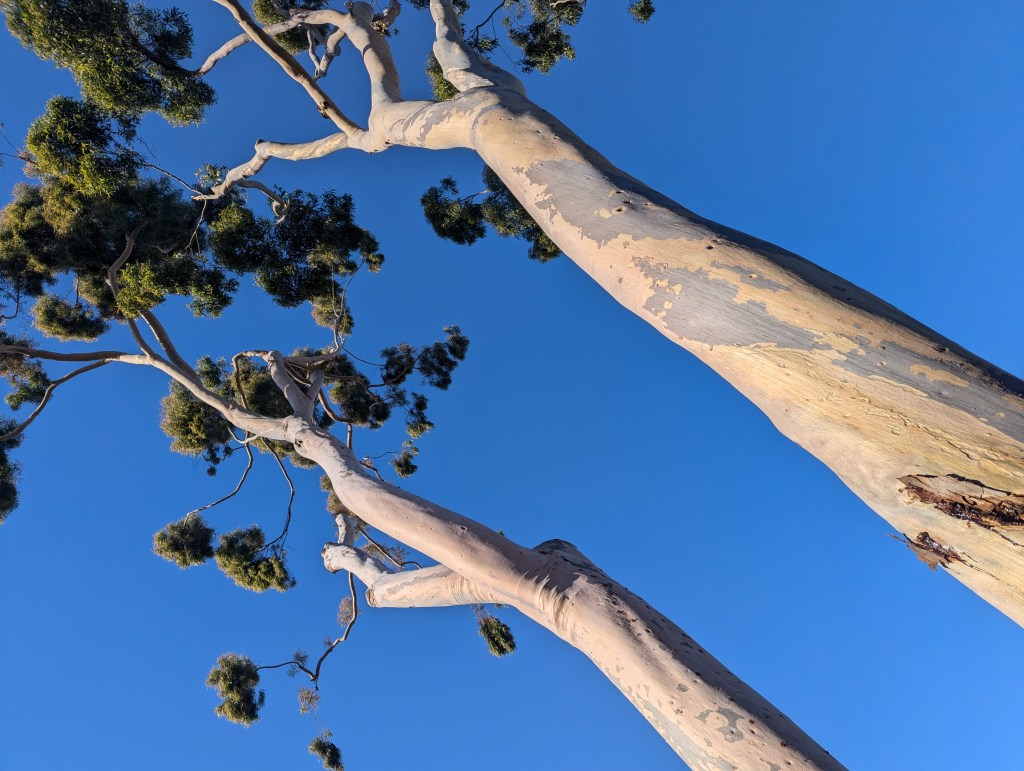
3. Eucalyptus citriodora, lemon gum is also more common in Southern California, likely because it prefers warmer winters. Although these are reasonably happy here, not many are so happy within the Santa Clara Valley on the other side of the Santa Cruz Mountain.

4. Cortaderia jubata, pampas grass is the aggressively invasive sort which is naturalized so wickedly on the West Coast of California and Oregon. This is not a good picture, since it shows only its bloom peeking above the edge of the cliff, with foliage concealed below.

5. Eucalyptus globulus, blue gum is another aggressively invasive naturalized species. It has a completely different personality, though. Where it competes with other tall trees, it grows very high, and is very combustible. This exposed tree is relatively short and stout.

6. Carpobrotus edulis, Hottentot fig, which most of us know incorrectly as ice plant, was imported from South Africa more than a century ago, and is now so abundant that some believe that it is native. Technically, it is invasive too, but it is not easy to dislike as such.

This is the link for Six on Saturday, for anyone else who would like to participate: https://thepropagatorblog.wordpress.com/2017/09/18/six-on-saturday-a-participant-guide/
Six on Saturday: Attempted Autumn

Astronomical autumn began more than a month ago. It is about a third done, with about two thirds remaining. Meteorological autumn can start at any time. Sometimes, it starts, but then pauses before restarting a bit later. Sometimes, the first rain is the beginning of the rainy season, which typically continues through winter. A bit of rain arrived between Wednesday and Thursday, and a bit more is here now, but no more is in the forecast for next week. Regardless of future weather, some flowers bloom, or at least try to, as late as they possibly can. Of course, some actually prefer to bloom even later and during winter. Apologies for the lack of focus of pictures #4 and #6.

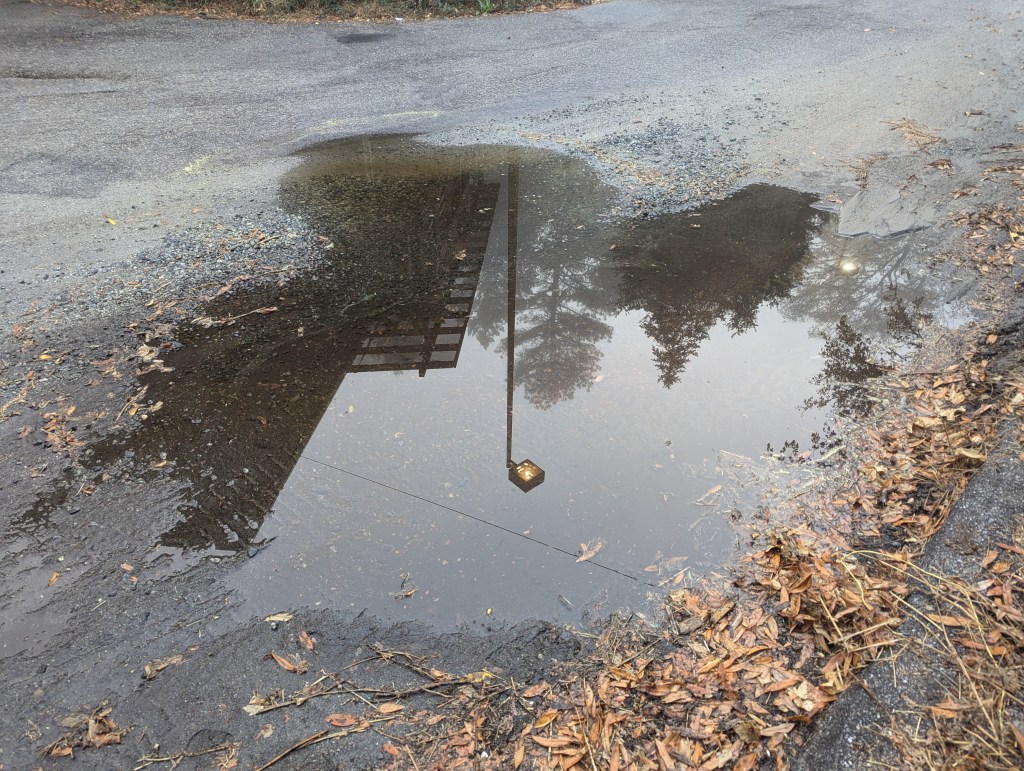
1. A ‘chance or rain’ in the weather forecast here is generally not taken too seriously until something like this happens. It is a genuine puddle. It is wet, and full of water from rain.

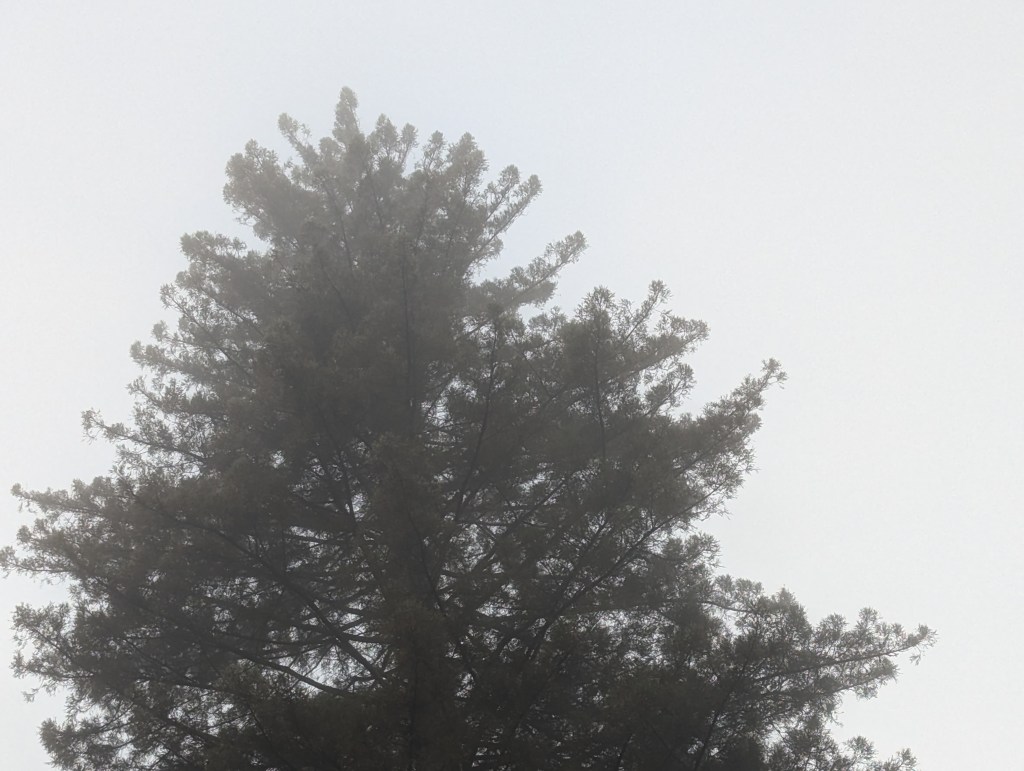
2. Sequoia sempervirens, coastal redwood seems to enjoy this damp weather. It actually enjoys all weather, but appears to be more refreshed by any interruption of arid warmth.

3. Lemna minor, duckweed is even weirder with this border of white foam that develops as the first rain washes away pollen and dusty crud that accumulated since the last rain.

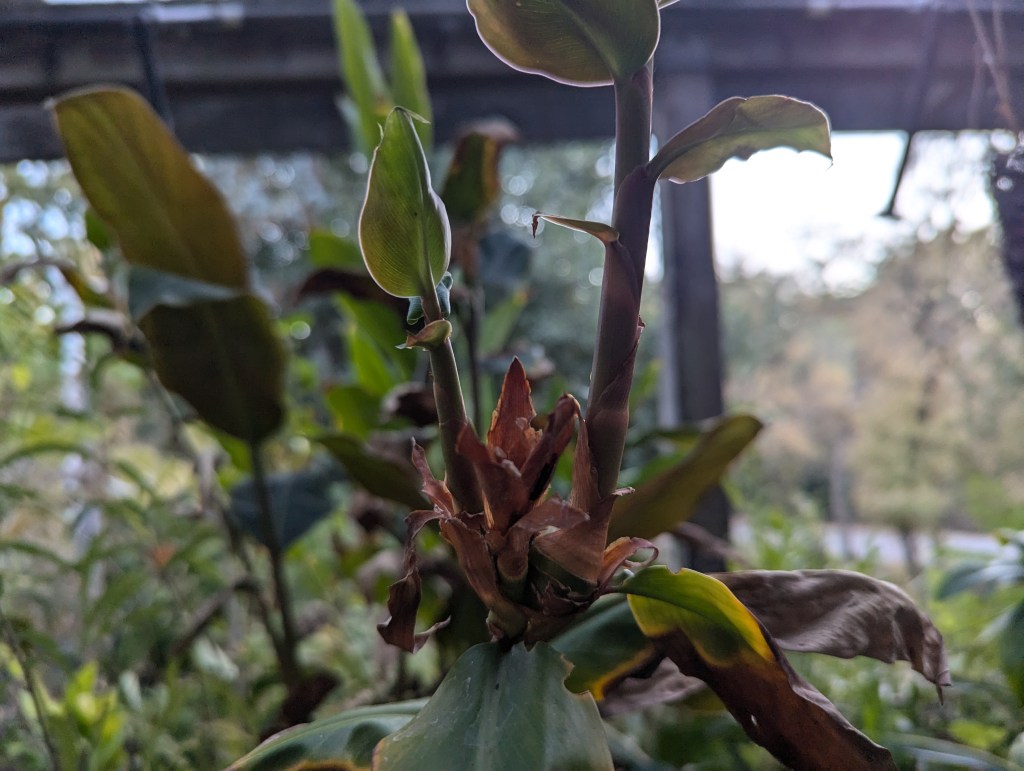
4. Hedychium coccineum X coronarium ‘Peach Delight’ ginger lily, which was blooming for last Saturday, is trying to bloom again. I already doubted its ability to follow through.

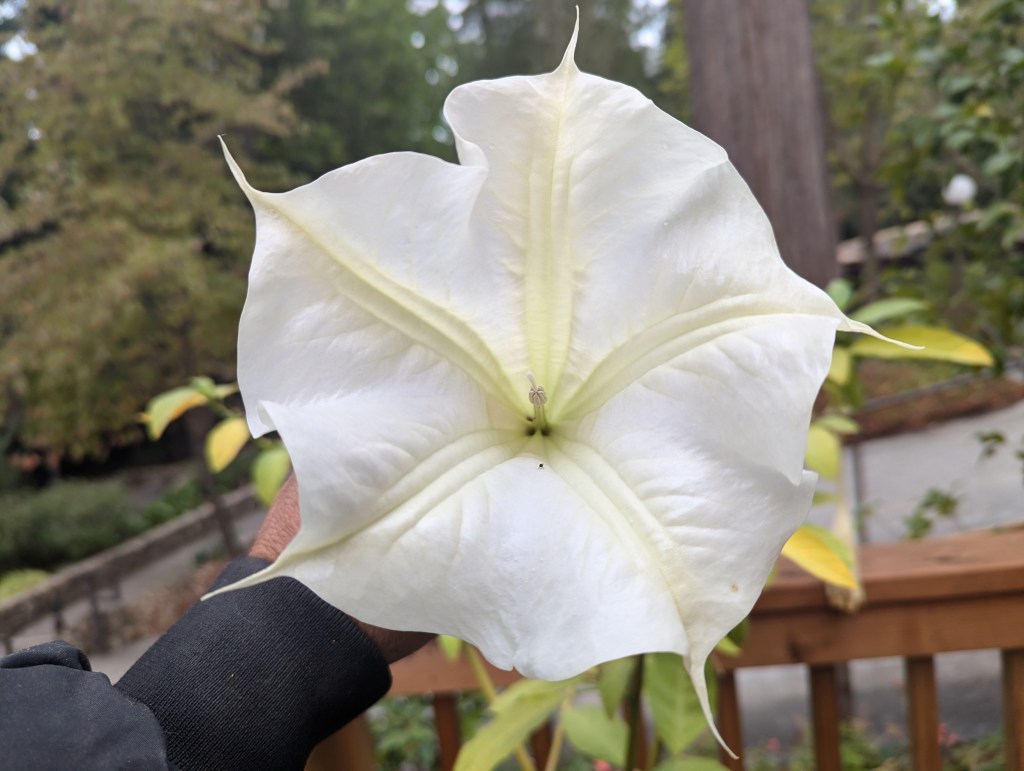
5. Brugmansia X cubensis ‘Charles Grimaldi’ angel’s trumpet looks like Carl’s Junior ate too much of its own food. I added this because of response to angel’s trumpet last week.

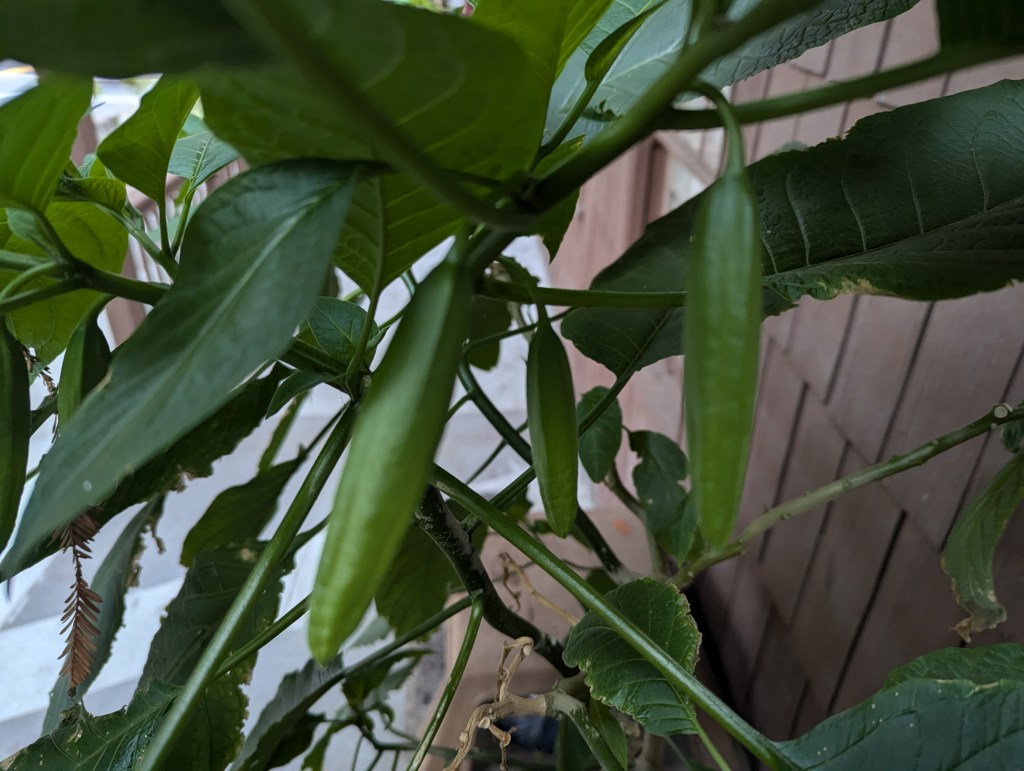
6. More interestingly, it produced this seed pod. Such hybrids should be sterile. I can not help but wonder if seed is true to type. If so, propagation by cuttings is easier than seed.

This is the link for Six on Saturday, for anyone else who would like to participate: https://thepropagatorblog.wordpress.com/2017/09/18/six-on-saturday-a-participant-guide/

Six on Saturday: Firsts & Lasts

Angel’s trumpet should be finishing bloom by now. Instead, and even while their foliage is fading with cooler weather, their bloom continues. Only the unidentified cultivar with single pink flowers currently lacks open flowers, but even it is budded for potential later bloom. (I neglected to get a picture of a flower of ‘Charles Grimaldi’ angel’s trumpet only because two pictures of angel’s trumpet is sufficient.) While angel’s trumpet is finishing, Algerian iris and ‘Peach Delight’ ginger lily are blooming for their first time here and red butterfly ginger is generating bulbils for its first time here. I was not aware that this sort of ginger generates bulbils. Otherwise, I could have allowed the other gingers do so also.

1. Hedychium greenii, red butterfly ginger is making bulbils! I did not know that it knew how to do so. I am now glad that I refrained from pruning the bloomed canes out earlier.

2. Hedychium coccineum X cornonarium ‘Peach Delight’ ginger lily started to bloom so late that I did not expect for it to actually show this much color and confirm its identity.

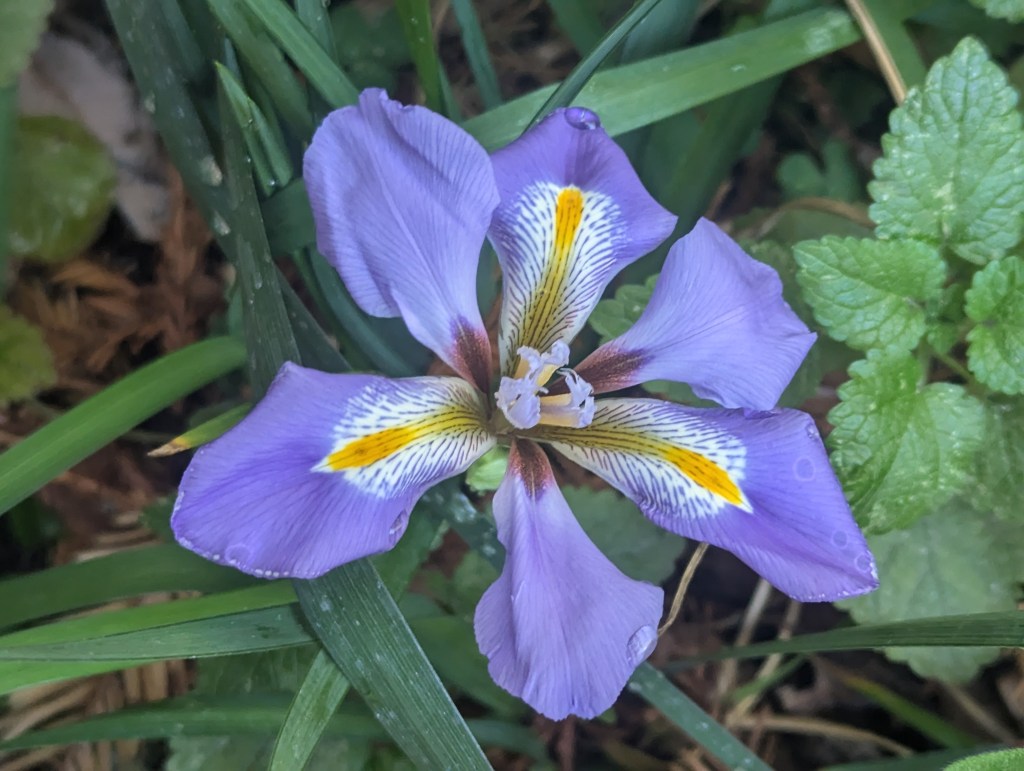
3. Iris unguicularis, Algerian iris is also blooming for the first time here, since its arrival from Tangly Cottage Gardening. It should bloom more for winter. Is it blue or purplish?

4. Brugmansia, angel’s trumpet of an unidentified cultivar, species or perhaps hybrid, is trying to bloom with its last big single pink flowers of the season, and it just might do so.

5. Brugmansia insignis ‘Single White’ angel’s trumpet is my favorite in regard to bloom, but not one that I recommend. It is blooming nicely though, now that its season is done.

6. Brugmansia candida ‘Double White’ angel’s trumpet also intends to bloom until it no longer can. It bloomed only sporadically since spring, but better than the ‘Single White’.

This is the link for Six on Saturday, for anyone else who would like to participate: https://thepropagatorblog.wordpress.com/2017/09/18/six-on-saturday-a-participant-guide/

Six on Saturday: Red Flag Warning

A Red Flag Warning that began Thursday night continues at least until five this evening. Arid wind severely increases the risk of wildfire during this time. The strong wind can be hazardous, even without fire. Big trees become big problems.

1. Wind developed soon after sunrise yesterday. I tried to get a picture of foliar debris as it fell from the forest canopy, but took only this. Sequoia sempervirens, coastal redwood makes the background, with Quercus agrifolia, coast live oak in the lower left quadrant.

2. Turkeys should hide from such wind. This one was alone and in a hurry, likely to find a sheltered situation with others, and just as likely, after shredding the red berries of the firethorn, Pyracantha coccinea. I saw no others as the wind continued through the day.

3. Sequoia sempervirens, coastal redwood is remarkably stable but structurally deficient where exposed to wind, which is why it grows in dense and mutually sheltering colonies. These big fractured limbs are very heavy, and fell with deadly velocity from very high up.

4. Umbellularia californica, California bay is often destabilized by structural deficiency. In other words, although its trunks and limbs are generally not structurally deficient, rot often compromises the structural integrity of the roots, which then become destabilized.

5. Two California bay trunks that destabilized and blocked the road in the picture above are obscured on the ground by their own foliage here. The fractured trunk that is visible was not structurally deficient, but was pulled down by the other two as they destabilized.

6. Hedychium coccineum X coronarium ‘Peach Delight’ ginger is likely too late to finish blooming. I would like to see it bloom to confirm its identity, but may need to wait until next year. Although irrelevant to the wind, I thought I should feature at least one bloom.

This is the link for Six on Saturday, for anyone else who would like to participate: https://thepropagatorblog.wordpress.com/2017/09/18/six-on-saturday-a-participant-guide/

Seventh on Saturday . . . and Eighth and Ninth – Omissions

Six on Saturday is, as should be obvious, limited to six. Therefore, I omitted a few of the pictures of colorful berries that I took last week. The first of these three of the omissions is likely the most important, but was omitted because its berries are not quite as colorful as they will be as they ripen a bit later. The other two were omitted because they actually justify omission. I mean that they are nothing to brag about. However, I did not want to delete their pictures that they were polite enough to pose for without sharing them here.

7. Callicarpa americana, American beautyberry was one of several gifts from Woodland Gnome of Our Forest Garden. I had never encountered it prior to its arrival, but wanted to grow it for years! These berries will soon ripen to a slightly purplish but bright bubble gum pink. Although I am typically not so keen on such bright color, I find their oddness to be very appealing. There is a white cultivar, and I do typically prefer white, but I want to grow the typical sort that grows wild within its natural range, rather than any cultivar.

8. Viburnum tinus, laurustinus fails to impress me. I realize that it is popular elsewhere, and that I should learn to appreciate it, but nonetheless, its allure somehow escapes me.

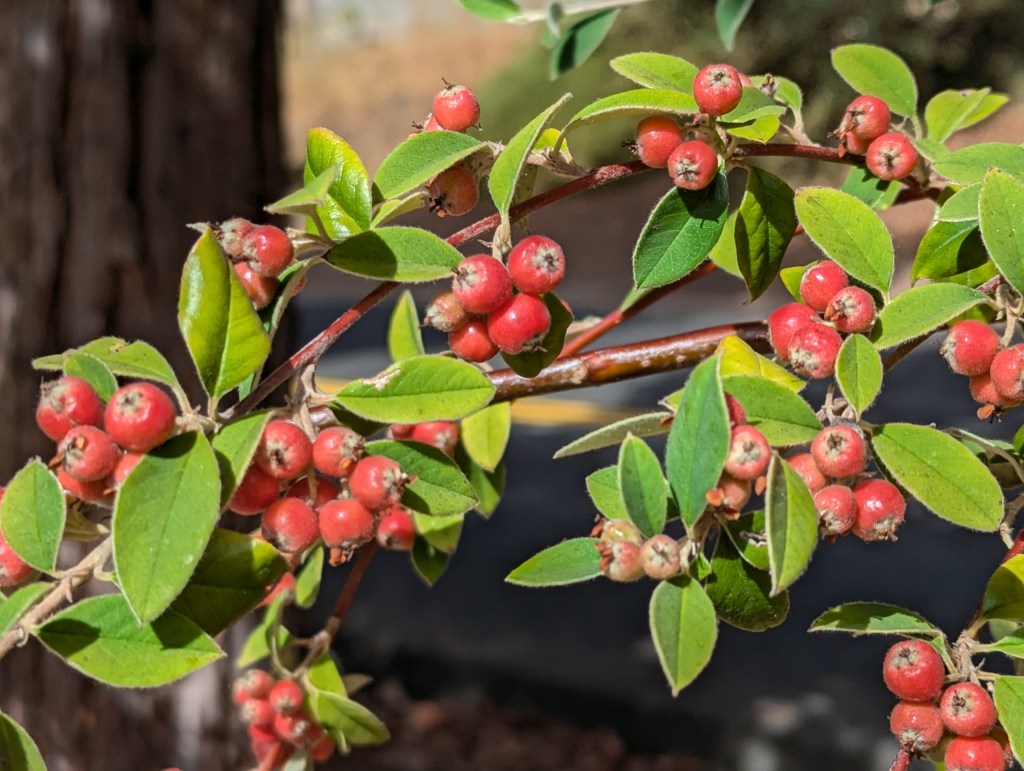
9. Cotoneaster pannosus, silver cotoneaster, to me, is even more unimpressive, perhaps because it is a weed locally. Berries are not colorful for long before turkeys destroy them. What is worse is that turkeys do not seem to eat the berries. They just shake them off the stems, and just leave them to decay on the ground. Berries that manage to ripen are not as vibrant red as firethorn berries, but are a somewhat grungy brownish or orangish red.

This is the link for the original Six on Saturday, for anyone who would like to participate: https://thepropagatorblog.wordpress.com/2017/09/18/six-on-saturday-a-participant-guide/
Six on Saturday: Berries

Brightly colored berries are ripening for both migrating and overwintering birds who are enjoying the abundance.

1. Rosa californica, California wild rose produces nice small hips, but then defends them within a thicket of very thorny canes. Birds have no problem flying in from above to take all they want. I get only what is left when it is time to cut the thicket down during winter.

2. Sambucus cerulea, blue elderberry is one of only two of these six that is designated as a berry by its common name, but is the only one of these six that is not a berry. Its fruits are drupes. Its jelly wins ribbons every time I bring it to compete at the Harvest Festival.

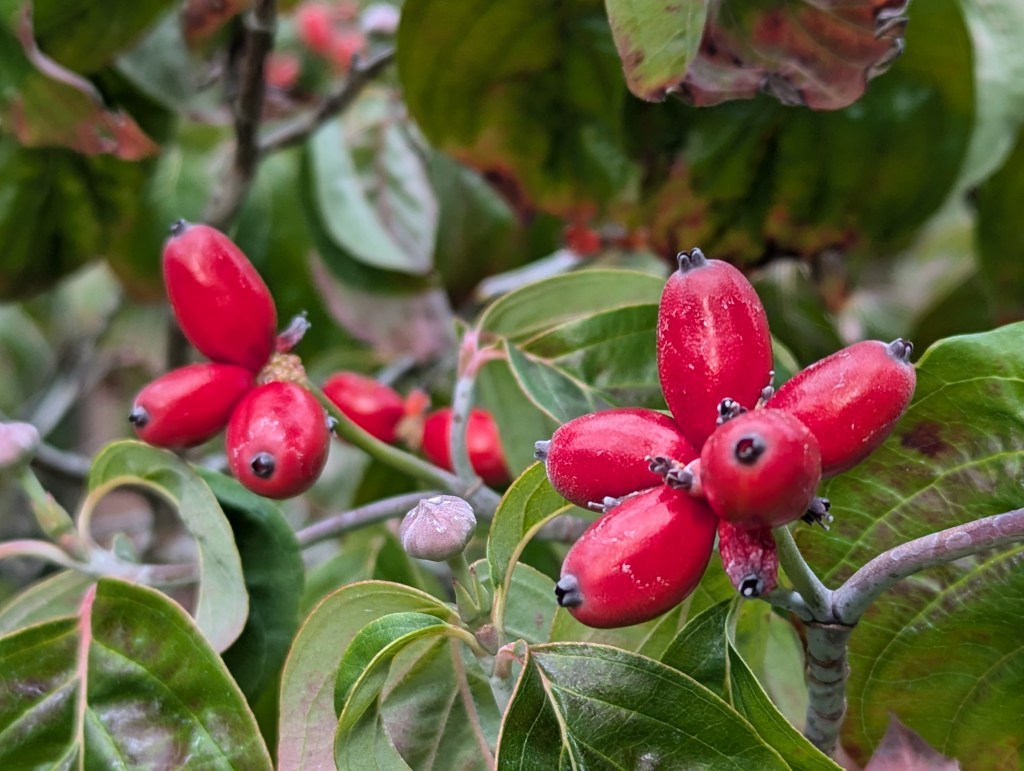
3. Cornus florida, flowering dogwood should stay almost fruitless. Yet, it produces more berries than the red flowering currant produces. It and the red cestrum are the only two of these six that are not native here. Rhody says it is dogwood because the ‘bark’ is ‘ruff’.

4. Ribes sanguineum, red flowering currant should produce more berries than flowering dogwood, but this is about as abundant as it gets. The berries do not even look appealing enough to collect. Their flavor is no more impressive than their oddly grayish blue color.

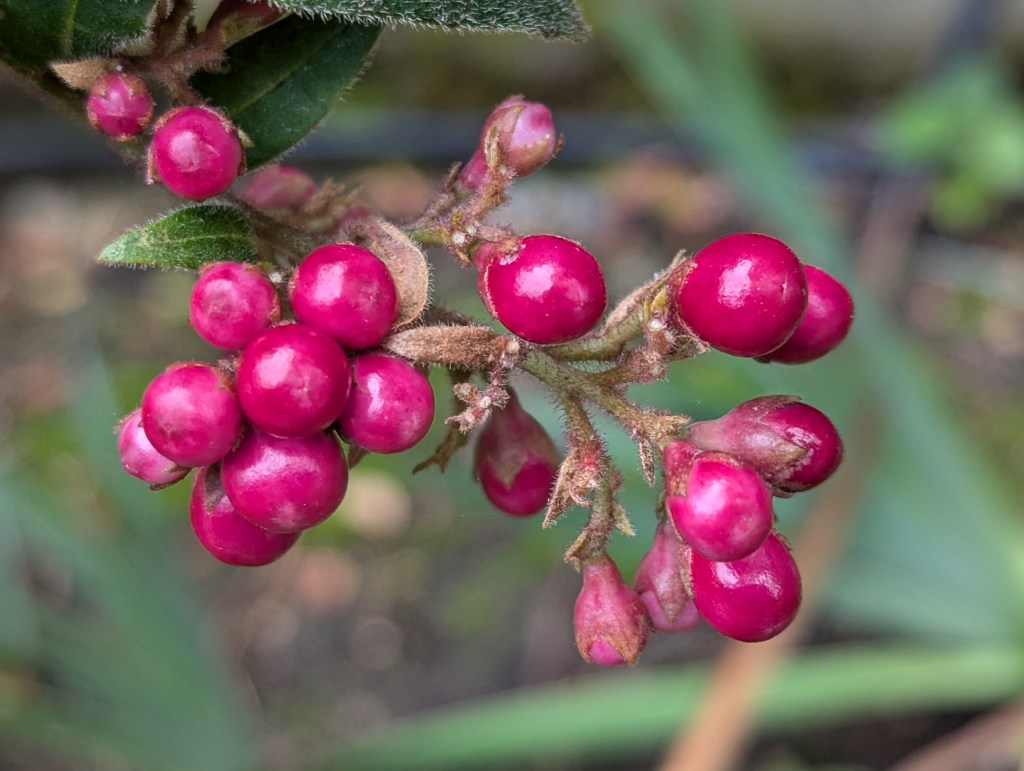
5. Cestrum fasciculatum ‘Newellii’ red cestrum berries are toxic, like those of snowberry and flowering dogwood. However, they are not toxic to birds who sometimes eat them as soon as they become colorful enough to be pretty. Birds can be pretty in the garden also.

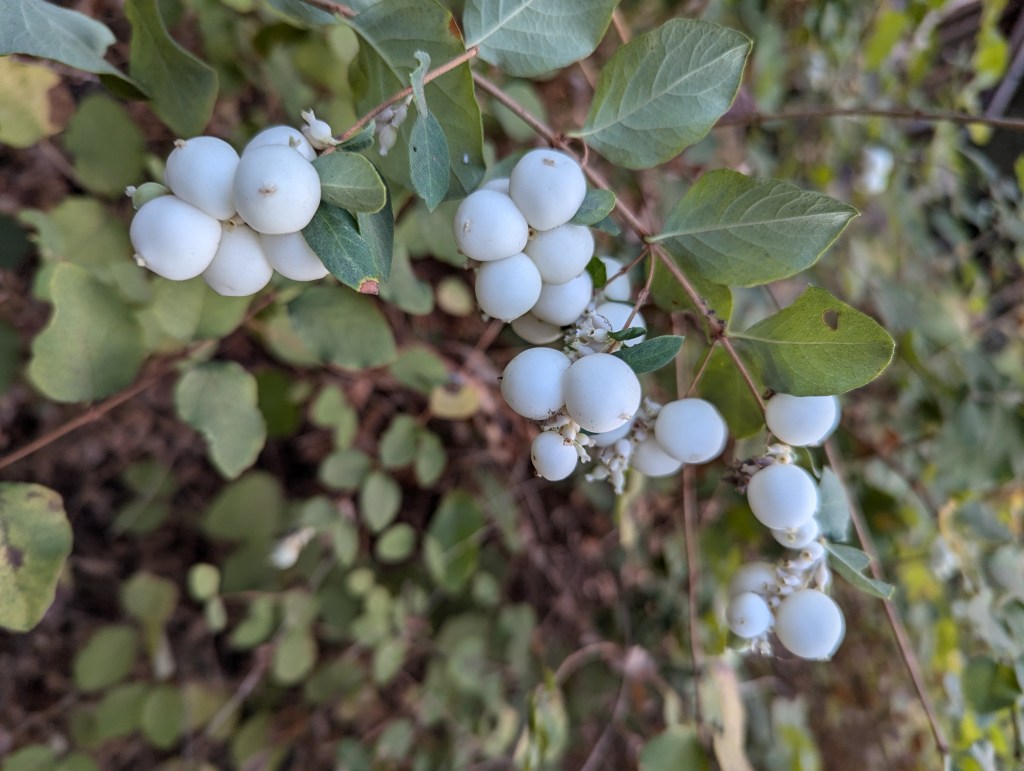
6. Symphoricarpos albus, snowberry is a rather skimpy species. Its thin and wiry stems form low and sparsely foliated thickets. It only stays because it produces these unusually white berries. It might be prettier and more prolific if coppiced during winter dormancy.

This is the link for Six on Saturday, for anyone else who would like to participate: https://thepropagatorblog.wordpress.com/2017/09/18/six-on-saturday-a-participant-guide/
Six on Saturday: Copy Machine

This is not about a machine that makes copies. It is five pictures of copies and a machine that Rhody could make very good use of.

1. Citrus paradisi ‘Marsh’ grapefruit was doing well until some sort of caterpillar that ate much of the foliage off of the passion fruit vines found it. This is an ungrafted cutting, so could eventually grow into a humongous shade tree if it survives this late without leaves.

2. Santolina virens, lavender cotton needed to be removed from one of the landscapes. I did not want it all to go completely, but none of it was salvageable, and I had not grown copies of it earlier. Happily, I found that this single dinky copy somehow got left behind.

3. Kniphofia uvaria, red hot poker is one of those common perennials that I had wanted to grow, but never did. Fancy cultivars are now more common than the common simple species. Finally, I managed to acquire three pups from an old and abandoned landscape.

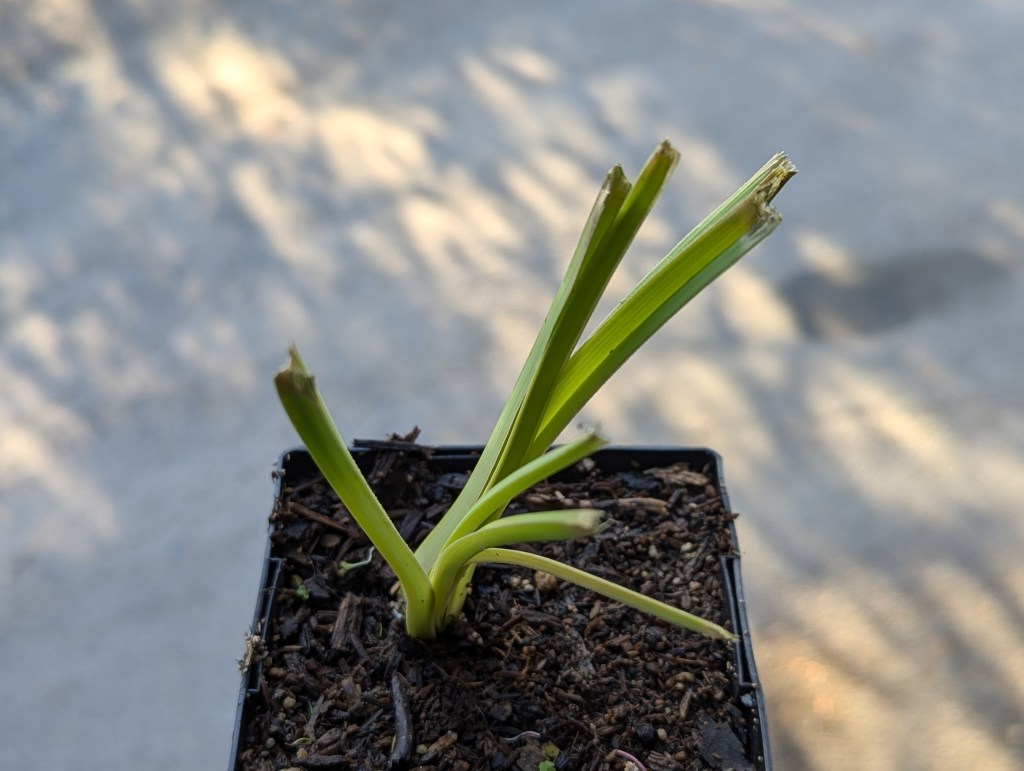
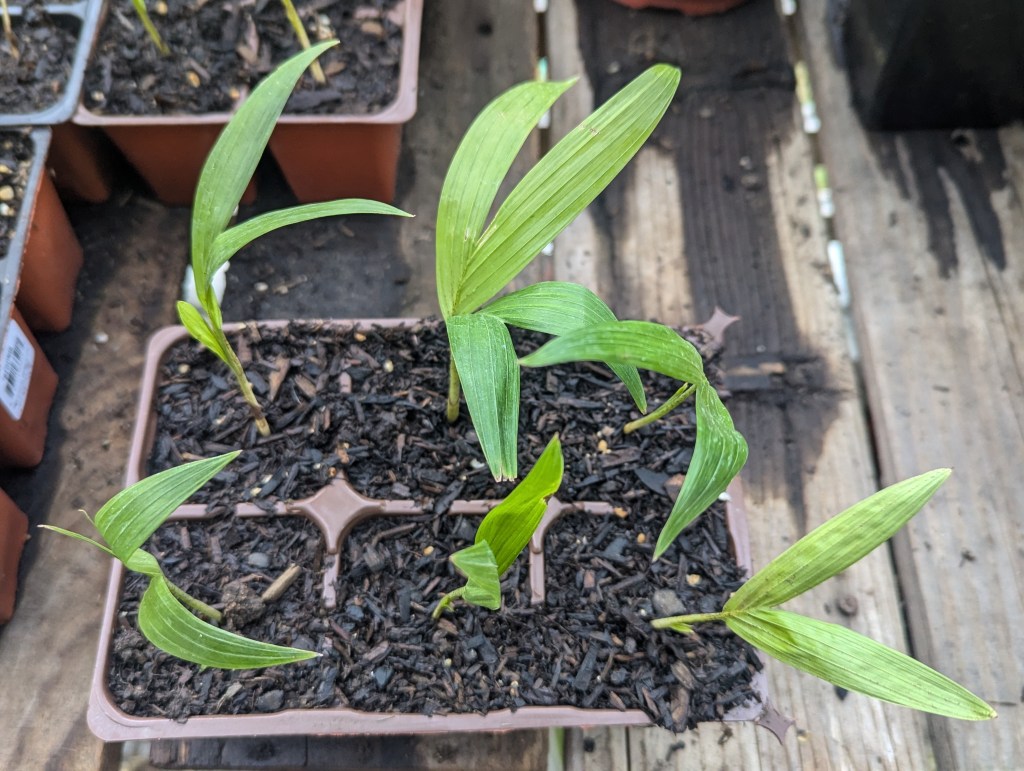
4. Archontophoenix cunninghamiana, king palm, or bangalow palm or piccabeen palm, is one of the popular palms of coastal Southern California that I would like to grow here. Naturally, but just as naturally without any plans, I procured about two dozen seedlings.

5. Musa acuminata ‘Golden Rhino Horn’ banana pups have grown like weeds since their arrival last June, and now, one of this pair is generating either another pair of pups very closely together, or a single pup that is already extending its first frond away from its tip.

6. Rhody is a terrier. In other words, he is terrestrial. Instinctively, he wants to dig in the earth. His type was bred for pursuit of terrestrial vermin, such as gophers. They need no excuse to dig, of course. Furthermore, Rhody requires no justification for his technique.

This is the link for Six on Saturday, for anyone else who would like to participate: https://thepropagatorblog.wordpress.com/2017/09/18/six-on-saturday-a-participant-guide/

Six on Saturday: Yoshino

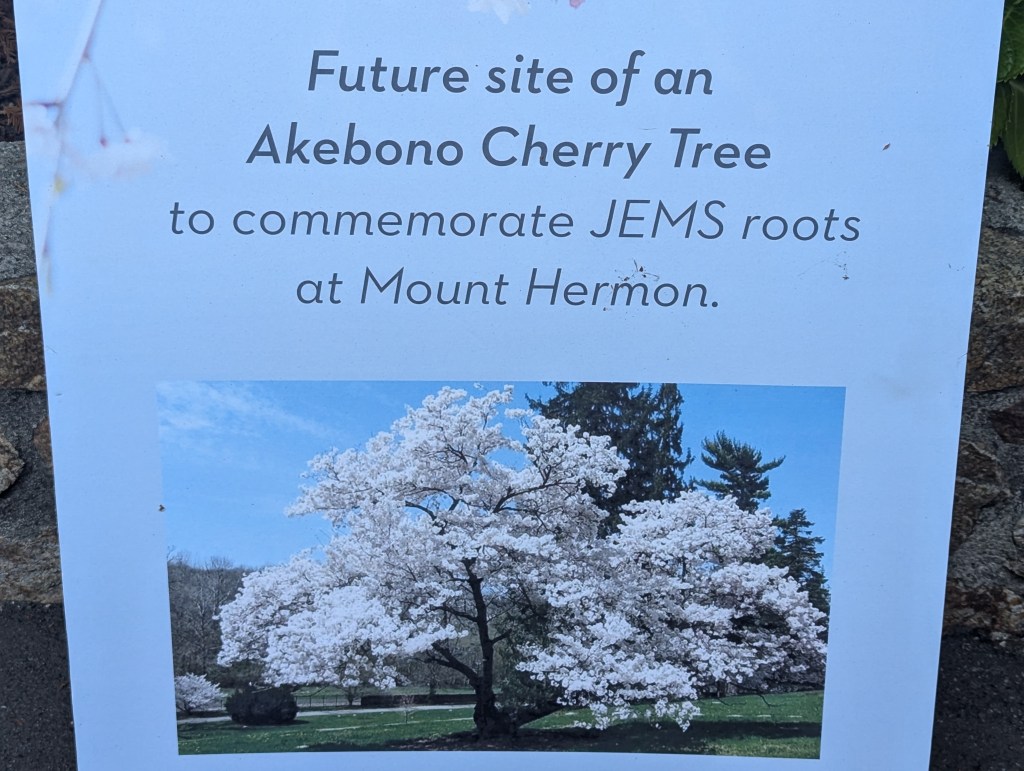
Yoshino is such an elegant name! It is the middle name of one of my nieces. A few of the flowering cherry trees here are very likely cultivars of Yoshino flowering cherry. Another recently arrived. It is a Commemorative Tree from the Japanese Evangelical Missionary Society, which we know simply as ‘JEMS’, for three quarters of a century of involvement with Mount Hermon Christian Conference Center. Its cultivar name is ‘Akebono’. We do not install many trees here, and we are more concerned with cutting trees down, but this tree is very special. It is situated very prominently on the central Mall at Mount Hermon where its spring bloom will be spectacular. It already seems to be a venerable Historical Tree that lacks only age. Now that it is here, it will acquire that eventually.

1. The Japanese Evangelical Missionary Society, or JEMS commemorated three quarters of a century of involvement with Mount Hermon with this gift of a flowering cherry tree.

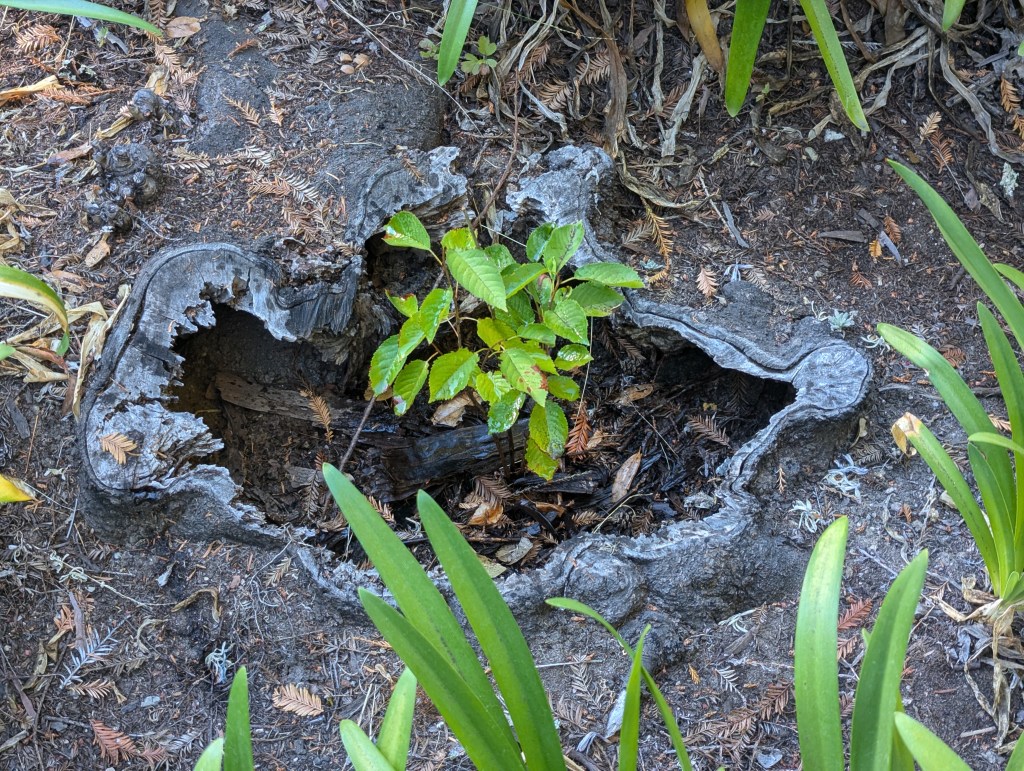
2. Unfortunately though, the pair of tiny flowering cherry trees that I installed to replace a very deteriorated and elderly pair of the same is already obsolete before it got to grow.

3. This pair of tiny flowering cherry trees grew from suckers from the original ungrafted pair, so are genetically identical, and are installed within the stumps of the original pair.

4. The new Commemorative Flowering Cherry Tree is much more prominent and better situated than the original pair, which was there prior to some of the adjacent pavement.

5. In other news, seedpods from (Hespero)Yucca whipplei, chaparral yucca, supposedly without its specialized pollinator, generated quite a few of what seems to be viable seed.

6. Also, Hedychium gardnerianum, kahili ginger that bloomed prematurely for the first several days of August is blooming again and more appropriately for the end of summer.

This is the link for Six on Saturday, for anyone else who would like to participate: https://thepropagatorblog.wordpress.com/2017/09/18/six-on-saturday-a-participant-guide/
Six on Saturday: Off Color

Perennial pea, lily of the Nile and dahlia displayed aberration of color earlier and started a trend.

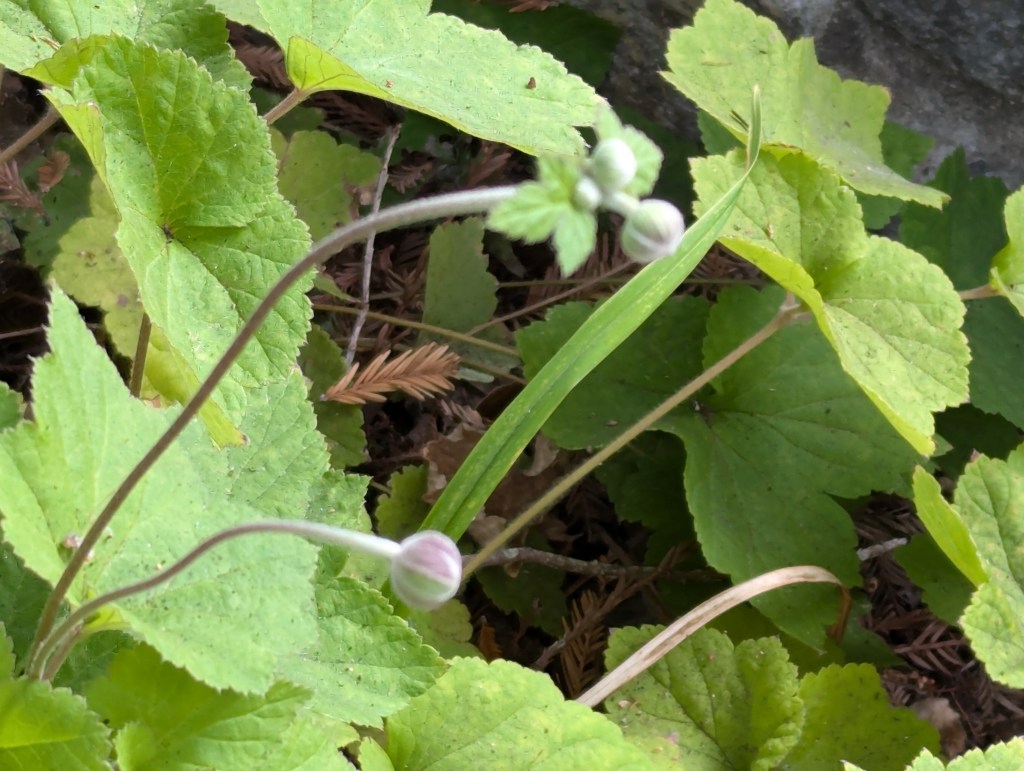
1. Eriocapitella hupehensis, Japanese anemone is enviable in other gardens. I neglect to remember that a minor bit of it survives in one of our landscapes. I ignore it because it is such a grungy almost grayish white without enough blush to be pink. I should see how it blooms now and then relocate it to a better situation where it might develop better color.

2. Hypoestes phyllostachya, polka dot plant is typically spotty with either white or pink. Two of seventy-two cell pack plugs exhibited this darker pinkish red. I got copies of it to perhaps grow as houseplants, at least until they will be happy in the garden next spring.

3. Chrysanthemum X morifolium, florist’s chrysanthemum seems to change color like a dahlia that I got a picture of last week. I thought that it bloomed orange last year, which was a surprise after it bloomed rusty red two years ago. I must not remember accurately.

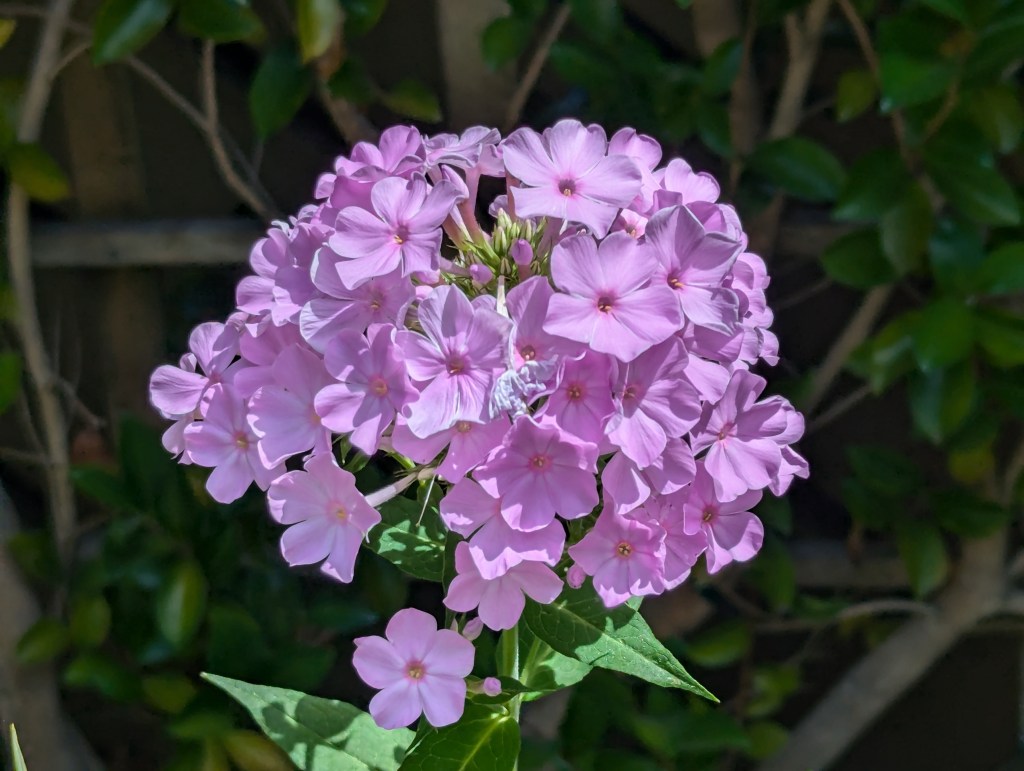
4. Phlox paniculata, garden phlox has bloomed exclusively white since it arrived here by unknown means a few years ago. Although I have been very pleased with its white color, and white happens to be my favorite color, I am also pleased with this new pink variant.

5. Amaryllis belladonna, naked lady did the opposite. It had always bloomed exclusively bright pink. Then, I found and isolated a few bulbs of a white blooming variant last year. An associate found two more in the same location this year. I like it much more in white!

6. Rhody is canine so lacks perception of red, which is the basis of these off colors. Most have more than they should, and one has none. Rhody sees them only as shades of gray.

This is the link for Six on Saturday, for anyone else who would like to participate: https://thepropagatorblog.wordpress.com/2017/09/18/six-on-saturday-a-participant-guide/