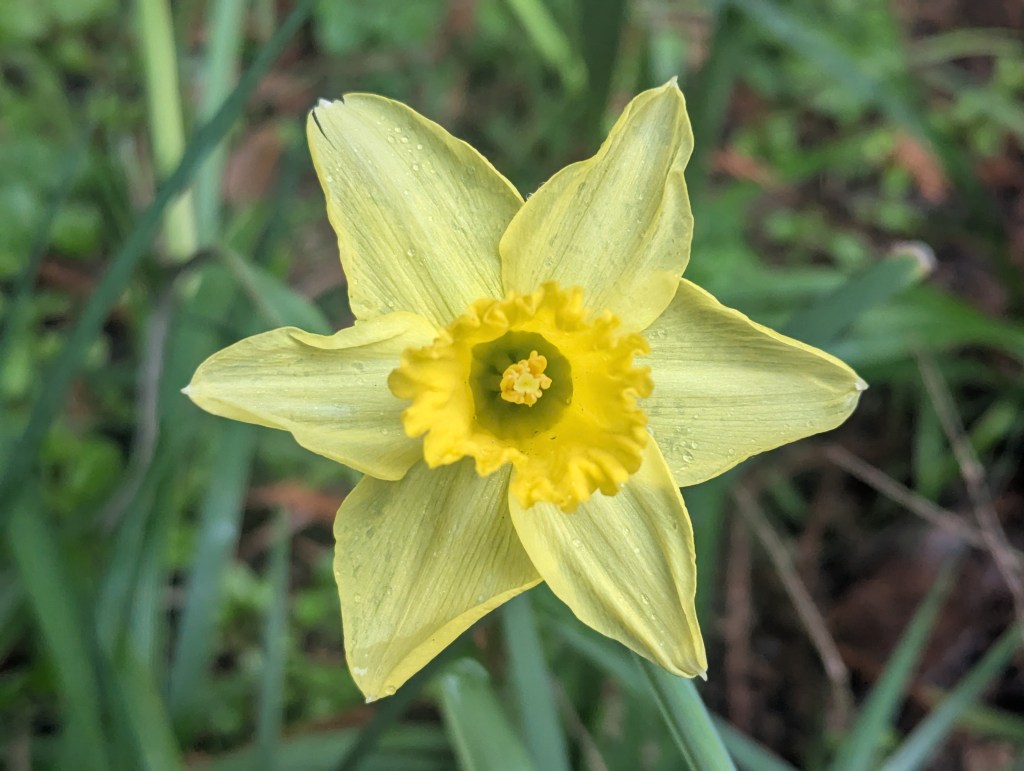
Sunday Best – Daffodil
Several days of stormy weather were predicted, and came with a flash flood warning and a tornado warning for Christmas, but it really was not that bad. No floods. No tornados.
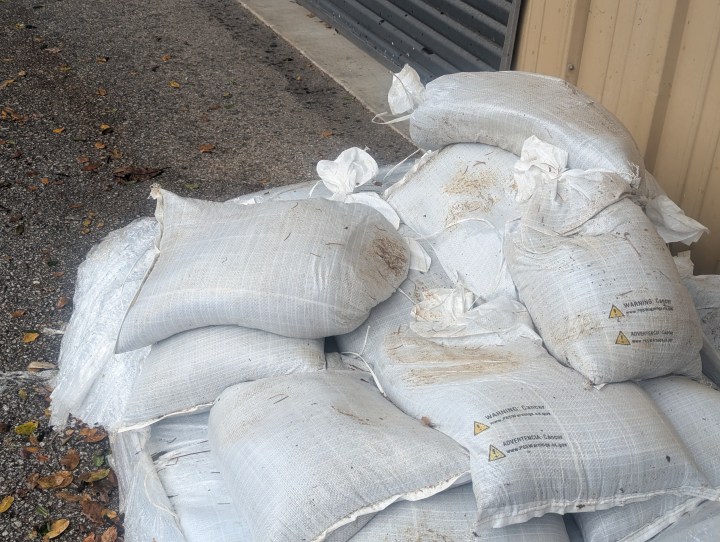
1. Sandbags were readily available for those who might have needed them for the storms that were expected. The wind was strong, but the rain was not as torrential as predicted.
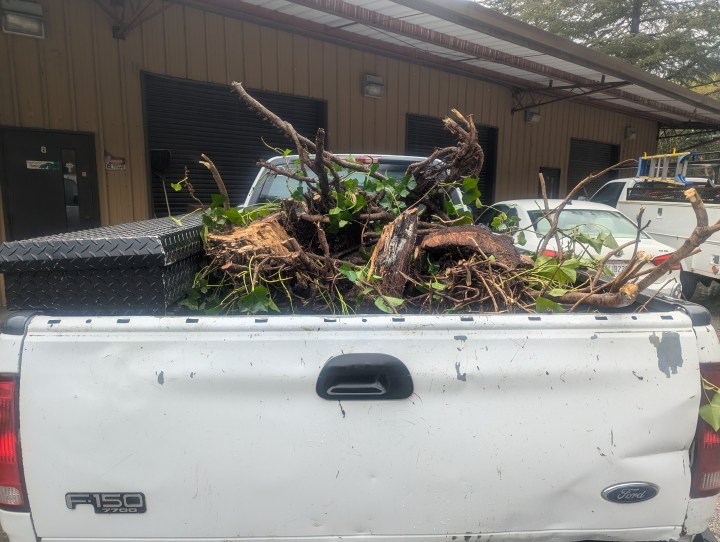
2. Hedera helix, English ivy and a rotten stump of Lithocarpus densiflorus, tanoak were among the vegetation debris that needed to be removed from roadways after the storms.
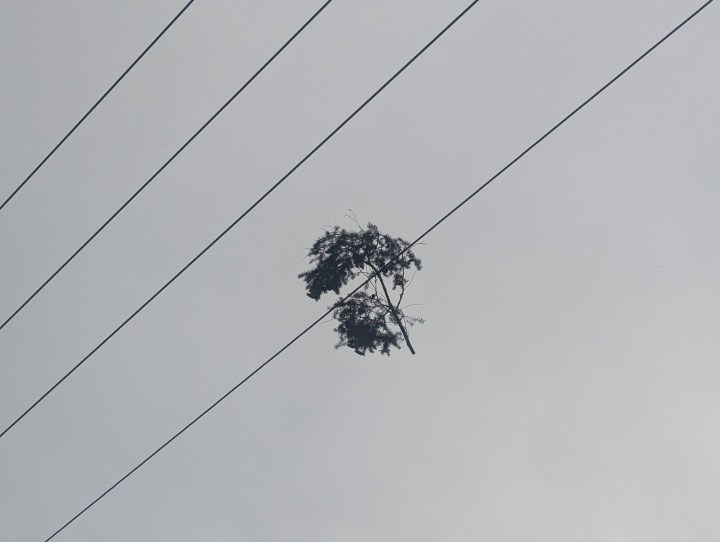
3. Pseudotsuga menziesii, Douglas fir contributed to the mess as well. This small bit did not reach the ground, though. Larger branches interrupted electrical service to the area.
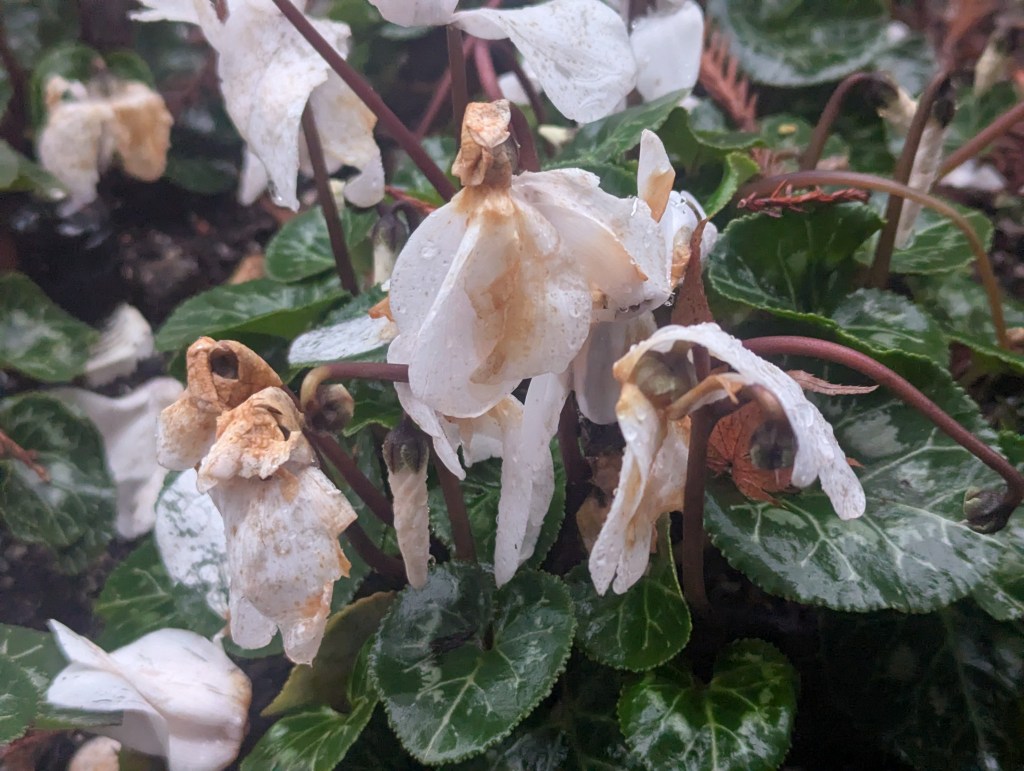
4. Cyclamen persicum, florist’s cyclamen looks rather shabby after so much windy, cold and rainy weather without interruption. The weather should be a bit drier for next week.
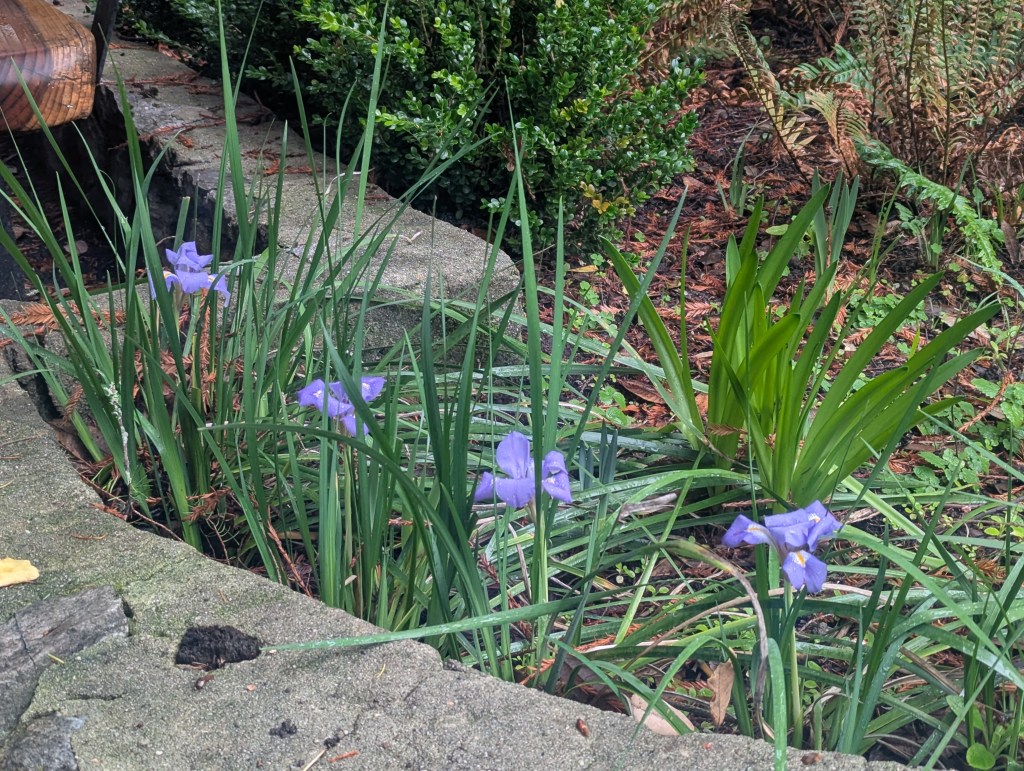
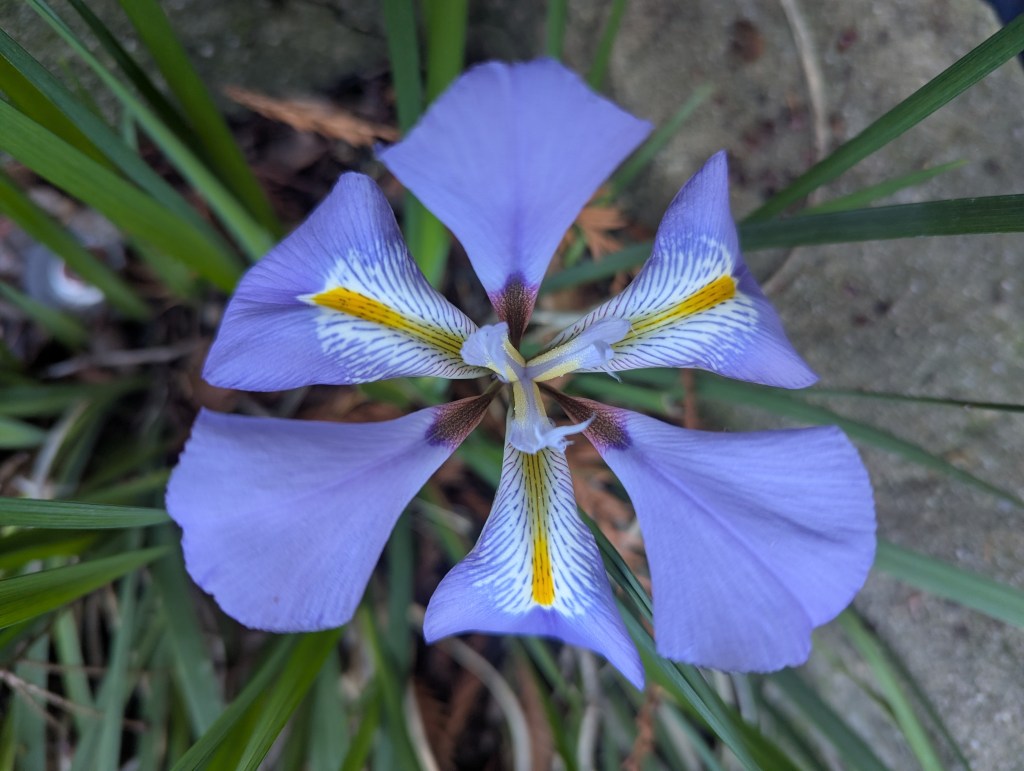
5. Iris unguicularis, Algerian iris has been more resilient to the weather; and it has been blooming for a long time. This might be its third appearance here in my Six on Saturday.
6. Leucojum vernum, snowflake is what we know as snowdrop. Now that snowdrop is so commonly available online, there could eventually be some confusion with their names.

This is the link for Six on Saturday, for anyone else who would like to participate: https://thepropagatorblog.wordpress.com/2017/09/18/six-on-saturday-a-participant-guide/

Half of these blooms are right on time. The other half are azaleas that really should wait until spring to bloom. I hope that some refrain from blooming now to bloom in season.
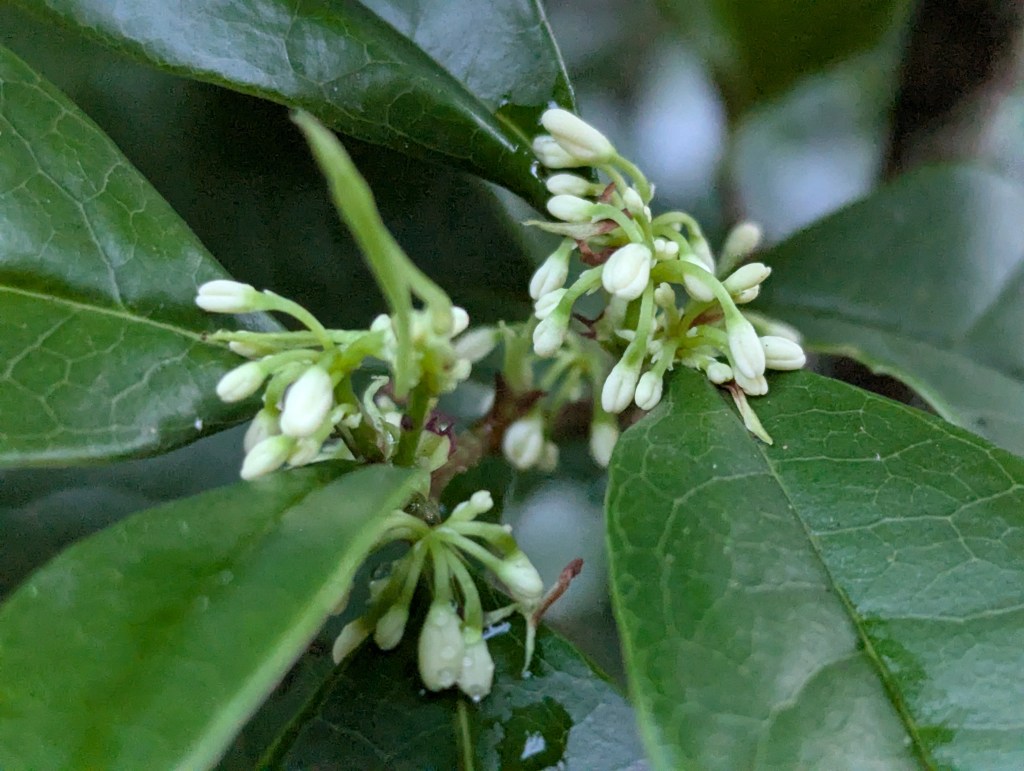
1. Osmanthus fragrans, sweet osmanthus may not be much to look at, but is exquisitely fragrant. I believe that the current cool and humid weather enhances its floral fragrance.
2. Viburnum tinus, laurustinus, which is not typically very fragrant, likewise seems to be more fragrant with cool and humid weather. This one blooms white without pink blush.

3. Osteospermum ecklonis, African daisy blooms significantly less while weather is cool, but seems to never be completely without bloom. This one blooms with a billowy center.

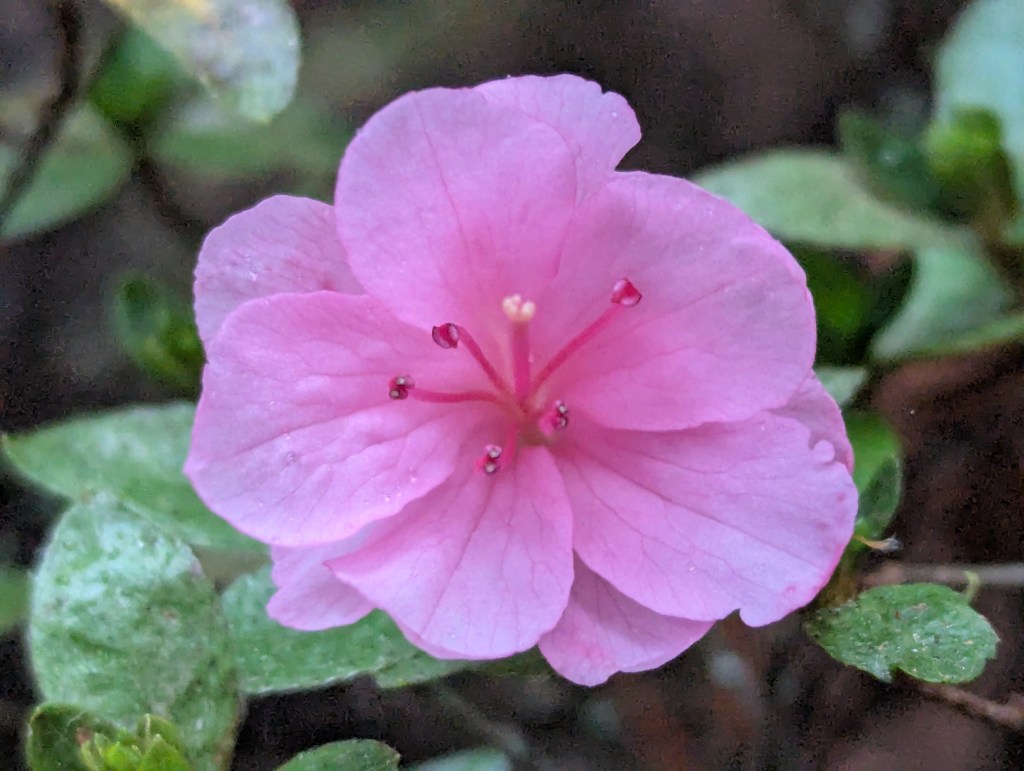
4. Rhododendron spp., azalea should not be blooming now. Flowers that bloom now will be finished and unavailable to bloom in spring. I believe that this cultivar is ‘Coral Bells’.
5. Rhododendron spp., azalea, which is likely ‘Fielder’s White’, is blooming prematurely also. If I remember correctly, it typically does this, but somehow blooms for spring also.

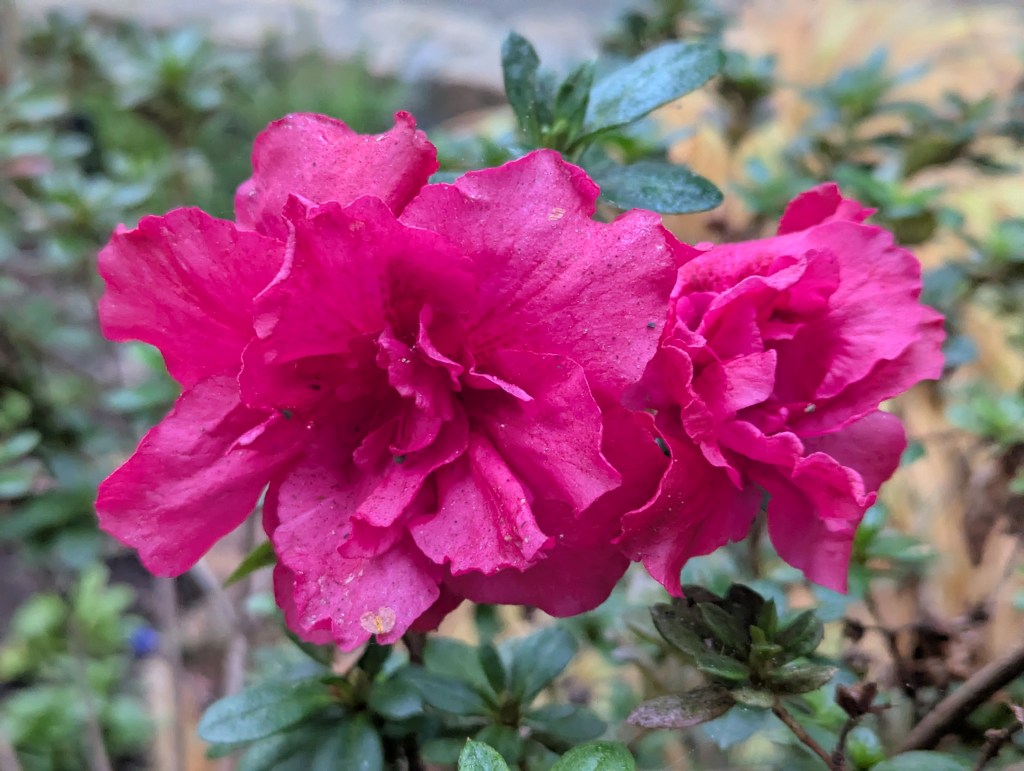
6. Rhododendron spp., azalea with double bloom is probably a recycled florist specimen. I have no idea what cultivar it is. It certainly is colorful. I hope it saves bloom for spring.
This is the link for Six on Saturday, for anyone else who would like to participate: https://thepropagatorblog.wordpress.com/2017/09/18/six-on-saturday-a-participant-guide/
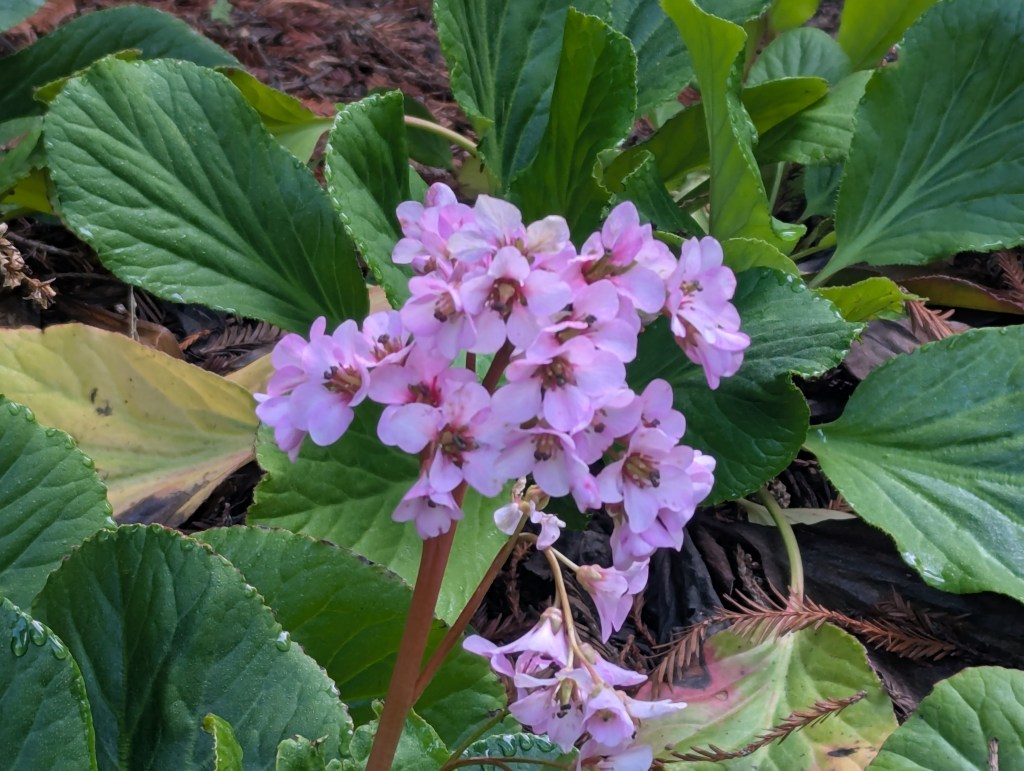
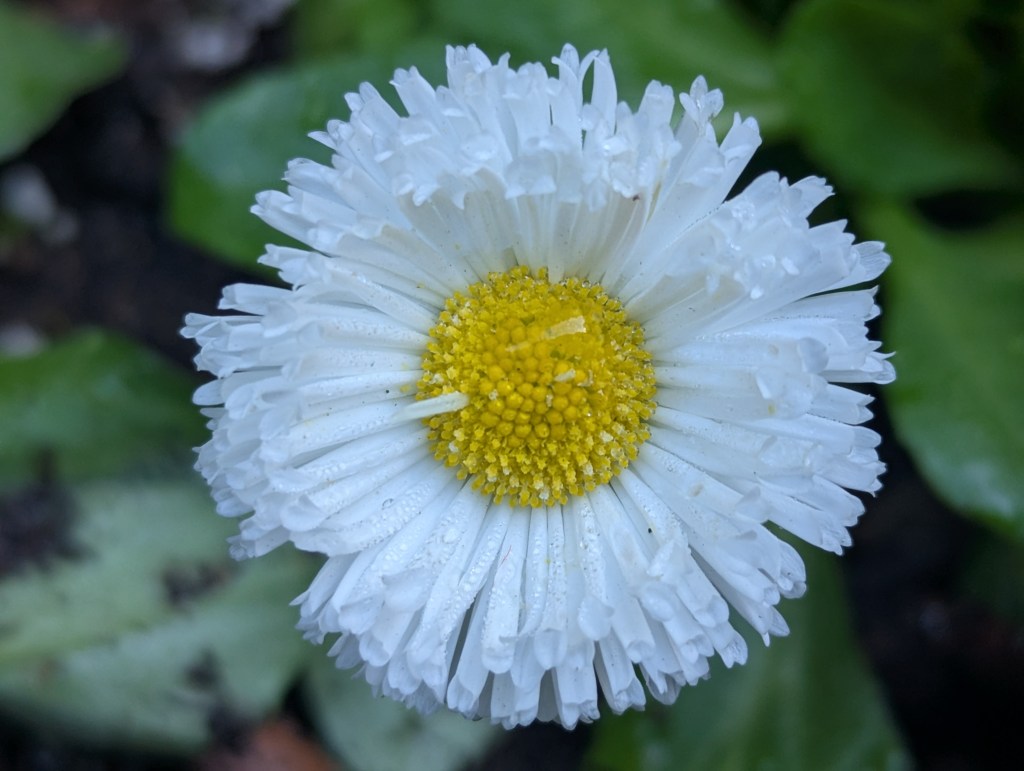
As bloom of most other plants decelerates for late autumn and winter, the floral color of common annuals becomes more prominent in the landscapes at work.
1. Viola X wittrockiana, viola blooms with smaller but more profuse flowers than pansy. I am not certain if they are the same species. Also, most of the flowers face one direction.
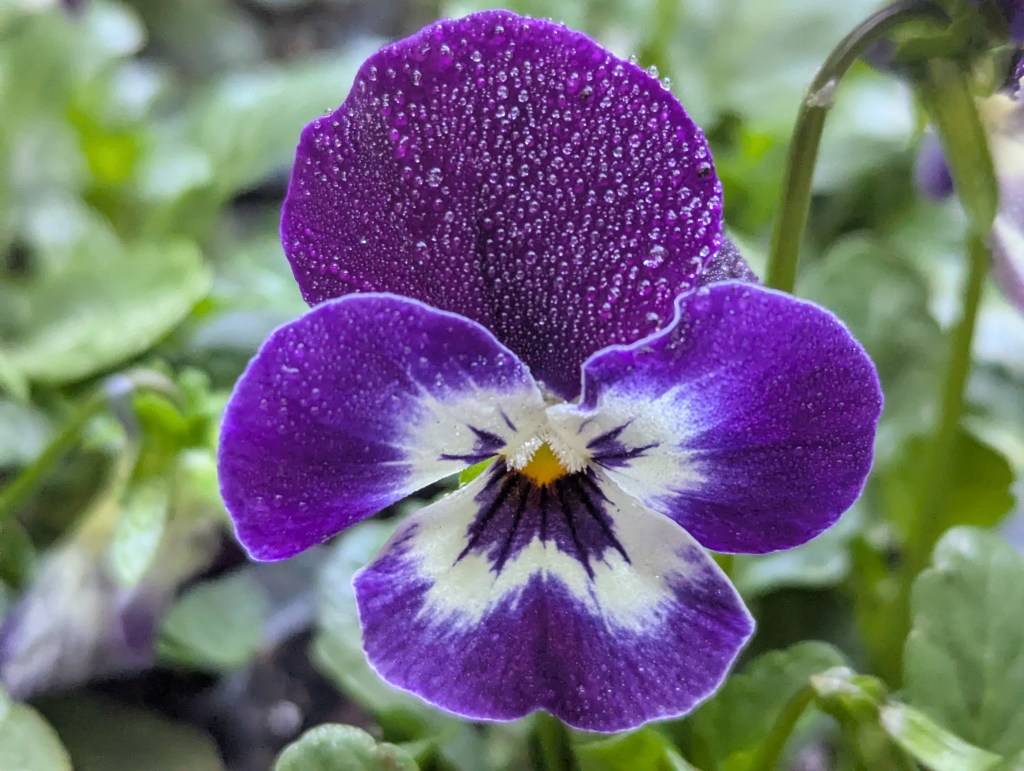
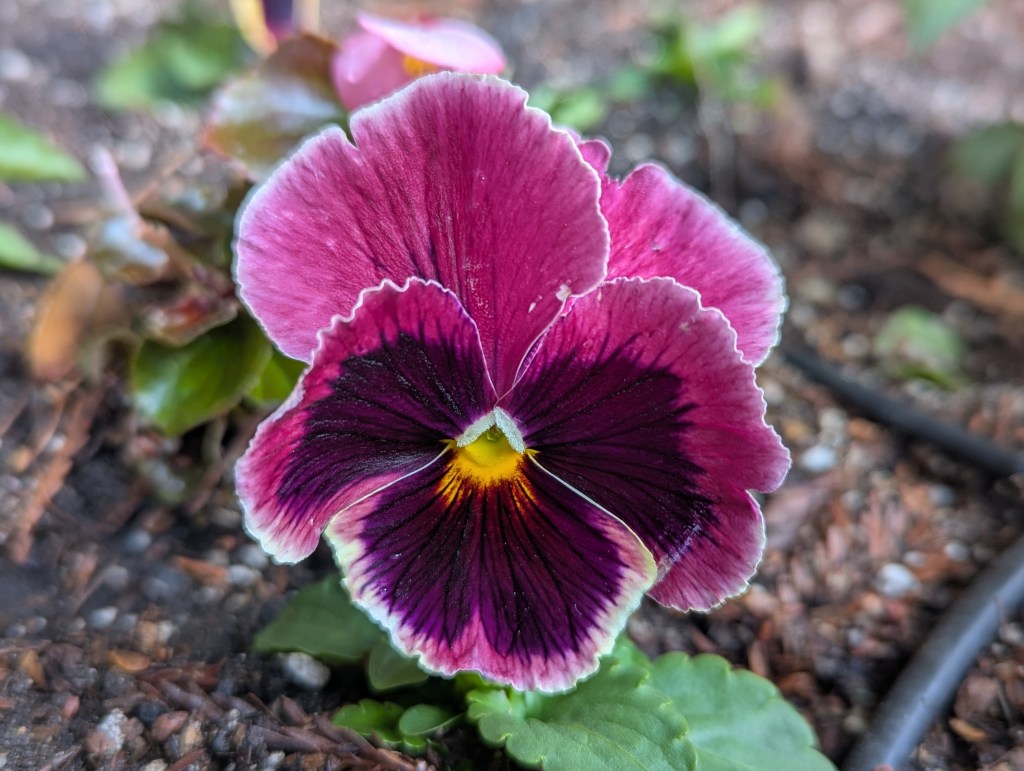
2. Viola X wittrockiana, pansy blooms with bigger but less profuse flowers which mostly face random directions. We got only two six packs to add to other flowers in a small bed.
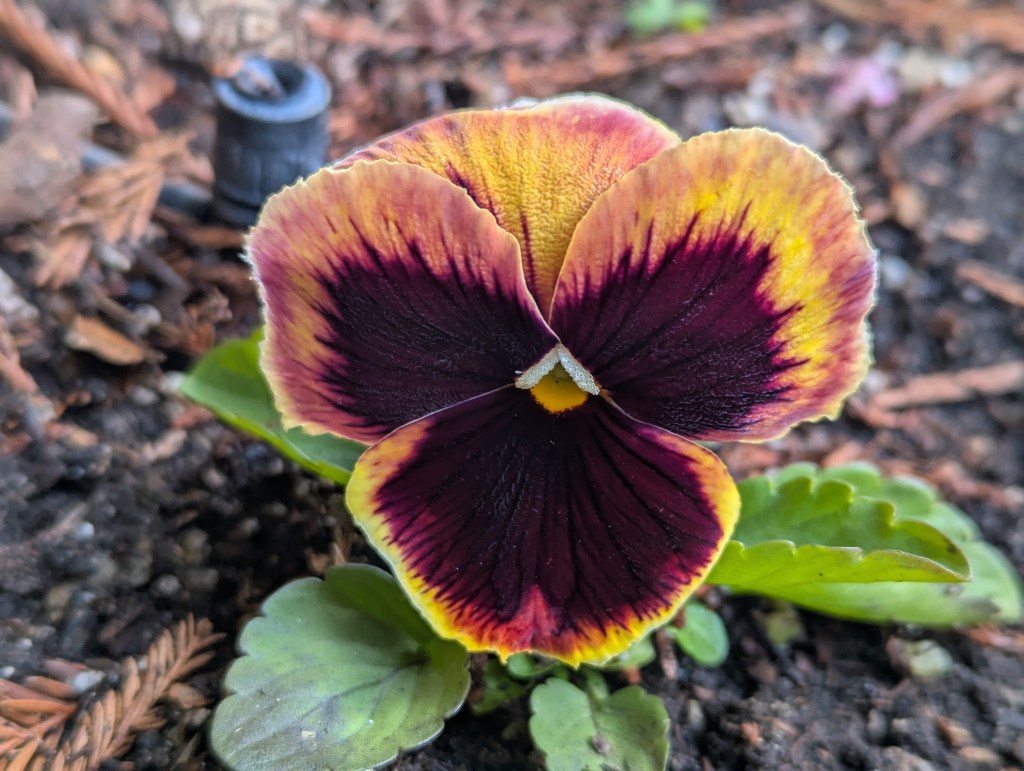
3. Viola X wittrockiana, pansy is redundant to the picture above, but is a different color. The plants are so dinky that they are scarcely visible behind their relatively wide flowers.
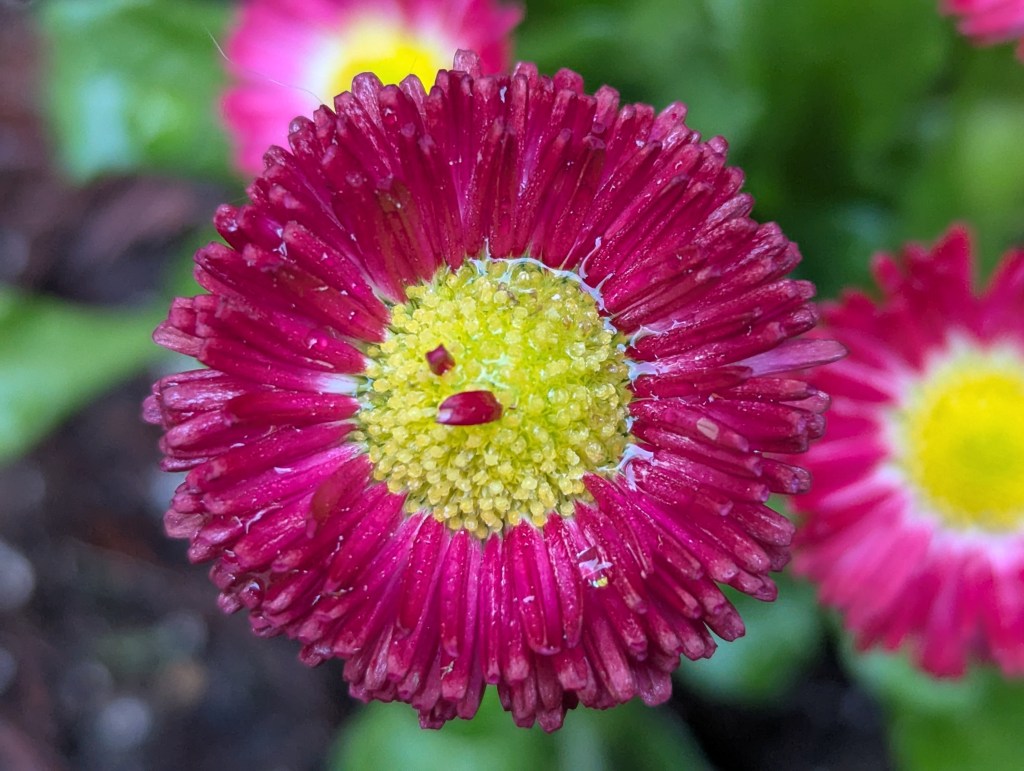
4. Bellis perennis, English daisy ranges in color from this rosy red to white like the color scheme of candy canes. I am fond of it because it is not so overly bred like other annuals.
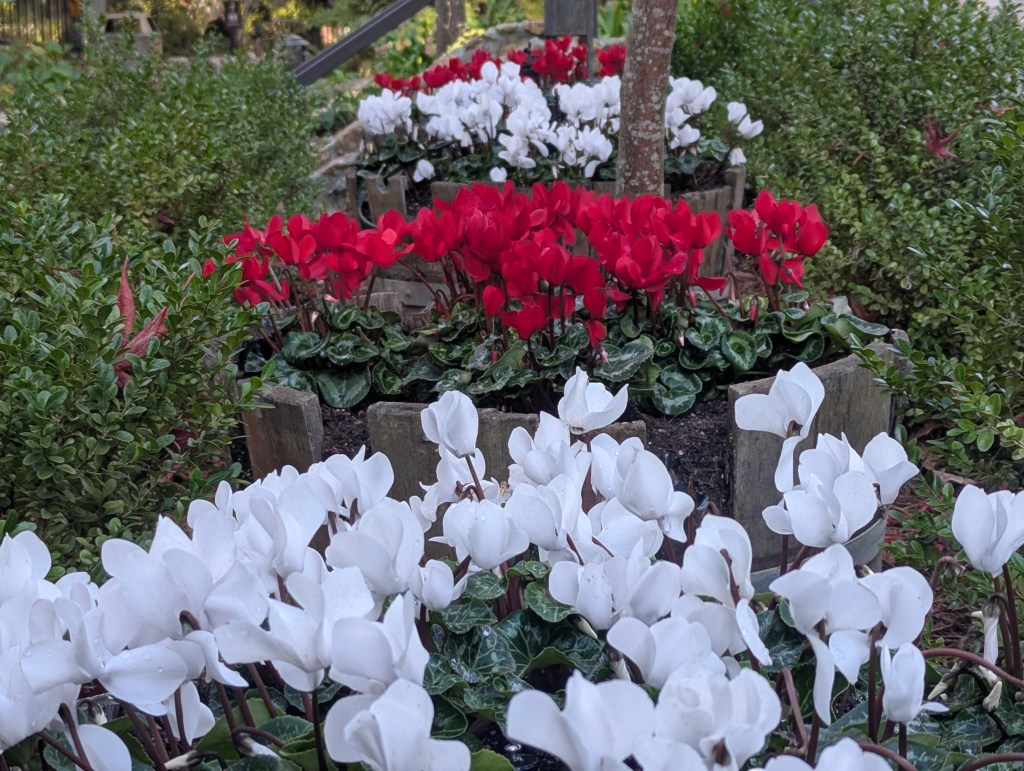
5. Cyclamen persicum, florist’s or Persian cyclamen is cheapened as an annual. I used to grow mine as cool season perennials. I also grew colors other than simple red and white.
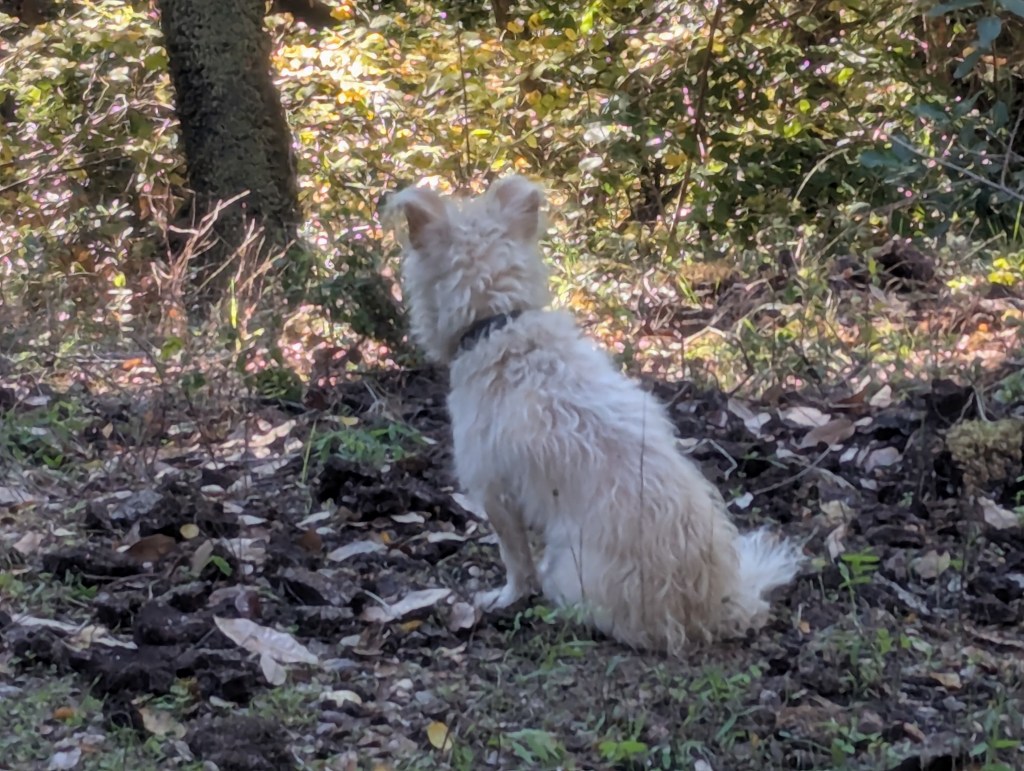
6. Rhody was unconcerned with these common annuals as he surveyed his domain early last Monday, while I burned forest green waste. He is not overly horticulturally oriented.
This is the link for Six on Saturday, for anyone else who would like to participate: https://thepropagatorblog.wordpress.com/2017/09/18/six-on-saturday-a-participant-guide/
It is looking a bit more like autumn as a few more species respond to cooling weather by discoloring or deteriorating before defoliation.
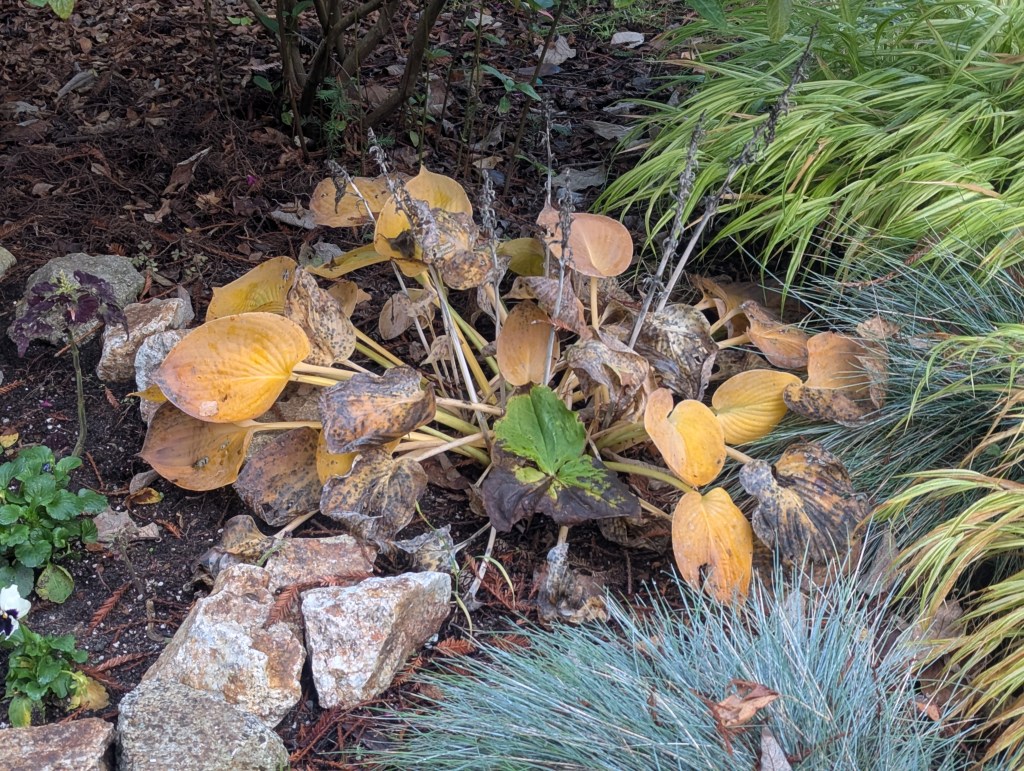
1. Hosta plantaginea, hosta is really looking shabby now. Actually though, it never really looked all that good. The difference is that this shabbiness is because of cooling weather.
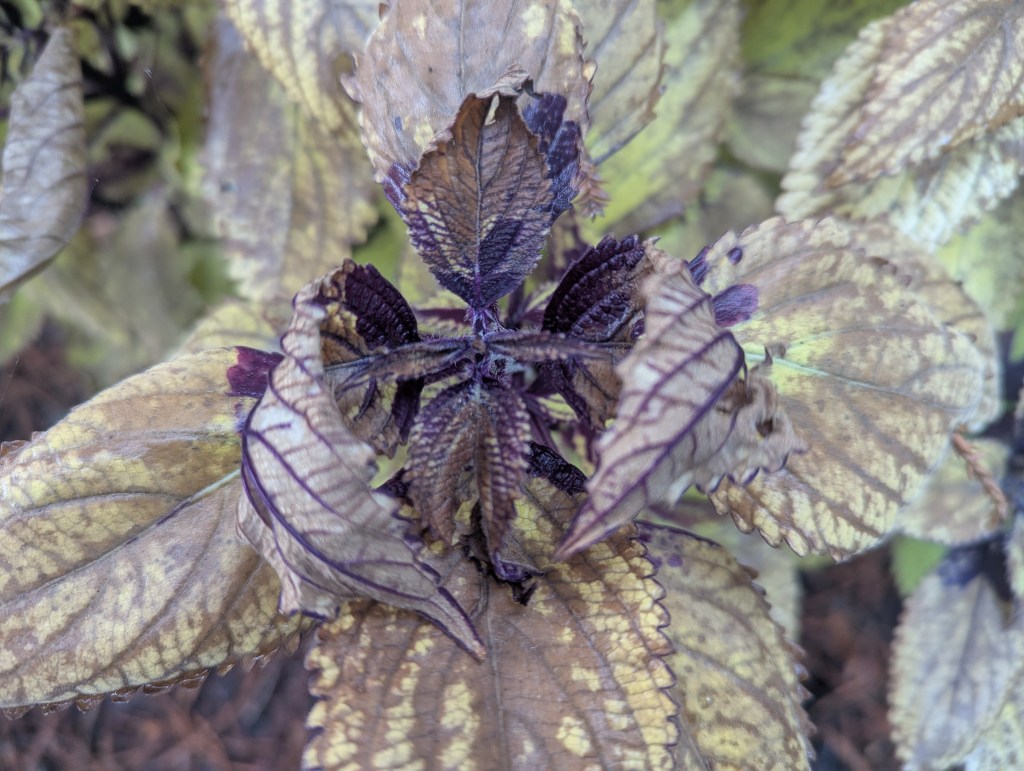
2. Plectranthus scutellarioides, coleus, which looked so splendid for Six on Saturday two weeks ago, is beginning to succumb to cooling weather, as is typical for this time of year.
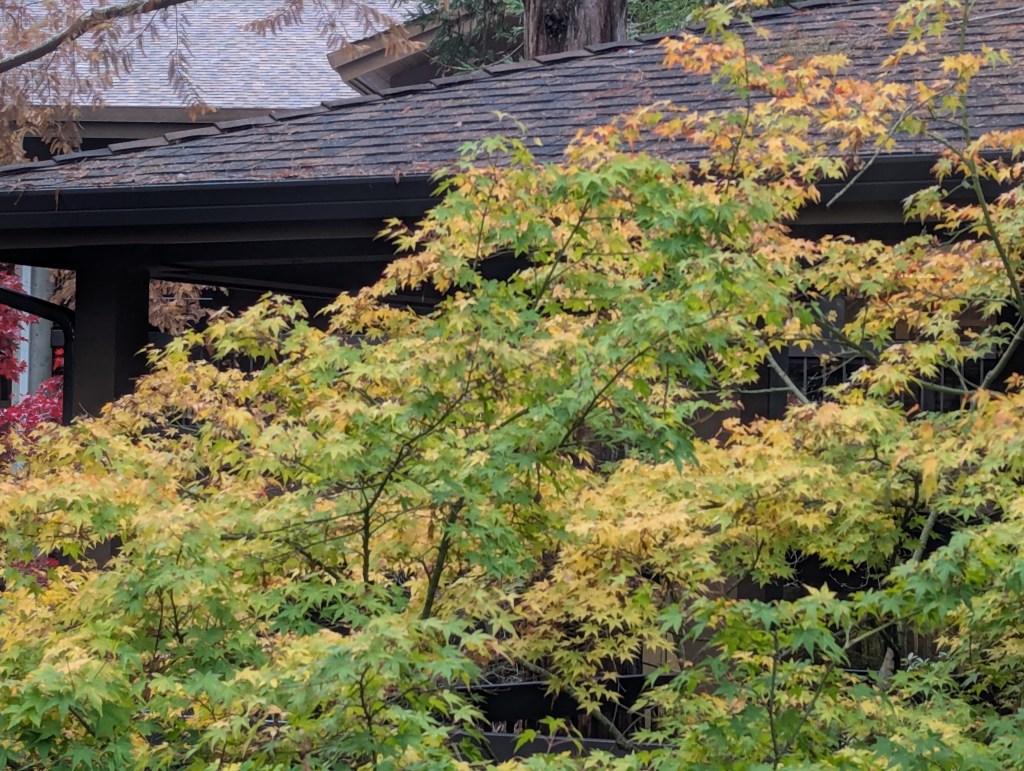
3. Acer palmatum, Japanese maple, which was still green for Six on Saturday two weeks ago, is now beginning to yellow in response to cooling weather, as it should for autumn.
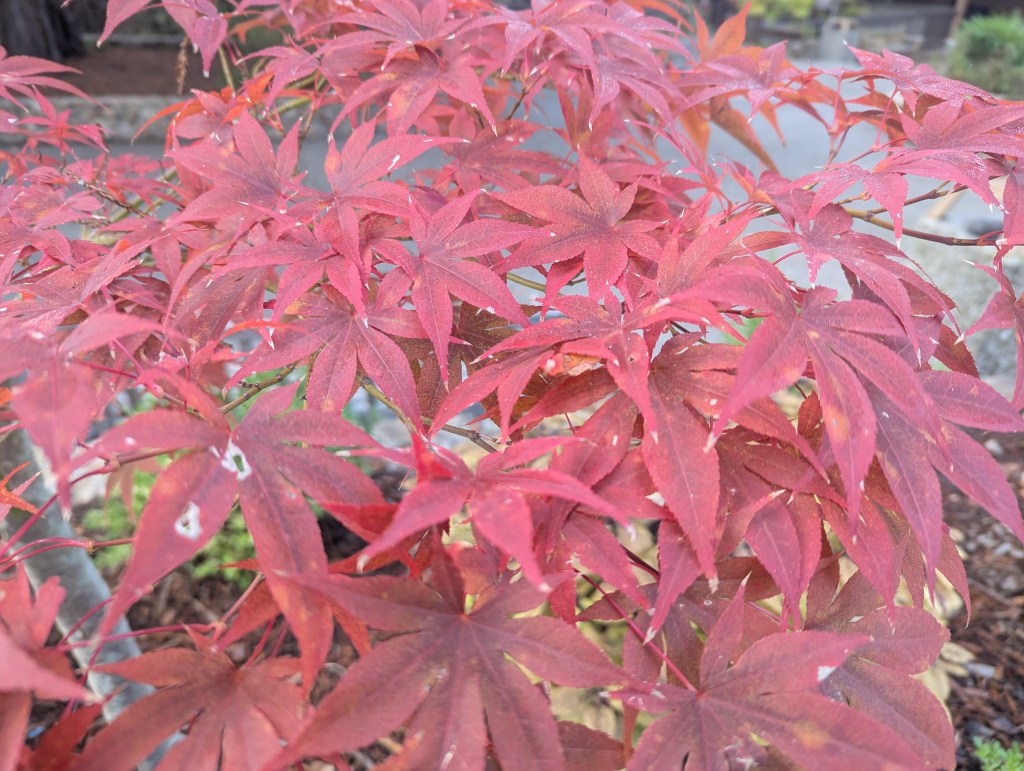
4. Acer palmatum ‘Bloodgood’ Japanese maple was already bronzy red, but is beginning to turn a bit brighter red because of the cooling weather. Its color may linger for a while.
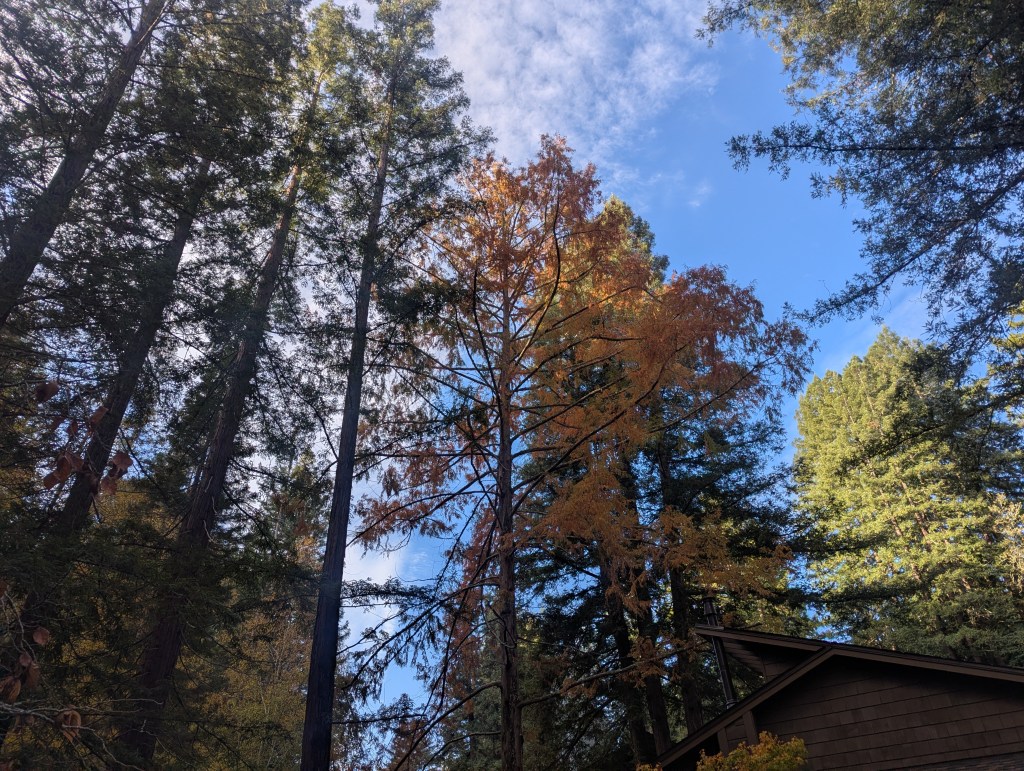
5. Metasequoia glyptostroboides, dawn redwood is likewise beginning to yellow because of cooling weather. It eventually turns brown while all the other redwoods remain green.
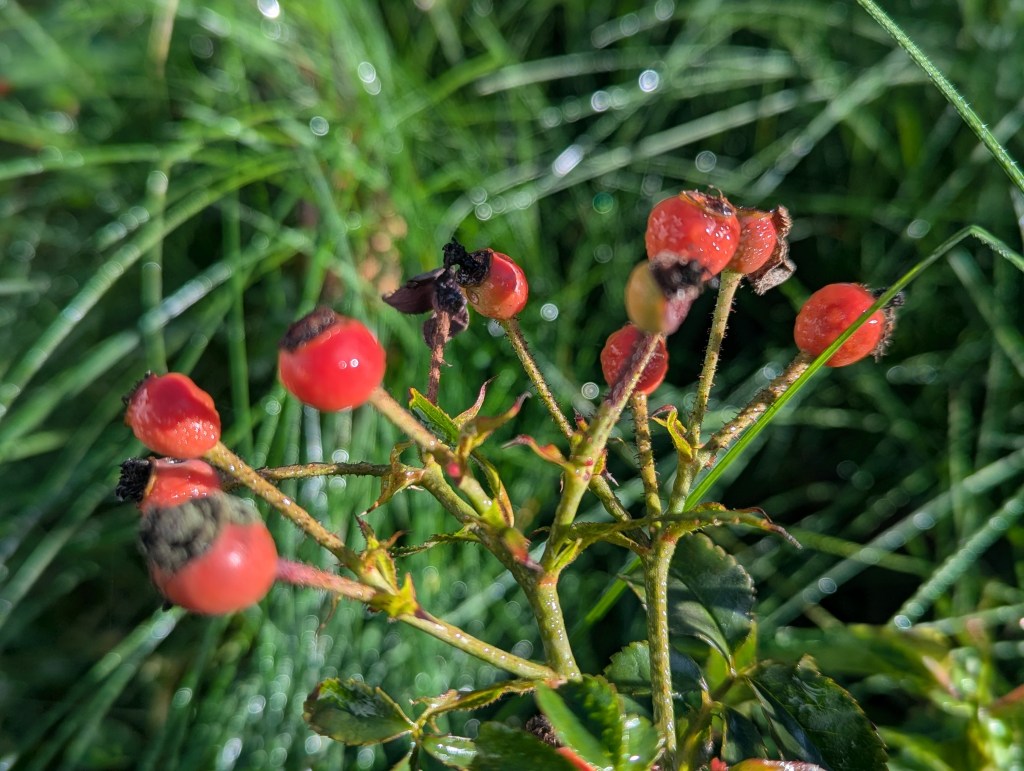
6. Rosa, carpet rose is the only one of these six that is not responding to cooling weather as it produces a few rose hips. I did not expect this. Rose hips are rare in our landscapes.
This is the link for Six on Saturday, for anyone else who would like to participate: https://thepropagatorblog.wordpress.com/2017/09/18/six-on-saturday-a-participant-guide/
 Tony Tomeo