Nomenclature used to be more predictably standardized than it is now. When I write about how it works, I compare it to the names of cars. For example, ‘General Motors’ is just a family. ‘Buick’ is a genus. ‘Electra’ is a species. ‘Limited’ is a variety. Well, my Sebring was labeled as a Chyrsler but made by Mercedes Benz. Modern horticultural nomenclature is no more accurate.
With all the promiscuity going on nowadays, it is impossible to know who the parent of some of our favorite plants are. Many are interspecific hybrids. Some are intergeneric hybrids. Some are so complicated that their species names are merely omitted; and no one seems to notice! That is like driving a Mercury LS without knowing or caring if it is a Grand Marquis or a Lynx.
So, now we can grow such aberrations of traditional stone fruit as as aprium, apriplum, pluot, plumcot, nectaplum, pluerry and peacotum. The first half of the names supposedly indicate who the promiscuous maternal parent is. The second half refers to the male pollinator. Parents who contributed fewer letters to the name were supposedly already hybridized prior to breeding.
For example, an apricot pollinated by a plum creates an aprium; and an aprium pollinated by a plum creates an apriplum. The apriplum gets an extra letter from plum ancestry because it is %75 plum and %25 apricot. A plum pollinated by an apricot creates a pluot; and a plum pollinated by a pluot creates a plumcot. There are, of course, many other complicating combinations.
Sure, the resulting fruit is very good; but is it any better than what it was bred from? If everyone could have tasted the simple, traditional and exemplary stone fruits that formerly grew in the vast orchards of the Santa Clara Valley, there would be no need for all this hooey. Besides, why is there all this interest in creating new and weird fruit while eliminating some of the old?
Prunes and plums, as I explained earlier, are two distinct types of fruits. Japanese plums are the richly flavored and typically more brightly colored fruits that were more popular in home gardens than in orchards, since they are not easy to transport. European prunes are the sweeter but mildly flavored freestone fruits that grew in orchards, generally for drying and canning.
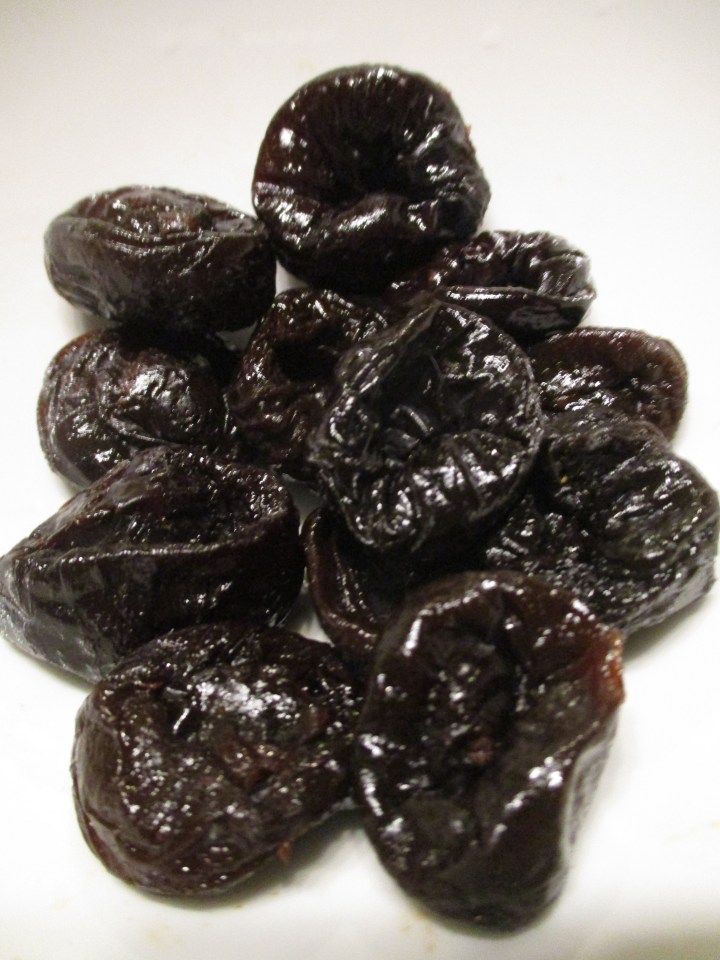
Apparently, the name of ‘prunes’ was not appealing enough . . . or was actually considered to be unappealing. Almost twenty years ago, prunes were consequently reclassified as plums. Dried prunes are now known as dried plums, as if they are dried versions of the classic ‘Santa Rosa’ plums that so many of us grow in our home gardens. Some of them just might be! Who knows?!
Plum juice could be extracted from Japanese plums, which actually make excellently rich juice, but is more likely from fresh (not dried) French or Italian prunes. However, there is still such a beverage that is known as prune juice. It is extracted from, of all things, rehydrated dried plums . . . or dried prunes. These unfortunate fruits get dehydrated, rehydrated, and then juiced!
The juice of rehydraded dehydrated plums or prunes might be the only remaining application of the word ‘prune’. At least it is useful for that; in the sense that it designates the source of the juice as rehydrated dehydrated fruit of some sort, rather than fresh fruit of some sort. Whether such fruit is a plum or what was formerly known as a prune remains something of a mystery.
 Simply put, ‘nomenclature’ is how things get named. It is not exactly like naming a child or a dog, or even a new small country in the South Pacific. There is a certain technique to it that is more like naming cars. Well, it ‘was’ like naming cars, a long time ago when cars had simple names rather than numbers and letters. Coincidentally, nomenclature of plants is getting to be just as confusing.
 Tony Tomeo