Why Bother?

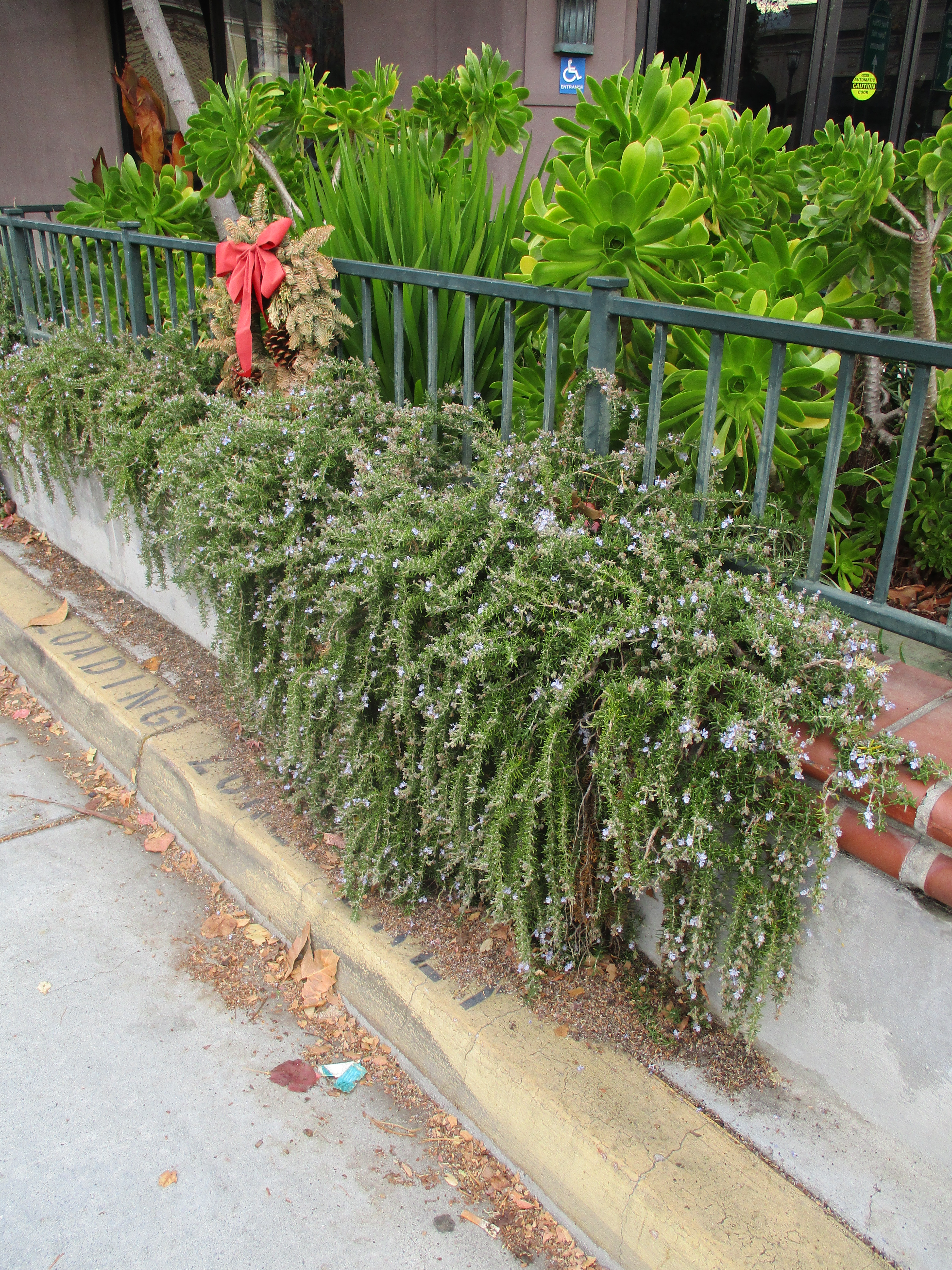
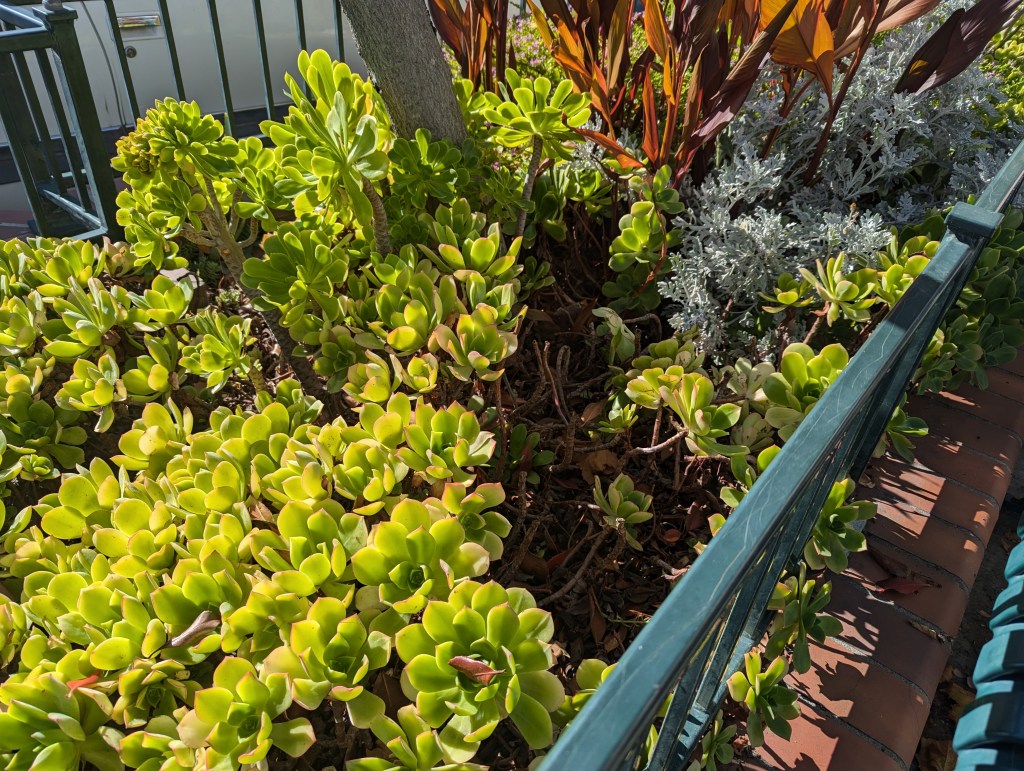
Nasturtiums were a good choice for my downtown planter box, or so I thought. I know that people pick flowers from such planter boxes. I figured that nasturtiums bloom so abundantly that no one could possibly pick all the flowers from them. Technically, I was correct. Technically, not all of the flowers were picked. However, there were times when only a few of the abundant flowers remained. I replaced them with some sort of compact aeonium like perennial that I can not identify. It forms dense mounds of yellowish green succulent foliage that I figured no one would bother. I do not mind when I notice a few pieces missing. There is enough to share. What I do mind is that someone clear cut harvested enough to leave this bald patch. The left half of the picture demonstrates what it should look like. What is worse is that there is so much of it extending outside of the railing that would not have been missed if it had been taken. Also, as the picture below shows, the more prominent common aeonium is not exempt from such pilferage. So, why do I bother? Well, I still enjoy my downtown planter box.

Six on Saturday: Downtown Planter

While away from work and home, and tending to errands downtown, I got these pictures from my downtown planter, which inadvertently became something of a Memorial.

1. Cuphea hyssopifolia, Mexican heather is not my favorite component of the downtown planter, but remains because it was installed by someone who was here prior to my time. A uniquely confined colony of montrebia that I will discuss on Wednesday also remains.

2. Senecio cineraria, dusty miller and the stonecrop below are from the garden of a now deceased client so can only be removed if a bit of it gets established in my home garden. It and the Mexican heather above are the only two of these six which are not succulents.

3. Sedum reflexum ‘Blue Spruce’ stonecrop is being displaced by the unidentified species of Aeonium below, but is also already established in my home garden. I expected it to be displaced eventually when I put it here several years ago. It is gratifying to see remnants.

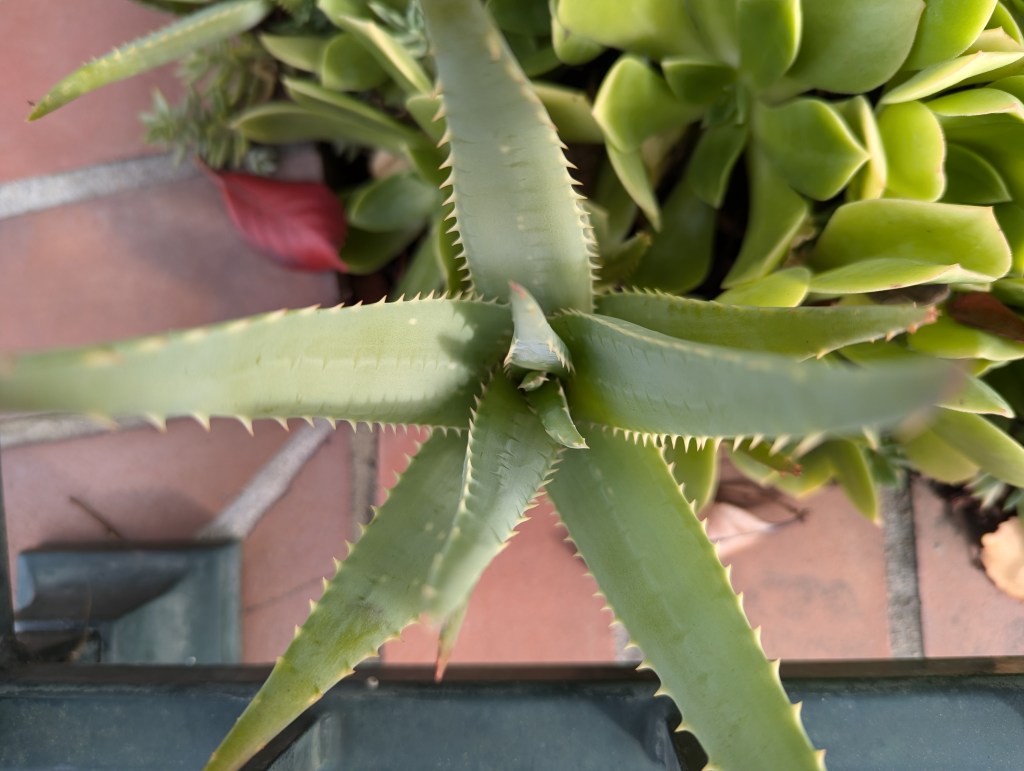
4. Aloe, as the Aeonium at the bottom of this list, is unidentified. It and both of the last six are from the garden of the deceased mother of a deceased friend who happened to be a direct descendant of Spanish explorers who were the first to arrive where Monterey is.

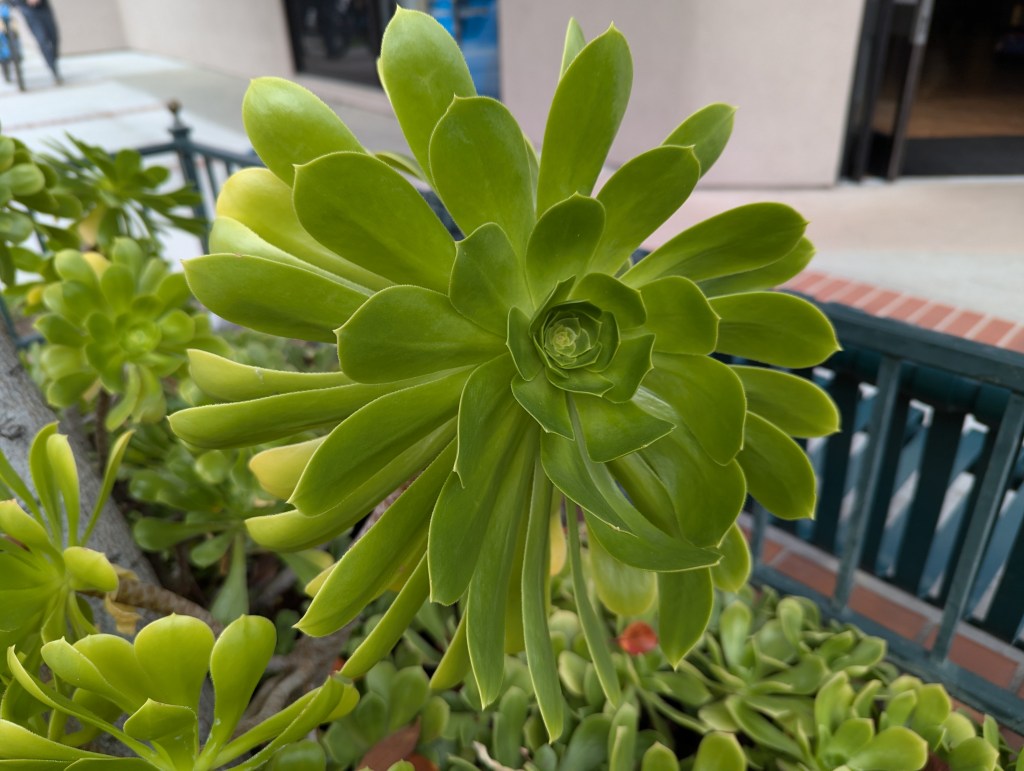
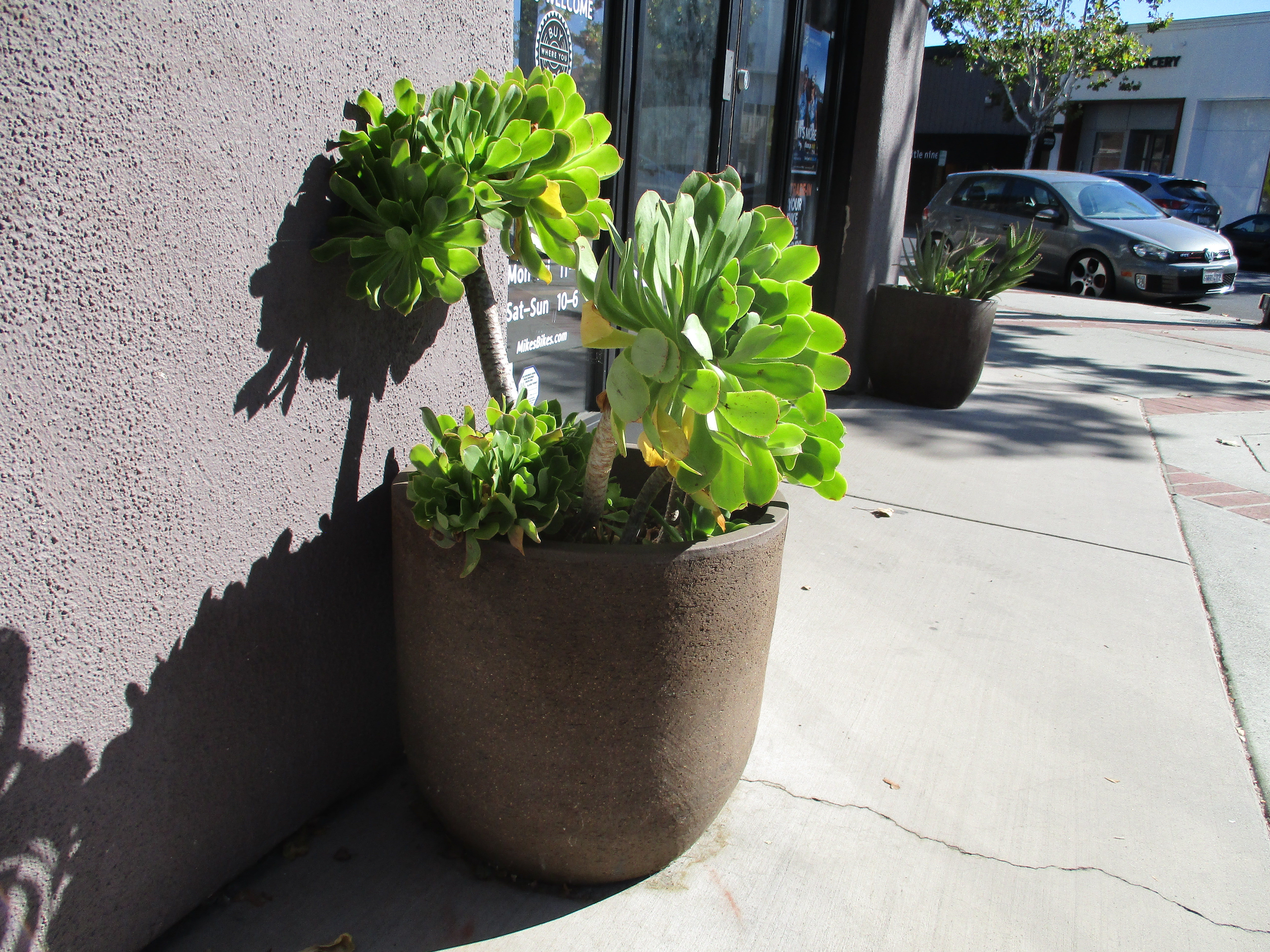
5. Aeonium arboreum, tree houseleek is the most striking vegetation within the planter, but is also occasionally disfigured by theft of its most sculptural stems. A darkly bronzed cultivar from the same special origin was taken piece by piece until none of it remained.

6. Aeonium is as unidentified as the Aloe above. It initially resembles the tree houseleek, also above, but remains low, dense and mounding. It is the most abundant vegetation of the planter, so was the primary culprit of the displacement of the stonecrop, also above.

This is the link for Six on Saturday, for anyone else who would like to participate: https://thepropagatorblog.wordpress.com/2017/09/18/six-on-saturday-a-participant-guide/

Horridculture – Trash Talk

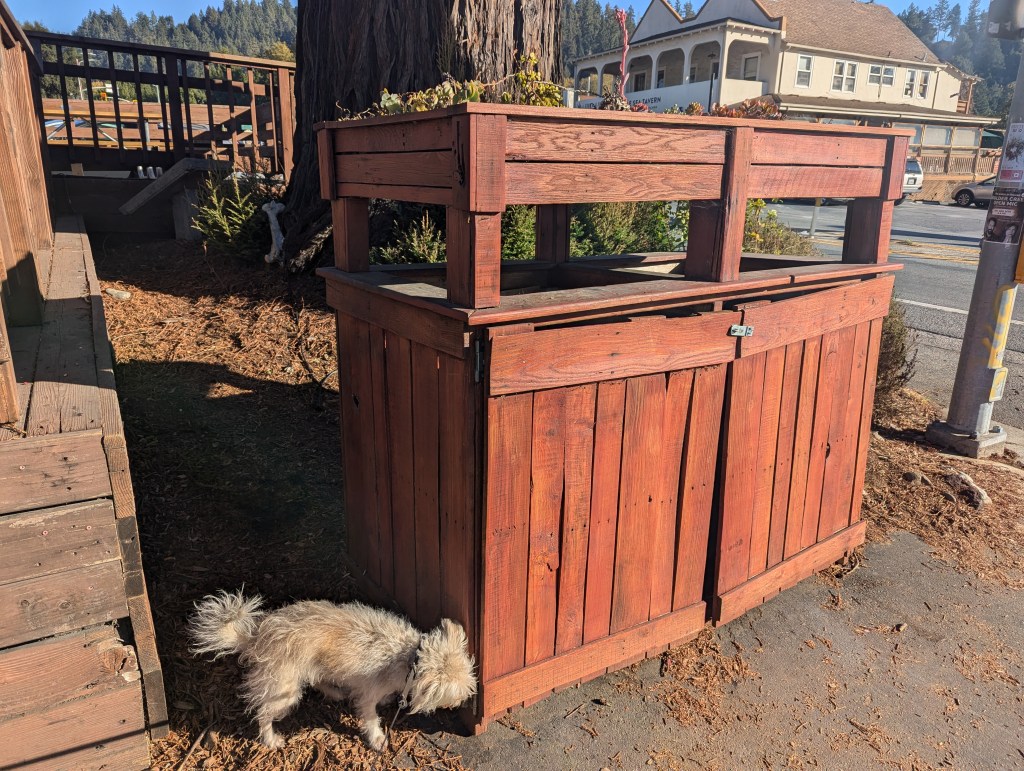
Public trash receptacles are a good concept. Without them, some of us would be more likely to litter. Contraptions such as this are most likely a good concept too, since they are somehow more visually appealing than exposed trash cans. Also, they are unlikely to fall over and spill as exposed trash cans sometimes do. Originally, one half of this receptacle was designated for trash, and the other half was designated for recyclables. This is another good concept, but was very unfortunately discontinued because it is so commonly ignored that someone must sort through less than efficiently sorted trash and recyclables. The only obvious component of this device that may not have been such a good concept is the planter box that hovers above it. Once outfitted with a nice collection of succulent perennials, it was left to survive as well as it can, which has not been very well. Succulents were likely selected for this particular application because they are supposedly ‘drought tolerant’. However, only some are drought tolerant, and only because they extend their roots as they must in order to find moisture, which they are unable to do while confined to this hovering planter box. Although they have been surviving, they have not been very happy about it. I suspect that someone must sometimes give them water, but these succulents want a bit more. Realistically, they would be happier in the ground behind the trash receptacle. There is certainly plenty of vacant space for them there, and they would be more visually appealing where they would actually be more visible than they are above average eye level. If some sort of vegetation is desirable above the trash receptacles, small shrubs or vines in the ground next to them would be happier than succulents above them. It would have been better to maintain the space that is already in need of maintenance than to add more.

Horridculture – Pilferage

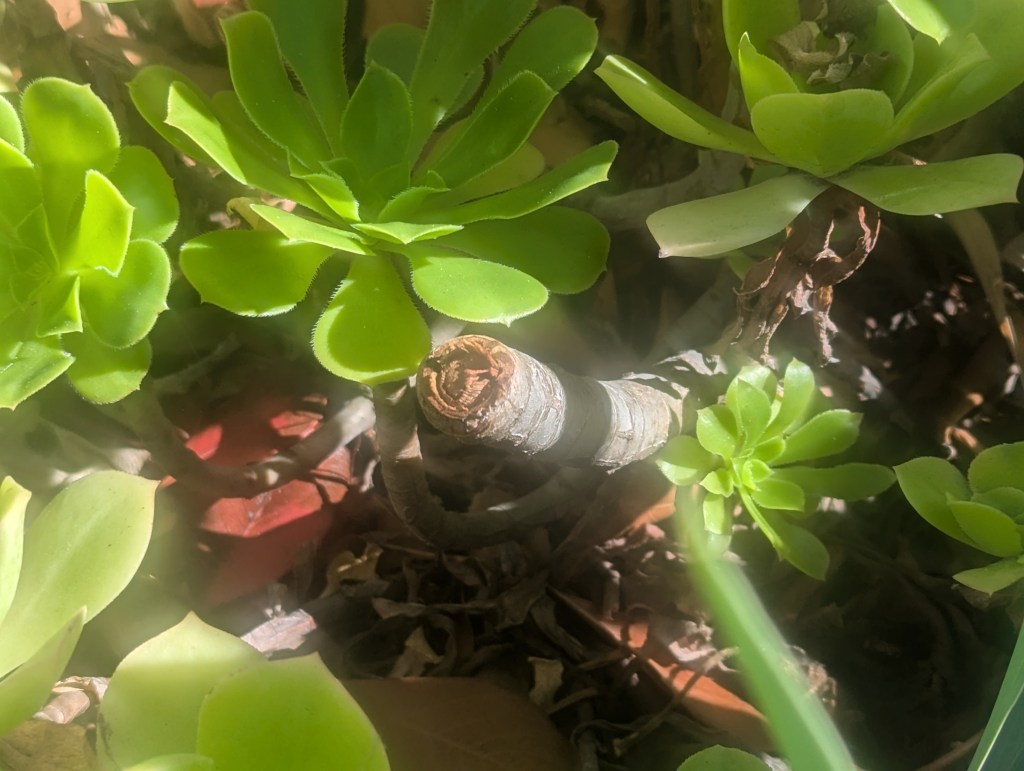
Cuttings could have been taken more neatly than this.

Aeonium arboreum, tree houseleek and a few other succulents within my tiny downtown garden are very important to me. They are from the former garden of a friend who passed away years ago. They have performed very well for this particular application since their arrival. They are resilient and undemanding, and provide delightful foliar color and form. The darkest bronze cultivar of tree houseleek that I ever grew arrived with them, but over a few months, was stolen until none of it remained. As the first few cuttings grew enough to become prominent, they were either taken completely, or deprived of their upper foliar rosettes. Any remaining rooted but bare stems eventually succumbed as any subsequent foliar rosettes that they generated were also taken. The surviving succulents remain only because they are both less popular, and too numerous for complete depletion. Actually, I would not mind if those who find these succulents to be appealing sometimes take a few pieces. I merely find their lack of tact to be annoying. I expect them to know better than to take the last of something. Also, I expect that they should have enough sense to take bits from where they would not be missed, and to do so neatly, without leaving broken stubs. Quite a few stems are sometimes overgrown or extending awkwardly outside the planter box, so should be removed anyway. Many stems that are overwhelmed by upper growth could be removed without compromising collective visual appeal. That might actually be a common occurrence that I am not aware of because it is done properly. Stems of these succulents can be easily broken neatly at their unions, without leaving stubs, so pruning shears are not even necessary. Fortunately, these damaged tree houseleeks will recover like they and other succulents always do.

Container Gardening

These containers are almost completely obscured by their contents.

Container gardening is one of those trends that I could do without in my own garden. Even though I know that it is actually very practical for several reasons, I prefer to grow as much as I can directly in the ground because I do not want to take care of contained plants. However, even with only minimal potted plants around my garden, the steep embankment above my driveway has reminded me of one of the many reasons why people like to grow plants in large or hanging pots, elevated planters or window boxes. There are just so many plants that look so good cascading out of containers.

The lily-of-the-Nile that I planted on top of part of the embankment to hold the soil together actually look really cool leaning over the top edge, and would look just as good in large planters. The smaller ‘Peter Pan’ lily-of-the-Nile is more proportionate to smaller urns. Since these do not hang over the edges too far, they look even better mixed with more pendulous plants like trailing rosemary, verbena, ivy geranium and dwarf periwinkle. Upright plants like fuchsia and smaller types of New Zealand flax in the middle of mixed plants add good contrasting form. Dracaenas (Cordyline spp.) were traditional vertical accent plants of Victorian gardening.

Low planters and pots, as well as many hanging pots, are very often best outfitted with traditional cascading annuals like lobelia, sweet alyssum, petunia, portulaca and my favorite, nasturtium. Even if annuals that do not cascade are the central features of mixed planters, cascading plants around the edges really maximize the show by spreading even more flower color over the exteriors of the containers. Colorful perennials like fibrous begonias, busy Lizzie, campanula, fleabane, scaevola and dusty miller may not cascade as well as the annuals, but add width, and probably cascade adequately for ‘artfully’ designed pots that are too appealing to obscure completely.

In sheltered lanais and porches, spider plant, burro tail and wandering Jew are classic solitary perennials for hanging pots. What orchid cactus lacks in form and foliage, it makes up for with bold flowers.

The largest pots and planters can benefit from simple ground covers like shore juniper and English ivy, perhaps dressed up with flowering annuals. Gazanias can provide their own flowers, so can instead be dressed up with the colorful and textural foliage of blue fescue or another grassy perennial. Asparagus densilforus has such bold texture and form alone that it does not necessarily need the color of annuals.

Six on Saturday: Beat Box


It sounds more compelling that way, like the old song by Art of Noise in 1984. It was . . . unique for the time. I suppose it still it. Brent introduced me to that Beat Box when we lived in the dorms at Cal Poly in 1986. Otherwise, to me, the name would have suggested a shallow wooden box for storing root vegetables in a cellar, or a crisper drawer of a refrigerator – a box for beets.

Well, I am just beeting around the bush to avoid sharing the unsightly pictures of my beat-up and neglected planter box downtown, which, incidentally, features neither beets, nor bushes.

The last update was only six weeks ago. https://tonytomeo.com/2018/08/18/six-on-saturday-out-with-the-old/ There has not been much improvement. I manage to remove the litter that accumulates. The condition of most of the plants is unfortunately natural for this time of year. It will not last long. For now, it is what I have to share.

The main problem now is that the common houseleeks, which are the most prominent perennials, naturally looks very tired. I would have no problem with it in my own garden. I know that they look great for most of the year. They look like they do now only in late summer. They recover immediately as soon as the rain starts in autumn. I do not know what is so great about rain, or what rain does that the irrigation does not do. I think that it coincides with cool humidity. Warm aridity is probably what causes the houseleeks to fold up and shed much of their foliage the way they do.

1. Common houseleek was grown from two tiny cuttings that I acquired from the garden of a friend’s deceased mother as we were emptying her home in Monterey. They arrived with a bronze common houseleek, another unidentified houseleek, an unidentified aloe, and, of all things, a bearded iris. They grew like weeds, and are now the most prominent features in the planter box. They would not have been my first choice, but once they started to grow, everyone liked them. I sometimes consider cutting them back so that they regenerate as lower foliar plants; but most people like their height and sculptural stems. I will instead groom out some of the superfluous grown to display their stems better. Once the rain starts, and they regenerate new foliage, they will look exquisite! For now, they look like . . . this.P80929

2. Bronze common houseleek was planted between the two common houseleeks, and at the same time, but never gets going well. As soon as it tries to grow, someone takes the top off of it. It would be an excellent contrast if it gets the chance. It really looks bad right now, but like the others, it will fluff out with the rain. The third smaller houseleek is right below it.P80929+
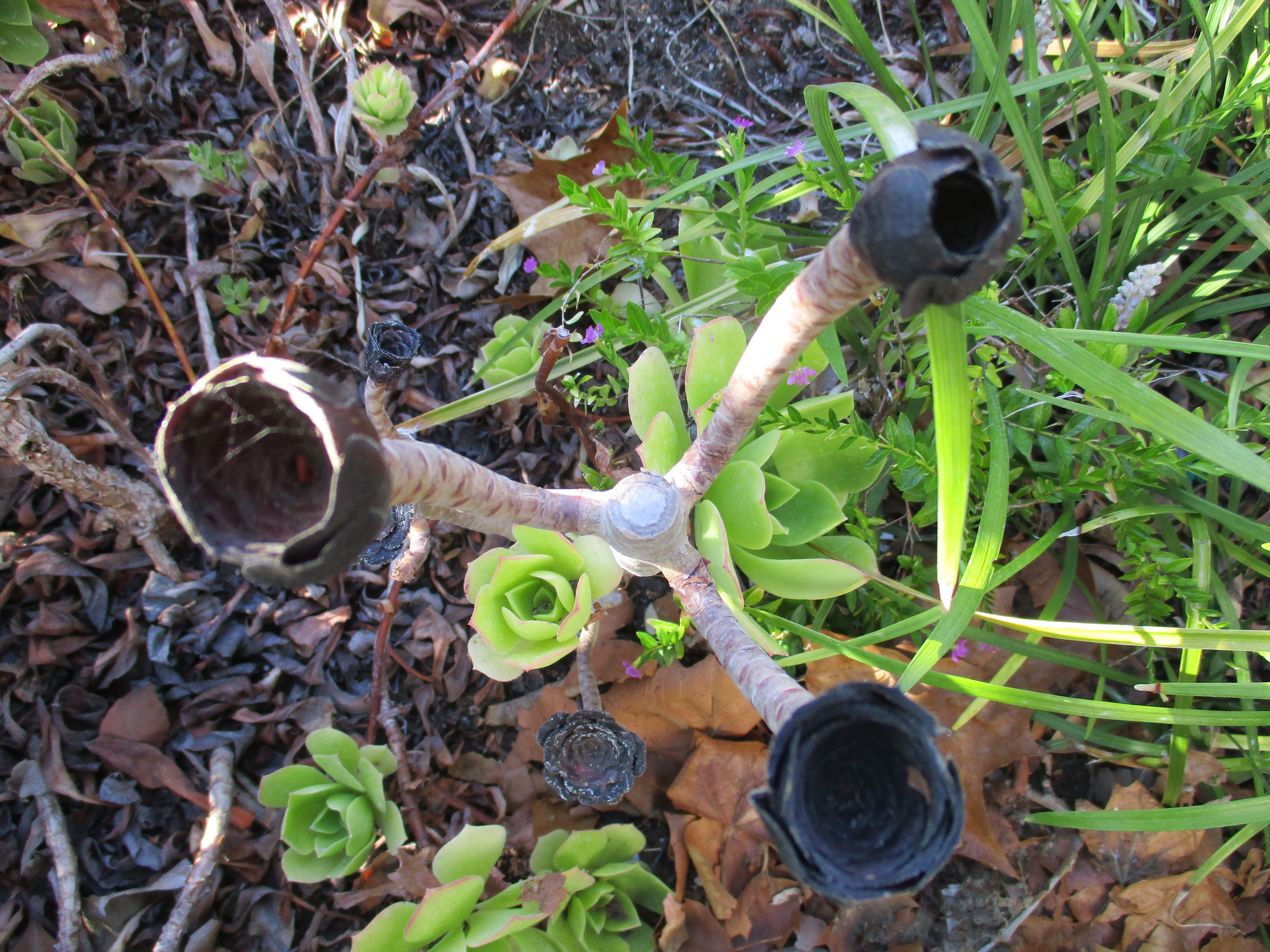
3. One never knows what might be found in a roadside planter box or landscape. Besides the concrete slurry (that was dumped by a tile-setter working in the adjacent building) and big puddles of vomit (such as those commonly found outside of downtown bars), I have found discarded bicycle parts (that were replaced by the adjacent bicycle store), baggies of dog poop, loaded diapers, small bags of trash, and a variety of dishes, glasses and flatware from neighboring restaurants. This disfigured fender is certainly not the strangest item to appear in my planter box, but is one of the largest.P80929++
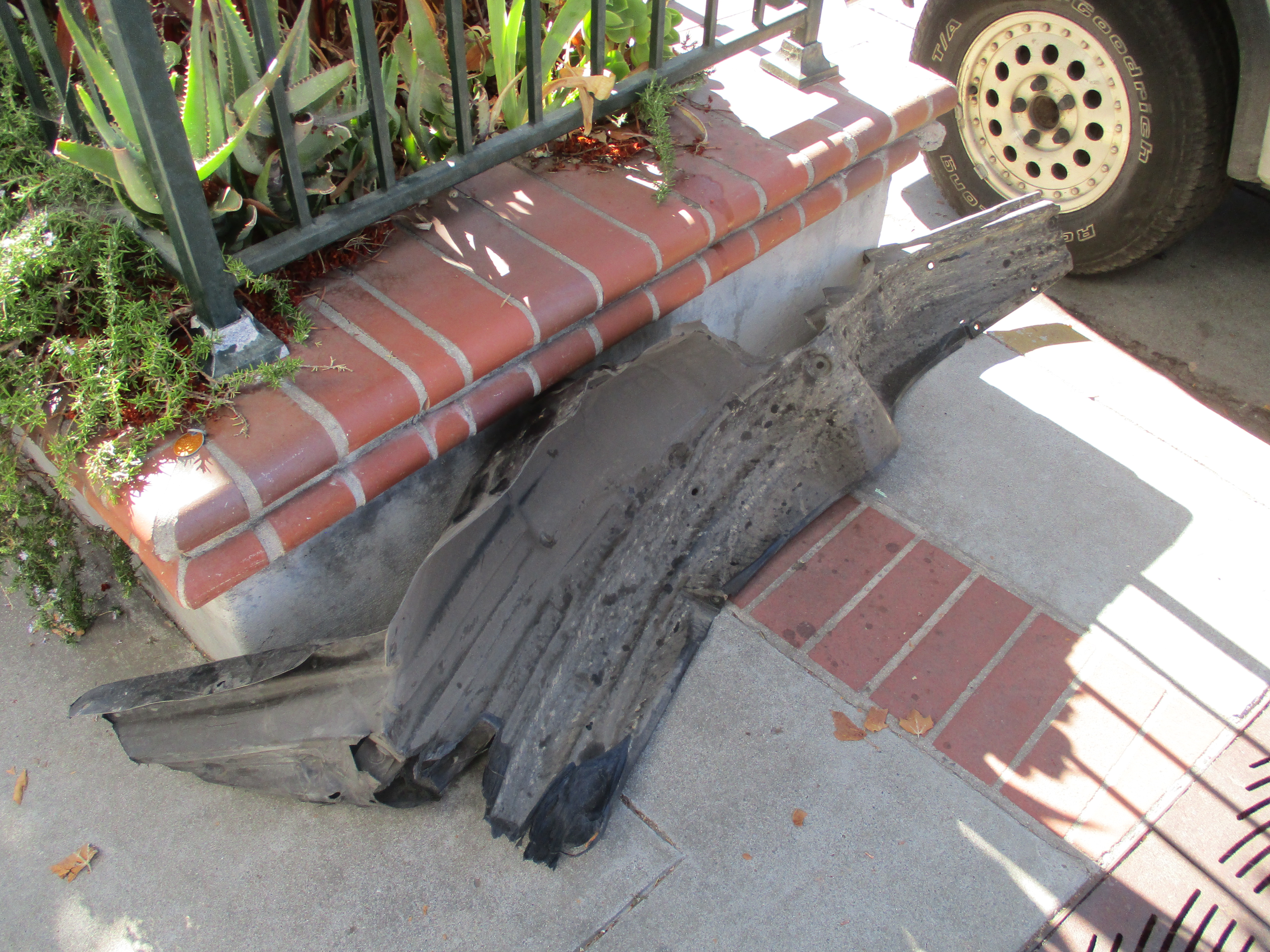
4. Two nice urns outside of the adjacent bicycle shop always look so much better than my planter box. They are filled with nice potting soil, and get watered more generously. The big houseleek in the closer of the two urns was removed from my planter box when it got too crowded. I would have planted a matching pair, but the farther of the two urns had been temporarily removed to make room for a sign. Now that it has returned, it is outfitted with a big aloe from the planter box. The aloe was cut back when the tile on the corner of the planter box where the aloe is located was repaired. I was not there when it happened, but I am very pleased that someone in the bicycle store salvaged the severed bits of aloe. I would have been annoyed if they had been wasted. They are quite large now. It would be excellent if they bloom soon. Most aloes bloom in summer, but this species has tried to bloom at really odd times . . . except in summer! The floral stalks in the planter box have always gotten broken off before they bloom, so I do not even know what the flowers look like. If they never get the chance to bloom, the foliage still looks great.P80929+++
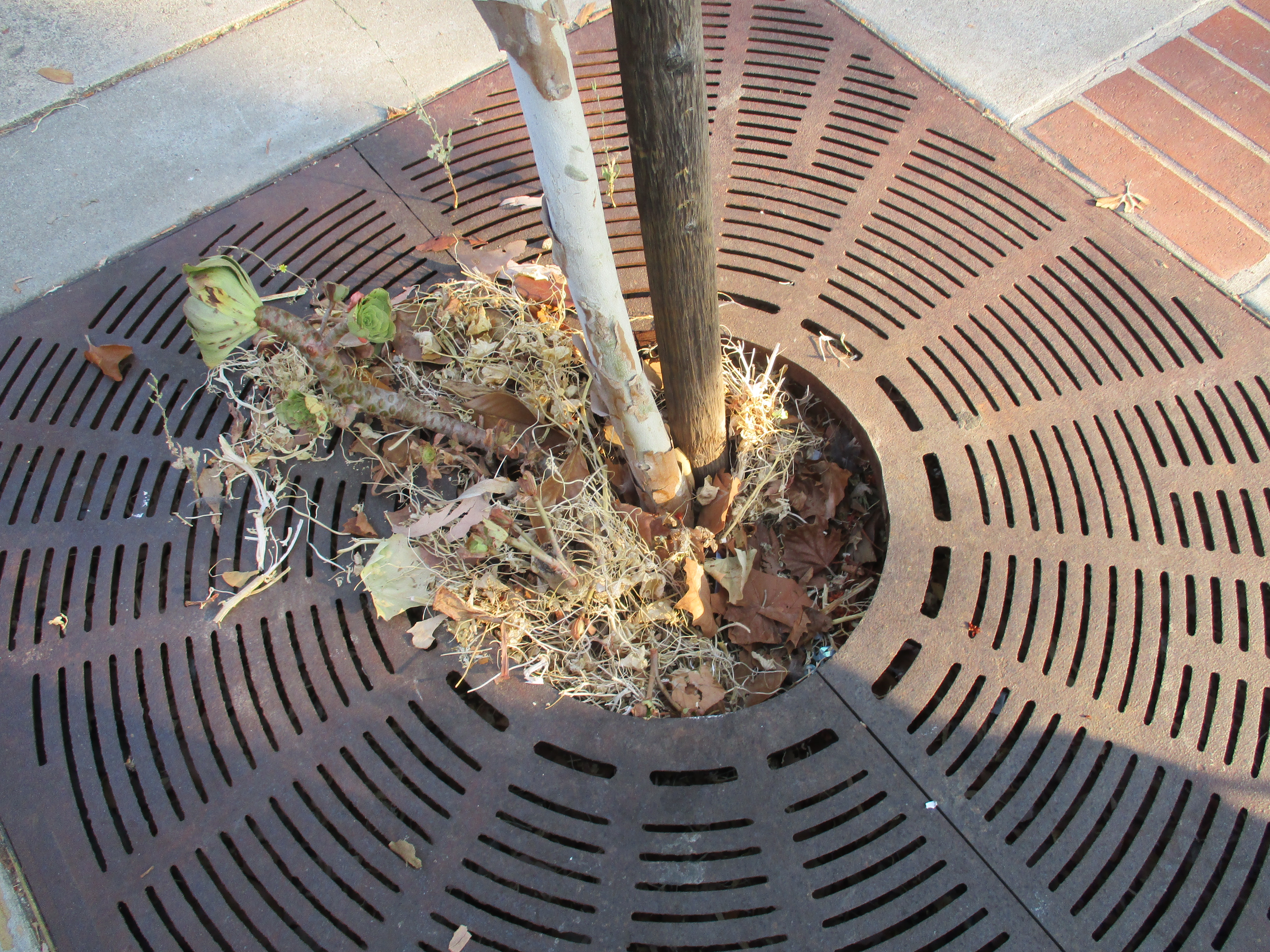
5. The adjacent tree well really did not look this bad after I pulled up some of the debris that collected in it a month or so ago. It now looks as nasty as it did during my previous update. I know the bit of housleek looks really nasty, but it stays because I expect it to recover once the rain resumes. Nasturtiums grow here too. I will sow seed for ‘Jewels Mix’ nasturtiums in the planter box only because nasturtiums do not regenerate there as reliably.P80929++++

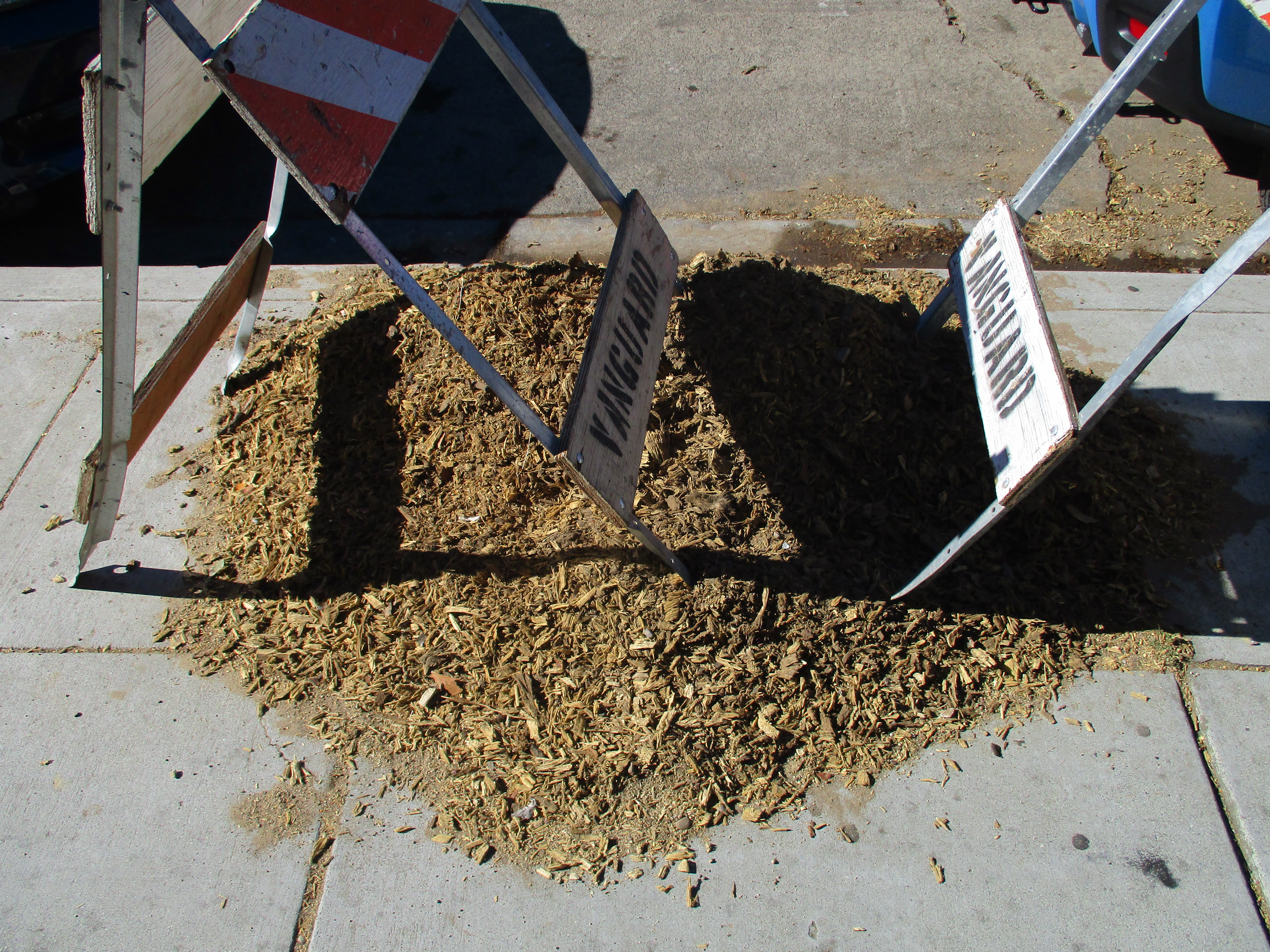
6. This second tree well that is just west of that in the #5 picture above had a nice magnolia tree in it a month ago. Only this pile of chipped stump remains. The sidewalk, curb and road pavement will be replaced soon. Street trees will be added later. The magnolias were so pretty, but were too impractical and messy. I am impressed that they did not do more damage than they did during the half century that they were there.P80929+++++
This is the link for Six on Saturday, for anyone else who would like to participate:

https://thepropagatorblog.wordpress.com/2017/09/18/six-on-saturday-a-participant-guide/
Six on Saturday: Out With The Old


The planter box downtown has been neglected for too long. ( https://tonytomeo.com/2017/11/04/my-tiny-downtown-garden/ ) I really must make some time to clean out the debris and a little bit of trash. There is nothing as interesting as when the concrete slurry was dumped into it by whomever was installing the tile in the bathroom of the adjacent building, but there are some odds and ends. One of the six trailing rosemary plants that was trailing so nicely over the southern edge is missing . . . as in someone cut it back to a stump. Someone dumped out an old dead houseplant right into the middle of the planter box, leaving an upside down pot shaped wad of potting soil, as if no one would mind. Right next to that, someone left a potted kangaroo paw, as if I might want to plant it into the planter box. It is all dried up and mostly dead . . . and I really do not like kangaroo paw enough to want to grow it there. Well, perhaps it is better to show you the drama than to write too much about it.

1. This is the potted kangaroo paw that someone left in the planter box. Anyone who does not notice how sloppy all the dried foliar debris on the ground around it is will be sure to notice how unsightly this dried kangaroo paw is. The pile of discarded potting soil was already bashed up and spread out before this picture was taken. I will probably plant the kangaroo paw somewhere else, just in case it survives. I do not want it here. The pot is nice.P80818

2. It has a name; Anigozanthos ‘Kanga Yellow’. Doesn’t anyone use species names anymore?P80818+

3. Right next to my planter box is a tree well with a London plane that has not grown more than a few inches in the past few years. When my nasturtiums really get to blooming and seeding, I sweep some of the seed into the tree well, where they bloom just as prolifically as they do in the planter box, but a bit later. I make it look like an accident. There is also a busted up houseleek in there. It grew from a piece of mine, and will regenerate when the rain resumes in autumn. It sort of looks like an accident too.P80818++

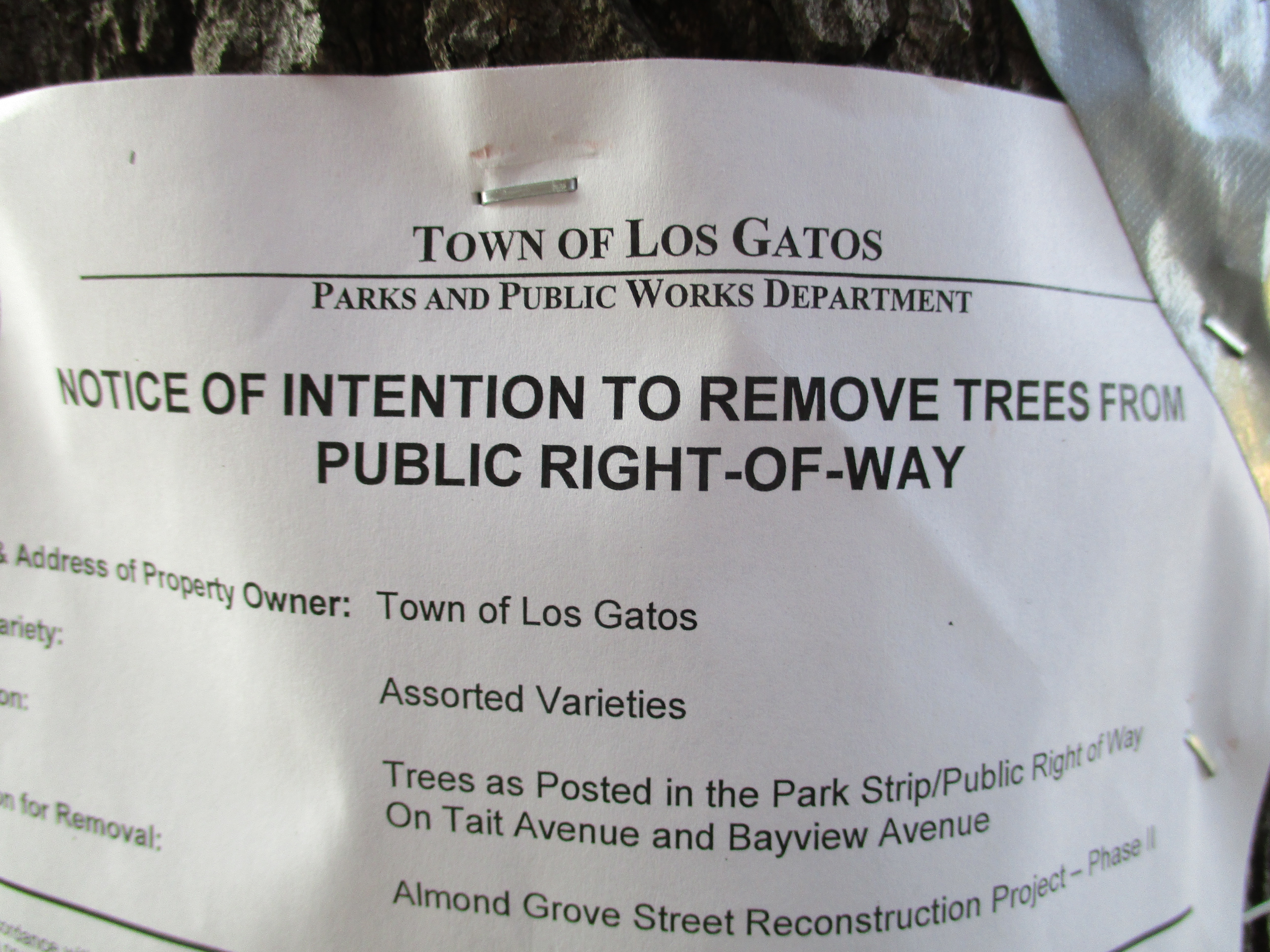
4. Just to the west of the slow London plane is one of a few old Southern magnolias that will be removed. They are disfigured and somewhat unhealthy, so are not worth salvaging as the pavement of the surrounding roadway, sidewalk and curb get replaced. Even if we wanted to salvage them, they would not likely survive the process. It is sad to see them go, but they were good street trees for a very long time, and certainly lasted longer than they should have been expected to. Southern magnolias commonly displace pavement. I really would not mind if the ailing London plane were to be removed as well, just because it it too pathetic to work around, but the tree huggers are intent on preserving it. When the magnolias get replaced with new redbuds or tupelos, the London plane will look odd, and will eventually get too big and break the new pavement. Oh well. My planter box and this tree are actually on Nicholson Avenue, not on Tait Avenue or Bayview Avenue.P80818+++

5. ‘X’ marks the magnolias who are condemned to death. I know they need to go, but it is saddening anyway. They were fun neighbors.P80818++++

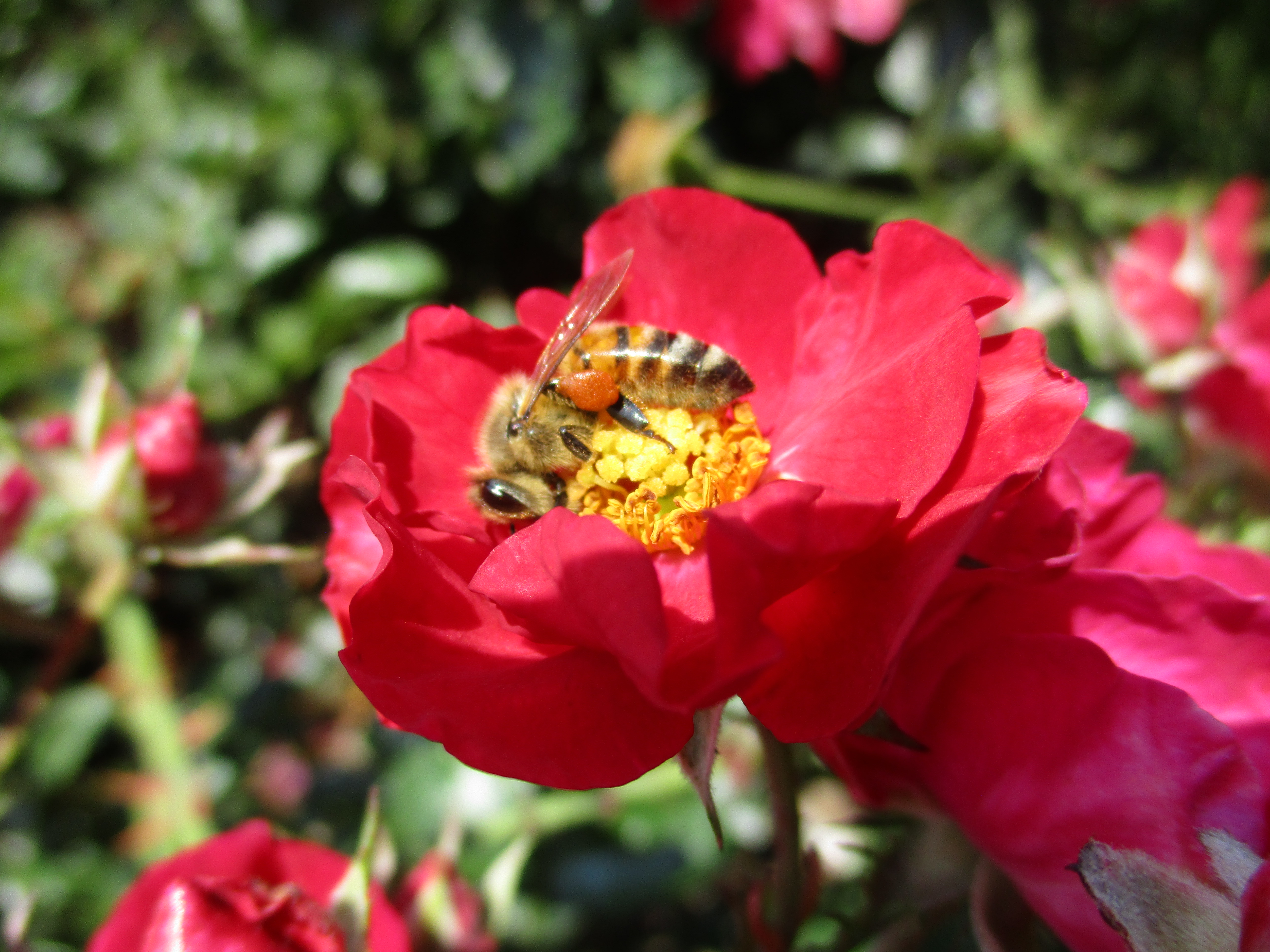
6. Since there were no colorful flowers within my planter box, it was necessary to get this picture elsewhere. Brent might say this looks like the Academy Awards, with a bee on the red carpet rose. Well, I can not expect you to know how Brent thinks. You can omit ‘rose’, and think of ‘bee’ as ‘B’, and think of ‘B’ as a euphemism.P80818+++++

This is the link for Six on Saturday, for anyone else who would like to participate:

https://thepropagatorblog.wordpress.com/2017/09/18/six-on-saturday-a-participant-guide/
Pebbles

P80113My little planter box downtown that I wrote about last week and earlier must be the weirdest garden that I have ever tended to. ( https://tonytomeo.wordpress.com/2017/11/04/my-tiny-downtown-garden/ ) I certainly enjoy it. There are not many horticultural problems that can not be remedied by simply removing plants that should not be out there anyway. The weirdness though is just . . . weird . . . and unique to the situation of a tiny garden in such a public space.

I have had weird neighbors before. Hey, I live where I do. Well, a resident of Nicholson Avenue saw me working on my garden one day and stopped to tell me what I should plant in it for compatibility with the color scheme of the front garden of her home a block and a half to the west. You see, she payed a lot of money for her home, and I payed nothing for my planter box that belonged to the town that her expensive taxes sustain. I just smiled and nodded my head until she drove away. I then continued to plant flowers that were compatible with the color scheme of Mike’s Bikes, the bicycle store that my planter box happens to be in front of.

Being in front of a bicycle store, the planter box collects quite a bit of discarded bicycle parts. Just about any part that can be purchased in the store and changed on the sidewalk out front has ended up in the planter box. I also find nice beer and wine glasses discarded by patrons of local bars. A worse aspect of the proximity to bars is that those who imbibe excessively sometimes barf into the planter box. Speaking of puddles, a contractor who was doing some tile work at Mike’s Bikes dumped a bucket of slurry from the mortar into my planter box, leaving a puddle of mortar that solidified into a round concrete disc about two and a half feet wide and an inch and a half thick. Cannas, housleeks, aloes and nasturtiums were all encased, and had to be removed with the concrete!

I prefer to grow flowers that are small and abundant rather than larger flowers that would be missed when they get taken. My bronze houseleek has been trying to grow as long as the green houseleeks, but gets broken off and taken as soon as it starts to look good. I figured that nasturtiums were too abundant to be missed if someone too a few. Yet, I noticed that so many were getting taken that the blank flower stalks were more evident than developing flowers. When I confronted someone who was taking them and putting them in a big plastic bag full of plucked nasturtium flowers, she told me that they are edible. So? I certainly do not mind sharing; but if anyone wants to eat THAT many of them, they should grow them in their own garden!

On another occasion, someone stopped to tell me that rosemary is a useful culinary herb, as if it were not something that a horticulturist would know about, and then yanked a huge chunk of it from the meticulously tailored rosemary that cascaded so nicely over the wall of the planter box before I could chase him away. Another chunk of rosemary was burned by the exhaust of a car that was left idling in the loading zone while a client of Mike’s Bikes was inside retrieving his bicycle from the repair shop. The drama just never ends.

But there is one oddity that I neither mind nor tamper with. It has not become a problem yet. On the north side of the planter box, adjacent to the backside of a park bench, pebbles and small stones have been gathering for a few months. Some disappear as new ones arrive, so that there are never too many at any one time. At first, I thought that they were just some of the detritus that someone flung aside after sweeping out their car while parked at the curb. Yet, there is no other trash or debris associated with the stones. They happen to be in the only spot that has been undefiled by discarded bicycle parts, glasses or barf. They seem to be placed quite deliberately in small groupings and patterns. They reminded me of those small stones that some people like to place in gravel Zen Gardens. I really do not know why they are there; but if someone is able to enjoy this little garden downtown in that way, than I probably should not interfere. The pebbles remain.P80113+

My Tiny Downtown Garden

P71105Main Street and Santa Cruz Avenue are the two main streets of downtown Los Gatos. They are the main shopping district, and the part of town that everyone sees. As much as things have changed, a bit of the familiar remains. Gilley’s Coffee Shoppe is still next door to the (rebuilt) Los Gatos Cinema. The brick La Canada Building miraculously survived the Earthquake. The simple deco Park Vista Building across the street is just as elegant now as it was a century ago. There are still concerts in the Town Plaza in summertime, shaded by the Town Christmas Tree that gets lit up in December.

Both Main Street and Santa Cruz Avenue are outfitted with big planter boxes that give the downtown a more relaxed and colorful ambiance. Each planter is elevated about a foot and a half, and contains one or two Indian hawthorn trees. A low wrought iron railing protects the contents of the planter boxes. Irrigation s automated. That is about all that the planters have in common.

Each planter box is ‘adopted’ by a member of the community, or a community group, each with different styles and different ideas of what we should plant in our boxes. Some like things neat and trim. Others believe that bigger is better. Some like plenty of foliage. Others like lots of colorful flowers. Some planter boxes even get adorned with seasonal decorations.

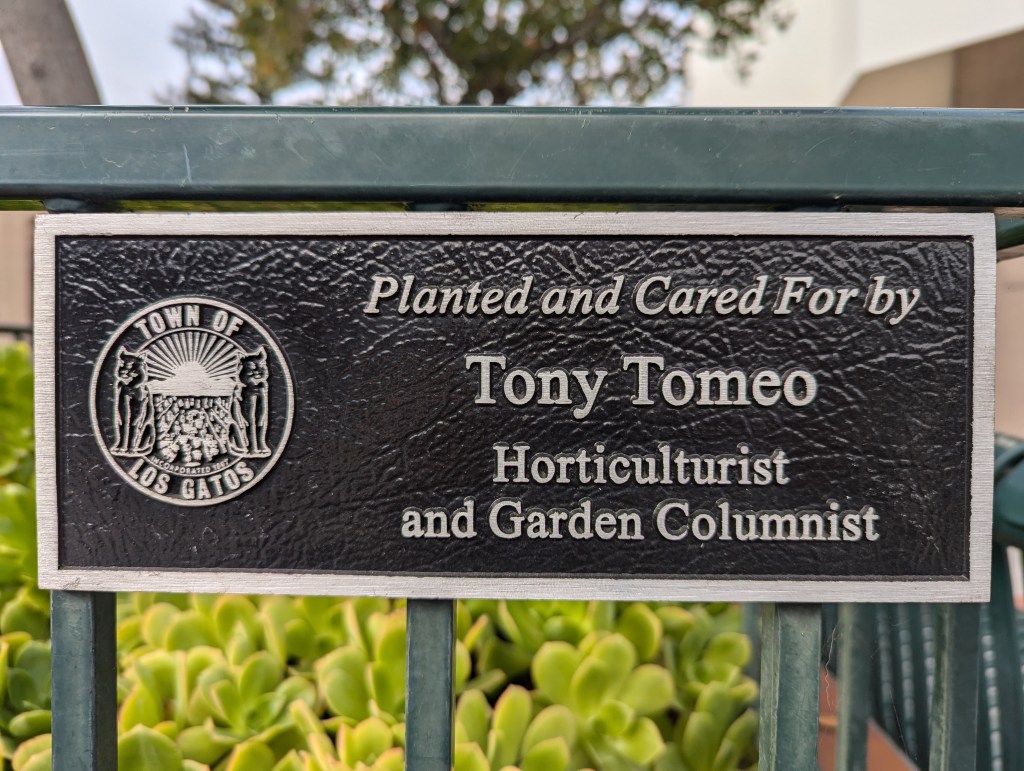
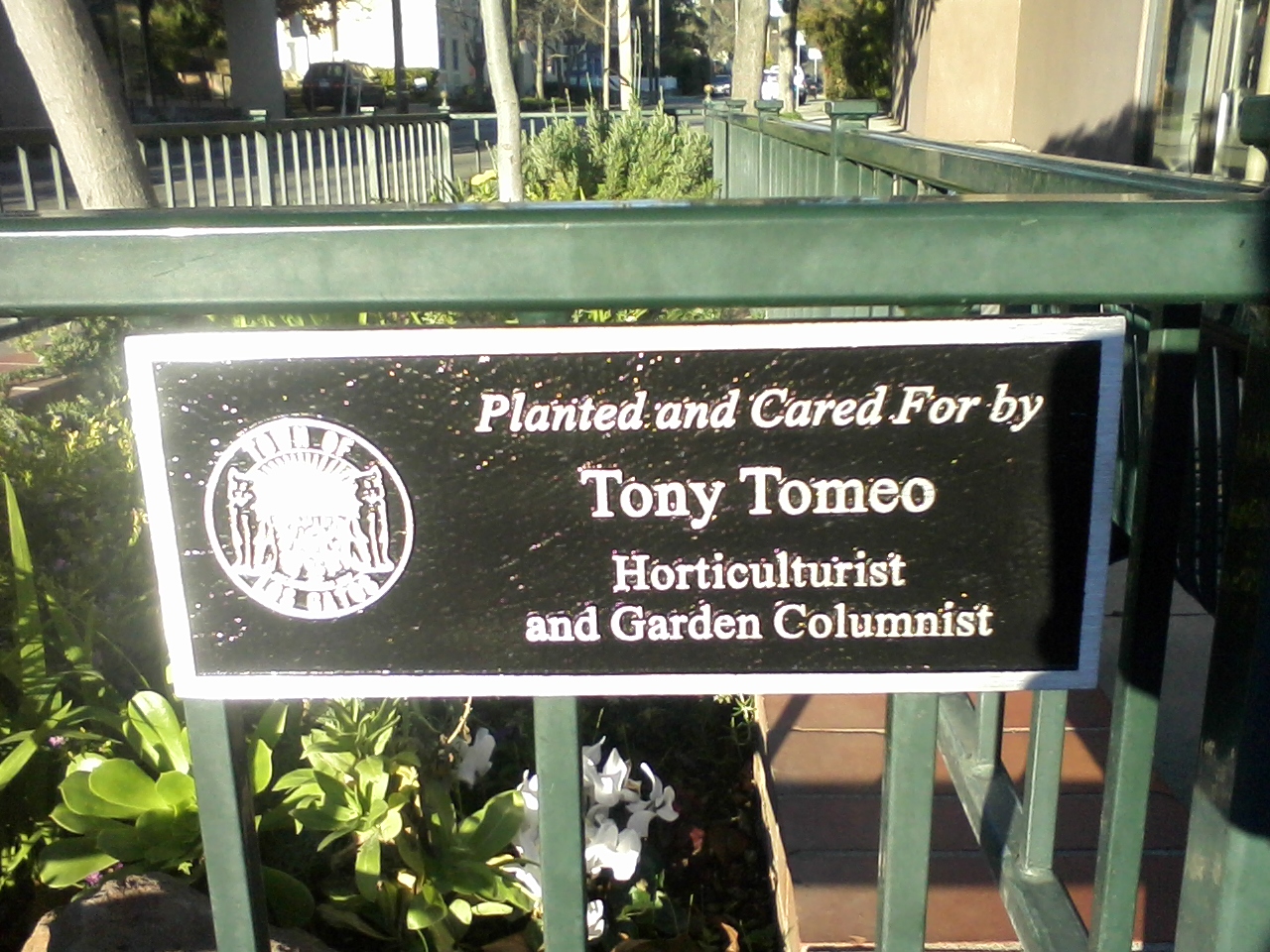
My little planter box is on the northwest corner of Nicholson Avenue and North Santa Cruz Avenue. It has a brass plaque with my name on it. It is my little garden space downtown, where I get to express my simple gardening style for everyone to see, even though I grow a few flowery things there that I would not actually waste space on in my own garden.

The trailing rosemary that cascades over the wall so nicely was there when I got the planter. So were the montbretia and liriope, which I did not want to remove because someone else had gone through the effort of planting them. When there was more space available, I planted a few inexpensive flowering annuals, like pansies and calendulas. As things grew, there was less space for annuals. Besides, I wanted to make a point of doing this planter nicely with sustainable plants that I propagated myself.

The two largest features are common aeoniums. The two original cuttings were on the dashboard in the car for weeks before I finally stuck them in the planter. They came from the home of a friend’s mother in Monterey. We emptied the home out after she passed away. It was gratifying that they found a home in my planter box, and even more gratifying that they grew so well and provided countless cuttings for copies all over town, including in other planter boxes. Between the two big aeoniums, there is a small bronze aeonium. It is the same age as the two big ones, but grows slower, and is regularly set back by people breaking off and taking the stems as fast as they grow.

These three aeoniums were not alone on the dashboard. They arrived with another related succulent, which I believe to be an old fashioned echeveria, and some sort of compact aloe. The echeveria has spread out over much of the area between the big aeoniums. The aloe is still confined to one corner.

To contrast with all the pale green foliage, I added two bronze ‘Australia’ cannas. They cost only a few dollars, and were probably my biggest expense in this entire project.

The most impressive feature of the planter box are the nasturtiums. Yes, common, simple and cheap nasturtiums. I wanted to get straight yellow nasturtiums for compatibility with the signs of the neighboring bicycle shop, but could not find any at the time. I instead started with the common ‘Jewels’ mix, which is still my favorite. After self sowing, the subsequent feral nasturtiums are only orange and yellow, with only one or two red blooming plants. What made them so excellent is how they grew! They overwhelmed the trailing rosemary (which is fine since they die back in summer when the rosemary takes over), and cascaded onto the walkway and curb. They filled the space between the railing and an adjacent bench, and even started growing through the bench. There was so much bright orange and yellow that no one seemed to mind that it was nasturtium.

After a long and warm summer, the aeoniums need serious grooming, and the nasturtium need to be replaced. I really hope that the planter box will be as impressive as it was last winter. The picture here is not very good. Perhaps I will get a better picture in a few months.

P71105+