Bridal Wreath Spiraea

Bridal wreath spiraea resembles baby’s breath.

Flowering quince and forsythia set a precedent. Bridal wreath spiraea, Spirea prunifolia, somehow became old fashioned too. All three are only beginning to regain popularity. All are deciduous, so defoliate for autumn and remain bare through winter. They then bloom spectacularly on bare stems for late winter or early spring. Foliage develops after bloom.

Bridal wreath spiraea, like forsythia, develops many upright and arching basal stems. Its stems can grow taller than eight feet, although they are typically a bit shorter. Removal of old stems after bloom promotes growth of new stems, which bloom better. Indiscriminate pruning ruins their naturally upwardly flaring form. A slight bit of partial shade is tolerable.

Almost all bridal wreath spiraea are of the cultivar ‘Plena’. Their double flowers are fluffy but tiny, between just a quarter and a half inch wide. The simple species, and the variety ‘simpliciflora‘ with single flowers, are rare. Regardless of floral form, floral color is limited to white. Foliage might develop yellow color for autumn where autumn weather is cooler.
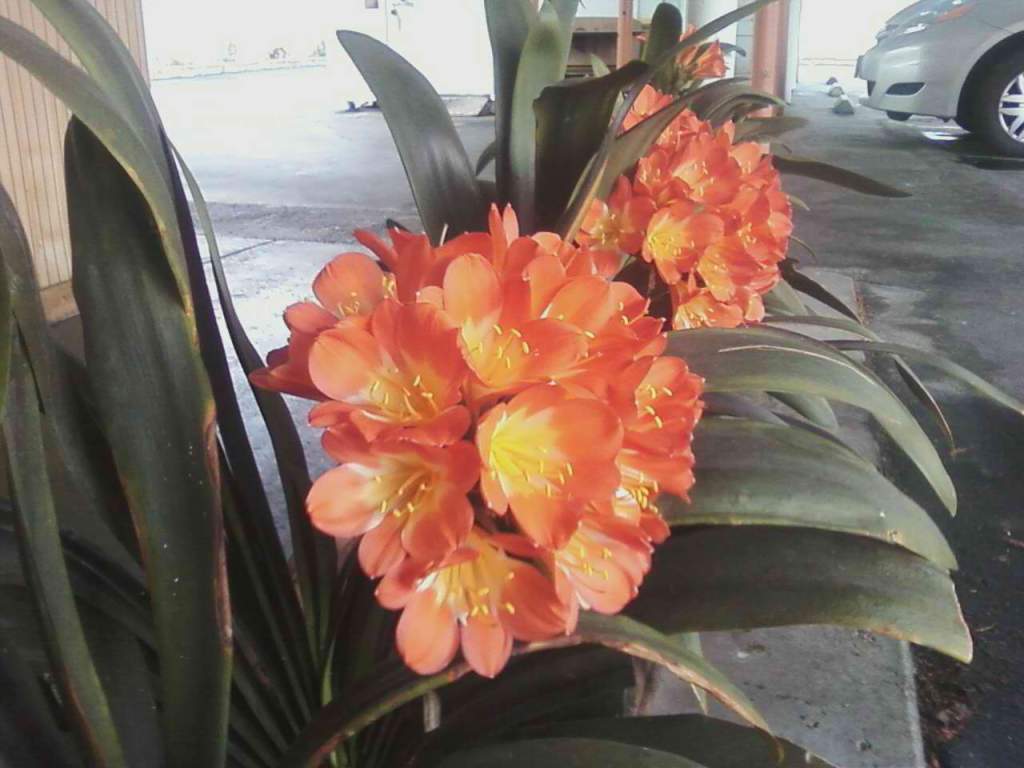
Kaffir Lily

Kaffir lily may look like a bright orange lily of the Nile.

Not much more than a decade ago, Kaffir lily, Clivia miniata, was known almost exclusively for big rounded trusses of boldly bright orange flowers at the end of winter or beginning of spring. Relatively recent breeding has extended the color range to include some softer shades of orange as well as many shades of yellow and reddish orange. Solomone Hybrids are various shades of yellow. ‘Flame’ is brilliant reddish orange. Some varieties bloom earlier in winter. Others bloom later in spring.

Individual tubular flowers are actually rather small, but are clustered like hydrangea flowers on strong stalks that stand as tall as a foot and a half. Bright red berries sometimes appear after flowers fade. The rather rubbery foliage is deep green. The individual strap shaped leaves are rather wide and can be nearly a foot and a half long. Belgian and French hybrids have heftier flower stalks and wider leaves. Established plants do not like to be disturbed, but may get too crowded to bloom well if not dug and divided every few years or so.

Tulip

A single tulip flower seems lonely.

As diverse as they are, popular varieties are a minority of countless hybrids of the genus. Most common and popular hybrid tulips qualify as the neo-species of Tulipa gesneriana. In other words, they are not an actual species. Most but not all are descendants of Tulipa suaveolens. More sustainable varieties of simple species are becoming more available.

The most popular of tulip are early spring bulbs that went into their gardens last autumn. Floral color ranges through pink, red, orange, yellow and white, mostly with dark centers. Their basal foliage is rather light green or perhaps almost grayish, with a rubbery texture. Most tulips stand singly on straight stems about a foot tall, but some can grow a bit taller.

Tulip bulbs enjoy organically rich soil with regular irrigation throughout their bloom cycle. They should get all the moisture they want from rain through their winter dormancy cycle. Tulip prefer a bit of chill in winter, so may not be as reliably perennial here as elsewhere. They are most spectacular in herds or large beds, but mix nicely with other spring bulbs. Simple tulips are among the most popular of cut flowers.

Harlequin Flower

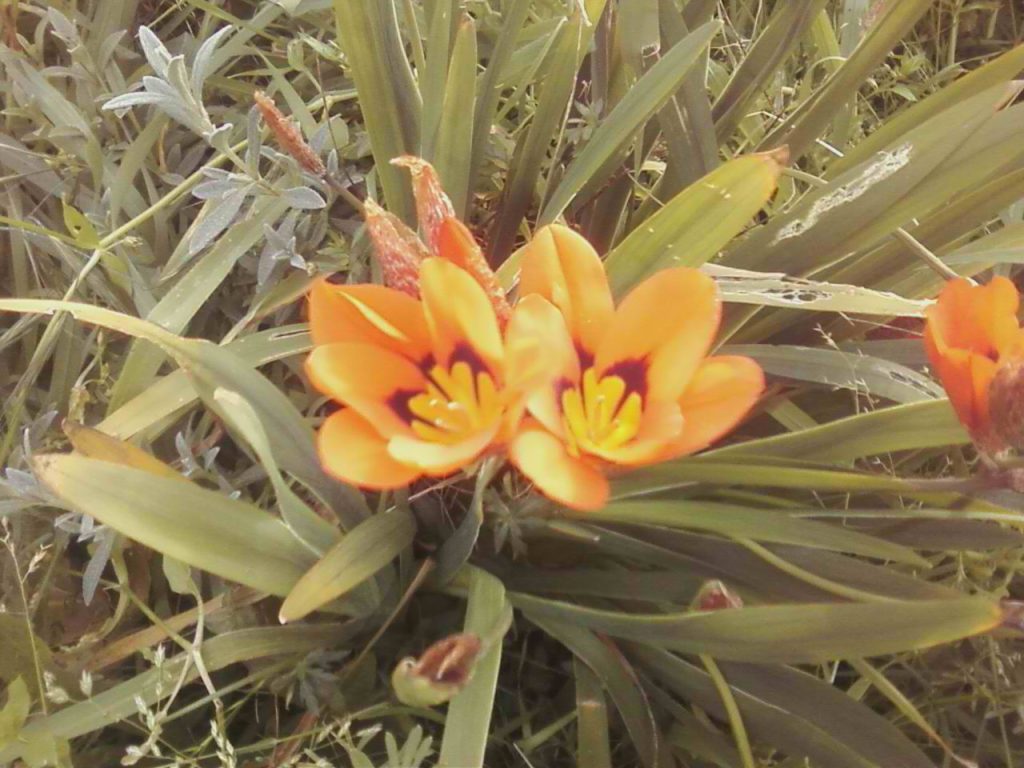
‘Tricolor’ (obviously) means ‘three colors’.

Even though bulbs for harlequin flower, Sparaxis tricolor, are no longer commonly found in nurseries when it is time to plant them in autumn, naturalized bulbs are somewhat common in some older gardens. Where winters are mild and soil does not get too dry and compacted, they are happy to slowly multiply and bloom every spring. They seem to be blooming a bit early this year, since they typically wait until later in spring. The upright narrow leaves resemble those of gladiolus, but get no taller than a foot. Each flower stems rises a bit higher to display a few flowers that are about an inch and a half wide. Each flower has a yellow center surrounded by a narrow rusty brown pattern, which is also surrounded by a third color; which is orange, red, pink or purple.

Chinese Fringe Flower

Fringe flower is an early bloomer.

The simple species is notably distinct from its several popular modern cultivars. Chinese fringe flower, Loropetalum chinense, grows very slowly to about fifteen feet tall. Its simple evergreen foliage is exclusively light green. Its small and ribbony flowers are exclusively creamy white. Limber and arching stems can eventually overwhelm adjacent vegetation.

However, this simple species is now very rare. Popular modern cultivars are much more compact. Although a few can grow taller, most are no more than five feet tall. Most exhibit delightfully purplish or bronzed foliage. Individual leaves grow about an inch or two long. Floral color ranges through white, creamy white, pink, rosy pink, rich red and garnet red.

Chinese fringe flower has a woodsy style. Shearing or aggressive pruning compromises its naturally relaxed form. It is naturally an understory species, so is somewhat tolerant of partial shade. Bloom is most abundant as winter relinquishes to early spring. It continues sporadically throughout most of the year. Blooming stems can be handsome cut flowers, and tolerate forcing bloom.

Spearmint

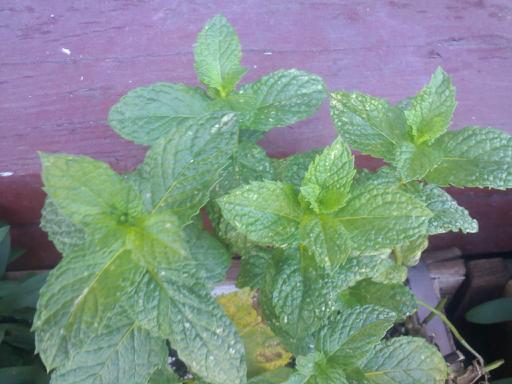
Mints have a sneaky way of migrating around a garden.

What most people who have grown the various mints remember about them is that they have a sneaky way of getting around the garden. They do not seem to be aggressive or weedy, but can be invasive with their subterranean stems nonetheless. That is why they are so commonly grown in pots, planter boxes or even pots sunken into the ground. Contained plants that get cut back at the end of winter every year look much better than unkempt plants that do what they want to anyway.

Once established, mint does not need any attention at all and only moderate watering. However, it performs much better with somewhat rich soil, regular watering and occasional grooming to remove old stems and spend flower stalks, (as well as getting cut to the ground in winter). Mints tolerate considerable shade or can be just as happy with full sun exposure.

Spearmint, Mentha spicata, is probably the most popular mint, with rich green serrate leaves that are a bit smaller than those of the second most common mint, peppermint. Minute pale blue flowers bloom in vertical trusses at high as two and a half feet. Most of the foliage stays lower, about a foot deep. The leaves can be used for flavoring fresh from the garden or dried. Like all mints, spearmint is very easy to propagate by division of rooted stems.

Red Flowering Currant

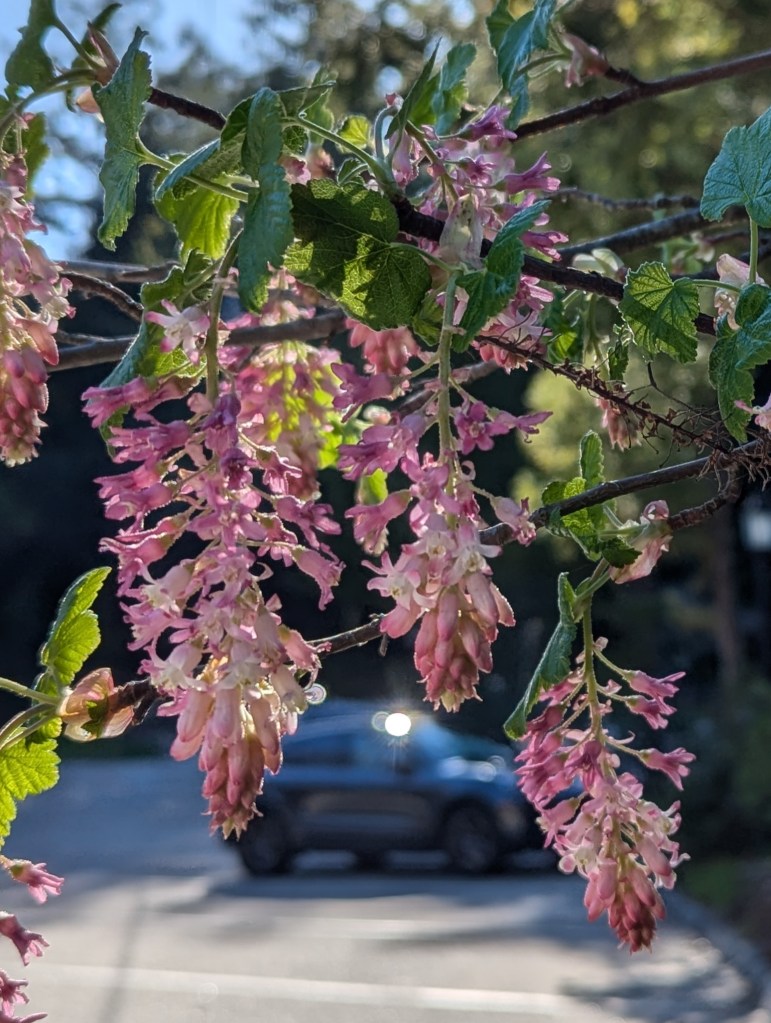
Red flowering currant tolerates some shade.

Its natural range extends from coastal Santa Barbara County to central British Columbia. Yet, red flowering currant, Ribes sanguineum, is elusive in the wild. It is more commonly observable within relaxed landscapes of native species. Individual specimens might not perform for more than a decade but can disperse seed. It behaves as if it is growing wild.

Mature specimens of red flowering currant can grow ten feet high and half as wide. Most stay lower. It is an understory species, so it tolerates a bit of shade. It may prefer shade to warm exposures. Young specimens may be wobbly enough to justify temporary staking. Removal of deteriorating old stems promotes more vigorous growth on fresh new stems.

Pendulous conical trusses of small pink flowers bloom by late winter or very early spring. Before anyone notices, birds are likely to take the few small currants that might develop. Small palmate leaves resemble those of scented geranium, and are somewhat aromatic. They turn yellow as they shed for autumn. Red flowering currant has a foresty character. It suits casual landscapes which border or merge into undeveloped areas.

London Plane

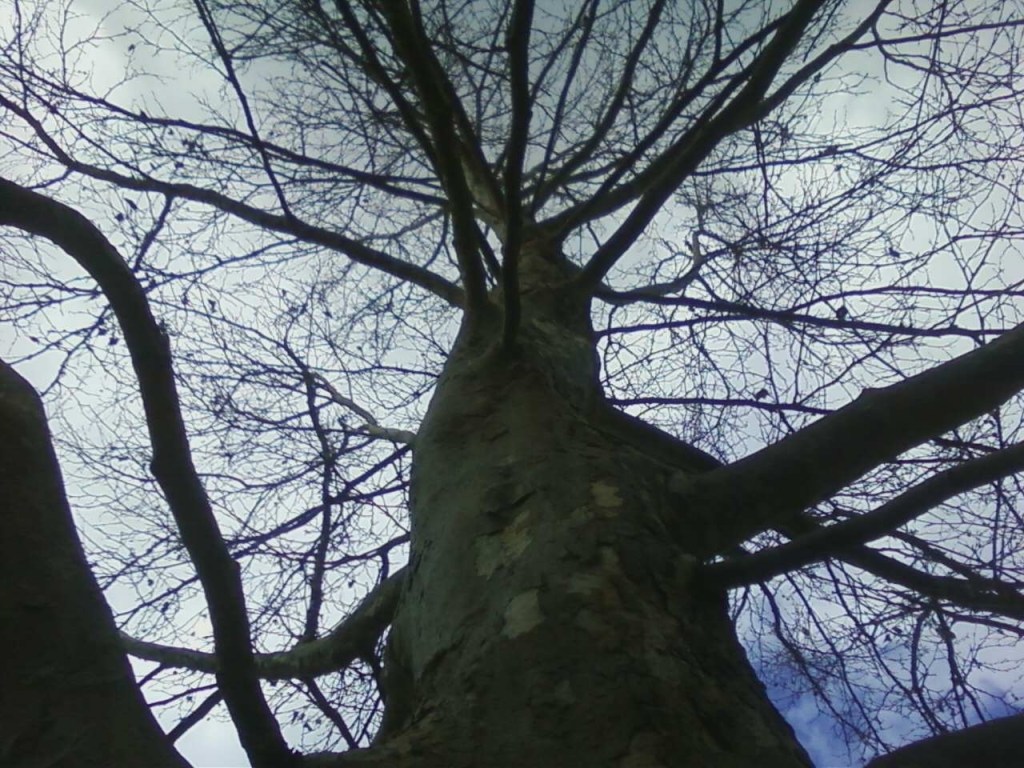
London plane is more common than it should be.

Not many arborists or horticulturists are fond of the unremarkable but very popular London plane tree, Platanus X acerifolia. It soon gets too large for many of the tight situations it gets planted in, more than thirty feet broad and more than forty feet tall. Although it is among the most common of street trees, it can produce aggressive buttressed roots that displace sidewalks and curbs. Fuzz (tomentum) from the leaves is irritating to the skin or if inhaled.

Older trees that were planted prior to the development of disease resistant varieties are very susceptible to anthracnose and mildew, and are likely to infect other susceptible plants. Infected trees often get their foliage late in spring (after earlier new foliage shrivels and falls), or defoliate by late summer. Otherwise, the slightly raspy eight inch wide leaves seem sickly as they turn grungy yellowish brown in autumn.

Landscapers use London plane trees too commonly merely because they are so reliable. They tolerate most soils, smog, severe exposure (such as reflected glare from pavement) and a bit too much watering. Modern varieties are not quite as susceptible to disease. ‘Yarwood’ has large rounded leaves that are resistant to mildew. ‘Bloodgood’ is less susceptible to anthracnose. ‘Columbia’ is less susceptible to both diseases.

Large limbs and trunks with mottled gray and tan bark are rather sculptural while bare through winter. London plane happens to be conducive to annual pollarding, which makes the limbs even more sculpturally gnarly, and produces more vigorous growth with larger leaves that are less susceptible to disease.  

Onion

Onions grow easily from onion sets.

Leek, garlic, shallot and other species of the genus have more distinct growing seasons. Technically, onion, Allium cepa, is a cool season vegetable. It grows through winter to be ready for harvest before summer dormancy. Alternatively, it can grow through spring for a later summer harvest. In cool situations, it can grow through summer for autumn harvest.

Onions do not actually mature within a single season anyway. Most grow from onion sets which are simply small onions that grew from seed earlier. They simply finish growing for another season once plugged into a garden. Those that grow from seed in autumn might go dormant through the middle of winter. Spring is actually their second growing season.

The most popular onions are yellow or brown, red or purple, or white. Each type exhibits a distinct flavor. All develop a few hollow bluish green leaves that stand about a foot tall. Their foliage shrivels as they mature enough for harvest. They are useless if they bloom. Green onions are merely juvenile onions which have not yet developed distended bulbs.

Wild Lilac

Some wild lilac can grow quite large, but lives only about thirty years.

There are many different forms of wild lilac, Ceanothus spp., ranging from low sprawling ground cover types that get only about two feet deep, to dense shrubs that get a few feet tall and broad, to relatively open and irregular shrubs that are a bit larger. The largest can become a small tree with multiple trunks as tall and broad as twelve feet. Wild lilac flowers can be any shade of blue ranging from deep dark blue to soft pale blue. Only a few have white or pinkish flowers. Some wild lilacs have leaves that are glossy and round like nickels. Others have small but thick and roughly textured leaves, like bacon bits.

However, almost all bloom in early spring, are evergreen, and want well drained soil. Only a few lose their leaves where winters are cold. Most prefer infrequent irrigation or none at all, although some of the ground cover types like to be watered occasionally through summer. Wild lilacs do not like to be pruned, and really do not want to be shorn, so should be planted where they have room to develop their natural forms. Sadly, wild lilacs are not permanent, and typically die within ten years or so.