‘Eureka’ Lemon

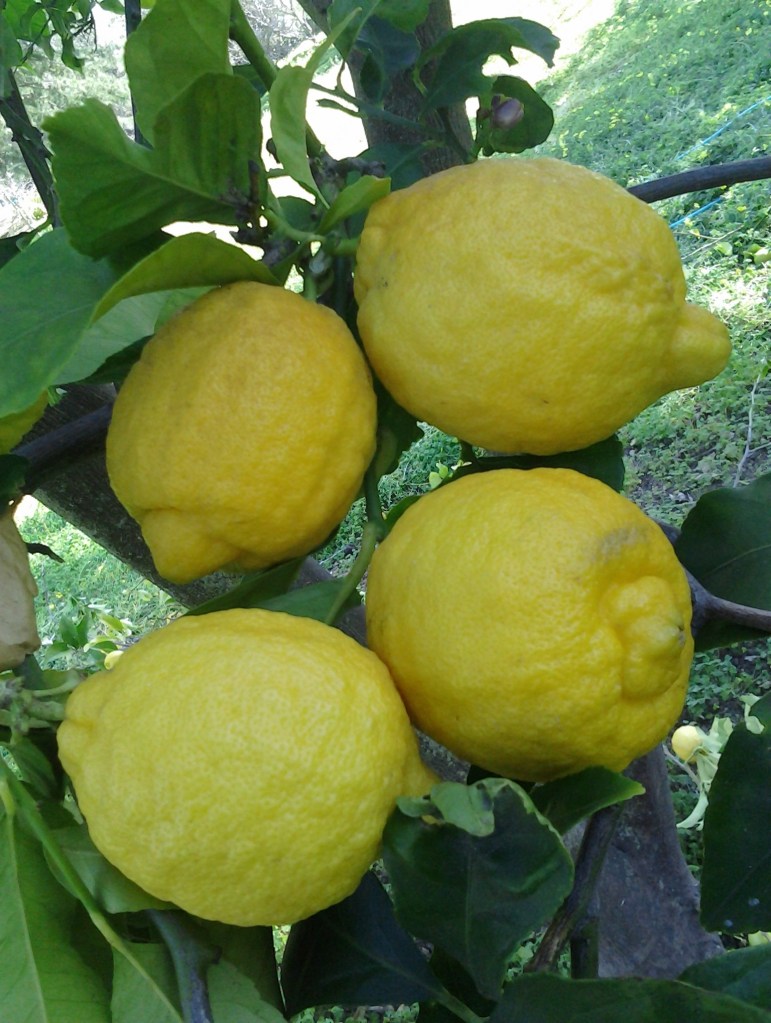
‘Eureka’ and ‘Lisbon’ lemons are indistinguishable.

‘Lisbon’ lemon was the original. It is still a common cultivar for orchard production of fruit for lemon products. Because almost all of its fruit ripens in winter, it can not provide fresh fruit continuously. ‘Eureka’ lemon, which is a mutant of ‘Lisbon’ lemon, may compensate. It is not as productive in season, but only because it also provides lemons out of season.

This complicates orchard harvest, but is justifiable by prolonging the supply of fresh fruit. It is more ideal for home gardens where only a few lemons are needed at a time anyway. Besides, seasonal abundance within home gardens can become too much of a surplus. ‘Eureka’ lemons are not as richly flavorful as ‘Meyer’ lemons, but are more acidically tart.

‘Eureka’ lemon trees, even on dwarfing understock, can eventually grow fifteen feet high. They are generally not quite as wide as they are tall. Their nastily sharp thorns are stout. Vigorous stems develop much longer and potentially dangerous thorns. Foliar fragrance is mild, but can be delightful during warm weather. Glossy evergreen foliage is aromatic when disturbed by lemon collection.

Iceland Poppy

Native California poppies are nothing like this.

Because winters here are so mild, Iceland poppy, Papaver nudicaule, gets planted out in the garden in autumn to bloom through winter and into early spring. Where winters are cold, bloom must wait until after winter, whether plants are put out in autumn or sown from seed as winter ends. Iceland poppy prefers good drainage because it is out in the garden during the coldest and rainiest time of year, but is otherwise not too demanding. Picking the flowers and removal of deteriorating flowers (deadheading) promote continual bloom. 

Circular flowers up to three inches wide in shades of orange, yellow, pink, white and nearly red hover up to a foot high on wiry and hairy stems. Prominent fuzzy stamens are bright yellow at the center of each flower. Some varieties have brighter colors and taller stems. The hairy and deeply lobed leaves form basal rosettes about five inches wide.

Coral Bark Japanese Maple

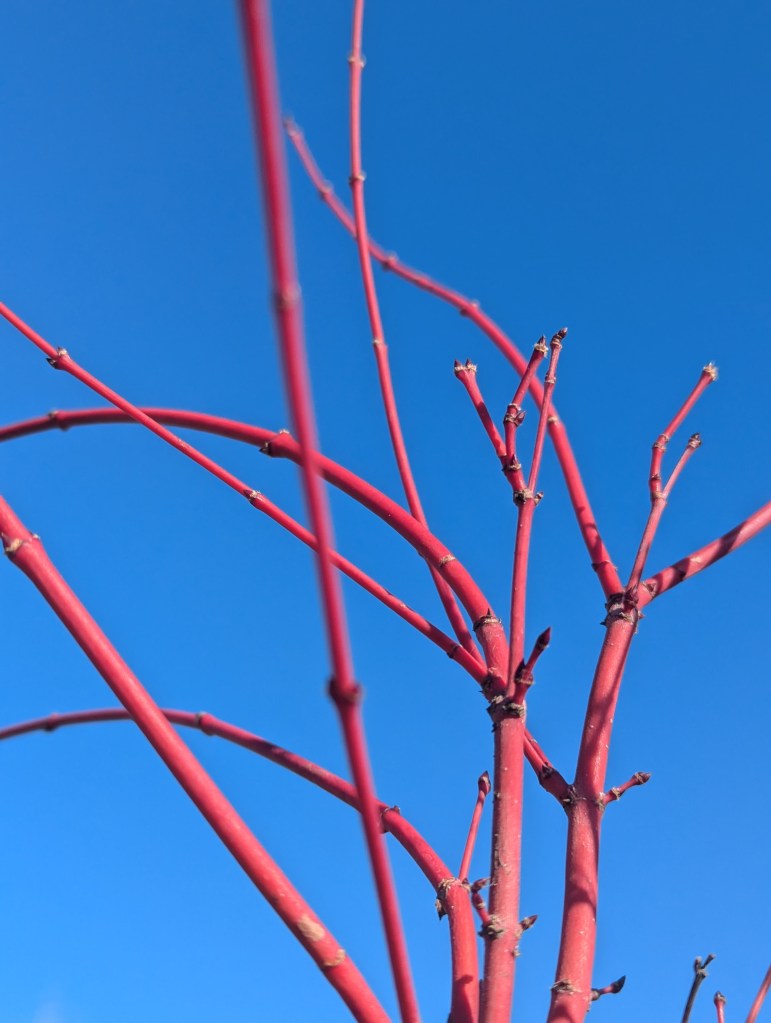
Defoliation reveals impressively red bare twigs.

Bloom is probably the favorite component of home gardens. Foliage is likely the second favorite component. Japanese maples are popular as much for their form as for any other characteristic. The intricate textures and autumn color of their foliage is likely secondary. Coral bark Japanese maple, Acer palmatum ‘Sango Kaku’, is even a bit more distinctive.

Relative to other cultivars of Japanese maples, its foliage is not remarkable. Actually, it is more vulnerable to foliar scorch with arid warmth. Its form is not overly remarkable either. For coral bark Japanese maple, the bright red bark of its young twigs is its primary allure. It is obscured by foliage for most of the year, to be revealed by defoliation through winter.

Coral bark Japanese maple is an understory tree, so can tolerate partial shade. With full sun exposure, it particularly dislikes arid wind. It can grow as tall as twenty feet, or might stay as short as ten feet. It naturally produces many long and limber stems with shiny red bark. Severe pruning to promote growth of such stems is likely to ruin its sculptural form.

Coral Bells

Coral bell foliage is as pretty as its delicate flowers for which it is named.

Even though their delicate trusses of tiny hanging flowers on one or two foot tall wiry stems make good cut flowers and attract hummingbirds in spring and early summer, coral bells, Heuchera micrantha, is more often grown for its colorful foliage. Contrary to their common name, the flowers (of this species) are more often pale or greenish white anyway. Their foliage can be all sorts of shades of green, gold, tan, brown, bronze, and purplish. The rounded and lobed leaves have somewhat raspy tomentum (hairs) and can be about two and a half inches wide. ‘Ruffles’ has more ruffled and deeply lobed leaves. ‘Palace Purple’ is a very popular cultivar with distinctive deep bronze or purplish foliage.

Mature plants can be divided in spring to make more plants every few years or so. Where protected from frost, division can be done in late autumn. Coral bells can also be propagated by cuttings. Rich soil and good exposure are preferred; but partial shade is best in warm spots.

Almond

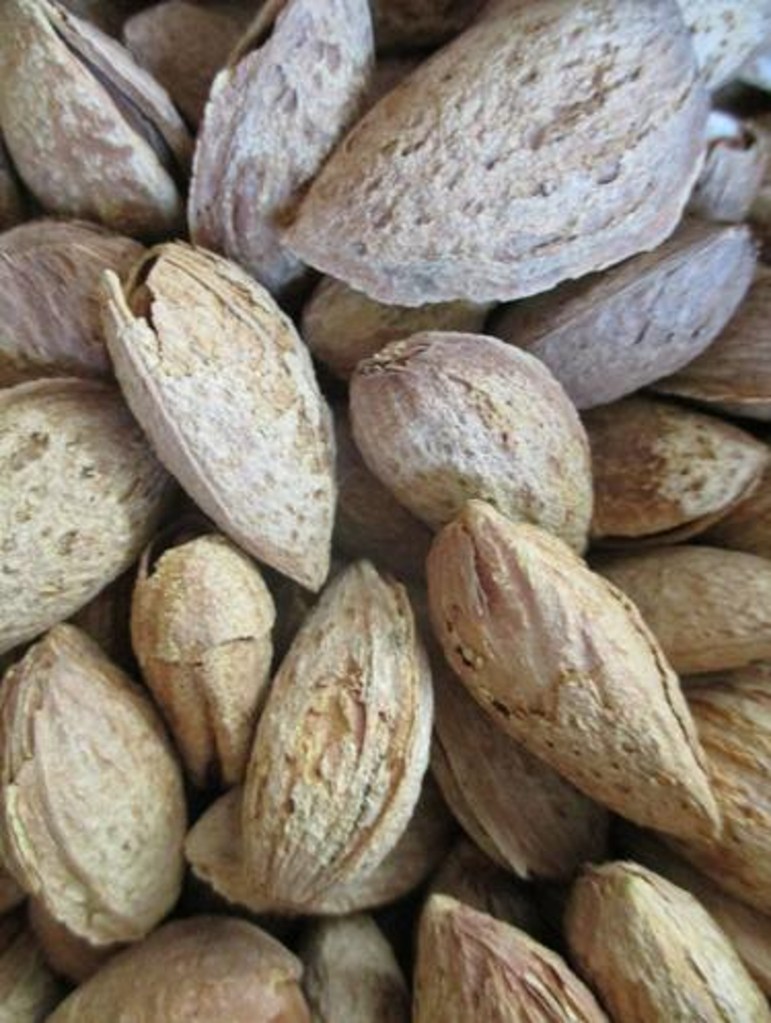
Almonds are stone fruit without fruit.

Is the pronunciation of the “al” of almond comparable to that of “salmon” or “palm”? That is about as controversial as the pronunciation of pecan. While pecan is related to walnut, almond, Prunus dulcis, is a stone fruit. That can be controversial also. Unlike other stone fruit, its mesocarp develops as leathery hulls instead of edible flesh. It is fruitless stones.

Like other stone fruit trees, almond trees need maintenance while dormant during winter. Bare root trees that are now available should be in the ground before their spring growth. Established trees need winter pruning before warming spring weather stimulates bloom. Almonds ripen for late summer though, after plums, apricots, peaches or other stone fruit.

Almonds are not as heavy as other stone fruits, and need no gentle handling. Therefore, winter pruning of almond trees may not need to be very aggressive. Such trees can grow as small shade trees with splendid white spring bloom. It is easier to shake unreachable nuts from tall trees than to pick them anyway. A few old fashioned cultivars need compatible pollinator cultivars.

Eastern Redcedar

Eastern redcedar is actually a juniper.

Like the majority of cedars, Eastern redcedar, Juniperus virginiana, is not really a ‘cedar’. According to its genus name, it is a juniper. That may be why it is less common here than within its native range. Even in its native range, most grow wild rather than in cultivation. Junipers gained an unfavorable reputation after becoming overly common decades ago.

Eastern redcedar has traditionally been more utilitarian than merely aesthetic. It can be a delightful Christmas tree, either cut or potted. While old cedar closets are native incense cedar, cedar chests are Eastern redcedar. Baton Rouge derived its name from a red stick demarcation pole. Indigenous people traditionally used Eastern redcedar for such poles.

Wild Eastern redcedar trees are variable and range in height from fifteen to fifty feet high. Cultivars develop compact conical or columnar form. Some are grayish or golden green. The small evergreen foliar scales, particularly juvenile foliage, can be somewhat prickly. The rusty red to grayish brown bark can display a handsomely fibrous or shaggy texture. The ‘silicicola‘ variety of Eastern redcedar is rare.

Dusty Miller

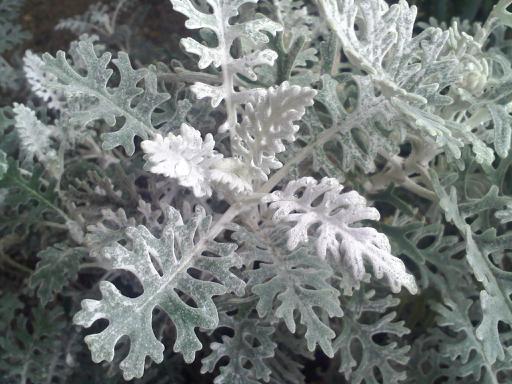
Such silvery foliage contrasts exquisitely with bronze foliage.

The relaxed trusses of small yellow composite (daisy-like) flowers of dusty miller, Senecio cineraria, can bloom at any time except when winter gets too cold. They are still blooming now. Yet, who cares? Dusty miller is grown more for its fuzzy white foliage than for bloom. It actually looks best and fluffier if occasionally shorn and pruned to remove blooming stems before they bloom. Individual leaves are intricately lobed. Mature plants get taller and wider than two feet. Dusty miller likes full sun exposure, good drainage and moderate water. Too much water causes rot and discoloration.

Nectarine

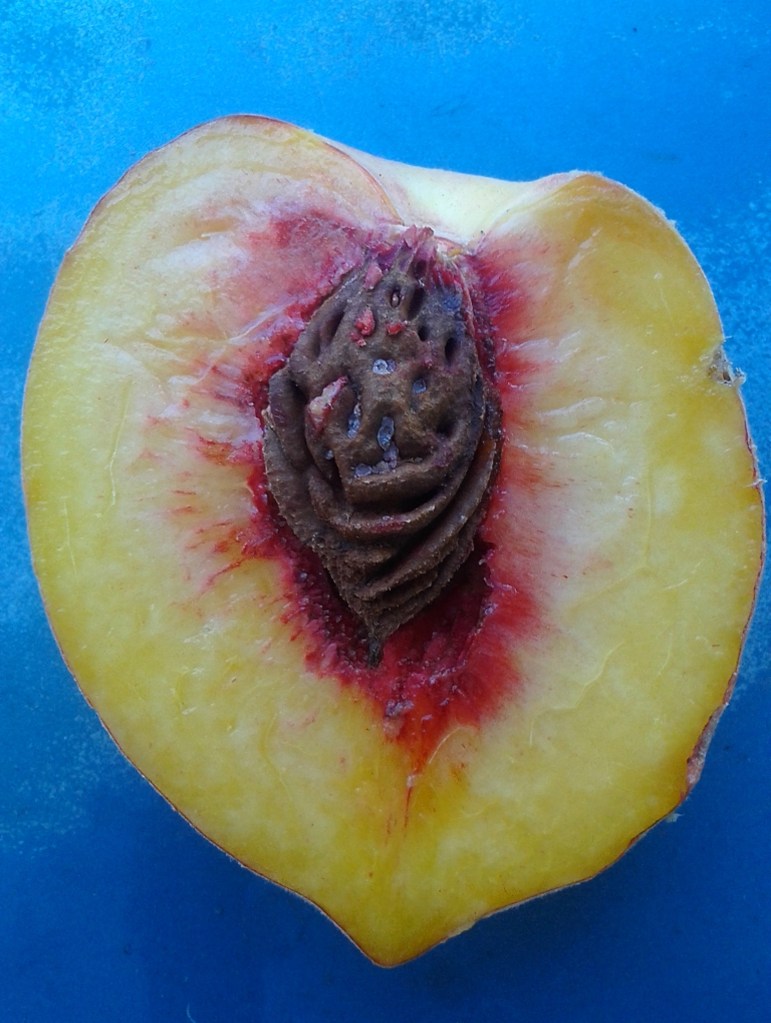
Nectarines are merely peaches without fuzz.

Stone fruit classification can get confusing. All stone fruit are of the same genus, Prunus. This includes almonds, which are stones or seeds of inedible fruit. Prunes are European fruits that are conducive to juicing and drying. Plums are similar Japanese fruits for fresh consumption, but not for drying. The two are more different than peaches and nectarines.

Nectarines, Prunus persicaria var. nucipersica, are simply peaches without fuzz. Cultural requirements are about the same for both. They need only very minor chill through winter to vernalize, and enjoy summery warmth. Trees are not very productive for their first year or two. Then, they may produce for only about twenty years. Thirty year old trees are old.

Both nectarine and peach trees require aggressive pruning while dormant during winter. Otherwise, they can not support the weight of their big and abundant fruit during summer. Semidwarf trees, which are the most popular, can potentially grow twenty feet high. They should stay half as high with adequate pruning. Most of their fruit should be within reach. Bare root trees initially disperse roots more readily than canned trees.

Gold Dust Plant

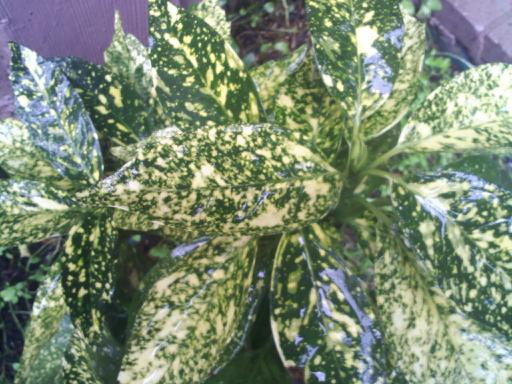
Gold dust plants actually prefers partial shade to full sun exposure.

Like so many hollies, the gold dust plant, Aucuba japonica ‘Variegata’, is grown more for its glossy foliage than for flowers or berries. The tiny dark red flowers that bloom in the beginning of spring are barely visible. Clusters of bright red half inch wide berries that ripen in autumn and winter are almost never seen without a male pollinator. Yet, the three inch wide and three to five inch long leaves are colorful enough with their splattering of light yellow spots. Gold dust plant grows rather slowly to about six to eight feet tall and wide, and does better in partial shade. Foliage can get roasted if too exposed to sunlight.

Hellebore

Hellebore is popular within cooler climates.

Where winters are too cool or damp for much else to bloom, hellebore are more popular. The most popular are Helleborus X hybridus, which are hybrids of a few similar species. Most are direct descendants of Helleborus orientalis. They are more resilient to frost than to arid warmth during summer. Actually, that is very likely why they are less popular here.

Locally, hellebore are useful for cool, damp or partly shady situations. However, they are not as substantial as ferns. Also, they can get a bit wimpy as the weather warms through summer. Although evergreen, they shed some of their older yellowing foliage. They grow most during late autumn, winter and perhaps early spring. They crave richly organic soil.

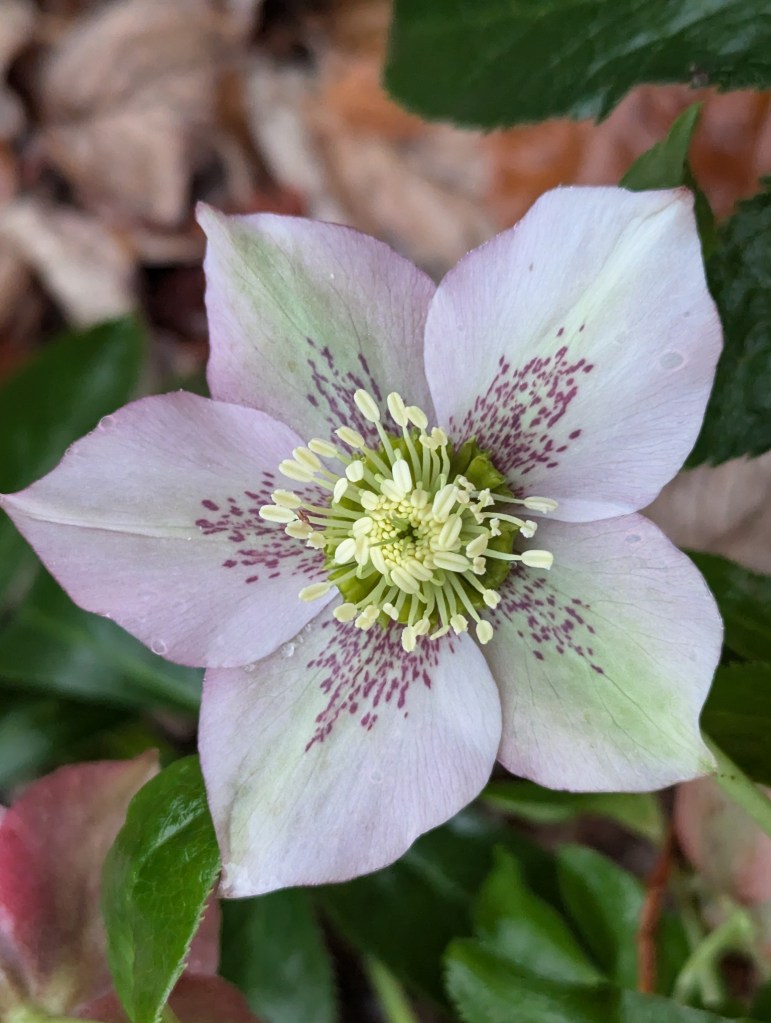
Floral color is typically subdued but interesting. Most common hellebore flowers are pale pink or almost grayish white with spots. Alternatively, they can be rusty red, maroon, pale green, yellow, gray or almost black. Some exhibit more or less spots, blotches, stripes or picotee edges. Double flowers are rufflier than single flowers are. All hellebore are toxic, and for some, can cause dermatitis.