Hellebore

Hellebore is popular within cooler climates.

Where winters are too cool or damp for much else to bloom, hellebore are more popular. The most popular are Helleborus X hybridus, which are hybrids of a few similar species. Most are direct descendants of Helleborus orientalis. They are more resilient to frost than to arid warmth during summer. Actually, that is very likely why they are less popular here.

Locally, hellebore are useful for cool, damp or partly shady situations. However, they are not as substantial as ferns. Also, they can get a bit wimpy as the weather warms through summer. Although evergreen, they shed some of their older yellowing foliage. They grow most during late autumn, winter and perhaps early spring. They crave richly organic soil.

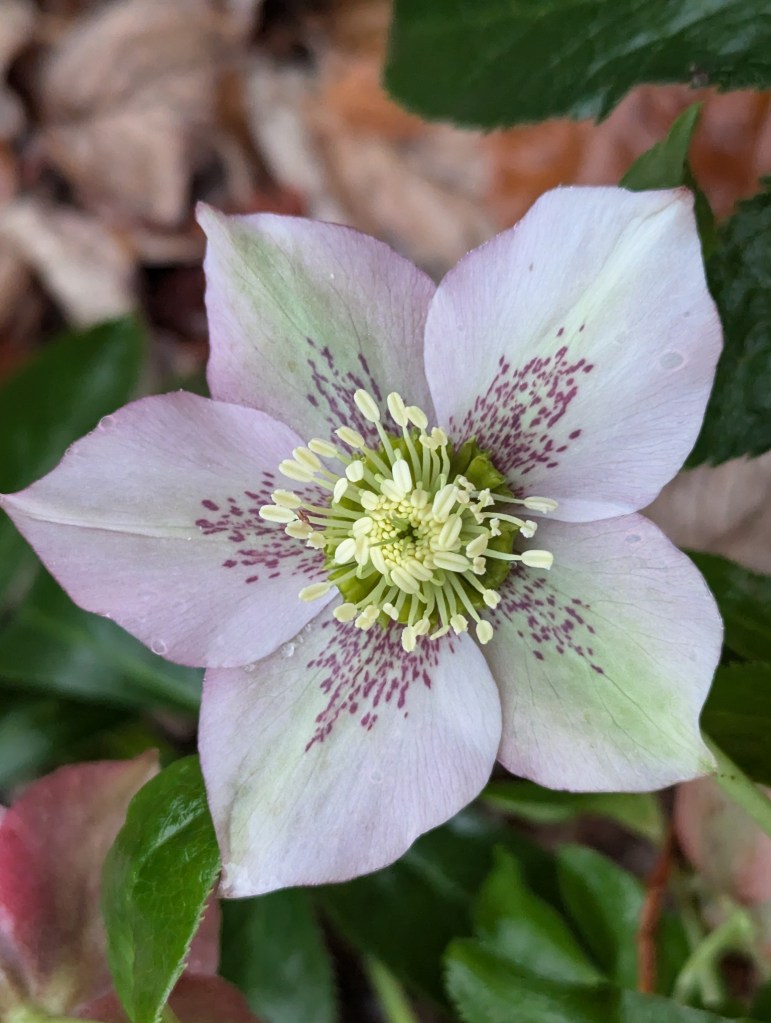
Floral color is typically subdued but interesting. Most common hellebore flowers are pale pink or almost grayish white with spots. Alternatively, they can be rusty red, maroon, pale green, yellow, gray or almost black. Some exhibit more or less spots, blotches, stripes or picotee edges. Double flowers are rufflier than single flowers are. All hellebore are toxic, and for some, can cause dermatitis.
Pink Melaleuca

Pink melaleuca can be impressively sculptural.

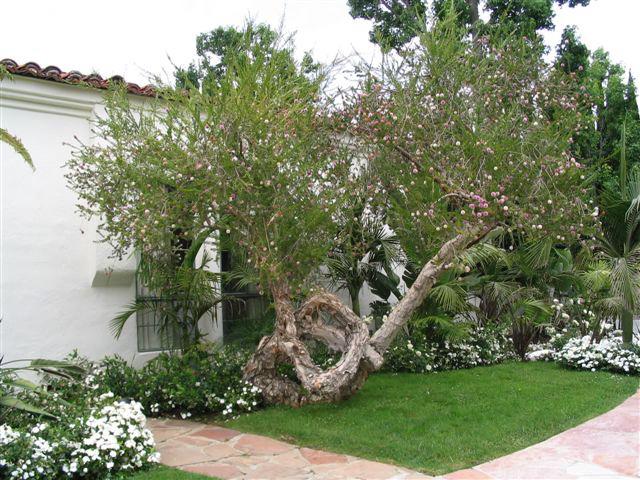
            Golden Gate Park in San Francisco has some of the most impressive mature specimens of pink melaleuca, Melaleuca nesophila, outside of their native homeland in Australia. Although most are naturally less than twenty feet tall and wide, their disproportionately bulky trunks are remarkably gnarled and sculptural, as if they have been growing there for centuries. Pink melaleuca actually grows and develops trunk and limb structure rather fast while young, without ever becoming too obtrusively large. Spongy pale tan bark covers the distinguished trunks and limbs like a thick parka.

            Sculptural small trees are not the only function of pink melaleuca. They also make nice informal hedges and screens, and can be shorn occasionally if necessary. The round inch long leaves are quite thick. Round inch wide trusses of small staminate flowers bloom slightly purplish pink and fade to pale white through most of the year, except where shorn. (Staminate flowers are showy because of distended stamens instead of petals.) Hummingbirds are grateful for the flowers while not much else blooms through winter. Hard seed capsules that remain in dense cylindrical formation on twigs after blooms are long gone are sometimes used as dried flowers. Like all melaleucas, pink melaleuca is easy to care for, and tolerant of harsh exposure, inferior soil, minimal watering and neglect.

English Holly

English holly can be handsomely variegated.

Hollies produced more bright red berries while they were more popular many years ago. Formal and perhaps lengthy hedges of exclusively female cultivars were common. A few or solitary male pollinators grew nearby, often as obscure small trees. Nowadays, males are oddly rare. Not many horticultural professionals are aware that hollies are dioecious.

English holly, Ilex aquifolium, is both the most and least favorite holly. Some who grow it appreciate its distinctively intricate foliar texture. Others detest the unpleasant prickliness of the same foliar texture. No other holly is as spiny, although most are somewhat prickly. All hollies exhibit dark green foliar color, remarkably glossy foliar sheen and rigid foliage.

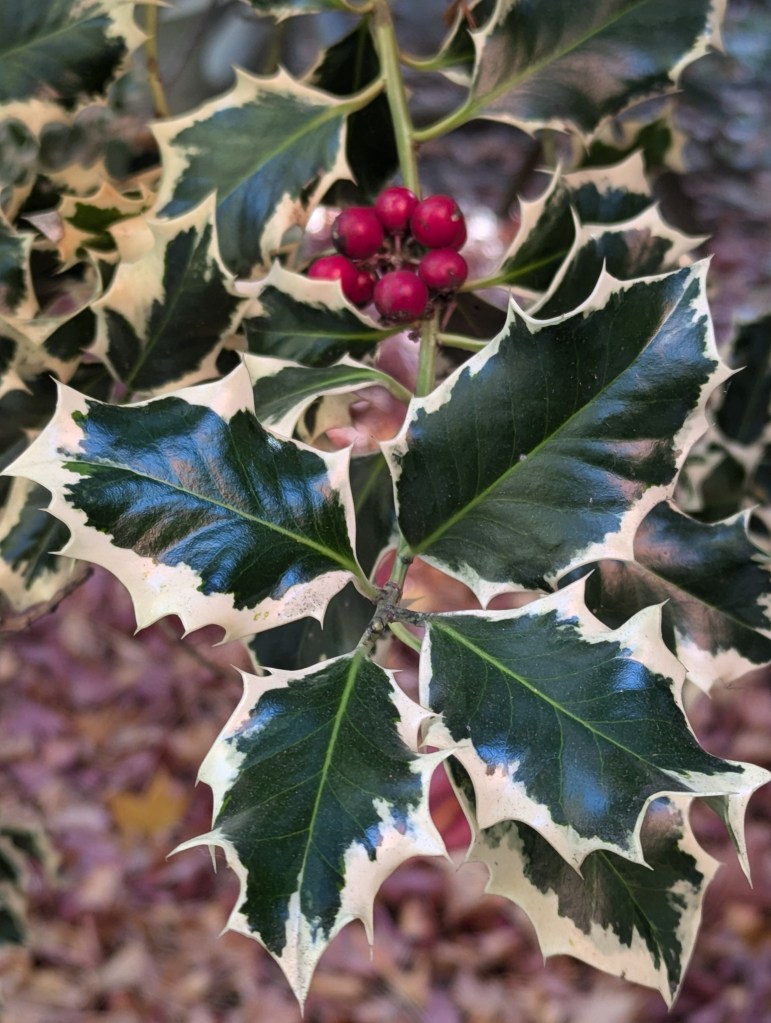
English holly can grow as a small tree with a dense canopy. With pruning, most stay less than ten feet tall. Cultivars with white or yellow variegation grow slower and stay smaller. Berries are common amongst naturalized colonies which naturally include both genders. Nurseries occasionally sell cultivars of both genders, potted together to mature together.

Cotoneaster

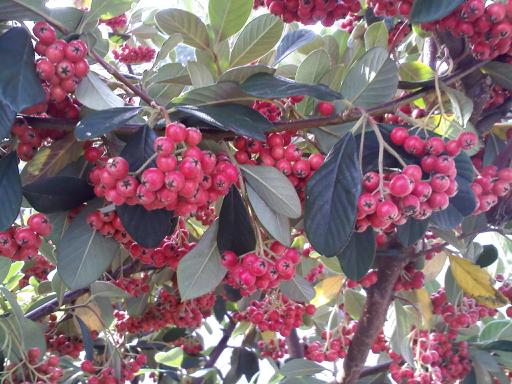
Cotoneaster berries can be as colorful as hawthorn berries, but with evergreen foliage.

            Unlike the more popular low growing cotoneasters that are grown as groundcover, the large Cotoneaster lacteus can be grown as large informal hedges or small sculptural trees with multiple trunks. Their limber arching branches can get more than eight feet high and broad. Cotoneaster lacteus are at their best where they have space to grow wild and unshorn, since indiscriminate pruning deprives them of their naturally graceful form; although selective pruning of lower growth exposes trunks and enhances the forms of those grown as small trees. Once established, they do not need much attention or watering anyway.

            Abundant two inch wide clusters of small white flowers in spring are not remarkably showy, but develop into comparably abundant clusters of bright red berries in autumn and winter, much to the delight of overwintering birds. The simple two inch long leaves of Cotoneaster lacteus have pale green and slightly tomentose (fuzzy) undersides.

Western Red Cedar

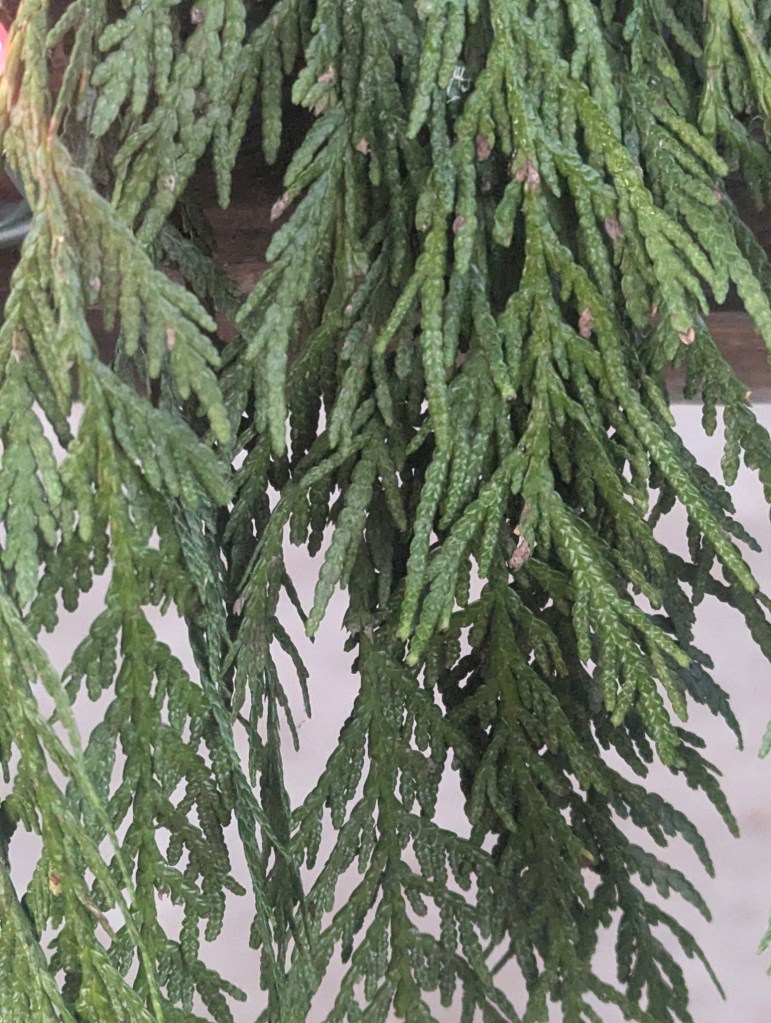
Western red cedar makes nice garland.

This coniferous evergreen is more appealing as seasonal foliar decor than it is practical. Western red cedar, Thuja plicata, is the most common component of Christmas garlands. Also, it is very popular for wreaths of mixed evergreens. It is the same genus as common arborvitaes. However, this particular species is notably rare among local home gardens.

Western red cedar is native to the Pacific Northwest. Its range extends south to the north coast of California, and east to western Montana. It therefore does not adapt efficiently to the arid warmth of local chaparral climates. Even with generous irrigation, its foliage can be vulnerable to desiccation. The healthiest specimens here are within coastal climates.

Like some other trees within its native range, western red cedar typically grows very big. It can easily reach a hundred and fifty feet tall, and can grow taller than two hundred feet. Although it does not grow as fast as redwood, it eventually needs about as much space. Western red cedar, here, is appropriate only for large landscapes within coastal climates. It is too obtrusive for compact home gardens.

Semperflorens Begonia

Some of us learned this as fibrous begonia.

From spring until autumn, semperflorens begonia, which is also known as fibrous, bedding or wax, begonia, is a warm season annual. They actually start to deteriorate as the weather gets cool this time of year. However, they do not necessarily need to be pulled out as their season ends. In sheltered locations or with protection from frost, they actually survive through winter as perennials. They are so easy to propagate by cuttings or division of overgrown plants that tired older plants can replace themselves with their own babies before they get too ugly.

The small flowers of semperflorens begonia can be white, red, or various shades of pink in between. Foliage is more often green or bronze, but can be reddish or variegated. The largest plants get only a foot tall. Denser dwarf types are half as tall. Semperflorens begonia likes rich soil and regular watering (when it is not raining). They prefer partial shade, but will take full sun if mixed with other plants that keep things cool and humid.

Strawflower

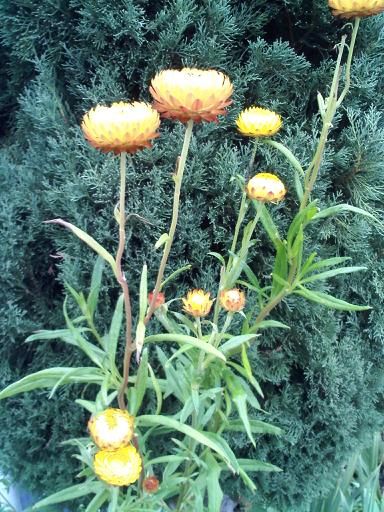
Strawflower retains its color and form, although not foliage, as it dries.

Just like cosmos, zinnias and other related flowers, strawflower, Helichrysum bracteatum, seems to be at its best as its bloom season ends. Bloom started in summer and should finish now that weather is getting cooler. The two and a half inch wide flowers last in the garden until they get ruined by rain. They are excellent cut flowers, and even better dried flowers.  

Strawflower can be white, pink, red, orange or yellow. Their seed should be sown directly where they are wanted in spring. Mature plants are about two and half feet tall and a foot wide, with three or four inch long and somewhat narrow leaves. Dwarf varieties are not as good for dried flowers, but are fuller and look better in the garden. 

Toyon

Native toyon berries appeal to birds.

Hooray for Hollywood! It was formerly Hollywoodland because of the California holly that still grows wild there. California holly is not actually holly, though. It formerly classified as hawthorn and two different photinia. It then became two other species of the genus that it is now. Ultimately, but perhaps just temporarily, it became toyon, Heteromeles arbutifolia.

Toyon is native to all but a few counties of California. It is therefore quite happy within the chaparral climates here. Once established, it needs no more water than it gets from rain. Occasional irrigation enhances foliar color and vegetative growth. Excessive or frequent irrigation can cause roots to rot. Fire blight can sometimes become a significant problem.

Toyon is unlikely to grow more than twelve feet tall with sunny and warm exposure. It can grow more than twice as tall if it competes for sunlight with larger vegetation. The simple evergreen leaves are narrow and somewhat serrate. Billowy trusses of tiny white flowers bloom for early summer. Trusses of bright red berries feed birds through autumn.

Western Cottonwood

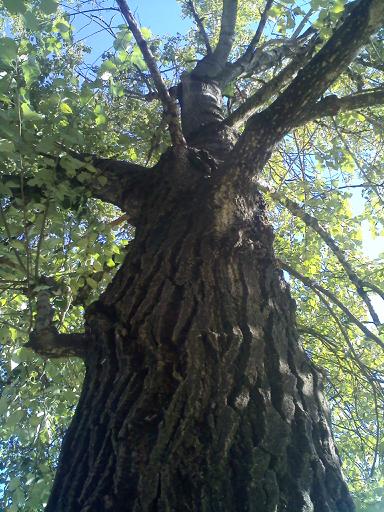
Western cottonwood is better in the wild than within refined gardens.

The brilliantly clear yellow autumn color of Western cottonwood, Populus fremontii, is best in the higher elevations and inland areas of its extensive range, which spreads from the coast of California to the Rocky Mountains and as far south as Mexico. Although it thrives in local riparian areas, particularly Coyote Creek and Guadalupe River, mild temperatures in both summer and winter do not allow it to get as colorful as it does in Nevada. It is almost never planted intentionally, but has a sneaky way of sometimes growing from seed in well watered gardens.

The bad news is that Western cottonwood grows big, fast and aggressively. The shallow roots displace pavement, compete with other desirable plants and damage septic and drainage systems. Large trees produce an abundance of annoyingly fuzzy seeds that adhere to anything. After causing so much damage, Western cottonwoods survive only a few decades, leaving big deteriorating carcasses that need to be removed before collapsing. Consequently, Western cottonwood is really suitable only for large open areas or in the wild.

Mature trees can be more than fifty feet tall and more than half as broad. Their somewhat thick leaves are almost triangular, with paired angular lobes on the sides and blunt tips. ‘Nevada’ is a male cultivar that does not produce fuzzy seeds.

Japanese Honeysuckle

Honeysuckle is more fragrant than colorful.

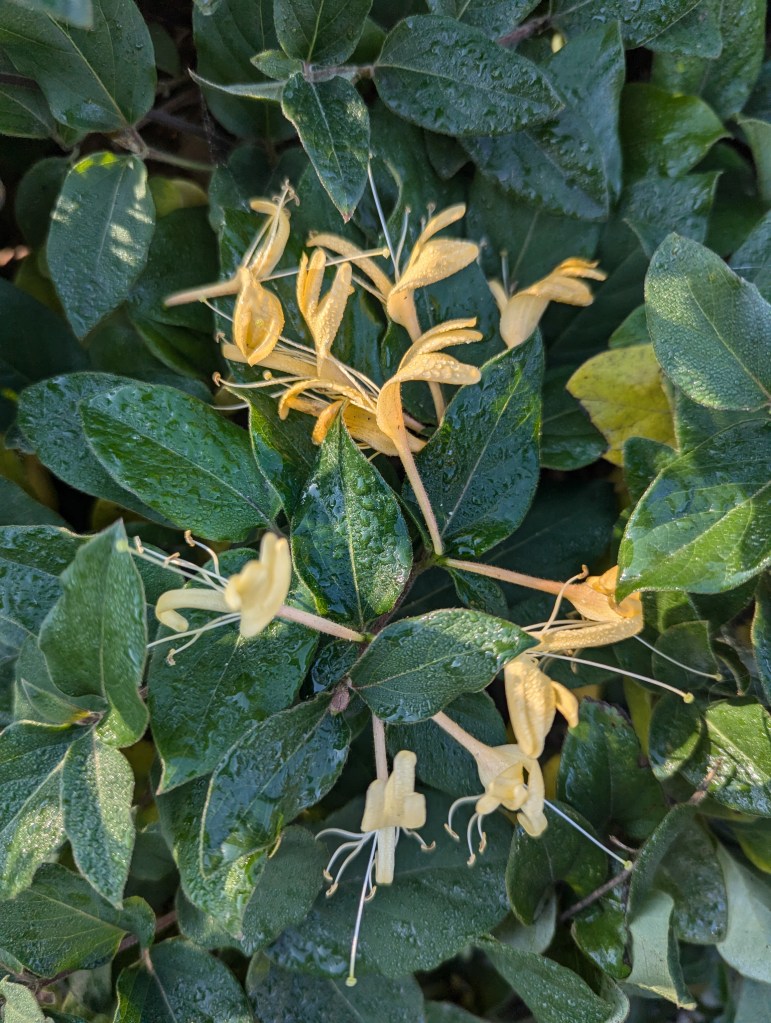
Bloom should be most abundant during late spring and summer. Within this mild climate though, it often continues sporadically through autumn. Japanese honeysuckle, Lonicera japonica, is presently blooming nicely in some areas. Its trusses of ribbony creamy white flowers fade to pale yellow. Although unimpressively colorful, they are alluringly fragrant.

Japanese honeysuckle here is almost exclusively Hall’s Japanese honeysuckle. It might be recognizable by a cultivar name of either ‘Hall’s Prolific’ or ‘Halliana’. Some botanists consider halliana to be a variety rather than a cultivar. (Variety names are neither quoted nor capitalized like cultivar names.) ‘Purpurea’, with dark but not purplish foliage, is rare.

Japanese honeysuckle, like star jasmine, is a vine that can be a ground cover. As a vine, It can climb more than thirty feet high. Unfortunately, it sometimes overwhelms shrubbery and small trees. Its twining stems can constrict the stems of other vegetation that it wraps around. As ground cover, it can get three feet deep. Leaves are two or three inches long.