Coleus

Coleus works both inside and out.

Without bloom, the richly vibrant foliar colors of coleus, Coleus scutellarioides, rival floral color of other warm season annuals. Striking foliar patterns are as exquisite as any floral display. Growth is efficient through the warmth of spring. Foliage might last until autumn. Late in its season, spikes of tiny blue flowers can be trimmed off to promote more foliage. 

With bright ambient sunlight, coleus is more perennial as a houseplant. However, it may get persistent with pesky bloom as it matures. Some who grow it prefer to let bloom, and then prune it back afterward. Recovery from such pruning can be slow. Vegetative stems, without bloom, root easily as cuttings even in water. New cuttings can replace old plants. 

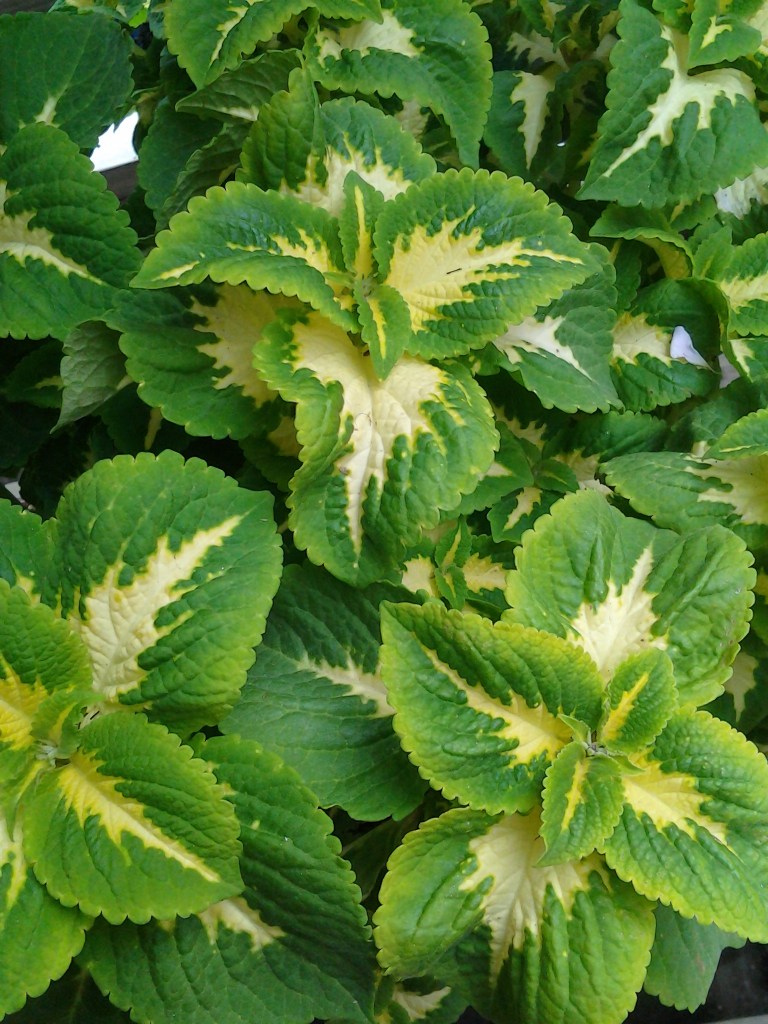
Coleus foliage is intricately variegated with countless combinations of green, chartreuse, yellow, orange, red, burgundy, pink, white and brown. Variegation can be symmetrical or random. Leaf margins may be deeply lobed or just serrate. Modern cultivars might be no better than old fashioned sorts. Mature plants can get as tall and broad as about two feet. Some stay lower.

Creeping Thyme

Creeping thyme is pleasantly aromatic, but not quite as flavorful as culinary thyme.

Trendy landscape designers like to set flagstone walkways slightly out of step to compel visitors to the garden to stroll through a bit slower. Between the stones, it is in style to grow creeping thyme, Thymus spp., as a very shallow groundcover that relinquishes its delightfully herbal aroma with any misstep. It stays too low to trip on, tolerates a bit of trampling, and needs only minor trimming where it creeps a bit too far onto stones or pavement. Creeping thyme can also be plugged into retaining walls of broken concrete or stone. The grayish green foliage is very finely textured. While the weather is warm, minute lavender flowers bloom in subdued phases that come and go slowly. Some varieties have more pinkish flowers, lighter green foliage or exhibit different aromas.

Rosemary

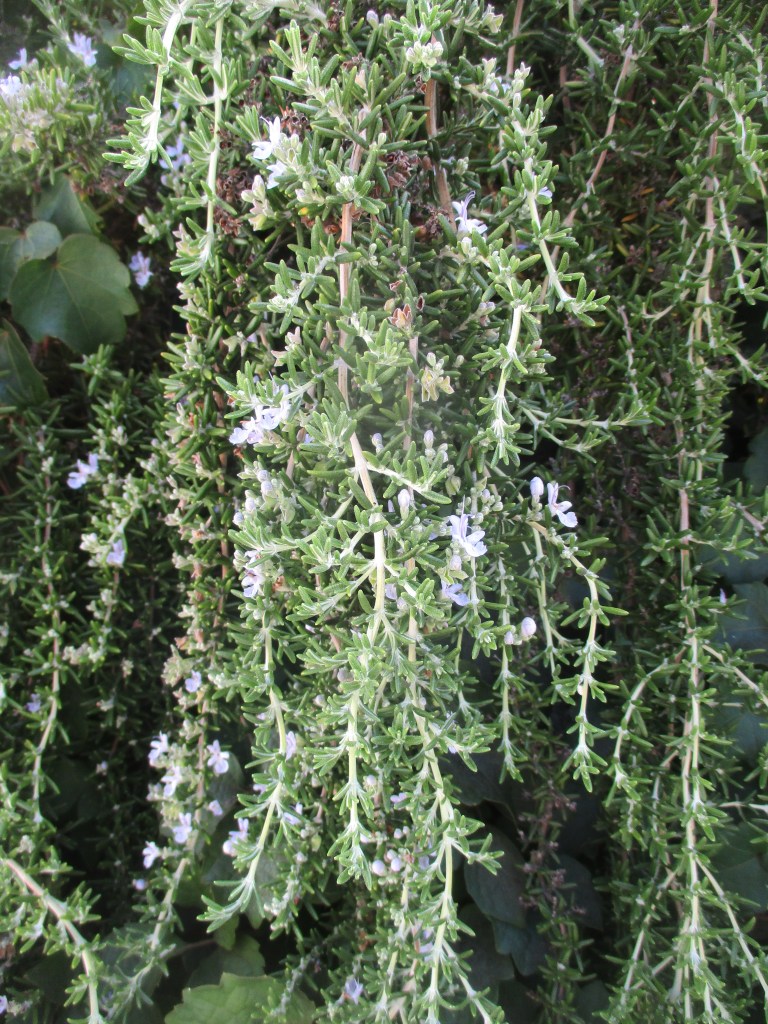
Trailing rosemary cascades over retaining walls.

It is as familiar for culinary application as it is for home gardens, even with its new name. Rosmarinus officinalis is now known as Salvia rosmarinus, but the common name is still just rosemary. Like many Mediterranean culinary herbs, it is a member of the Lamiaceae Family. Since it is native to Mediterranean regions, it is quite happy within local climates. 

While many culinary cultivars of rosemary are shrubby or upright, the most popular home garden cultivars are trailing types. Trailing rosemary disperses its woody stems laterally, but can eventually get deeper than two feet. Shrubbier cultivars get at least twice as high in less time. The finely textured dark green foliage is evergreen and pungently aromatic.

Bloom is generally most profuse from late spring through the middle of summer, but may never really stop. It can continue in sparser sporadic phases whenever the weather gets warm, and even throughout the year. The tiny flowers are various shades of blue. Purple, white and pale pink bloom is very rare. Bloom is appealing to bees and other pollinators, including hummingbirds.

Knotweed

Knotweed by any other name. . .

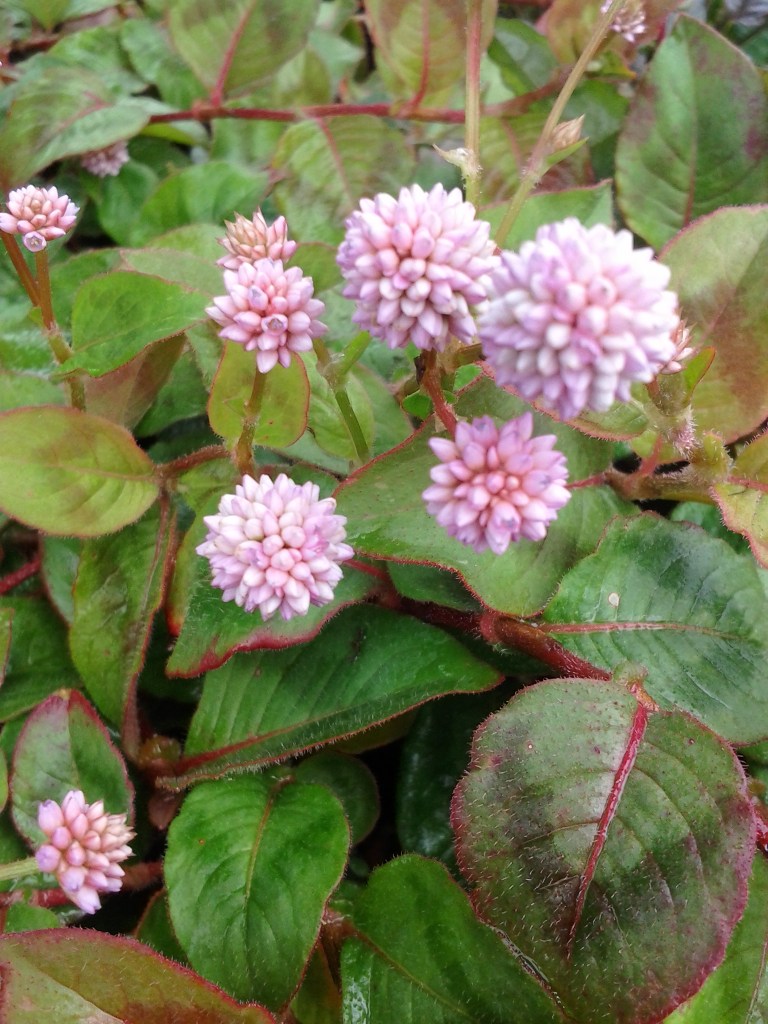
There are no fancy varieties, but many different fancy names for knotweed. It used to be known as Polygonum capitatum, but is now easier to research as Persicaria capitata. The many common names include pink knotweed, pink clover, pink fleece flower, pinkhead, pink bubbleweed and smartweed. Obviously, the tiny and spherical blooms are pink, about the color of bubble gum. Each small leaf has a distinctive brown chevron, which makes the collective foliage rather bronzy. The wiry stems can not stand much more than three inches high, but creep indefinitely, rooting as they go. Knotweed is an excellent but potentially invasive groundcover, and is also a nice component to mixed plantings in large urns or behind retaining walls, where it can cascade several inches over the edges. A bit of partial shade is no problem. Bloom continues through the end of summer, and resumes at the end of winter.

English Ivy

Rampant English ivy can overwhelm trees.

Compared to Algerian ivy, English ivy, Hedera helix, may seem to be more complaisant. As ground cover, it mostly stays a bit lower, with smaller leaves, and a more refined foliar texture. It is generally easier to maintain and to mow if it does not get too deep. However, where it naturalizes, English ivy is more aggressive and more invasive than Algerian ivy. 

If contained, English ivy is a splendidly dense and evergreen ground cover that excludes most weeds. Containment is very important! English ivy must not climb into shrubbery or trees. It otherwise overwhelms its support and disperses seed. Although reasonably safe on bare concrete walls, it ruins wooden, painted and stucco surfaces. Growth is very fast! 

‘Hahn’s’ is likely the most popular cultivar of English ivy. It branches well, to fill out fast as ground cover. Cultivars that are variegated with white or yellow grow significantly slower, but provide elegant foliage for big pots or planters of mixed annuals or perennials. Foliar lobes are variable. For example, lobes of ‘Needlepoint’ are distinctly narrow and pointed.

Cockscomb

Plumose cockscomb blooms with pinata colors.

The flowers of the two different specie known as cockscomb do not seem to be as closely related as they are. Celosia cristata exhibits two or three inch wide, weirdly stunted and crested blooms that resemble the combs of roosters, although the most popular varieties are so densely furrowed that they look more like fuzzy little brains. Celosia plumosa, as the name implies, has plumose flowers that look more like three or four inch long pampas grass flowers than like anything associated with chickens. What they have in common is their very bright red, orange, yellow, pink or white blooms. Foliage can be bright green to rich bronze.

As short lived annuals, cockscombs blooms only for about two months from the middle of summer to autumn. As cut flowers, they can last a week or two. However, because those popularly grown as summer annuals are mostly less than a foot tall, the flower stems are rather short.

Petunia

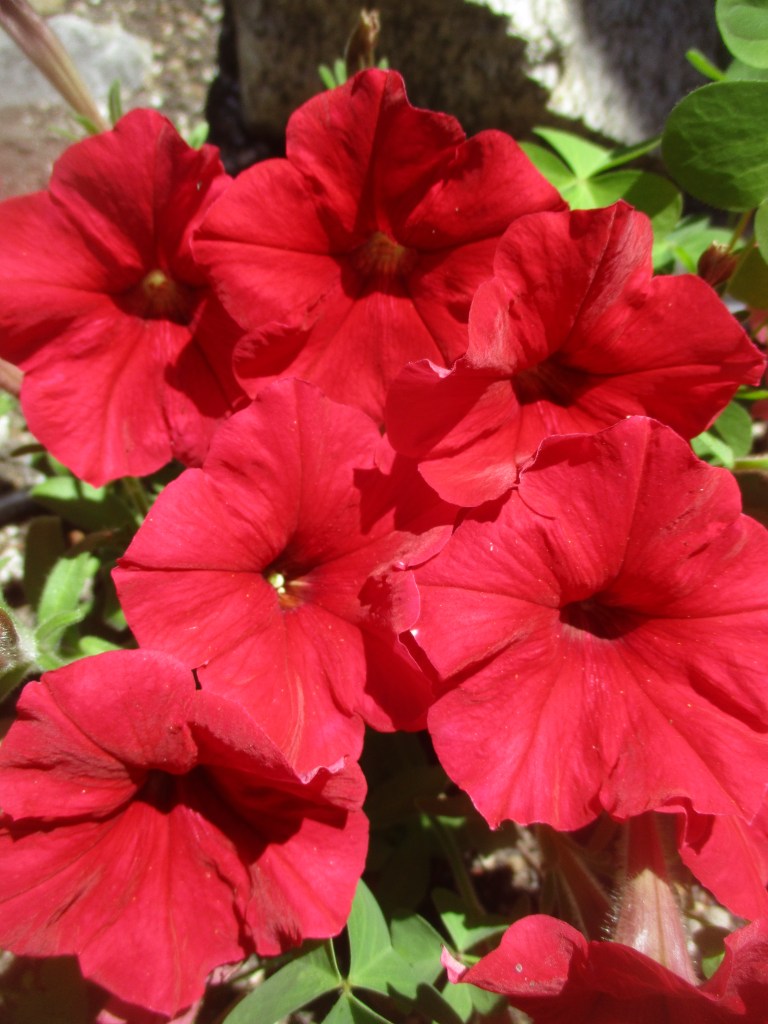
Petunias are quintessential warm season annuals.

There are too many varieties of petunia to be familiar with nowadays. The species name is Petunia X hybrida because almost all are hybrids of two primary species, as well as a few others to complicate the situation. The color range of the bloom of these hybrids now lacks only a few colors. (GMO orange petunias are only beginning to become available.) 

Besides an impressively extensive color range, bloom can be spotted, speckled, striped, blotched, haloed or variegated by too many means to list. Flowers can be rather small or as wide as four inches. Some are surprisingly fragrant. Some have frilled double flowers. Stems of cascading types may sprawl wider than three feet while only a few inches high. 

Petunias are warm season annuals that perform from spring until frost. They can survive as perennials for a few years if cut low for winter. Cool season annuals can obscure and shelter them until they resume grown in spring. They prefer rich soil, systematic watering and sunny exposure. Although mostly sterile, some appreciate occasional deadheading. Trimming during summer may promote fluffier growth for lanky stems.

Coleus

No flowers needed with this foliage!

Out in the garden, coleus, Plectranthus scutellarioides, prefers partial shade where the foliage is less likely to get roasted during arid and warm summer weather. It is grown as a warm season annual instead of as a perennial, because it gets so tired through winter, and can be killed by even a very mild frost. Its sensitivity to exposure in the garden is probably why it is more familiar as a houseplant.

The flashy and sometimes deeply lobed foliage is variegated with any combination of green, chartreuse, yellow, orange, red, burgundy, pink, white, brown and almost black. Flower spikes should be snipped as they develop to keep foliage dense. The tiny purple flowers are not much to brag about anyway. Large plants can get to two feet tall and broad. Cuttings root easily in rich and regularly moist potting soil or just plain water. Seeds need sunlight to germinate, so should only be pressed onto the surface of damp potting soil without getting covered, and misted daily.

Star Jasmine

Star jasmine blooms with fragrant profusion.

This jasmine is quite a star. However, this star is technically not a jasmine. Star jasmine, Trachelospermum jasminoides, is instead related to mandevilla and oleander. For many years, it has been one of the most popular vines for home gardens as well as large scale landscapes. It works well either as a ground cover, or as a relatively docile climbing vine. 

As ground cover, star jasmine gets about two feet deep. It will be lower and more refined with shearing, but will likely bloom less. It tries to climb shrubbery and trees, so will need exclusionary pruning. However, on a chain link fence, star jasmine works splendidly as a shorn faux hedge. It grows fast to more than ten feet high, but can get significantly higher. 

The richly fragrant bloom is most profuse about now, and can continue sporadically until autumn. The inch wide and bright white flowers are shaped like stars, and hang in small clusters. After bloom, the distinctly glossy and dark green evergreen foliage is handsome alone. Individual leaves are a bit longer than two inches and a bit broader than one inch. 

‘Angelina’ Stonecrop

‘Angelina’ is a bright chartreuse stonecrop.

Until the patent expires, unauthorized vegetative propagation (cloning) of ‘Angelina’ stonecrop, Sedum rupestre ‘Angelina’, is still illegal. However, it regularly flaunts its own unlawful proliferation wherever dislodged bits of stem can find anything to take root into. It can be just as happy to root into cracked concrete as in bare soil. Yet, it is a surprisingly complaisant small scale ground cover that cascades only several inches over stones, low retaining walls or the edges of planters.

Without getting more than four inches deep, stems root as they creep indefinitely but slowly along the ground. The bright yellowish evergreen foliage and bright yellow flowers that bloom about now contrast nicely with darker green or bronze foliage. Exposed foliage can get blushed with orange in winter. Shabby plants regenerate vigorously after getting pruned back. Pruning scraps sprinkled over bare soil and lightly mulched with finely textured compost will happily but illegally grow into more of the same. ‘Angelina’ stonecrop likes somewhat regular watering, but can survive with less.