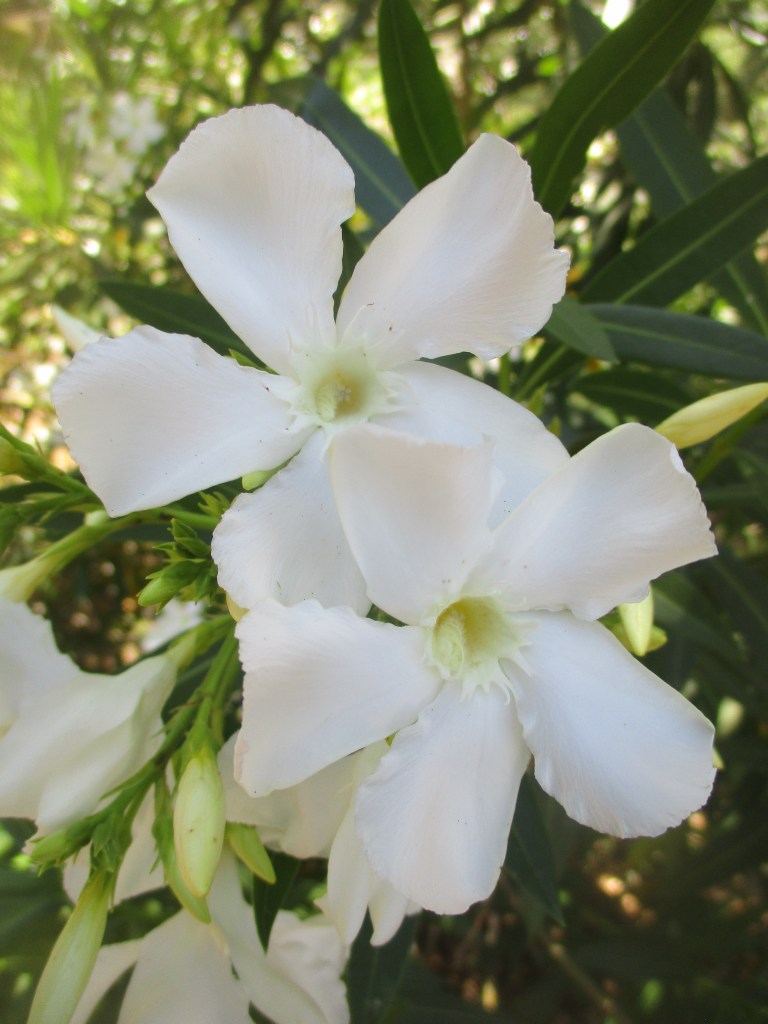
Prior to the appearance of oleander scorch disease in the early 1990s, oleander, Nerium oleander, was almost too popular, and for good reason. It is remarkably resilient to harsh conditions. It had been one of the more common plants within freeway landscapes since freeways were invented. Now, new plants are rarely available. Only older plants remain.
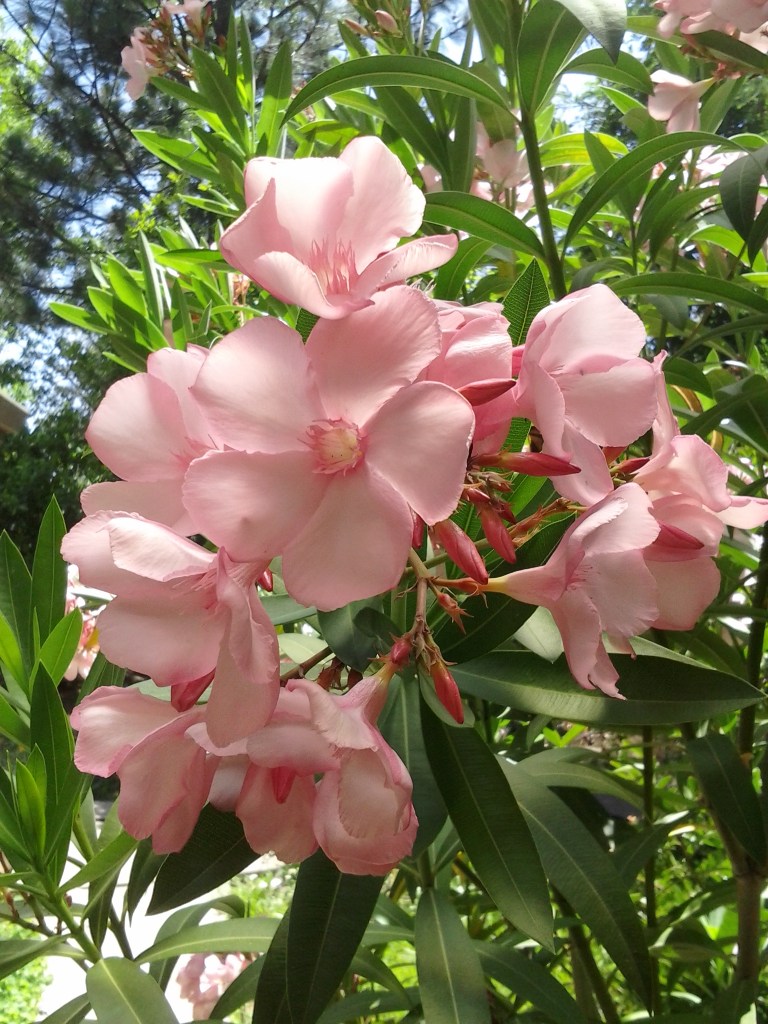
White, pink or red bloom is most abundant through warm summer weather, with sporadic bloom continuing through most of the year. Some dwarf cultivars bloom with peachy pink double flowers. Plants with enough room to grow wild without much pruning bloom best. Frequent shearing deprives the healthiest oleander of its blooming stems prior to bloom.
The biggest oleander get as tall as fifteen feet, so can be pruned up as small trees, either on single trunks or multiple trunks. However, because their limber trunks can not support much weight, occasional pruning is necessary while trunks develop. Such pruning limits bloom, so should happen mostly at the end of winter. Straight single trunks need staking. Oleander wants warm and sunny exposure, but is quite undemanding.



 Tony Tomeo