California Buckeye

California buckeye resembles related horse chestnut.

Chaparral climates are not easy without irrigation. The long summers are warm and arid. California buckeye, Aesculus californica, knows what to do if it can not stay hydrated out in the wild. It simply defoliates. Yes, it goes bare right in the middle of summer. If it does it early enough, it refoliates after rain resumes in autumn, only to defoliate again for winter.

This ‘twice deciduous’ characteristic is likely why California buckeye is not more popular for unirrigated landscapes of other natives. Shade is an asset through warm summers. In coastal, riparian or irrigated landscapes, the original spring foliage lasts through summer to defoliate in autumn, like that of most other deciduous plants. It may get shabby though. 

Nonetheless, California buckeye is a delightful small tree, typically with a broad and low canopy suspended by a sculptural branch structure. Not many get more than twenty feet tall, although some get twice as tall. Bark is strikingly pallid gray. The elegant leaves are palmately compound. Six inch long trusses of tiny white flowers are sweetly fragrant in spring.

Golden Pfitzer Juniper

Fresh new shoots are most colorful.

Of the several junipers that were too common decades ago, the golden pfitzer juniper, Juniperus X pfitzeriana ‘Area’, was the one outfitted with cheery, bright yellow new foliage each spring. Similar but more compact varieties that are more popular now were rare back then, or simply not yet invented. Contrary to the stigma, golden pfitzer juniper is a very tough shrub, which is why so many from decades ago remain in older gardens, and new plants can sometimes be found in nurseries. Once established, they need very little water, or none at all. A bit of partial shade is tolerable, but inhibits color. Angular branches radiate outward, with the finely textured foliage drooping only slightly at the tips. Mature plants get wider than six feet, and taller than four feet. Crowded plants can stand taller than six feet. Golden pfitzer juniper can technically be shorn as hedges, but are so much more appealing if selectively pruned to maintain their natural form. They are at their best where they have space to spread out naturally without pruning.

Fraser’s Photinia

Bronzed new foliage fades to green.

Almost all photinia in local landscapes is Fraser’s photinia, Photinia X fraseri, which is a thornless and fruitless hybrid of two species that are now rare. Some of the old fashioned photinia are thorny. Some produce copious berries that can get messy, or feed birds who can get messy. More modern cultivars of Fraser’s photinia are becoming more available.

Fraser’s photinia is popular as a shorn evergreen hedge. New foliage that develops after shearing is richly reddish bronze, and fades to dark green. Bronze color is best in spring, after late winter shearing. Summer shearing stimulates a repeat performance, although it may not last as long before the foliage fades to green. Shearing enhances foliar density.

Unshorn photinia can develop into small trees as tall as fifteen feet, with new growth that is a bit less richly colored than that of shorn photinia. It also blooms, often profusely, with big and rounded trusses of tiny creamy white flowers. Bloom is not impressively colorful. Floral fragrance is objectionable to some. All photinia types are susceptible to fire blight.

Shiny Xylosma

Shiny xylosma has pleasantly glossy foliage.

Where it had been left to develop naturally in old freeway landscapes, shiny xylosma, Xylosma congestum, grew as small trees. The largest are significantly taller than twenty feet. They can be pruned up to expose their nicely flaking bark on sculptural trunks and stems. The evergreen foliage is shiny and rather yellowish green, somewhat like that of camphor tree. The slightly serrate leaves are about two inches long or a bit longer. The tiny and potentially fragrant flowers are rarely seen, and not worth looking for. In refined landscapes, shiny xylosma is popular as a shorn hedge. Xylosma congestum ‘Compacta’ has denser growth, and can be kept only a few feet high if necessary. Vigorous shoots can have nasty thorns hidden in their deceptively gentle foliage. Once established, shiny xylosma does not need much water. It prefers full sun exposure, but will tolerate a bit of shade.

Jupiter’s beard

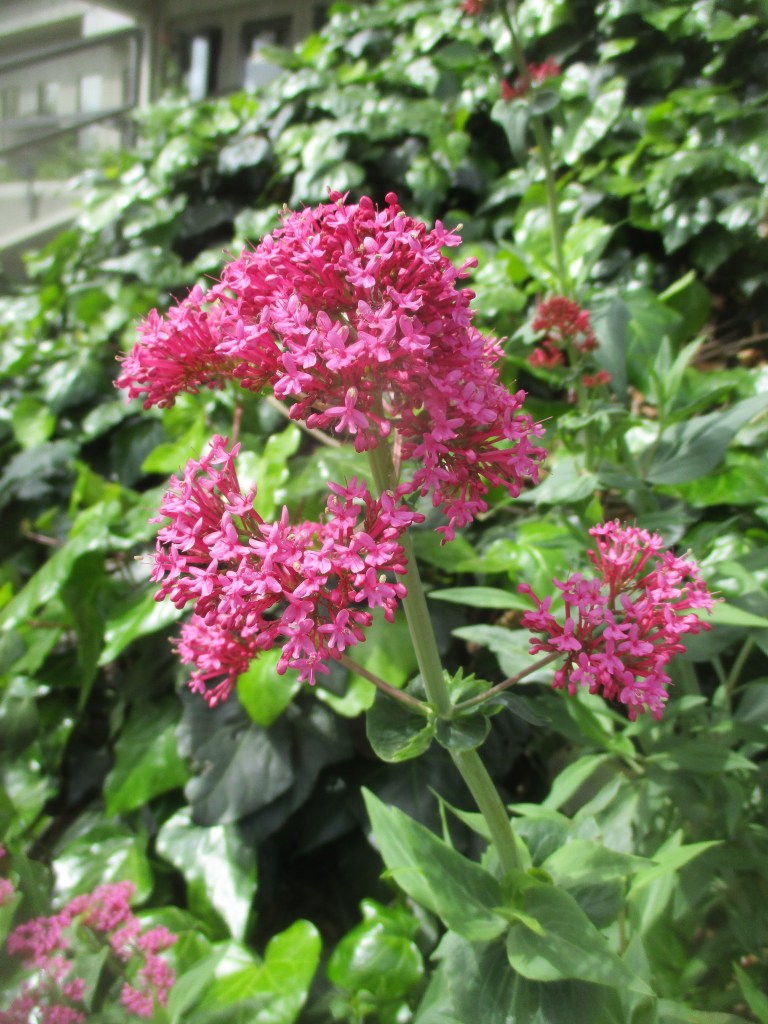
Jupiter’s beard tolerates only minor shade.

It is rare in nurseries, but common in and near old gardens. Jupiter’s beard, Centranthus ruber, was popular at least a century ago, and is now naturalized. It migrates so liberally, and transplants so easily, that there should be no need to purchase it. Those who grow it in established colonies may be happy to share. Specific cultivars can be elusive though.

Bloom is typically pinkish red, but can be brick red, purplish red, purplish pink, pale pink, or white. Individual flowers are tiny, but abundant, in rather dense and somewhat conical trusses. Bloom begins in spring and becomes more profuse until warm summer weather. A cool situation can inhibit primary bloom, but promote sporadic bloom through summer.

Jupiter’s beard prefers sunny exposure. Although a bit of shade can preserve foliar color and extend sporadic bloom through summer warmth, it compromises profusion of bloom. The slightly rubbery evergreen foliage of bloomed stems deteriorates slowly. Removal of older stems after bloom eliminates shabby growth, and also promotes fresh new growth.

Pittosporum tobira

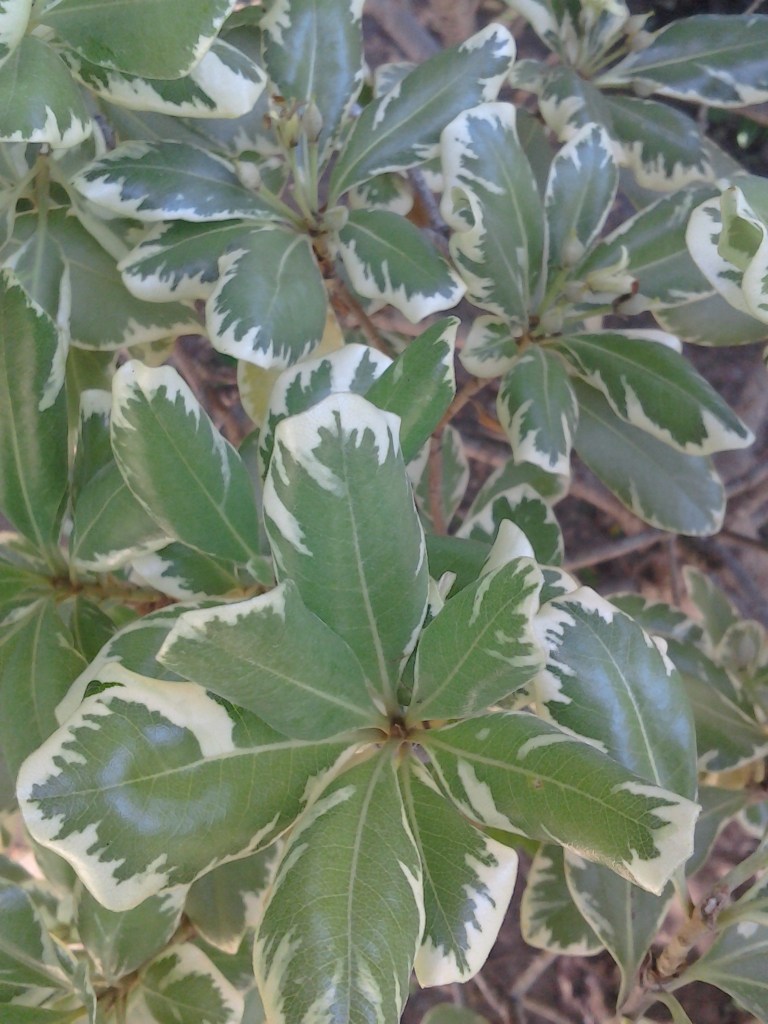
There are too many other plants known as ‘mock orange’ for Pittosporum tobira to still go by that name, which is why it is more commonly known by its Latin name, or simply as ‘tobira’. The pleasantly fragrant flowers do not smell too much like those of orange anyway. The glossy and dark green leaves are like those of some hollies, without the distinctive prickly points. ‘Variegata’ has lighter green foliage variegated with white, but does not bloom as much. Dwarf cultivars, both variegated and unvariegatd, bloom even less. ‘Variegata’ has a tendency to occasionally produce stems of green (unvariegated) foliage that grow more vigorously and can overwhelm the original variegated growth if not pruned out. Common green Pittosporum tobira can grow as a small tree in the partial shade of larger trees, but is more often maintained as dense shrubbery less than ten feet tall. It makes a nice dense hedge in full sun, but unfortunately does not bloom if shorn regularly. All cultivars are resilient to drought once established.

Algerian Ivy

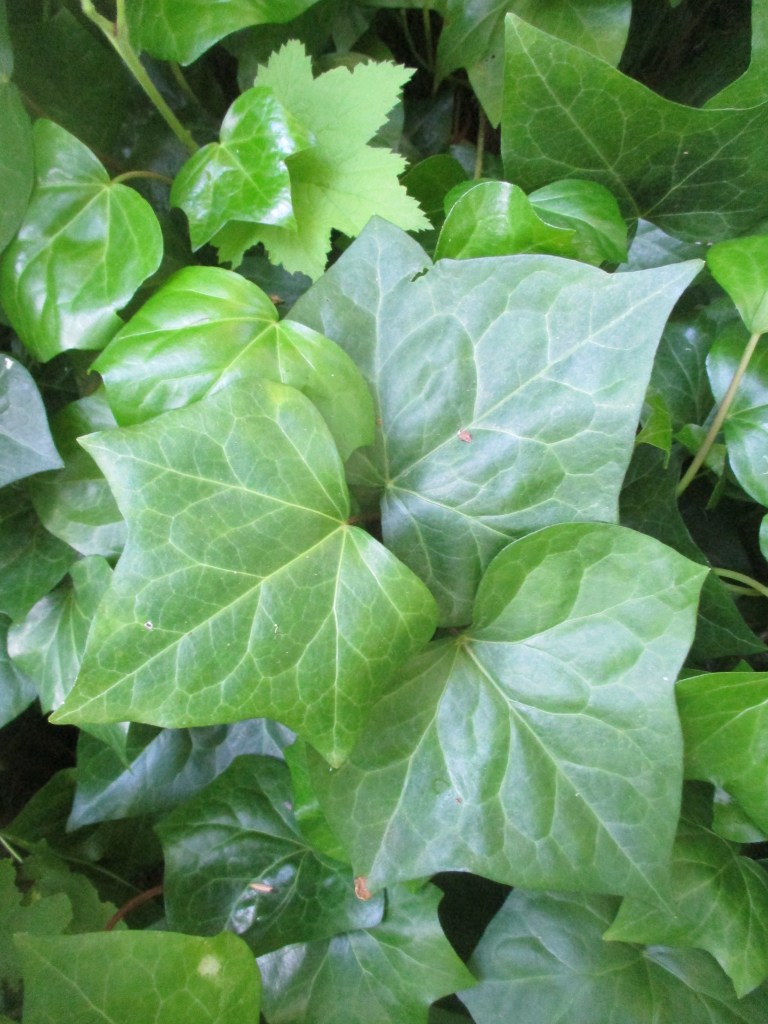
Algerian ivy is big and bold.

Like so many fad plants that were formerly too popular, Algerian ivy, Hedera canariensis, now has a bad reputation. Ironically though, it earned its reputation for doing what it does best. It covers ground rapidly and efficiently. The problem is that it never seems to stop. It creeps anywhere it can, and climbs trees, fences and anything else that it can grab onto.

Aerial roots of climbing vines ruin paint and stucco, and accelerate rot of wooden fences and walls. Vines that get between planks or into cracks between bricks cause significant damage as they expand. Shrubby adult growth that blooms and produces seed develops where climbing vines reach the top of their support, or spontaneously in sunny locations. 

Nonetheless, with diligent edging for strict confinement and to prevent climbing, Algerian ivy works well as a resilient evergreen ground cover for large areas. Once established, it excludes weeds, and tolerates quite a bit of shade. Shrubby adult growth is uncommon if vines can not climb. Climbing vines may be harmless on bare reinforced concrete walls.

Algerian ivy is neither as finely textured nor as shallow as English ivy. Its broader leaves are about six inches wide, with blunter lobes. They stand higher on longer and distinctly blushed petioles. Algerian ivy is rare in nurseries now, but inhabits old landscapes, from which it sneaks into adjacent landscapes. Variegated cultivars are slightly more passive. 

Box Elder

Box elder is the ‘other’ maple.

No other maple is native to so much of North America as the common box elder, Acer negundo. Yet, because of innate structural deficiency and a general lack of pizazz, it is also one of the least popular. The smaller and more adaptable garden varieties are more often grown for their interestingly colorful foliage. ‘Flamingo’ starts out with pink, white and pale green foliage that turns richer green and white by summer. ‘Violaceum’ has smokey purplish new foliage that fades to rich green. ‘Auratum’ has yellowish foliage that fades to chartreuse green. Any stems that try to revert to a more natural shade of green should be removed before they dominate. Unlike other maples that have distinctively palmate leaves, box elder has compound leaves with three or more leaflets each.

Black Locust

White black locust bloom seems oxymoronic.

The natural ranges of black locust, Robinia pseudoacacia, likely included only the Ozark Mountains, the Ouachita Mountains, and the Appalachian Mountains south of New York. Early American colonists planted it elsewhere before botanists documented its origins. It was notably used for firewood, durable lumber, erosion mitigation, and soil conditioning.

Modern cultivars are less useful for such applications, but are more appropriate for home gardens. Regardless of elegantly lofty form, delightfully finely textured foliage, and richly fragrant white bloom, the species is aggressively invasive and wickedly thorny. Cultivars can bloom pink or rosy pink, lack thorns, and develop more compact and shapely forms.

Bloom resembles that of wisteria, with many small flowers hanging in pendulous trusses. Deciduous foliage, which was absent through winter, appears in conjunction with bloom, but does not obscure it. Individual leaves are pinnately compound, with small leaflets on central rachises (stalks). Most modern cultivars will not get much more than forty feet tall, to make moderate shade.

Peony

Peonies are unusually happy this year.

The fact that peonies do not perform well in such mild climates does not dissuade some of us from growing them. After all, they can sometimes be found in local nurseries and even farmers’ markets as if they belong here. Tubers of more of the countless varieties can be purchased online or from mail order catalogs while dormant in autumn. Unfortunately, without much winter chill, few peonies perform as they should.

Peonies can be white or various shades of pink or red, with considerable variation of flower structure. Tree peonies that bloom yellow are the most likely to be wimpy without winter chill. All peonies are good cut flowers. After spring bloom, the distinctively coarse and rich green foliage stays until autumn dormancy. The more popular herbaceous peonies should not get more than three feet tall and broad. Tree peonies do not actually grow into trees, but develop woody stems that can hold flowers nearly six feet high. Larger flowers may need support.

Because plants get established so slowly, they should not be moved or disturbed. Small new plants can be divided from larger plants while dormant, but take a few years to actually bloom. Peonies like rich soil and regular watering, where they do not get crowded or shaded by other plants.