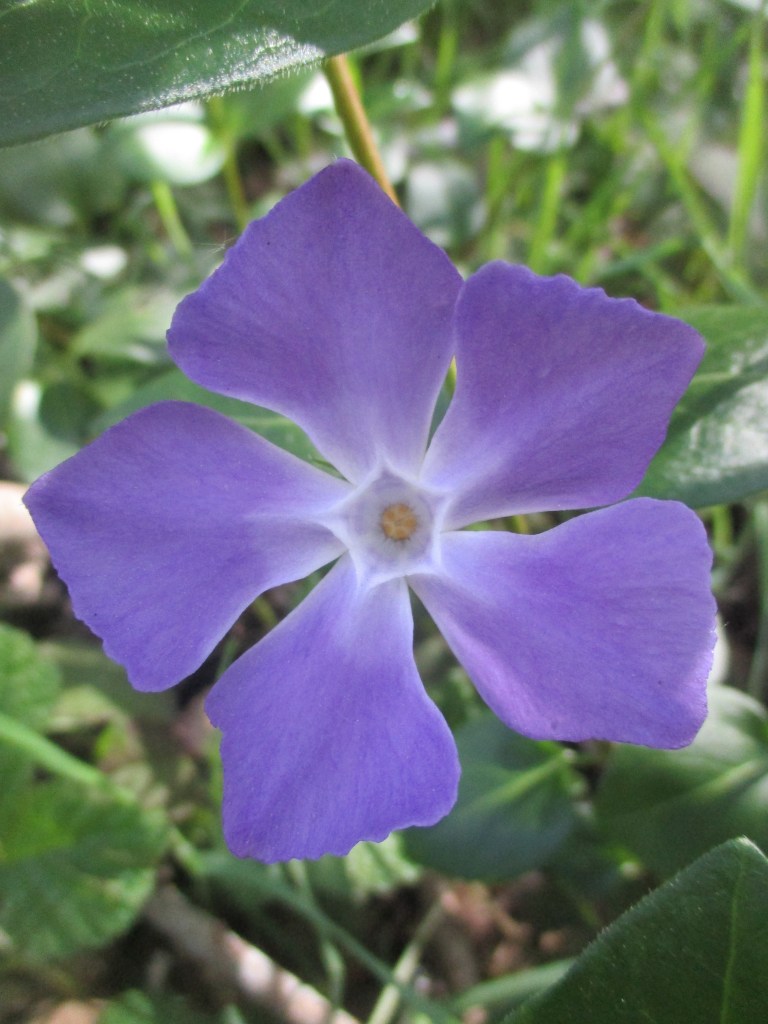
Dwarf periwinkle, which is a vigorous but manageable ground-cover here, is an invasive weed in other regions. Locally, common periwinkle, Vinca major, is the more aggressive sort. It naturalizes in riparian situations and damp parts of unrefined landscapes. Stolons can be difficult to pull completely from the soil. Seed disperses secretively but efficiently.
Periwinkle is almost never available in nurseries nowadays. It tends to infest gardens by sneaking in. Then, the foliage and bloom can be too appealing to eradicate. More plants are easy to divide from established colonies. Growth is tidier if mown at the end of winter. As it regenerates, it gets more relaxed, and finally gets floppy. It looks shabby if trampled.
Periwinkle blooms with sporadic but delightfully clear blue bloom. Individual flowers are about an inch and a half wide. The evergreen leaves are an inch or two long. Wiry stems get a foot or two deep. Cultivars with white or purplish blue bloom were available before
periwinkle naturalized. Periwinkle with foliar variegation still inhabits some old gardens. It is slightly more complaisant.





 Tony Tomeo