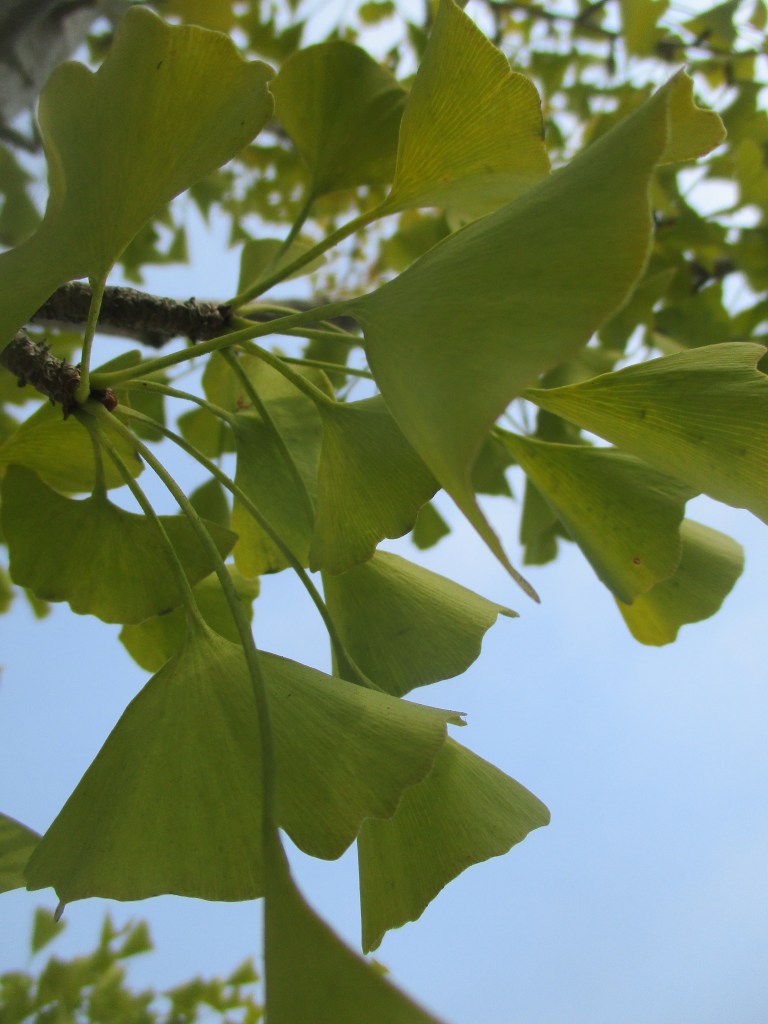
Where autumn chill is minimal, the best and brightest yellow autumn color is that of the ginkgo, Ginkgo biloba. Some know it at the maidenhair tree. Except for older trees that produce messy and stinky fruit, it is a notably clean tree. Perhaps it is too clean. It drops nothing all year, but can defoliate too soon once it develops it striking autumn color. Minimal chill actually prolongs the process.
Ginkgo is dioecious, with separate genders. Modern cultivars for landscapes are male, so produce no obnoxious fruit. Female cultivars that produce nuts and fruits are not commonly available in nurseries locally. (As objectionable as their aroma is, the nuts and fruits are edible.) Some people may be allergic to the pollen of mature male trees. Many mature trees predate modern cultivars.
Trees are somewhat slender and perhaps sparse while young. They develop a broader canopy as they age. Trees can get more than fifty feet tall, with sculpturally irregular branch structure. Foliar venation radiates outward from the petioles. Leaves, which are about two or three inches long, therefore have the shape of fishtails. Leaves on current season stems are cloven into paired lobes.