Pollard And Coppice During Winter

Proper pollarding and coppicing are rare.

This is extreme dormant pruning. Pollard and coppice pruning involve complete removal of all new growth. They typically involve growth from a previous season annually. A two year cycle involves growth from two previous seasons, and so on. This repetitive pruning to the same origins stimulates distended callus growth there. It is as brutal as it sounds.

This is why pollard and coppice pruning are vilified in America. The techniques evolved through centuries of horticulture and several cultures. Both are still practical for various reasons everywhere else. However, American arboriculture classifies them as topping or disfigurement. Consequently, very few arborists here know how or want to do it properly.

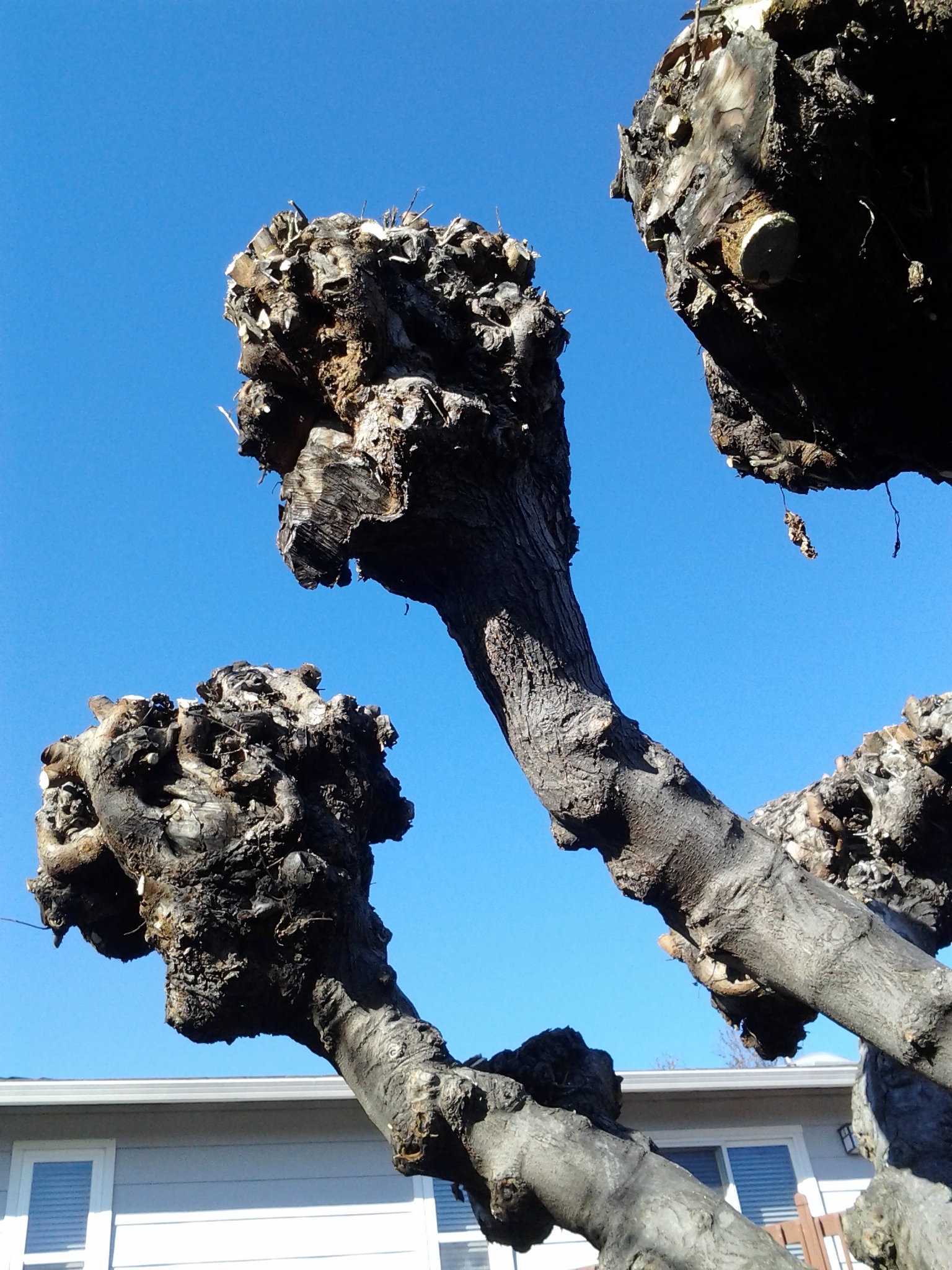
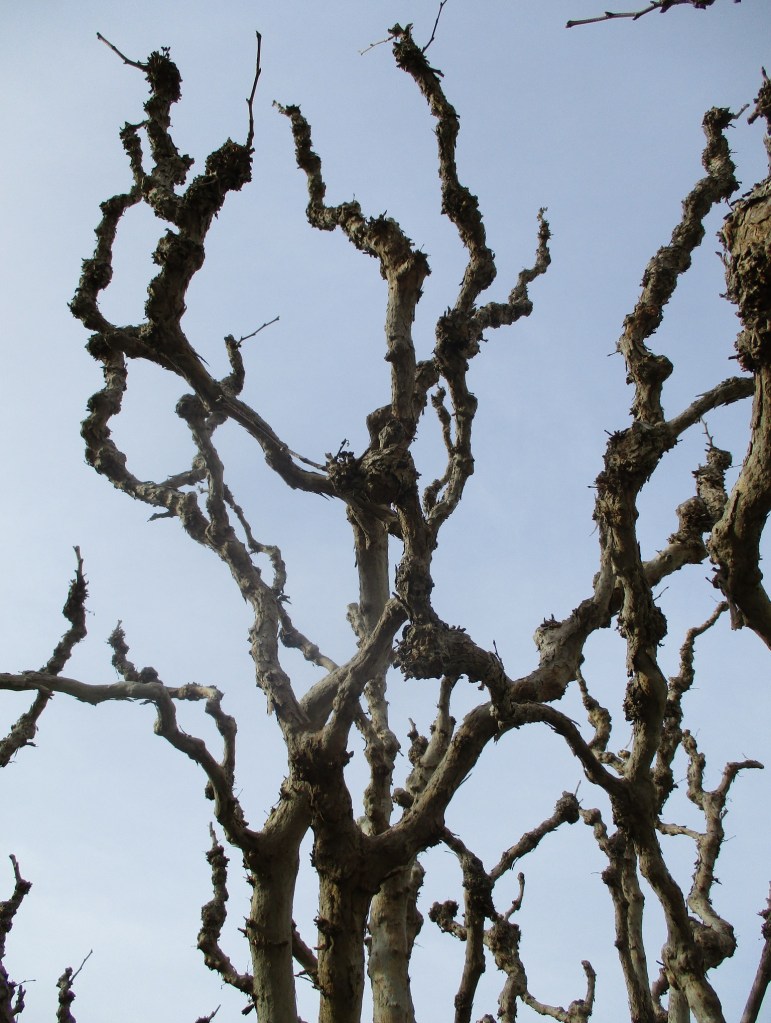
Like other dormant pruning, pollard and coppice pruning must happen during winter. It is too severe for active vegetation. Also, pollard pruning exposes bark of trunks and limbs. Such bark would scald during sunnier summer weather. Growth from distended callus growth, or knuckles, shades lower stems by summer. It is very vigorous through spring.

That is what pollard and coppice pruning is still useful for within other cultures. Vigorous foliage is useful for fodder for livestock, including silkworms. Vigorous stems are useful for kindling and basketry. Some species bloom more vigorously on vigorous new growth. Others can not bloom to produce unwanted pollen or messy fruit within the same year.

Colorful or variegated foliage is more colorful in response to pollard or coppice pruning. Some eucalypti generate juvenile foliage for floral design. Such foliage is more aromatic than adult foliage. Improved foliar vigor enhances resistance to some diseases, such as mildew and rust. Coppicing can renovate some types of overgrown or shabby shrubbery.

The difference between pollard and coppice pruning is that pollard pruning retains limbs. Coppice pruning retains only a stump near grade. It is less reliant on repetition, and may never need it again. Pollard pruning compromises structural integrity, which necessitates repetition. Otherwise, pruning to restore structure will eventually become necessary. Not many species are receptive to such extreme pruning techniques.
Do Not Try This At Home

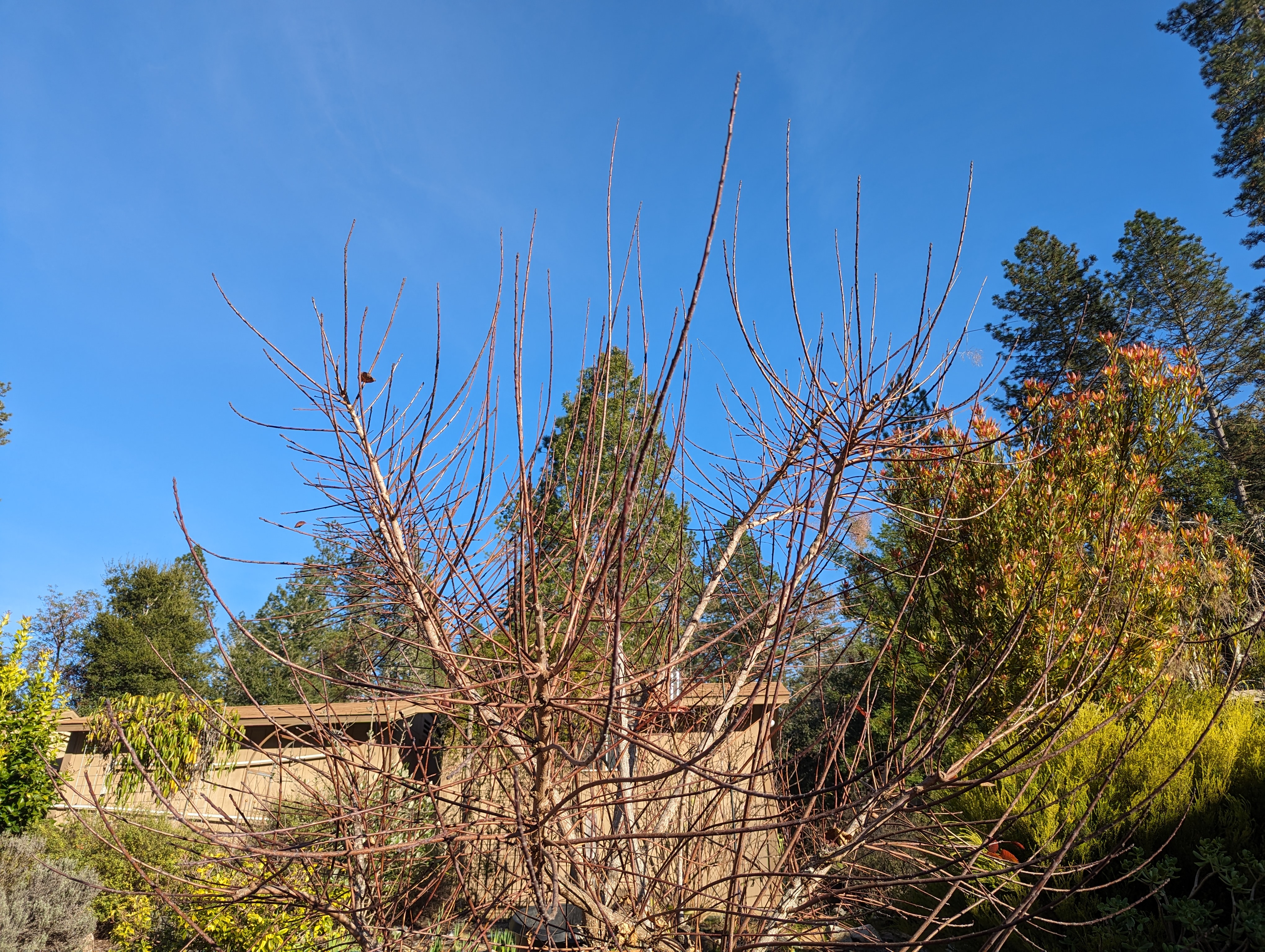
Before and After pollarding

Pollarding and coppicing are very unfortunately vilified here. I just wrote an article about these topics for the gardening column. Arborists are taught that they are comparable to topping, and that they cause irreparable disfigurement.

It is unfortunate because both procedures have very practical application. Both are still commonly practiced in other regions. If performed properly, both are quite sustainable, and can actually maintain some specimens of a few species longer than they typically live naturally. I use both techniques to a minor degree at work, and will likely do more of both within my home garden.

However, I almost never recommend either technique. Because they are so vilified, arborists do not learn about them. Consequently, it is nearly impossible to find an arborist who can perform either technique properly. Trees and shrubbery can very easily be ruined by either technique if performed improperly.

In fact, I am hesitant to allow reliance on pollarding and coppicing by trees and shrubbery at work because I am concerned that no one else will want to repeat the processes after my retirement or resignation, which could be at any time. Coppicing carpet roses should be no problem for whomever performs it in the future, but I can not be certain. Pollarding is a bit more specialized, so concerns me more.

This smoke tree was initially pollarded for renovation. It was previously distressed and weak, but is now quite vigorous. Its purple foliar color is more vibrant through summer. So is its autumn foliar color. I previously believed that it bloomed only on year old stems, so would be unable to bloom on exclusively new canes after being pollarded. Instead, it blooms better on vigorous new stems that it on distressed year old stems.

It is not forming knuckles though. New stems emerge from all over the permanent stems, so leave pruning wounds that do not compartmentalize as efficiently as they would on knuckles. Also, without terminal knuckles, some permanent stems die back an inch or two annually. Although pollarding successfully renovated this smoke tree, it is not as sustainable as I would like it to be.

So, because the procedure is not sustainable for this particular specimen for very long, and I suspect that no one will want to repeat the process annually in the future, I will likely encourage more natural form. I left a few extra new canes for this year. For next year, the twiggy interior growth may be thinned, while upper and outer growth is allowed to develop into a more permanent canopy.

Coppicing And Pollarding Annoy Arborists

Pollarding is a long term commitment.

Coppicing and pollarding are the most extreme of pruning techniques. They may also be among the oldest in some cultures. Yet, arborists are correct to condemn both as improper. Coppicing is the complete removal of all stems and trunks back to a stump. Pollarding is the removal of all stems back to main stems and trunks. Both procedures happen in winter, annually or every few years.

Both coppicing and pollarding stimulate vigorous and prolific cane growth during the next season. Lush foliage of such growth is useful as fodder. Foliage of pollarded mulberry is the primary food of silk worms. Canes are good kindling for the following winter. Thin canes of various species are useful for basketry. New foliage of pollarded eucalypti is useful for both essential oils and floristry.

Of course, few rely on modern urban gardens for fodder, kindling, eucalyptus oil, or basketry material.

Arborists disapprove of coppicing and pollarding because both techniques ruin trees. Many of such trees are too structurally compromised to support the weight of secondary growth after the first year. Consequently, they rely on annual coppicing or pollarding. Some trees will support their weight for a few years. Strangely though, many properly coppiced or pollarded trees live for centuries.

Coppiced trees generate from stumps of cut down trees. Ideally, they begin young. Grafted trees are less cooperative. They are likely to generate suckers below their graft unions. Pollarded trees get to develop their main trunks and limbs prior to their first pollarding procedure. The locations of the first pollarding cuts is very important. Subsequent pruning will be back to the same locations.

Distended ‘knuckles’ develop after repeated coppicing or pollarding back to the original pruning sites. Pruning must be flush to these knuckles. Stubs interfere with healing. Annual pruning leaves smaller wounds than less frequent pruning. Secondary growth should be able to overgrow wounds efficiently. Cutting below knuckles leaves wounds that may be too big to heal before they decay.

Pollarding And Coppicing Appall Arborists

00212thumb
Pollarding is disturbingly severe but effective.

Very few arborists in America condone the extreme pruning techniques known as pollarding and coppicing. Both techniques essentially ruin trees, and deprive them of their natural form. Affected trees likely require such procedures to be repeated every few years or annually. Otherwise, they are likely to succumb to resulting structural deficiency. Restoration of such trees is rarely practical.

Pollarding is severe pruning to remove all except the main trunk and a few or perhaps several main limbs. Coppicing is even more severe, and leaves only a stump. Both are done while subjects are dormant through winter. Most or all new growth that develops is spring is concentrated around pruning wounds of the previous winter. Some coppiced stumps generate growth from the roots.

If pollarded or coppiced annually, all growth that developed during the previous season gets pruned cleanly away to where it grew from since the previous procedure. Distended ‘knuckles’ develop at the ends of pollarded limbs or coppiced stumps as the pruning is repeated for a few years. ‘English’ pollarding leaves a well oriented stub of any desired length to slowly elongate each knuckle.

Pruning wounds should be as flush to each knuckle as possible, without intrusive stubble. The many small pruning wounds left on each distended knuckle will compartmentalize (heal) efficiently as new growth develops during the following season. Pruning below a knuckle might seem to be more practical, but leaves a single but big wound that could decay before it gets compartmentalized.

Delaying pruning for a few years creates bigger wounds, and allows innately structurally compromised stems to get heavy.

Pollarding and coppicing were developed a long time ago to produce kindling, fence stakes, cane for basketry, and fodder for livestock, as well as silkworms. Nowadays, it is done to contain big trees, enhance the size and color of leaves, produce juvenile foliage, produce colorful twiggy growth, or prevent unwanted bloom or fruit. Not many trees are conducive to such severe techniques.