Saskatoon

Saskatoon prefers significant chill during winter.

Of eighteen species that are native to North America, only two are native to California. Of these two, only one is native locally. However, some of the few nurseries that sell various saskatoons market them as native. Obviously, most are not. A few are hybrids. All of them are species of Amelanchier, and are still rare here. Their common names are numerous.

Serviceberry, sarvisberry or sarvis may be some of the more common of common names. Shadbush, shadwood or shadblow may be less common. Juneberry, chuckley pear, wild plum and sugarplum are likely regional names. They are more familiar where winters are cooler. Some sorts do not perform well locally because they prefer a bit more winter chill.

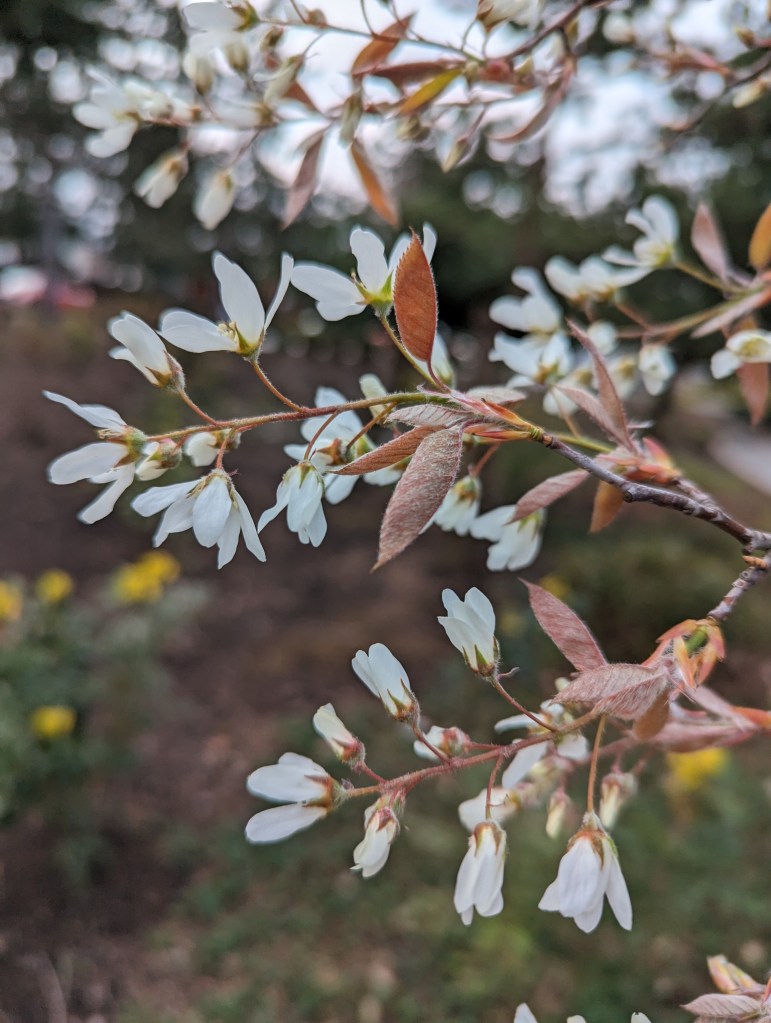
Saskatoons are locally popular primarily for their fruit, and only among a few enthusiasts. They are more available online than in nurseries. The fruits are pommes like tiny apples, but are only the size of blueberries. They ripen to blackish purple for summer. Their early spring flowers are like wispy apple flowers. Most Saskatoons grow less than ten feet tall. Some rarer types can grow thirty feet tall in favorable climates.
Quince

Quince has become a rare fruit.

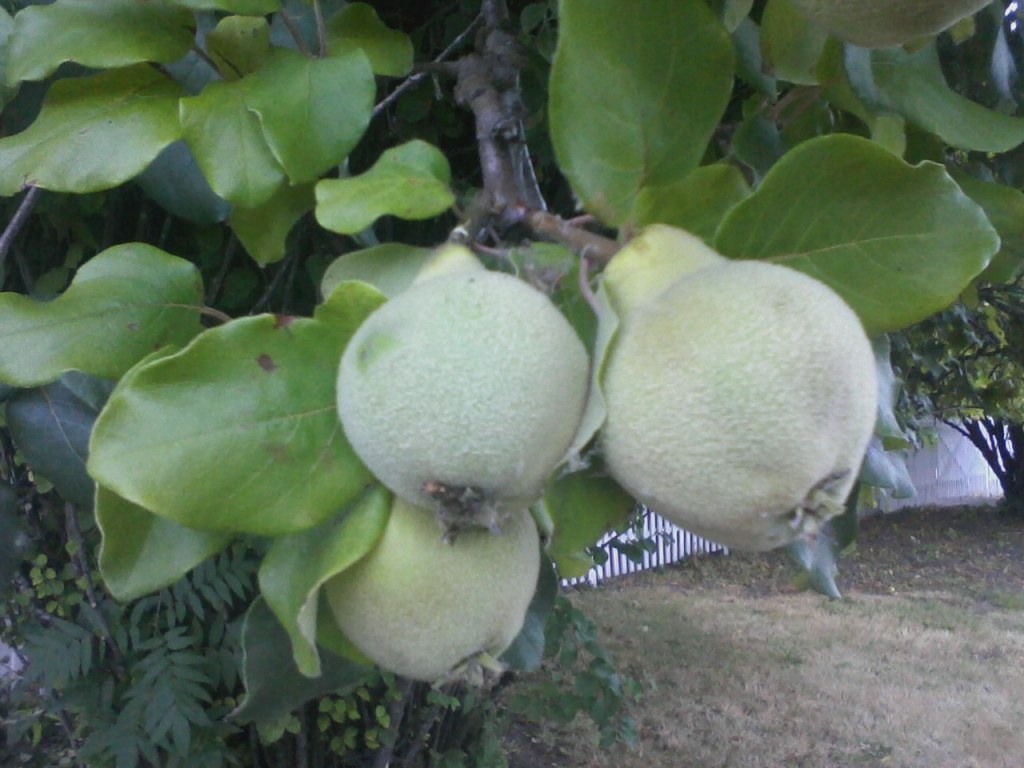
With the many slender arching trunks, quince, Cydonia oblonga, is more like a large deciduous shrub than a fruit tree. Even old trees are not much more than twenty feet tall and broad. Most of the rare trees that can be found are old, because quince is such an old fashioned fruit. The fruit is still immature and covered with white pubescence (fuzz). By late autumn, it will be remarkably aromatic and resemble golden pears, about four inches long and nearly as wide, and so hard that it should be cooked.

Quince

Quince fresh from coastal Santa Cruz!

The function of this formerly popular fruit tree has changed significantly to adapt to modern horticulture. The big but hard fruit of quince, Cydonia oblonga, is less perishable than the firmest pears or apples. Without canning or freezing, it lasts through winter in cool cellars. It also provides pectin for jellies of fruits that lack it. However, quince fruit is too hard to eat fresh, so should be cooked.

As food storage became less important, quince became less popular than more flavorful apples and pears, which are edible while fresh. Pectin is obtainable from apple cores and skins, or from supermarkets. However, quince are not completely absent from home gardens. They are now the unseen but common dwarfing understocks that limit the size of pear trees for suburban gardens.

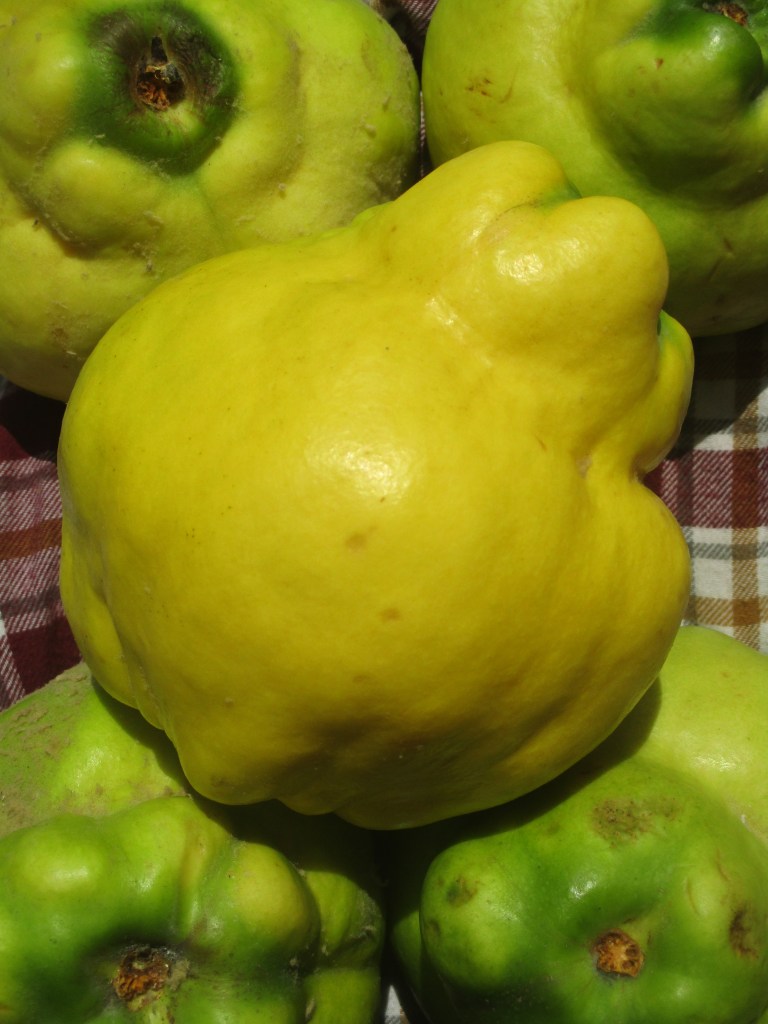
The big lemony yellow fruits that are ripening now may look like very lumpy pears or apples. The largest sorts get as big as small cantaloupes. Developing fruit and new foliage are distinctly fuzzy. Fuzz can be polished off of alluringly aromatic mature fruit. Delightfully pale pink flowers are mostly obscured by new foliage in spring. The deciduous rounded leaves are two or three inches long.

The biggest of quince trees, which are very different from ornamental flowering quince, might get as high and wide as twenty feet.

Pomes Produce Better Than Palms

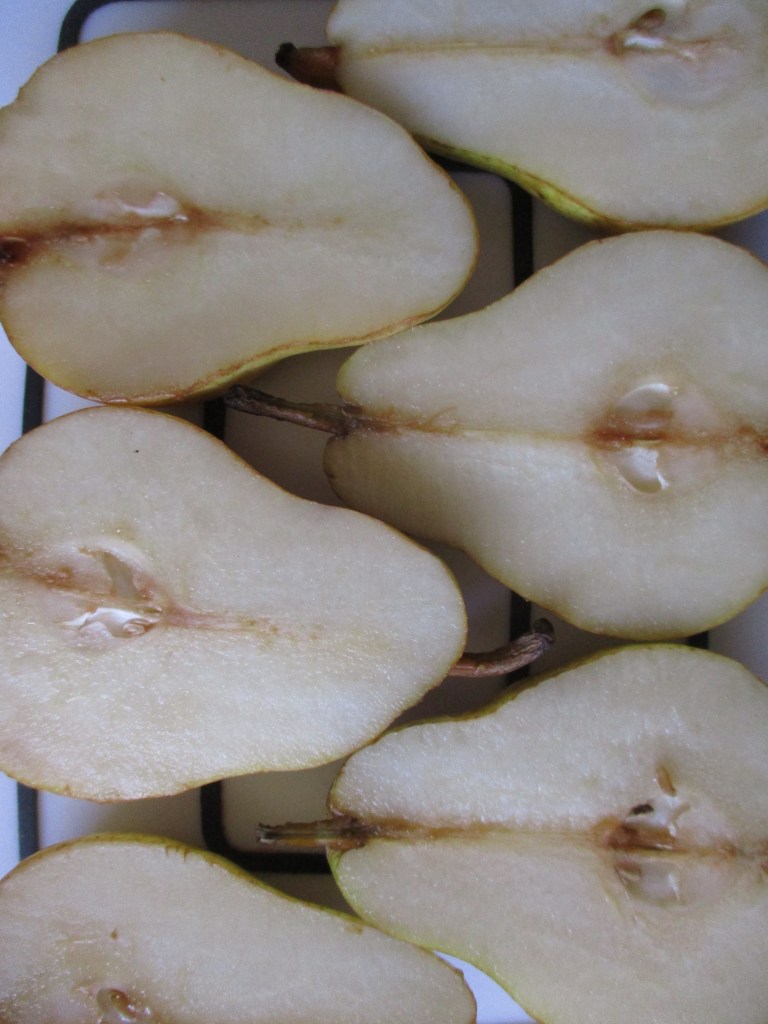
Pear season continues late into October.

Dates, coconuts, acai berries and palm oil grow on palm trees. All are rare in local home gardens. The palms that are popular in much of California are almost exclusively ornamental. Very few of them produce useful fruits. Despite the similar pronunciation, such palms are not at all related to pomes. Some of the more familiar fruits happen to be pomes, which are also known as pommes.

Apples and pears are the most popular examples of pomes. Quinces, which were very popular decades ago, are now rare. Quinces are so closely related to pears that they work well as dwarfing understock for home garden pear trees. (Orchard pear trees use other understocks that are not dwarfing.) Actually, most quince trees grew secondarily from roots of dead or removed pear trees.

Saskatoons (serviceberries), chokeberries (aronias) and medlars are locally rare pome fruits that are slowly gaining popularity. Productively fruiting cultivars of loquat are now more available than those that were primarily ornamental. Some flowering quinces may produce a few small fruits. Mayhaws and mountain ashes (rowans) are berry-like pomes that are more familiar in other regions.

The earliest cultivars of apple might be in season by late July, before stone fruit season finishes. (Some peaches, the largest of the stone fruits, ripen in September!) The latest will be ready in late November, at least a month into citrus season. Pear season extends from August into October. So, this is the middle of apple and pear season. Most but not all other pomes are already finished.

Like stone fruit trees, the trees and shrubs that produce pomes need very specialized pruning while dormant through winter. Without annual pruning to enhance structural integrity and concentrate resources, apple and pear trees are unable to support all of their fruit. Shrubby quince trees become thickets without pruning for grooming and confinement, although they may not need it annually.