 In this situation, the point is that all those pointed tips of the leaves of this awkwardly floppy century plant, Agave americana, are extremely sharp, extremely rigid and EXTREMELY dangerous. Those shorter teeth on the margins of the leaves are just as sharp and rigid, and are curved inward to maximize injury to anyone trying to get away from an initial jab. With tips that impale, and marginal teeth that slash, this is one very hateful perennial!
Another point is that this big and awkwardly obtrusive century plant is on a patio at a Mexican restaurant. Yes, it is in a public place where people get dangerously close to it. On Friday and Saturday nights, this restaurant can get quite crowded. Some within such crowds are inebriated, so are more likely to stumble about and bump into things that are best avoided. Those concrete slabs to the left are benches where people are often seated.
The third point is that the only remedy for this ridiculously bad situation is to remove the century plant. Chopping the leaves like those that were over the bench on the left only removes a few tips and teeth, but does not make the rest of the foliage significantly safer. Nor does folding the leaves inward, like those that are next to those that were chopped. Such abuse only makes the whole mess uglier. Now it is both dangerous AND ugly.
Now, who thought that putting the most dangerous of all perennials available into this public situation was a good idea?! (Cacti with inward curving spines and other plants that are more dangerous are not even available in nurseries.) Century plants are dangerously nasty even when small and young, so even someone who knows nothing about landscape design should have known better than this!
 The dark bronze and variegated varieties of tree houseleek, Aeonium arboreum, are so much more popular than the simple species, that the simple species with plain green foliage is now rather rare. The succulent stems do not stand much more than three feet tall. They get about as broad, and can get even broader as lower stems develop roots and grow into new plants. The succulent rosettes of foliage of well watered plants can be fragile to handle. Mature plants can bloom in spring with unusual conical trusses of yellowish or chartreuse flowers.
 Cut Christmas trees really are the way to go. There is no obligation to take care of them after Christmas. They do not need to planted out into a garden that will be too small for them as they grow. They do not need to be maintained in a pot, only to get disfigured or partially defoliated before next Christmas. They simple get removed from the home and composted or otherwise disposed of.
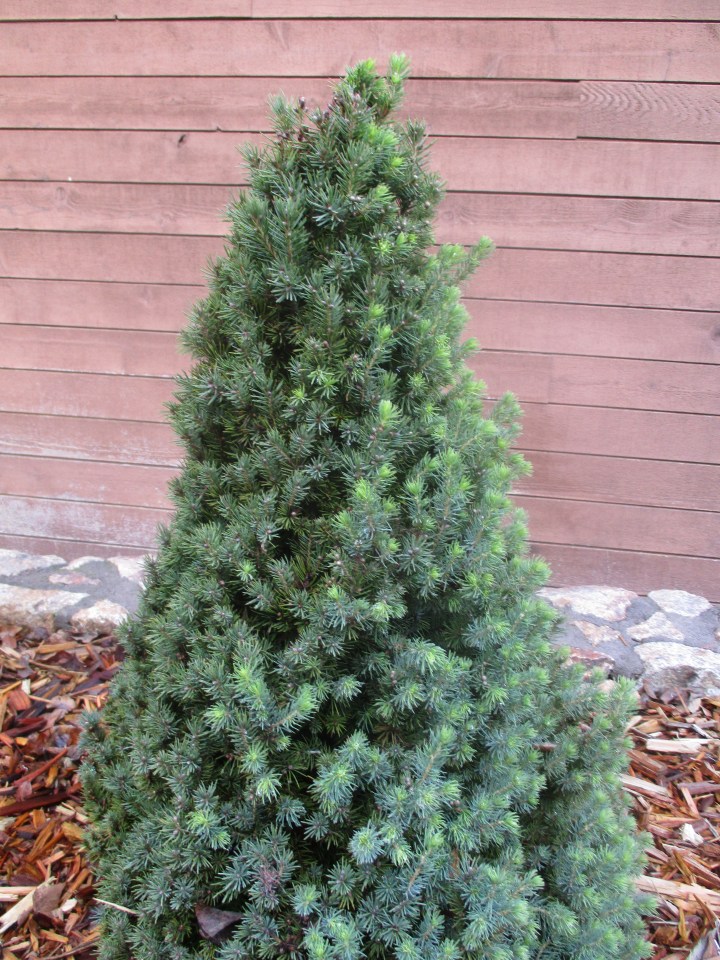 People really stress out over Christmas trees. Some do not want a cut Christmas tree because it involves killing the tree. Some do not want an artificial Christmas tree because it is . . . artificial. Some do not want a living Christmas tree because it is too expensive for a tree that is too small. There are so many myths and misconceptions about Christmas trees, yet everyone wants one.
 Aside from all the seasonal raking and dormant pruning, there is not as much to do in the garden as there was earlier in the year. Lawns do not need much mowing. Hedges do not need much shearing. Untimely mowing and shearing can actually damage lawns and hedges. Watering, which was so important while the weather was warm, is now rare in the cool weather between rain.
 This is a recycled picture that still annoys me. There was another that I did not want to use because it happens to be from a landscape that I sometimes work in.
 Two others have already written about this far more proficiently than I would have:
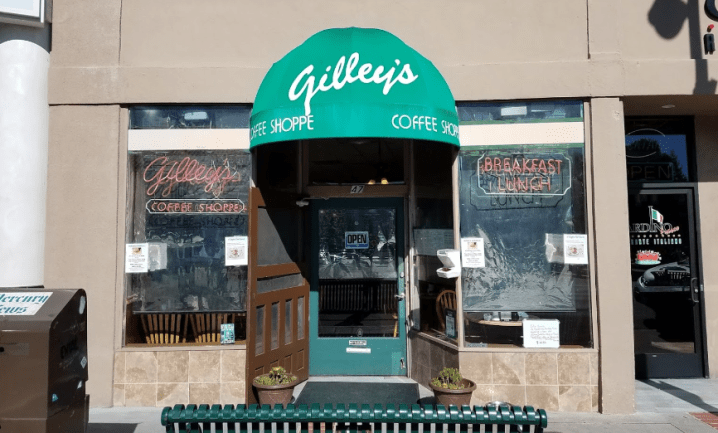 Immediately after the Loma Prieta Earthquake, nothing was open for business downtown on North Santa Cruz Avenue south of Bean Avenue. As buildings were inspected for safety and cleaned up, sections of cyclone fence that had kept everyone out were slowly and systematically moved out so that businesses on the east side could open for business. The same slow process was repeated on the west side, moving south from the corner at Bean Avenue, but did not get very far. The old Los Gatos Cinema, as well as the several other building between it and the seemingly destroyed old La Canada Building on the southern corner of the block, were too badly damaged for the fence to be removed.
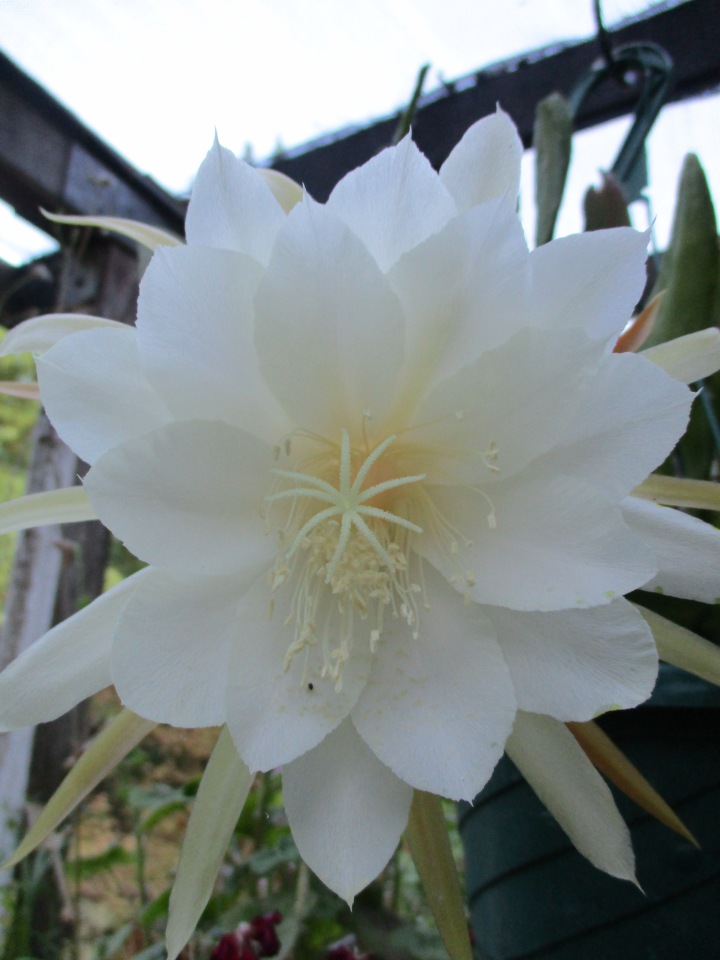 The common names of ‘Dutchman’s pipe’ and ‘queen of the night’ are not much less awkward the the Latin name of Epiphyllum oxypetalum, which might be why the Latin name is more common than the common names are. Some know it as ‘white ephiphyllum’ or even more simply as ‘white epi’. It is one of the more popular of the epiphyllums; and it is the most popular with white flowers.
 Tony Tomeo