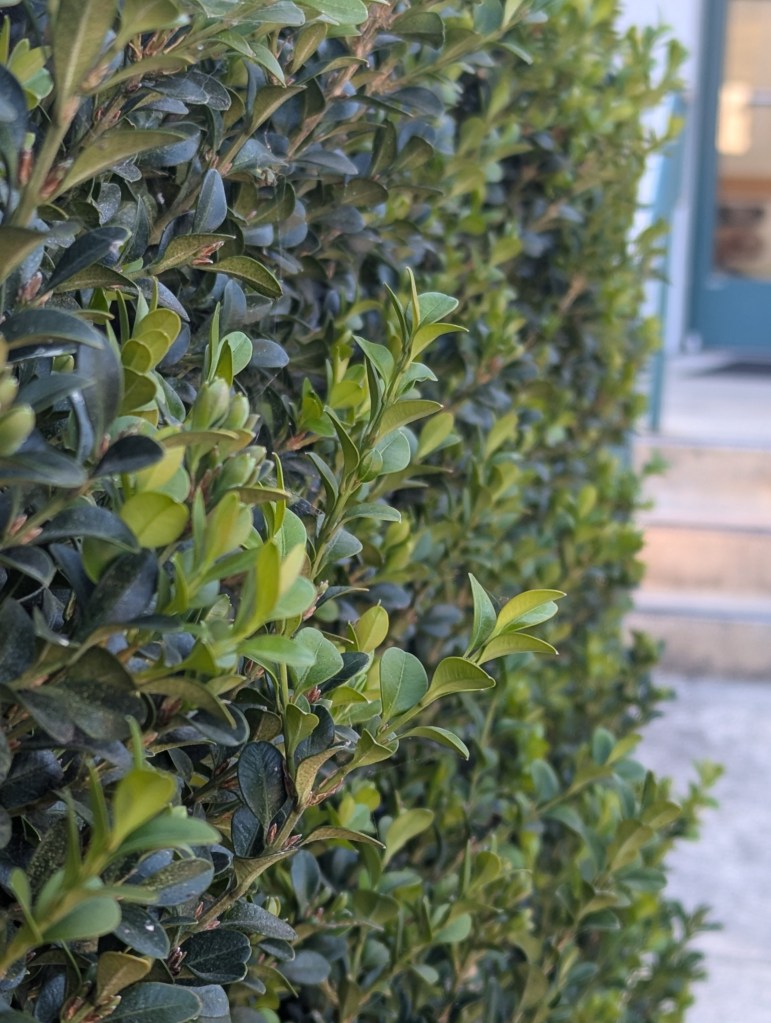
Hedging Produces Foliar Green Fences

Proper hedging technique is not complicated.

Motorized hedge shears are the most overused home garden power tools. They are very useful for hedging evergreen shrubbery into hedges and privacy screens. However, they too often shear vegetation that requires different types of pruning. They are fast and easy but not appropriate for all pruning applications. Even hedging is a specialized technique.

Unfortunately, the rules of hedging are too often ignored. Hedges are utilitarian features. Many provide privacy. Many obscure unwanted scenery. Some divide large gardens into smaller and cozier spaces. Most continue to function as they should even without proper maintenance. Consequently, problems associated with maintenance may not be evident.

Unshorn informal hedges are mostly simpler to maintain, but only if they remain unshorn. Ideally, they use species or varieties that mature to a desirable size and form. Therefore, they should not become too large or Obtrusive. Only a few wayward stems need pruning. Of course, species or varieties that grow too large for such application will need hedging.

Shorn or formal hedges are more likely to develop problems. They need regular hedging to maintain their size and strict form. Yet, even with the most diligent maintenance, many become overgrown. Many gain depth from front to back, to become obtrusive. Many gain more height than they should. Most become distended up high while subdued down low.

This happens because pruning cuts can be slightly farther out than they were previously. They are a bit farther out higher up because that is where most growth is. Hedging within former cuts can renovate overgrowth, but damages hedge facades. Fortunately, damage should be temporary. Severely overgrown hedges might require severe pruning, though.

As mentioned, hedges are utilitarian. They should perform their primary purpose without encroachment into usable spaces. Their typically evergreen foliage is generally external. Their interiors are generally bare stems and empty space. Therefore, a hedge can be as effective whether two or four feet from front to back. Four feet is merely a waste of space.
New York Times

(This article is copied from my other discontinued blog at Felton League. It is not about horticulture, but links to another article about hedges, and features Brent’s garden.)

This is why I have never stayed at Hotel del Flores.

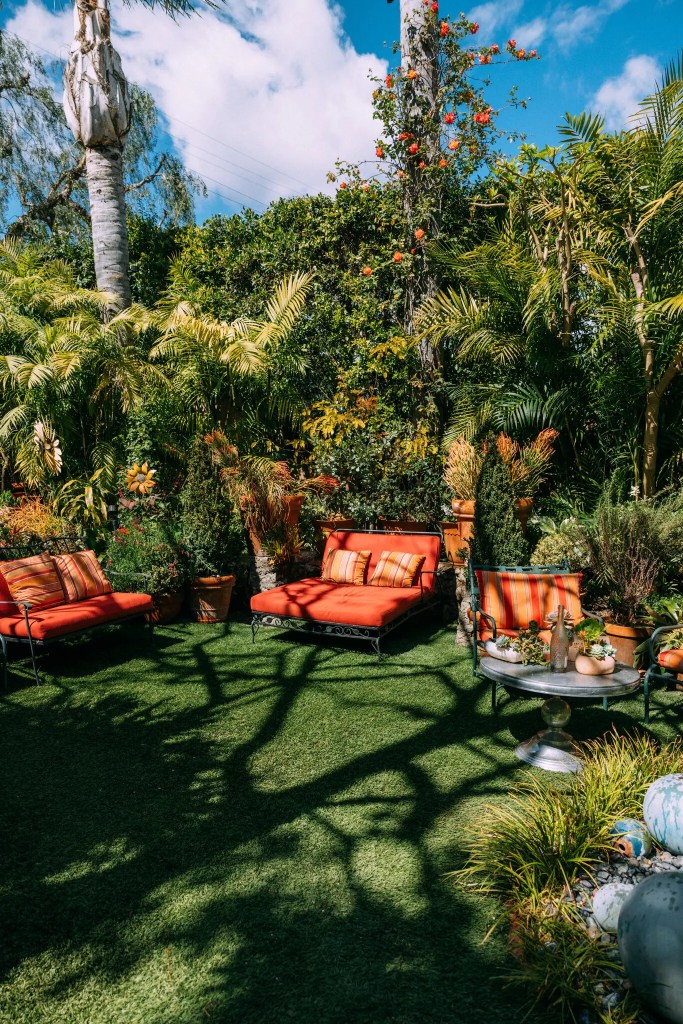
The New York Times featured a picture of my homeless camp! It is the third illustration of this article about landscape hedges. It shows where I camp while in Southern California, including the orange garden daybed where I sleep, and, as the primary topic suggests, a portion of the surrounding hedges.

This illustration should demonstrate why I enjoy being homeless in Southern California. It is quite luxurious. The weather is exemplary for camping. I wake amongst lush tropical foliage and palms, to the gentle sounds of small fountains and wild parrots. It is about as excellent as camping within one of my gardens, but very different, and special because I do it for less than three cumulative weeks annually. For many years, I have been wanting to stay at the famously eccentric Hotel del Flores nearby, but will not do so without inhospitable weather to dissuade homelessness.

Seeing this particular illustration reminds me of why this Felton League blog has been discontinued. For quite a while, there has not been much to write about that would not be intrusive to those involved. Societal difficulties as well as personal difficulties within society certainly remain, but are not as prominent as they had been. My own experience with faux homelessness, albeit within another Community, is strangely appropriate as an illustration for an unrelated article within the New York Times.

Most of those who experienced unemployment, poverty, homelessness or related difficulties here in the past are now enjoying major improvements to their personal situations. Many of those who are not yet benefiting from such improvements appreciate support from this graciously compassionate and generous Community. This has always been a good place to be in a bad situation. Perhaps, now that I no longer blog here, I should write a book about my experiences.

Good Neighbors Make Good Fences

Is privacy really worth big fences?

Good old fashioned suburbia will never bee the same. Bigger modern homes on smaller modern parcels leave little space for gardening and trees. What is not shaded by the taller homes is shaded by the taller fences, which are ‘needed’ for privacy since the homes are closer together. Building codes in most municipalities limit the height of fences, but lattice screens are often added on top for extra height.

Because lumber is not of the quality that it was when shorter light duty redwood fences were built decades ago, relatively expensive modern fences do not last nearly as long. They might last longer if they would get repaired instead of replaced when only the posts rot. Green technology seemed to work better before it became trendy.

Ironically, no one wants these bigger and bolder fences that are closer to home to be so prominent in the landscape. We try to obscure them with vines that can tear them apart, or shrubbery that can push them over. Watering these vines and shrubs accelerates rot in the posts.

Shrubbery intended to obscure a fence should not be so voracious that it wants to displace the same fence that it is intended to obscure. Some types of pittosporum work nicely because they support themselves without leaning against other features in their surroundings too much, even if they eventually get quite large. However, they do get quite thick, and can obscure a fence so well that no one would miss the fence if it were to get pushed over! A good hedge without a fence is sometimes a better option.

Many types of vines can be kept much closer to a fence than shrubbery can, but most tend to be more destructive. Star jasmine works nicely if allowed to climb a trellis directly in front of the fence, but should not be allowed to get between planks in the fence, or to get too intertwined in lattice. If it gets too fluffy, it can be shorn back like a light hedge.

Clinging vines like creeping fig can be very appealing on fences, and can be shorn like hedges, but will eventually necessitate the replacement of the fences that they climb. For those who appreciate such a tailored appearance, replacement of the affected fences every few years is a fair compromise.