Village Harvest redirects surplus from home gardens to those who can use it.

Surplus need not go to waste.

(This article is several years old, so some of the information within is likely outdated.)

Those who witnessed the event know that it actually happened. During citrus season a few years ago, a crew of volunteers descended upon, or should I say, ascended ladders into the legendary and monstrously large King Grapefruit Tree in a gallant but hopeless attempt to harvest the fruit. Our caravan of an assortment of smaller pickups and my full sized Ford that we drove out to confront this aberration of nature where it resided was completely full by the time we had harvested only about a third of the fruit. We left happy with our plunder, but unexpectedly defeated by the abundance left behind. I have seen many fruit trees throughout my career, but have never seen so much fruit in a single tree! 

It may have watched us leave exasperated with our mud-flaps dragging, but the King Grapefruit Tree was not solely victorious. We Village Harvest volunteers and the many beneficiaries of Village Harvest enjoyed its fruit for weeks! Village Harvest arranges for community fruit harvesting events to collect fruit that might otherwise go to waste so that it can instead be distributed to people in the community who can use it. The fruit of the King Grapefruit Tree was donated, and more was harvested later, so that it would not become an unwanted mess for the residents of the nearby home.

This is just one of many examples of how Village Harvest community fruit harvesting events benefit everyone involved. Those who donate their surplus fruit get it harvested and taken away before it becomes messy. Village Harvest volunteers get to take a bag or so of the fruit that gets harvested during the event. The clientele of the local food agencies that distribute the produce get fresh home grown fruit from the Santa Clara Valley; which is, as we all know, the best in the world.

Although citrus season is still several months away, five community fruit harvesting events are scheduled to collect summer fruit through July. On July 18 and again on August 1, two Mountain View community harvesting events will be from 9:00 a.m. to 12:30 p.m.. Two Central San Jose community harvesting events will be from 8:30 a.m. to 12:30 p.m. on both July 20 and July 27. The Sunnyvale community harvesting event will be from 8:00 a.m. to noon on July 26. Locations to meet for each event can be determined when making reservations.

Information about volunteering for any of these and other events, or how to arrange for donation of fruit, can be found at the website, www.villageharvest.org, or by telephoning 888 – 378 4841. Because admission is limited, it is advisable to make reservations for any event early, either online or by telephone. (It may be too late for the July 18 event.) Parking is also limited, so participants should carpool if possible. Pickups and station wagons to help transport fruit are very helpful. So is a grocery bag to share in the harvest afterward. Covered shoes (not sandals) are important. Layered clothing is more comfortable for cool mornings that get warmer closer to noon.  

Thanksgiving

Thanksgiving is a celebration of gratitude. It was created by early American settlers who were grateful for their harvest at a time when the exotic fruits, vegetables and grains that they brought with them from Europe were only beginning to get established in unfamiliar climates and soils. They were also grateful for the generosity of the indigenous people, as well as the native fruits, vegetables and game that they introduced them to. Regardless of how meager their resources now seem to be by modern American standards, early American settlers were very grateful for what they had.

Nowadays, for most Americans, sustenance from all over the World is so reliably available and in such abundance that many neglect to appreciate it. As in the past, those who lack such abundance are more grateful for what is available to them. Perhaps that is why Thanksgiving is still so relevant, and such an excellent Holiday. It is a reminder of the importance of gratitude.

Gardening to grow fruits and vegetables, even on a scale that is very minor relative to how early American settlers did so, facilitates gratitude for the sustenance and any surplus that it generates. Produce from the garden is so much more satisfying than produce from a supermarket. A pantry of canned surplus from the garden is so much more gratifying than a pantry of food that was purchased from a supermarket. Perhaps there should be no difference, since food from a supermarket is purchased with money that is earned from other work, which should be comparatively gratifying.

Realistically, there is so much to be grateful for, and so much gratitude to celebrate. In fact, there is enough to justify a specific Holiday for it. Work and gardening can be resumed tomorrow or later, after this celebration of gratitude, Thanksgiving.

Canning

Surplus fruits and vegetables can be canned for later.

It seems to me that the reason that so many of the kids I grew up with do not like apricots is that they were so common when we were younger. Because there were still several abandoned orchards, and most of us had at least one apricot tree in our backyards, we ate apricots in every form imaginable; fresh, dried, in pies, in cobblers, as jams, as apricot nectar (juice) and of course, canned. By the time we grew up and moved on, we were done with apricots.

Apricots happen to be one of the many ‘high-acid’ fruits that are remarkably easy to preserve by canning, which is how and why they are available as jams and canned apricots at any time of the year. In fact, almost all of the fruits that were so commonly grown in the vast orchards of the Santa Clara Valley, like prunes, plums, cherries, nectarines, peaches, apples and pears, are also high-acid fruits that are relatively easy to can in various forms. ‘Low-acid’ vegetables, like broccoli, corn, pumpkin (squash), spinach and beets, as well as meat and poultry, were not so commonly canned only because they take considerably more work to can with the use of a pressure cooker (in order to achieve higher temperatures).

Because home canning can potentially be dangerous if done improperly, it is best to learn something about it first. This is why the Guadalupe River Park Conservancy has arranged for UC Master Preserver Susan Algert to conduct the workshop ‘Safe Methods for Food Preservation and Canning’. Participants will learn the importance of canning to kill toxic pathogens, and why high-acid produce gets canned in a hot water bath while low-acid foods need to be canned in a pressure cooker. Canning is an alternative to freezing for preserving overly abundant produce from the garden.

(Outdated information regarding classes has been omitted from this recycled article.)

Produce Fresh From The Garden

Cucumbers grow in spring or autumn.

Plants notice it before people do. They respond accordingly. Vegetative growth slows or stops completely. Most remaining bloom does likewise. Fruit and seed finish developing. Less fresh produce is available from the garden. Boston ivy and Japanese maples might already be changing color. They all know that the days are shorter and nights are cooler.

Warm season produce gets less abundant as summer ends because most is fruit, which contain seed. Most plants naturally finish with seed production prior to autumn. Most cool season produce is truly vegetative and lacking seed. It naturally grows during autumn or winter, with the (‘fruitless’) intention of blooming and fruiting during the following season.

It seems as if warm season vegetables were replacing cool season vegetables from last winter only a few months ago. Perhaps they were. That process began about half a year ago, but never completely stops. Various phases of various vegetables start and finish at various times. Now, some warm season vegetables might continue to produce until frost. 

Corn is of those warm season vegetables that remain productive. Seed for the last phase would not have been too late if it got into the garden two weeks ago, but will take time to produce. Broccoli seed sown at the about same time could be the first of the cool season vegetables in the garden. However, it is likely more practical to plant seedlings a bit later. 

Seed for cabbage and cauliflower can go into the garden now. Alternatively, it should do as well in flats or cell packs, for later planting. This procedure delays their occupation of garden space, which might still be occupied by late warm season produce. Besides, it is easier to defend tiny seedlings in flats or cell packs from slugs, snails, birds and insects.

For big and leafy cool season produce, it may be more practical to purchase seedlings in cell packs rather seed. Since only a few seedlings of each type are needed, they are not too much more expensive than seed. However, confinement to cell packs disfigures root vegetables, such as beets and carrots. Their seed can get into the garden in two weeks to a month.

AGAIN – NO Blue Ribbon!

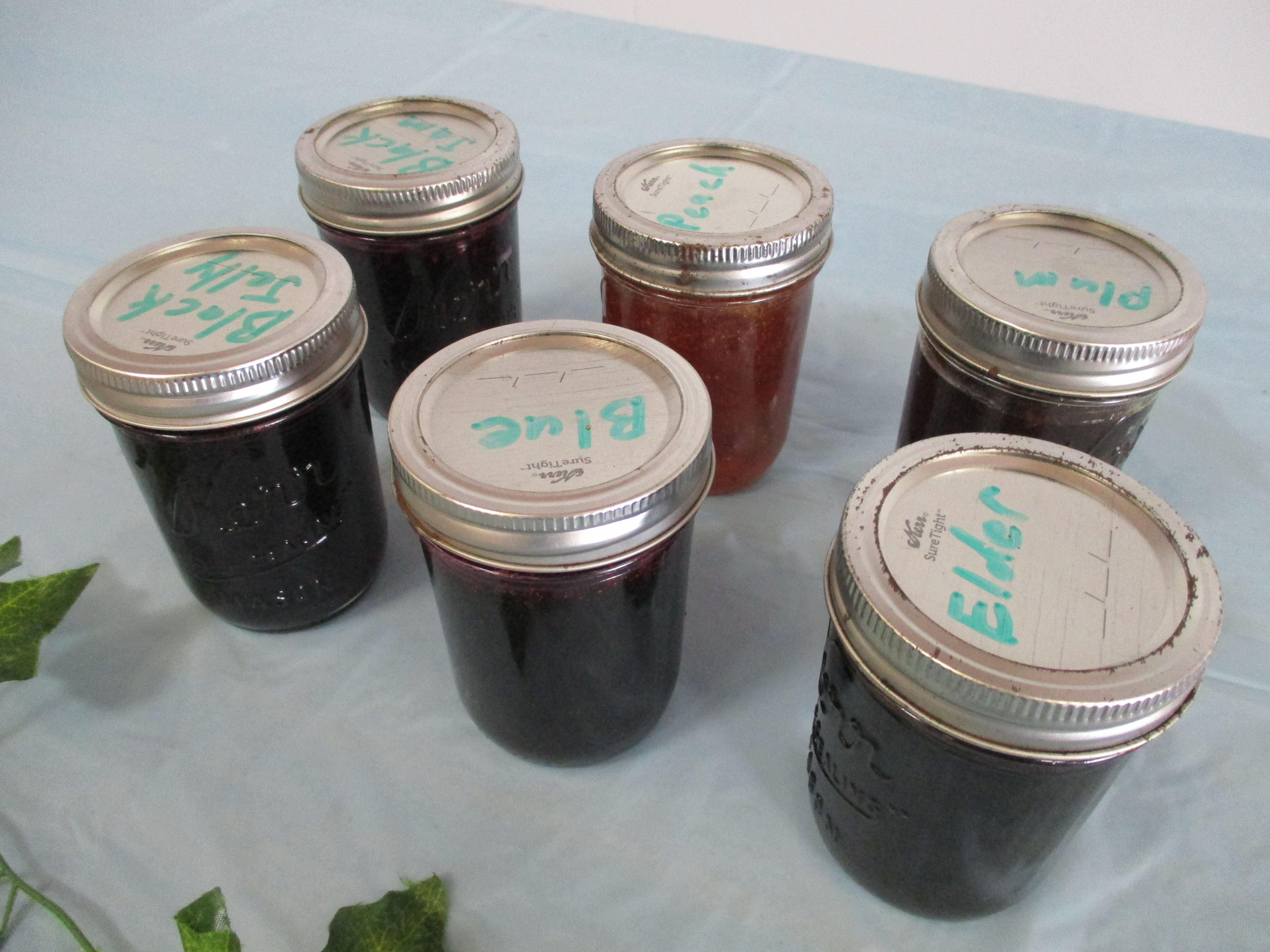
P90929After all that fuss yesterday, about how much I wanted to win a first place blue ribbon for one of my jams or jellies at the Jam, Pie and Chili Contest of the Santa Cruz Mountains Harvest Festival, I must still do without! Not only did I not win the ever elusive first place blue ribbon that I so desperately crave, but for the first time ever, I did not win second or even third place!

However, it is not as disappointing as it seems. There were no ribbons to win. There was only the same single prize for each of the three categories, which is a winter pass for the hot tub and sauna at the Bear Creek Recreation and Community Center of Boulder Creek. Although it is not the blue ribbon that I can flaunt and brag incessantly about, it is a fabulously generous prize.

What was more disappointing was that the Contest was canceled. For the Jam category, there were only two other contestants with only a few submissions, and neither showed up! How can that even happen? My six submissions were the only six to compete! It was even worse for the Pie and Chili categories, with only one contestant bringing pumpkin pie and two types of chili!

Yes, it was disappointing, but only briefly. No one minded that there were only identical pumpkin pies to vote for in the Pie category. In fact, we all easily agreed that they were the best pies in the Contest! Selection of the best of two types of chili in the Chili category was slightly more challenging only because no one wanted to say that one chili was less excellent than the other.

I still crave the elusive first place blue ribbon, but can easily do without it too.

Anatomically Correct Horticulture

P71026Certain fruits and vegetables were so much more palatable before studying botany. Knowing what they really are sort of puts a damper on things.

Real fruits, including those known as vegetables, are no problem. We all know what they are, and they have the seeds to prove it. Just like flowers reward pollinators with nectar, many plants use fruit to get animals and people to disperse their seeds. Therefore, the fruit is designed to be eaten.

The majority of vegetables are fine too. It seems natural to eat leaves, stems, roots and even flowers. Things get a bit weird with petioles of rhubarb, celery and cardoon, since the leaves are not eaten. Cinnamon bark and saffron stamens also seems a bit odd. What about maple syrup? Is it a vegetable too?

Then there are fruits and vegetables that are not what we think they are.

You will never look at a potato the same way knowing that it is a subterranean stem known as a stolon. If it is looking back at you, it is because it has eyes, which are actually modified axillary buds, which only stems are equipped with. It it were a modified tuber or or a tuberous root like most of us think it is, it would not have these eyes.

Pineapple might be watching too, with its many eyes. Each eye actually represents a flower. What we think of as a pineapple fruit is actually a densely crowded collection of distended and fused flowers. Does that mean it is a vegetable like broccoli or cauliflower?

Strawberry is sort of fruity; but only what we think of as strawberry ‘seeds’. They are actually single seeded fruits known as ‘achenes’. Really, those little black things are outfitted with everything that they need to be classified as fruit. The red part of the strawberry is only a ‘receptacle’ for the achenes.

Everyone knows that fig trees do not bloom. So, how do they make fruit? Well, they technically don’t make any visible fruit; but they do bloom. What we think of as a fig fruit is actually a weird inside out inflorescence, with minute flowers on the inside. Each species of fig is pollinated by a particular species of minute wasp that enters the inflorescence through a very small hole at the end. Minute achenes about the size of strawberry achenes are the crunchy bits in ripe figs. To make figs even more unappealing, some wild figs contain the eggs and larvae of the wasps that went inside to deposit their eggs before dying there. Yum. Most garden varieties attract the wasps, but lack the necessary floral parts for the wasp to want to leave their eggs there. They therefore do the job of pollinating without dying inside.