Division Can Equate To Multiplication

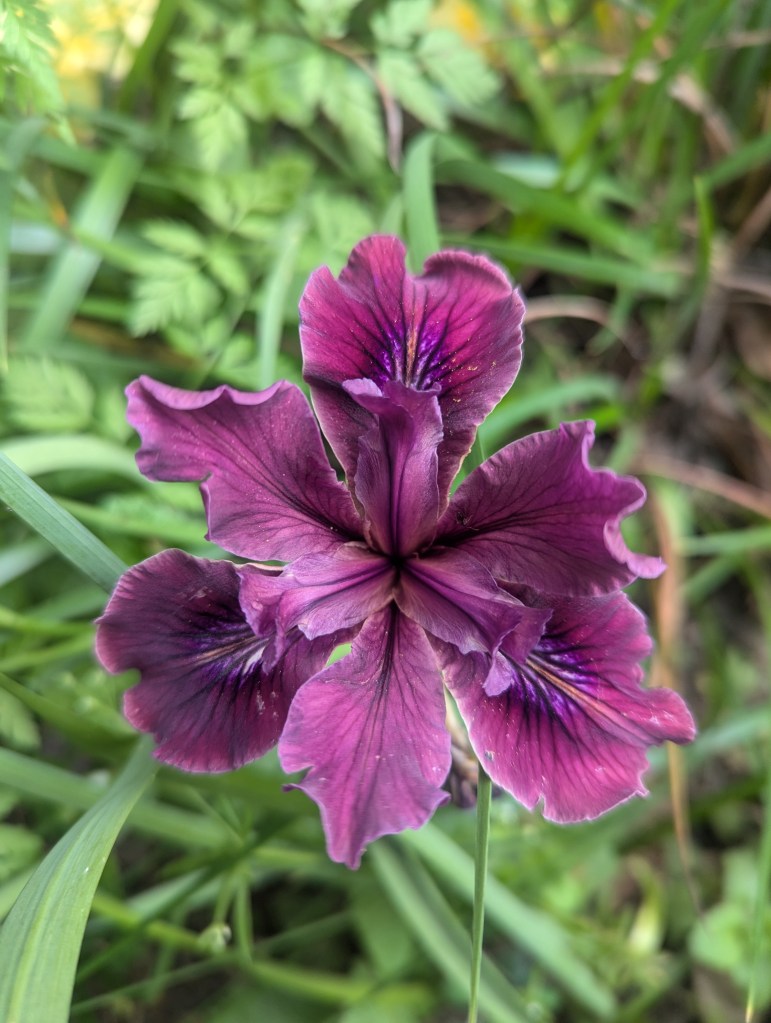
Pacific Coast iris eventually appreciates division.

Propagation produces more plants from minimal and readily available resources. Within home gardens, propagation is practical by seed, cutting, layering or division. Seed which is not available directly from the garden is generally not very expensive. Cutting, layering and division utilize what already lives within the garden. In other words, the stock is free.

Seeding produces genuinely new plants. Other forms of propagation produce genetically identical copies of their parent plants. Cutting compels pieces of stem to grow new roots. Layering does the same, but while pieces of stem remain attached to their parent plants. Division involves separation of portions of stems that already developed their own roots.

Most species that are conducive to division are substantial perennials. Flowering quince and lilac, though, are woody shrubs that produce dividable suckers. Most division should happen during late summer or early autumn. However, several species prefer late winter. Deciduous species, like lilac and flowering quince, prefer it during their winter dormancy.

Shasta daisy, lily of the Nile, daylily and coneflower prefer division during late summer. It is after their bloom and summer warmth, but before cool weather of winter. They disperse their roots through winter to resume growth even before spring. Bearded iris are ready for division a bit earlier, and resume growth by autumn. They are then ready for early spring.

Division of phlox and penstemon should be a bit later, when they get cut back. Bergenia blooms for winter, so should not be disturbed until late winter. Torch lily might bloom late, so also prefers to wait until late winter. New Zealand flax recovers from the process more efficiently after winter. It grows slowly during wintry weather, so is more susceptible to rot.

Daylily is easy to divide by simply digging and separating foliar rosettes from each other. Lily of the Nile is as simple but more work because of tough roots. Shasta daisy involves cutting apart clumps of its matted basal stems. Each clump, which may be cut away with a shovel, contains several such stems. Newly divided plants might bloom better because they are not quite so crowded.

Too Much Yucca

Yucca whipplei, which is now also known as Hesperoyucca whipplei, was the first species of Yucca that I met in the wild when I relocated to San Luis Obispo in 1985. Although it is too unpleasantly spiny for me to recommend it for home gardens, it is my favorite species of Yucca.

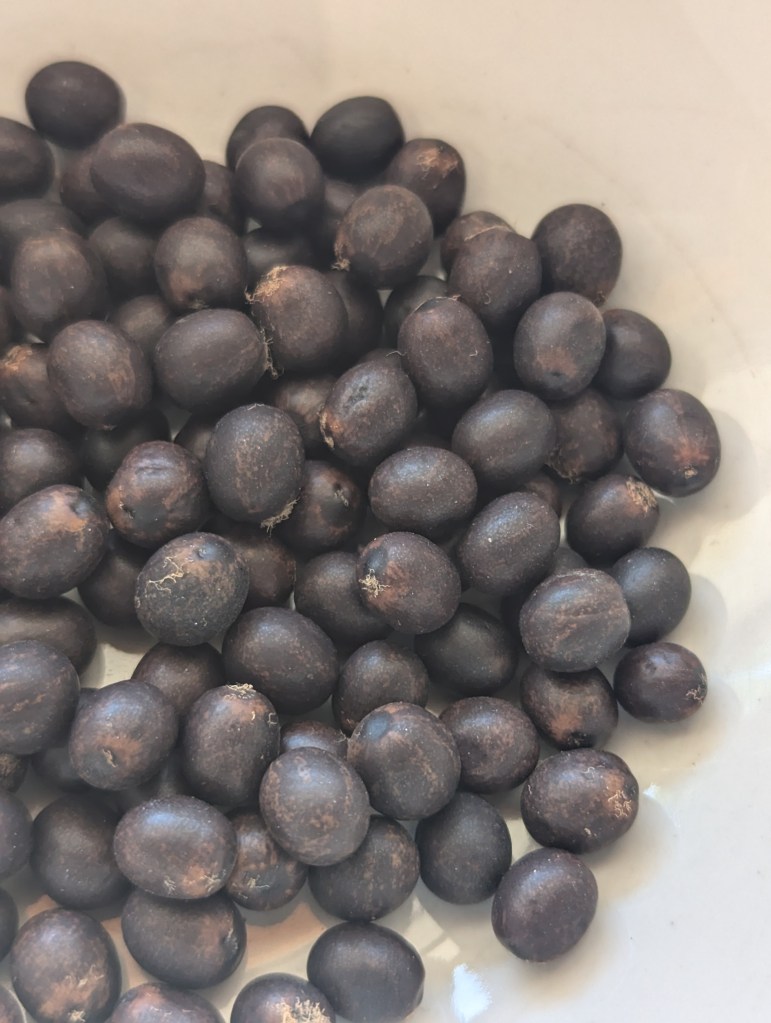
The only specimen of Yucca whipplei that inhabits our landscapes produced a few seed pods two years ago. I dried the seed and sowed them last year. I would have been pleased if a few germinated successfully. Instead, hundreds of them are now growing! Again, I grew too much of a good thing.

I can install several as a deer fence below a portion of my home garden. Although they grow only about three feet tall, deer will not try to jump over them uphill if they can not land beyond their painful foliage on the uphill side. However, if I put them three feet apart, only about twenty seedlings will be needed for approximately sixty linear feet of deer fence. That might be only about a twentieth of the hundreds that are now growing! They are still babies. I can worry about finding homes for them later.

Runt

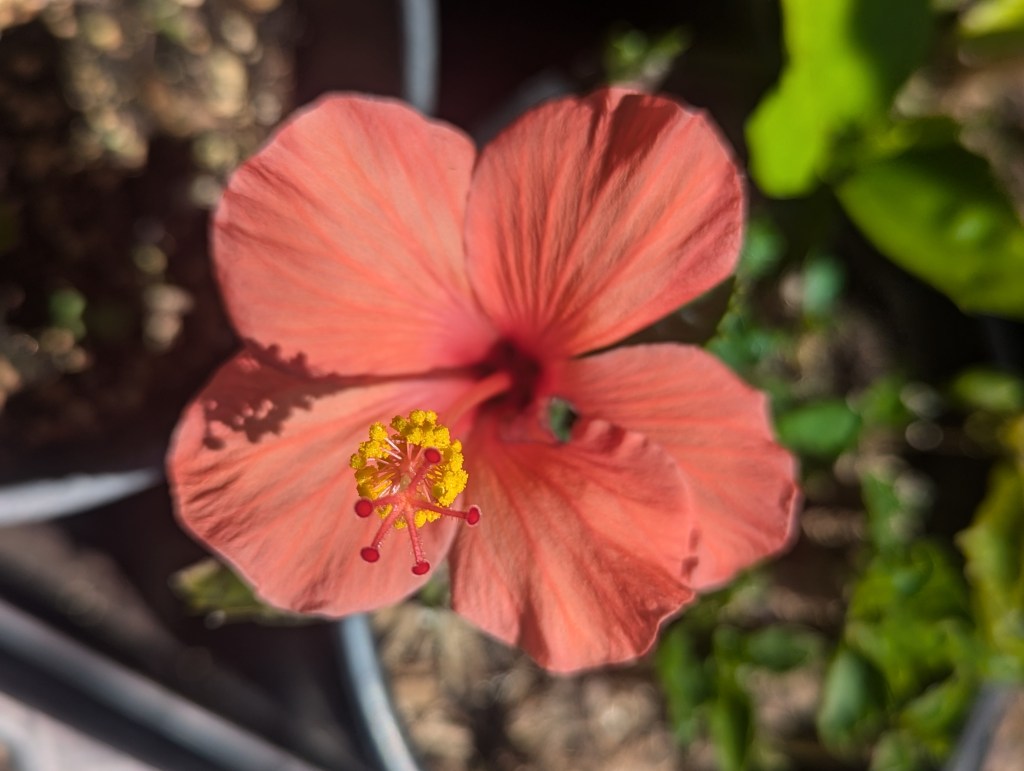
What a pathetic tropical hibiscus flower! It is only about two inches wide. It should be bright red instead of this faded terracotta pink. It even lacks foliage in the background. So, why did I take a picture of it? I was impressed by this flower because it bloomed on a cutting that is still in the process of rooting. I should have removed the bud when it appeared, to conserve resources for root growth. Instead, I let it bloom to see what would happen. This is the result. Knowing all that I know about it, I am somewhat impressed. Of course, I plucked the flower off after taking its picture. After all, I am a nurseryman, not a gardener. I want the cuttings to root as efficiently as possible. Actually, more of them than I expected seem to be rooting, so there may be a surplus of these particular hibiscus in the future. Cuttings of another cultivar that blooms yellow did not perform so well. Only three survived so far, and they are rather wimpy. I may need to go back to collect more cuttings for that one. I also would like cuttings from a cultivar that blooms orange.

Propagation Produces More Garden Plants

Many species propagate reliably by seed.

Seed is the most familiar option for producing new garden plants. Division of perennials, especially overgrown colonies, is another familiar technique. More substantial plants are easier to grow from cutting or layering. Propagation is any process of producing plants. It is how nurseries generate such plants. Some techniques are practical for home gardens.

Propagation by seed is the most practical for most annuals. It is also practical for several perennials and woodier plants. However, not all seed is true to type. Some may become progeny that is different from its parents. After a few generations, ‘Jewel Mix’ nasturtiums revert to orange and yellow bloom. Progeny of most variegated plants lacks variegation.

Propagation by division is more practical for many perennials that form distinct colonies. This includes crowded bulbs. It entails separation of portions of such colonies, or merely single rhizomes. Such portions need only enough root to grow as new plants. Progeny of division are genetically identical to their single parent plant. They therefore do not revert.

Propagation by cutting is the most common technique of propagation among nurseries. It involves cutting pieces of stems and compelling them to grow roots in rooting media. For small scale home garden applications, some of such stem pieces can root in water. Such pieces, or cuttings, are genetically identical to their original parents. They can not revert.

Layering is rather similar to propagation by cutting. Stem pieces remain attached to their original parents during the process though. Burying a portion of stem with its tip exposed stimulates root growth where it is buried. Such stems eventually develop enough roots to sustain themselves after separation. Layering is practical for producing just a few copies.

Propagation is certainly more involved than these brief descriptions imply. It may involve other techniques. Grafting involves assembly of two or more distinct cultivars onto single plants. Rootstock grows from seed, division, cutting or layer. Scions are buds or stems of other cultivars. They graft onto the rootstocks to become the upper portions of the plants.

Male Delivery

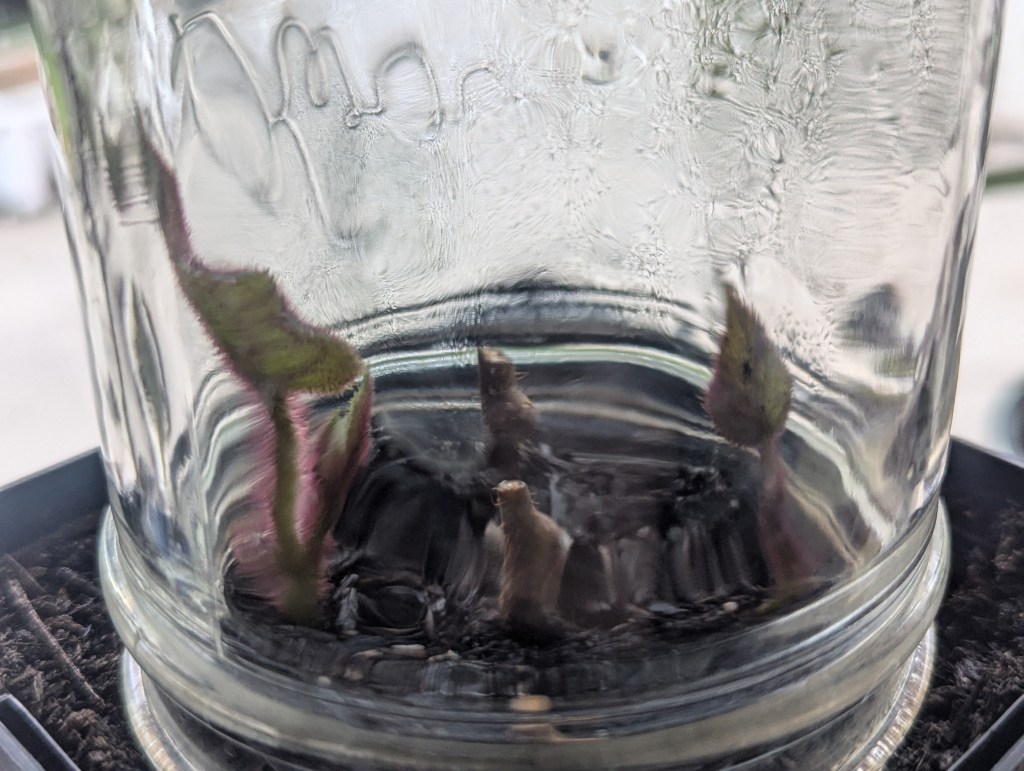
Flowers of all fruit need pollination for fruit to develop. Most are self pollinating. Some require pollination from another variety. Some are dioecious, so female flowers need pollination from male flowers. A few, such as figs and muscadines, are even more complicated, but they are topics for another article. For now, I am concerned with my female kiwi vine, which is growing like a weed, but would have been unable to produce any fruit without a male pollinator. It was not a planned acquisition. I grew it from cuttings from a bit of vine scrap that someone brought to dump in the debris piles here. Because it grew so well, I requested some male vine scrap from the same person who provided the female vine scrap. Obviously, since he grows the female vine in his home garden, he also grows a male vine to provide pollen. I wanted the scrap while it was dormant through winter, because that is when I prefer to start hardwood cuttings. By the end of winter, I figured that it was too late to start cuttings, and that I would need to wait to try next winter. Then, just a few days ago, the person who provided the female vine scrap brought me a small piece of the male vine, which was already foliated and growing! This presents a challenge, since I lack access to a greenhouse with bottom heat and mist. I cut the stem into five cuttings. Three have single axillary buds that are still dormant. Two are vascularly active terminal cuttings, which are merely short shoots that grew from two axillary buds that are still attached. All but the smallest leaves were removed from the terminal cuttings. So far, they seem happy under a jar. Now, I can only watch and wait.

More Sticks

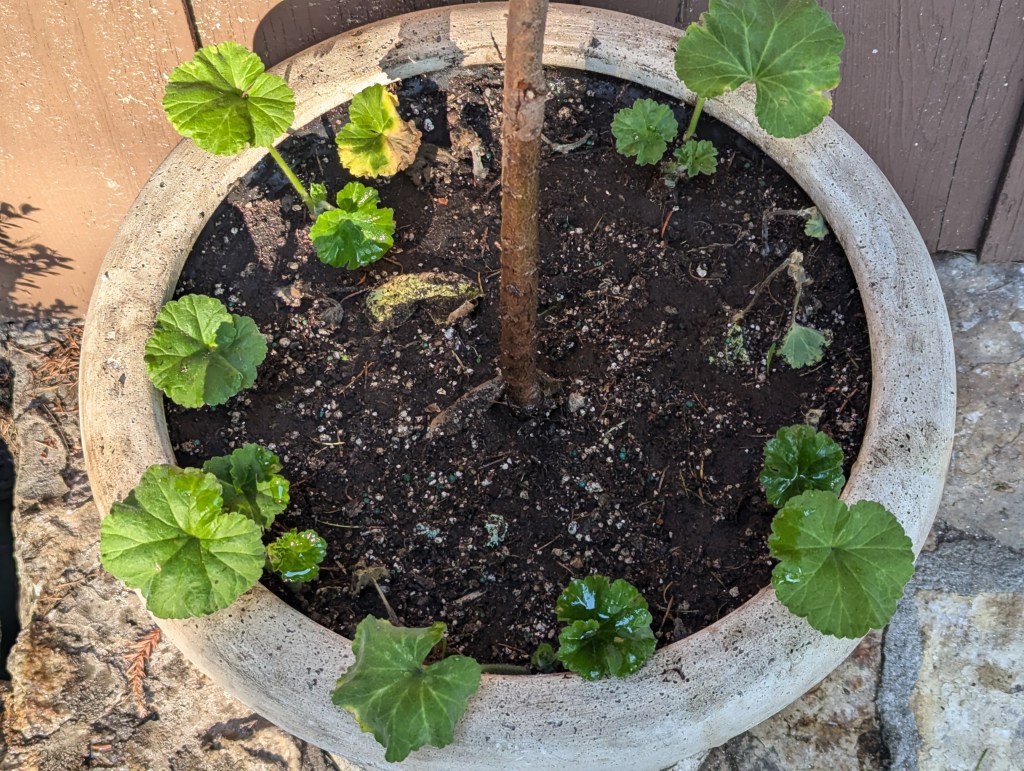
Horticulture involves many sticks. Almost all are pruning scrap. Very few become scions for grafting, like the stick of ‘Beurre d’Anjou’ pear that I wrote about last week. A few more become cuttings, like these white zonal geraniums, Pelargonium X hortorum. These cuttings were processed from scrap of the same that formerly inhabited their same pair of big pots. The original specimens performed well within their pots for a few years, but were about to become overgrown if they had been left to grow for another season. They could have been pruned back and left to regenerate. However, because small specimens of lemon cypress, Cupressus macrocarpa ‘Goldcrest’ were added to their large pots, it was easier and neater to simply remove them completely and replace them with eight cuttings in each of their two pots. These cuttings should grow nicely and perform well for a few more years. Then, they can either be cut back to regenerate, or replaced with cuttings processed from their own scrap after their removal. Such processes cost no more than a bit of time and effort. I have been doing the same with a weedier bright pink zonal geranium that I have been growing since I was in junior high school in about 1979. I acquired the original sticks from a neighborhood garden debris dump, and have been growing them ever since then. I brought them with me to every home that I lived in through college, and then brought them back here when I returned. I acquired a similarly weedy but orangish red zonal geranium in about 1993, and have been growing it since then also. Zonal geraniums are underappreciated for their simplicity, practicality and, most of all, their sustainability. Once they inhabit a garden, there is no need for them to ever leave.

Which Houseplant?

Peperomia obtusifolia?

Peperomia obtusifolia, baby rubber plant is what I suspect this to be. I can not be certain. I do not work with houseplants. I can barely remember that we studied only a few cultivars of Peperomia that happened to be popular back when we were in school during the late 1980s’. The modern cultivars that are popular now were not even developed back then. I do not remember ever getting acquainted with the simple species, which this seems to be. That makes it even more perplexing. Where did someone get this copy of the simple species that has become so rare relative to popular modern cultivars as well as formerly popular cultivars? The rarest of modern cultivars is not as rare as this original. It is an exemplary specimen, too. It is at least two feet wide and stands more than a foot tall in its wide but shallow pot. Someone has maintained it meticulously for several years. Perhaps it grew as a cutting from an even older specimen that was grown before it became so rare so long ago. Perhaps someone appreciated this original simple species as it was losing popularity to more colorful modern cultivars back then. Realistically, without any of the fancy variegation of modern cultivars, the simple green original is undoubtedly more vigorous, and perhaps significantly so. It is therefore more sustainable than cultivars, and more likely to survive and perpetuate itself by cutting for many years. Alternatively, it could have originated as a reversion from a modern cultivar. Someone may have been impressed enough by its relatively vigorous simple green foliage to grow a copy from a cutting. Perhaps relatively vigorous simple green growth merely overwhelmed and replaced original but less vigorous variegated growth. These are merely guesses about its identity, which remains a mystery.

Ocotillo Cuttings

Fouquieria splendens, ocotillo

Fouquieria splendens, ocotillo has been an elusive species that I would like to try to grow, even if only to determine that it will not survive for long in my climate. I suspect that there are a few reasons why I have never observed it outside of desert or warm chaparral climates. I know that it is very susceptible to rot if irrigated even slightly excessively, and within some climates, any irrigation may be excessive. If I can grow cuttings, I will put them in stony and very well drained soil on an exposed ridgetop above my garden, where they will get no irrigation. The piece of cane that was given to me a few days ago, and that I mentioned this morning, is about three feet long, with a single offshoot that is a few inches long. Cuttings should supposedly be between four and six inches long. I tend to make short rather than long cuttings, so would be inclined to cut them four inches long, for a total of about ten cuttings, including the offshoot. I am tempted to cut thirteen cuttings, three inches long, but will try to confirm with the recommended four inch minimum. I do not leave many cuttings out for their ends to dry, but will make an exception for these, since that is what is recommended. I will refrain from scarifying the sides of the proximal ends of the cuttings, just because the stems are somewhat wide, with correspondingly wide basal cuts. Rooting hormone powder will be applied, also as recommended. Fortunately, winter is the best time for starting such cuttings. However, they develop roots slowly, so may not be ready for plugging for two years. I can wait. I will continue to maintain these ocotillo cuttings until they either root or rot.

Six on Saturday: Weeding & Pilferage

Pilferage annoys me. I certainly do not want to annoy anyone else with it. Fortunately, I only want to pilfer weeds that should be removed from their landscapes anyway. Several of these six were unwanted feral seedlings, which technically qualify as weeds. Seed that was not removed could have grown into more feral seedlings if I had left it. Although the red yucca pup was not a weed, it was crowded. Ocotillo was a gift, so was neither a weed, nor pilfered. Now, I have even more to grow.

1. Hesperaloe parviflora, red yucca produces quite a bit of seed. I found some which the gardeners neglected to deadhead. I wrapped it too neatly to unwrap to get a picture of it.

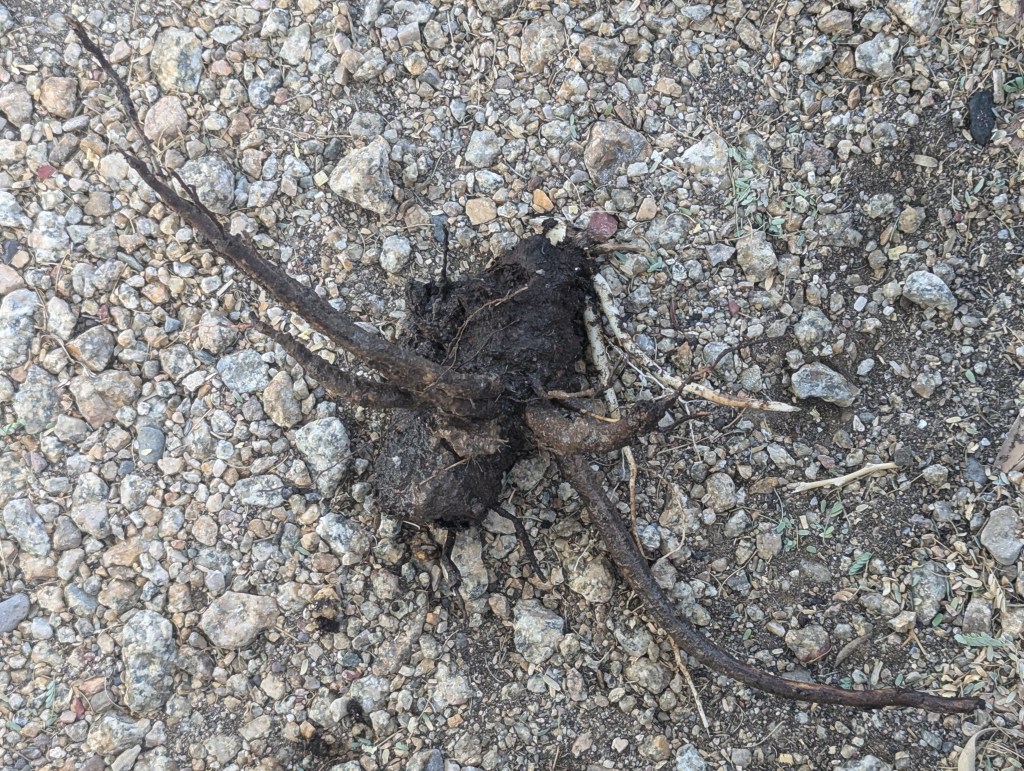
2. Hesperaloe parviflora, red yucca should be easier to grow by division. Unfortunately, this one shoot that I managed to divide is almost totally rotten from excessive irrigation.

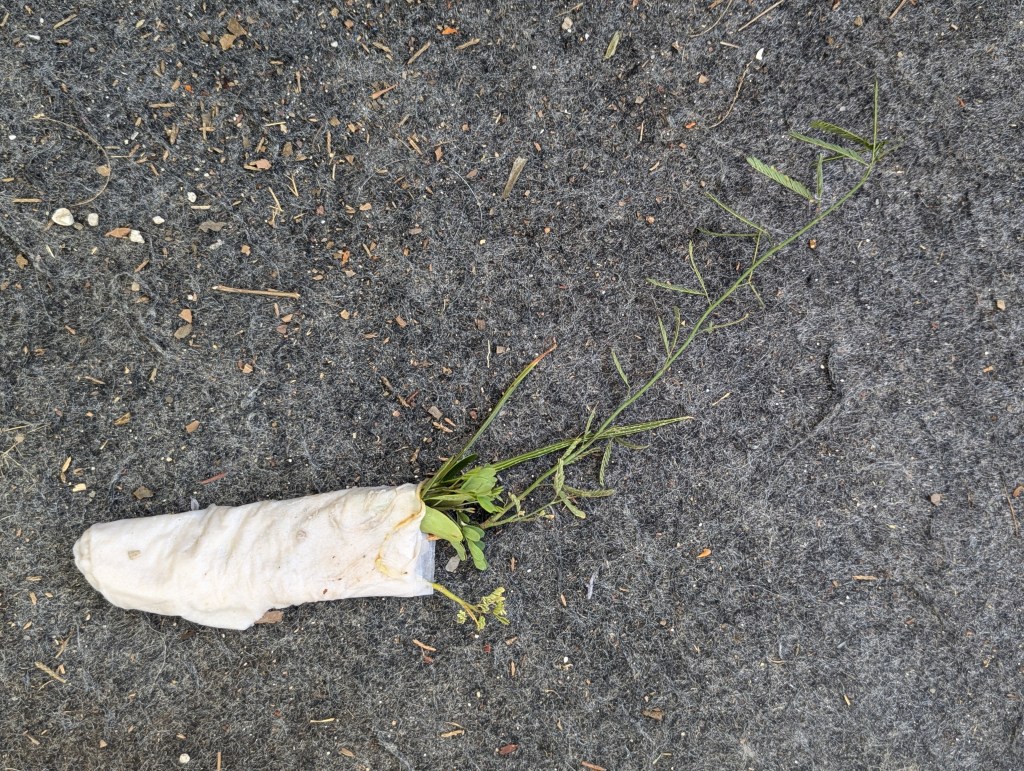
3. Calliandra californica, Baja fairy duster is the only species in this bundle of seedlings that I can identify. It is the biggest one which extends to the upper right. The bundle also includes seedlings of both or either Parkinsonia florida, blue Palo verde and or Prosopis velutina, velvet mesquite, as well as a single seedling of an unidentified species of palm.

4. Parkinsonia florida, blue palo verde is easier to identify when it larger than seedlings. However, because I am unfamiliar with it, I am still uncertain if these are actually them.

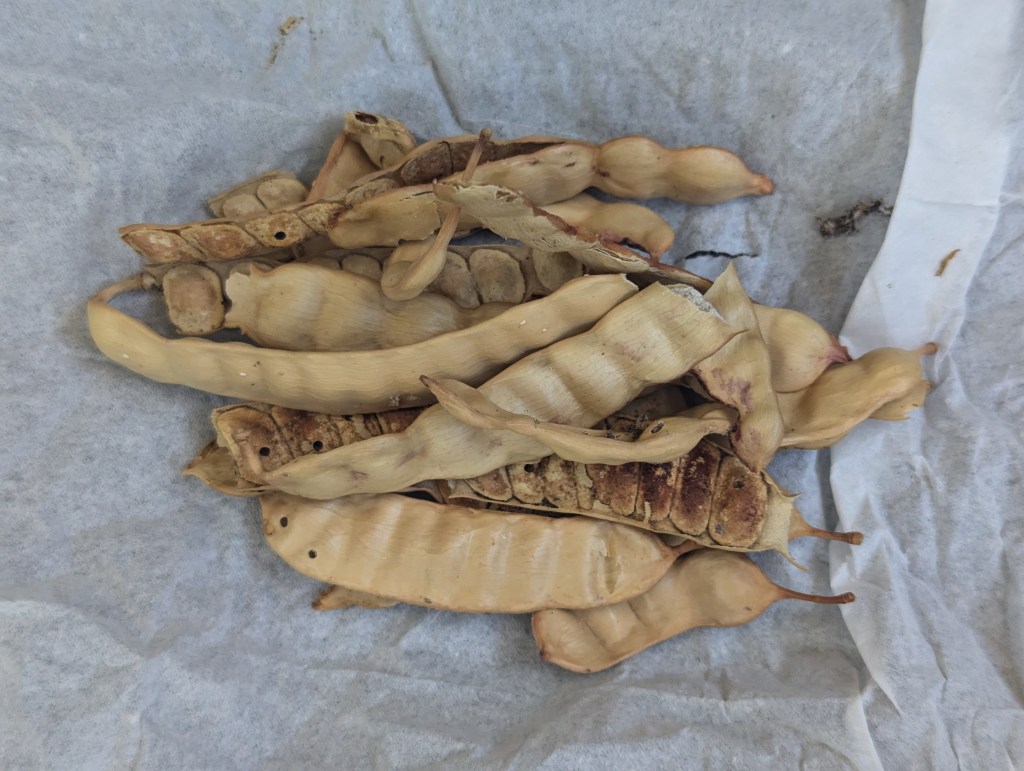
5. Prosopis velutina, velvet mesquite left these seed pods on the ground. Small holes are from insect larvae that ate some of the seed within. A few viable seed would be adequate.

6. Fouquieria splendens, ocotillo was a gift, so was not pilfered. This cane is about three feet long, so can become several cuttings when I determine how long cuttings should be.

This is the link for Six on Saturday, for anyone else who would like to participate: https://thepropagatorblog.wordpress.com/2017/09/18/six-on-saturday-a-participant-guide/

Please Do Not Pick the Flowers

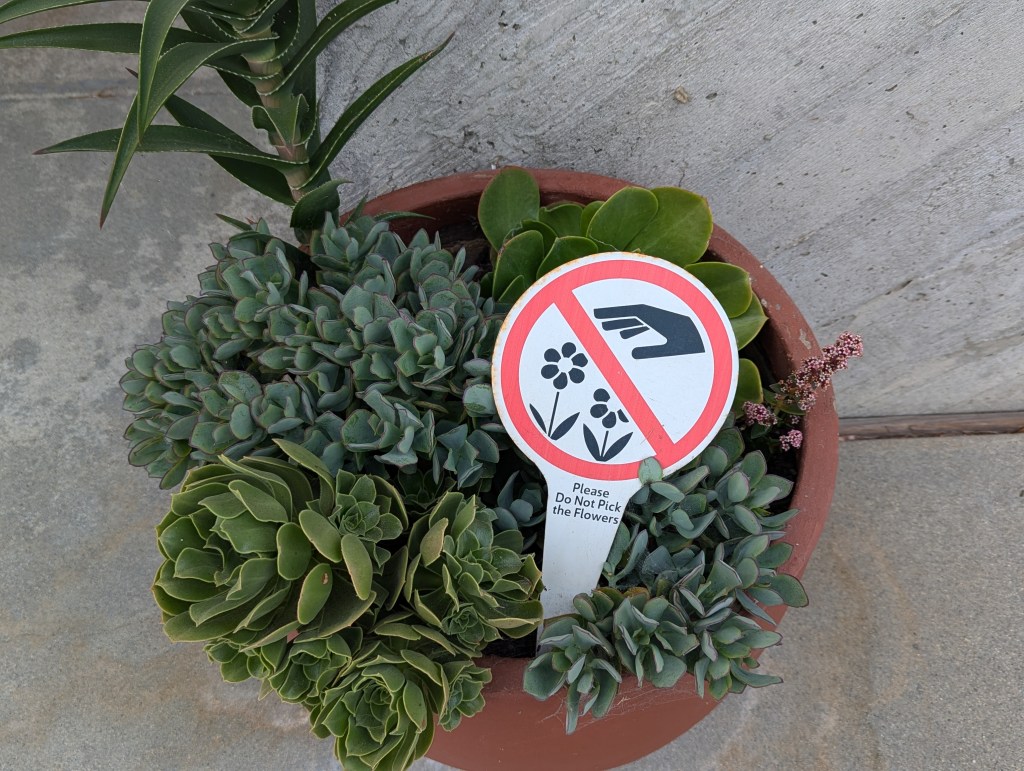
Am I that predictable? How did whoever posted this sign know I would be here? I do not want their stupid flowers anyway. Besides, only that dinky twig of some random species that I can not identify is blooming on the far right. Is that all they got? What I really want, or more accurately, what I would want if I did not find them to be either uninteresting or redundant what is already in my garden, is stem bits of the succulents for propagation. I suppose that I am not the only one who might want that, which is why the sign, although slightly irrelevant to such desires, became necessary. Actually, I have direct experience with pilferage of bits of succulents from my small planter box downtown, so I am aware of why such signs might be useful. I would not install any such sign within my planter box because such a sign would be bigger and more prominent than any of the flowers that it would be intended to protect. If I were to grow more flowers, I would prefer those that are so abundant that no one would miss a few that might get pilfered. The most abundant flowers are also smaller than less abundant flowers, so they would not be as tempting to those who might want more impressive flowers. For example, the bearded iris within my downtown planter box blooms with only a few big and bold floral stalks. Not only are the flowers tempting and easily taken, but when they are taken, there are no more to replace them. Anyway, I do not actually mind if those who want copies of my succulent perennials take a few bits if only they do so properly. It may happen more often than I am aware of, but of course, I am not aware of it if otherwise useless bits are taken from below the visible growth, or where they should be pruned away anyway. That is how I justify what you likely know I will mention next. Yes, only about a hundred feet from this urn filled with succulents and the sign that requests that I refrain from doing as such, even if it does not mention the subject matter and procedure directly, I ‘borrowed’ a few bits of stem from the underside of a shabby specimen of what seems to be ‘Roman Red’ Salvia guaranitica that should eventually get pruned back for winter anyway.