Litter Problem

It will not DIE!

We have a litter problem. At least three species of Agave continually have litters of pups. We give almost all of the pups away to friends and neighbors, but more constantly appear. I suppose that we could dispose of some, but that is not easy for those of us who enjoy growing vegetation instead of destroying it.

Pups of one Agave continue to appear where the original was relocated from several years ago. Although I do not know what species it is, it is likely my favorite of the three. However, we can not accommodate all these pups! The original is happy with its new situation, but is beginning to generate a few more pups there as well.

Pups of Agave americana, century plant, got canned because we thought that we could eventually find homes for them. Now, and for the past few years, these maturing pups are producing more pups, some of which are emerging from the drainage holes of their cans! The original is happy to be a neighbor of the unidentified Agave, but could generate more pups at any time.

Agave ovatifolia, whale tongue agave, was purchased by the other horticulturist for a specific situation. It was a striking specimen that was worth what was spent on it. However, it began to generate pups almost immediately after installation, and then suddenly and unexpectedly bolted and bloomed. It was disappointing for such an expensive specimen of a monocarpic species. We removed it after bloom, with the intention of replacing it with one of its several maturing pups. Of course, I could not simply dispose of its carcass. I canned it like a dormant perennial, just in case it did something. Well, now it is doing something! It is bolting and blooming from the grave! I expect more pups soon. We really should get all the Agave spayed!

Agave really should be spayed!

Horridculture – Salvage

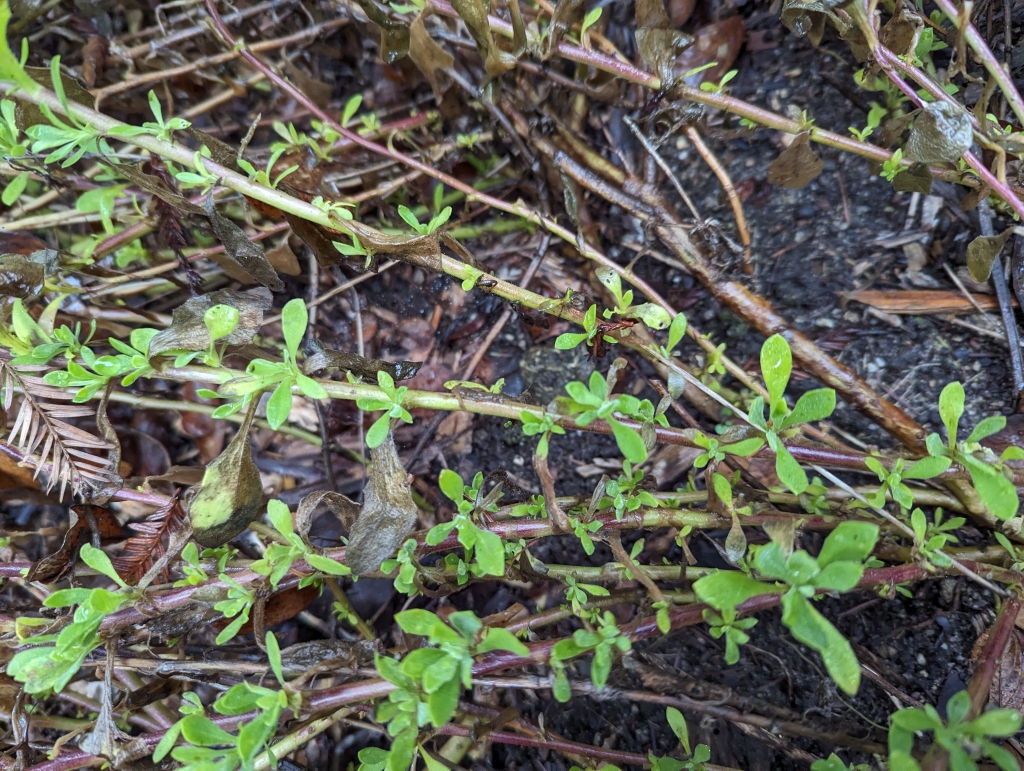
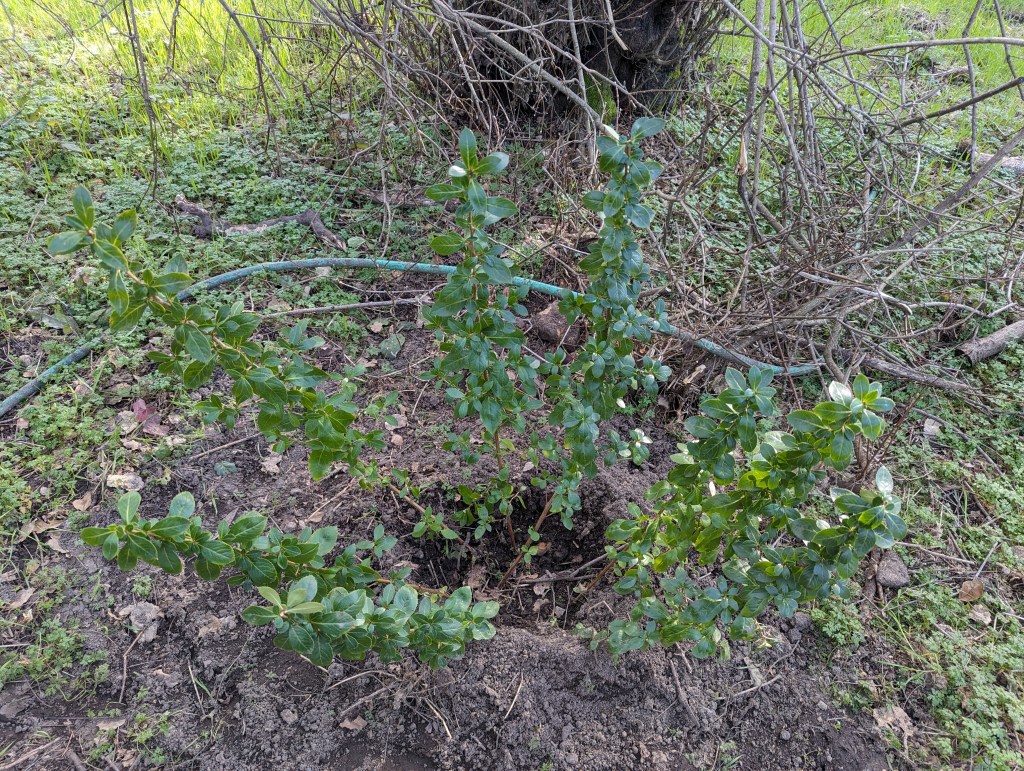
A hedge of a dozen like this came from one branched stump.

This is an old and redundant topic. I should know better. Some vegetation is not worthy of salvage. Even that which is worthy can become excessive if too much is salvaged. The problem is that I find it very difficult to discard vegetation that I can relocate to another landscape, or grow in the recovery nursery whether or not we have use for it.

A few stumps of shrubbery needed to be removed from a small landscape of one of the buildings at work. With one exception, the shrubbery was common Photinia X fraseri, which had been cut down some time ago, and had not grown back much. The one exception was a common Escallonia rubra, which had been cut down even earlier, so had grown back about five feet tall, with a few distinct trunks.

I had no problem discarding the Photinia X fraseri. The stumps came up with mostly severed large roots, and very minimal fibrous roots that they needed to survive. If I really want to grow more, it would be more practical to grow it from cuttings. I am none too keen on the species anyway.

The Escallonia rubra was not so simple. Although I was determined to discard it all, and I am no more fond of the species than I am of Photinia X fraseri, it came out with more than enough fibrous roots to survive relocation. What is worse is that the several trunks were easily divided into several individual well rooted specimens, with several more layered stems attached to them. I assembled an even dozen well rooted specimens as a hedge outside a fence of our maintenance shops, and nine smaller rooted cutting to alternate between cypress trees outside another similar fence. Although pleased with the results, I should have discarded them.

This is one of the smaller well rooted specimens, although the layered stems are smaller.

Six on Saturday: Plugging Along

Agapanthus orientalis, lily of the Nile and Osteospermum ecklonis, African daisy are all there is to my Six for this Saturday. Lily of the Nile is in the first three. African daisy is in all but the first. Both are in the second and third. Both are from South Africa. Both have been getting recycled from where they are migrating a bit too much, and getting plugged into more appropriate situations. It is nursery production directly within the landscapes where the finished products are desired. Processing African daisy cuttings and lily of the Nile shoots takes time, but is still less expensive than purchasing nursery stock. They are byproducts of our normal landscape maintenance.

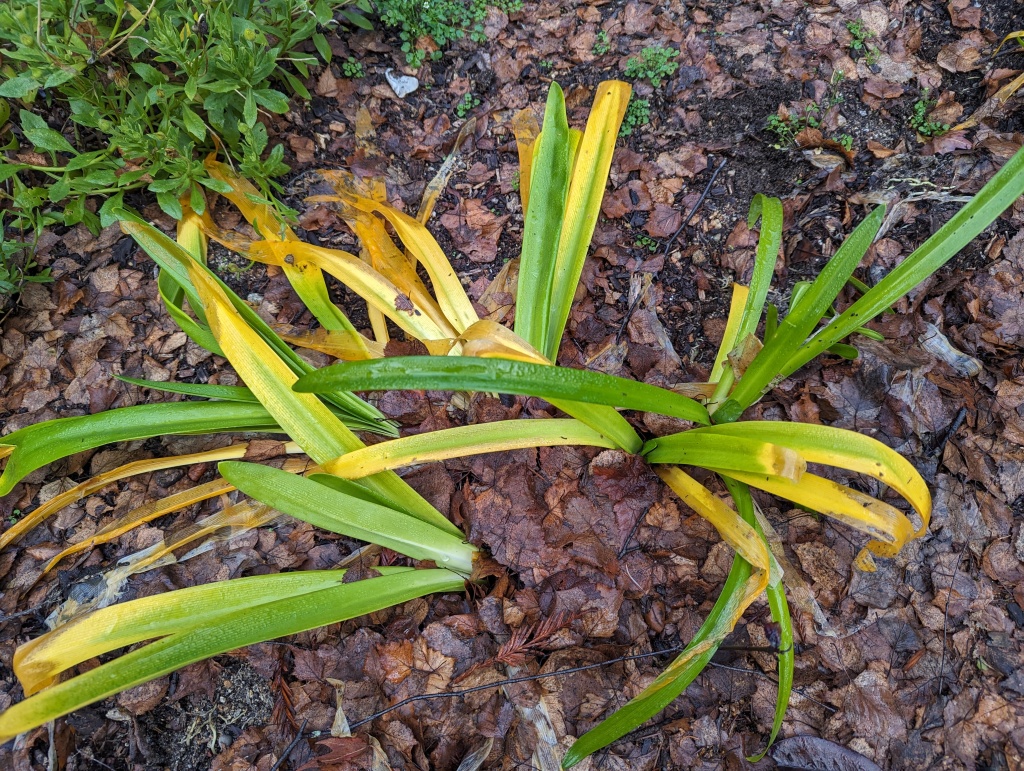
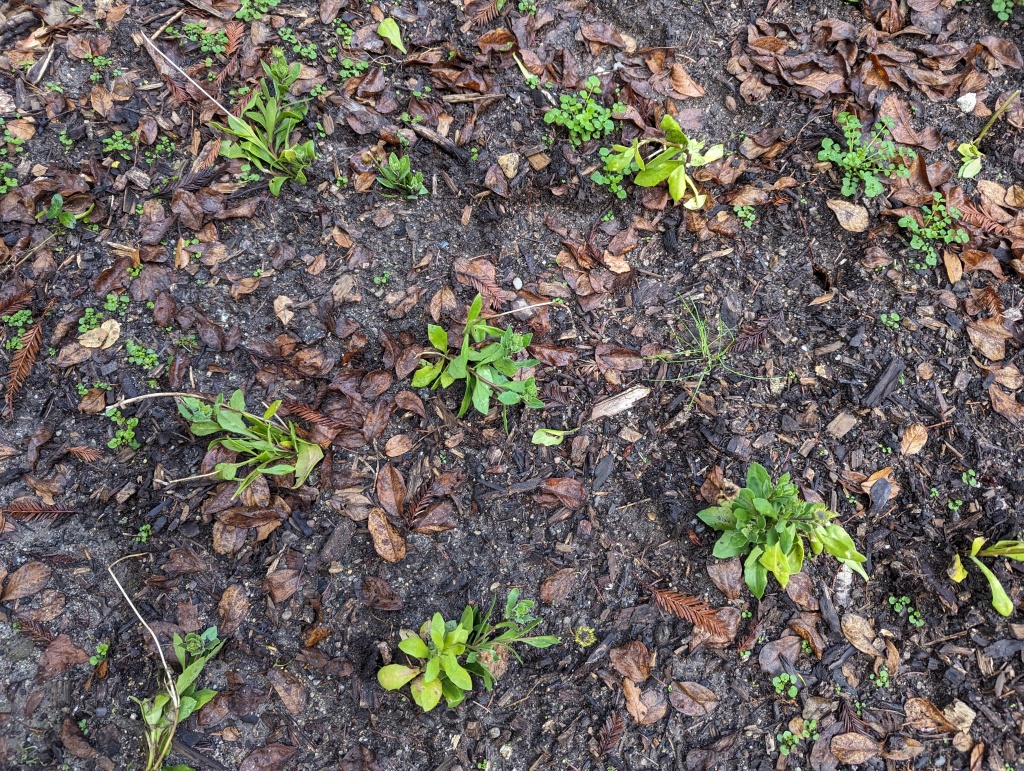
1. Gophers are killing fewer lily of the Nile than they killed last year. I must plug some of the spare shoots from last Saturday here though. Gophers ate the thick rhizomes below.

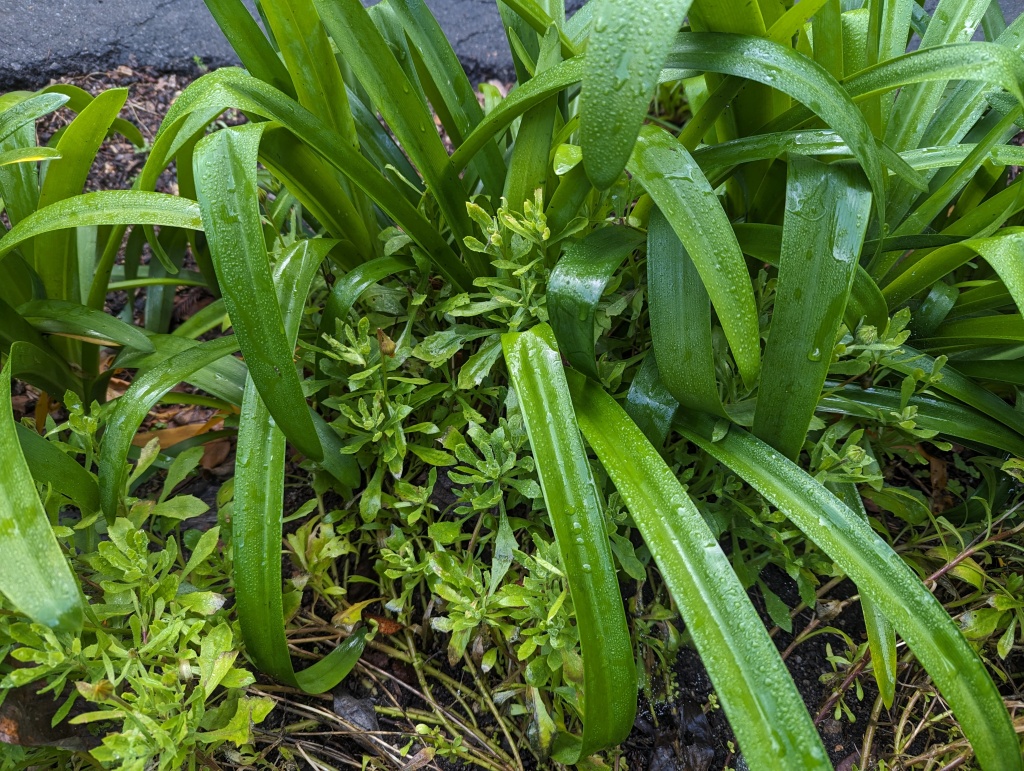
2. African daisy is performing as well as the majority of lily of the Nile in this landscape. It migrates nicely, but also encroaches somewhat into the adjacent row of lily of the Nile.

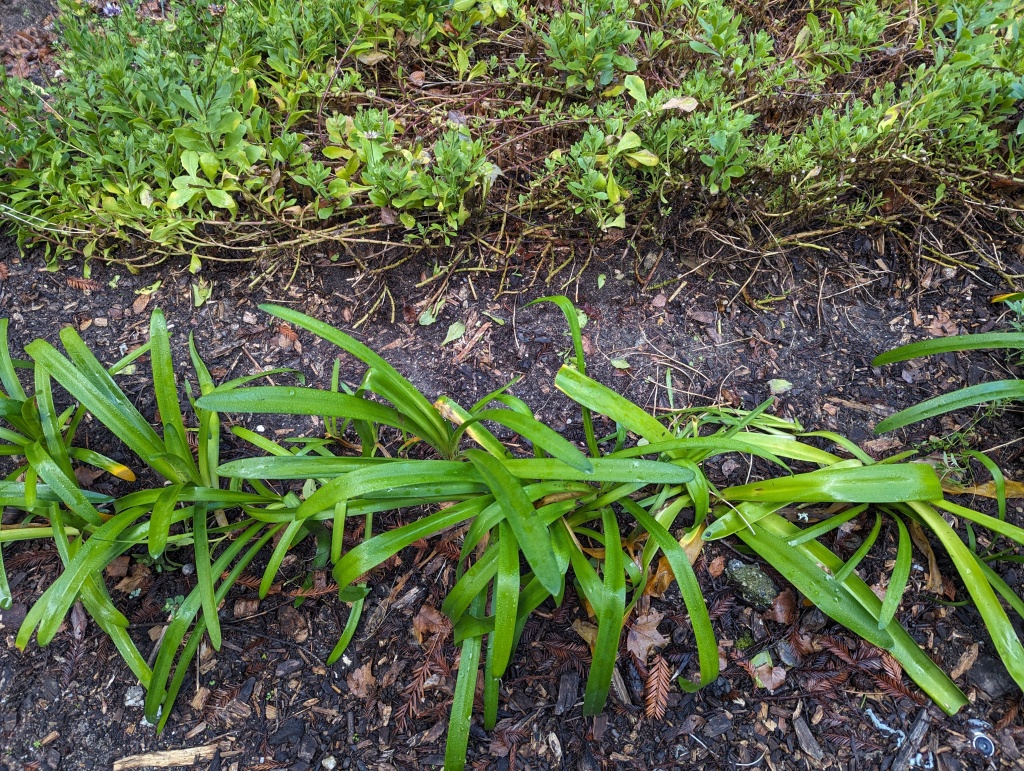
3. Edging is now necessary to separate the African daisy from the lily of the Nile. The lily of the Nile should grow to become too dense for the African daisy to encroach next year.

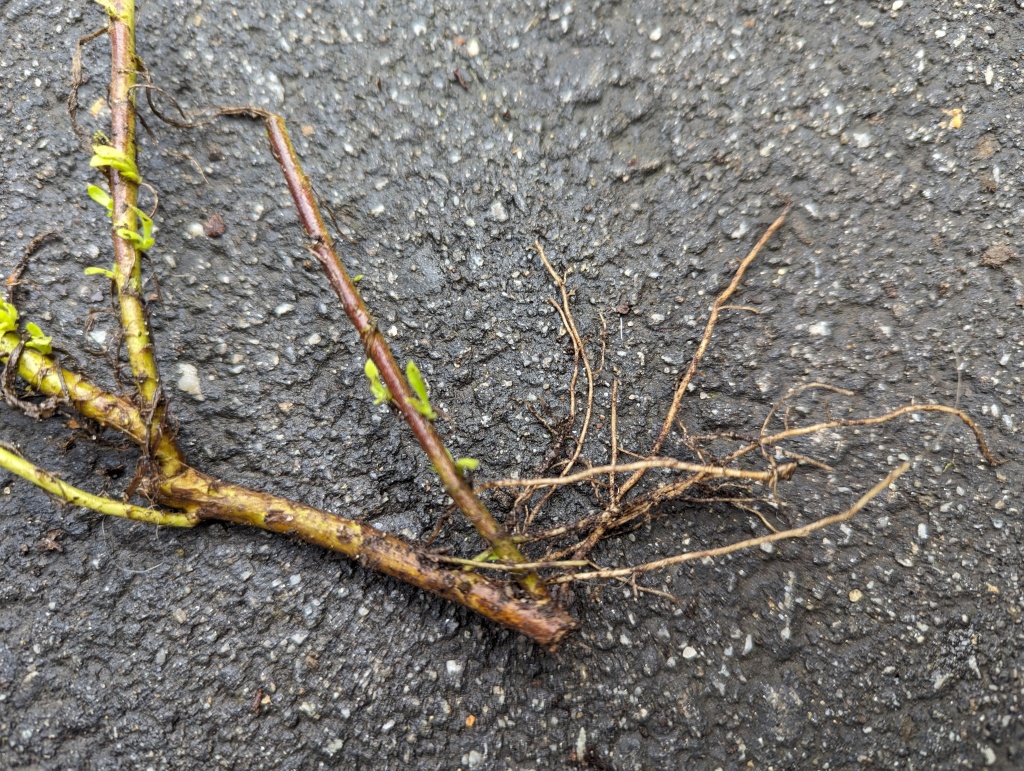
4. Some of the pruning scraps of the African daisy had already developed roots, as if they belong there. Their roots can be useful somewhere else. These scraps became cuttings.

5. Remaining stems are generating axillary growth for this year. We should apply a layer of compost over the stems to hold some against the soil so that they can develop roots.

6. Pruning debris from the African daisy was processed into unrooted cuttings that were plugged wherever we wanted more African daisy. They will develop roots prior to spring.

This is the link for Six on Saturday, for anyone else who would like to participate: https://thepropagatorblog.wordpress.com/2017/09/18/six-on-saturday-a-participant-guide/

Stick in the Mud

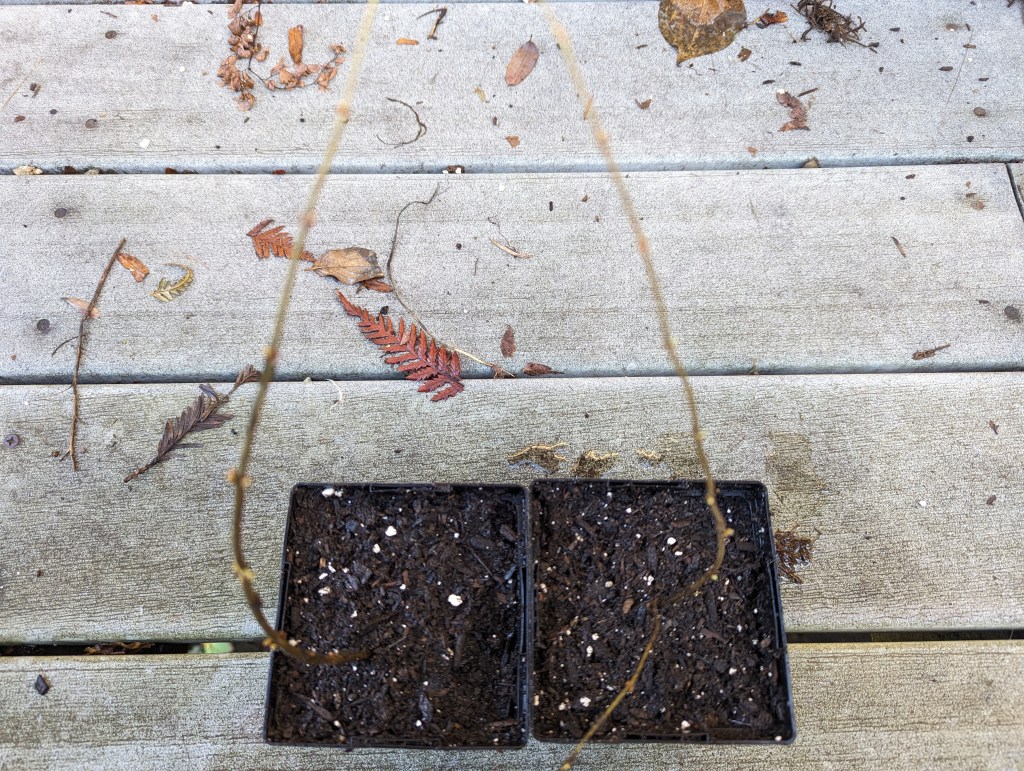
Correction: two sticks in potting medium

This is why I did not brag about my recently acquired snowberry within the context of my ‘Six on Saturday’ post this morning. They are not much to look at. Even if this illustration were more in focus, these bare twigs are indistinguishable from similar dormant twigs.

Nonetheless, I am pleased with their acquisition. I can not explain why, but I am pleased. The species, Symphoricarpos albus, is native, but not popular. I am beginning to realize why. Not only is it not much to look at in this particular condition, but it will unlikely ever become much to look at. It always looks scraggly, even while generating new foliage for spring. Its foliar color is unimpressively bland light green. Its twigs are very twiggy. Its dinky pale pink flowers are grungy and almost always infested with something or other. Its white berries, which is its primary attribute, are very scarce.

After so gleefully pulling this particular seedling from a landscape that it needed to be removed from, splitting it into two, and canning them as seen here, I realized that a rather large colony of snowberry inhabits another of the landscapes here. I could take as many rooted bits from it as I want without noticeably depleting it. For now, I am very satisfied with these. I have no plans for them, but will figure that out as they grow.

I suspect that snowberry can be more appealing in cultivation than in the wild. I intend to promote growth that is more vigorous than typical, which should enhance berry production. After this first winter, in which I dug and canned it, I will likely cut all of its growth to the ground annually during winter dormancy. I will not notice improvement this first year, but might after two years.

Raising Cane

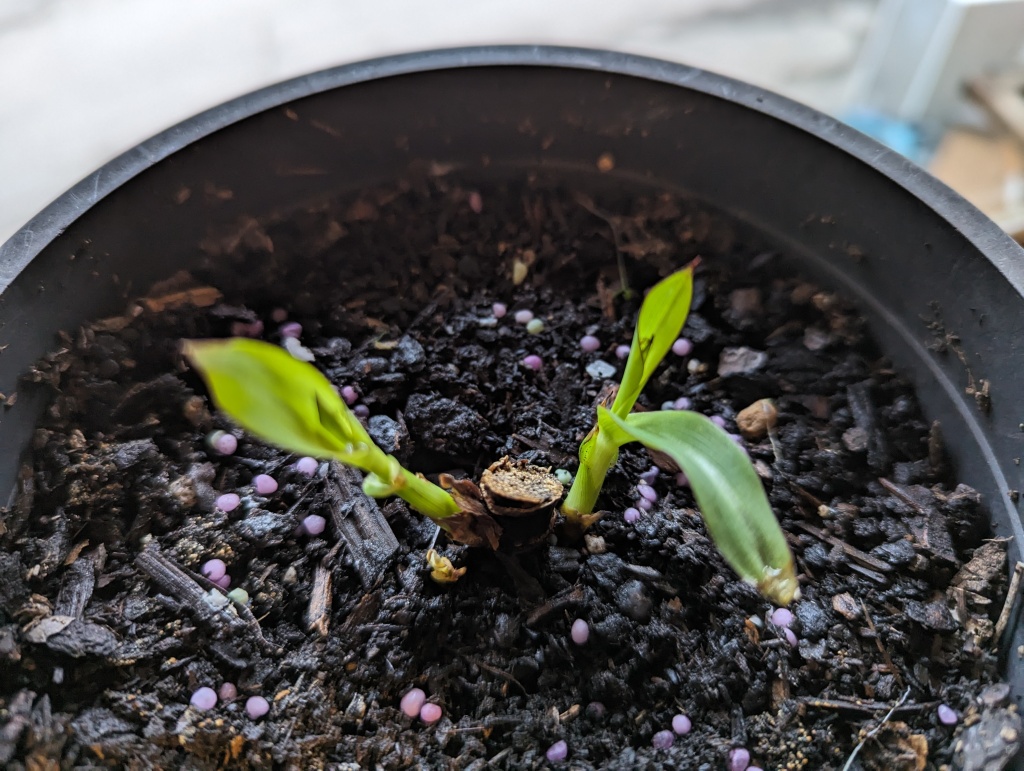
Sugarcane has been disturbingly easy to grow. This pair of pictures were taken about a day apart. The picture with smaller growth was taken yesterday morning, and posted with my Six on Saturday post at midnight. The picture with larger growth was taken this morning. If sugarcane grows this fast as a rooting cutting during winter, what will it do in the landscapes? Will it become an invasive weed? I suppose that I should be pleased with such healthy growth, but I am also concerned.

This particular sugarcane is likely ‘Pele’s Smoke’, which is more of an ornamental cultivar that should stay relatively compact. The original specimen from which I got the cuttings was not much more than six feet tall after at least two years, with bronzed foliage that is about the color of smoky topaz. It lives in Brent’s front garden. I pruned and groomed it while I was there for the first few days of November. Of course, I could not merely discard the scraps. I brought them back here and processed them into cuttings. I hoped that a few might take root.

The problem now is that most of the cuttings are beginning to grow. Only the softest of the terminal cuttings did not survive. Sugarcane is a tropical grass, so should not be growing much at all while the weather is cool. The many cuttings are stuffed into a pair of #5 cans, so may need to be separated prior to spring. I thought that only a few would survive at this time of year, and that they would grow too slowly to need separation until late next winter. Of course, I can not discard any surplus as I should. Only a few will go into the landscapes. Perhaps I can share some with neighbors.

Six on Saturday: Lily of the Nile Division

Now that the weather is getting cooler and almost rainy, it is time to relocate overgrown lily of the Nile. Quite a bit of it has slowly climbed over stone retaining walls to encroach into walkways. I remove rhizomes that are on top of walls, as well as any that are within a foot or so of the walls. After I divide and groom them, I install them where they will be more of an asset to the landscapes. They settle in with cool and rainy wintry weather, so should be ready to grow as soon as the weather gets warmer in spring. I neglected to get any before and after pictures to show where they came from and where they went to, (or to get six pictures).

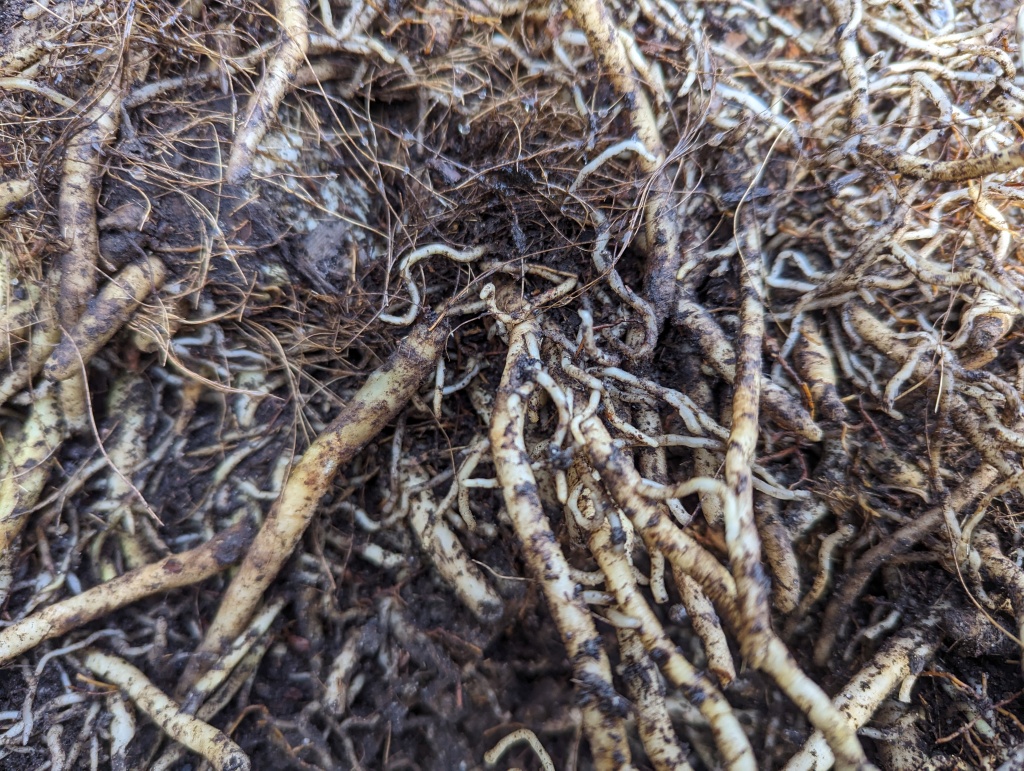
1. Roots of lily of the Nile can hold firmly onto a silty riverbank as the river floods above. They are impressively densely meshed. They are fleshy though, and therefore easily cut.

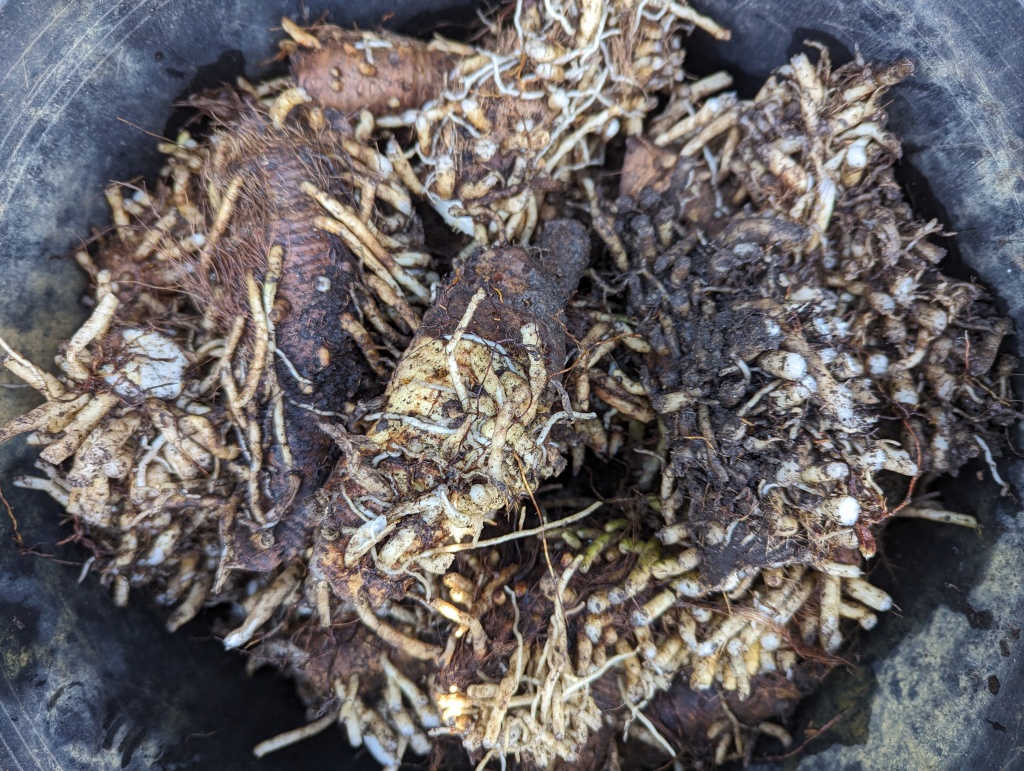
2. Rhizomes are also both impressively densely meshed and fleshy. Division is no simple task. I separated these scraps by cutting their roots. I bury them between divided shoots.

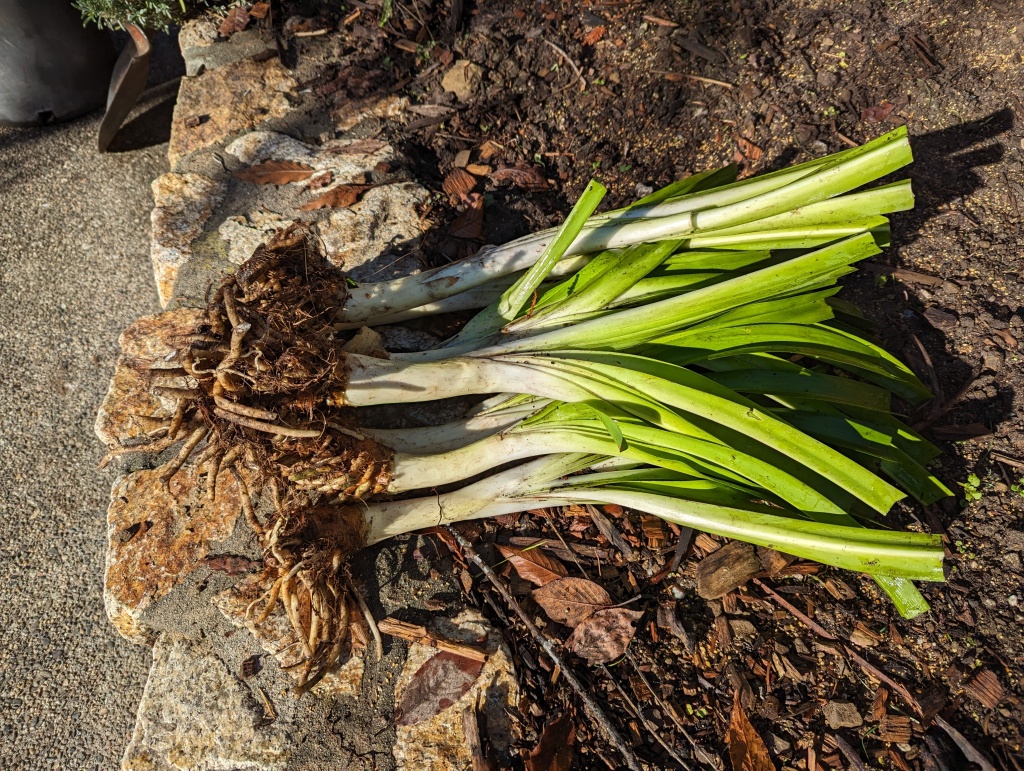
3. Foliar shoots or rosettes with a few inches of their rhizomes will grow into new plants. These have been groomed, so are ready for plugging with scraps of rhizomes in between.

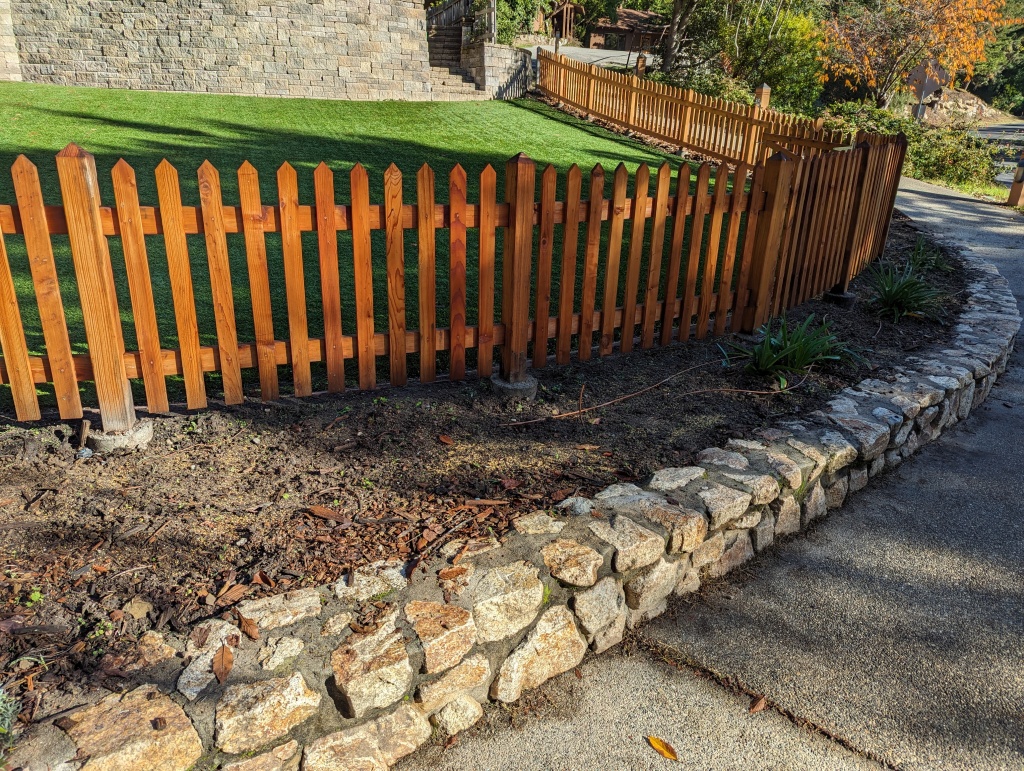
4. Gophers claimed all but a few lily of the Nile that were plugged here last year. I should have taken a picture of their replacements here, even if they are not much to brag about.

5. Oh deer! We are very fortunate that deer avoid the landscapes here. They always have.

6. Sugarcane is growing like a weed. This is one of too many cuttings that I brought from Los Angeles. They were pruning scraps from what I believe to be ‘Pele’s Smoke’. Sweeet!

This is the link for Six on Saturday, for anyone else who would like to participate: https://thepropagatorblog.wordpress.com/2017/09/18/six-on-saturday-a-participant-guide/

Six on Saturday: Self-Replication

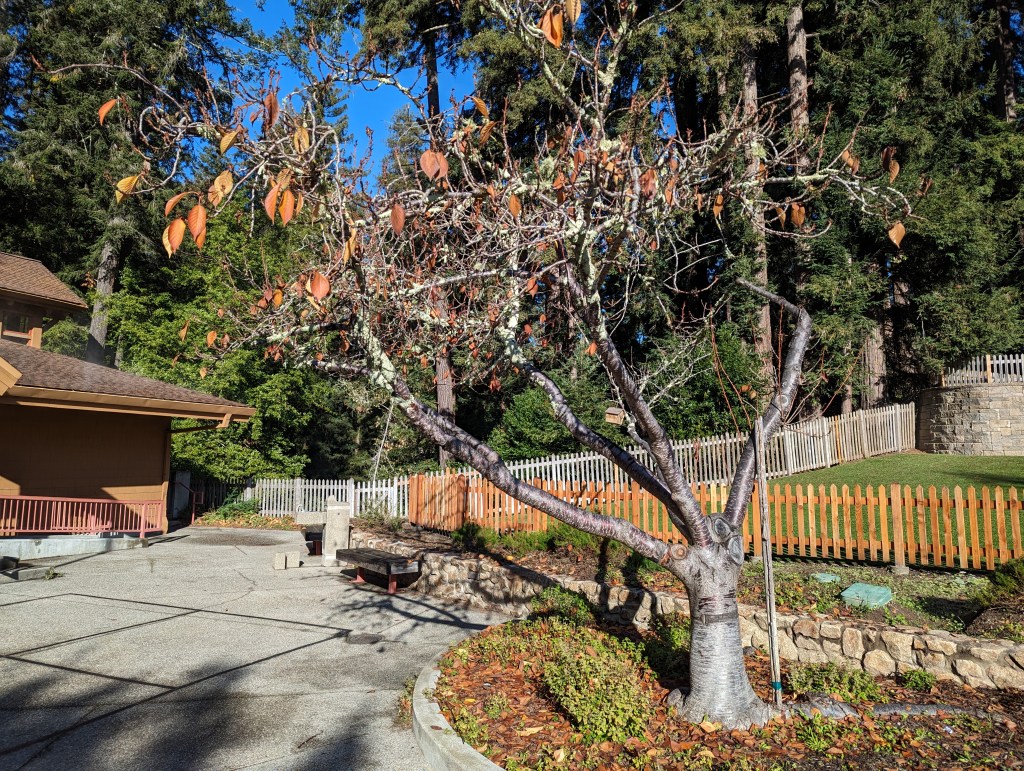
Kwanzan flowering cherry is spectacular as it blooms for early spring. Only one inhabits our landscapes, and of course, it is dormant and defoliated until next spring. I took these six pictures of it anyway, to demonstrate that it is deteriorating fast, but could be able to replace itself before it succumbs to decay completely. Unfortunately though, it will likely be removed before it is able to do so, so that we can install a purple leaf plum within this particular situation instead. I only assist with this self-replication process because of the very unlikely possibility that replacement with another different tree may never actually happen. It has been delayed for years.

1. This flowering cherry tree has been deteriorating for the past several years. Several big limbs have died, leaving its canopy disfigured and lopsided. Its right half is nearly gone.

2. Only shiners remain where some of the major limbs that died were removed from the trunk. If this tree were to survive any longer, these shiners would decay before they heal.

3. Incidentally, this tree is not grafted. Suckers from the roots are indistinguishable from growth of the canopy. Bark of exposed roots is indistinguishable from bark of the trunk.

4. Therefore, this sucker is genetically identical to the original tree. The roots have been generating suckers for several years. All but this one were removed. Instead, it is bound.

5. The binding stake is nailed to one of the major limbs of the original canopy, as well as to a big root below. Damage to the limb is unimportant. It will be removed soon anyway.

6. The bound sucker is now more than six feet tall. It could develop branches to begin to grow as a new tree next year. It could stay as a replacement after removal of the original.

This is the link for Six on Saturday, for anyone else who would like to participate: https://thepropagatorblog.wordpress.com/2017/09/18/six-on-saturday-a-participant-guide/

The Hedge on the Ledge

Perhaps no one will notice.

I can explain. Firstly, I should mention that this is an industrial building at work, not a home garden; so no one else cares what it looks like. Secondly, although this building is outfitted with an abundance of external electrical lighting, it lacks external electrical outlets. Thirdly, I brought a ‘Double Mahoi’ banana tree back from the Los Angeles region less than a month ago, so divided its pups at the most inconvenient time, as autumn weather was getting cooler. Fourthly, I should stop numbering all these individual statements, and get on with a simple explanation of this visually unappealing contraption.

The banana tree went to its permanent home already, where it can hibernate through winter. However, its pups languished and immediately began to deteriorate here. Because they will not grow much until warmer weather after winter, their rudimentary corms can rot faster than they can recover from their division. Therefore, I purchased an electrical heating mat to warm their media from below, and accelerate root and corm growth. It was not a pleasant purchase, since I object to reliance on such technology, but that is another topic for later.

I did not want to extend an extension cord too extensively from a window to the nursery benches on the deck to the lower right in the illustration above. I thought that this shelf would be less obtrusive. Perhaps I should have thought a bit more about it. I successfully extended and obscured an extension cord for the fountain on the mountain, but again, that is another topic for later.

Now that it is installed directly outside the window, without the need for an extension cord, the shelf fits the heating pad reasonably well, and suspends eight #1 cans with three 4″ pots nestled in between.

By the time this explanation posts at midnight next Sunday morning, the largest of the four ‘Double Mahoi’ banana pups, which incidentally is already in the process of generating another rudimentary pup, might be exhibiting a slight bit of accelerated growth. The two smallest of these four pups were cut back to their corms, and the third will likely get cut back also, so will take a bit longer to exhibit growth. All four are arranged in the front row at the bottom of the illustration below.

The three 4″ pots that are nestled in between the #1 cans contain tissue cultured plugs of ‘Gran(d) Nain’, ‘Cavendish’ and ‘Orinoco’ banana. With all seven pups and plugs of banana neatly arranged on the heating mat, remaining space accommodated a few cuttings that should also benefit from the warmth of the heating mat.

The four #1 cans in the rear row at the top of the illustration below contain cuttings of passion flower vine and cup of gold vine. The passion flower vine to the right of center is unidentified, but ‘Constance Elliot’ is to the left of center, with a single cutting of ‘Frederick’. Almost predictably again, that is another topic for later. Nine cuttings of unvariegated cup of gold vine to the far right are shabby because they were superficially damaged by minor frost earlier. Six cuttings of variegated cup of gold vine are to the far left.

Although shabby, they do not look so silly from inside.

Too Late To Divide Cymbidiums

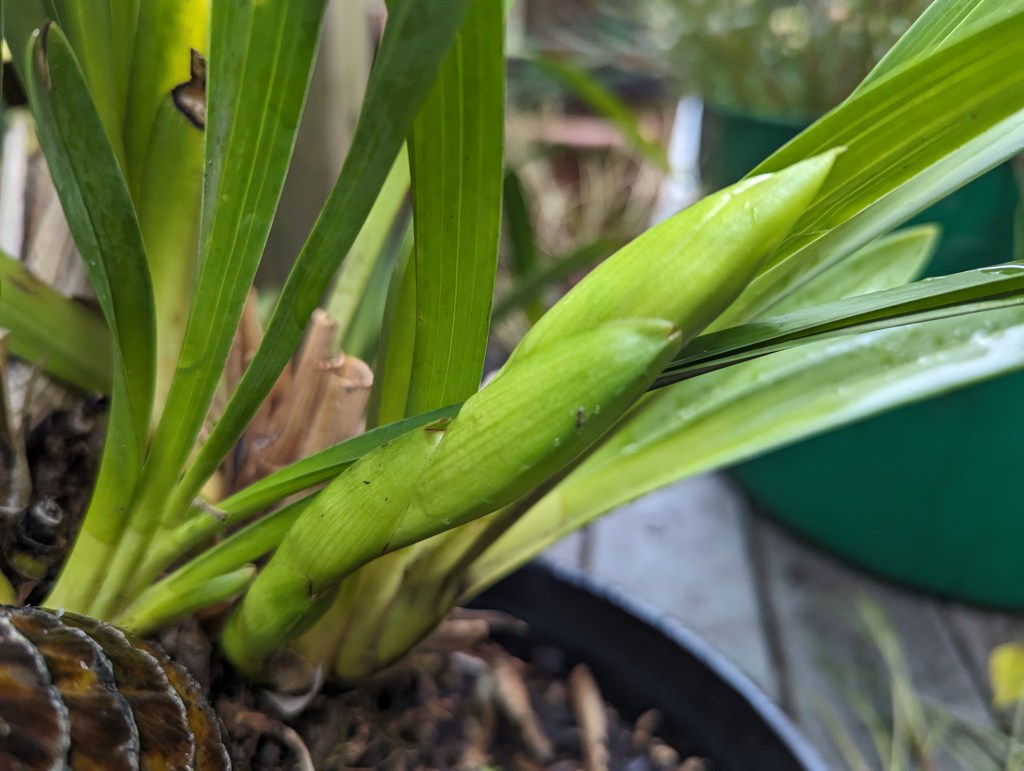
New floral shoots appeared almost immediately after the former bloom finished.

Cymbidium orchids perform quite well here, and seem to be happier with a bit of neglect. Actually, those with a tolerable bit of foliar blemishing or discoloration bloom better than those with exemplarily healthy and vigorous foliage. Those that get everything that they supposedly want, such as coarse chunks of fir bark to disperse their roots into, and regular application of fertilizer, are likely to produce an abundance of healthy foliage with only moderate bloom.

Only two cymbidiums inhabit my garden. I gave all others away many years ago. I acquired one of these two from a neighbor in the early 1990s, and have divided many copies of it since then. It remains potted within a bunch of leafy debris that I raked from my driveway under a massive valley oak many years ago. I suspect that the debris has decomposed to soggy muck at the bottom of the pot, although it remains friable on top, where I only rarely add a bit more leafy debris. I am not so keen on its simple pink bloom, but I continue to grow it because it has been with me for so long.

The other cymbidium was a gift from a colleague here. It originally grew ‘properly’ in a pot of coarse fir bark, but was removed from its pot many years ago, and left to die on top of a pot of potting soil that something else had already died in. It grew unattended there for a few years before coming here. It has bloomed splendidly and annually since its arrival. I want to divide it, but have not managed to do so between bloom phases. Its bloom continues for so long, that by the time it finishes, the next bloom phase is beginning. Fortunately, it is not too overgrown yet.

Six on Saturday: Los Angeles to Los Gatos II

Ilex opaca, American holly would have been a better topic for Six on Saturday this week. Woodland Gnome of Our Forest Garden sent me six seedlings from Williamsburg! They are now happily canned. I will share their pictures next week. For now, these are a few of the many goodies that I brought from Southern California. I sadly needed to go there for a memorial for an old college friend.

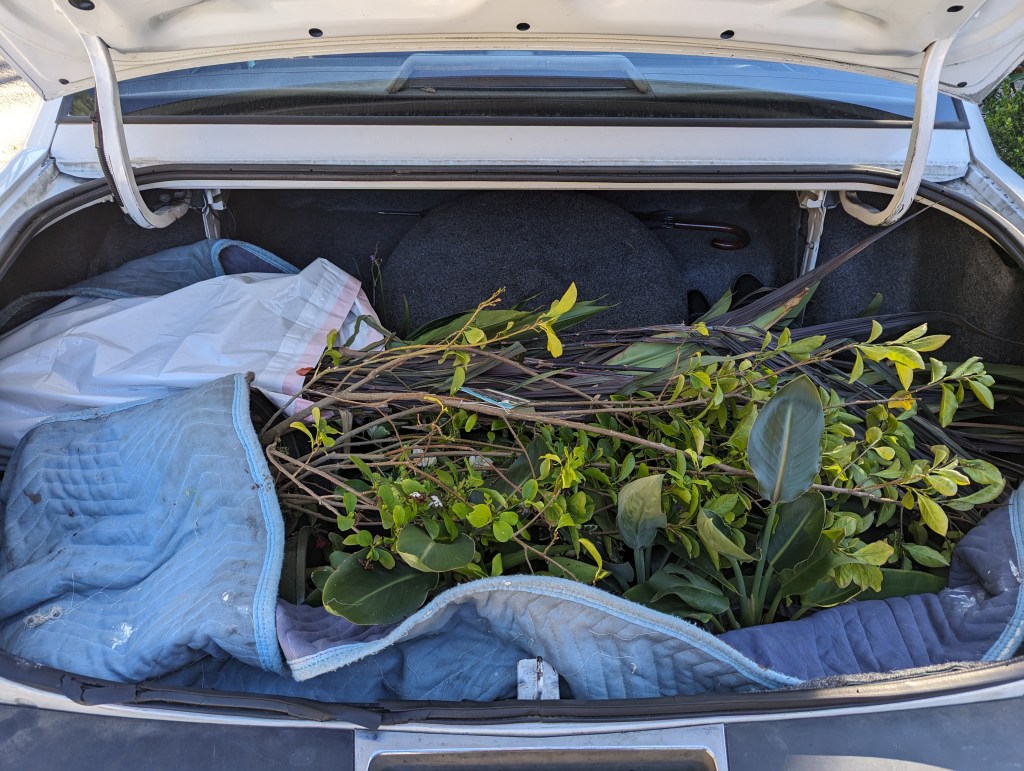
1. Carson is a 1994 Buick Roadmaster touring sedan, not a pickup. He diligently brought all this from Southern California anyway. It includes so much more than these six below.

2. Pimenta dioica, allspice is apparently quite rare. Brent had me trim his so that I could process these scraps as cuttings. However, it is dioecious, so requires a mate to set fruit.

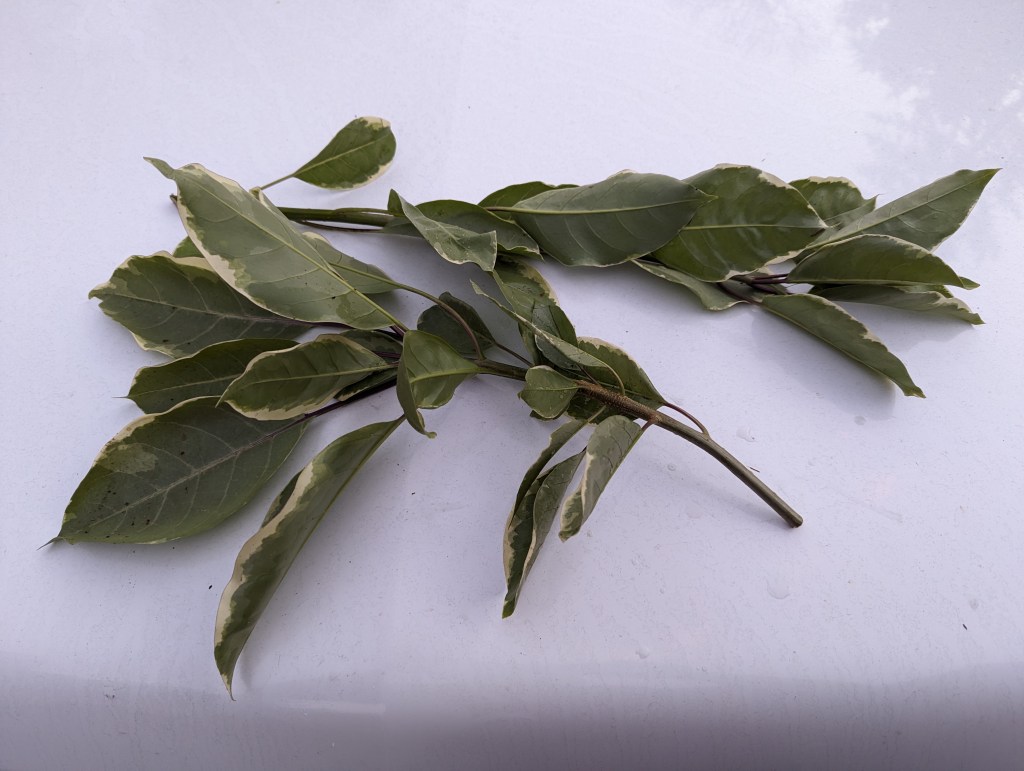
3. Solandra maxima ‘Variegata’, variegated cup of gold vine was acquired in accordance with one of our collegiate traditions; theft. I processed these two scraps into six cuttings. Incidentally, I was uninvolved with its initial acquisition. I will merely grow the cuttings.

4. Nephrolepis exaltata ‘Variegata’, variegated Boston fern or tiger fern is a smaller copy of the mature specimen that provided picture #4 of my Six on Saturday of last Saturday.

5. Hedychium coronarium ‘Variegatum’, variegated white butterfly ginger should bloom with white flowers comparable to those of white butterfly ginger from Woodland Gnome of Our Forest Garden. However, I suspect that it is actually ‘Tahitian Flame’ with peachy bloom. To its right, Alpinia galanga, galangal is a culinary ginger with mundane bloom.

6. Canna of an unidentified cultivar is likely the most important of all these acquisitions. It was acquired by the same means as the variegated cup of gold vine #3, but worse. It is from the Baptist Church that hosted the repast for the memorial of our deceased friend.

This is the link for Six on Saturday, for anyone else who would like to participate: https://thepropagatorblog.wordpress.com/2017/09/18/six-on-saturday-a-participant-guide/