Prickly Pear

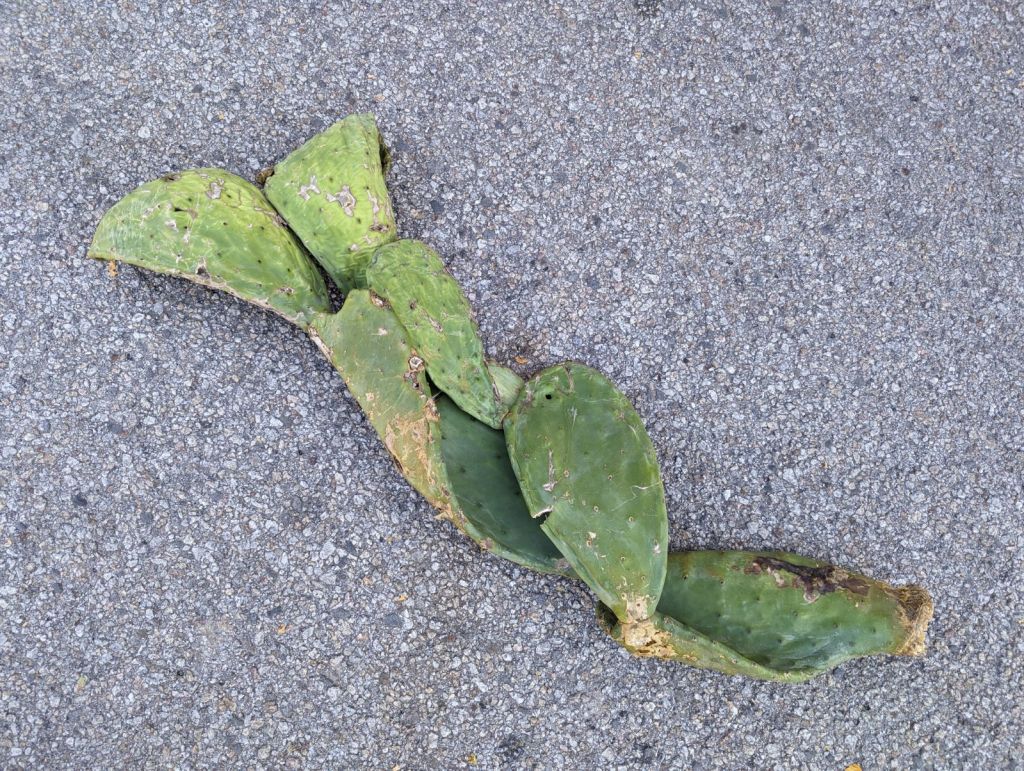
I can make good use of this bit of greenwaste.

It is certainly no pear, and its particular cultivar is not overly prickly. Nonetheless, it is commonly known as ‘prickly pear’. It is also known as ‘Indian fig’, but is neither a fig, nor from India. The Mexican Spanish name for its fruit is ‘tuna’, but in American English, that seems fishy.

However, within its proper linguistic context, ‘tuna’ would be the least misleading of the common names of the fruit of ‘nopal’. ‘Nopal’ is the common name of various species of Opuntia, many of which are popularly grown as vegetables. ‘Nopales’ are plural. ‘Nopalitos’ are sliced or otherwise processed as small bits for culinary application.

Anyway, this shabby bit of nopal appeared within our big greenwaste pile at work. I find it annoying when neighbors exploit our greenwaste pile for disposal of greenwaste that is obviously not from our landscapes, as if I will not notice. Such debris often includes dirt and other crud or even trash that can not be chipped, and is almost never staged to facilitate efficient chipping.

This was quite a find though. It can be cut into six separate pieces to be plugged in between the five Arizona cypress that I installed as an informal hedge along the outer road. I would not have considered doing so if this had not appeared unwanted on our greenwaste pile. Nopal that I plugged a bit farther out, closer to the road, were shredded by weed whackers on a few occasions until they ultimately succumbed.

I already grow one unidentified cultivar of nopal for its eventual production of rich red tuna. I have no idea what this new acquisition is either, and it could be the same as what is already here, but I sort of hope that it produces yellow or gold tuna with milder flavor.
What Is This?!

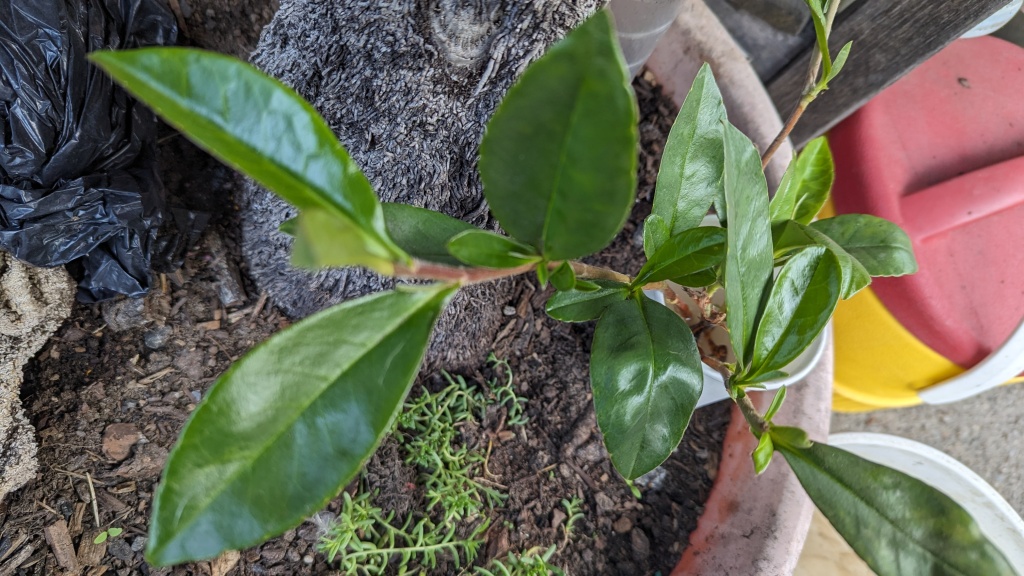
I have no idea what it is, but I intend to grow it.

It is an evergreen vine that seems to sprawl over other vegetation rather than actually climb it. It lacks tendrils or other means with which to hold onto its support. It does not even seem to wrap around its support. Nor does it seem to get very high above the ground. It just sort of sprawls.

Its glossy leaves are rather simple, just like in the picture here.

Its bright yellow and staminate flowers, if I remember correctly, seem to resemble those of Saint John’s wort, but are a bit wider.

This vine, again if I remember correctly, seemed to be more popular years ago. I do not notice it much anymore. I can not remember when I last saw it in a nursery, or if I ever saw it a nursery. The few specimens that I am aware of inhabit old landscapes that have not been renovated in decades. I got these bits from where they were regenerating after their earlier removal from an old landscape.

Now that I have these bits, I intend to grow them, in order to get familiar with the species. I hope that I can eventually identify it. It should not be so difficult for something that had formerly been popular, or at least common enough for me to recognize it as something that had formerly been familiar.

I do not often encounter a species that I can not identify, and I even more rarely admit to it. If I do not recognize a species, I can typically recognize the genus, or at least the family, and then key it out. For this seemingly simple vine, I can not identify its family. I asked Brent, which I almost never do. He recognized it about like I did, but also could not remember its name.

Cuttings Become Copies Of Originals

Elderberries grow efficiently from hardwood cuttings.

Seed is the most familiar source of much of the vegetation that inhabits home gardens. It is the origin of almost all vegetables and most annual flowers. Some seed grows directly into its gardens. Some grows in nurseries to become saleable young plants. Seed is not the only method of propagation though. Cuttings, division and layering are as productive.

Cuttings, as well as divisions and layers, are genetically identical to their single parents. Unlike seed, which are products of two parents, they lack potential for genetic variation. Division is the separation of stems with roots from perennials or clumping woody plants. Layering is the rooting of stems by partially burying them while attached to their parents.

Cuttings grow simply as pieces of stem within moist rooting medium such as potting soil. They initially lack roots and perhaps foliage. They develop new roots and foliage as they grow. Their medium must remain moist throughout the process. For many plants, rooting hormone accelerates root initiation. Some species can grow roots as they soak in water.

Hardwood cuttings are mostly from deciduous species as they defoliate for winter. Those from last winter are developing now. Evergreen hardwood cuttings retain some foliage through their winter dormancy. Softwood cuttings can be either deciduous or evergreen. They involve fresh new growth, so can begin as soon as such growth is mature enough.

The lower cuts of cuttings should be just below a node. Upper cuts should be just above a node. Terminal cuttings are tips of stems without upper cuts. Each cutting must include at least two good nodes. Some species may need cuttings to be several inches long in pots. Most grow better from small cuttings that fit into flats. Some can go directly into a garden. Cuttings should lack leaves below the level of their rooting medium.

Softwood cuttings generally require humidity to help compensate for their lack of roots. Most also appreciate partial shade. Evergreen hardwood cuttings appreciate the same as weather gets warmer and drier. Warmth from a heating mat below pots or flats might accelerate rooting. Many species are difficult or impossible to grow from cuttings though.

Six on Saturday: Return From Arizona

The first three of these six are the last of my trip to the Los Angeles and Phoenix regions. That was weeks ago. If there were a time limit for such pictures, these first three pictures would have exceeded it. With a limit of six pictures weekly though, it takes quite a while to post all of an abundance of pictures. Cool weather has inhibited activity in the garden anyway. Although there is plenty of bloom, much of it is no longer new. I am still waiting for vegetative growth from a few tropical types of vegetation that prefer warmth to grow. This includes the last three here.

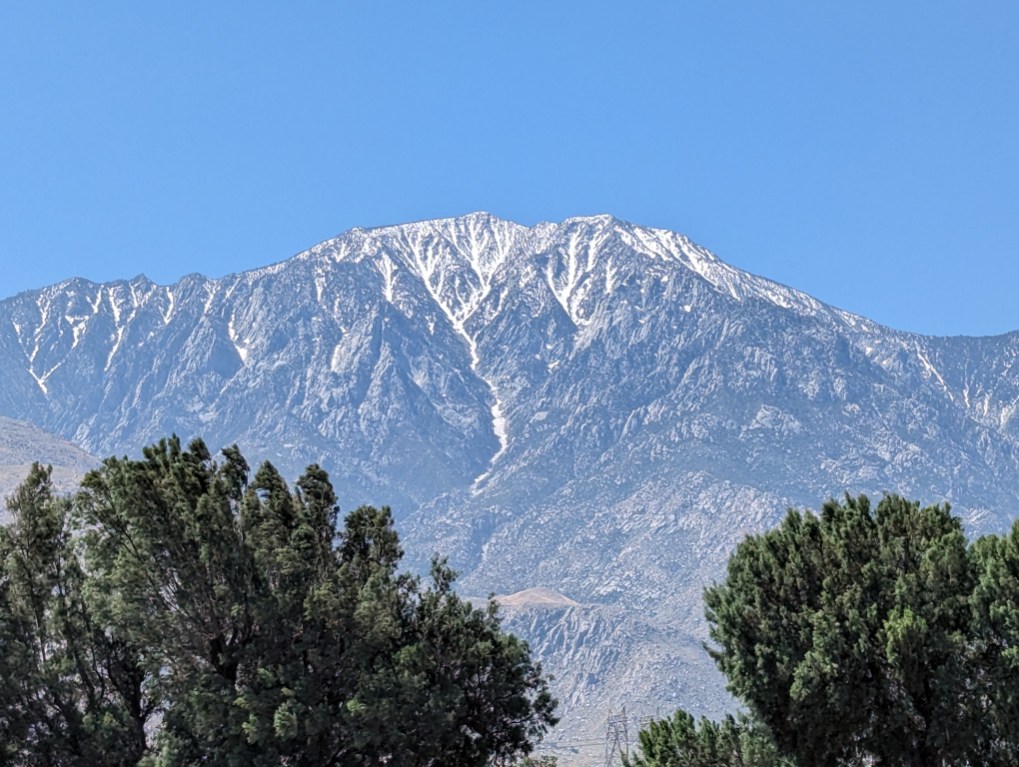
1. Mount San Jacinto is not exactly horticulturally relevant, and I do not even know what that vegetation in the foreground is, but it is a grandly scenic backdrop to Palm Springs.

2. Phoenix dactylifera, date palm grows in date orchards throughout the Mojave Desert and the Sonoran Desert, and is most likely the origin of the name of Phoenix in Arizona.

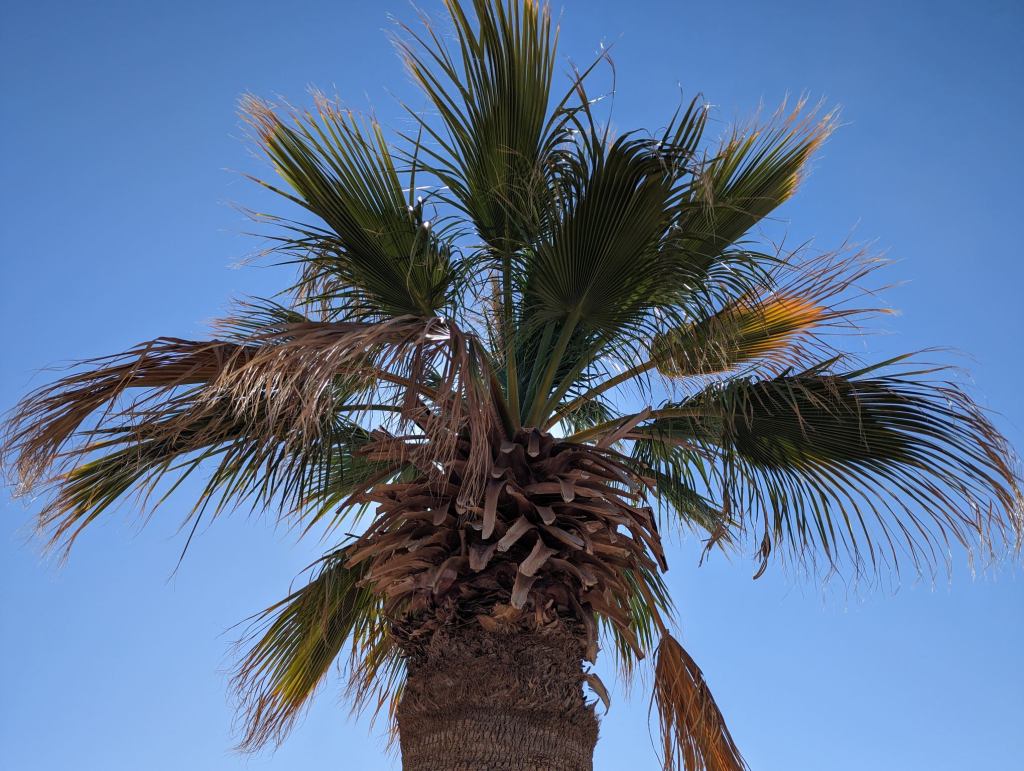
3. Washingtonia filifera, California fan palm is the only palm that is native to California. It is the origin of the name of Palm Springs because it grows wild around nearby springs. This happens to be an atypically shabby specimen at a roadside rest stop on Highway 10.

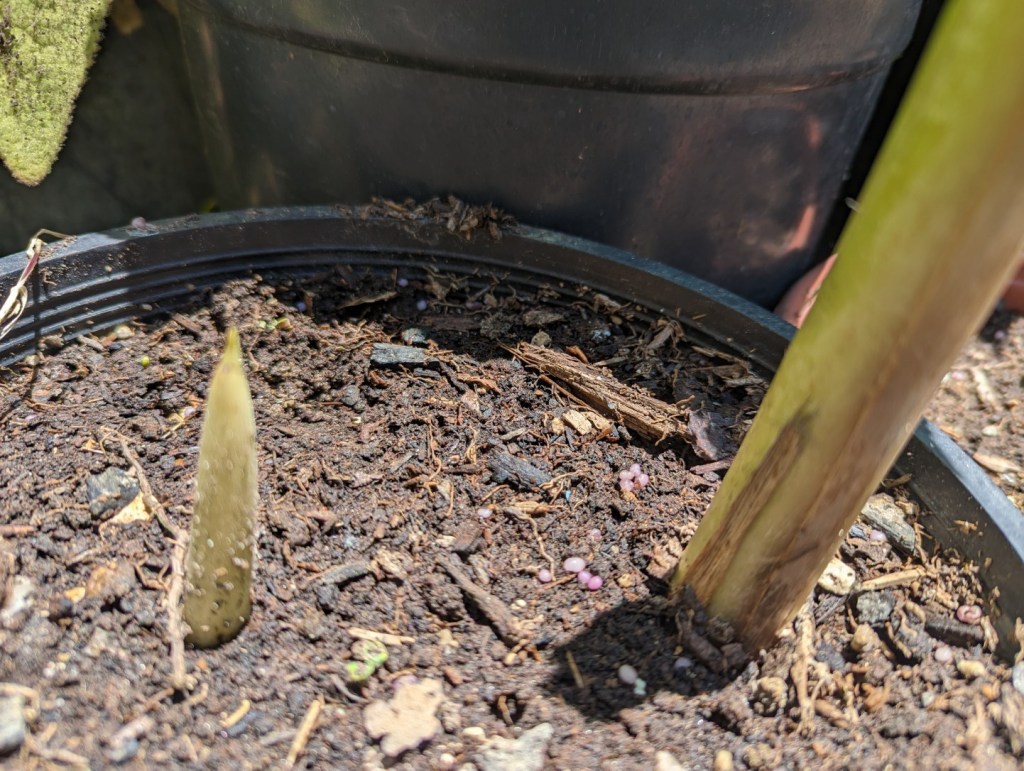
4. Heliconia psittacorum, parrot heliconia had done no more than survive last winter. It needed to be removed from Brent’s garden, so came here. It is finally beginning to grow.

5. Hedychium greenii, red butterfly ginger arrived with the parrot heliconia, but canned separately here. I did not know what it is until Brent mentioned that his is now missing.

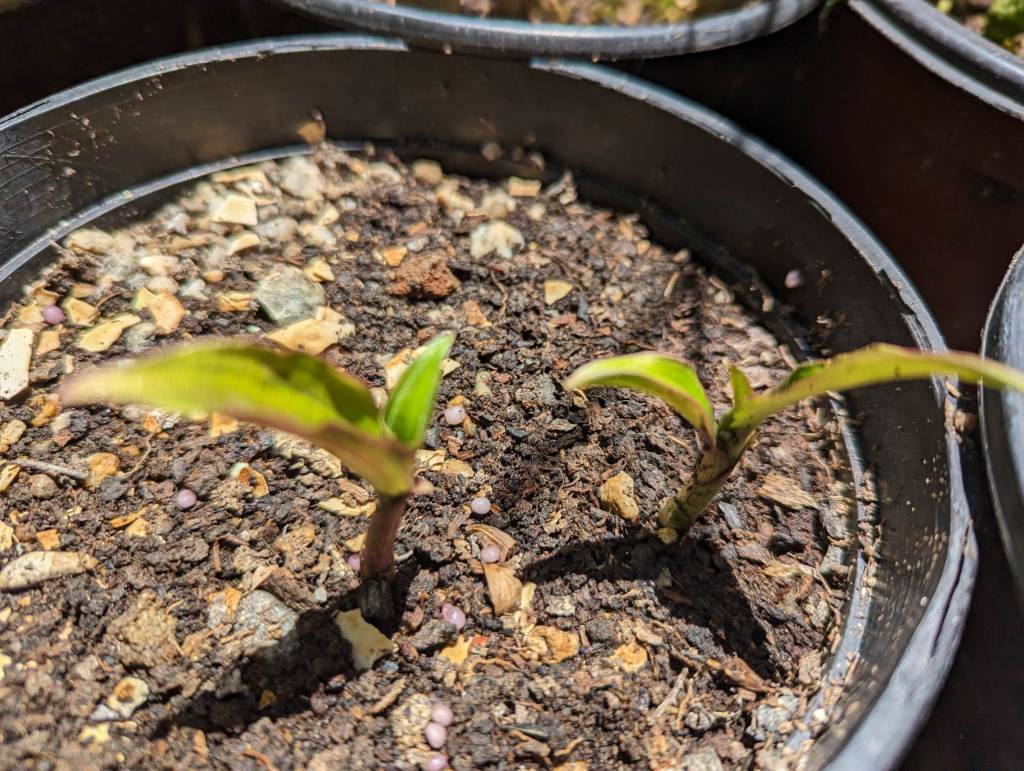
6. Dichorisandra thyrsiflora, blue ginger was not expected to survive the unusually cold frost of last winter, but finally is slowly generating these little shoots from eight cuttings.

This is the link for Six on Saturday, for anyone else who would like to participate: https://thepropagatorblog.wordpress.com/2017/09/18/six-on-saturday-a-participant-guide/

Six on Saturday: Canna From Heaven

The weather was major news here again. After the only snow for most regions here since 1976, and the most flooding since 1982, torrential rain and more flooding was predicted for yesterday. Fortunately, the rain was not torrential enough to cause flooding. Prior to the rain, I was trying to plant what needed planting so that it would get soaked in well. I split and planted some overgrown Kaffir lily, and split and canned way too many canna. Flowering quince and queen’s tears provide a bit of floral color for this ‘Six on Saturday’.

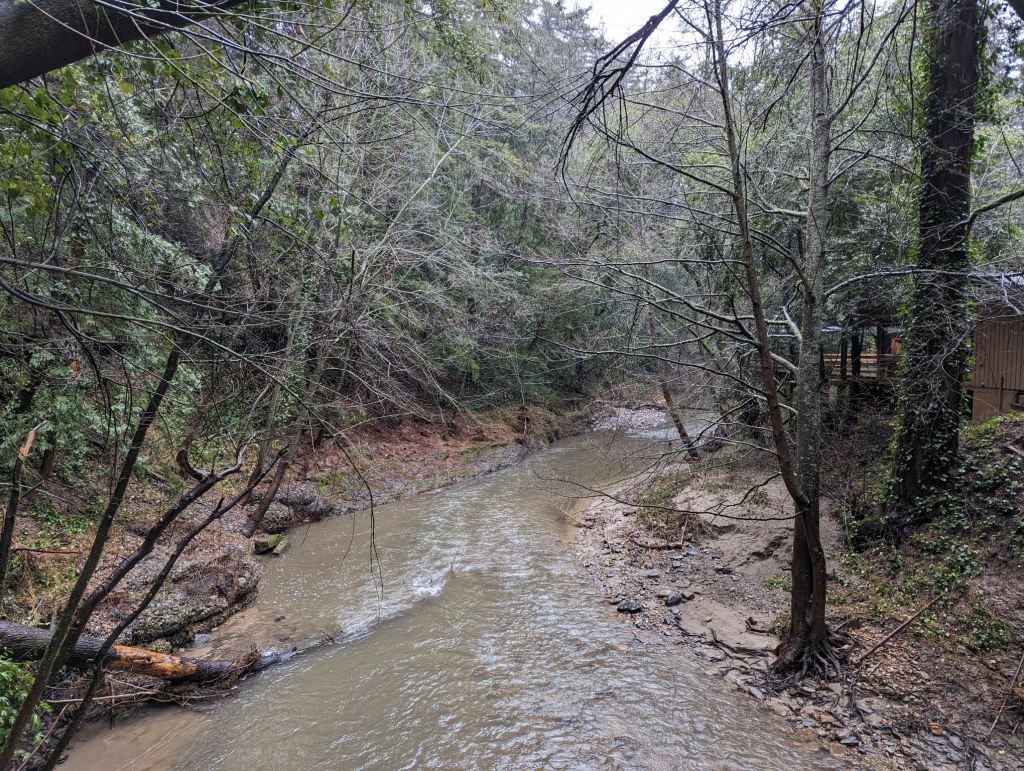
1. Zayante Creek flowed under the deck to the right of this picture as 2022 became 2023. This was Thursday, a few hours before another flood was predicted, but did not happen.

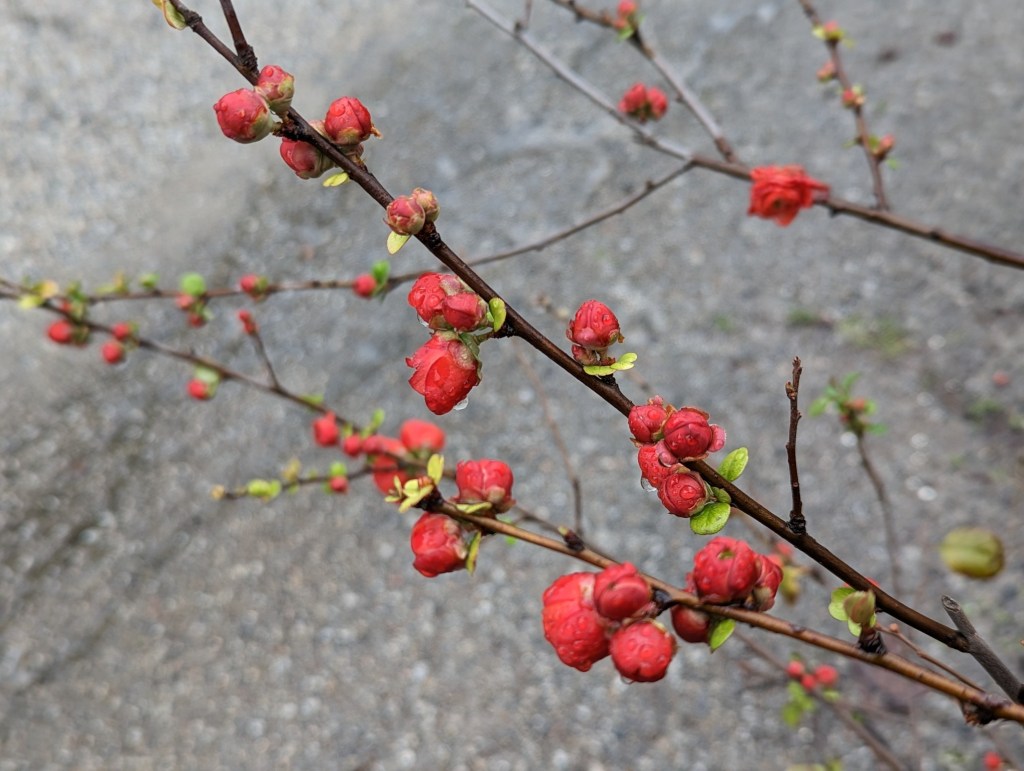
2. Chaenomeles speciosa ‘Double Take Orange’, flowering quince, like many early spring and late winter flowers, got delayed by the very unusually cool and rainy wintry weather.

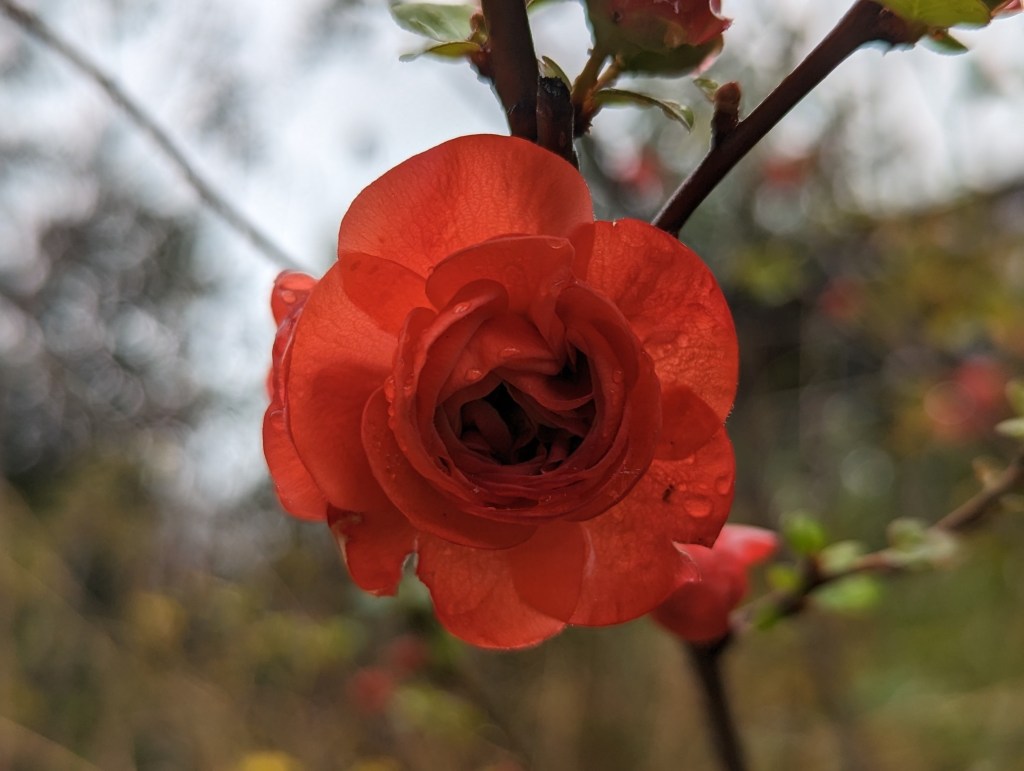
3. Chaenomeles speciosa ‘Double Take Orange’, flowering quince is a modern cultivar of a traditional flower. I am none too keen on modern cultivars, but I am fond of tradition.

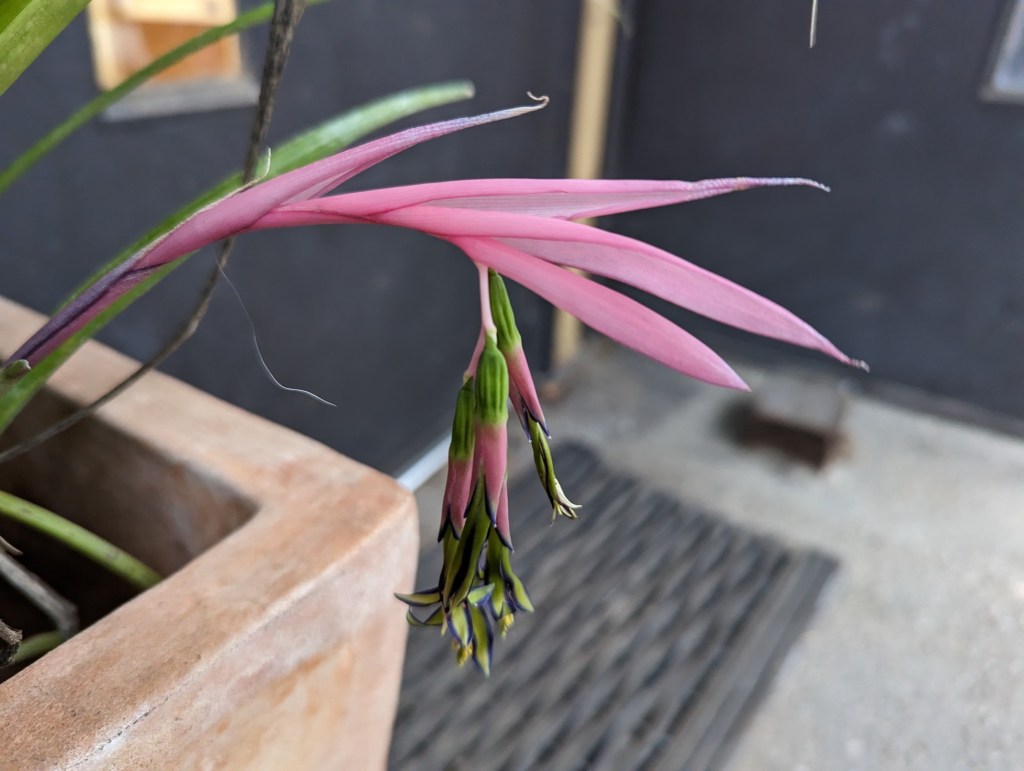
4. Billbergia nutans, queen’s tears is an unimpressively palid and grassy bromeliad that blooms with these sillily pendulous flowers. Actually though, these silly flowers are cool.

5. Clivia miniata, Kaffir lily was recycled from another landscape, rather than Craigslist. It was crowded within a planter box, so now has more room to grow and be happy here.

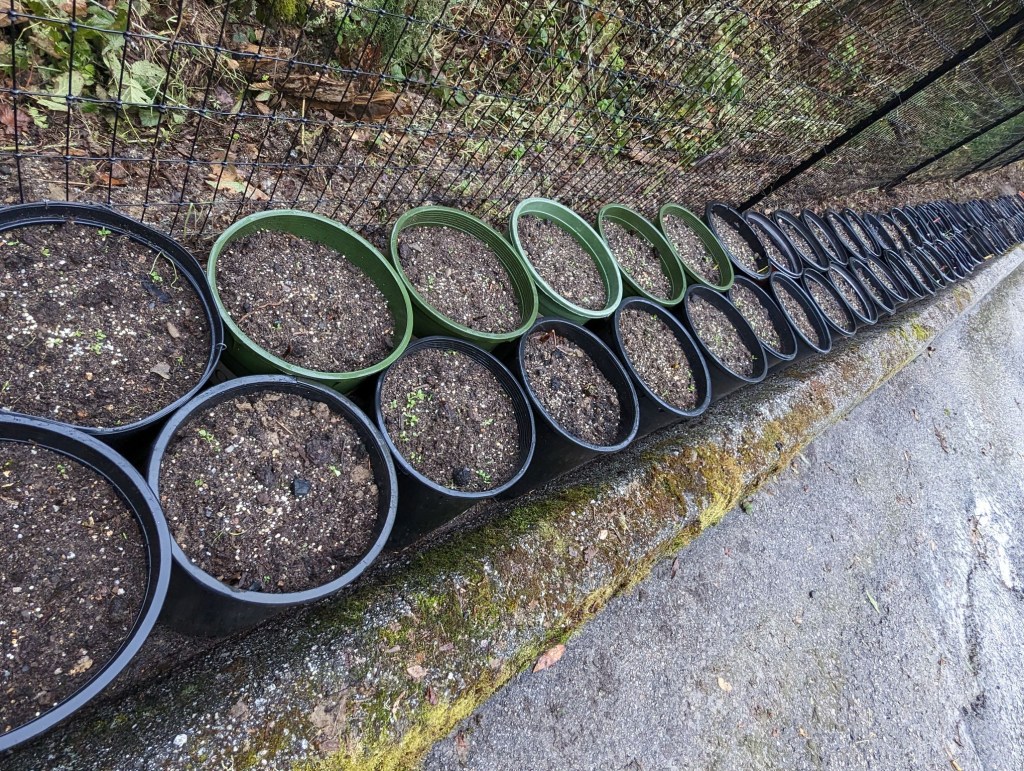
6. Canna of various cultivars has become excessive! There are eighty-eight #5 cans of it! At least a dozen more are expected later! Most cans contain enough rhizomes for at least two cans; merely because there were not enough empty cans when I split and canned the dormant rhizomes. I should field grow them somewhere else. At least they will be pretty for this summer.

This is the link for Six on Saturday, for anyone else who would like to participate: https://thepropagatorblog.wordpress.com/2017/09/18/six-on-saturday-a-participant-guide/

Junk In The Trunk

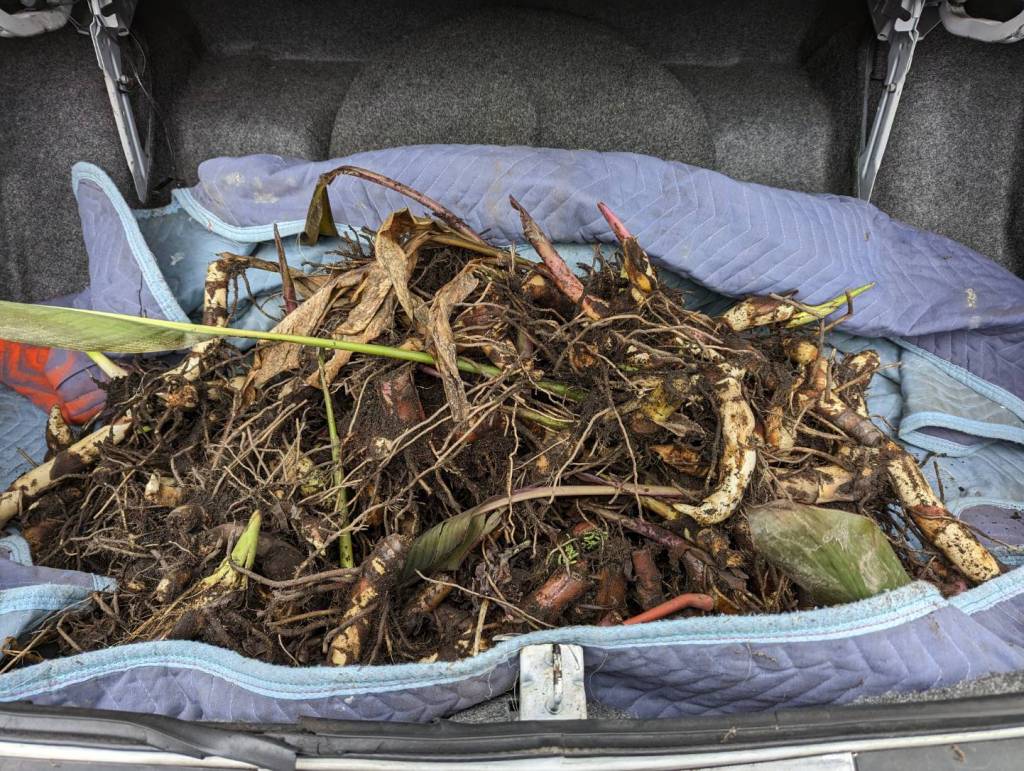
It is exactly what it looks like; more Canna rhizomes. I am very aware that there are already too many Canna here. I grew them. I do not care. I saw these in a neighbor’s garden, and asked for a few copies. She told me that I only needed to dig them myself, as if that might be a problem. As she pointed out those that were migrating a bit too close to her home, I dug many more than I should have. Since she was so generous to share so many, I felt obligated to remove all that were superfluous. Besides, to me, they are not junk. I am very pleased with them, even if they are a bit excessive.

There are two cultivars, and perhaps seed grown rhizomes of one of the two cultivars. The shorter sort are ‘Inferno’, which is the same as ‘Tropicanna’ and ‘Durban’. Some Canna cultivars seem to develop several synonyms. Its bright orange bloom stands tall above distinctively striped and bronzed foliage. It gets about six feet tall, so is only the shorter of the two cultivars because the other is so much taller. Although it is one of the more popular cultivars, I only recently acquired a single can of it from Brent last year. I am pleased to grow much more.

The other cultivar seems to be comparable to the unidentified cultivar at work that resembles and might actually be Canna musifolia. It has similar scrawny orange bloom on top of very tall canes that I must bend over for deadheading. Because I did not notice them until after frost, I do not know how bronzed the foliage is, or if it is bronzed at all. The neighbor who gave them to me says that they are ‘lightly’ bronzed. The newly emerging buds seem to be green without any bronze. I will be pleased with any color, but simple green would be awesome! Some of these may have grown from seed, so may be slightly different from the original.

There were enough rhizomes of ‘Inferno’ for a dozen #5 cans with about four rhizomes each. There were enough rhizomes of the taller sort that might be Canna musifolia for sixteen #5 cans with about three very plump rhizomes each. That was after sharing some with others at work, and leaving some for a neighbor of the neighbor who shared them with me. I intend to take some to the Pacific Northwest before the end of winter, but canned them all because I do not yet know when I will leave. I can always remove some from their cans, or just take them in their cans.

Since they fit into the trunk more easily than a previous batch of ‘Wyoming’ and a cultivar that resembles Canna flaccida that I obtained from another neighbor, they seemed to be less numerous. However, the previous batch included foliage. These rhizomes lacked foliage, and were actually a bit more numerous. Regardless, I am very pleased with them, and intend to enjoy growing them. As I closed the tailgate after unloading them, I could see that Rhody did not share my enthusiasm.

Six on Saturday: 2022 Ends

The year ends with the day, but bad habits continue. I make no resolutions. I continue to collect too much seed, plug too many cuttings and divide too many perennials. Common weeds are not off limits. Canna were already too abundant before more were canned last week. More will be divided later! Cymbidium is not proliferating yet, but has potential to do so after bloom. For now, there is no need to irrigate any of this surplus, since the rain will not stop.

1. Lunaria annua, money plant or honesty, is not quite naturalized within unrefined but damp zones of our landscapes. We collect seed to toss where we think it should perform well. It has become a tradition. The name implies that it is native to the Moon, and that, like 2022, lasts only one year. These seed in key envelopes are for whomever takes them.

2. Canna ‘Australia’ are bloomed canes that I groomed from the downtown planter box, as seen last week. There are a dozen #5 cans of four canes, and six #1 cans of two canes! More pups must be thinned later! Also, I will soon dig even more cannas for a neighbor!

3. Bellis perennis, English daisy is naturalized in the vast lawn at Felton Covered Bridge Park. I have no use for it, but plugged a dozen solitary rosettes in with the Canna canes.

4. Sambucus nigra ‘Black Lace’, black elderberry should generate a bit of fruit without a pollinator, but is merely pretty here. I plugged a few cuttings because its darkly bronzed foliage works so well for our landscapes. Native blue elderberry produces plenty of fruit.

5. Cymbidium orchid is extending quite a few floral spikes. I have not counted them yet.

6. Morgan was reminded why no one craves his parking space. Rain is splendid though!

This is the link for Six on Saturday, for anyone else who would like to participate: https://thepropagatorblog.wordpress.com/2017/09/18/six-on-saturday-a-participant-guide/

Grafting fact and fiction

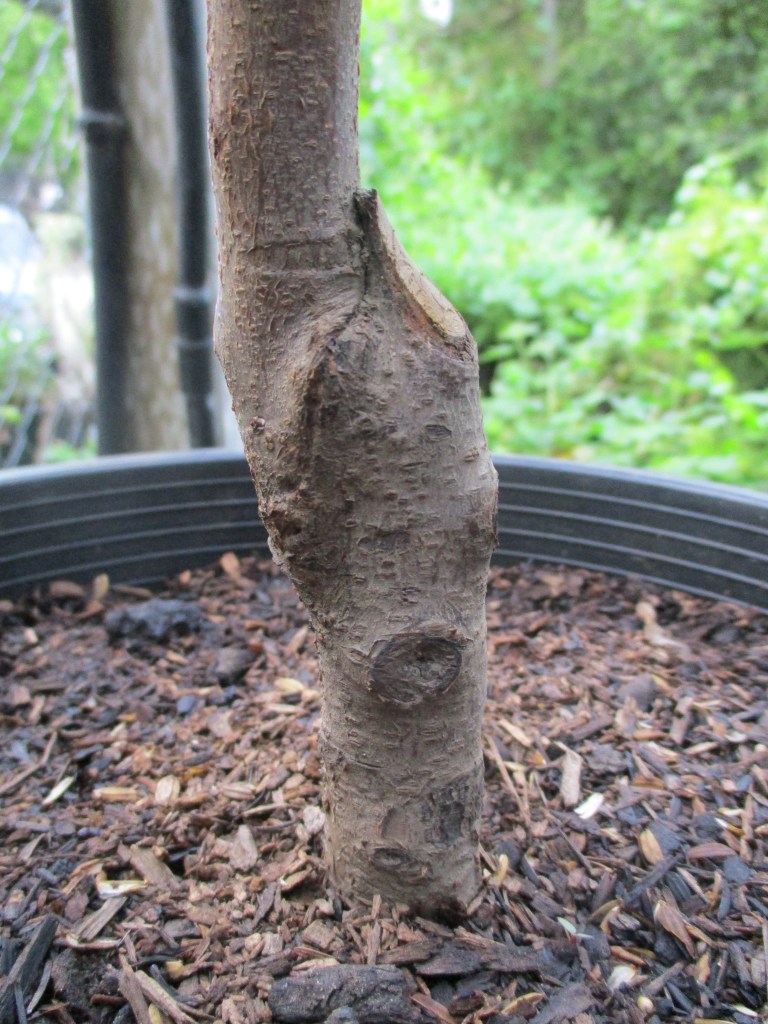
The scion is above this graft union. The rootstock is below.

There are not many Californians of my generation who do not remember growing avocado trees from seeds when we were kids. We simply impaled the big seeds around the middle with three evenly spaced toothpicks to suspend them from the rims of Dixie cups partly full of water. If just the bottoms of these seeds remained properly submerged, they grew roots and a stem with a few leaves, all they needed to grow into trees that were producing too many avocados by the time we got to high school.

Yet, I and others of my generation have always heard that avocado trees need to be grafted to produce fruit. (Grafting is the union of two or more compatible but different plants. The ‘scion’ is the upper portion that forms a trunk, branches and foliage. The ‘rootstock’ is the lower portion that provides roots.) Well, this is obviously not true, but does make us wonder about the advantages of grafted trees.

They myth of seed grown trees being unproductive probably originates from the tendency for seed grown avocado trees to be unproductive for the first few years during the juvenile stage. Scions of grafted trees are taken from adult growth that is ready to bloom and fruit immediately; although even grafted trees need a few years to grow large enough to produce more than just a few avocados.

Many plants are juvenile while young, in order to better compete in the wild. While juvenile, avocado tree seedlings grow vigorously enough to compete with other trees. Adult habits of blooming and fruiting would only slow them down. Besides being fruitless for many years, citrus seedlings are very thorny through their juvenile phase, to avoid getting eaten by grazing animals. Scions of grafted citrus trees are from relatively thornless adult growth that is immediately ready to produce fruit.

The primary advantage of grafting fruit trees though, is keeping the many different cultivars (cultivated varieties) ‘true to type’, since many seed grown plants exhibit at least some degree of genetic variation from their parents. For example, avocados from seed grown (ungrafted) trees tend to be much larger, but often less flavorful than the fruit that the original seed came from. No one really knows what the fruit will be like until it actually develops. Some seed grown peaches are indistinguishable from their parents, but most are very different. However, most pecans and chestnuts are actually produced from ungrafted seed grown trees.

The secondary advantage of grafting fruit trees is the ability to graft onto dwarfing rootstock. Although few avocado trees are dwarf trees, almost all citrus trees for home gardens are grafted onto dwarfing rootstock that keeps them more compact and proportionate to home gardens. Most deciduous fruit trees are similarly grafted onto semi-dwarf rootstock.

Six on Saturday: New Photinia

Renovation of an old photinia hedge on the main road at work has been more work than it should have been. It was too overgrown for simple shearing. I pruned it up as a row of small trees, with the intention of eliminating their upper canopies as basal watersprouts grew upward from the newly exposed trunks below. Well, water sprouts did not grow as readily as I hoped for. The trees were cut down while the hedge below was still scrawny. As planned, I layered a tall water sprout as a replacement for one of two missing shrubs, but needed to replace the other with the naturally layered specimen from another hedge. (Layers develop roots where they touch soil, while attached to their original specimens.)

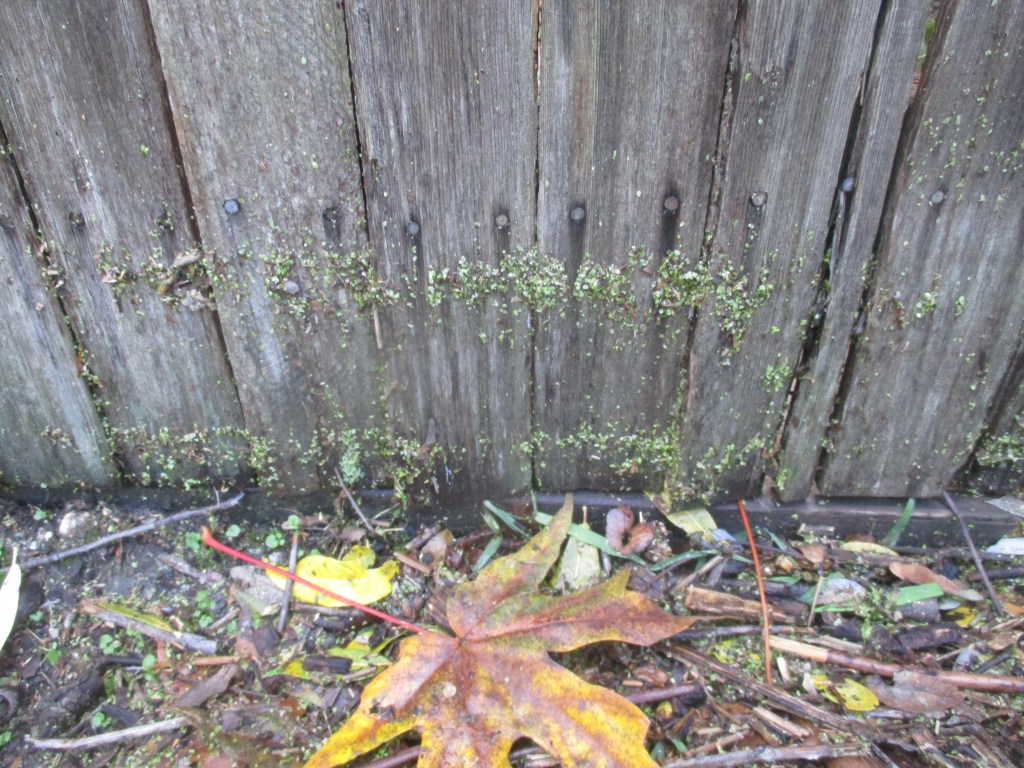
1. Rain! The first storm of the season came and went about two weeks ago. The drainage pond flooded about two feet over its spillway! This duckweed was left on a nearby fence.

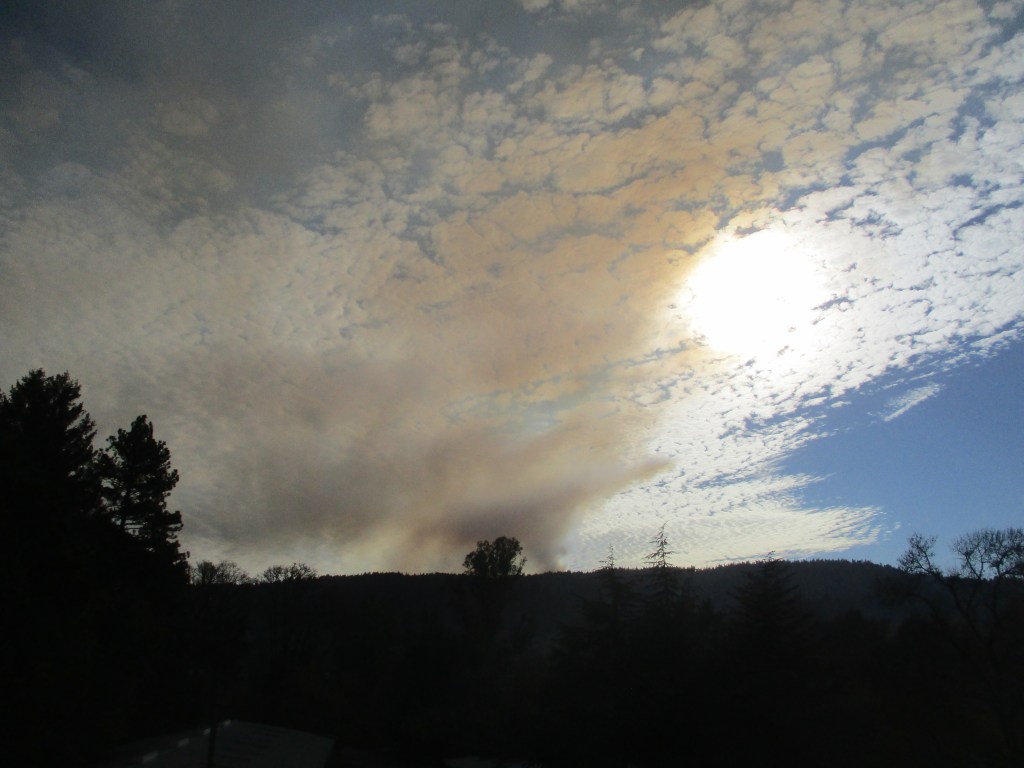
2. Controlled burns resume now that the beginning of the rainy season is also the end of the fire season. There has been no more rain since the first storm, but forests are damp.

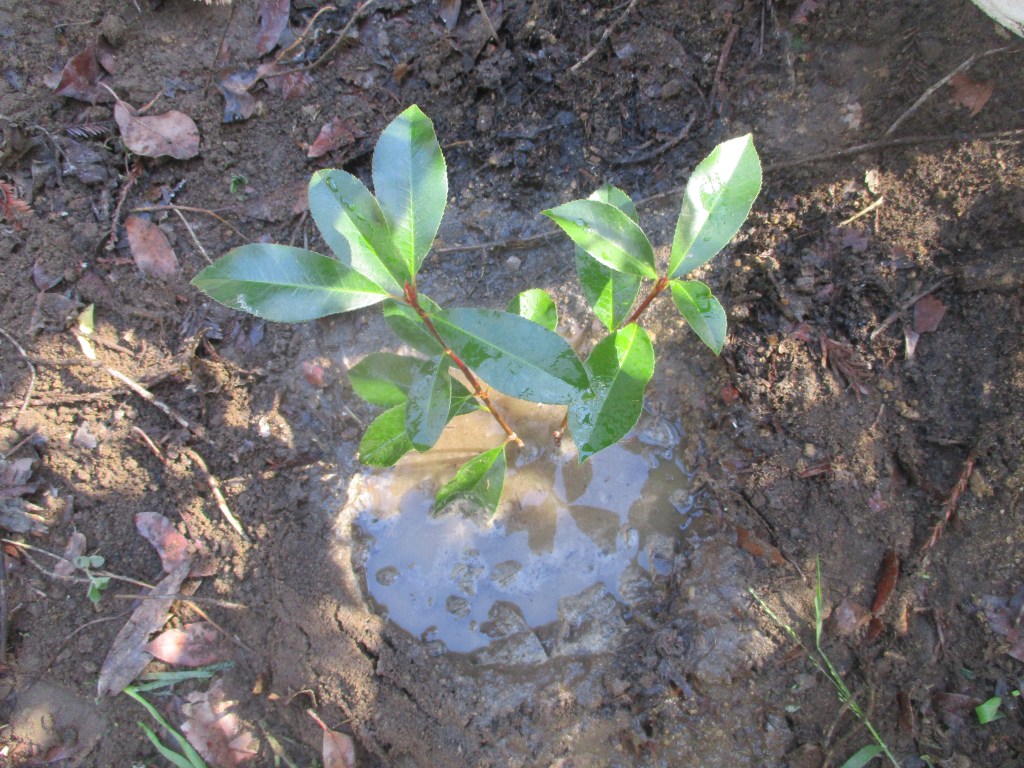
3. Damp ground and cooler weather facilitate planting within areas that lack automated irrigation. This layered photinia stem got relocated from one old hedge to patch another.

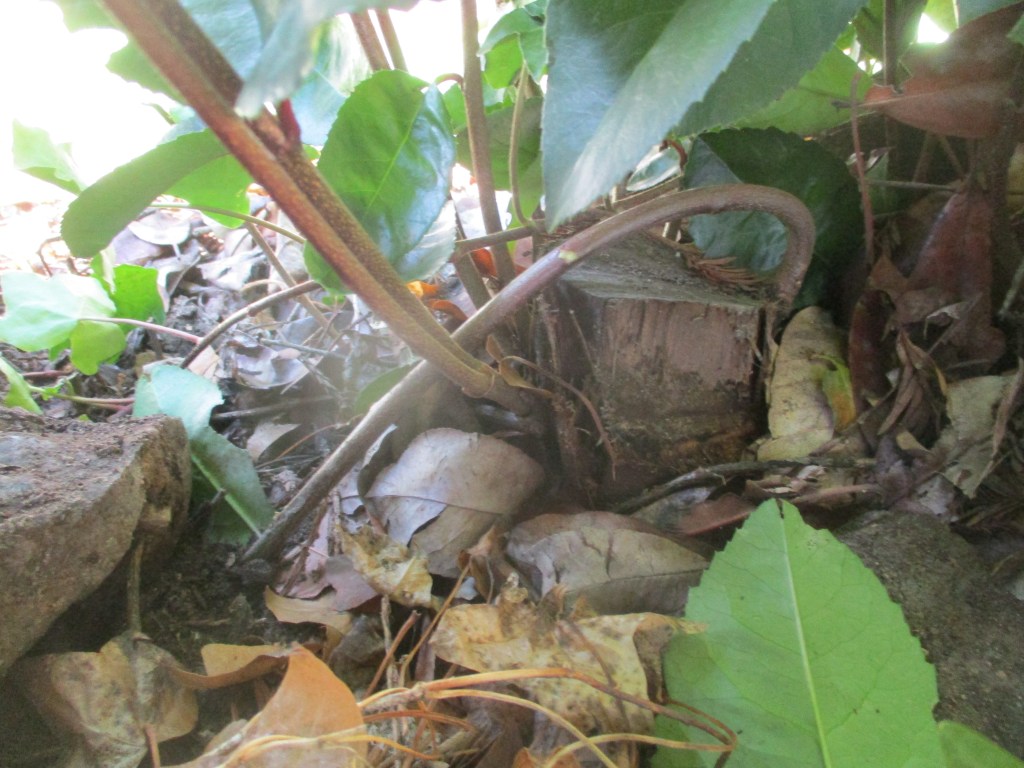
4. It was not enough though. To compensate for lack of another, I simply made a second layer by bending over and mostly burying a vigorous water sprout of an adjacent stump.

5. A new photinia can now grow where the tip of the mostly buried water sprout emerges from the soil. I am very pleased with the very uniform spacing of all specimens involved.

6. Meanwhile, I plugged a rooted sucker of an ungrafted historic flowering cherry within the decayed center of the stump of the now deceased original tree. It could replace itself!

This is the link for Six on Saturday, for anyone else who would like to participate: https://thepropagatorblog.wordpress.com/2017/09/18/six-on-saturday-a-participant-guide/

Six on Saturday: L. A. II

Los Angeles was fun, even if merely for five days. So was the indirect trip there and back. While there, I collected a few bits and pieces of vegetation to bring back here. Much of it, including these Six, needed to be removed from Brent’s garden anyway. I want to collect more Plumeria cuttings later, during the correct season. I only took what I got from this procedure because two of the dozen or so specimens needed minor pruning. Conversely, I collected many more giant bird of Paradise seedlings than I can accommodate because they needed to be removed from where they were. A neighbor here should hopefully take most of them. Most of these acquisitions were expected, although the quantities of some were unexpectedly excessive. Nonetheless, I am very pleased with them.

1. Heliconia of an unidentified species was phased out as other vegetation matured over the past several years. Remnants came up with only bits of rhizome, so may not survive.

2. Strelitzia nicolai, giant bird of Paradise grew from seed from a very mature specimen that was the first plant that Brent installed after he moved here almost twenty years ago.

3. Plumeria of an unidentified cultivar or even species needed to be pruned off the roof. It grows easily from cuttings, such as these, but needs protection from minor frost here.

4. Washingtonia robusta, Mexican fan palm, like giant bird of Paradise, grew from seed from a recycled specimen that Brent installed. Its parent is his brother’s Memorial Tree.

5. Clivia miniata, Natal lily formerly bloomed profusely in the front garden, but became overwhelmed by other vegetation. They were installed directly into a landscape at work.

6. Chamaedorea costaricana, pacaya, which Brent and I know as bamboo palm, is much more vigorous and larger than the more common bamboo palm, Chamaedorea seifrizii.

This is the link for Six on Saturday, for anyone else who would like to participate: https://thepropagatorblog.wordpress.com/2017/09/18/six-on-saturday-a-participant-guide/