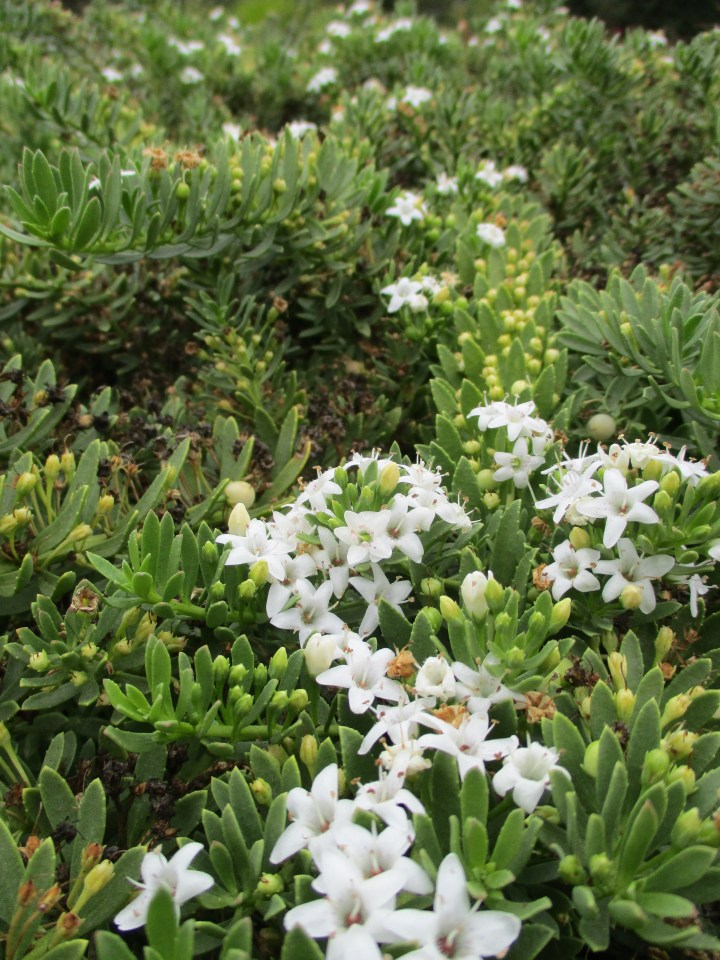
 The familiar sandalwood, Myoporum laetum, that is such a resilient small tree or big shrub in windy coastal climates, might make the wrong impression for the less familiar creeping myoporum, Myoporum parvifolium. Creeping myporum does not get much more than a foot high unless it climbs over stones or other obstacles, and it might stay less than six inches deep in exposed spots.
The evergreen foliage is dense enough to prevent most weeds from getting through. The tiny and narrow leaves are only about half an inch or an inch long, perhaps a bit longer. Clustered white starry flowers that begin to bloom late in spring continue to bloom through summer. Although tiny, and neither profuse nor remarkably showy, they are a nice accent to the rich green of the foliage.
Creeping myporum prefers full sun and occasional watering. It rots easily if watered too much. Its other weakness is that it does not tolerate traffic well. Creeping myoporum is a low growing shrub with woody stems that can break if trampled on. Individual plants can get ten feet wide if they get the chance. They are typically planted much closer together so that they cover the ground faster.
 Lawns composed of turf grasses are the most functional, but also the most demanding forms of groundcover. That is old news. There are so many other less demanding low growing plants that that can cover the ground in areas that are not used like lawns are. Sometimes they work nicely just to control weeds. Sometimes they help to control erosion on otherwise unlandscaped hillsides.
 Tony Tomeo