Rhody and I are still not taking many pictures while on vacation. I realize that I said that I should be more diligent about doing so, but we have been so busy vacationing. Perhaps I will do somewhat better next Saturday.
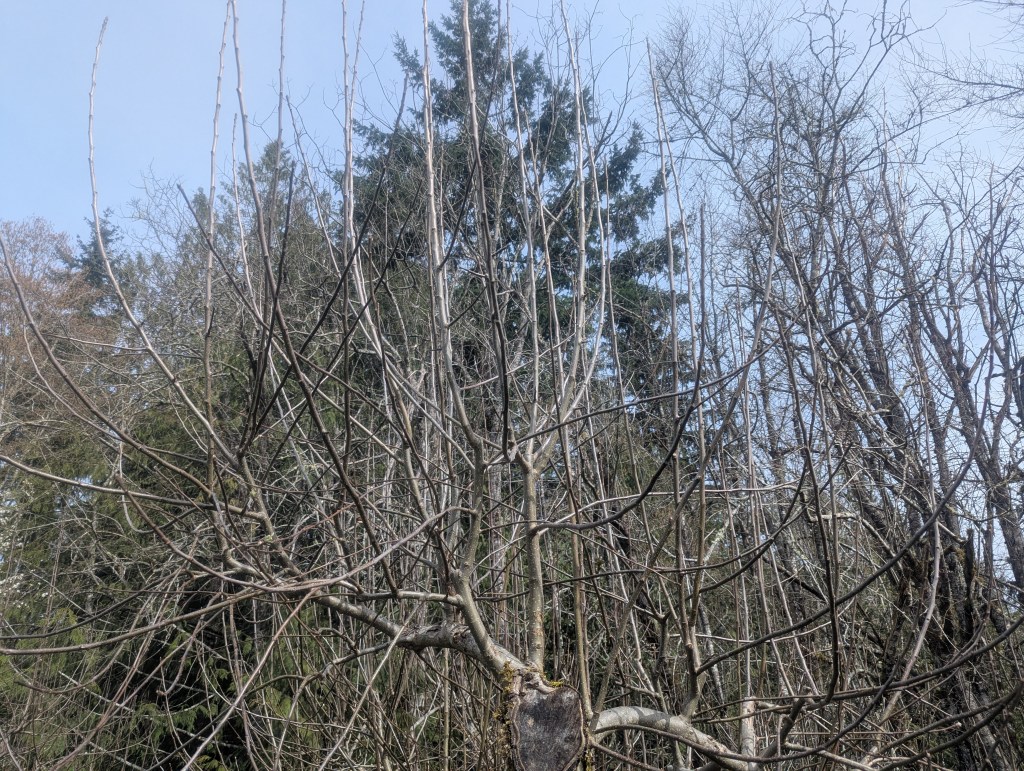
1. Apple trees before pruning look like a hot mess, particularly with the thicket of willow and other vegetation in their background, but are actually quite healthy and cooperative.
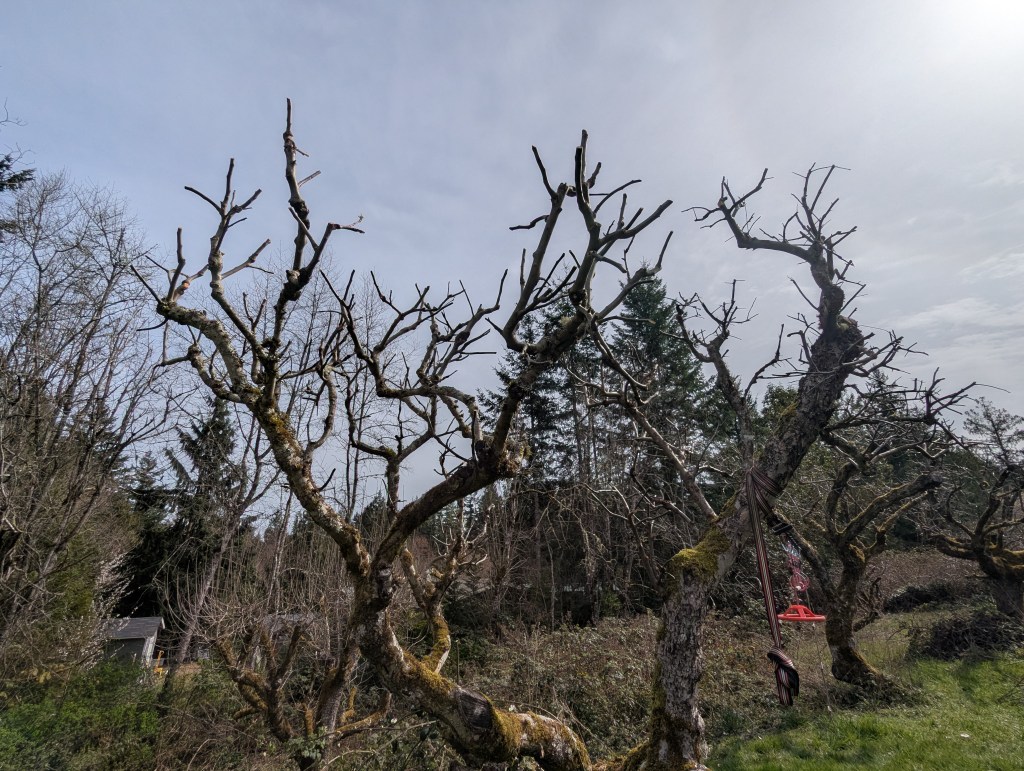
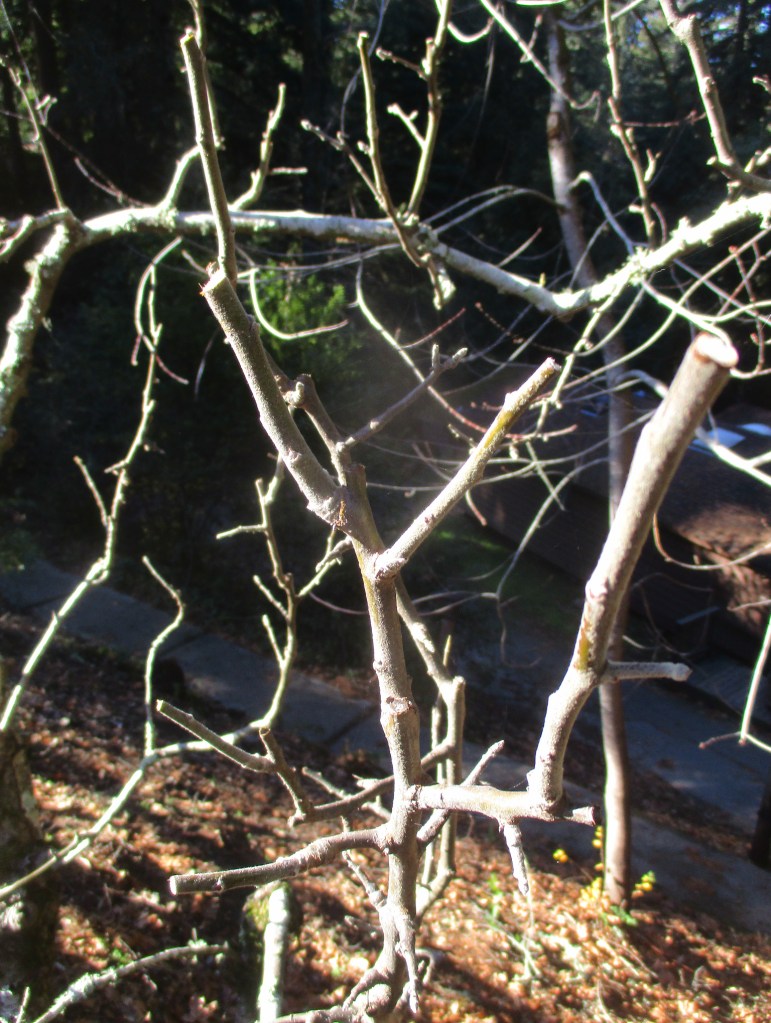
2. Apple trees after pruning still look questionable and disfigured, but really are healthy. I probably should not have thinned them so much. It will compromise their production.
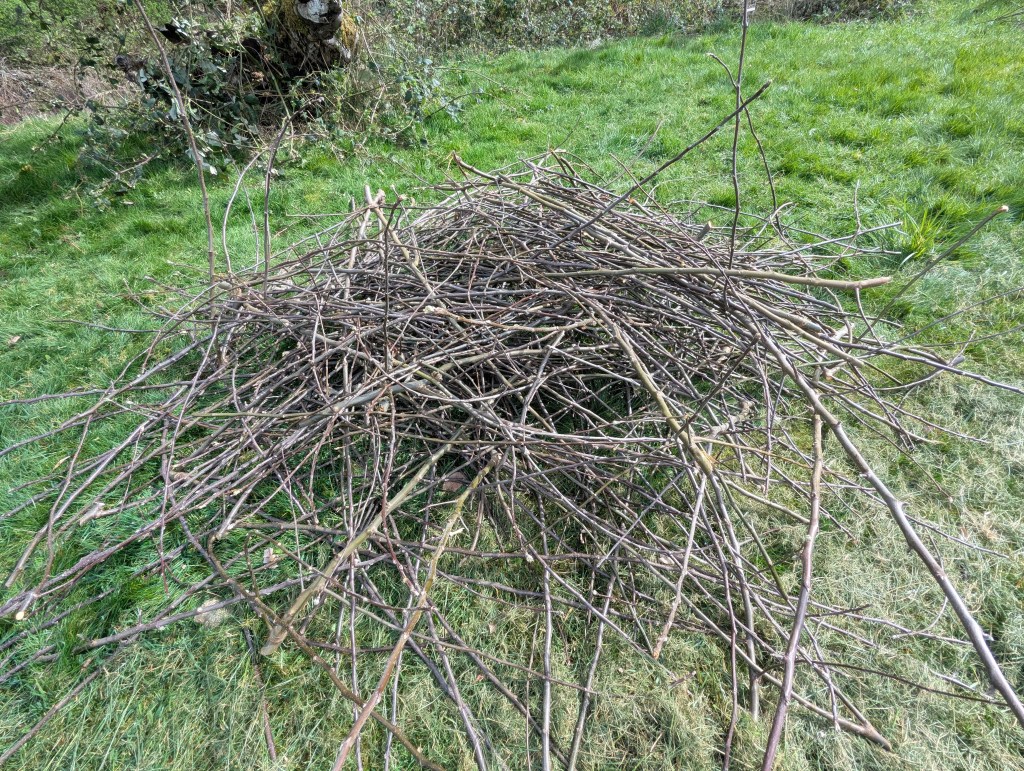
3. Apple debris was not so abundant this year, since all the major cuts were made in past seasons. Almost all of this debris is one or two year old growth. Now, it must be burned.
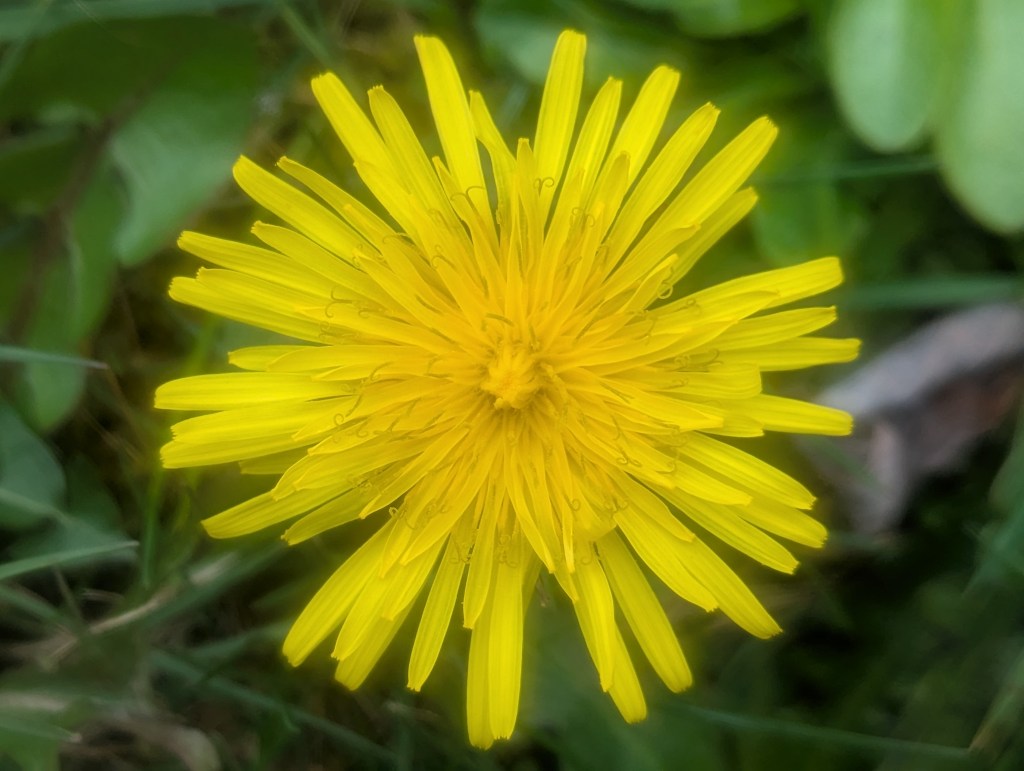
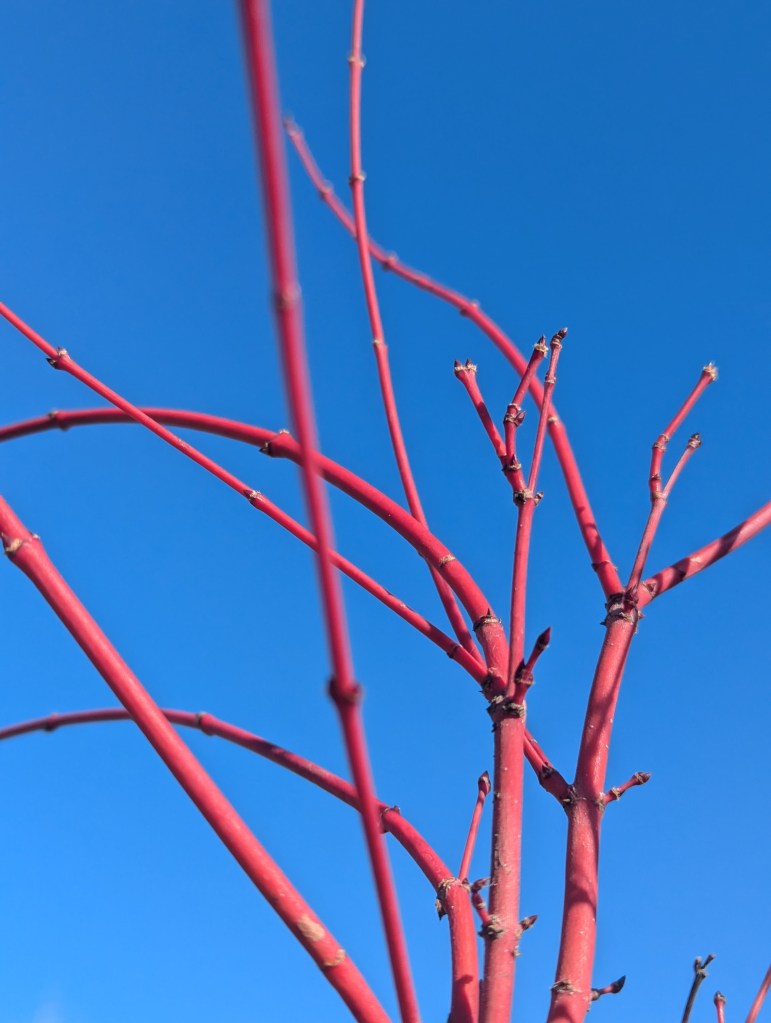
4. Dandelion was one of the only flowers besides cherry trees that I noticed blooming in the vicinity of the apple trees. A cherry tree that I got pictures of last week is about done.
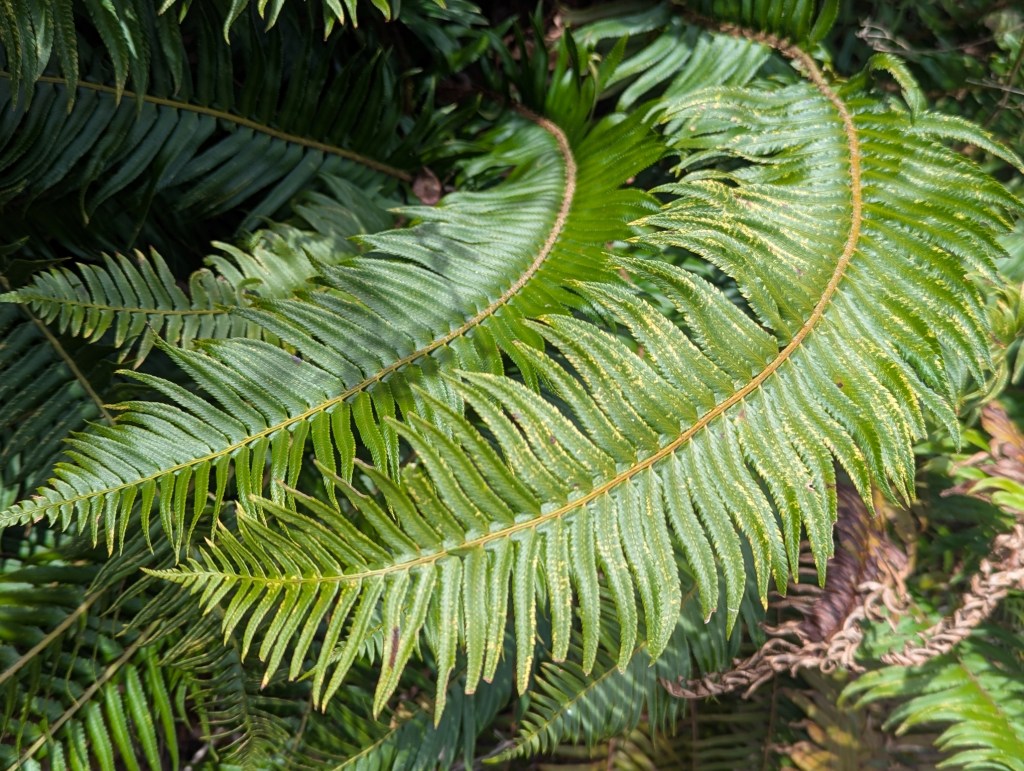
5. Western sword fern was featured in an upcoming gardening article. This picture is the same as the illustration but sideways. This fern is very common in the Pacific Northwest.
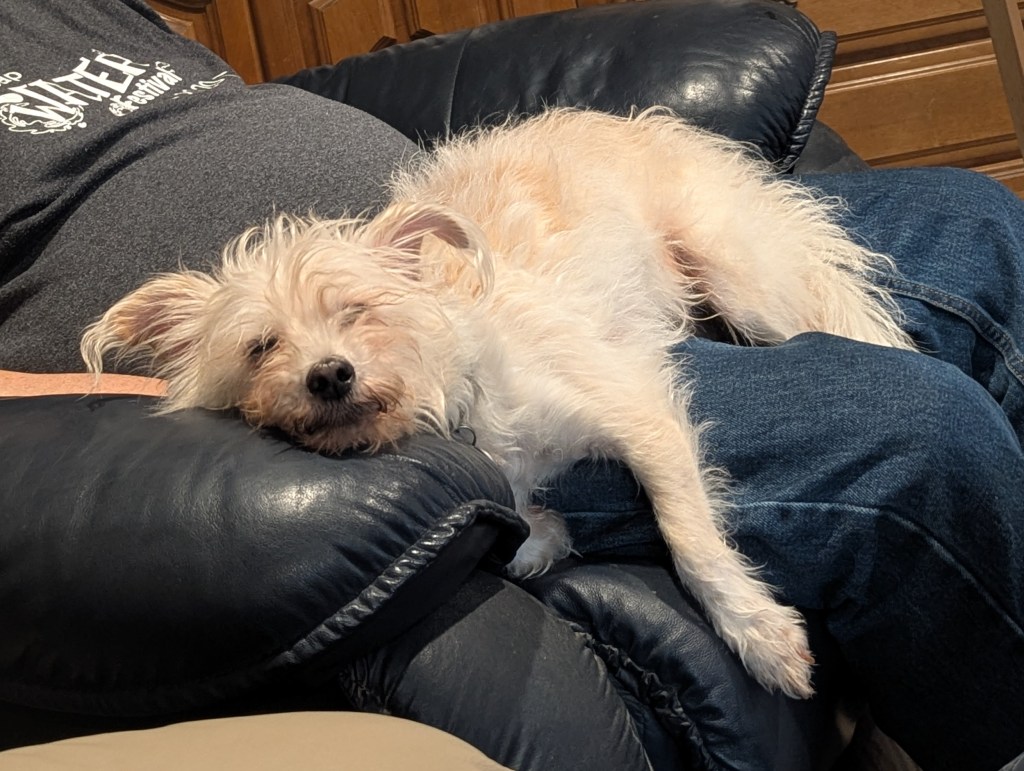
6. Rhody really knows how to relax on our vacation. He is very fond of my Pa, and enjoys lounging on his lap for as long as he can, typically with an inane movie on the television.
Dormant pruning happens during winter for one primary reason; dormancy. For the same reason, most alternating canes pruning should happen during winter. The results of such pruning will become obvious during the following spring or summer. New growth should be more vigorous. Bloom and any subsequent fruit production should be more abundant.
Alternating canes is similar to coppicing, but not as drastic. Coppicing entails pruning all growth down to the ground. Alternating canes involves pruning only old and deteriorating stems to the ground. Younger and more vigorous stems remain with more space to grow and bloom. The process essentially promotes constant growth of more productive stems.
Pruning grape vines with this technique is a bit different. It entails pruning old canes only back to their permanent trunks, rather than to the ground. In that regard, it is more similar to pollarding, but not as drastic. Pollarding entails pruning all growth back to a trunk or a few main limbs. Small grape vines might support only a pair of canes after such pruning.
Most, but not all, alternating canes pruning should happen during winter dormancy. Lilac and Forsythia bloom profusely for early spring, but generate no fruit. Therefore, for them, alternating canes pruning may occur immediately after bloom. Delay of such pruning can allow old canes to bloom one last time prior to their removal. It maximizes floral potential.
Some species that benefit from alternating canes pruning happen to be evergreen. Their pruning can happen whenever it is convenient for them, even if not during winter. Abelia, for example, may be rather sparse after such pruning. It remains sparse for longer during early winter than late in winter. Oregon grape and Heavenly bamboo are also evergreen.
Proper dormant pruning for several types of plants involves alternating canes by default. These include, but are not limited to, roses, hydrangeas, elderberries, and cane berries. Some types of filbert, and some types of cotoneaster are less common examples. Witch hazels, like forsythias and lilacs, should bloom prior to pruning. Bamboos are conducive to alternating canes whenever they appear to get unkempt.
Bare root season begins now because bare root stock is so efficiently dormant for winter. Dormancy is the same reason that this is now also time for dormant pruning of fruit trees. It is comparable to anesthesia for surgery. Affected fruit trees waken from dormancy after winter with no idea of what happened. They then resume growth as if nothing happened.
Dormant pruning is important because of the unnatural breeding of most fruit trees. They have been bred to produce unnaturally large and unnaturally abundant fruit. Their fruit is so excessive that they can not support all that they could produce. Dormant pruning both limits production and concentrates resources. Resulting fruit is less abundant but bigger.
Bigger, better but less abundant fruits collectively weigh less than overly abundant fruits. Furthermore, dormant pruning improves structural integrity of affected trees. So, affected trees are able to support more weight but must support less. Ideally, they should need no propping for limbs that are too heavy with fruit. Limbs should not break from their weight.
Dormant pruning also directs and stimulates growth. It should prevent stems from getting so high that their fruit is beyond reach. Actually, most fruit should be within reach from the ground without a ladder. Vigorous growth is more resistant to pathogens than congested and less vigorous growth. There are actually quite a few advantages of dormant pruning.
Stone fruit trees and pome fruit trees are popular types that need dormant pruning. Stone fruit include apricot, cherry, nectarine, peach, plum and prune. They need similar pruning but to varying degrees. Peach needs more severe pruning because its fruit is so big and heavy. Cherry needs less aggressive pruning. Apple, pear and quince are all pome fruit.
Deciduous fruit trees are quite demanding, and reliant on timely dormant pruning. Those who would like to grow them should first be aware of their cultural requirements. Diligent research of pruning technique is helpful. Practical and annual experience is even better. Each year, it is an opportunity to observe how subject trees respond to dormant pruning.
Given the opportunity, blackberry and raspberry canes become rampant thickets. The trick is to keep them contained and controlled so that they can produce berries without conquering the garden. Besides, proper pruning promotes production. Properly maintained canes are therefore both better behaved and more productive.
Berry canes are certainly not low maintenance, and should be selectively pruned a few times through the year. The type of pruning needed is determined by the type of growth that the canes exhibit in particular seasons. Spent canes or upper portions of everbearing raspberry canes that produced berries through summer and early autumn will need to be removed by the end of winter while new canes that grew through this year get trained to replace them.
Pruning and thinning of new canes should be delayed until the end of winter; but removal or pruning of spent canes can begin as soon as their fruit gets depleted. Spent canes of traditional summer bearing raspberries like ‘Willamette’, ‘Tulameen’ and ‘Canby’ can be pruned to the ground. ‘September’, ‘Heritage’, ‘Summit’, ‘Fallgold’ and other everbearing raspberry canes should be pruned only as low as their fruit was produced. Lower portions that did not produce fruit should be left to bloom and produce berries next spring.
Just like raspberry canes, new blackberry canes that grew this year do not need to be pruned until late winter. However, the canes that grew last year and are finishing berry production this year can be pruned to the ground as their last berries get taken. There is no rush for this procedure, but getting it done early makes later pruning of new canes for next year a bit easier.
Of course, every different cultivar (cultivated variety) of raspberry and blackberry behaves differently. Some finish producing and are ready to be pruned sooner than others. Their behavior is also affected by climate and environmental conditions, so that the same variety may be earlier or later in different areas, or even different parts of the same garden.
Favorite berry canes are very easy to propagate by division of superfluous new shoots during winter. Alternatively, spent canes that should be removed can be ‘layered’ instead. They simply need to be bent down and partially buried, and can be dug and separated as they develop roots.
The top few inches of cane should extend above the soil. At least a few inches of cane below the top should be buried a few inches below the surface of the soil. The length of cane between the buried portion and the base of the parent plant can remain exposed.
Layering can be done at any time of year if the layer (buried section of cane) gets watered while developing roots. Layering this time of year is easiest though, because layers get plenty of water from rain through winter, and develop roots most efficiently as they come out of dormancy late in winter or early in spring. If layers are buried where new plants are desired, they do not need to be dug and moved next year.
Rosemary happens to be one of the many plants that is perhaps too versatile to be respected. Low ground cover forms and sculptural upright forms are probably at their best without much attention. Shrubby forms can instead be shorn strictly into neat formal hedges.
The problem is that most rosemary eventually gets shorn and deprived of natural shape and texture, whether it needs it or not. Those that should be upright and sculptural become rounded over like bean bag chairs. Ground cover forms without their naturally soft texture are like flattened hedges. Those that should be shorn are seldom shorn properly for confinement, so become distended and obtrusive.
The many different kinds of juniper are similarly disgraced. Instead of becoming sculptural small trees, Hollywood juniper and Eastern red cedar more commonly get shorn into nondescript shrubs. Shrubby types get shorn so often that their appealing textures are never appreciated. Only a few of the densely foliated and compact junipers are conducive to formal shearing.
Shearing is certainly practical where formal hedges are desired, and for plants that have sufficiently dense and finely textured foliage. Yet, it is still important to shear such plants properly. Hedges should be slightly narrower at the top and wider at the bottom, so that lower foliage gets good sun exposure. Vertical surfaces are acceptable; but hedges should not be wider on top and narrower on the bottom.
Hedged or shorn plants should not be allowed to sneak out of their confinement to become obtrusive to usable space. For example, hedges along a driveway should not become so deep (from front to back) that they occupy usable space where cars could otherwise park. They function just as well if three feet deep as they would if they were eight feet deep!
Most hedged plants that should not have been hedged can be salvaged with a bit or work. Unfortunately, the process can be quite involved and makes the shorn plants unappealing while they recover. Overgrown privet hedges can simply get cut back to bare limbs (late in winter) and allowed to sprout back. They should be cut back farther than they need to so that new growth has room to expand.
Overgrown photinias are not so tolerant to severe pruning, so need to be cut back selectively to allow sunlight into the interior. The largest and most obtrusive growth can be cut out completely at first, as long as some lower growth remains to sustain recovery and shade interior stems. As new growth emerges from within, more of the overgrown outer growth can get removed until it is replaced.
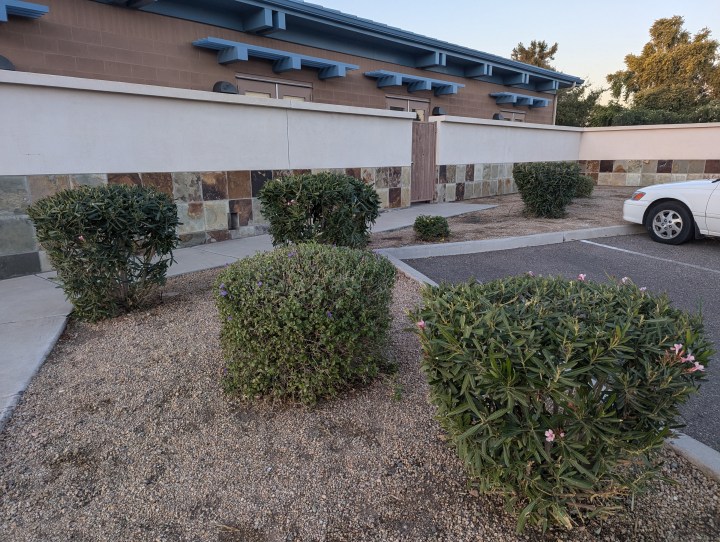
Alternatively, overgrown photinias, as well as oleanders, osmanthus, large junipers and some pittosporums can be allowed to grow wild on top if their obtrusive lower growth gets pruned away. Such overgrown plants often have appealing trunks within. The only problem is that hedges pruned up into rows of small trees do not obstruct lower views as they may have been intended to do, unless they get pruned up only on one side.
Remember that shearing is not the only option. Properly pruned plant are allowed to grow into some spaces, but not where they will get in the way. Natural growth habits should be exploited instead of oppressed.
Dormant pruning last winter did more than concentrate resources for flowers and fruits. It did more than eliminate superfluous growth, which many pathogens overwinter in. It also directed or concentrated resources for stems and foliage. Such growth now grows faster than some types of insect infestation. Aphid, though, are famously prolific and tenacious.
Hybrid tea roses very effectively demonstrate the advantages of dormant pruning. Those that lacked such pruning are more vulnerable to major aphid infestation now. Those that benefit from such pruning are significantly less vulnerable. Even with minor infestations, they may bloom well. Their vigorous stems grow at least as fast as aphid can proliferate.
It is too late for dormant pruning now. Furthermore, this is the beginning of aphid season. It continues until early autumn. Fortunately, aphid are usually not problematic for too long on the same hosts. Their natural predators often find and control them as their infestation culminates. They might continue to be present, but at a tolerable or unnoticeable degree.
Insecticides can be useful for severe infestation, but can interfere with natural processes. Some eliminate predatory insects that can naturally control aphid. If possible, it might be more practical to literally allow nature to take its course. Aphid are prolific, but essentially weak. Mildly soapy water kills them fast without killing many beneficial predatory insects.
Ants symbiotically cultivate aphid in exchange for their honeydew, (which is excrement). They protect their benefactors, and move them to ideal host material. Pruning citrus trees so that they touch nothing else can nearly block access to ants. Application of a barrier to their trunks, such as grease, blocks access more completely. Predatory insects still fly in.
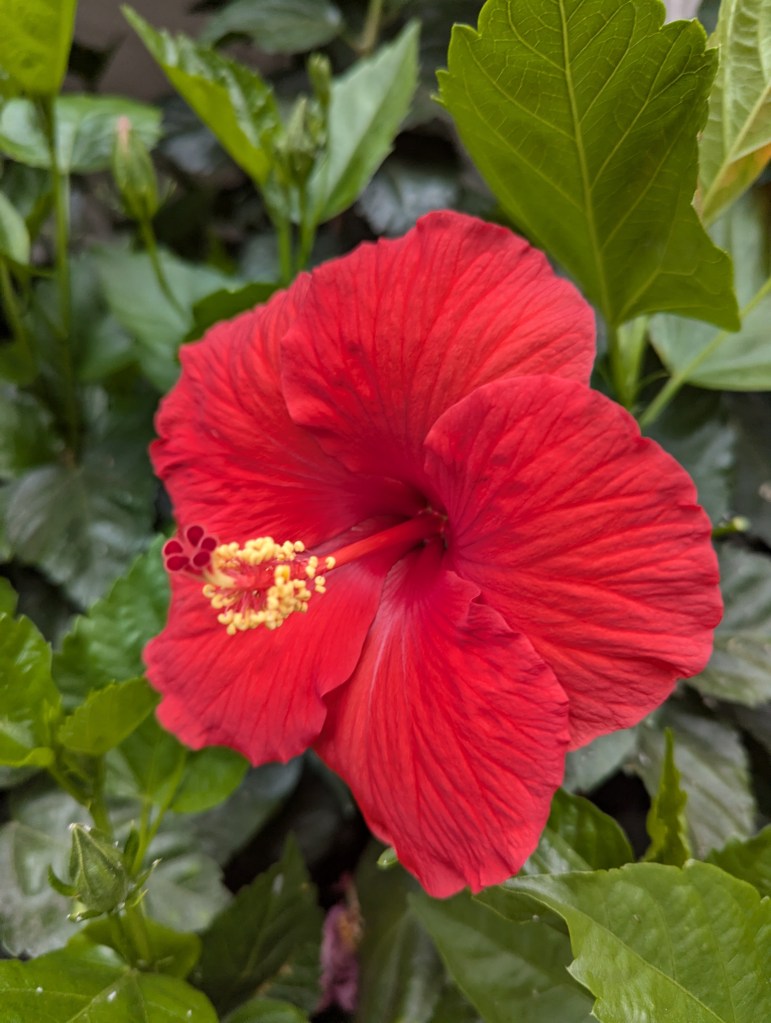
This technique is practical for many small trees, but not low shrubby roses and hibiscus. For them, aphid might be easy to blast off with a spray nozzle on a hose. This procedure neither removes nor kills all aphid, but it can limit their damage. Repetition of the process will likely be needed a few days later, and maybe a few times. Aphid might be persistent, though.
Back before gardening was cheapened to the degree that it is now, and before most of everything within reach was shorn into submission, many plants were pruned, or not pruned, as necessary to enhance their naturally appealing characteristics. New Zealand flax got planted where it had room to reach out, and only got ‘plucked’ as shoots ventured too far from the center. Lily-of-the-Nile got ‘chopped’ where it crept too far, and ‘thinned’ where it got too crowded to bloom.
Only hedges were shorn; and they were shorn properly, to be slightly narrower on top. Trees actually grew as trees above, and got pruned for clearance below. Vines were selectively groomed, but allowed to climb their trellises. Deciduous fruit trees got the specialized pruning that they require in winter.
Many different kinds of plants that produce generally vertical stems from the base were maintained by a pruning technique known as ‘alternating canes’. This procedure is almost opposite of removing watersprouts or suckers (watersprouts that develop below a graft union) to favor a primary stem. It is actually the removal of primary stems as they get replaced by their own basal watersprouts.
For example, glossy abelia is naturally rather limber with upright growth that spreads outward. Without pruning, it can become an overgrown mounding thicket. However, shearing deprives it of its naturally appealing form, and interferes with bloom. Instead, the technique of alternating canes removes older canes as they begin to deteriorate, allowing new canes to grow more vigorously, arching gracefully outward from the center.
Elderberries and pomegranates may not actually require regular pruning, but are easier to manage if some basal stems are allowed to mature and replace tall and awkward older trunks. The newer growth is more productive (after the first year), easier to reach, and simply looks better. Alternating canes also promotes bloom while preventing thicket growth of mock orange and lilac, particularly since they produce such abundant basal growth.
Heavenly bamboo (Nandina spp.) and real bamboo are two completely different and unrelated plants that both benefit from alternating canes. Heavenly bamboo likes to get its deteriorating or floppy older stems cut to the ground, to allow more space for fresh new foliage to unfurl. Bamboo simply needs old canes cut out as they die.
If necessary, Oregon grape can be pruned to the ground now.
Spring has sprung; and winter has wenter . . . or whatever winter does to get out of the way of spring. Plants are more active now than at any other time of year. Deciduous plants that were dormant and bare through winter have already started to bloom and produce new foliage. Evergreen plants are now making new foliage to replace their tired old foliage that lingered through cold, wet and windy winter weather.
Frost is very unlikely this late. It is safe to sow seeds for all sorts of warm season vegetables and annual flowers, like beans, okra, zucchini, nasturtiums and sunflowers. It is likewise time to plant small plants for certain vegetables and flowers that are too slow to start from seed, like tomatoes, peppers, eggplants, petunias and impatiens.
Winter was the time to prune almost all deciduous plants (which defoliate) and many evergreen plants while they were dormant. However, pruning of plants that are susceptible to frost damage needed to be delayed until about now, even if they had been damaged earlier. Premature pruning would have stimulated new growth, which would have been even more sensitive to subsequent frost.
Any lavender starflower, bougainvillea, marguerite daisy or blue potato bush foliage that was damaged by earlier frost can now be pruned away. New foliage should already be appearing. Also, any mushy frost damaged leaves of giant-bird-of-Paradise and banana can be removed, and should be replaced by new foliage as the weather gets warmer.
The end of winter and beginning of spring is also the best time for any necessary severe restorative pruning of plants that can be damaged by frost, as well as many heartier evergreen plants. It is late enough to avoid frost, while early enough to take advantage of the first new growth phase of the season.
For example, lavender starflower that is both overgrown and damaged by frost can be pruned back to the main stems now, instead of merely shorn to remove damaged foliage. If pruned earlier, it would have not only been more sensitive to frost, but would have remained unsightly as long as weather remained too cool for it to regenerate new foliage.
It likewise can not be pruned much later without wasting most of the new spring growth that is presently developing, which would be very stressful and delay bloom. Pruning severely now will be unsightly for the least amount of time before new growth regenerates and blooms. It would also be less stressful, since it coincides with natural dormancy and regenerative cycles.
Privets, junipers, oleanders, photinias, bottlebrush and pittosporums that need restoration should also get it now, not because they are sensitive to frost, but so that they recover as efficiently as possible as weather gets warmer. Besides, bottlebrush, pittosporum and some other plants are susceptible to disease if pruned during winter, because pruning wounds are easily infected during rainy weather.
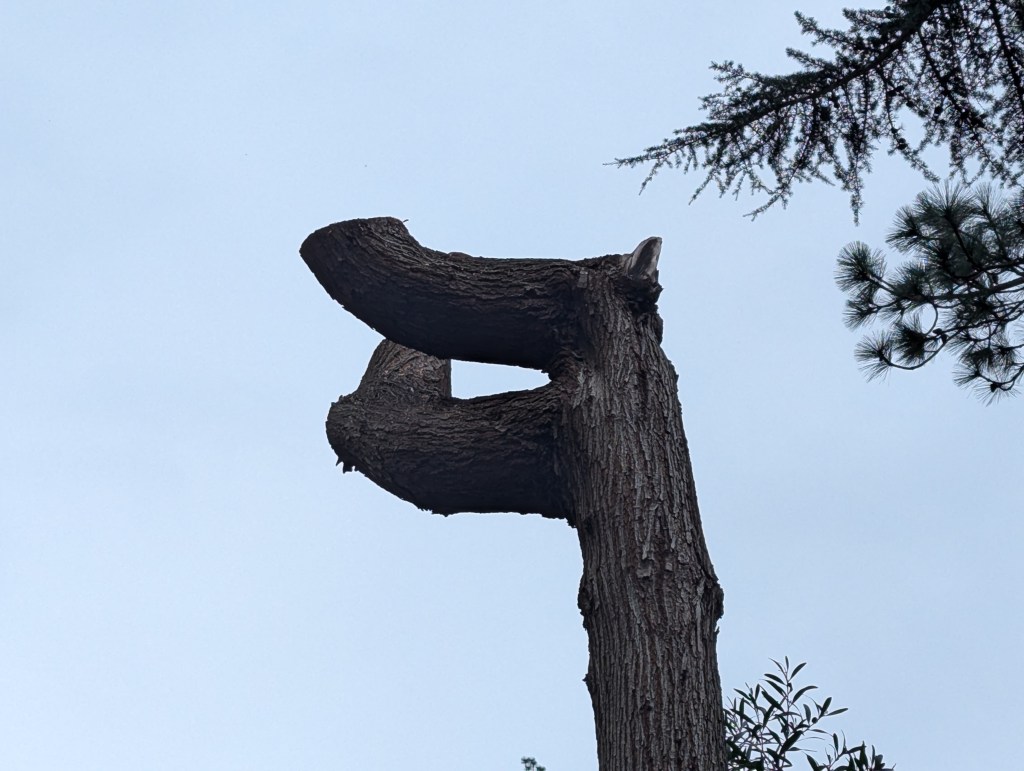
Actually, this does not even qualify as pollarding. It looks as if this tree, which was one of a few similarly damaged Acacia melanoxylon, black acacia trees, was in the process of being removed when the crew who was removing it left for the day. It would not have been so bad if they had returned to remove it and the others completely. They did not. This was the finished product. It and the others were almost twenty feet tall in this condition. They were about twice as tall prior. This sort of hack job is what gives pollarding a very bad reputation. It also demonstrates why proper pollarding should not be so vilified that arborists do not learn how to do it. Very obviously, this is not proper. Because they could not be salvaged, all of these trees were cut down a few days after I got this picture.
Pollarding can be done for a variety of reasons, and has been done for centuries in various cultures. It is still respected technique in many or most cultures. It stimulates vigorous growth that can be fodder for some types of livestock, including silkworms who consume the vigorous foliage of pollarded white mulberry trees. It can prevent some trees from producing troublesome pollen or fruit, such as old orchard olive trees that were retained as homes and their respective gardens were constructed around them. It can enhance autumn foliar color for some types of deciduous trees, such as the old Schwedler maples that were formerly common as street trees in San Jose. It stimulates growth of vigorous cane stems that are useful for basketry, fences, trellises or kindling. Locally though, it is considered to be as egregious as the technique pictured above, which is why no one here learns about it.
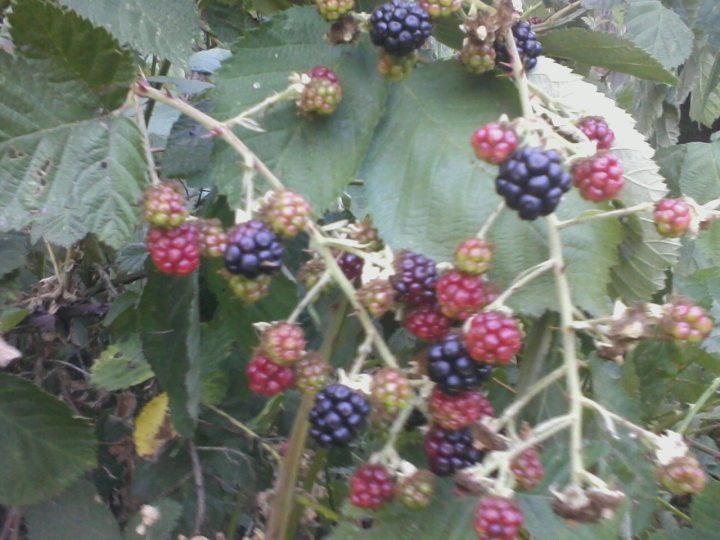
Their habit of overwhelming untended gardens gives blackberry canes a bad reputation. Their thicket like growth in their native habitats does not help. They are certainly not ‘low maintenance’ and need intensive specialized pruning later in the year. Yet, they become available with other bare-root plants this time of year for a reason. They make great blackberries!
New bare-root blackberry plants do not look like much when they are first planted, and do not produce berries in their first year. They will instead be busy dispersing roots and producing biennial canes that will produce berries the following year. Root barriers can prevent their aggressive roots from getting into neighbors’ gardens, particularly since south or west facing fences are just as practical for supporting trailing canes as trellises are.
‘Trailing’ types like ‘Marion’, ‘Boysen’ and ‘Olallie’ blackberries, which are also known as ‘boysenberry’, ‘marionberry’ and ‘olallieberry, are the most popular locally. ‘Erect’ types, like ‘Arapaho’, ‘Choctaw’ and ‘Navaho’ are more tolerant to frost, so are more popular where winters are colder. ‘Semierect’ types are hybrids of trailing and erect blackberries.
In their second year, trailing and semierect canes that grew during the first year should be trained onto trellises, fences or wires. As their fruit gets depleted later in summer, these canes can be cut to the ground. Some of the new canes that developed through the season need to be trained onto the same supports to replace the older canes as they get removed.
There should be more than enough new canes. About ten to fifteen of the best canes of trailing types should be selected and pruned to about six or seven feet long. Semierect types need about half as many canes, and can be pruned about a foot shorter. Extra canes should be cut to the ground. A few of the smaller extra canes can be left through summer to be separated with roots as new plants during the following winter.
Side branches that grow from the pruned canes through late summer and early autumn should get pruned to about a foot long at the end of the following winter. New growth from these stubs will produce fruit during the following summer. The process of replacing the old canes with new canes can be repeated as the fruit gets depleted. The process is similar for erect blackberries, but no support is needed. During the second year, canes should be cut to about two and a half feet tall in the middle of summer. Secondary branches from these canes should be cut to about a foot long in winter. As fruit gets depleted and replacement canes develop during the following summer, these mature canes can get cut to the ground. New canes then get pruned just like the older canes were.

 Tony Tomeo