Coppiced Vegetation Regenerates With Vigor

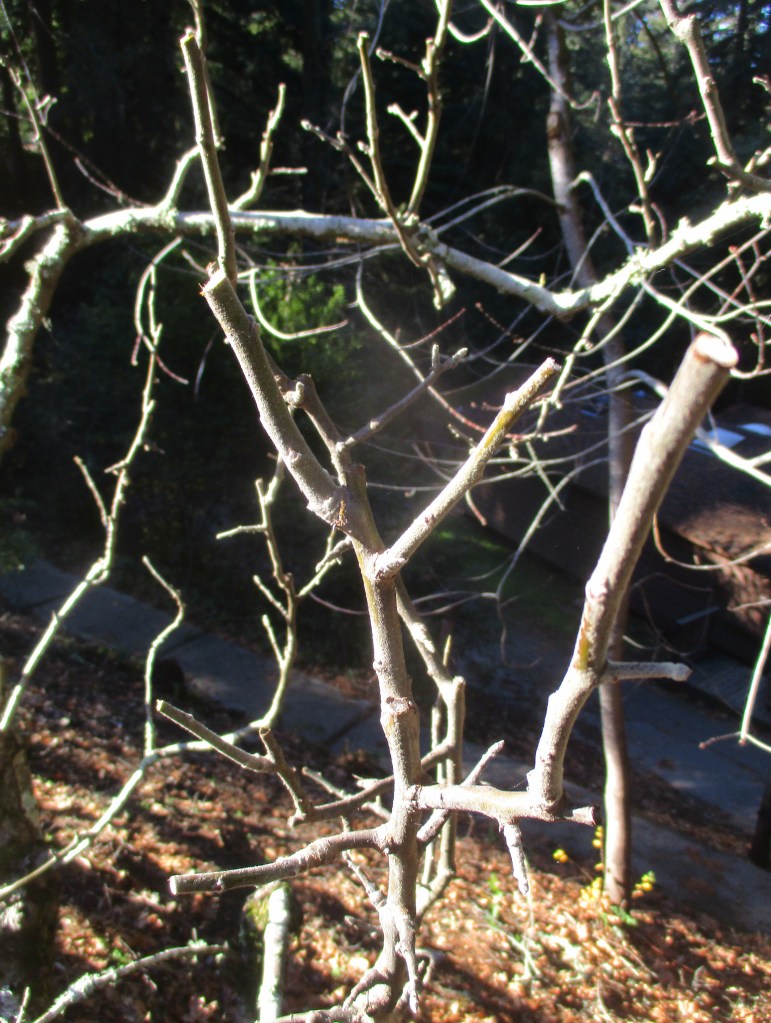
Coppicing can alleviate congested basal growth.

Winter dormancy has advantages. It facilitates acquisition and establishment of bare root stock, and winter dormant pruning. Coppicing and pollarding are the most severe sorts of winter dormant pruning. Although initially ugly, coppiced and pollarded vegetation mostly grow vigorously later. Most species bloom and fruit better. All species foliate more lushly.

There is certainly nothing wrong with proper coppicing and pollarding. Both are common beyond America, particularly within Europe. However, both are very unfortunately vilified as disfigurement here. Not many arborists know how to perform such techniques, or may not admit to it. Yet, some coppiced vegetation is covertly popular in some home gardens.

Coppicing and pollarding are genuinely extreme and harsh techniques. Coppicing is the removal of almost all growth that is above the surface of the ground. For some shrubbery or trees, short stumps may remain. Coppiced vegetation is therefore not much to look at. Pollarding is similar, but retains primary trunks and limbs. Pollarded trees seem hideous.

Hideousness is subjective, though. By European standards, pollarding is an acceptable horticultural technique. European arborists know how to perform it properly during winter dormancy. They do so neatly, without stubs or torn bark, and direct growth as necessary. Coppiced vegetation is not as hideous because not much of it remains to see afterwards.

Because of its vilification, coppicing became more tolerable with different classifications. “Cutting back” perennials, such as African iris, lion’s tail and canna, is the same process. So is cutting back carpet roses or honeysuckle to the ground. The alternate classification is more acceptable. It is just as effective for removal of thicket or deteriorating old growth.

Also, coppiced vegetation regenerates more vigorously for spring than it may otherwise. Elderberries prefer selective grooming, but coppiced plants produce bigger fruit clusters. English Laurel, osmanthus, photinia and red twig dogwood respond nicely to coppicing. However, coral bark Japanese maple is grafted, so is likely to lose its scion if cut too low down.

Winter Pruning Deciduous Fruit Trees

Specialized dormant pruning improves fruit production.

Bare root season is synchronous with winter for one simple reason. Winter is when bare root stock is dormant. Dormancy similarly justifies winter pruning of deciduous fruit trees. It functions like anesthesia for surgery. While dormant, deciduous fruit trees are unaware of relocation or pruning. They resume growth for spring as if nothing stressful happened.

Winter pruning, or dormant pruning, would be inappropriate at any time other than winter. It is both very specialized for particular deciduous fruit trees, and, for most, very extreme. Some trees that benefit from it could not survive such procedures while vascularly active. Such pruning would involve the removal of most or all foliage if it were not already gone.

Winter pruning is no more unnatural than major breeding that necessitated it. Because of breeding, fruit trees produce unnaturally heavy and abundant fruit. Many can not support the weight of the fruit that they could potentially generate. Major pruning limits production and improves structural integrity of stems. It also confines production to reachable stems.

Production of unnaturally big and abundant fruit consumes substantial resources. Winter pruning concentrates resources into less excessive fruit of better quality. Since fruit is not as congested as it would otherwise be, it is more resilient to pathogens. So are its stems, foliage and precursory bloom. Fruit is easier to harvest from less congested stem growth.

Stone fruit trees and pomme fruit trees are the most common that require winter pruning. Stone fruit include cherry, apricot, plum, prune, peach, nectarine and almond. They need distinct degrees of similar pruning. Large fruit like peach necessitate aggressive pruning. Cherry and almond do not require as much. Pomme fruit include apple, pear and quince.

Deciduous fruit trees are certainly not low maintenance. Their reliance on winter pruning is undeniable. Those who would like to grow such trees should be aware of their cultural requirements. Diligent research of pruning techniques is very helpful. Annual experience is even better. It is an opportunity to observe how trees respond to all earlier procedures.

Big Shrubbery or Small Trees

Pittosporum undulatum is a large shrub that can become a small tree.

            Shrubbery behaving badly can be a problem. Many seemingly innocuous shrubs get planted in situations where they do not fit, and soon get too big for the space available. Others do not get shorn or pruned as they should, or simply get neglected, and eventually get overgrown. Many others have sneaky ways of sowing their seeds in awkward places where they would not otherwise get planted by anyone who knows better.

            Most home improvement shows on television would simply recommend removing obtrusive, overgrown or inappropriate shrubbery and replacing it with something more proportionate, appropriate and stylish. What a waste! Hidden within overgrown shrubbery, there are sometimes potentially appealing small trees that only need to be released from thickets of overgrowth.

            Overgrown Australian tea tree, sweet olive (Osmanthus fragrans), xylosma, glossy privet, ‘Majestic Beauty’ Indian hawthorn, and larger types of oleander, holly, pittosporum, cotoneaster and juniper are often easily salvaged by aggressive selective pruning rather than indiscriminate pruning for confinement. Lower growth that has become obtrusive, disfigured or otherwise unappealing can be thinned or removed to expose substantial sculptural trunks within. Upper growth that is out of the way can be left intact or thinned as necessary, but should not shorn or pruned indiscriminately. This creates informal small trees with distinctive trunks from what had been overgrown shrubbery.

            Some shrubbery may need some time to grow out of its former confinement, and may be somewhat unsightly during the process. As they develop though, they should require less maintenance, since most of their growth should be up out of the way instead of where it is in constant need of pruning for confinement. 

            Many small trees that often get shorn into shrubbery would similarly do better with selective pruning to enhance natural branch structure and eliminate congested thicket growth. Japanese maples, redbuds, smoke tree, English hawthorn, crape myrtle, parrotia, loquat, strawberry tree, Pittosporum undulatum, and small types of magnolias, acacias, and yew pines (Podocarpus spp.) are notorious for getting shorn into unmanageable shrubbery. Pineapple guava, photinia, toyon, hop bush, larger types of bottlebrush and smaller types of melaleucas are more conducive to being shorn and pruned as large shrubbery, or can be pruned into small trees if preferred.

Nurseries Sell Some Marginal Species.

Heliotrope is available from nurseries in climates that get too frosty for it.

            Limiting selection of plants to those that are appropriate to the local climate is not as easy as it seems. Even in mild climates, plants that should be grown in even milder climates are just too tempting, and have sneaky ways of getting from nurseries into the garden. Consequently, when the weather gets cold, at least a few plants get damaged by frost.

            Geraniums, angel’s trumpet, daisies and many other perennials that are so reliable throughout the rest of the year were likely damaged when the weather recently got harshly cold so suddenly after being so mild. Sensitive plants that got some protection prior to the frost may have avoided damage this time, but will likely need protection again before the end of winter. The only sensitive plants that are reasonably safe are those that are located in sheltered spots or in pots that got moved to shelter.

            Now that the damage has been done, it is important to not rush corrective procedures. Even though frost damaged foliage is unsightly as it deteriorates, it insulates undamaged tissue below. Early removal of the damaged foliage exposes interior stems to frost later in the season. On rare occasion, exposed stems of some plants can be damaged by desiccating cold wind or sun scald. (Sun scald typically happens during summer, while sunlight is most intense.)        

            Early pruning of frost damage can also stimulate premature development of new growth, which is much more sensitive to later frost. Most moderately sensitive plants have no problem recovering from minor frost damage once annually. However, recovery is so stressful and takes so much effort that secondary frost damage to new growth can be much more damaging and even fatal to some plants.

            It is best to delay removal of frost damage until late winter when subsequent frost is unlikely. Large plants that are too unsightly to wait that long should be pruned as minimally as possible, and then pruned as necessary later. Minor distal damage known as ‘tip burn’ of avocado and lemon trees may not need to be pruned out at all if it first gets obscured by new growth that develops after winter.

            This may seem contrary to the importance of pruning most other plants while they are dormant during winter. The difference is that, unlike most plants that stay dormant while the weather is cold, plants that get damaged by frost are not so well adapted to cold winter weather, so do not know that they need to stay dormant until the weather is safe for new growth.      

            Burlap, plastic sheeting or any other coverings used to protect sensitive plants from frost should be removed when it is not needed. These protective coverings hold warmth within, which can stimulate premature development of sensitive new growth. Opaque materials shade the plants below and can eventually cause etiolation (stretching of the stems), which likewise makes plants even more susceptible to frost damage.

Horridculture – Aberraculture

Totem of aberrative arboriculture

“Aberraculture” is no more a real word than “horridculture” is. Just as “horridculture” is like a contraction of “horrid” and “culture” that seems to describe horrid horticulture without actually doing so, “Aberraculture” is like a contraction of “aberrative” and “culture” that seems to describe aberrative arboriculture without actually doing so. Perhaps the illustration above provides a better explanation. I suspect this happened because the entire canopy of this particular Quercus agrifolia, coast live oak, extended over the fence and the driveway within the fence from which it needed to be pruned for clearance. However, because of the fence at the edge of the driveway, the trunk could not be cut completely to the ground. Whoever did this lacked access through a nearby gate. The dinky limb and stubbed limb at the top of this severed trunk seem to be a pathetic attempt to cut back to a lateral limb, as if it somehow makes this a proper cut. If this trunk had remained, it would have generated rampant growth that would extend in all directions, including back over the driveway that necessitated this procedure. It is gone now, and the stump should be dead. Because this was on a property where I work, I did not want anyone to see it there. I have no idea who did it, since it was done for an adjacent property, and whoever made arrangements for it did not want to trouble us with it. I only noticed because the adjacent property happens to be a bank that I do business with. I probably should occasionally inspect such fenclines for potential problems before something like this happens again. They are easy to neglect because, although close to some landscapes outside, they are so far from the trees and refined landscapes that we maintain within.

Does cutting back to a lateral limb somehow make this a proper cut?!

Autumn Tasks

Gardening tasks may be a bit less demanding now, but are no less important.

With cooler and rainy weather, and shorter days, gardening is not what it was a few months ago. It is more comfortable to stay inside when the weather is not so pleasant. Besides, gardening when the garden is too wet gets muddy, and can damage lawns and bedding areas. Even while the weather is pleasant, there is not enough daylight left to get much done at the end of the day.

The good news is that gardening is not as demanding in autumn and winter as during spring and summer. Plants are either dormant or are growing only minimally. Pruning and hedging is therefore not so necessary. Lawns likewise do not need to be mown as often. Without much blooming, there is less need for deadheading. With rain bringing more moisture than the garden needs, and cooler temperatures inhibiting evaporation to take moisture away, watering is rarely a concern.

The bad news is that there are a few things than should be done in autumn and winter that should not be delayed to spring. For example, early spring blooming bulbs should be planted as they become available in nurseries so that they can get a good chill through winter and disperse their roots as soon as possible. Also, evergreen trees that may be a bit awkward on their trunks should be staked before winter winds. (Deciduous trees do not get blown around much without their foliage.) 

Eventually, or sooner, the weather will get cold enough to necessitate protection from frost. Marginal plants are probably safe under eaves or taller evergreen trees. Sensitive plants that are not in pots that can be moved to shelter should be tented when threatened by frost. Tenting can be as simple as tarps suspended above the foliage by stakes, and only needs to shelter plants from exposure.

As deciduous fruit trees lose their foliage, they will be ready for winter pruning. This is very important for apricot, peach, cherry, nectarine, plum, prune, apple, pear and related trees, since they should not be pruned once they start to bloom in spring. Maples and birches should also be pruned while completely dormant in winter, since they bleed so profusely if pruned in spring or summer.

Weed seedlings may start to appear with winter rain. They do not grow as rapidly now as weeds do in spring, but have a sneaky way of growing in more places because of the uniform availability of water in places that would be dry without rain. Fortunately, they are easy to pull while the soil is damp. Seedlings of any desirable plants should be identified first so that they can be distinguished from weed seedlings and not pulled.

Falling leaves should be raked from lawns and ground cover, not because they are unappealing in the garden, but because they block out sunlight and promote rot. Raking should not be done immediately after rain though, since lawn and ground cover are so easily damaged while soil is wet and muddy.

Taking Sides

This is what taking sides looks like. The right side was taken completely off, leaving only the left. The view from the other side would show that the left side was taken completely off, leaving only the right. It is not such a good picture because it is difficult to distinguish the extent of the damage from what is going on in the background. Realistically though, a better picture would be even worse, since the extent of the damage would be more obvious. The justification for such damage here is more obvious, since, obviously, this is a bad situation, with no room for balanced growth. Although survival is possible, this is not what nature intended. Natural growth should be an asset, and efficiently directed to where it can be useful, which would most likely be much more balanced than this. Incidentally, this is a coastal redwood, which is the Official State Tree of California. This sort of pruning would be just as damaging to Western hemlock, Douglas fir or blue spruce. For that matter, it would be just as damaging to longleaf pine, Western white pine or Ponderosa pine. Ultimately, it is bad technique for any tree in any situation.

Tree Work Will Be Less Stressful During Dormancy.

Only arborists can work on the big trees.

The taller trees are typically the first to admit that summer is finished and that it is now autumn. Perhaps because they are higher up and into the changing weather more than smaller plants that are sheltered and closer to the ground. Some trees are changing color nicely. Others are thinking about it. Evergreens are, . . . well, evergreen; so they may not seem to change so much. Nonetheless, autumn is here, and most plants will consequently be going dormant for the winter, or at least slowing down a bit.

For many trees and other plants that need to be pruned, the next few months will be the best time for it. Because they are more or less dormant, they are not very aware of whatever procedures they are subjected to. When they wake up in spring, they simply adapt to the earlier pruning and start growing as if not much happened to them. Dormancy is like a natural anesthesia for trees and plants.

Conversely, the end of winter and beginning of spring is the worst time to prune many trees and plants because they are just emerging from dormancy, so are wide awake! If necessary, minor pruning done properly is generally tolerable, but should realistically be done either before or after that time. Maples, birches, mulberries and figs express their disapproval of late pruning by bleeding profusely, and sometimes for a long time.

Deciduous trees are most dormant by winter when their leaves have fallen off. Pruning them a bit earlier would probably be harmless, but deprives them of their colorful foliage. Maples, gingkoes, poplars and mulberries typically defoliate earliest. Oaks, elms and sweetgums (liquidambars) take their time, holding onto their leaves until they get knocked out by wind and rain. Oaks and elms are not very colorful anyway. Sweetgums though can look too good to get pruned late into winter!  

Arborists are physicians of trees, so can prescribe recommended pruning and maintenance procedures. Many trees, like Chinese elms, fruitless mulberries and willows, need more attention than others. Austrian black pines and Eastern redbuds are not so needy. Blue spruces that are allowed to remain branched to the ground and have enough space around them may never need a visit by an arborist.

Regardless of how much attention any particular tree needs, when it develops a problem that is out of reach, it should be assessed by an arborist, and hopefully pruned accordingly. Because trees are the most substantial features of the landscape, and can develop worse problems if not maintained properly, it is imperative to procure the services of qualified arborists; and not trust such important tasks to a gardener or anyone who can find a chain saw and pick up. Fortunately, certified arborists can be found at the website of the International Society of Arboriculture (ISA), at www.isaarbor.com.

Bloomless Hydrangea

This hedge of modern Hydrangea is completely devoid of bloom.

Modern cultivars of Hydrangea were not easy to adapt to. I learned how to prune old fashioned cultivars during their winter dormancy. I knew to retain the terminal buds of their retained canes to bloom for their following season. Pruning canes of modern cultivars back shorter and depriving them of their terminal buds in order to promote shrubbier growth seemed to be more like pruning roses. I did not trust them to bloom without their terminal buds. Not only do they bloom, but they do so a bit more abundantly, and with sturdier floral trusses that last and retain their floral color somewhat longer than those of old fashioned cultivars. Old fashioned cultivars have bloomed so reliably for the past few years that I am not so hesitant about pruning them back. However, this year, they inexplicably did not bloom. I do not mean that they bloomed sparsely, or that a few of the total did not bloom. I mean that none of the modern hydrangeas bloomed at all. The only hydrangeas that bloomed within the landscapes at work this year are the few remaining old fashioned sorts. All of the hydrangeas are healthy with vibrantly green foliage. Neither disease nor insect pathogens have been problematic. I can not explain this odd lack of bloom. With such vigorous canes, pruning should be easy this winter. However, I am more likely to leave awkwardly long canes in order to retain their terminal buds. Even if they are not necessary, terminal buds might provide an earlier prebloom prior to the bloom of stems that grow from lateral buds. I can not help but wonder why, while modern cultivars did not bloom, old fashioned cultivars did. A colony of unpruned feral Hydrangea near the bank of Zayante Creek was unusually prolific in bloom.

Unpruned feral Hydrangea bloomed unusually prolifically.

Horridculture – Hackers (again)

Is it really too much work to not leave such stubs while destroying a hedge?!

It has been quite a while since I posted anything that qualifies for the theme of ‘Horridculture’. Such topics are not only unpleasant, but have become redundant and passe. They are annoyingly frequent reminders of how several of the horticultural industries attract too many of those who either lack practical experience or simply do not care about their work. I can not even remember how many times I wrote about hackers, which is why I did not assign a number to this title. I can see that I addressed this issue as recently as February. Nonetheless, because this particular incident involves a Prunus laurocerasus, cherry laurel hedge that we have been renovating for a few years, it is difficult to ignore. The formerly severely overgrown hedge had been responding somewhat slowly but otherwise adequately to its renovation, all behind a reasonably presentable facade. Actually, until recently, the facade had become tidier and denser than it had ever been before. Then, a tree service was hired to clear some adjacent unmanaged vegetation. The objective was to remove vegetation from an area that is to be paved for dumpsters. There was no concern for the quality of the work, since remnants of such vegetation can be managed or removed later. The problem is that those who performed the task also removed a significant portion of the facade of the hedge beyond the area from which unmanaged vegetation needed to be removed. What is worse is that it was done so horridly. I do not remember seeing any proper cuts. All involved stems were stubbed and gashed. I can only guess that whoever did this expected the hedge to be removed later. I can not be certain of that, since complete removal within one process would have been less work than such thorough disfigurement. I mean that someone put a great deal of effort into disfiguring the hedge this severely. Fortunately, the hedge will eventually recover. I removed the stubs and neatened what remains, and will try not to look at it for the next several months. The tree service that did this actually removes unwanted trees for us efficiently and safely. Their arborists are quite experienced and qualified for what they do. I just do not want them to do anything else.

Someone put a great deal of effort into this degree of damage.