Six on Saturday: A Series Of Unfortunate Events

Horticulture can be so challenging. Some challenges are very frustrating. Some are quite infuriating. Some of the worst would be likewise if they were not so weirdly silly. Really, plants naturally present certain innate challenges. So do their pathogens. People though, are special. Their behavior is not completely innate. They should know better than to do so much of what they do. So many of their mistakes are so creatively inane. Yet, some of the most egregiously silly are not even mistakes according to their personal perceptions. Goodness, merely attempting to explain these unfortunate events becomes challenging! Realistically, it is not as bad as it seems. I swatted lily of the Nile buds when I was a kid. The neighbor with the ‘machine’ is unaware of the naked ladies, and will remain as such.

1. Lagerstroemia indica, crepe myrtle is susceptible to powdery mildew. These new specimens of a modern cultivar are more resistant than most but apparently not enough.

2. Hydrangea macrophylla, bigleaf hydrangea changes floral color according to soil pH. However, white is always white. We relocated this white specimen to the White Garden.

3. Canna ‘Cleopatra’ is the strangest Canna here, with mixed red and yellow bloom, and mixed green and bronze foliage. Unfortunately, it shared its virus with the other Canna.

4. Agapanthus orientalis, lily of the Nile is a reliably resilient and neat perennial for the edges of walkways, where kids unfortunately enjoy swatting their floral buds with sticks.

5. Agave americana, century plant is so prolific with pups that they are sneaking out the drainage holes! We can them to give them away, but no one wants them. They are nasty!
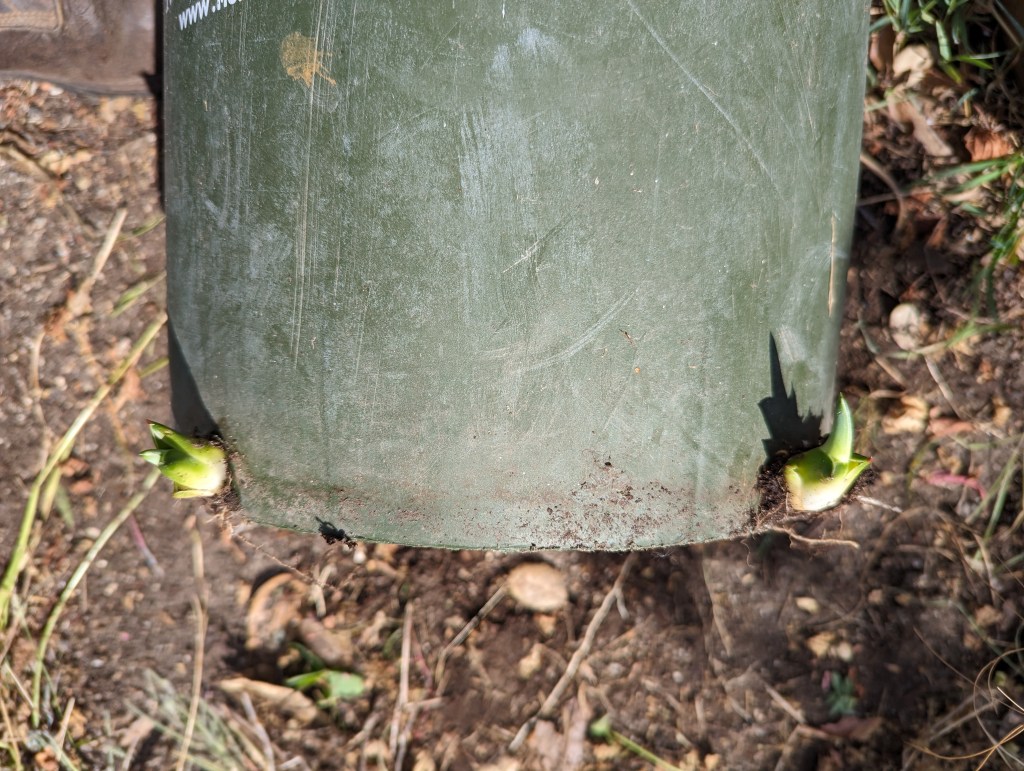
6. Amaryllis belladonna, naked lady was about to bloom as profusely as it does annually when this was maneuvered into position, back and forth, back and forth, back and forth.

This is the link for Six on Saturday, for anyone else who would like to participate: https://thepropagatorblog.wordpress.com/2017/09/18/six-on-saturday-a-participant-guide/
Succulents Are A Diverse Group

If Agave are succulents, are closely related Yucca also succulents?

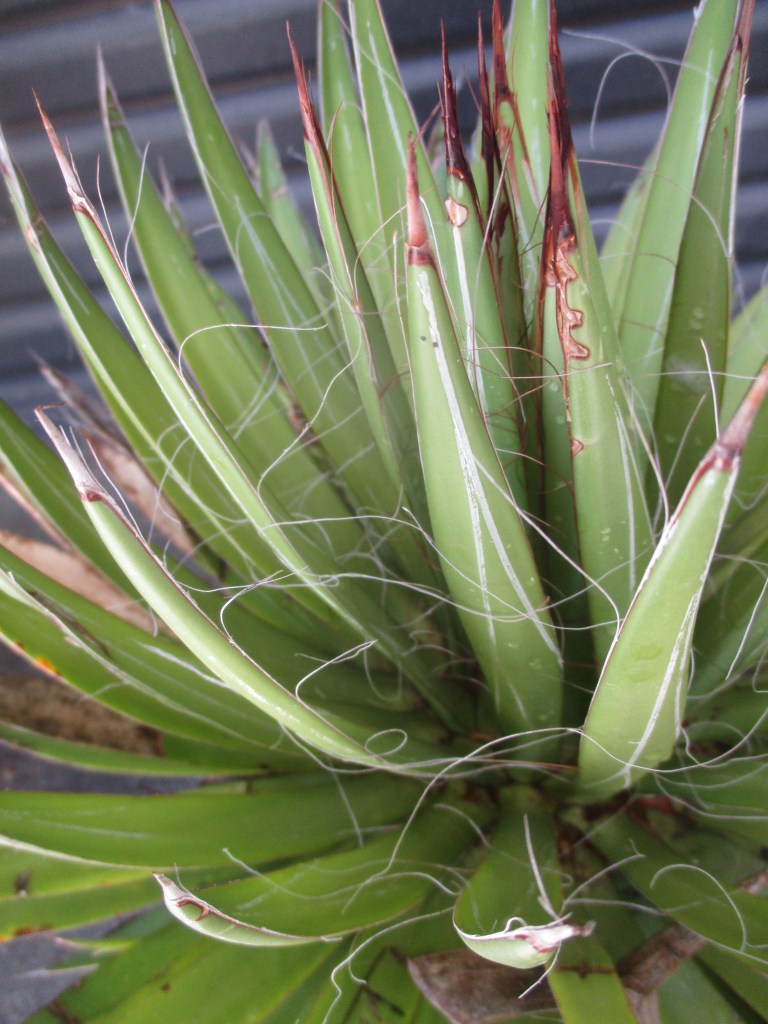
There really is no way to neatly classify succulents. Many are spiny cacti with fleshy stems without recognizable foliage. Others are euphorbs (related to poinsettias) that may resemble cacti, or may instead have fragile leaves on fleshy stems. Aloes and agaves have bold rosettes of fleshy leaves that obscure their wide basal stems.

The most familiar succulents are small docile perennials, like the many varieties of jade plants and iceplants. Some are flowering perennials like begonias. A few are even grown as annuals, like busy Lizzie (impatiens).

So what do succulents have in common? Well, that is a good question that is open to interpretation. Most would agree that succulents have some sort of fleshy succulent parts for storing water through dry weather. These succulent parts are most often leaves or stems. Yet, yuccas, dracaenas and ponytail palm that are no more succulent than palms, are considered by many to be succulents like related aloes and agaves.

Many succulents are remarkably easy to propagate vegetatively (without seed). Most aloes, some agaves and many yuccas produce pups, which are basal shoots that can be separated as new plants. Agaves that do not produce pups while young will likely produce many pups after they bloom and begin to deteriorate. (Individual rosettes die after blooming.)

Despite the nasty spines that make them difficult to handle, cactus that produce multiple trunks can likewise be divided. Cactus can alternatively be propagated as large cuttings; but because they are so fleshy, should be left out for their cut ends to dry and ‘cauterize’ somewhat before rooting. Many euphorbs behave much like cacti, but are even more hazardous to handle because of their very caustic sap.

The majority of small succulents, like the many jade plants and iceplants, are notoriously easy to propagate by cuttings.

Pups Of A Horticultural Nature

Pups are copies of their parents.

Pups of the most familiar type are canine. Most are puppies of domestic dogs. Some are foxes or wolves. A few are seals, otters or various other animals. Garden variety pups do not get much consideration though. They develop into new progeny of plants rather than animals. Unlike animal pups, they are genetically identical clones of their single parents.

Pups of the horticultural sort generally develop from subterranean stems, such as corms, tubers or rhizomes. Most emerge from formerly dormant buds. Some grow adventitiously from roots. Pups appear as basal sideshoots against or close to their parent plants. They efficiently disperse their own roots to eventually survive as new and independent plants.

Most plants that produce pups are perennials. Some are so proficient with the technique that they grow into substantial colonies of genetically identical clones. For some, it is the primary method of replication. They actually prefer to replicate vegetatively than by seed. Some trees and woody plants do the same, but their clones lack the same classification.

For many perennials, propagation by division is merely the separation of pups from their parent plants. Most types of banana trees eventually generate a few surplus pups. Some types generate an abundance of pups to share with anyone who wants them. Separation of their pups is very similar to division of the smaller rhizomes of canna or lily of the Nile.

Individual rosettes of various species of Agave and a few terrestrial species of Yucca are monocarpic. In other words, they die after blooming only once. However, instead of dying completely, most generate several pups prior to bloom. Some produce pups excessively! Such pups can be difficult and hazardous to separate, but can replace their own parents.

Mediterranean fan palm is one of only a few palms here that generates pups. That is why it develops multiple trunks. Surplus pups can survive separation to grow as distinct trees. However, because of their densely fibrous roots, separation of intact pups can be difficult or impossible. Sago palms, which are not actually palms, are more compliant to division, even for rootless pups that develop on their stout trunks.