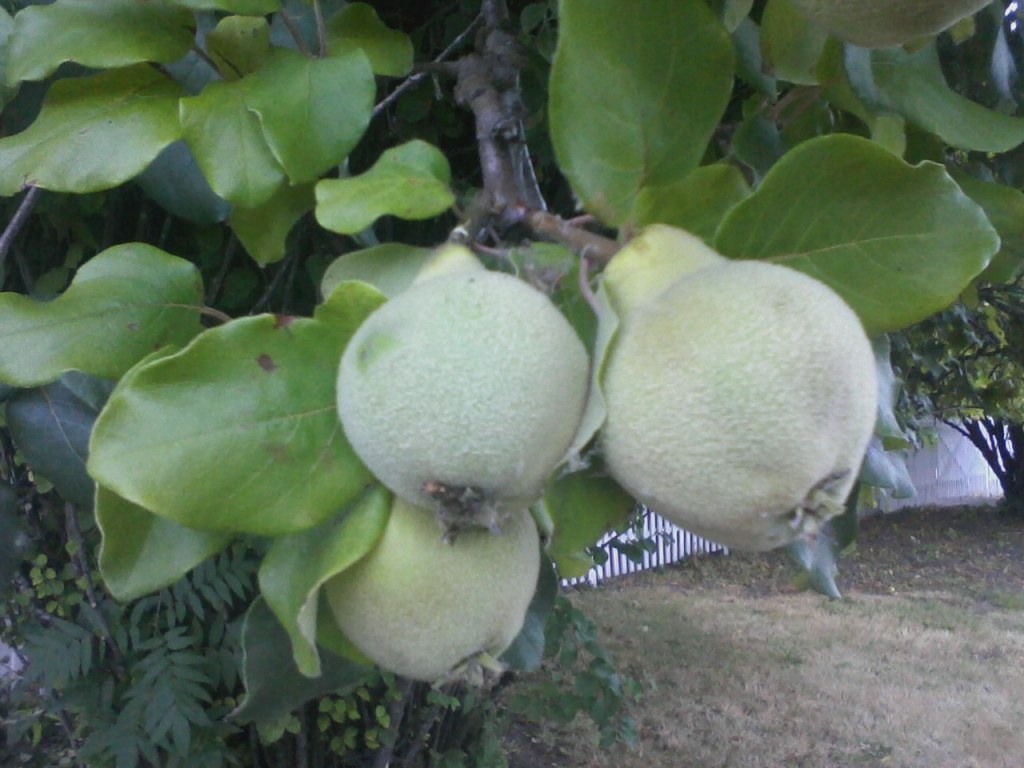
With the many slender arching trunks, quince, Cydonia oblonga, is more like a large deciduous shrub than a fruit tree. Even old trees are not much more than twenty feet tall and broad. Most of the rare trees that can be found are old, because quince is such an old fashioned fruit. The fruit is still immature and covered with white pubescence (fuzz). By late autumn, it will be remarkably aromatic and resemble golden pears, about four inches long and nearly as wide, and so hard that it should be cooked.
Flowering crabapples are the same genus as fruiting crabapples. Flowering cherries are the same genus as fruiting cherries. Flowering quince, Chaenomeles spp., though, is not the same genus as fruiting quince. Available cultivars are generally floriferous but sterile hybrids. Only four basic species produce small fruit that are good for little more than jelly.
They bloom magnificently though, on bare stems, prior to foliation. Profusion of bloom is comparable to that of flowering crabapple and flowering cherry. It begins early enough to finish before some flowering cherries begin. Flowering crabapples start even later. Floral color ranges from bright white to deep red. This includes orangish pink and orangish red.
Unlike flowering cherry trees and flowering crabapple trees, flowering quince is shrubby. The largest might grow no higher than ten feet, with irregular branch structure. Some old cultivars are thorny. Modern cultivars are more compact, shaplier and thornless. Younger trunks should methodically replace older trunks. Pruning can happen after spring bloom.
The function of this formerly popular fruit tree has changed significantly to adapt to modern horticulture. The big but hard fruit of quince, Cydonia oblonga, is less perishable than the firmest pears or apples. Without canning or freezing, it lasts through winter in cool cellars. It also provides pectin for jellies of fruits that lack it. However, quince fruit is too hard to eat fresh, so should be cooked.
As food storage became less important, quince became less popular than more flavorful apples and pears, which are edible while fresh. Pectin is obtainable from apple cores and skins, or from supermarkets. However, quince are not completely absent from home gardens. They are now the unseen but common dwarfing understocks that limit the size of pear trees for suburban gardens.
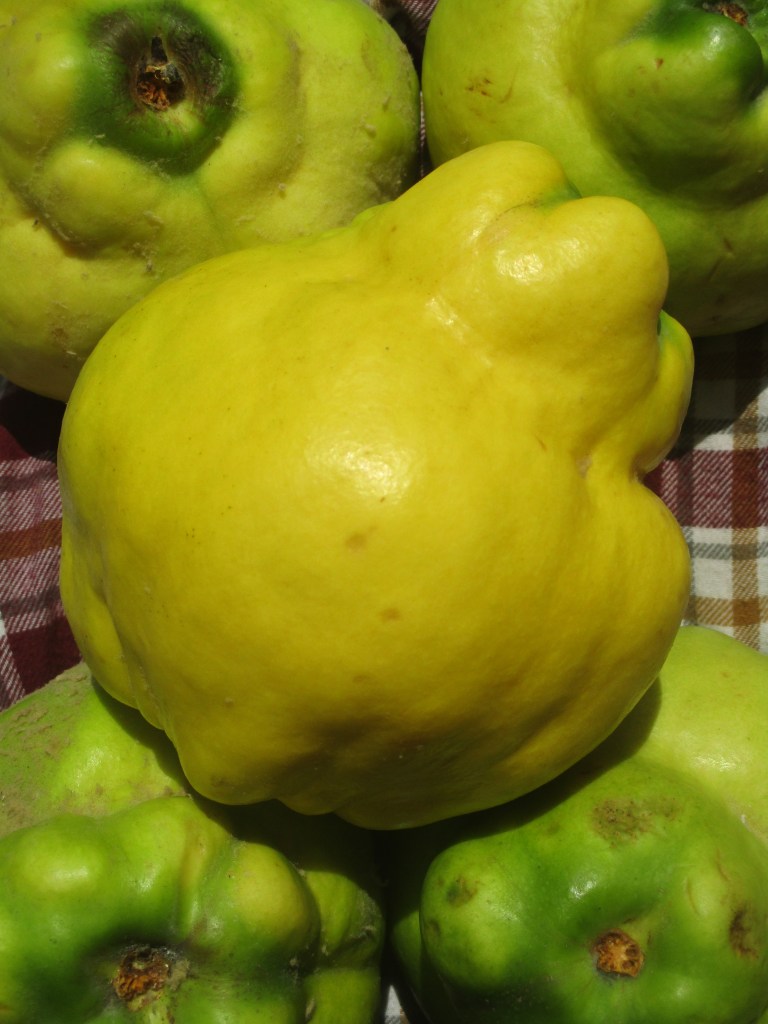
The big lemony yellow fruits that are ripening now may look like very lumpy pears or apples. The largest sorts get as big as small cantaloupes. Developing fruit and new foliage are distinctly fuzzy. Fuzz can be polished off of alluringly aromatic mature fruit. Delightfully pale pink flowers are mostly obscured by new foliage in spring. The deciduous rounded leaves are two or three inches long.
The biggest of quince trees, which are very different from ornamental flowering quince, might get as high and wide as twenty feet.

 Tony Tomeo