Rainy Weather Begins With Autumn

Weather changes with the changing seasons.

Rain is at least as relevant as temperature is to the seasons here. Temperature does not change as much. The warmest of summer weather does not seem to be terribly hot. Low humidity helps. The coolest of winter weather is not too terribly cold. Some local climates lack frost. The difference between dry weather and rainy weather is much more obvious.

After all, rainy weather ends during spring, and does not resume until about now. Almost no rain occurs during the extensively arid summer season. This includes late spring and early autumn. Summer thundershowers are uncommon. Therefore, almost all rain occurs during winter. Some also occurs somewhat variably during late autumn and early spring.

This is quite normal for local chaparral climates. Comparatively to other climates, it might be both an advantage and a disadvantage. It is why most landscapes, particularly lawns, rely on irrigation. It is also why the growing season is so long here. This climate provides more pleasant weather to facilitate more gardening. It also necessitates more gardening.

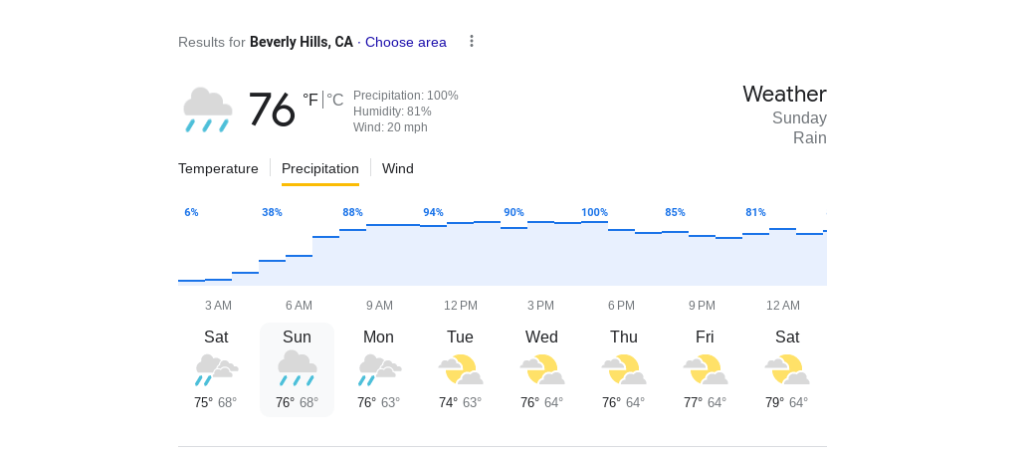
Recent rainy weather is likely the beginning of the rainy season. If so, it is obviously also the end of the dry season. Transition from one season to the next is not on a very precise schedule, though. Dry weather could potentially resume for a while. Conversely, El Nino has potential to promote rainy weather. This winter could be even rainier than last winter!

Even if rainy weather does not resume for a while, irrigation requires seasonal reduction. This includes frequency and duration of automatic irrigation. Vegetation consumes much less moisture while dormant through winter. Less moisture evaporates from soil while the weather is cool. Rain may provide most of the garden with more moisture than it can use.

Unfortunately though, rain is also potentially messy. It makes soil muddy, and can cause erosion. It dislodges deteriorating deciduous foliage, especially in conjunction with wind. Colorful deciduous foliage is much less appealing on pavement or lawn than in its trees. Raking fallen leaves, and all other gardening, is less pleasurable during rainy weather of autumn.

End of Fire Season

Burned trees are visible on ridge tops within the CZU Fire zone.

Rain is gratifying at the beginning of the rainy season. We all know that it has potential to become excessive later in the season, but we are not yet concerned with flooding or mudslides. After a typically long and dry summer, we enjoy it while we can. A storm that finished earlier yesterday was relatively minor, but was nonetheless the first significant storm of this new rainy season of 2023 and 2024. Only minor drizzle preceded it.

The beginning of the rainy season is also the end of the fire season. Forest fires become less likely as the forests become more saturated through the season. However, rain also sustains growth of vegetation that will become combustible during the following fire season, especially if the weather becomes unusually warm and arid by then. Unfortunately, this is the natural pattern of the climate here. Fire is a major component of local ecosystems.

Three years ago, the CZU Fire was the most destructive forest fire within documented history of this region. Larger fires likely occurred prior to documented history, but burned forests that expect to occasionally burn, without damage to unnatural infrastructure that did not exist at that time. Prehistoric fires were likely less common than modern fires, but involved much larger areas. They also likely burned faster and less violently. Modern forest fires involve more fuel because of regeneration of hardwood species after clear cut redwood harvesting a century ago. That is why so many coastal redwoods that survived several fires during their long lives succumbed to the CZU Fire.

Much of the marginal area of the CZU Fire is regenerating efficiently enough to eliminate evidence that it burned so recently. The scenery of areas that burned more severely remind us why we are grateful for the beginning of the rainy season.

Early Rain

This could be a sequel to ‘Late Summer’ from yesterday. It happened shortly afterward. It certainly adds another interesting component to this already odd year of weather. Although not impossible, rain at this time of year is rare. Almost all of the rain here occurs between late autumn and early spring.

Weirdly, if rain does occur during summer, it typically does so around the fifteenth of August. Seriously, it is very prompt about that schedule. It typically either begins or ends on that same date.

The first flash of lightning of the storm that started the CZU Fire occurred at 11:59 p.m. on the night of the fifteenth of August of 2020, less than a minute prior to midnight. So, although the storm occurred during the early morning of the sixteenth, it technically began on the night of the fifteenth.

This brief rain shower was minimal, but by local standards, it was surprising. I sort of wanted it to continue long enough to dampen and contain the dust of summer. It might have done so briefly, but could not prevent the dust from becoming dusty again shortly afterward. The aroma of damp asphalt dissipated even before that happened. It was fun while it lasted.

Perhaps this rain shower will be the last of this unusually autumnish weather. Warm and dry summery weather typically resumes immediately after brief rain showers that happen during the middle of August. Technically, for a summer rain shower, it is only half a month late. So far, the forecast does not suggest that pattern, but it has been wrong before, even here. I doubt that there will be any more rain prior to autumn, even if cool autumnish weather resumes until then. But of course, I have been wrong more often than weather forecasts.

Late Summer

Such weather is early this year.

The change of seasons can be boring here. It might seem as if this climate experiences only two seasons. Summer is the primary season, which seems to extend through most of the year, with what seems to be merely a few days of another brief secondary season which is not summer. Perhaps this brief secondary season is autumn, winter and spring, but that is too many letters and big words for such a small season.

That is how those who are familiar with more distinct seasons might perceive seasons of this innately mild climate. Those of us who are familiar with this climate perceive it quite differently. We are aware of the four seasons, regardless of how mundane the transitions between them seem to be. In fact, some might contend that, if autumn seems to be minimal here, it is merely because this climate experiences a fifth season between summer and autumn, which is known as Indian summer.

Indian summer is an extension of summery weather into autumn, and sometimes occurs after summer seems to have begun to succumb to autumn. It does not happen annually, and does not seem to be happening this year, but certainly could. It is sneaky that way.

For now though, autumn seems to be sneaking into the last two weeks of summer, much like Indian summer sometimes sneaks into autumn. Nights have been interestingly cool. Low clouds have been lingering a bit longer after sunrise than they typically do.

However, vegetation that enjoys warmth does not seem to be decelerating for cooler weather. Perhaps such vegetation knows more than the rest of us do about what to expect. Perhaps it is merely more responsive to photoperiod than weather. Regardless, I get the impression that this is how late summer typically is within other climates.

Hurricane Hillary

Rain is expected to start about six or seven in the morning in Brent’s neighborhood.

California is so big that, from here, it extends about four hundred miles to the north and four hundred and fifty miles to the south. That is where San Diego County is, in the southwestern corner of California. It is so far away that the weather there can be very different from here, as it is now that Hurricane Hillary is coming up from the coast of Baja California. While a tropical storm warning is in effect there, typical summer weather is expected here.

Typical summer weather here is dry. Not much rain happens after early spring. Not much happens prior to late autumn. Every few years, a single odd and brief thunderstorm goes through in the middle of summer, leaving no evidence of its downpours two days later. If it were to happen this year, it should happen about now, like it is in Southern California.

Forecasts for the weather in Southern California are quite unpleasant. A friend in Palm Springs was filling sandbags today. Floods and mudslides are expected through a huge area. This is the first tropical storm in California since 1939, and the first ever tropical storm warning. Yet, we will miss it completely here.

I try to remind myself that the historically torrential rain of last winter was no fun. Flooding was a mess, and caused significant damage even in this neighborhood. Nonetheless, even native Californians can start to miss rain late in summer.

Brent will likely telephone at about seven in the morning. It might be raining by that time. It should finish by noon on Monday. Realistically, it will not rain for long. The problem is that rain will be torrential, especially at high elevations out in the deserts, which do not absorb much water. It will be interesting to see what transpires.

Shasta Lake

Shasta Lake is a large reservoir on the Sacramento River. It contains water for flood control and to generate electricity. Some of the water within is used for agricultural irrigation and, to a relatively minor degree, to supply regional municipal water.

It is a very common misconception that the volume of water within Shasta Lake is necessarily relative to ‘drought’ conditions. Low water level is supposedly indicative of a ‘drought’. High water level is supposedly indicative of ‘normal’ weather conditions, including adequate precipitation. This same misconception seems to apply to all reservoirs in California.

Well, after the rainiest winter since 1982 and 1983, Shasta Lake is still not full. The level fluctuates, so might have been full earlier, or might be full later, but regardless, is not presently full. Water must be released prior to expected rainy weather, which can still occur during spring, in order to accommodate more water to control flooding. Less water may be released as drier weather is expected. Shasta Lake could therefore be fuller or completely full for summer, when almost no rain is expected. The presently observed water level does not indicate deficiency of water any more than a potentially higher water level during summer indicates surplus.

Most of California has a chaparral climate. Some of California has a desert climate. Such climates are naturally dry through summer. It is quite normal. It does not constitute a drought. A drought is an unusually dry weather pattern. It is not so normal.

Contrary to popular belief, California is NOT in perpetual drought. Although droughts occasionally happen, they are not annual events. Dry weather that occurs annually every summer is normal climate. If there is a deficiency of water here, it is because there are nearly forty million people relying on a limited supply of water.

Winter Weather Lingers Into Spring

Late wintry weather delays early bloom.

Winter was epic! Snow was more abundant than since 1976. Rain was more continuous than since 1982. Frost was colder than since 1990. All of this happened within this same winter! Californians generally appreciate rain and snow, and tolerate typically minor chill. Chaparral and desert climates here rarely get much. However, this weather is excessive!

Furthermore, such excessively cold or wet weather was unconducive to gardening. Most of us wanted to stay inside. Home gardens consequently endured neglect in conjunction with extreme weather. Regardless of the current weather conditions, winter is technically done. Now that it is spring, gardens should begin their systematic processes of recovery.

This may entail more effort for those who enjoy gardening than for the associated plants. Most plants are resilient to harsher winter weather than they endured here recently. That is how they survive other less temperate climates. Some may respond favorably to more thorough than typical grooming. Some might prefer later grooming while they regenerate.

Chill can actually enhance performance of some plants that prefer cooler winter weather. For example, some cultivars of apple are barely satisfied with the more typical local chill. They may perform better this year, after a cooler chill. Flowering cherry, purple leaf plum, lilac, wisteria, and many others may do the same. Stone fruits might be more productive.

Several plants do succumb to frost though. Some that typically die back but then recover may not recover this year. For some, the unusually cold frost was lethal. Others rotted as a result of lingering cool dampness. Kaffir lily that is blooming well now may succumb to rot later. Canna that grew early only to succumb to later frost should recover well though.

Some plants that endured frost and saturation last winter might delay their spring bloom. Roses could bloom better but also later, both as a result of cooler than typical chill. Some early spring bulbs that bloomed when they should suffered for it. Rain and wind knocked them into the mud. Later bulbs might avoid a similar fate by delaying their bloom slightly. Fewer conform to a comparably strict schedule.

Six on Saturday: No EMail

Modern technology annoys me. Firstly, the electronics industries are what destroyed the idyllic culture of the Santa Clara Valley. Secondly, it complicates things. If I try to rely on it as the rest of society does, it does not function. It is a long story, so to be brief, I could not download pictures that I sent from the telephone. These six are random, but became available

1. Monstera deliciosa, Swiss cheese plant is in Brent’s garden, four hundred miles away. He wanted to get it into the Canyon News, but sent me this uselessly shabby image of it.

2. Billbergia nutans, queen’s tears was blooming well enough for ‘Six on Saturday’ three weeks ago and is blooming a bit more now. Perhaps I should have taken a better picture.

3. Olea europaea ‘Arbequina’, olive trees were gifts for participants at a conference here. This is one of several surplus that we acquired. It is a little but exemplary rooted cutting.

4. Viola tricolor, Johnny jump up demonstrates that some plants that enjoy more wintry weather than they typically experience here perform well after the atypically wild winter.

5. Tulipa X gesneriana, tulip is not reliably perennial here. I therefore would not bother to grow it. This one came with my iris from the old garden, and got planted only because I could not bear to discard it while it was still alive. It somehow survived and bloomed! As if that were not impressive enough, It bloomed again this year! I will take better care of it now, and I hope that it establishes. I have no idea what it is, or where it came from.

6. Crazy weather finally relinquished spring to more appropriate weather this last week. This was the last hail. I can not remember so much incessant rain within a single season.

This is the link for Six on Saturday, for anyone else who would like to participate: https://thepropagatorblog.wordpress.com/2017/09/18/six-on-saturday-a-participant-guide/

Six on Saturday: Snow, Rain, Wind, Frost, Etcetera

Etcetera is the important part here We must adhere to a schedule. As mentioned earlier, this winter generated the only snow for most regions here since 1976, and more flooding since 1982. By local standards, this winter was severe. It seemed to continue longer than it should have, as if to delay spring and the chores that come with it. I managed to prune a disfigured lemon tree, perhaps more than I wanted to, but effectively so. It was a good reminder of what time of year this really is. The weather is presently pleasant. More rain is expected for tomorrow, Tuesday and Wednesday. However, it is not expected to be as torrential as it had been. No more frost is expected.

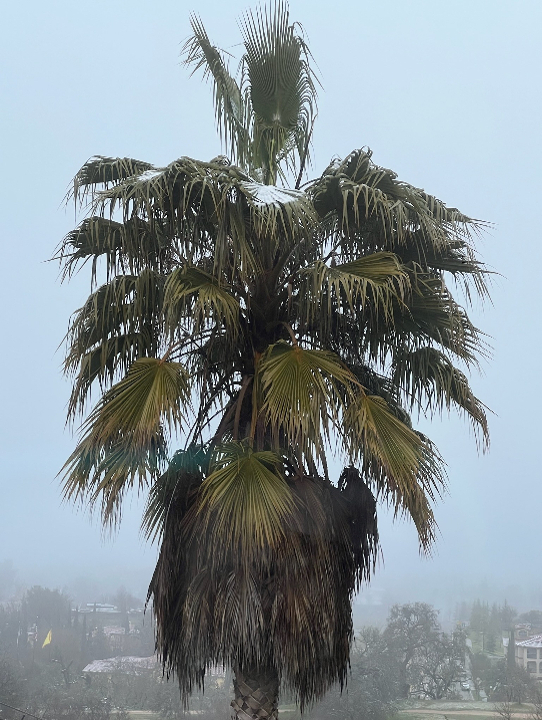
1. Snow looks silly on top of a Mexican fan palm, Washingtonia robusta. This was weeks ago and hundreds of miles to the south, but is amusing nonetheless. Brent sent it to me.

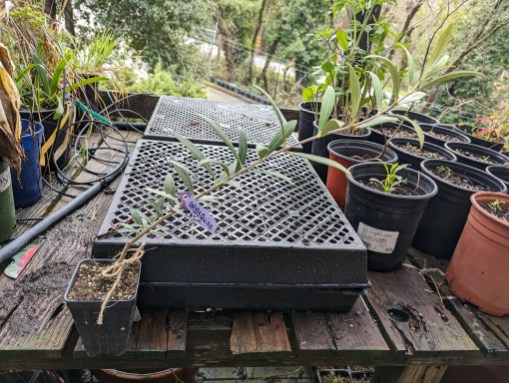
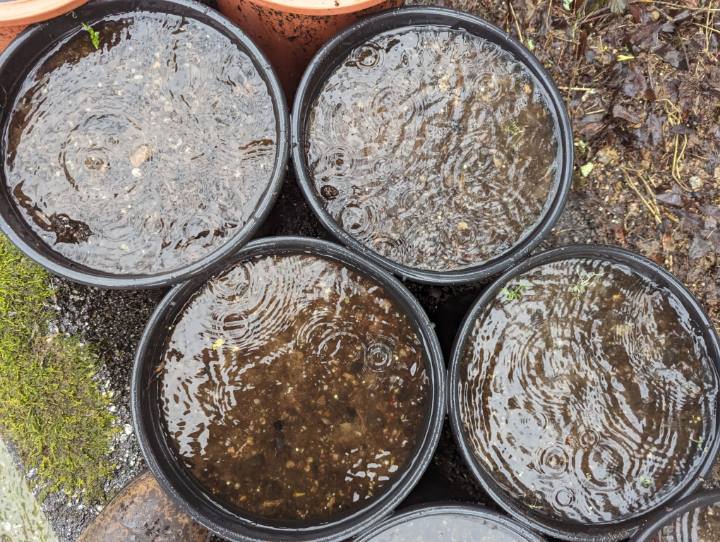
2. Rain fell faster than it could drain through the recently canned Canna. Their drainage holes are likely in the middle of the bottoms of these cans, rather than around the edges.

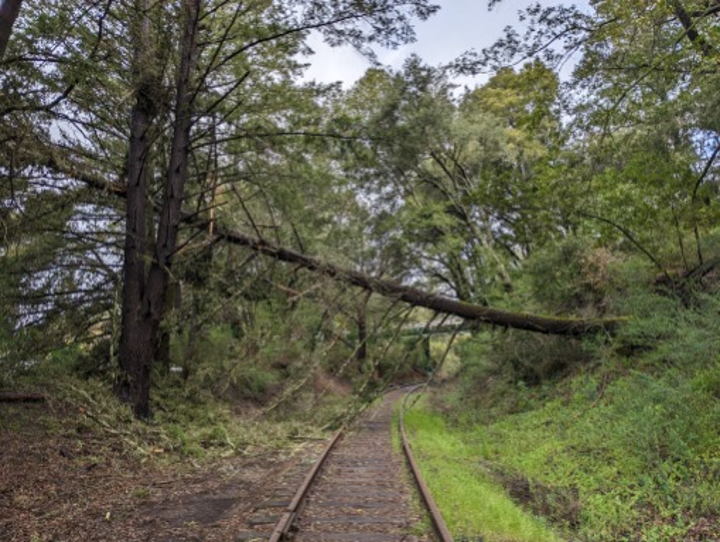
3. Wind blew limbs and trees down all over. Then, after it stopped blowing, this Douglas fir, Pseudotsuga menziesii, fell across the Roaring Camp Railroad behind the barn here.

4. Frost should be done for the year. So, I pruned the structurally compromised Eureka lemon, Citrus limon ‘Eureka’, and processed a few of the scraps into ungrafted cuttings.

5. Lemons were another byproduct of pruning. Most are not yet completely ripe though. Several ripe lemons are always available, but the primary phase should ripen about now.

6. Rhody has been a good sport through all the unusually wintry weather this winter. He is pleased to get outside more now. We got a similar but cuter picture for next Saturday.

This is the link for Six on Saturday, for anyone else who would like to participate: https://thepropagatorblog.wordpress.com/2017/09/18/six-on-saturday-a-participant-guide/

RAIN!

Rain is naturally and innately . . . wet.

(February 12, 2012)

More than a week ago, many of us were astonished to witness countless drops of water miraculously falling out of the sky! What could this be? Where did this water come from? It is actually not such a mystery. These unfamiliar falling drops of water are merely a type of weather known as “rain”. “Rain” is actually nothing new, and happens every winter. Typically, there should have been an abundance of “rain” by this late in winter.

The problem with “rain” is that it is wet. Whatever it encounters also becomes wet, and often messy. Wet dirt becomes mud. Wet roads are hazardous to traffic. It is uncomfortable to go outside to do any gardening when everything is wet and muddy.

However, “rain” is very important to everyone’s survival. It is what moves water from the oceans back onto land, so that it can be collected and used for the many things that water is needed for. “Rain” also brings needed water to gardens, landscapes, and even the forests outside of urban areas. In one way or another, every living thing needs “rain”.

But wait! There’s more! “Rain” so efficiently waters gardens and landscapes that no other watering is needed! Most watering systems should therefore be turned off as long as there is enough “rain” to keep everything wet. Even when the “rain” stops, cooler temperatures and higher humidity keep things from drying as efficiently as they would during warm summer weather. Consequently, most watering systems can remain off until after winter, when the “rain” stops until next winter, and the weather gets warmer.

Actually, the only plants that may want water are those that are sheltered from the “rain”, and perhaps a few large potted evergreen plants that continue to lose enough moisture by evaporation from their foliage to get a bit dry between periods of “rain”. Even these sheltered and potted evergreen plants use less moisture this time of year because they are less active, and evaporation from their foliage is limited by the weather.

Remember; for plenty of moisture that is one hundred percent natural and absolutely free, try “RAIN”!