New Mouser

Rodents departed when she arrived.

Darla, the former mouser here, relocated to a more domestic lifestyle in Santa Clara during the unusually stormy weather and flooding last winter. She is getting rather elderly, and has earned a comfortable retirement. Unfortunately though, rodents of all sorts arrived immediately after her retirement.

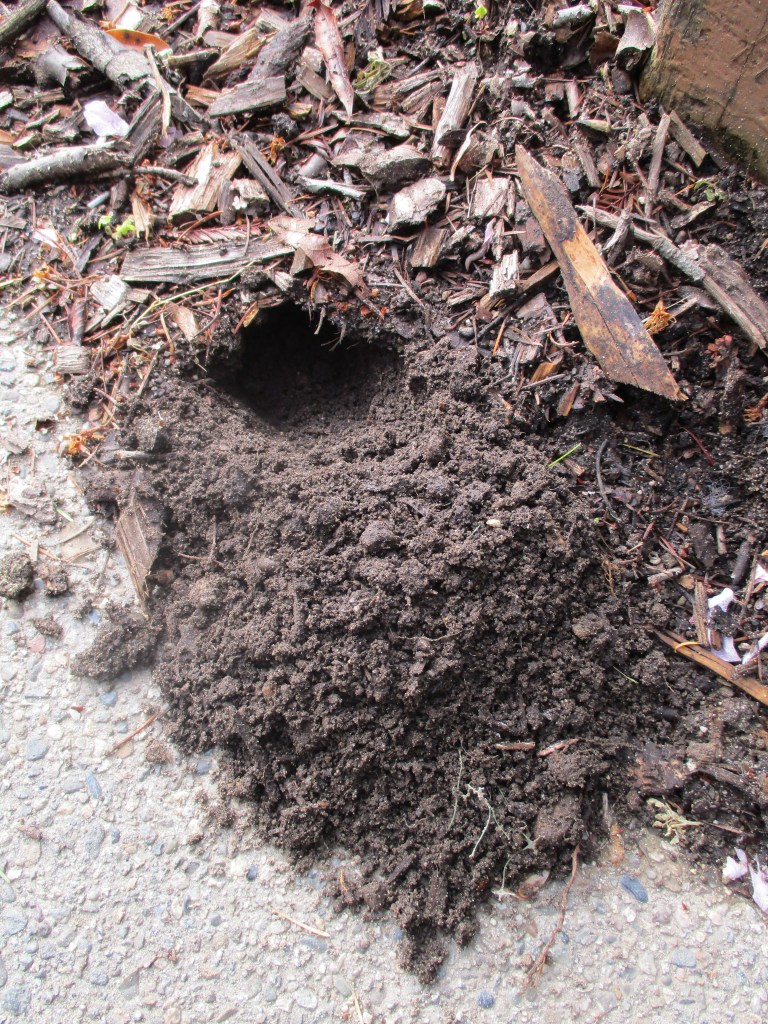
Mice and rats infested the buildings while gophers and ground squirrels infested exposed ground outside, including the recovery nursery. Rodents of some sort ate the tops off a few of my banana plugs, and chewed the base of my cup of gold vine. Another chewed into a bag of seed for mixed erosion control vegetation, and made a mess of it.

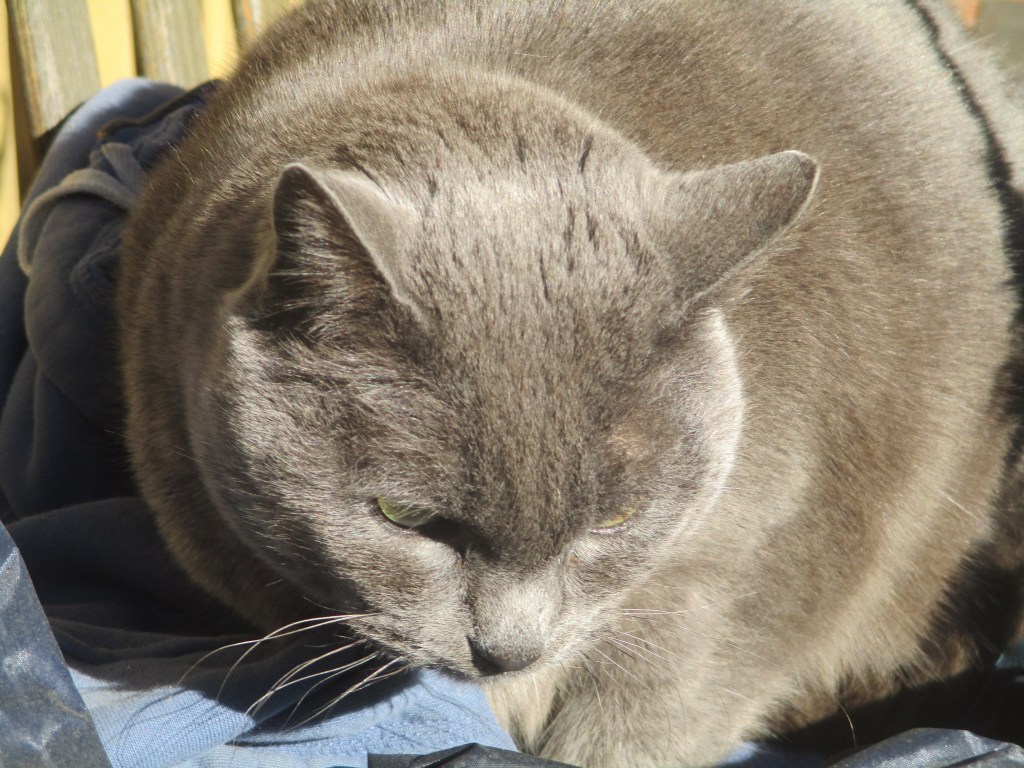
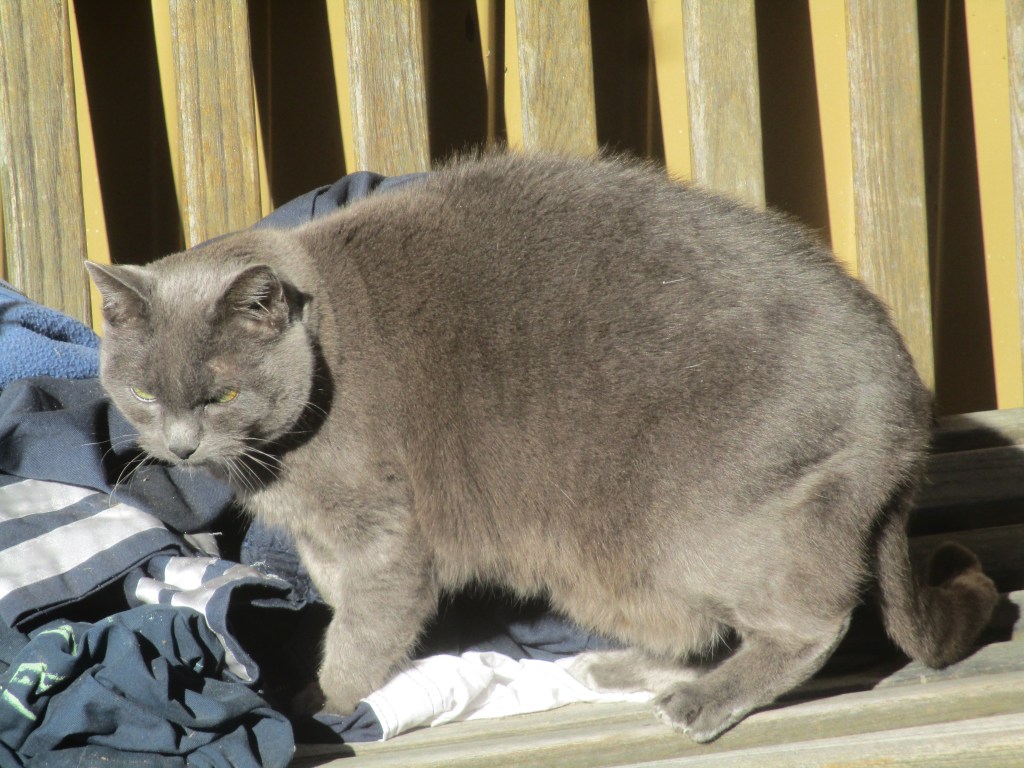
Then, the rodents seemed to leave as suddenly as they arrived. Even tree squirrels became scarce. At about that time, we noticed, on rare occasion, what seemed to be a stray kitty. I thought that the kitty must live nearby, and would eventually return home. It avoided us, but never completely left the area for long.

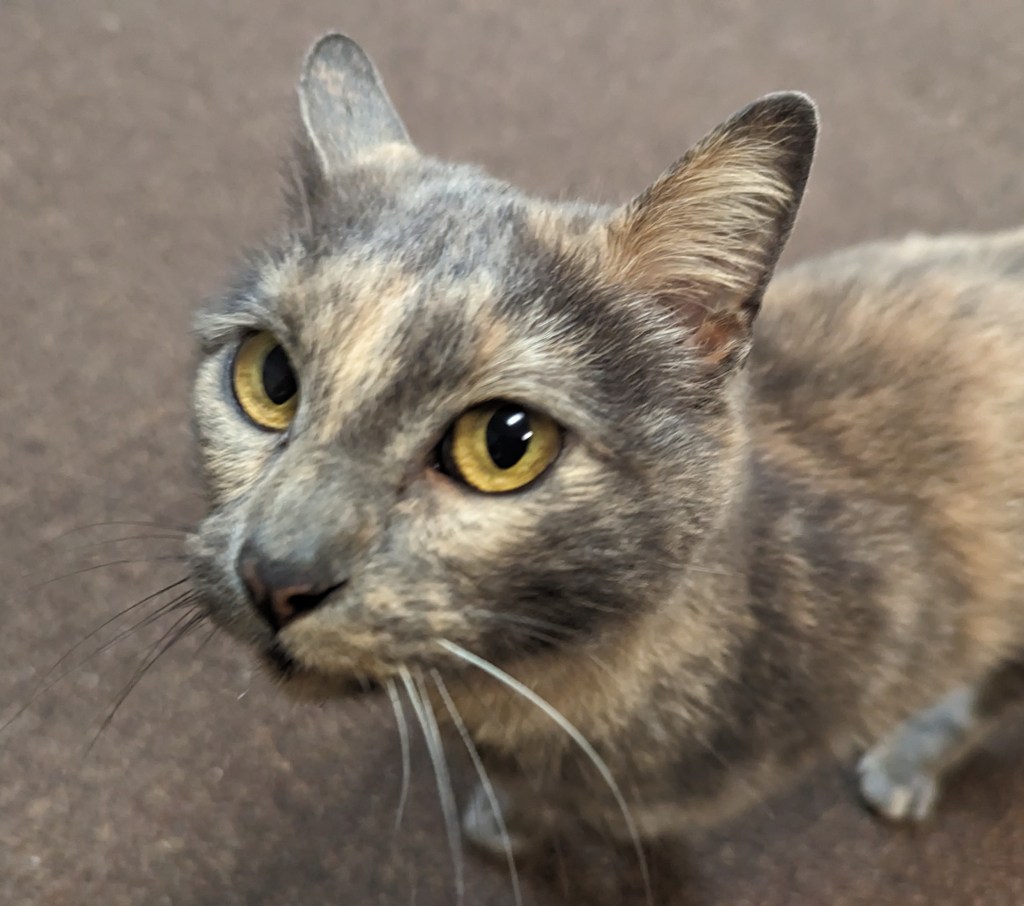
The kitty appears to be rather grungy because of its color pattern. I recently learned that this particular color pattern is known as tortoiseshell, and that almost all kitties with this tortoiseshell color pattern are female. I hope that she is not offended if my assumption of her gender as female is inaccurate. She is quite small and lean, with a thin tail that is kinked at the end. I intend to get a better picture of her to share with neighbors, just in case someone is missing her.

A bit more than a week ago, this kitty seemed to become a bit more interested in human activity here. For the first time, I offered her a bit of something that she might enjoy. Because there was no kitty food here, I gave her a small can of tuna from the galley. She enjoyed it so much that I got her some real kitty food. She now comes for it to the meeting room daily after the crew leaves. I have been able to get a bit closer to her daily, and petted her briefly for the first time a few days ago. She purrs quite loudly when petted, although she also seemed to be rather nervous. She prefers interaction with Rhody, who now chews her ears. I invited her into the hallway because it gets somewhat cool in the evening, but she does not want to come inside.

Because I believe that her presence here convinced the rodents to relocate, I would prefer her to stay if she has no other home to return to. If she only wants a bit of food from me, this could be a mutually beneficial situation. If so, we should determine what her name is.
Horridculture – Rats!

Darla would not have allowed this!

Darla would be very disappointed. Rodents were not a problem while she was here. Since her retirement, they have proliferated. I do not mind if they get into the compost or even the trash. The problem is that they now inhabit portions of the shop buildings and the nursery where we grow a few items for the landscapes.

They are rudely bold about their infestation too. They know that I can not catch them like Darla would, so they are in no hurry to evade me if I encounter them while working late. They ruined a bag of seed for erosion control vegetation. Although the top of the bag was wide open, they chewed through the bag so that the contents spilled out onto the floor.

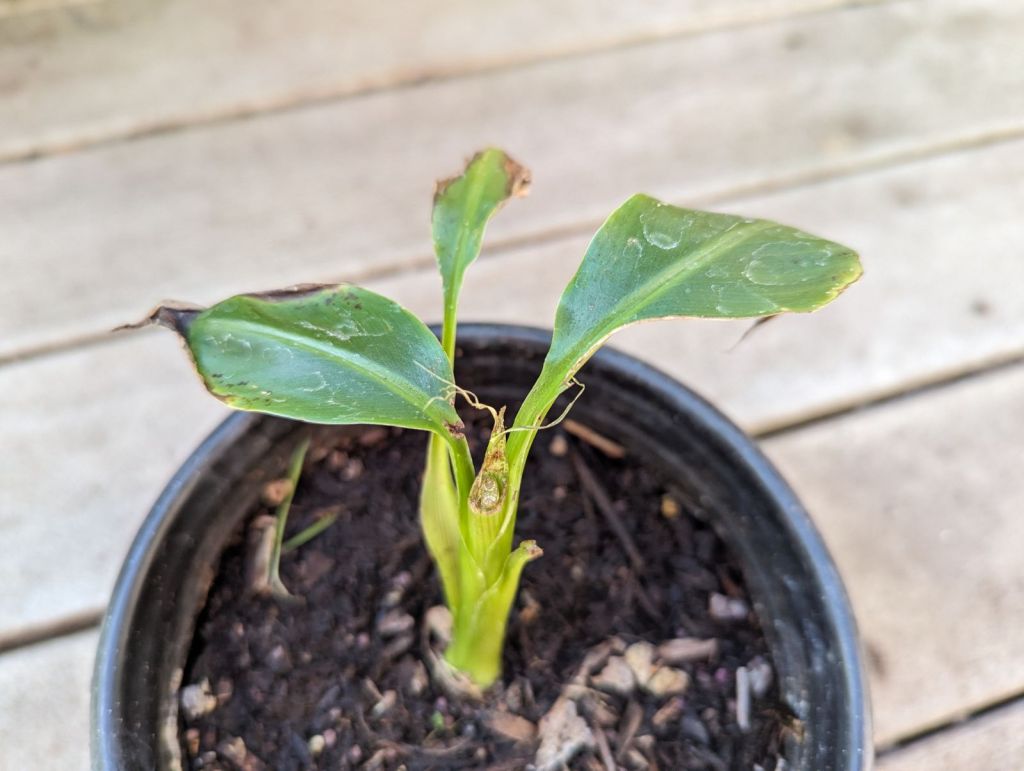
Worst of all, they chewed the tops of a few of the more unusual items within the nursery. They ruined a few of the Heliconia that I brought from Brent’s garden, and then chewed the tops off of two young banana trees. All affected specimens should recover, but I am very annoyed by the damage nonetheless. I do not put so much effort into growing such vegetation just to feed rude rodents! Besides, the banana trees are of an uncommon cultivar. I am concerned about others that are quite rare.

Rats would not be such a problem if only they were not so rude. There is plenty of vegetation, including blackberries, for them to eat within surrounding forested areas. They insist on coming inside to damage important vegetation instead. That is why I do not feel at all guilty about putting traps out.

Ultimately, I should be more diligent about hiring a feral kitty to dissuade rodent infestation. I have not yet heard back from the agency that procures employment for such feral kitties.

Feline Ecology

No one can build a better mousetrap.

Darla is a feral kitty who used to live here. I believe that she is why no rodents lived here. I never actually saw her do anything to dissuade rodent infestation. Actually, I rarely saw her do anything. She was quite reclusive and disliked almost everyone except Rhody.

Unfortunately, someone else here insisted that fleas were a problem because of Darla. He also insisted that Darla came inside to share her fleas with the carpet and furniture. No one else, including Rhody, ever noticed a flea. Darla never came inside.

While the weather was getting nastier than it had since 1982 last winter, Darla went to live at a home in Santa Clara. After her initial disapproval, she efficiently adapted, and learned to appreciate it. Apparently, she is now happy with her more domestic lifestyle. She is quite elderly, so really deserves safer and more comfortable accommodations.

Rodents are everywhere now! Rats and mice come inside for any scraps of food that the crew leaves out. Ground squirrels have burrowed into much of the exposed soil downstairs. They as well as the rabbits and perhaps tree squirrels eat some of the plant material that is stored in the yard until it goes into the landscapes. The ground squirrels are already digging after the soft buds of the pups my giant bird of Paradise that were heeled in only yesterday! I need to put blood or bone meal out there in an attempt to repel them. I had not considered how horticulturally beneficial a kitty could be.

Of course, with so many rodents here, the fleas have also become a major annoyance, particularly for Rhody!

Now, others at work want me to hire another feral kitty. I do not know how to take care of a kitty, especially a feral kitty!

While the cat is away, the mice and all the other rodents will play.

Vermin Run Amok In Spring

Gophers are busy with homemaking projects.

No one really hibernates here. Well, ground squirrels might, but they are unlikely to be a problem in refined home gardens. Winter weather is sufficiently mild for most of the most troublesome vermin to remain active, even if somewhat subdued. Some are more active in autumn before food gets scarce. They store food for later, and eat more to gain weight.

Now that it is spring, vermin are more active than they are at any other time of year, even autumn. Gophers, squirrels, rats and mice want to party like it is 1999; well, like spring of 1999. Although they all fattened up last autumn, and stored plenty of food for winter, they now want to exploit abundant spring vegetation. So do raccoons, skunks and opossums.

Generally most vermin, which most prefer to describe more politely as ‘wildlife’, are not a problem for home gardens. Some might be beneficial. Skunks may trench into lawns, but only because they want the grubs that would otherwise cause more damage from below. They also eat snails and slugs. Opossums eat snails and slugs too, as well as baby rats!

However, skunks and opossums can do more harm than good. They eat vegetables and fruits as they ripen, and pet food. Raccoons cause more significant damage, and can be very dangerous to pets. These three types of vermin are nocturnal, and therefore difficult to dissuade or confront directly. Fortunately, they are not very common in urban gardens.

Conversely, squirrels are everywhere except the harshest desert climates. Although they cause significant damage to new spring growth, and will later damage developing fruits, they are more tolerable than other vermin. Some people actually feed them to draw them to their gardens! Rats and mice are less tolerable, probably because they lack fluffy tails.

Gophers are likely causing more damage than other vermin now. Their growing families voraciously devour many of the fresh roots that disperse in spring. Now that their tunnels are not too muddy, gophers are remodeling to expand accommodations. Young gophers do not live with their parents for very long, so will eventually infest new adjacent territory. Lawns and vegetable gardens are most preferable.

Rodents Will Never Give Up

00401thumb
Warming weather brings out the gophers.

None of the most problematic rodents here hibernate completely. Only ground squirrels hibernate, but they are rare, and tend to avoid home gardens and refined landscapes. Some other rodents are less active through the cooler parts of winter, but never completely stop eating, chewing and digging up what they want from our gardens. Many will become more active with warming weather.

Gophers are the most destructive rodents right now. They might still be excavating the mud of last winter from their tunnels. They will find plenty to eat as warming weather stimulates root growth of their favorite plants. Young gophers are growing up and leaving home, to excavate more tunnels and consume more vegetation elsewhere. They are more numerous now than they will be all year.

Squirrels are not so industrious. For now, they are destructive only if they dig out recently planted seedlings and bedding plants, or eat flowers and freshly emerging foliage. They should otherwise be temporarily satisfied with acorns that they hid late last year. They will become more of a problem as they eat ripening fruit, nuts and maybe vegetables later in summer. Some might chew bark.

Rats are sneakier than squirrels. They are not as destructive to ripening nuts and stone fruits, but do eat some of what falls to the ground. Although not a problem for the garden, well fed rats infest adjacent homes, where they cause serious damage. At this time of year, rats sometimes ruin citrus fruit. They eat the pulp out from the rinds of oranges and tangerines, and the rind off of lemons.

Rodents are nearly impossible to exclude completely and safely from gardens. Poisons are too dangerous to be practical around the home, particularly if there are dogs or cats anywhere nearby. Traps are safer and effective, but require diligence. Also, some traps are difficult to set. Each type of rodent exhibits distinct characteristics. That which controls one type is ineffective for another.

Sanitation and vegetation management deters some rodents by depriving them of sustenance and nesting sites.

RATS!

P80204

Remember the Beverly Hillbillies? That was a really lame sitcom; but it was somehow very popular at the time.

Each episode began with the stupid jingle that explains how and why the formerly impoverished but suddenly wealthy Clampetts left their home in Bugtussle and moved to Beverly . . . Hills that is.

As they drive their decrepit Oldsmobile down Bedford Drive just west of downtown, the palms flanking the roadway are prominently visible to the left and right. This strictly regimented collection of Canary Island date palms alternating with Mexican palms was not very big back then, in the early 1960s. By the 1980s, they were strikingly grand. Sadly, they are now deteriorating from old age. Many of the broad Canary Island date palms have succumbed to pink rot, so are now absent. Some of the Mexican fan palms are also lacking. It is saddening to see them now knowing how grand they were not too long ago. Although they are being replaced, they will never be as formal and uniform as they were as a monoculture (or biculture) that was planted all at the same time back in the late Victorian period. Even if it were possible to remove all of the trees and plant new ones at the same time, such conformity went out of style decades ago.

Arborists see these historic trees differently. They know that just one Canary Island date palm is likely infested with rats. Such a grand collection must be infested with a disturbingly large population of rats. Within a canopy of a Canary Island date palm rats, are safe from most predators, and get quite a bit to eat from the fruit produced by the female trees. (Most Canary Island date palms are female, with only a few taller and less billowy male trees for pollination.)

When a Canary Island date palm gets cut down from the base, it falls with a big SPLAT on the ground, followed by a blast of wind containing every Frisbee, baseball, tennis ball, kite and whatever got stuck in the tree over the previous few years. After a brief pause, but before the the baseballs stop rolling in the gutters, a herd of all surviving rats flees the scene. Most hide in the closest shrubbery they find. Some scurry up other nearby palms. It can really blow your image of the Canary Island date palm.

Rodents Eat Just About Anything

61214thumbNot much bothers old fashioned junipers. They tolerate heat and frost, and anything else the weather throws at them. They do not appeal to many troublesome insects. Once established, they do not mind if they do not get much water. So, aside from over-watering and bad pruning, they are pretty indestructible. Yet, once in a while, otherwise healthy junipers die suddenly and mysteriously.

Sometimes, entire plants die. Sometimes, only big pieces of them die. The foliage is intact, but dried to a nice light brown. The roots are firm. In fact, the damage that caused such efficient death might not become apparent until the dead stems get dismantled and removed. It might even get overlooked because it is not the sort of damage that we expect to find in our tame home gardens.

Rats! They sneak in under the dense foliage to chew the bark from the main stems. The thicket of rigid stems protects them from cats and dogs. They can kill both shrubby and ground cover junipers, as well as ivy, ceanothus, cotoneaster, firethorn, . . . and nearly any sort of shrubby plant that they feel safe from predators in. They also eat vegetables and fruits, particularly citrus fruits.

The damage should be rather distinct. Bark is missing. Bare wood is exposed. Squirrels sometimes cause the same sort of damage, but usually on smaller stems in trees. Gophers do their dirty work underground by eating roots. If they kill junipers or other shrubbery, the dead plants can be pulled up from the soil relatively easily, and fresh gopher ‘volcanoes’ should be evident in the area.

Protecting stems and roots from rodents is more difficult than protecting developing fruit. The rodents know that they are concealed by the dense growth that they chew the bark or roots from, so fake owls are not much of a threat. Poisons are very unpleasant for the targeted rodents (duh!), and very dangerous to cats and dogs that might catch the poisoned rodents. Traps are effective and safe (except for the rodents . . . duh!) but take serious dedication to empty and reset!