Protecting Fruit From Birds and Squirrels

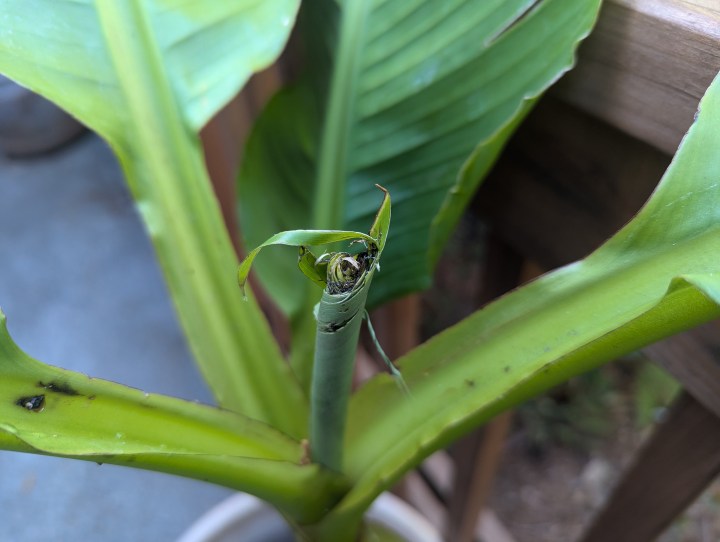
Squirrels can be quite destructive.

Ecological balance should be an asset to the garden. Good insects eat bad insects. Certain birds eat more bad insects. The problem is that some visitors to the garden are not so beneficial.

Besides the bad insects that can damage various plants in the garden, there are several types of birds and squirrels that compete for nuts and fruit. Birds and squirrels are much more aggressive in their tactics than insects are, and are often more difficult to control.

Some people like to provide alternate sources of food for hungry birds. However, birds that crave fresh berries are not so likely to be distracted by dry birdseed in a bird feeder.

Flash tape (which is strips of silver Mylar) or unwanted CDs hung prominently in fruit trees repels birds for a while, but  eventually fail to impress. Such bling should be put out in the garden only as fruit starts to become attractive to birds. If hung out too early, birds become accustomed to them and will not be deterred by the time the fruit ripens.

Flash tape or CDs should be placed where they will flutter in the breeze and can be seen from most perspectives, and may be more effective if moved every few days. Scarecrows are much more work to move about, but are no more effective. Besides, they can be unpopular with neighbors.

Bird netting is more effective to keep birds away. It can be installed over fruit trees a week or more before the fruit ripens. It should be tied around the trunk below lower branches or extend to the ground if birds are persistent enough to look for access through it. Netting should be removed when the fruit is harvested, so that stems to not grow through it.

Squirrels are more of a challenge. They have no problem getting through netting, and do not mind flashy bling. Squirrels may temporarily avoid dummy owls that repel pigeons and rats, but eventually realize that they are not a threat. Poison baits are dangerous to cats or dogs or anyone else that may be interested in poisoned squirrels, particularly since squirrels are so easy to catch as they succumb to poison!

Plastic rodent guards (or even sheet metal) wrapped around the trunks of fruit trees block access to squirrels because they are too smooth for rodents to get a grip into. Some types flare out too far for rodents to reach around. Others are too wide (from top to bottom) for squirrels to reach over. They should be located at least six feet above the ground so that squirrels do not simply jump past them from the ground.

However, rodent guards are only effective if all other access is also blocked. Lower limbs should be pruned about six feet above the ground, as well as six feet from roofs, fences, other trees or anything else that squirrels can jump from. This can be somewhat of a hassle when it is time to harvest ripe fruit that is out of reach.
Gopher Purge

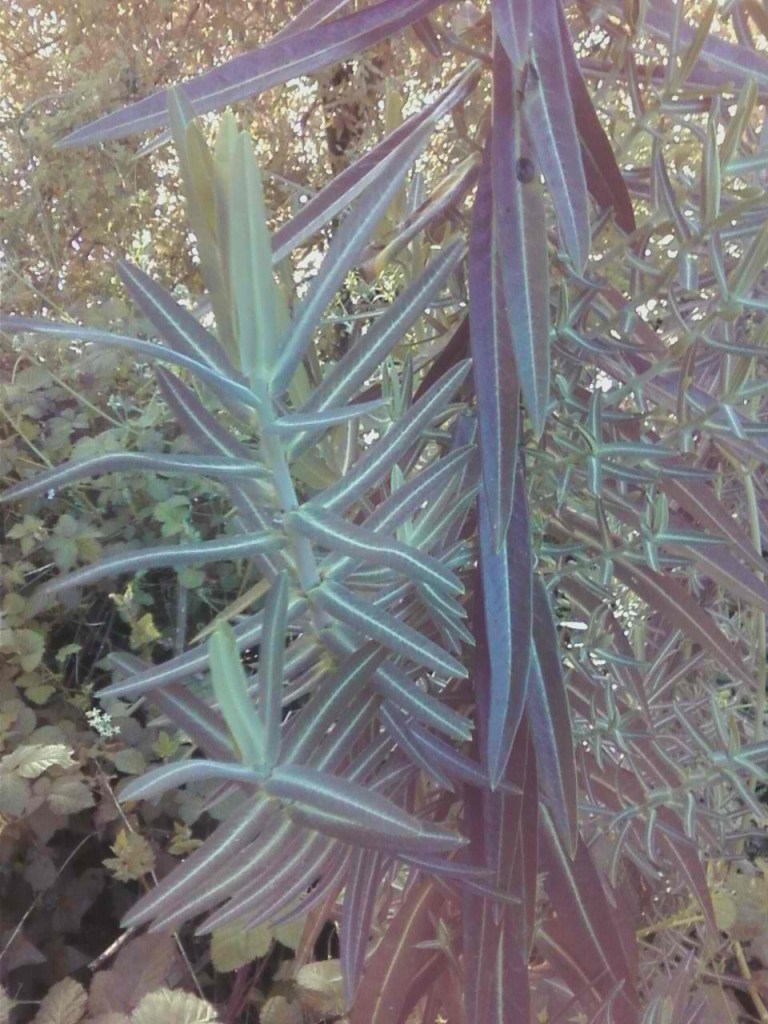
Caustic sap deters gophers.

The common name may be derived from ‘gopher spurge’, since Euphorbia lathyris is within the family of plants known as ‘spurge’, and it is also purported to ‘purge’ the garden of gophers and moles. Like all related spurge, it has caustic opaque white sap that is very irritating to the skin and toxic if ingested. This offensive sap prevents anything from burrowing through the roots, but unfortunately does not prevent gophers and moles from going around. Therefore, a garden that is adequately protected may also be crowded by gopher purge.

Individual plants live for only two years, but produce enough seed to seem like perennials. Their mostly solitary stems can grow to nearly five feet tall with foliage that spreads up to a foot wide in the first year. Tiny yellow flowers that bloom in the second summer are not remarkable; and can set seed without getting much notice before the plant dies. Gopher purge can naturalize without becoming too invasive in regularly moist or somewhat shady parts of the garden. It prefers to be watered occasionally in drier and sunnier areas.

The foliage of gopher purge is strikingly symmetrical. Each pair of grayish or bluish green leaves is perpendicular to the pairs above and below it, in a four ranked pattern. Except for the newest upper leaves, each leaf pair is also arranged in a generally horizontal plane, perpendicular to the vertical stem. Gopher purge seems to have been assembled in the garden instead of grown there.

Aromatic Foliage Attracts And Repels

Scented geranium supposedly repels some insects.

After their invention in ancient Rome, window boxes became overly prevalent in Venice. They contained herbs and vegetables where space was limited within such urban areas. Their produce was close to kitchens, and more visually appealing than nearby buildings. Several window box herbs produced aromatic foliage for more than culinary application.

The popularity of window boxes preceded the availability of affordable window screens. Mosquitoes were a nuisance within the swampy ecosystems around Venice prior to that. Therefore, besides their obvious usages, window boxes also sustained aromatic foliage. Such foliage, which was mostly also culinary herbs, repelled some troublesome insects.

Just as flowers attract pollinators with fragrance, some foliage repels insects with aroma. Some aromatic foliage intends to repel other large consumers, such as rodents and deer. Any potential consumers know that flavor is likely as objectionable as associated aroma. Ironically, some flavors or aromas that are unappealing to them are appealing to people.

Culinary herbs are perfect examples. Their strongly flavorful and aromatic foliage is quite repellent to insects and wildlife. However, it is an asset both for culinary and horticultural application. Some such herbs have cultivars for either culinary or landscape application. Trailing rosemary is a groundcover that has slightly milder flavor than culinary rosemary.

Several cultivars of lavender are popular for home gardens even if not for home kitchens. Their aromatic foliage is as delightful as their foliar color and bloom. The foliar texture of fennel is as striking as its foliar aroma. Thyme is both an herb and an aromatic, although irregular, ground cover. Mint and oregano are a bit more casual, but likely more aromatic.

Some of the most popular aromatic foliage has no culinary application, though. Its aroma more than justifies its cultivation. Scented geraniums and sages are remarkably diverse. Although most are quite pretty, a few are simply very aromatic. Most aromatic foliage can not disperse its aroma like floral fragrances. It requires some sort of disturbance to do so. Warmth with humidity enhance typical foliar aroma.

Utilitarian Garden Features Became Aesthetic

Nasturtium used to be more utilitarian.

Gardening is fun. Furthermore, gardens are pretty. Some gardens also produce fruits and vegetables. Not very long ago, production of fruits and vegetables was more of a priority for more gardens. Some big gardens generated firewood and a bit of forage for livestock. Contemporary abundances allowed gardening to become more aesthetic than utilitarian.

Such abundance may not seem so apparent while so many of society could benefit from a bit more. People work more than ever to earn resources to purchase produce that they can not grow in their gardens while working so much. It has become more feasible to do so. Landscape maintenance is just another expense that many would prefer to eliminate.

Nonetheless, some popular features within modern home gardens evolved from formerly utilitarian features. Many such utilitarian features were common within the infrastructures of home gardens prior to the development of any modern technology that replaced them. Some were popular only because such technology was either expensive or uncommon.

Shade trees are among the most traditional and perhaps more recognizably utilitarian of landscape features. Although, even they have evolved. With modern air conditioning and insulation, their shade is less important than their aesthetic appeal. Window screens and rain gutters are also modern technologies that made particular garden features obsolete.

Window boxes, which are now mere ornamental features, were originally popularized for aromatic vegetation, to repel insects from windows. Rosemary, nasturtium, ivy geranium and petunia had always been some of the more popular repellent plants for this purpose. They do not obscure much sunlight as they cascade delightfully outward and downward.

Foundation plantings, which now merely soften the perpendicularity of vertical walls and horizontal garden spaces, were also utilitarian features. Compact and resilient shrubbery or perennials inhibited erosion caused by rain falling from eaves above. They obstructed splattering mud from below also. Indian hawthorn and lily of the Nile were quite effective. They could survive through summer without much irrigation, but then survive excessive moisture through winter.

Late Night Terror For Foliage

Snails and slugs really crave hostas.

Snails and slugs really enjoy all the new seedlings and fresh foliage that is growing in the garden while the soil is still damp from earlier rain, and the weather is getting warmer. They are neither too smart nor too fast, but they are very hungry, and do their damage at night when no one is watching. They hide before the sun comes up.

The same lush foliage that they eat is also where they often live. However, they also live among lily-of-the-Nile and some ferns that they do not damage very much, as if they think that no one will look for them there. They also hide under any sort of debris and in valve boxes. Removing such debris and unwanted weed foliage diminishes their habitat.

Pieces of damp cardboard intentionally left out in cool and damp spots in the garden overnight can attract snails and slugs as they seek shelter in the morning, and then be flipped over during the day to collect and dispose of the surprised snails beneath. It is sneaky, but effective. People who happen to be up late can hunt for snails while they are out and about. Otherwise, hunting for hiding snails and slugs by daylight takes a bit more diligence.

Saucers or plastic lids containing puddles of beer is supposed to keep snails and slugs out drinking until they get roasted when the sun comes up. The problem is that the beer gets washed away whenever the garden gets watered. Besides, it does not really kill very many victims. Salt around the most susceptible plants likewise gets washed away, and can be toxic to the plants that it is supposed to protect. Keeping water in drainage saucers below potted plants is a problem for drainage, and allows mosquitoes to proliferate.

Copper tape that can be purchased from nurseries or hardware stores is an effective barrier for snails and slugs, but only if the susceptible plants are completely surrounded, and only if leaves or stems that extend over the copper do not touch anything outside. Copper tape can be self adhesive or stapled to wooden planters. Bare copper wire is just as effective. If wrapped around tree trunks, copper tape or wire should have some slack to allow for growth. An extra bit of self adhesive copper tape pressed against itself to form a tab that it can be pulled apart as needed should work well. Copper wire only needs a small loop of extra wire.

Another One Bites The Dust

P90825If this looks familiar, it is because it is the second big camellia to be killed here in the same manner in not much more than two months. The damage is not fresh, likely because the gopher that caused it started chewing on the roots as soon as the other camellia was removed. The other camellia succumbed about two months after a similarly damaged cherry tree was removed.
We are now concerned for a remaining third camellia in the same spot, as well as others in the vicinity. There is also concern that the gopher may take interest in something else, such as the birches. We would typically find and destroy any gopher that causes such problems. The difficulty here is that the area is thoroughly covered with a dense layer of Algerian and English ivies.

All evidence of gopher excavation is obscured. Even if we could locate such excavation, it would be very difficult to cut through the thicket of ivy without collapsing the tunnels that we would need to put the traps into. It would be excellent to get rid of the ivy as well as the gopher, but that would be a major project for another time. As voracious as gophers are, they don’t eat ivy!

For now, we can only watch the adjacent camellia and other camellias in the vicinity for distress. Of course, by the time a problem is noticed, it will likely be too late to do much about it. We could only apply blood meal, and hope that it works as a repellent. These camellias get blood meal as fertilizer anyway, so would only need more applied off schedule and around the trunks.

The remains of the deceased camellia were removed from the site, and respectfully interred into the green waste recycle bin.

Cats Do What Cats Want

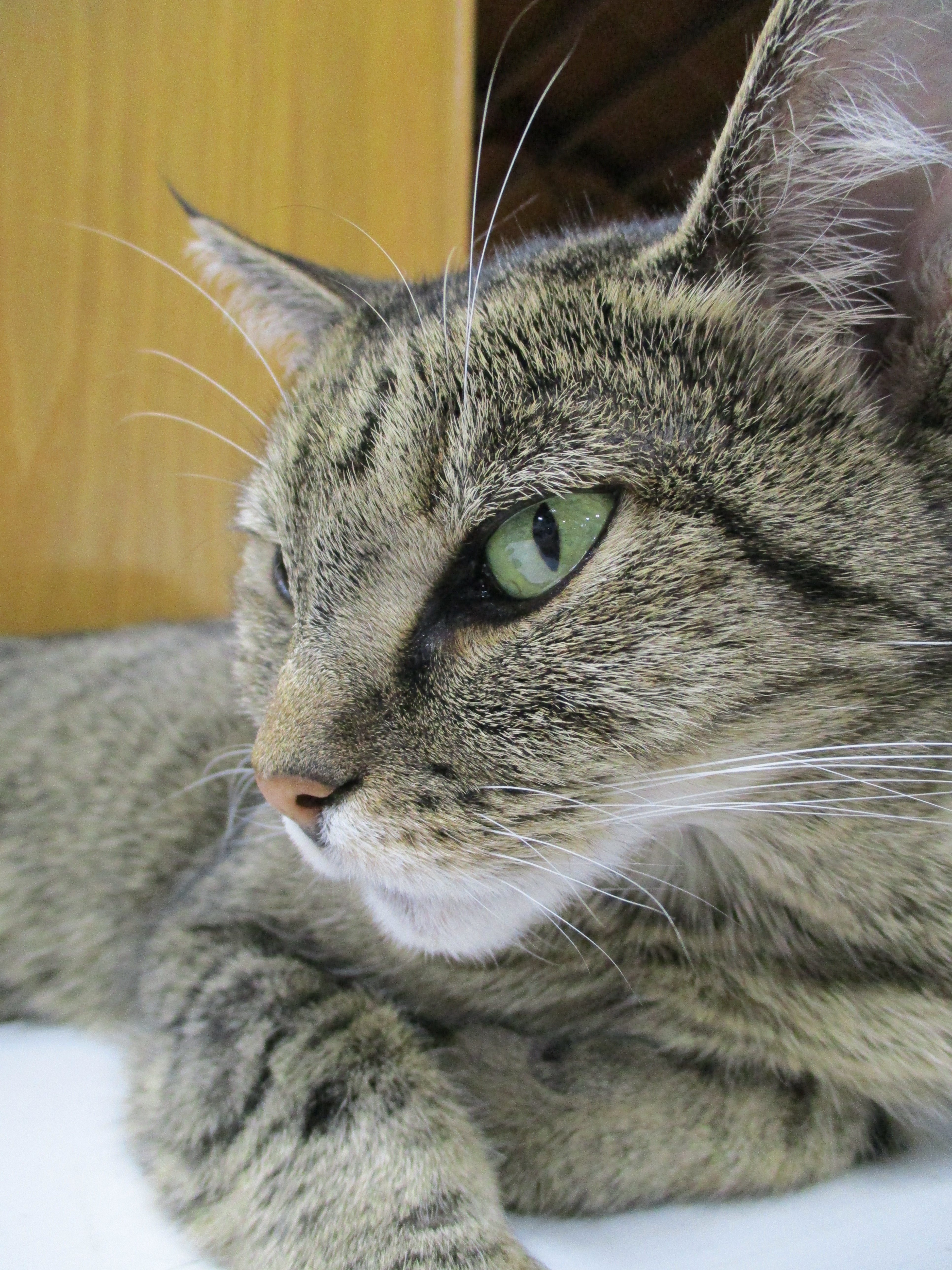
60706thumbAnyone who has ever owned a cat knows that no one owns a cat. They do whatever they want to do, whenever and however they want to do it. They take orders from no one. If they decide to use a dry spot in the garden as their litterbox, or a tree trunk as their scratching post, it is impossible to dissuade them. They are so smug and arrogant. It is no wonder that so many dogs dislike them.

Cats live in our homes and gardens because we are not as sensible as so many dogs are. We succumb to their charm and devious mind control techniques because they really can be adorable when they want to be. Fortunately, most of us would agree that this sort of symbiosis is mutually beneficial. An occasional delivery of a dead rodent proves that some cats actually work for a living.

As pompous as cats are, they are surprisingly tactful about their poop. Cats that are confined to a home leave it in their litterboxes, and even bury it with kitty litter that absorbs the objectionable aroma. From there, it can be collected and disposed of by human servants. In the garden, cats seem to put considerable effort in burying it out of the way, where it is less likely to offend anyone.

However, what is out of the way to a cat might not be so conveniently situated for others. The most refined and regularly watered gardens might not leave many options for cats, who prefer dusty and dry spots. There is not much to deter cats; so the best option may be to plant and occasionally water something in problematic spots, in conjunction with providing a litterbox somewhere else.

Sneaky cats sometimes use flat or parapet roofs where there is plenty of dry gravel and perhaps other dry detritus. For most single story roofs, it is nearly impossible to obstruct access; but in rare situations, it might be as simple as pruning trees and shrubbery back farther than cats will jump. Obstruction of access to the dusty dry soil of basements and crawlspaces is easier since it usually involves relatively simple repair of vent screens, access hatches or windows.