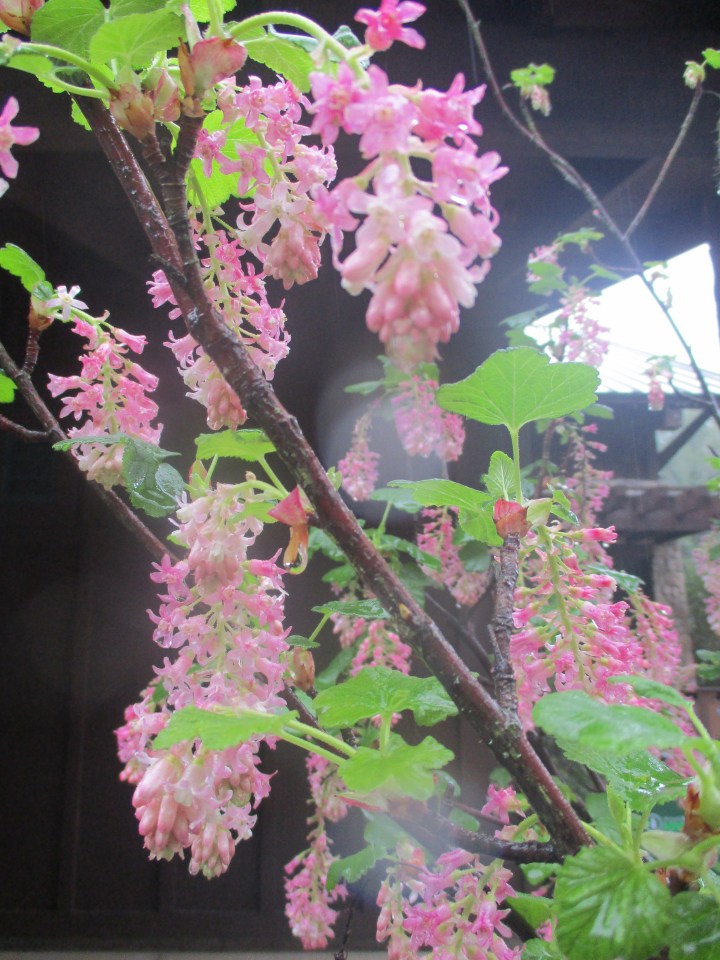
 We tend to think of currants as being from Europe, Russia or Eastern North America. The pink flowering currant, Ribes sanguineum glutinosum, is actually endemic to canyons and riparian sites of the coastal ranges of California. Because it is an understory species that lives in the partial shade of large trees, it is quite tolerant of shade, and even prefers a bit of shade rather than full sun.
Mature specimens might reach first floor eaves, and get as wide as six feet. Aging stems of maturing plants should be pruned out to promote growth of new stems. New plants should probably be staked loosely until they disperse stabilizing roots. Although tolerant of drought, pink flowering currant is happier with occasional watering, and will actually tolerate poor drainage through winter.
Pendulous trusses of tiny pink flowers bloom like small wisteria flowers late in winter or early in spring. They are mostly done by now. Small and sparse currants get eaten by birds almost before they get seen. The deciduous foliage turns only soft yellow before falling in autumn. The handsome and slightly aromatic palmate leaves look and smell almost like those of a scented geranium.
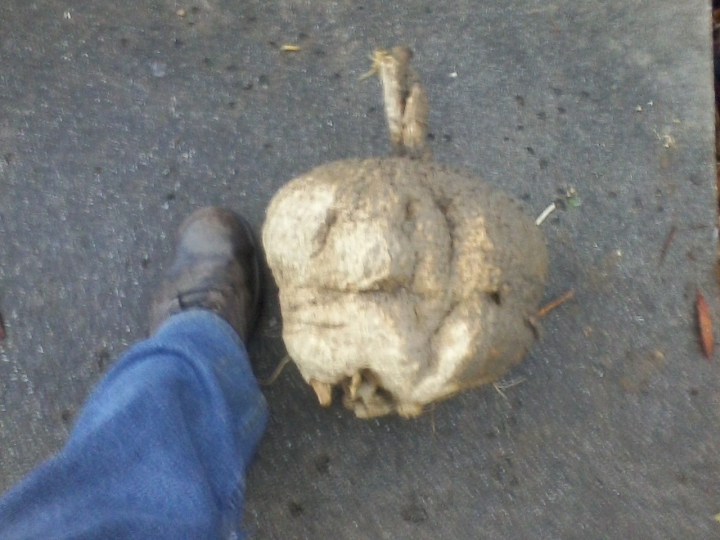 What is it?!?
 Tony Tomeo