
Roots are innately mysterious. They consume much of the resources that plants require. They stabilize the stems above them. Few plants can survive without them. Yet, roots are very secretive about their work. Almost all are invisibly subterranean. Consequently, they get minimal consideration. A lack of consideration is a root cause of many root problems.
Every plant species has distinct environmental preferences. Some plants require full sun exposure. Others tolerate or prefer partial shade. Some are more discerning than others. Similarly, plants that naturally disperse their roots extensively dislike confinement of their root systems. Small plants and some riparian plants are more adaptable to confinement.
Annual bedding plants and many small perennials perform well within pots, planters and small spaces because they do not need to disperse their roots extensively. Some woody plants with fibrous root systems, such as azalea, boxwood and andromeda, can adapt to confinement also. Occasional pruning can keep them proportionate to their root volumes.
Most of the popular succulents perform remarkably well in confinement. Some types that disperse their roots extensively if necessary will adapt to confinement by dispersing their roots only as far as they must. If they get all they need within a pot, they need not go any farther. However, succulents that are endemic to dry desert regions are not as adaptable.
Desert plants can survive warm and dry summers because they disperse their roots very extensively. They can not do so within the confinement of pots and planters. This should not be a problem that systematic irrigation can not compensate for. Unfortunately though, these same plants are too susceptible to rot if their roots are damp during warm weather.
So, some plants that are the most resilient in the ground are the least resilient in pots. Of course, this is not an absolute rule. Yuccas from tropical and temperate climates perform well either in the ground or in pots. Those from desert climates are likely to rot in pots. In general, drought tolerance and container gardening are two fads that are not compatible.


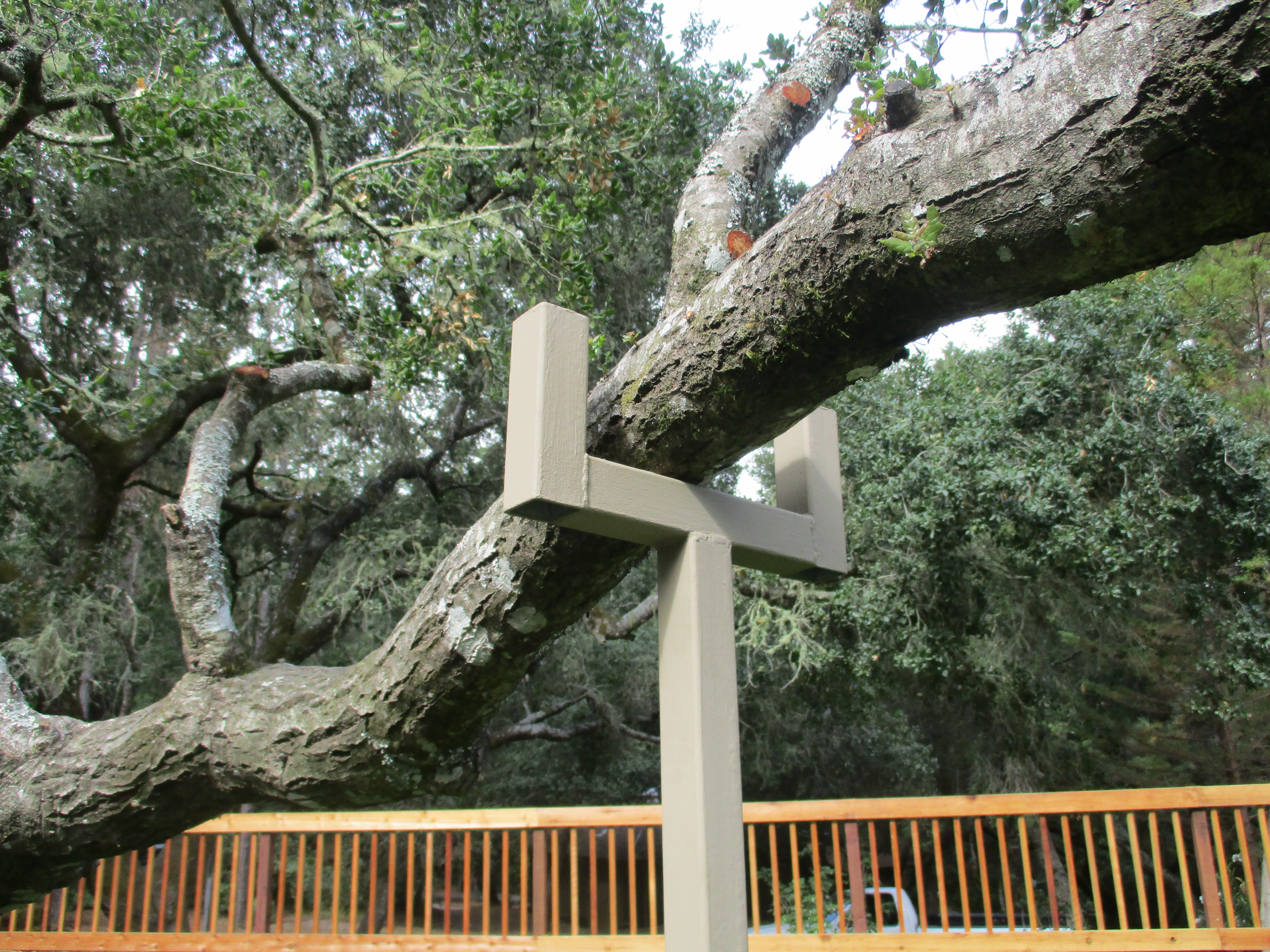 It has been almost a month since one of three small but sculptural and very prominent coast live oaks at work was destabilized by . . . well, children. They were climbing on it, as most good children should do. There were a few of them; and the tree is old and deteriorating. All three of the trees actually grew from the same rotten stump of a tree that was cut down decades ago.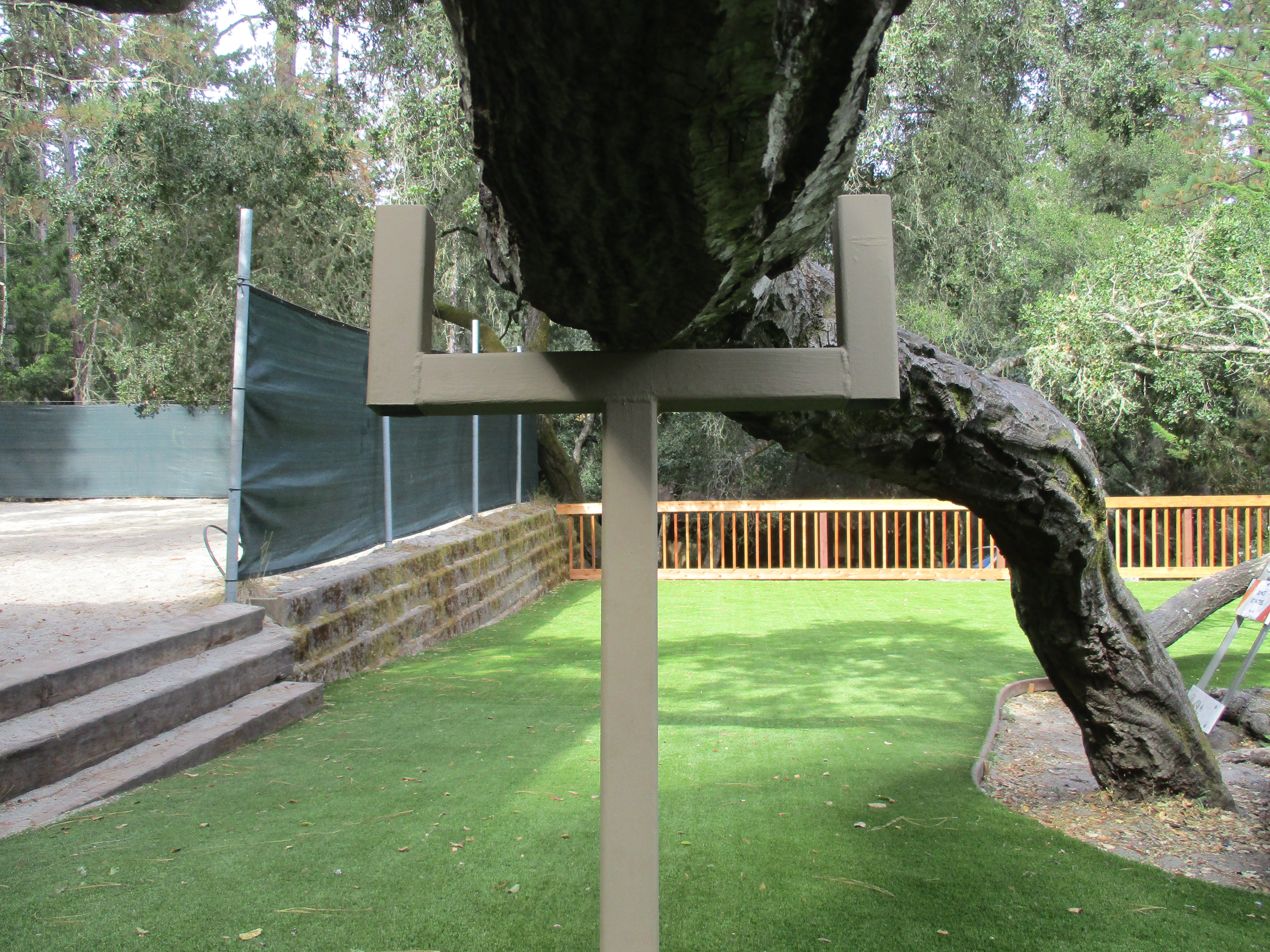
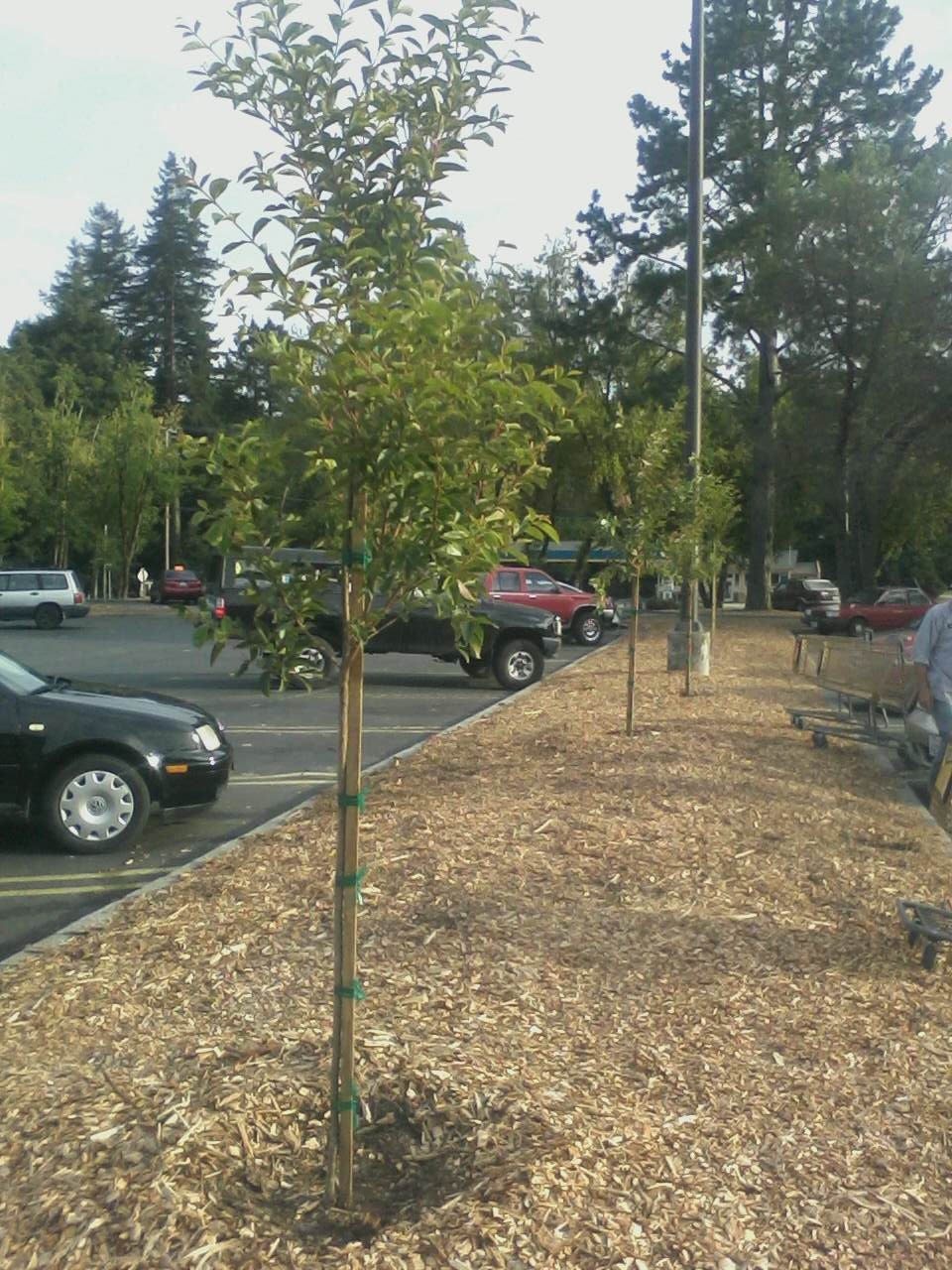 Most plants would prefer the real thing; how they do it in the wild. They drop their leaves, flowers and twigs. Deciduous plants do it mostly in autumn. Evergreens might spread it out through the year. The debris accumulates on the ground below, and decomposes at about the same rate as it accumulates. There is no one there to clean it up. Yet, the natural ecosystems know what to do.
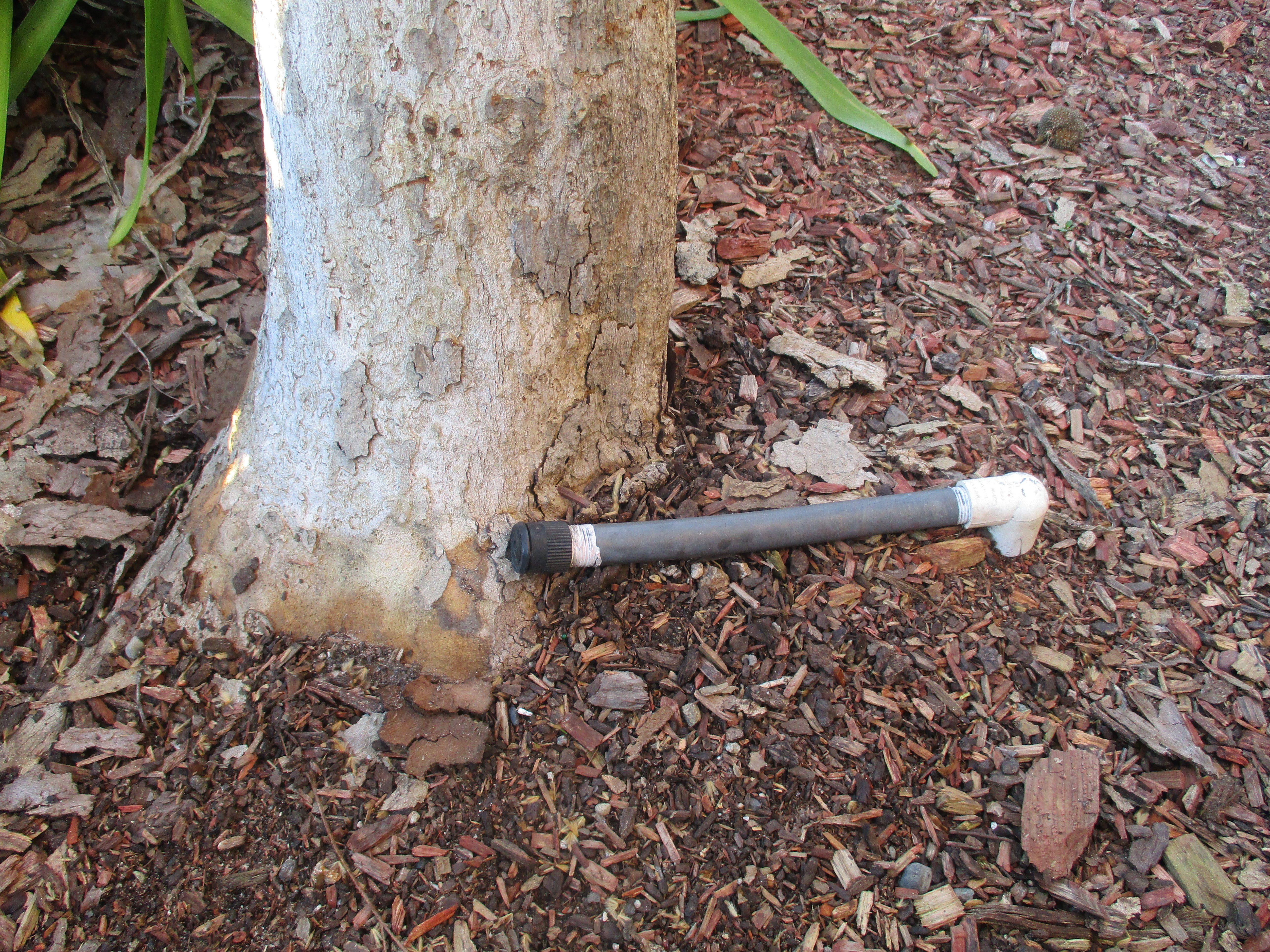 Regardless of their individual innate requirements for water, new plants need to be watered very regularly immediately after they are installed into a landscape. As they mature and disperse their roots, the regularity of supplemental watering becomes less important, and ‘drought tolerant’ plants may not need to be watered at all. Maturing larger trees generally get what they need from the landscape around them.
 Today’s episode is brought to you by the letter ‘T’.
 Root pruning is nothing new. It is done more commonly than we think about for many aggressive perennials like lily-of-the-Nile, that like to disperse their roots into areas where we want to grow more docile annual bedding plants or vegetables. We might do it halfway, or more, around a shrubby plant during spring or summer if we plant on digging and moving it the following autumn. For most small and low profile plants, root pruning is sort of tolerable. The plants that we do it to may not like it, but it is sometimes necessary, and better than not doing so.

 Tony Tomeo